
General News
Kwame A Plus Wants Sale of Unplanned Lands Banned to Curb Flooding


Gomoa Central MP Kwame Asare Obeng, popularly known as Kwame A Plus, has proposed sweeping reforms to Ghana’s land administration system, calling for a ban on the sale of lands that have not been properly planned and approved.
Speaking during a live broadcast on the country’s recurring flooding crisis, A Plus argued that the lack of proper land-use planning is one of the biggest contributors to illegal developments and annual floods.
He proposed that no chief, family head or landowner should be allowed to sell land unless a detailed planning scheme or layout has been approved by the appropriate authorities. According to him, every parcel of land should clearly indicate roads, drainage systems, public facilities, schools, hospitals and other essential infrastructure before it is put on the market.
The Gomoa Central lawmaker further suggested that the government revoke leases on large parcels of land that have not been developed with approved planning schemes, rather than waiting until people construct buildings that later have to be demolished.
A Plus also called on the Lands Commission, district assemblies and planning authorities to tighten enforcement of existing regulations to prevent the indiscriminate sale of land.
He maintained that Ghana’s current system allows developers to create communities first before the government is forced to provide roads, electricity and drainage infrastructure, a practice he described as unsustainable.
According to him, implementing stricter land planning laws would help prevent future flooding, improve urban development and reduce the need for costly demolitions in the years ahead.
Story by: Abena Nyame
In September 2026, the Ghana Gold Board (GoldBod) in accordance with its mandate under section 2(b) of ACT 1140, generated from its ASM gold trade operations, foreign exchange totaling US$1.871 billion against the announced monthly target of US$1.4 billion.
Of the total amount, US$701.3 million was sold to authorized commercial banks against the set target of US$700 million to support FX market stability, while an amount of US$1.170 billion was provided to the Bank of Ghana against the set target of US$700 million to support reserve accumulation.
In October 2026, GoldBod projects to generate US$1.5 billion in foreign exchange. Of this amount, US$1 billion will be made available to commercial banks to support FX market stability, while up to US$500 million will be provided to the Bank of Ghana to support the building of reserves in line with the GANRAP.
This will be done in accordance with the newly developed Spot FX Sales/Intermediation Framework of the GoldBod to strengthen transparency, fairness and regulatory compliance.
GoldBod remains committed to its statutory mandate to generate foreign exchange for Ghana and will continue to work closely with all stakeholders.
General News
Martin Amidu accuses Chief Justice Baffoe-Bonnie of being Mahama’s ‘surrogate’ to control judiciary

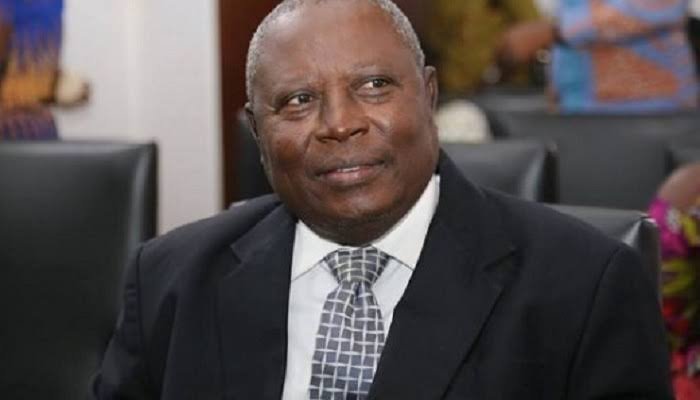
Former Special Prosecutor Martin Amidu has launched a strong criticism of Chief Justice Paul Baffoe-Bonnie, alleging that the head of Ghana’s judiciary is serving as a “surrogate” for President John Dramani Mahama in an attempt to influence the affairs of the judiciary.
Amidu’s comments add to the ongoing public debate over judicial independence and the relationship between the executive and the judiciary.
In his remarks, the former Attorney-General questioned the independence of the judiciary under the current administration and alleged that the Chief Justice is being used to advance the interests of the political executive.
He described Baffoe-Bonnie as a “surrogate” of President Mahama and alleged that the arrangement is intended to give the government influence over the judiciary.
The allegation is a serious one, particularly given the constitutional importance of judicial independence in Ghana’s democratic system.
Justice Baffoe-Bonnie has served on Ghana’s Supreme Court for years and has appeared on numerous panels dealing with constitutional and politically sensitive cases. Court records, for example, show him as a member of Supreme Court panels in cases involving Martin Amidu himself, including proceedings dating back to 2013 and 2017.
The former Special Prosecutor’s latest comments therefore place the spotlight once again on the question of how Ghana’s judiciary should maintain its independence while dealing with politically sensitive cases and constitutional disputes.
Amidu’s allegation remains his stated position and does not, by itself, establish that the Chief Justice is acting on behalf of President Mahama. Any assessment of the claim would require evidence concerning specific actions or decisions attributed to the Chief Justice.
The controversy comes at a time when judicial independence and accountability remain prominent issues in Ghana’s public discourse, with politicians, lawyers and civil society actors continuing to debate the appropriate balance between the three arms of government.
For now, Amidu’s remarks have opened another contentious chapter in the national conversation over the independence of Ghana’s judiciary and the role of the Chief Justice.
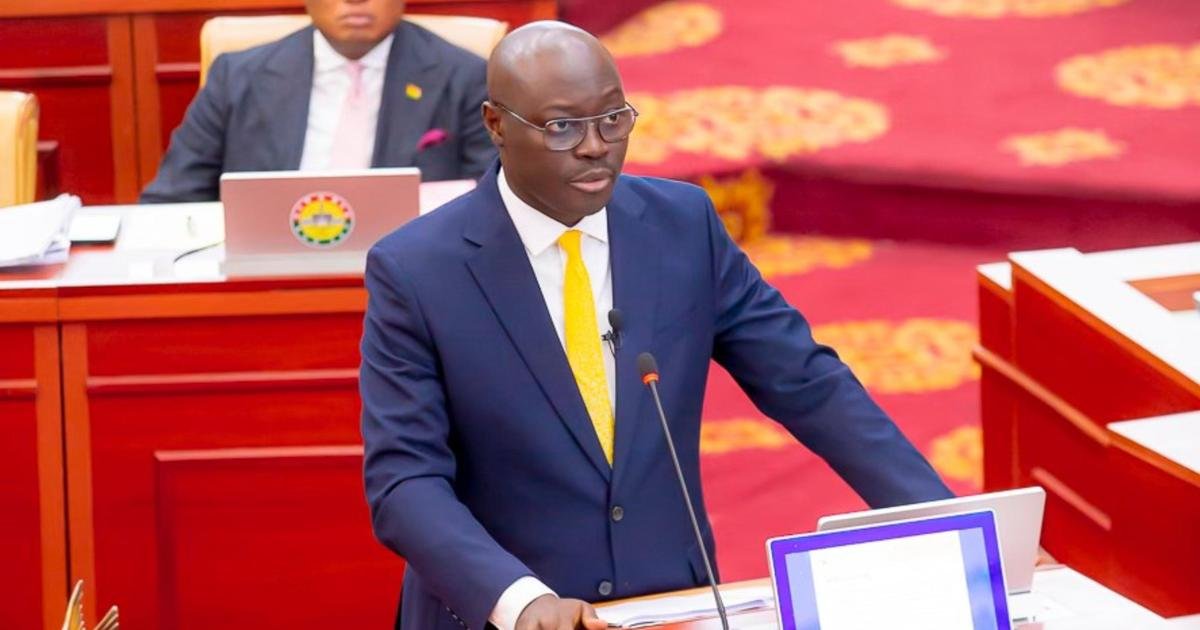
Ghana has secured a major legal victory against oil giant Tullow Ghana Limited after an international arbitration tribunal dismissed all claims brought by the company over the taxation of business interruption insurance proceeds.
The arbitration tribunal, constituted under the Rules of Arbitration of the International Chamber of Commerce (ICC), delivered its award on Tuesday, September 29, 2026, ruling in favour of the Republic of Ghana.
According to a statement issued by the Ministry of Finance on Wednesday, September 30, the tribunal upheld in full the Ghana Revenue Authority’s (GRA) tax assessment of US$393,091,993.70 against Tullow.
The tribunal further found that the tax assessment did not breach Ghana’s Petroleum Agreements and determined that the penalty imposed was properly applied.
It also ruled that the assessment was not time-barred and that the enforcement action taken by the GRA was lawful.
Ghana secures major tax victory
The Finance Ministry said the outcome vindicates the position Ghana has maintained throughout the dispute — that every company operating in the country, regardless of its size, remains subject to Ghanaian laws.
Finance Minister Dr Cassiel Ato Forson commended the work of the Office of the Attorney-General, the Ghana Revenue Authority and Ghana’s external legal counsel, Folely Hoag LLP, for their efforts in defending the interests of the Republic.
The ruling comes at a significant time for Ghana’s oil sector, as the government and its Jubilee partners work to maximise the prospects of the Jubilee and TEN oil fields.
Government moves to implement award
The government has indicated that it will work closely with Tullow to give effect to the tribunal’s award in accordance with Ghanaian law.
However, the Ministry stressed that implementation would take into consideration the continuity of operations in the Jubilee and TEN fields, as well as Tullow’s capacity to sustain the investments required in those fields.
The government also noted that Ghanaian law gives the GRA the authority to determine the timing and manner in which assessed tax liabilities are settled.
According to the Ministry, its objective is to ensure that the award secures the revenues due to the Ghanaian people while preserving Tullow’s ability to continue operating and investing in Ghana.
Talks with Tullow to continue
The Finance Ministry disclosed that prior to the tribunal’s decision, the government had been engaged in discussions with Tullow to find an amicable resolution to outstanding tax matters between the two parties.
Those discussions, the Ministry said, will continue and will cover both the matter determined by the tribunal and separate proceedings concerning the disallowance of loan interest.
The government expressed confidence that the discussions would ultimately be resolved in the mutual interest of both parties.
Despite the legal dispute, the Ministry described Tullow as a vital partner to Ghana and the country’s largest petroleum producer.
It noted that Tullow’s operations in the Jubilee and TEN fields contribute to Ghana’s energy security, domestic gas supply and the livelihoods of thousands of Ghanaians.
The government therefore emphasised that it remains in the national interest for the relationship between Ghana and Tullow to endure, even as the latest arbitration award is implemented.
General News
Accra-Kumasi Highway contractor reports Adom Kyei-Duah to minister over alleged church obstruction
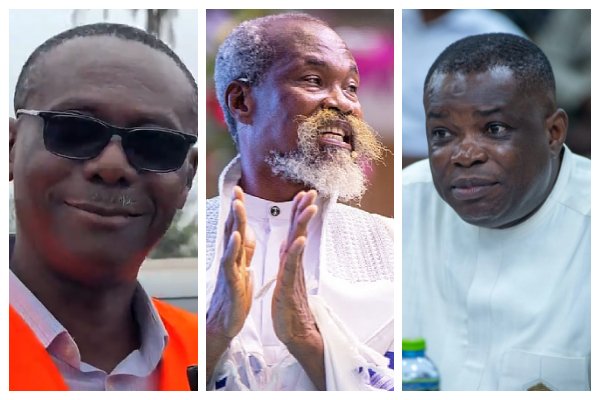
The contractor working on the Accra-Kumasi Highway project has reportedly raised concerns over alleged obstruction of construction activities by a church associated with Prophet Adom Kyei-Duah.
According to the contractor, activities at a section of the major road project have been disrupted by the church, prompting the company to formally bring the matter to the attention of the sector minister.
The contractor is said to have complained that the alleged obstruction is affecting work on the highway and could have implications for the smooth execution of the project.
The development has brought renewed attention to the challenges that can arise when major infrastructure projects intersect with existing religious, commercial or private activities along project corridors.
The contractor is therefore seeking the intervention of the minister to help resolve the matter and allow construction activities to proceed without further disruption.
The concerns come as work on the Accra-Kumasi Highway remains a major infrastructure priority, with the project expected to improve connectivity between Accra and communities across the country.
The alleged dispute involving the church has now placed the issue before the relevant authorities, who are expected to examine the concerns raised by the contractor and determine the appropriate way forward.
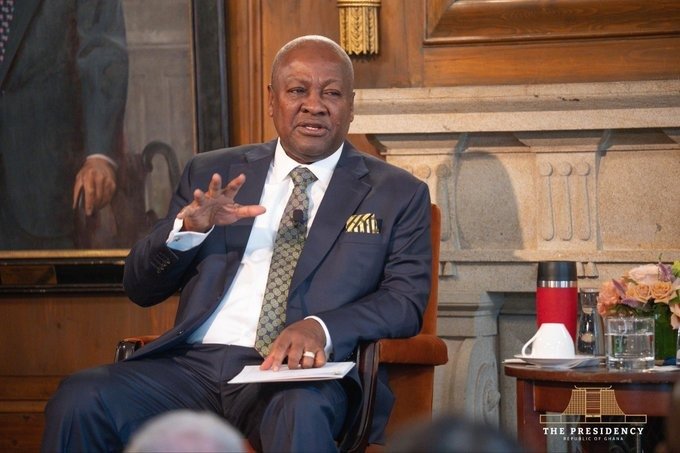
Africa is stepping up its long-running campaign for permanent representation on the United Nations Security Council, with African leaders arguing that the current structure of global decision-making no longer reflects the realities of the modern world.
The demand has gained renewed momentum as UN member states continue negotiations on Security Council reform, with African countries maintaining that the continent must have a permanent presence in the body responsible for major decisions on international peace and security.
The African Union’s position is anchored in the Ezulwini Consensus and the Sirte Declaration. The bloc is calling for at least two permanent seats for Africa, with the full rights and privileges of permanent membership, including veto power for as long as the veto remains part of the Council’s structure. Africa is also seeking five additional non-permanent seats.
‘Africa cannot remain excluded’
The argument has been strengthened by the continent’s demographic and political weight. Africa accounts for more than 50 UN member states and more than a quarter of the organisation’s membership, yet none of its countries currently holds a permanent seat on the Security Council.
The African Union has described the situation as a historical imbalance, pointing out that when the UN was established in 1945, much of Africa was still under colonial rule and therefore had little or no direct participation in shaping the post-Second World War international system.
The AU Commission has repeatedly argued that the Council must evolve to better reflect contemporary geopolitical realities.
In May 2026, AU Commission Chairperson Mahmoud Ali Youssouf said Africa was “not asking for a favour” but seeking to correct what he described as a historical injustice. He argued that the Council’s credibility and legitimacy depend on its ability to reflect today’s world rather than the geopolitical order of 1945.
Mahama joins the call
President John Dramani Mahama has also used Ghana’s platform at the United Nations to support reform of the Security Council and greater African representation.
The broader African position is that the continent should not merely be consulted on decisions affecting international peace and security but should have a permanent role in shaping those decisions.
Africa also points to its involvement in international peace and security efforts, including contributions to peacekeeping operations, as part of the argument for greater representation.
The African Union has therefore maintained that its demand goes beyond symbolism and is tied to the principle of equitable representation in global governance.
UN negotiations remain ongoing
The campaign comes as the UN’s intergovernmental negotiations on Security Council reform continue.
A June 2026 UN paper recorded broad agreement among participating states that Africa should be equitably represented in a reformed Security Council. However, member states continue to differ over the precise distribution of additional seats and other elements of reform.
The reform process has been ongoing for years, with discussions covering the number and categories of Council members, the veto, regional representation and the Council’s working methods.
For Africa, however, the central demand remains clear: permanent representation with the same rights and privileges enjoyed by the existing permanent members.
The African Union has continued to insist that the continent should determine which African countries represent it in any future permanent seats.
As negotiations continue, the question confronting the international community is whether the Security Council can be substantially reformed to reflect the geopolitical realities of the 21st century.
For African leaders, the argument is straightforward: a continent with more than 50 countries and a major role in the UN system should have a permanent voice in the organisation’s most powerful decision-making body.
The push for reform is therefore unlikely to disappear anytime soon, with Africa continuing to press for a seat — or seats — at the centre of global peace and security decisions.

Djokovic opens China campaign with victory

Listen, Connect, Develop, Deliver – Kojo Addo Unveils NDC Vice Chair Bid

GOLDBOD FX GENERATION AND SALES UPDATE – SEPTEMBER 2026



-
 General News1 week ago
Two political parties, one lesson: Afuntummireku and Tikro Nkɔ Agyina for Ghana
-

 Culinary1 week ago
Kofi Brokeman: The Simple Ghanaian Snack That Has Stood the Test of Time
-
 General News1 week ago
Rev. Dr. Christian Kwetey Kweitsu Set for International Recognition at 100 Most Influential Persons Awards in Kigali
-

 General News1 week ago
Free Speech, False Publication and Presidential Criticism in Ghana: Where Does the Law Draw the Line?
-
 General News1 week ago
Don’t Expect Concerts When People Can’t Afford Food – Rex Omar on Black Star Experience
-

 Entertainment1 week ago
Can’t Anything Good Come Out of Ghana? – Ras Caleb Appiah-Levi Fires Back at Critics
-

 Entertainment2 weeks ago
30 Old Ghanaian Songs That Defined Generations
-

 General News2 weeks ago
Shatta Wale Urges UPSA Students to Turn Ideas into Sustainable Ventures