
General News
Mahama Hails Economic Reforms as Cement Prices Fall Sharply in Ghana

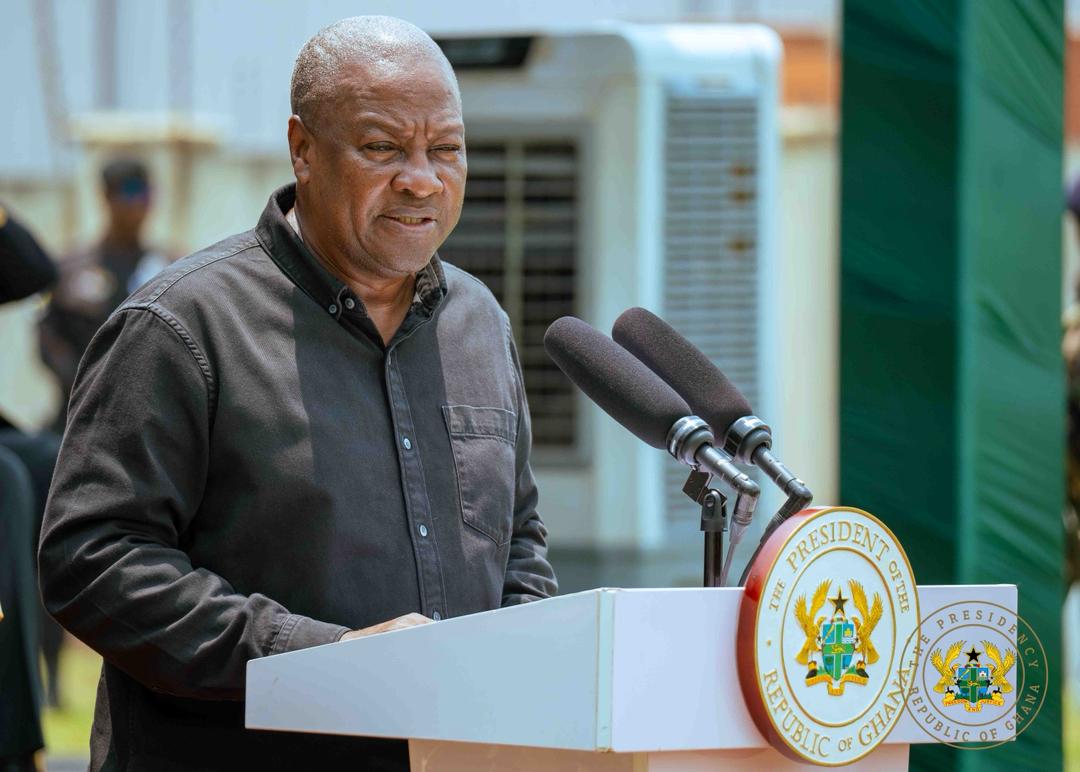
President John Dramani Mahama has hailed Ghana’s ongoing economic reforms and industrial investments after announcing a sharp reduction in cement prices across the country, bringing significant relief to the construction and housing sector.
According to the President, cement prices have fallen by about 20 percent following a combination of macroeconomic stabilisation policies, fiscal discipline, and sustained engagement with industry stakeholders.
Speaking during the commissioning of a new $110 million calcined clay cement manufacturing plant in Tema, President Mahama described the development as evidence that sound economic management and private sector collaboration are yielding positive results.
“Through a mix of macroeconomic stabilisation, fiscal discipline and constructive engagement with industry stakeholders, we have started to see positive results in the cement space,” President Mahama said.
He added that the price reduction is already benefiting builders, contractors, and households across the country who rely heavily on cement for construction activities.
Relief for Construction and Housing Sector
President Mahama explained that cement prices had surged in 2024, reaching approximately GH¢120 per bag for 42.5 grade cement and GH¢113 per bag for 32.5 grade cement.
However, he said government policy reforms helped reverse the upward price trend.
“By July 2025, cement prices had fallen by about 20 percent, providing relief to builders, contractors and the housing construction industry,” he stated.
The President further noted that construction inflation has also shown signs of stabilisation, declining to 3.9 percent year-on-year in January 2026, reflecting broader economic recovery.
“These developments demonstrate the impact of prudent economic management and a strengthening domestic currency,” he said.
Industrial Investment Driving Local Production
President Mahama linked the price reduction partly to new investments in Ghana’s cement manufacturing industry, including the newly commissioned calcined clay cement plant in Tema.
He said the facility will help increase domestic cement supply while reducing Ghana’s dependence on imported clinker, which has historically increased production costs.
“This investment demonstrates that when the policy environment is transparent, stable and supportive of enterprise, the private sector will respond by mobilising capital and undertaking projects of global significance,” he said.
The President explained that the new plant will reduce clinker imports by more than 10 percent, helping retain hundreds of millions of cedis within the domestic economy.
“This means lower production costs, reduced import dependency and more value retained within the Ghanaian economy,” he added.
Sustainable Manufacturing and Climate Action
The new plant utilises limestone calcined clay cement technology, which significantly reduces carbon emissions compared to traditional cement production methods.
President Mahama emphasised the importance of adopting environmentally friendly industrial practices to support global climate goals.
“Traditional clay-based cement production accounts for about 8 percent of global carbon dioxide emissions. By introducing this technology, we are advancing both industrial growth and environmental responsibility,” he said.
He added that Ghana remains committed to balancing industrial development with climate action in line with international environmental agreements.
Part of Broader Industrialisation Agenda
President Mahama said the project forms part of government’s broader industrialisation and infrastructure development agenda under the Big Push programme, which is investing over GH¢60 billion in national development projects.
He expressed optimism that continued dialogue between government and industry stakeholders will help sustain price stability in the long term.
“Dialogue between government and industry remains essential for ensuring stability and sustainable growth in this all-important sector,” he said.
Economic Outlook
Analysts have welcomed the development, noting that stable construction material prices could support housing development, infrastructure expansion, and job creation across the country.
General News
2026 BECE Placement Results: 527,932 Students Placed; Government Opens Self-Placement for 53,887 Candidates

The Ministry of Education has released the 2026 Computerized School Selection and Placement System (CSSPS) results, with 527,932 candidates successfully placed in Senior High Schools (SHSs), Senior High Technical Schools (SHTSs), and technical and vocational institutions across the country.
Speaking at a press briefing in Accra on September 7, 2026, Deputy Minister for Education, Dr. Clement Abas Apaak, disclosed that the placement results were released at 10:00 p.m. on September 4, 2026.
According to the Ministry, a total of 623,072 candidates sat for the 2026 Basic Education Certificate Examination (BECE), representing an increase of 19,744 candidates compared to the 603,328 who sat for the examination in 2025.
Out of the 623,072 candidates, 604,567 qualified for placement, while 527,932 were automatically placed, representing 87.3 percent of all qualified candidates.
Of those automatically placed, 276,521 are females and 251,411 are males.
The Ministry explained that the failure of some qualified candidates to secure automatic placement was largely due to the high demand for Category A schools.
Data from the placement exercise shows that 313,283 candidates selected Category A schools as their first choice, while 176,614 selected Category B schools, 123,577 selected Category C schools, and 995 opted for private Senior High Schools.
However, the available vacancies stood at 76,417 in Category A schools, 250,366 in Category B schools and 468,652 in Category C schools, bringing the total declared vacancies to 859,828.
Dr. Apaak explained that the challenge was not a shortage of school places but rather a mismatch between the school’s candidates preferred and where vacancies were available.
“The issue is not simply the availability of spaces. It is largely a mismatch between where vacancies exist and where candidates most strongly prefer to be placed,” he said.
The Ministry further disclosed that 57,259 candidates did not meet the requirements for automatic placement.
This figure includes 3,372 candidates who did not sit for the BECE, 35,382 candidates who obtained Grade 9 in either English Language or Mathematics, and 18,505 candidates who obtained Grade 9 in both subjects.
Government has, however, decided to allow candidates who obtained Grade 9 in English Language and/or Mathematics to access the self-placement portal and select schools with available vacancies.
The 3,372 candidates without examination results will not be placed at this stage but will be given another opportunity to resit the examination.
Meanwhile, 85 private Senior High Schools will participate in the Free SHS programmed for the 2026/2027 academic year.
The Ministry said the inclusion of the private schools is aimed at expanding access to secondary education while reducing pressure on highly subscribed public schools.
To make the admission process easier, the CSSPS has also been upgraded to include an admission portal through which parents can enroll their children and download admission forms without having to travel to the schools.
Heads of schools have been cautioned against admitting students outside the official placement system.
The Ministry has also established resolution centers at all regional Ghana Education Service (GES) and Ghana TVET Service offices to assist parents and candidates with placement-related concerns.
The GNAT Hall in Accra has been designated as the National Placement Resolution Centre.
Dr. Apaak stressed that the school placement process is completely free and warned parents against paying money to individuals who claim they can secure or change placements.
“No parent should pay money to any individual, whether that person claims to be an official of the Ministry, GES, TVET Service, a school official or intermediary, to secure or change placement. There is no legitimate protocol placement that requires payment,” he said.
He urged parents and candidates to report anyone demanding money for placement to the Ghana Police Service or the Office of the Special Prosecutor.
Parents and candidates who require assistance can contact the official CSSPS call center on 055 037 7388, 059 952 5926, 059 844 5898, 059 797 4847, or 055 855 5431.
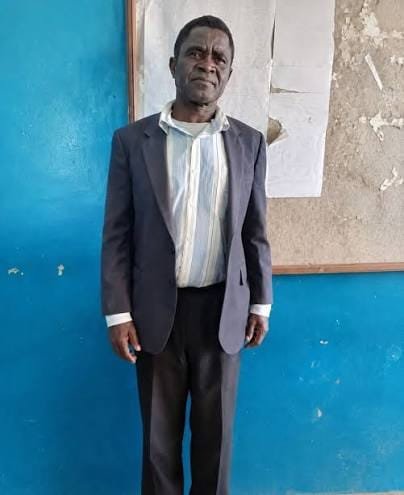
A 41-year-old primary school teacher in Malawi has allegedly faked his own death and submitted forged documents to have an outstanding loan cancelled, only to be discovered alive after reportedly returning to the same financial institution to apply for another loan.
The incident, which has sparked widespread discussion about fraud, financial hardship and the welfare of teachers, reportedly occurred in Kasungu, Malawi.
According to reports attributed to the Malawi Police Service and Select Financial Services Limited, the teacher, identified as Francis Peter Mtema of Kalimanyungu Primary School, allegedly attempted to convince the financial institution that he had died to have his outstanding loan written off.
Mtema had reportedly taken a loan of K1,114,128.15 Malawian Kwacha (MWK), equivalent to about US$641.87, with an outstanding balance of K1,043,497.52 MWK, approximately US$601.15.
To support the alleged claim of his death, he was said to have presented documents including a death certificate, burial permit and a letter from a village headman.
However, the alleged scheme reportedly unravelled when Mtema returned to Select Financial Services Limited to seek a top-up loan.
An auditor at the institution reportedly recognised that the man seeking the new loan was the same borrower who had supposedly died.
The matter was subsequently reported to the authorities, leading to his alleged arrest at Kalimanyungu Primary School.
While the case has attracted condemnation from some members of the public, a commentary by Seth Afum A. Dankwah of the J. G. Knol Technical Institute in Adukrom-Akuapem has drawn attention to the broader economic circumstances that may have contributed to the alleged act.
Dankwah argued that although allegations of fraud and forgery must be dealt with under the law, the incident should also raise serious questions about the financial struggles faced by teachers and other public sector workers across Africa.
“A teacher should teach to live, not fake death to live,” he wrote.
The commentary described the incident as more than an alleged case of financial fraud, arguing that it reflects the desperation of workers who may resort to extreme measures when overwhelmed by debt and economic hardship.
The writer called on governments to improve the welfare and living conditions of teachers, while urging the legal system to ensure that justice is balanced with consideration of the circumstances surrounding the case.
He also appealed to philanthropists and well-meaning individuals to support people facing severe financial difficulties.
The incident has since reignited discussions about teacher welfare, low incomes, personal debt and the growing reliance on loans for survival.
However, authorities in Malawi are expected to handle the matter in accordance with the country’s laws, as allegations of fraud and forgery remain serious criminal offences.
General News
‘Cheap Justice?’ — Prof. Kwesi Yankah raises 4 ‘explosive’ concerns about Baffoe-Bonnie’s conduct

Professor Kwesi Yankah has launched a blistering critique of Chief Justice Paul Baffoe-Bonnie, raising a series of provocative questions about the conduct, public engagements and political neutrality of Ghana’s top judicial officer.
In a strongly worded opinion piece titled “Cheap Justice?”, the academic and former Minister of State for Tertiary Education questioned whether recent actions by the Chief Justice have weakened public confidence in the Judiciary.
Prof. Yankah’s intervention comes amid growing controversy over comments made by Baffoe-Bonnie during visits to state institutions, where he praised what he described as improved performance under the current administration while making comparisons with the previous government.
1. Has the Chief Justice crossed the political line?
At the heart of Prof. Yankah’s criticism is the Chief Justice’s recent engagement with state-owned enterprises.
According to Yankah, Baffoe-Bonnie appeared to venture beyond the traditional boundaries expected of the head of the Judiciary when he commented on the performance of public institutions and contrasted their current output with the situation under the previous administration.
The professor described the episode as the “last straw”, arguing that the Chief Justice appeared to have entered territory that was more political than judicial.
He suggested that such comments could damage the moral authority of the Judiciary, particularly when the institution is expected to remain independent and above partisan political contests.
2. ‘What happened to judicial neutrality?’
Prof. Yankah’s second major concern centres on the perception of judicial independence.
He questioned whether a Chief Justice who publicly comments on the performance of governments and state institutions could continue to command the same level of confidence from citizens across the political divide.
His concern comes against the backdrop of criticism from other prominent voices, including former Auditor-General Daniel Yaw Domelevo, who has warned that comments on politically sensitive matters could create a perception of bias if related issues eventually find their way before the courts.
For Yankah, the issue is not simply what the Chief Justice intended to say — but how those remarks could affect the public’s perception of the Judiciary.
3. From church dancing to political controversy
Prof. Yankah also revisited earlier moments involving Baffoe-Bonnie that, in his view, signalled a departure from the traditionally distant image associated with Ghana’s Chief Justice.
He recalled the Chief Justice’s appearance at a thanksgiving church service shortly after his appointment, where he was seen dancing and celebrating openly.
While acknowledging that there was nothing inherently wrong with such conduct, Yankah used the episode to paint a picture of a judicial leader who appeared increasingly comfortable operating in the public and political space.
He also referenced the Chief Justice’s participation in government delegations during international and national events, saying those developments had raised eyebrows even before the latest controversy.
4. The explosive ‘early retirement’ suggestion
Perhaps the most striking part of Prof. Yankah’s commentary was his suggestion that the controversy surrounding the Chief Justice could ultimately be interpreted as a signal for an early exit.
He noted that Baffoe-Bonnie has only a relatively short period left before his retirement and provocatively suggested that his controversial comments could be interpreted as an “application for early retirement.”
Yankah went even further, arguing that the Chief Justice’s conduct had already affected the prestige attached to his office.
His central warning is that once public confidence in the neutrality of the Judiciary begins to erode, rebuilding that confidence can become extremely difficult.
‘Cheap justice?’ — The bigger question
Prof. Yankah’s intervention has added another powerful voice to an increasingly heated national debate over the limits of public commentary by Ghana’s Chief Justice.
The Judicial Service has maintained that Baffoe-Bonnie’s observations were made in good faith and were not intended to undermine judicial independence, while other groups and individuals have called for restraint in his public engagements.
The Ghana Catholic Bishops’ Conference has also rejected calls for the Chief Justice to resign, arguing that he is entitled to his own convictions.
But Prof. Yankah’s latest intervention has ensured that the controversy is unlikely to disappear quietly.
For now, one question hangs over the Judiciary: can the Chief Justice remain politically neutral in the eyes of the public after making such politically charged observations?
Prof. Kwesi Yankah has fired the latest salvo — and the debate over Baffoe-Bonnie’s conduct is only getting hotter.
General News
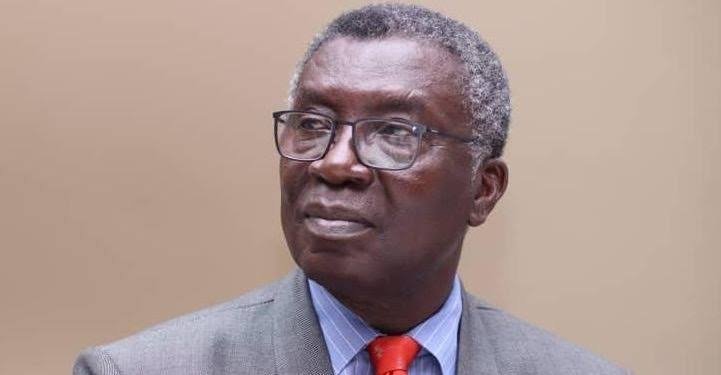
FRIMPONG-BOATENG SPEAKS ON GALAMSEY — ‘ENFORCING ENVIRONMENTAL LAWS CARRIES POLITICAL COST’
Chief Justice Paul Baffoe-Bonnie has come under intense public scrutiny after remarks about the performance of state institutions triggered concerns over the perceived political neutrality of Ghana’s Judiciary.

2026 BECE Placement Results: 527,932 Students Placed; Government Opens Self-Placement for 53,887 Candidates

Kojo Preko Dankwa Calls for Mahama to Become Ghana’s Creative Arts Ambassador
Mahama Is First President to Put GH¢40m Seed Money into Creative Arts Fund: Kojo Preko Dankwa



-

 Entertainment7 days ago
Oswald Okaitei Explains the Real Vision Behind Ghana’s Black Star Experience
-
 General News1 week ago
GES Urged to Review Student Sexual Misconduct Rule Over Alleged Discrimination Against Boys
-
 General News2 weeks ago
OSP Assesses Extortion Allegations Against Afenyo-Markin
-
 Politics2 weeks ago
Stop The Personal Attacks!” — Vitus Azeem Demands Probe Into Sammy Gyamfi–Afenyo-Markin Feud
-

 Entertainment2 weeks ago
Stonebwoy Is Not My Rival — Shatta Wale Reveals They Live Minutes Apart
-

 Politics2 weeks ago
Swallow Your Pride and Apologize – Cape Coast Mayor Fires At Afenyo-Markin Over Sammy Gyamfi Claims
-

 General News2 weeks ago
Zanetor and Ayariga Face Parliamentary Vetting Today
-
 General News2 weeks ago
Oti Region Youth Endorse John Boadu, Cite Experience as Key to NPP Victory