
Politics
NDC Clears Air on Executive Elections, Age Limit and Zongo Representation

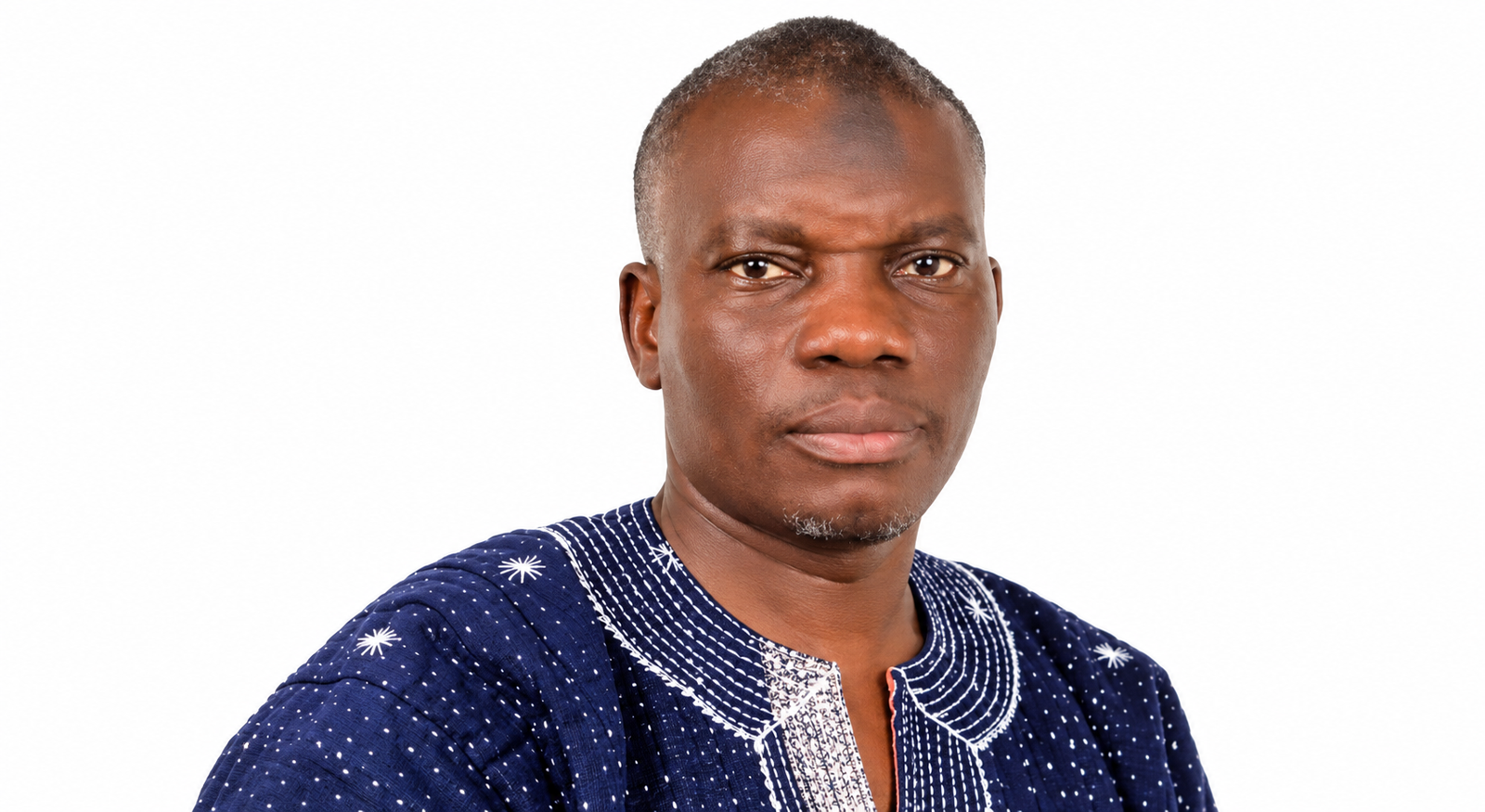
The Director of Elections and IT of the National Democratic Congress (NDC), Mahdi Gibril, has clarified a number of issues surrounding the party’s upcoming constituency executive elections, including resignation requirements, eligibility criteria and the Zongo Caucus.
According to Mahdi, the NDC has put in place arrangements for its executive elections, with particular attention to individuals seeking to contest constituency executive positions.
He explained that once a person decides to contest a constituency executive position, the individual would have to resign from their position as a branch executive.
Mahdi further clarified that a resignation letter must accompany the filing of nomination, rather than being submitted at the time of picking nomination forms.
He explained that this is necessary because a person could pick a nomination form and later change their mind about contesting.
He added that even where a candidate fails to submit a resignation letter, the matter would be referred to the vetting committee for consideration.
Mahdi also disclosed that the party has, for now, decided not to impose an age limit on candidates seeking to contest, provided they meet the basic eligibility requirements.
He said any candidate who is above 18 years, is of sound mind and possesses a valid party card with dues paid up to date can contest or sign for a candidate intending to contest.
Addressing questions about the NDC’s Zongo Caucus, Mahdi explained that the caucus is not intended exclusively for Muslims.
According to him, the structure is meant to represent all settlers in Zongo communities and is not based on religious affiliation.
He therefore admonished coordinators to make room for all eligible candidates to access the necessary assistance without discrimination.
Mahdi also disclosed that there would be no coordinators elections this year as it has deliberately been suspended till after the national elections.
On the party’s membership register, Mahdi expressed optimism that virtually every valid NDC member have their photograph captured in the register, except those who did not submit photographs during the registration exercise.
He said any other errors identified in the register could be addressed through editing at the various party offices.
Mahdi further indicated that about 95% of the current register is accurate, underscoring the party’s confidence in the integrity of its membership database.
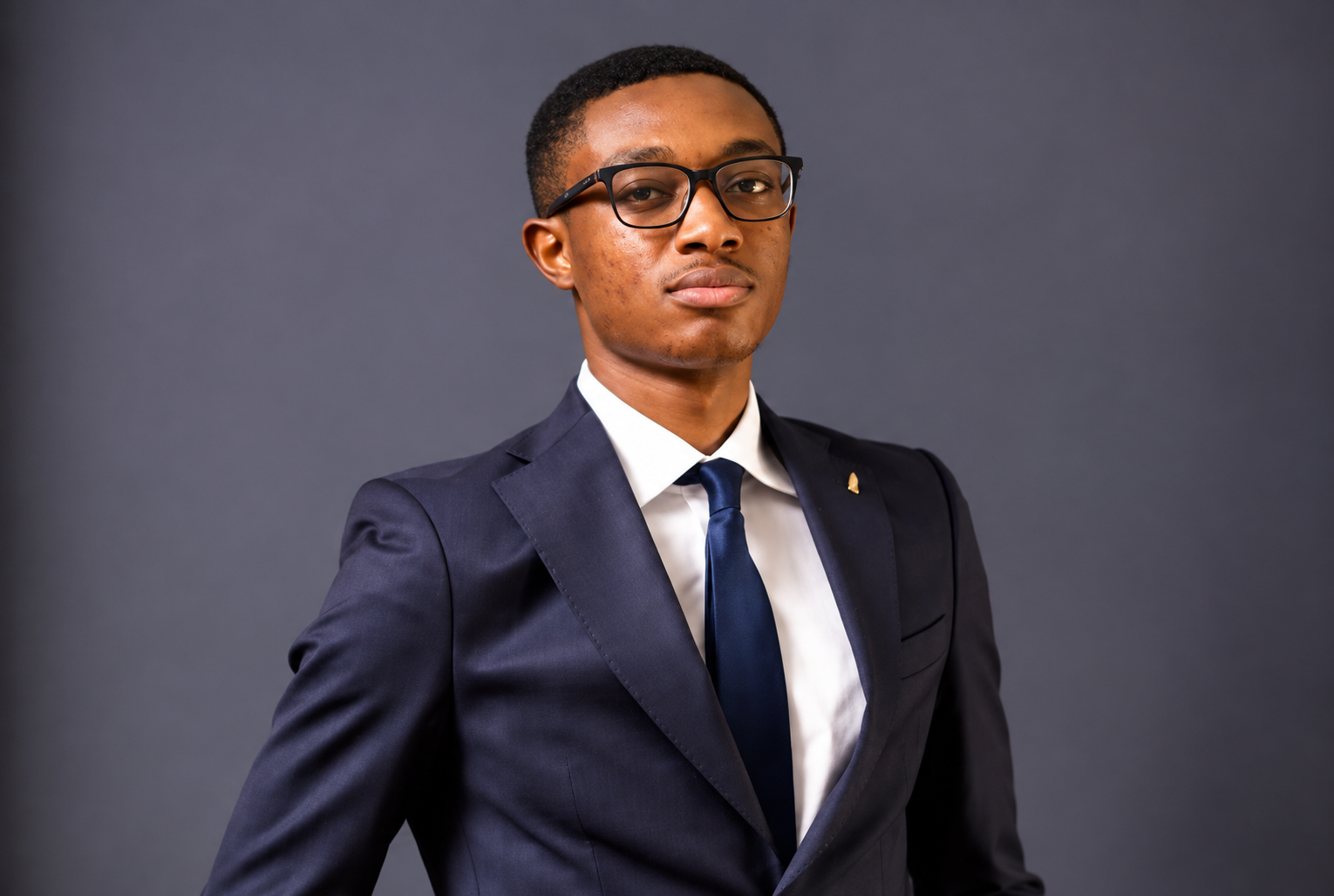
Dear Dr. Ato Forson,
A medium-scale hard-rock mining concession may not cost more than $200 million to acquire. Three such assets , enough to establish genuine, formal, mechanized production, would cost in the neighborhood of $600 million. This is not a marginal sum, but neither is it an unreachable one, by the current standards of moving billions of dollars a year through a single gold-purchasing apparatus called Goldbod. And that is precisely what makes the choice actually so difficult to explain on economic grounds alone.
We have directed billions toward the purchase of galamsey gold that is degrading our water bodies and our arable lands in real time. We have, in effect, constructed a subsidy for the very activity we claim to be formalizing, and we have done so under the banner of reserve accumulation and currency stability. I do not doubt the sincerity of that objective. I doubt very much whether this is the instrument that achieves it at a cost the nation can actually bear, and whether the accounting being used to justify it reflects the true price being paid.
It is worth asking what else that money could have built. More than 1,200 schools in this country still hold class under trees. Millions of our citizens live in conditions the data insists on calling multidimensional poverty, a term with the unfortunate property of making deprivation sound abstract.
Dr. Ato, there is no version of development economics, however heterodox, in which capital allocated to subsidizing informal ore extraction outranks capital allocated to a child’s first classroom. Economic history will offer only little comfort to those who believe unprocessed mineral exports are a foundation for prosperity. No economy has ever ascended to durable, high-income status on the strength of raw commodity exports alone.
South Africa may be the standing rebuke to that hope. A country with among the deepest mineral endowments on the continent, and still contending with levels of structural inequality that a century of extraction did remarkably little to resolve. Wealth pulled from the ground rather proved a persistent tendency not to reach the people standing on it.
Australia, Canada, and China each extract far more gold annually than we do. Not one of them would describe its economy, or permit itself to be described, as a gold exporter. Mr. Minister, that is the empirical signature of diversification and it is proof that when a nation’s economic identity collapses into a single raw commodity, what you are observing is not strength but the absence of it. It is a structural fragility being readied for a season.
Real, cumulative national development has always rested THE CAPABILITIES of a nation’s people. India did not become a $200B/year exporter of IT and software services by discovering a mineral. It became one by investing, deliberately and over decades, in human capital, in education, in the institutions that let talent compound. That is the harder path. It is also the only one with a track record of arriving anywhere durable.
To degrade our rivers and our farmland for a short-term foreign exchange gain is not a defensible trade-off, least of all when better alternatives sit in plain view, unfunded. So I put the question plainly, because I believe it deserves a plain answer.
Is this a failure of quantitative rigor in how the policies are designed, or is it simply that our leadership lacks the patience for genuine national development demands? Because on the numbers alone, this does not add up and a policy that does not add up is not a strategy but simply a bet. It is a bet made with our country’s patrimony, on someone else’s watch. Don’t supervise this.
Respectfully,
Hubert
Investment Research Analyst

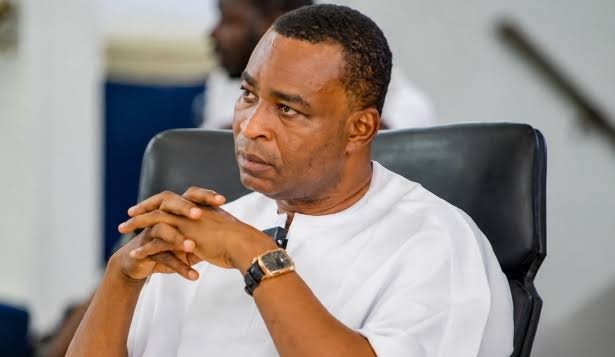
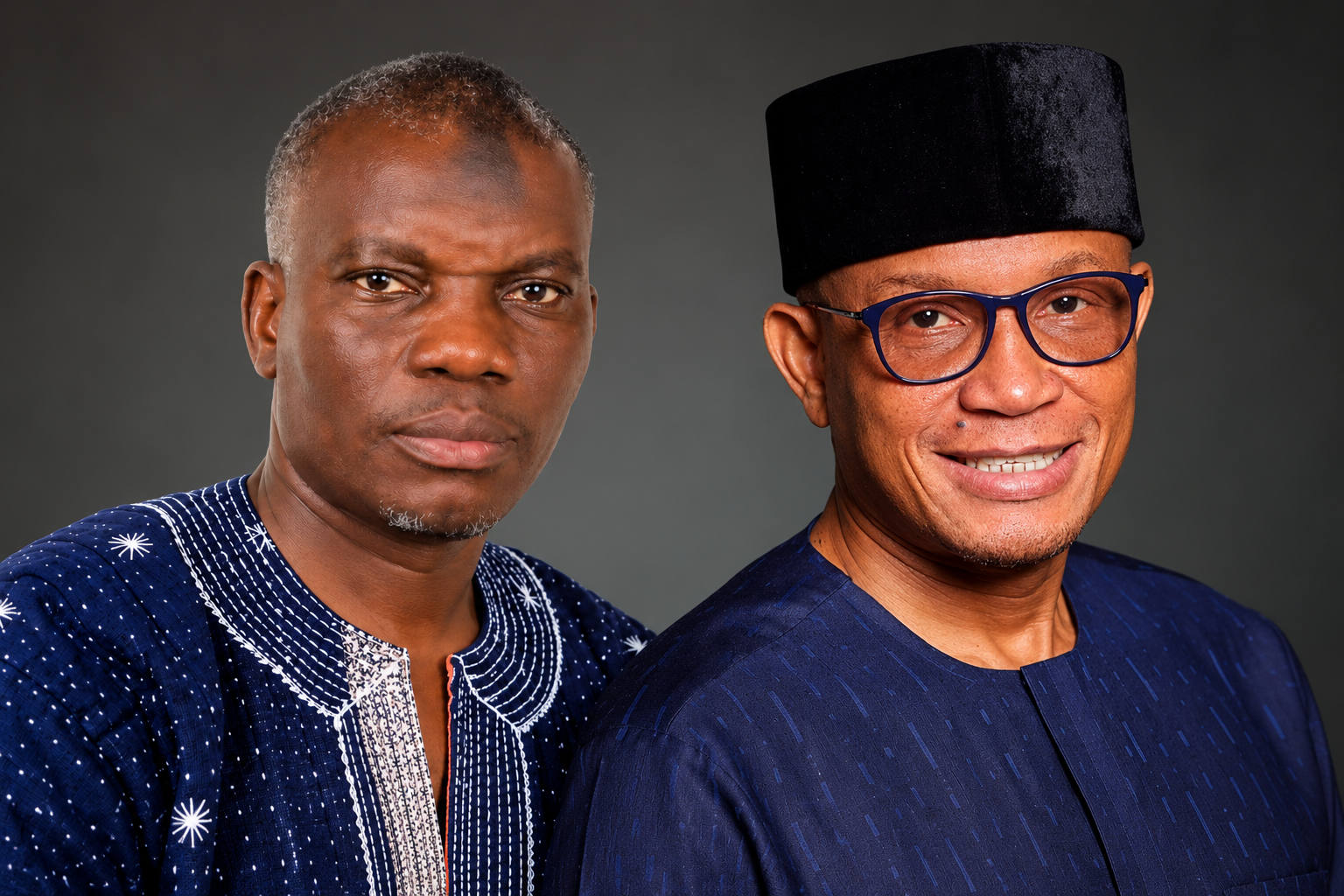
National Democratic Congress (NDC) Director of Elections and IT, Mahdi Gibril, has launched a strong response to comments attributed to former New Patriotic Party (NPP) minister, Mustapha Hamid, over the NDC’s growing attraction for academics and professionals.
In an interview on Kessben Maakye show in Accra, Gibril argued that the NPP’s criticism of academics who have joined or supported the NDC reflects what he described as a lack of respect for intellectuals within the party.
According to him, the NPP appears to assume that they are intellectuals but they are not.
They presumed people associated with the NDC do not read or possess the intellectual capacity to engage in serious political discourse.
He questioned whether the NDC, during its earlier years in government, appointed only people from the streets as ministers, arguing that the party has consistently provided opportunities for young people and professionals to rise through the ranks.
Gibril cited the emergence of young NDC figures, including Sammy Gyamfi, Adudzi Tamakloe, Kombat and other professionals, as evidence of what he described as the party’s willingness to give young people opportunities to serve both in the party and government. He added that the aforementioned young people would never have gotten the opportunity they now have to serve if they were in NPP in spite of their distinction in government.
He further argued that political appointments under the NDC are not necessarily determined by family background or longstanding party connections.
“If you don’t have a birth certificate with a barcode, you will never enjoy any position in the NPP government,” Gibril is quoted as saying, no wonder they queried Hon. Okudzeto Ablakwa during his vetting as deputy minister of information in 2008 , if he has ever gotten working experience, what he considers excessive scrutiny of individuals seeking opportunities to work in government.
He also questioned the performance of NPP members with academic credentials who served in government, asking what their educational qualifications ultimately translated into during their tenure.
In one of his sharpest remarks, Gibril stated: “Education does not erase stupidity.”
He added that, in his view, the most ignorant person is one who believes they are educated but lacks genuine knowledge.
Gibril further accused the NPP of allowing “ignorance and arrogance” to influence its political approach, questioning whether the party expected every Ghanaian voter to hold a university degree before being considered capable of making political choices.
He also warned young people against blindly following Hamid’s political outlook, suggesting that doing so could limit their opportunities to excel.
The NDC official concluded with another jab at the NPP, arguing that if the party wants to be mischievous they don’t speak in English but in Twi so they can be loud.
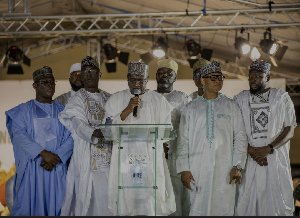
Former Vice President Dr Mahamudu Bawumia has reflected on his remarkable political journey, saying his rise from a running mate to becoming Ghana’s Vice President — and eventually a former Vice President — was guided by the divine will of Allah.
Dr Bawumia made the remarks while calling on Ghanaians to remain tolerant, peaceful and submissive to God’s will, stressing that political positions and personal fortunes are ultimately in the hands of the Almighty.
From running mate to Vice President
Bawumia’s political journey has been one of the most significant in Ghana’s recent political history.
He first became the running mate to then-NPP presidential candidate Nana Addo Dankwa Akufo-Addo ahead of the 2008 general election.
Although the NPP lost that election, the partnership continued into the 2012 and 2016 elections.
The breakthrough finally came in 2016 when Akufo-Addo and Bawumia defeated the John Mahama-led NDC, paving the way for Bawumia to become Vice President in January 2017.
Eight years at the Jubilee House
Bawumia subsequently served as Vice President for two terms under the Akufo-Addo administration.
He later became the NPP’s presidential candidate for the 2024 general election, taking on then-incumbent President John Dramani Mahama.
The NPP, however, lost the election, bringing Bawumia’s tenure as Vice President to an end.
Reflecting on that journey, he said the twists and turns of his political career should ultimately be understood as part of God’s plan.
‘It is by divine will’
For Bawumia, the experience is a reminder that political power is temporary and that human beings should remain humble regardless of the positions they occupy.
His message was therefore not simply about his own political career but about accepting life’s outcomes with faith and patience.
The former Vice President urged Ghanaians to maintain religious tolerance and focus on building a peaceful and united country.
A message with 2028 in the background
Bawumia’s comments come as political attention increasingly turns toward the next general election and the NPP’s preparations for 2028.
Although the former Vice President has not been elected as the NPP’s 2028 presidential candidate, his name remains central to discussions about the party’s future.
His latest reflection therefore carries an unmistakable political undertone: his journey has already taken unexpected turns, and he remains convinced that the next chapter will also unfold according to God’s will.
Politics, power and destiny
From losing presidential elections as a running mate to eventually becoming Vice President, then becoming the NPP’s presidential candidate and returning to life as a former Vice President, Bawumia has experienced dramatic changes in political fortune.
His message is that such changes should not be viewed solely through the lens of political victory or defeat.
For Dr Mahamudu Bawumia, the journey from running mate to Vice President and now former Vice President was never entirely in his own hands — it was, as he puts it, part of God’s divine will.

Techiman Assembly, Zoomlion Undertake Fumigation Exercise to Prevent Disease Outbreaks

INTERPOL AFRICA COMMITTEE MEMBER LYDIA YAAKO DONKOR SPEAKS ON GLOBAL POLICE COOPERATION

Open Letter to the Finance Minister



-

 Entertainment1 week ago
Oswald Okaitei Explains the Real Vision Behind Ghana’s Black Star Experience
-
 General News2 weeks ago
GES Urged to Review Student Sexual Misconduct Rule Over Alleged Discrimination Against Boys
-
 General News2 weeks ago
Oti Region Youth Endorse John Boadu, Cite Experience as Key to NPP Victory
-

 Entertainment1 day ago
Mahama Is First President to Put GH¢40m Seed Money into Creative Arts Fund: Kojo Preko Dankwa
-

 General News2 weeks ago
Zanetor and Ayariga Face Parliamentary Vetting Today
-
 General News2 weeks ago
President Mahama makes further ministerial changes
-
 General News2 weeks ago
Police Suspend Concrete Mixer Truck Operations in Accra, Tema From August 28
-
General News2 weeks ago
GES Opens WAEC Portal for 2026 School Placement Data Upload