
General News
Poor Sanitation Costs Ghana GHS 6.2 Billion Yearly – ISSER Study

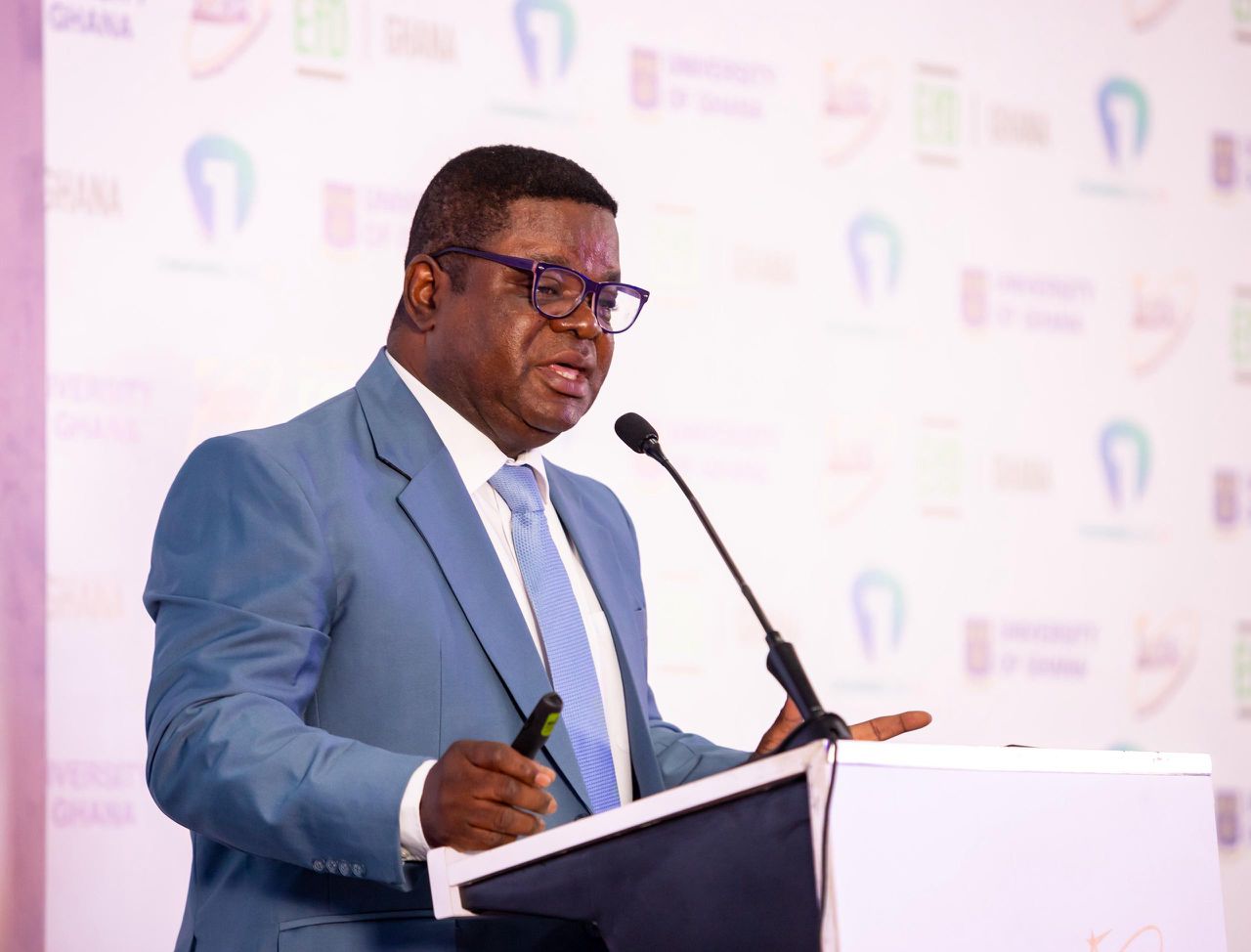
Ghana loses more than GHS 6.2 billion every year due to diseases linked to poor waste management and sanitation, a new study by the Institute of Statistical, Social and Economic Research at the University of Ghana has revealed.
The findings were presented at a high-level stakeholder engagement in Accra, on Thursday, 26th February 2026, where policymakers, Members of Parliament, local government officials, development partners and private sector actors gathered to examine the economic case for increased sanitation investment.
The research, led by Prof. Peter Quartey and Dr. Kwame Adjei-Mantey, is titled “An Economic Analysis of the Benefits of Adequate Investment in Waste Management and Sanitation in Ghana.” It assessed both the economic and social consequences of current sanitation practices and modelled the potential gains from improved financing.
According to the study, five diseases closely associated with poor sanitation malaria, cholera, pneumonia, typhoid fever and diarrhoea account for nearly 31.9 million lost workdays each year and an estimated 177,222 deaths. The researchers calculated direct medical costs at about GHS 5.8 billion annually, with an additional GHS 650 million lost through reduced productivity, bringing the total burden to over GHS 6.2 billion.
Despite these losses, Ghana currently spends an average of about GHS 38 per tonne of waste generated. The researchers described this as modest compared to the scale of the health and economic damage linked to poor sanitation systems.
Using cost-benefit modelling, the team found that under the current business-as-usual approach, every GHS 1 invested in waste management generates about GHS 180 in economic returns. However, under a best-case scenario — where investment rises to approximately GHS 1,028 per tonne in line with lower-middle-income benchmarks returns could increase to GHS 556 per GHS 1 invested.
In total terms, projected national benefits under the enhanced investment scenario could reach about GHS 58 billion in 2025 and rise further to GHS 67.2 billion by 2032. The projected gains are driven largely by sharp reductions in disease incidence, mortality and productivity losses.
Presenting the findings, Prof. Quartey urged government to stop treating sanitation as a residual expenditure. He stressed that waste management must be viewed as a high-return development investment capable of protecting public health and strengthening economic growth.
The presentation was followed by an extensive question-and-answer session. Participants raised concerns about how much of the disease burden could be directly attributed to waste. The research team explained that their modelling relied on global health data and assumed that about 45 percent of the selected disease cases were attributable to waste exposure. Sensitivity analysis was conducted to test different attribution levels.
Stakeholders also questioned whether the best-case scenario reflected on-the-ground realities, especially in slum and rural communities where waste collection remains inconsistent. Prof. Quartey acknowledged that waste management in such areas is more complex and costly due to access challenges. He noted that flexible and smaller-scale collection systems may be required rather than a uniform national model.
Other concerns focused on uncollected waste and dumping in drains and water bodies. The researchers explained that their modelling incorporated standardized ranges for lower-middle-income countries, taking into account infrastructure gaps and collection inefficiencies.
Members of Parliament present at the forum emphasized the need for stronger coordination across agencies. While some suggested the creation of a National Sanitation Authority, others cautioned against expanding bureaucracy and proposed strengthening existing institutional structures instead.
Education and job creation also featured prominently in the discussion. Prof. Quartey highlighted earlier regional research on green jobs and recycling, stressing that investment in skills development and public awareness could help unlock employment opportunities in the waste sector.
The research team concluded that Ghana’s annual sanitation-related losses far exceed current spending levels. They called for increased and sustained investment, targeted interventions in high-risk communities, and stronger data and budgeting systems within Metropolitan, Municipal and District Assemblies to ensure sanitation is prioritized as a central pillar of national development.


Former General Secretary of the New Patriotic Party (NPP), John Boadu, has publicly expressed solidarity with the Ashanti Regional Chairman of the party, Bernard Antwi Boasiako, popularly known as Chairman Wontumi, following recent developments surrounding his imprisonment.
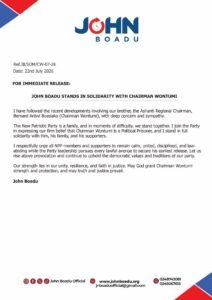
In a statement dated July 22, 2026, John Boadu said he had followed the situation involving Chairman Wontumi with “deep concern and sympathy,” describing the NPP as a family that stands together during difficult times.
Boadu stated that he firmly believes Chairman Wontumi is a “political prisoner” and pledged his full support to him, his family, and his supporters.
“The New Patriotic Party is a family, and in moments of difficulty, we stand together. I join the Party in expressing our firm belief that Chairman Wontumi is a Political Prisoner, and I stand in full solidarity with him, his family, and his supporters,” the statement read.
He further appealed to NPP members and supporters across the country to remain calm, united, disciplined, and law-abiding while the party leadership pursues every lawful means to secure Wontumi’s earliest release.
According to Boadu, party faithful should resist provocation and continue to uphold the democratic values and traditions of the NPP.
He concluded by expressing hope that truth and justice would prevail, while praying for God’s strength and protection for Chairman Wontumi.
“Our strength lies in our unity, resilience, and faith in justice. May God grant Chairman Wontumi strength and protection, and may truth and justice prevail,” he said.

Mrs. Maame Efua Houadjeto, Chief Executive Officer of the Ghana Tourism Authority (GTA), has officially accepted her appointment as Vice Chair of the African Travel Commission (ATC), reinforcing Ghana’s commitment to promoting tourism integration and sustainable development across the continent.
Her acceptance was announced during a high-level strategic meeting with the leadership of the African Travel Commission on the sidelines of the 2026 Hotel Managers Conference (HMC), held from July 11 to 12 at the Lagos Continental Hotel in Lagos, Nigeria.
The meeting brought together key tourism leaders, including Director General of the Nigerian Tourism Development Authority (NTDA) and Chairman of the African Travel Commission, Mr. Olayiwola Awakan, Executive Director of the ATC, Dr. Lucky Onoriode George, and Board Member, Prof. Wasiu Babalola.
Speaking after accepting the appointment, Mrs. Houadjeto expressed gratitude for the confidence placed in her, describing the role as both an honour and a great responsibility. She pledged to work closely with the Commission’s leadership and tourism stakeholders across Africa to strengthen regional partnerships, encourage collaboration, and advance the continent’s tourism agenda.
She highlighted Ghana’s historic role as the host of Africa’s oldest travel and tourism organisation, the African Travel Commission, saying the country’s legacy places a responsibility on it to continue championing regional integration and sustainable tourism development.
Mrs. Houadjeto said one of her priorities as Vice Chair would be to bridge the gap between West Africa and other regions of the continent while promoting stronger cooperation among African countries. According to her, greater collaboration will boost intra-African travel, attract investment, create jobs, and drive sustainable economic growth through tourism.
Chairman of the African Travel Commission, Mr. Olayiwola Awakan, welcomed her acceptance of the appointment, describing it as a significant step toward strengthening the Commission’s vision for a more united African tourism industry.
He praised Ghana’s longstanding contribution to tourism development in Africa and expressed confidence that Mrs. Houadjeto’s experience and leadership would add value to the Commission.
“Ghana has always played an important role in African tourism, and I am confident that with Mrs. Houadjeto serving as Vice Chair, the Commission will benefit immensely from her experience and leadership. Ghana, West Africa, and indeed the entire continent stand to gain when we work together towards common goals,” he said.
Executive Director of the African Travel Commission, Dr. Lucky Onoriode George, also described Mrs. Houadjeto’s acceptance as a major milestone in the Commission’s revitalisation efforts and a reaffirmation of Ghana’s historic leadership as one of the ATC’s founding members.
He noted that Ghana’s active role in the Commission’s leadership would help advance the organisation’s vision of building a more united, competitive, and globally recognised African tourism industry.
Dr. George added that the Commission remains committed to strengthening partnerships among governments, the private sector, development partners, and tourism stakeholders to accelerate tourism growth, improve air connectivity, encourage research and innovation, attract investment, and position Africa as one of the world’s leading tourism destinations.
The meeting ended with a renewed commitment by participants to promote a shared continental tourism agenda through strategic partnerships, regional integration, and sustainable development. They expressed confidence that Ghana’s leadership within the African Travel Commission would further support efforts to drive inclusive and sustainable tourism growth across Africa.
General News
President Mahama Signs New GIPA Act to Boost Investment and Position Ghana as West Africa’s Business Hub

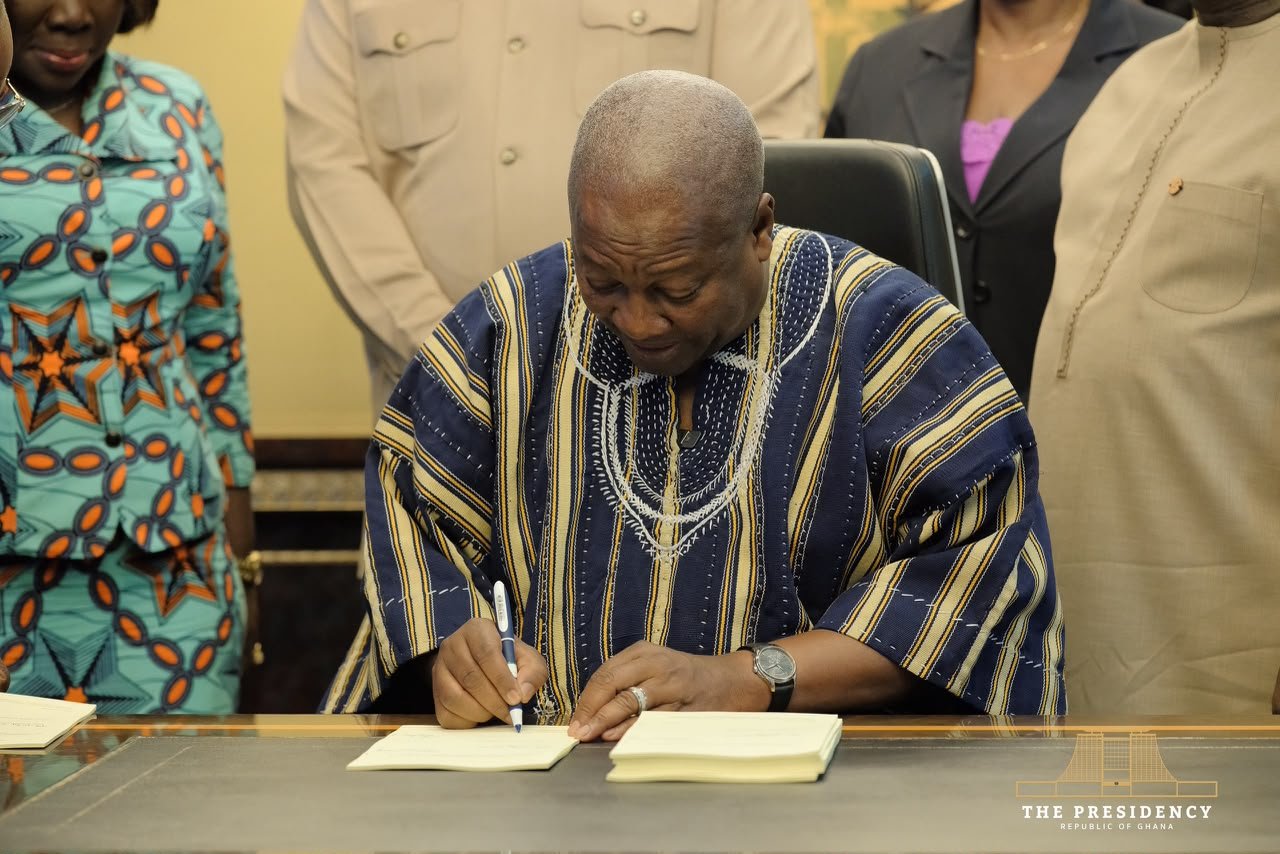
President John Dramani Mahama has signed into law the new Ghana Investment Promotion Authority (GIPA) Act, replacing the former Ghana Investment Promotion Centre (GIPC) Act in a major reform aimed at strengthening Ghana’s investment climate.
The new legislation is expected to reposition Ghana as a leading investment destination in Africa by simplifying investment procedures, reducing bureaucratic bottlenecks, and making it easier for both local and foreign investors to establish and operate businesses.
The Act also strengthens investor protection by providing a more robust legal framework that enhances confidence and security for investors while improving the country’s overall investment environment.
Additionally, the law expands the mandate of the Ghana Investment Promotion Authority, empowering it to more effectively promote, facilitate, regulate, and monitor investments across key sectors of the economy.
A key feature of the Act is its emphasis on supporting Ghanaian businesses, enabling local enterprises to scale up, attract investment, and participate more competitively in the country’s growing investment ecosystem.
The government says the new GIPA Act forms part of its broader economic transformation agenda and is expected to drive sustainable economic growth, create jobs, attract quality investments, and reinforce Ghana’s position as the preferred investment destination in West Africa.
The legislation marks another step in the government’s #ResettingGhana agenda to build a more competitive, business-friendly, and resilient economy.

DJ K.A Issues Public Apology Over Viral Video, Accepts Full Responsibility

Kwadwo Safo’s Final Journey: Family Sets July 30 Funeral at Kantanka Centre

GHS121,000 Top Payout: GHAMRO Announces Major Royalty Distribution for Ghanaian Musicians



-

 Entertainment1 week ago
Derrick Manny Calls for Better Support for Ghanaian Creatives Following Dede Padiki’s Death
-
 Entertainment2 weeks ago
Apostle Kwadwo Safo Kantanka’s Reported Will: Companies, Beneficiaries and Final Wishes
-

 Entertainment1 week ago
“Stay Broke If You Want Peace” – Sarkodie Sparks Online Debate With Powerful Success Message
-

 Entertainment2 weeks ago
Influencer Kwatemaa Andoh Says She Won’t Marry a Poor Man
-
Entertainment1 week ago
Dede Padiki Felt Neglected by Ghana’s Creative Sector Before Her Death – Derrick Manny
-

 Entertainment2 weeks ago
Focus on Saving Lives, Not Politicising My Sister’s Death:Mzbel
-

 General News1 week ago
Okatakyie Afrifa Mensah’s Team Alleges Assault, Gunshot Injuries After Arrest
-
 General News2 weeks ago
Mahama Calls for Monthly National Clean-Up to Tackle Flooding and Poor Sanitation