
General News
Race against time: 129 people still missing after Indonesian ferry overturns

BANJARMASIN, Indonesia — September 14, 2026:
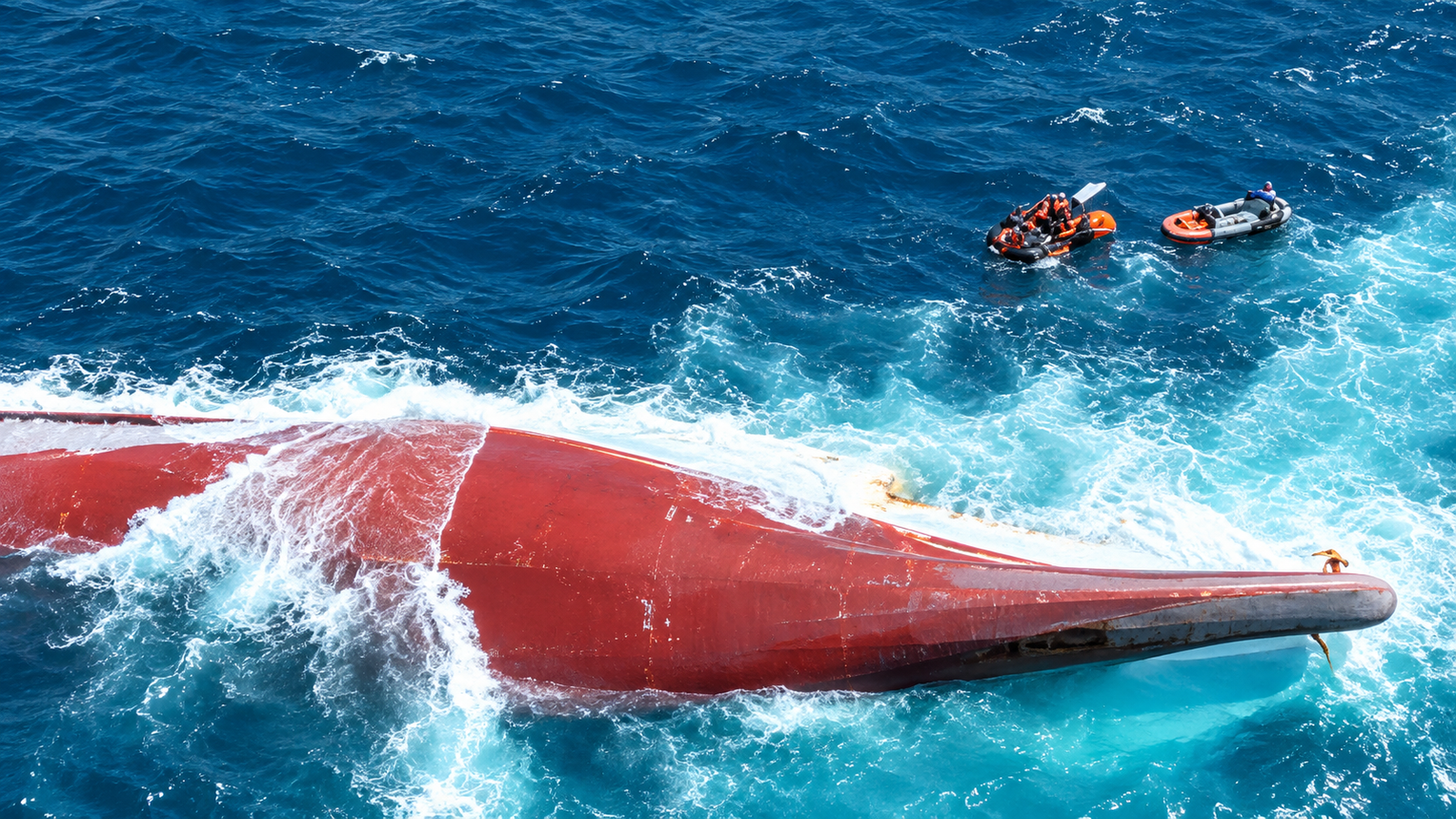
A major search-and-rescue operation is underway in Indonesia’s Java Sea after a passenger ferry overturned in rough weather, leaving 129 people missing and at least six confirmed dead.
The Virgo Transport 8 was carrying 243 people, including passengers and crew, when it ran into severe weather while travelling from Surabaya in East Java to Banjarmasin in South Kalimantan. Authorities said 108 people have so far been rescued.
Rough seas hamper rescue efforts
Rescue teams are facing dangerous conditions as strong winds and waves reaching around three metres make it difficult to reach and search the overturned vessel.
Indonesia’s National Search and Rescue Agency has deployed more than 600 personnel, along with ships, helicopters and aircraft. Specialized underwater rescue teams and naval underwater drones are also being prepared to assist with the operation when conditions allow.
The ferry was found partially submerged and overturned in waters near the Masalembo Islands, roughly 148 kilometres from Banjarmasin. Rescuers have been concentrating their efforts around the vessel and surrounding waters.
What caused the ferry to overturn?
Officials said the ship was hit by powerful waves from its starboard side, causing it to lean heavily before eventually capsizing.
The captain had reportedly issued a distress call after the vessel began listing in the rough conditions. Authorities have not yet established a final cause of the disaster, and an investigation is expected to examine the vessel, weather conditions and other possible contributing factors.
Indonesia’s Transport Minister Dudy Purwagandhi said the vessel had a capacity of about 500 passengers, meaning officials did not initially consider overloading to be the cause of the accident.
Families wait anxiously for news
As the search continues, relatives of those aboard have gathered at Banjarmasin’s Trisakti port, waiting for updates from authorities.
For families still searching for loved ones, every hour has become critical as rescue teams battle the difficult conditions at sea.
A wider maritime safety concern
The accident has renewed concerns about maritime safety in Indonesia, an archipelago of more than 17,000 islands where ferries and other passenger vessels remain an important and affordable means of transportation.
The Java Sea has also been the scene of previous major maritime disasters. Recent ferry accidents in Indonesia have further raised questions about safety standards and emergency preparedness across the country’s extensive network of sea routes.
For now, rescuers remain focused on one priority: finding the 129 people still missing and bringing them home safely.






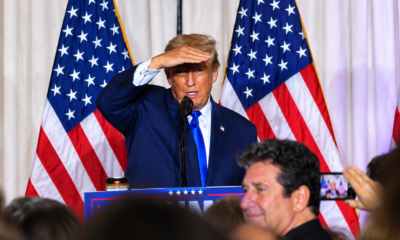






The Ghana Police Service has rescued a 30-year-old man, Bismarck Amo, who was allegedly kidnapped, tortured and subjected to extortion after a dispute over money.
Four suspects have been arrested in connection with the incident, while police have launched a manhunt for a senior military officer allegedly linked to the case and other accomplices who are still at large.
The dramatic rescue followed an intelligence-led operation by the Central North Regional Police Command, supported by personnel from the CID Headquarters, the Ashanti Regional Police Intelligence Department and other specialised units.
The operation, code-named “Operation Rescue the Victim and Arrest the Perpetrators,” was directly coordinated by the Inspector-General of Police, Christian Tetteh Yohonu, according to the police.
Four suspects arrested
Police identified the four suspects in custody as Mavis Badu Acheampong, 42, a teacher at Kumasi Girls Senior High School; Charles Doku, 53, a security guard; Oteng Baffour, 31, an electrician; and Kenneth Opoku Kwarteng, alias “Culture,” also a teacher at Kumasi Girls Senior High School.
The police said all four are currently assisting with investigations and are being processed for court.
How the alleged kidnapping unfolded
According to preliminary police investigations, the incident began after Amo allegedly defrauded Mavis Badu Acheampong of an unspecified amount of money.
Police said Acheampong subsequently allegedly connived with her husband, described as a senior military officer who is currently outside the country, to lure Amo from his residence in Assin Fosu to Kumasi.
Upon his arrival, police alleged that Amo was forcibly kidnapped with the assistance of Doku, Baffour and other accomplices who are currently at large.
Five days of alleged torture
Police said Amo was held hostage at a private residence belonging to Mavis Badu Acheampong from September 6 to September 11, 2026.
During the period, he was allegedly subjected to severe torture despite his family paying GH¢19,500 as ransom.
The police further alleged that the suspects used their own mobile phones to communicate with the victim’s family in an attempt to avoid detection and conceal their digital footprints.
‘They threatened to kill him’
The police account describes disturbing acts of alleged brutality against the victim.
According to the statement, Amo was stripped naked, tied with a nylon rope and brutally beaten, resulting in serious injuries to his head and genital area.
Police said the alleged attackers also recorded videos of the abuse and sent them to the victim’s family while demanding money.
The suspects allegedly demanded a total of GH¢45,000, which they claimed was meant to cover the amount they said Amo had defrauded and expenses incurred in locating him.
After receiving GH¢19,500 through mobile money transfers, the suspects allegedly demanded another GH¢30,500, threatening to kill Amo if the additional money was not paid.
Police launch rescue operation
The victim’s family reported the incident to the Regional CID in Assin Fosu on September 8, after paying the initial ransom but discovering that Amo was still being held.
Police said the rescue operation was immediately activated following the complaint.
On September 11, investigators reportedly closed in on the suspected kidnappers as they attempted to move Amo to another undisclosed location.
According to the police, the suspects instructed a driver to dump the victim by the roadside.
However, tactical police teams intercepted the operation and rescued Amo.
Victim found covered in blood
Police said Amo was found partially unconscious, covered in severe bruises and drenched in blood when officers rescued him.
He was immediately rushed to a medical facility, where he remains admitted under police escort and is receiving treatment for his physical injuries and psychological trauma.
Manhunt launched for military officer, other accomplices
While four suspects have been arrested, police said their investigation is far from over.
The Ghana Police Service has launched a manhunt for the senior military officer allegedly involved in the incident, as well as other suspected accomplices who remain at large.
The police said the arrested suspects are being processed for court and will face the full rigours of the law.
Police issue stern warning
The Police Administration used the case to warn members of the public against taking the law into their own hands, regardless of the nature of a grievance or financial dispute.
The police stressed that kidnapping, torture and extortion are serious criminal offences and assured the public that its intelligence and specialised units would continue to pursue individuals involved in organised criminal activities.
The dramatic rescue of Bismarck Amo has once again highlighted the dangers of resolving financial disputes through violence, while the ongoing manhunt is expected to shed further light on the alleged network behind the kidnapping.
As investigations continue, police say further updates will be provided as more information becomes available.
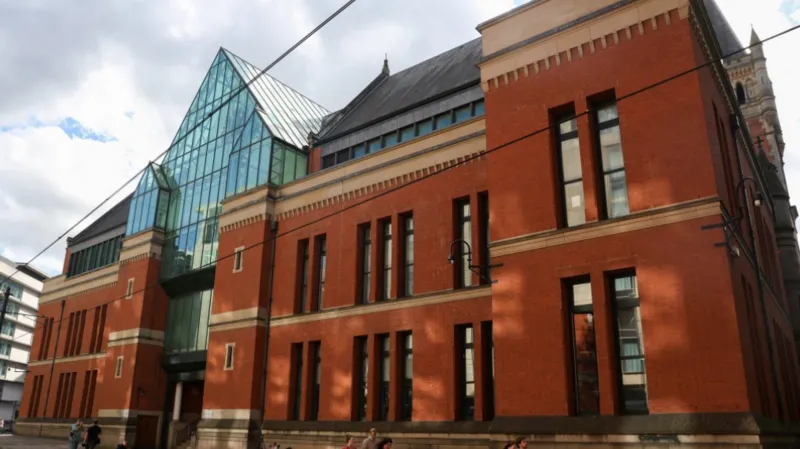
A man in his sixties has admitted 60 sexual and drug-related offences against his wife, following allegations that he drugged and raped her without her knowledge for more than two decades.
The man, who cannot be named to protect his wife’s legal right to anonymity, entered the admissions at Manchester Minshull Street Crown Court, where he had previously pleaded guilty to some of the charges, including rape.
His wife watched the proceedings from the public gallery, supported by members of her family.
The husband became visibly emotional as he repeatedly said “guilty” to dozens of charges, including multiple counts of rape, assault by penetration and administering a substance with intent.
At one point during the hearing, the judge invited him to sit down in the dock.
The offences against his wife are alleged to have taken place over a period dating back to 2004, during their decades-long marriage.
The man, who is from Stockport, Greater Manchester, will be sentenced for the offences he has admitted at the conclusion of the ongoing trial.
Meanwhile, 12 other men are accused of multiple serious sexual offences against the same woman and deny the allegations.
The alleged offences involving the other defendants are said to have occurred between September 2018 and November 2025.
The defendants are:
- Philip Wild, 58, from Stockport
- Sean Peers, 38, from Stockport
- Jordan Wallace, 31, from Manchester
- Alan Keelan, 42, from Manchester
- Jonathan Kirk, 43, from Stockport
- Robert Stewart, 70, from Stockport
- Mohammed Sabir, 28, of no fixed abode
- Graham Brougham, 74, from Northwich, Cheshire
- Richard Townsend, 37, from Rochdale
- Karl Lindsay, 55, from Taunton, Somerset
- Daniel Rayner, 42, from Whitstable, Kent
- David Graves, 59, from Ilkeston, Derbyshire
A 13th man previously admitted to sexual offences against the woman.
The trial is expected to continue in the coming weeks
Source: BBC
General News
Creative Arts Agency Records GH¢2.01m Revenue in FY2025 Despite Financial Reporting Gaps

The Creative Arts Agency (CAA) recorded total revenue of approximately GH¢2.01 million in the 2025 financial year, with its expenditure matching its revenue, leaving the Agency in a break-even position, the 2025 State Ownership Report has revealed.
However, the report also raised concerns about the Agency’s governance and financial reporting arrangements, indicating that the Creative Arts Agency had failed to prepare and submit annual financial statements as required under the Public Financial Management Act, the State Interests and Governance Authority (SIGA) Act and other applicable laws.
The report paints a picture of an Agency with a key mandate to regulate, promote and develop Ghana’s creative sector but facing challenges relating to financial reporting, governance and institutional accountability.
According to the 2025 State Ownership Report, the Creative Arts Agency had no governing board in place during the 2025 financial year.
The position of Board Chair was also yet to be filled during the period under review.
The report lists Gideon Aryeequaye as the head of the Agency.
The Creative Arts Agency was established under the Creative Arts Industry Act, 2020 (Act 1048) to regulate, promote and develop Ghana’s creative sector.
Its mandate includes creating an enabling environment for creative enterprises, promoting collaboration among stakeholders within the creative industry and supporting artists, creative practitioners and organisations.
The strategic intent of state ownership of the Agency is “to regulate, promote, and develop the country’s creative sector.”
The Agency’s mission is to foster an enabling environment for innovation, empower artists and creative practitioners and showcase Ghana’s rich cultural heritage globally.
A major concern highlighted in the report relates to the Agency’s failure to prepare and submit the required annual financial statements.
According to the report, the Creative Arts Agency had not prepared and submitted annual financial statements since its establishment, despite the legal requirements governing public institutions and specified entities.
Although an attempt was reportedly made in 2025 to provide financial information, the report said the information presented was significantly inadequate and did not meet the requirements of a complete financial statement.
The report further indicated that there was no information on the Agency’s financial position or other material information available to the State Interests and Governance Authority (SIGA) that required additional disclosure.
The lack of complete financial statements means that important information concerning the Agency’s financial activities and position was not adequately available through the required reporting framework.
The report consequently identifies financial accountability and reporting as key areas requiring attention at the Creative Arts Agency.
Despite the concerns surrounding its financial reporting, the report provided figures for the Agency’s revenue and expenditure during the 2025 financial year.
The Creative Arts Agency recorded total revenue of GH¢2.011 million in FY2025.
The same amount was also spent during the period, resulting in a break-even position for the year.
The figures indicate that the Agency’s total expenditure matched its total revenue, meaning it did not record either a surplus or deficit at the end of the financial year based on the information captured in the report.
While the Agency was able to mobilise resources to support its operations during the year, the equal level of revenue and expenditure meant that it did not retain a surplus.
The 2025 State Ownership Report noted that, despite the governance and financial reporting challenges, the Creative Arts Agency undertook initiatives aimed at supporting the development and strengthening of Ghana’s creative industry.
Among the initiatives were efforts to identify talents and increase registration and licensing within the creative sector.
These measures are expected to contribute towards improving the Agency’s operations and increasing its internally generated funds.
The report, however, indicated that the effectiveness of such initiatives remains to be fully reflected in the Agency’s financial information.
The Agency’s broader mandate includes supporting the growth of creative enterprises and practitioners while promoting collaboration across the sector.
The report also indicated that the Creative Arts Agency recorded no important events during the 2025 financial year.
Additionally, the Agency reported no quasi-fiscal activities during the period.
Quasi-fiscal activities generally refer to activities undertaken by public entities that have fiscal implications but may not be directly captured as part of the central government’s budgetary operations.
The Creative Arts Agency also did not report any climate-smart investment during FY2025.
The findings contained in the 2025 State Ownership Report highlight significant gaps in the Creative Arts Agency’s governance and financial reporting structures.
The absence of a governing board during FY2025, the unfilled Board Chair position, and the failure to prepare and submit complete annual financial statements were among the issues identified.
While the Agency recorded GH¢2.011 million in revenue and an equal amount in expenditure, the report’s concerns over the adequacy of its financial information raise questions about the need for stronger reporting and accountability mechanisms.
With the Creative Arts Agency mandated under the Creative Arts Industry Act, 2020 (Act 1048) to regulate, promote and develop Ghana’s creative sector, the findings point to the need to strengthen its governance structures and financial reporting systems to support the effective execution of its mandate.
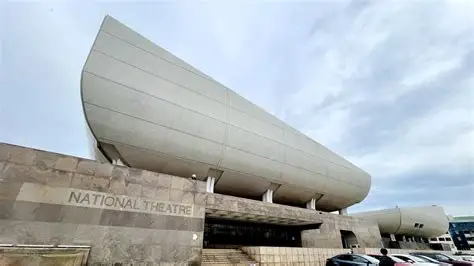
The 2025 State Ownership Report lists the National Theatre of Ghana as an Other State Entity (OSE) under the State Interests and Governance Authority (SIGA), outlining its mandate to promote Ghanaian culture while balancing its public responsibilities with the need for financial sustainability.
The National Theatre was established under the National Theatre Law, 1991 (PNDC Law 259).
Its core mandate is to promote and develop Ghanaian culture through the performing arts.
The institution also serves as a multi-functional venue for a wide range of activities, including concerts, dance performances, drama, musicals, conferences, exhibitions and other cultural and public events.
This makes the National Theatre more than a traditional performance venue.
It serves as a major piece of infrastructure for Ghana’s cultural and creative sector, providing a professional space for performers, artists, cultural organisations and event organisers.
However, the institution’s dual responsibility creates a significant challenge.
While it is expected to preserve and promote Ghanaian culture, it must also generate sufficient revenue to support its operations, maintain its facilities and improve its financial sustainability.
Financial information contained in the 2025 State Ownership Report covers the institution’s income, expenditure, assets, liabilities and other performance indicators between 2022 and 2025.
The report also highlights activities undertaken by the National Theatre as part of its cultural mandate.
These include the observance and celebration of internationally recognised cultural events such as World Poetry Day, International Dance Day, International Music Day and World Theatre Day.
The institution also undertakes quasi-fiscal activities, reflecting its wider public-service responsibilities beyond purely commercial operations.
The report further highlights climate-smart investment as part of the institution’s planning and development considerations.
The inclusion of climate-conscious investment is significant for a large public facility such as the National Theatre, which requires continuous investment in infrastructure, equipment and building maintenance.
The report also includes a gender-distribution indicator as part of the wider assessment of the institution.
This demonstrates that the State Ownership Report assesses not only the financial performance of state entities but also areas such as governance, human resources and institutional development.
The National Theatre’s importance extends beyond its financial statements.
As one of Ghana’s major cultural institutions, it provides a platform for artistic expression and supports activities across the performing arts and wider creative economy.
Its ability to improve revenue generation and control expenditure could strengthen its capacity to maintain its facilities and host more cultural programmes and events.
However, the pressure to become financially sustainable must also be balanced against its statutory responsibility to promote Ghanaian culture.
An excessive focus on commercial activities could create tension with the institution’s broader public mandate.
The key challenge for the National Theatre, therefore, is to achieve financial sustainability without compromising its role as a national centre for culture, artistic expression and the development of Ghana’s creative sector.
The 2025 State Ownership Report places that balancing act into focus as the institution seeks to remain financially viable while safeguarding its responsibility to Ghana’s cultural development.
General News
National Theatre faces financial pressure as report highlights revenue, cost and solvency concerns
The 2025 State Ownership Report lists the National Theatre of Ghana as an Other State Entity (OSE) under the State Interests and Governance Authority (SIGA), while highlighting its financial performance, revenue, expenditure, efficiency and short-term solvency.
The National Theatre operates under the National Theatre Law, 1991 (PNDC Law 259), with the responsibility of promoting and developing Ghanaian culture through the performing arts while providing a platform for artistic expression and hosting a wide range of public and commercial activities.
Financial information contained in the report covers the National Theatre’s performance over the period from 2022 to 2025, including its assets, liabilities, income, expenditure and other key financial indicators.
The report’s Income and Expenditure analysis tracks movements in the institution’s revenue and operational costs over the reporting period.
Revenue generated by the theatre comes from its cultural and commercial activities, while expenditure includes the cost of operating, maintaining and managing the national cultural facility.
A Revenue versus Cost analysis also examines the relationship between the income generated by the institution and the cost of sustaining its operations.
The report further assesses the National Theatre’s financial efficiency and short-term solvency, highlighting the importance of sound financial management and expenditure control in ensuring the institution remains capable of meeting its obligations.
The report also examines the theatre’s capital structure and long-term financing, as well as its debt and contingent liabilities.
The National Theatre’s financial position includes total assets, current and non-current assets, equity, current and non-current liabilities, as well as total liabilities and total equity and liabilities.
The debt and contingent liabilities section provides an indication of the institution’s financial obligations and potential exposure.
The report suggests that the financial sustainability of the National Theatre cannot be assessed solely based on the revenue it generates. Its ability to manage expenditure, meet short-term obligations, maintain sufficient assets and effectively manage its liabilities also remains important.
Key Performance Indicators contained in the report assess areas including financial performance, assets, financing, revenue and costs.
The indicators provide a broader assessment of whether the institution is meeting the expectations placed on it as a state-owned entity.
The financial situation of the National Theatre also raises broader questions about how state cultural institutions can improve their commercial performance without losing sight of their public responsibilities.
Unlike purely commercial facilities, the National Theatre is expected to serve Ghana’s cultural and creative sector by providing infrastructure and opportunities for performers, artists and cultural organisations.
The challenge, therefore, remains how the institution can strengthen its revenue base and improve financial efficiency while continuing to fulfil its statutory responsibility of promoting Ghanaian culture through the performing arts.

Police rescue kidnapped man after five days of torture, arrest four suspects

Man admits 60 offences after allegedly drugging and raping wife for more than 20 years

Creative Arts Agency Records GH¢2.01m Revenue in FY2025 Despite Financial Reporting Gaps



-

 Entertainment1 week ago
Mahama Is First President to Put GH¢40m Seed Money into Creative Arts Fund: Kojo Preko Dankwa
-

 Entertainment2 weeks ago
Oswald Okaitei Explains the Real Vision Behind Ghana’s Black Star Experience
-
 General News2 weeks ago
COCOBOD Settles GH¢2.3 Billion DDEP Bond Obligations for 2026
-
 General News1 week ago
Don’t Punish Them Retrospectively – Educationist Challenges New CSSPS Placement Rule
-

 Culinary1 week ago
The Green Heart of Ghanaian Cuisine: Celebrating Nkontomire and the Art of Abom
-

 Entertainment6 days ago
Government Repatriates Musician Barosky from UK
-

 Culinary2 weeks ago
Pineapple: The Spiky Tropical Fruit Packed With Sweetness and Nutrients
-
 General News1 week ago
OSP Opens Preliminary Investigation into Alleged GH¢70,000 Payment Linked to Parliament’s Vetting