
General News
Trump Promises $5,000 Payout to U.S. Adults if Republicans Win Midterm Elections


U.S. President Donald Trump has promised a $5,000 “dividend” for every adult American if Republicans retain control of both chambers of Congress in the November midterm elections, unveiling a sweeping proposal with potentially more than $1 trillion in costs and few details on how it would be financed.
Trump made the pledge during the Republican National Committee’s midterm convention in Dallas on Wednesday, September 9. He said the payment would be available to every adult U.S. citizen if Republicans win both the House of Representatives and the Senate.
The president described the proposed payment as a dividend resulting from what he characterized as the country’s strong economic performance under his administration.
“If the Republicans win, you win with us and you get $5,000,” Trump said during his speech.
Trump calls it a “dividend”
Trump presented the proposed payment as similar to a company distributing money to its shareholders. He said the only condition attached to the payout would be that the money must be spent inside the United States.
However, the president did not explain exactly how the program would operate, when payments would be made or what legislation would be required to authorize the transfers.
The lack of details has immediately raised questions about the proposal’s financial and political feasibility.
Potential cost could exceed $1 trillion
A nationwide payment of $5,000 to more than 200 million American adults could cost well above $1 trillion, depending on eligibility rules. The scale of the proposal makes its funding one of the biggest unanswered questions surrounding Trump’s announcement.
Trump did not provide a detailed funding mechanism during his convention speech. His comments therefore leave open questions about whether the money would come from tariff revenues, federal spending cuts, new borrowing or another source.
The president has previously floated similar ideas involving direct payments to Americans. Those proposals included a potential $2,000 tariff-funded dividend, although that plan was not implemented.
Proposal comes ahead of crucial midterm elections
The announcement comes as Republicans campaign to maintain control of Congress in the November elections.
Trump has sought to make the midterms a referendum on his administration, urging Republican supporters to vote as though he himself were on the ballot. The president is not directly running in the congressional elections, but his political influence remains central to the Republican campaign.
By tying the proposed dividend to Republican control of Congress, Trump has placed the promise at the centre of the party’s election-year economic message.
Questions over funding and inflation
Economists and political analysts are likely to scrutinize the proposal because of its enormous potential cost.
A payment on this scale could have significant implications for the federal budget. There are also questions about whether putting such a large amount of money into the economy could add to inflationary pressures, particularly if the payments were financed through government borrowing.
The United States is already facing substantial fiscal pressures, making the financing of the proposed dividend a major issue for lawmakers.
Vice President JD Vance has suggested that the plan could potentially exclude wealthier Americans and be connected to tariff revenues, but those details have not been established as a formal policy.
No guarantee the payments will happen
Despite Trump’s announcement, the $5,000 payment is a political promise rather than an approved government program.
Any broad federal payment program would likely require congressional action and a clearly defined funding mechanism. Trump has not yet provided details sufficient to determine how the proposal would be implemented or whether Congress would approve it.
That distinction is important for voters evaluating the pledge ahead of the election.
A high-stakes economic message
The proposed “Trump Dividend” places direct financial relief at the centre of Trump’s appeal to voters as Republicans fight to preserve their congressional majorities.
Whether the proposal develops into formal legislation will depend on the outcome of the midterm elections, congressional support and the administration’s ability to identify a sustainable source of funding.
For now, Trump’s $5,000 promise has added a dramatic new element to an already closely watched U.S. election campaign, while leaving Americans with one central question: where will the money come from?










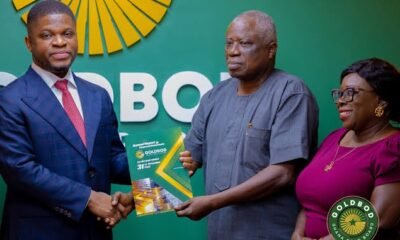











Energy sector analyst and senior researcher at Institute of Energy Security, Smith Prosper Boateng has called for the adoption of a Public-Private Partnership (PPP) model in the management of the Electricity Company of Ghana (ECG) to help address persistent revenue leakages and operational losses.
According to Mr. Boateng, Ghana must prioritiZe energy security while implementing measures to improve ECG’s efficiency and financial sustainability. In an interview on the Kessben Maakye show in Accra,
he said government should be commended for measures introduced to shield the energy sector from external shocks, but stressed the need to tackle the persistent revenue challenges confronting ECG.
Mr. Boateng argued that every serious government would find ways to stop revenue leakages and stabiliZe ECG’s operations, even if the utility does not generate direct profits.
He noted that ECG is currently unable to generate enough revenue from electricity supplied by Independent Power Producers (IPPs), resulting in government interventions through subsidies or loans to settle power sector obligations.
He further supported efforts to bring in private-sector participation, saying a properly structured PPP could improve management efficiency and revenue collection.
However, he cautioned that the arrangement must be carefully designed to prevent excessive increases in electricity tariffs, which could trigger complaints from consumers and businesses.
Mr. Boateng also called for an upgrade of Ghana’s transmission infrastructure to reduce technical losses and improve the reliability of power distribution.
He stressed that PPP should not be confused with outright privatization, arguing that the concept must be properly communicated to stakeholders to build public understanding and confidence.
According to him, the focus should be on using private-sector expertise and investment to strengthen ECG while protecting the interests of consumers and the state.
By Maurice Otoo

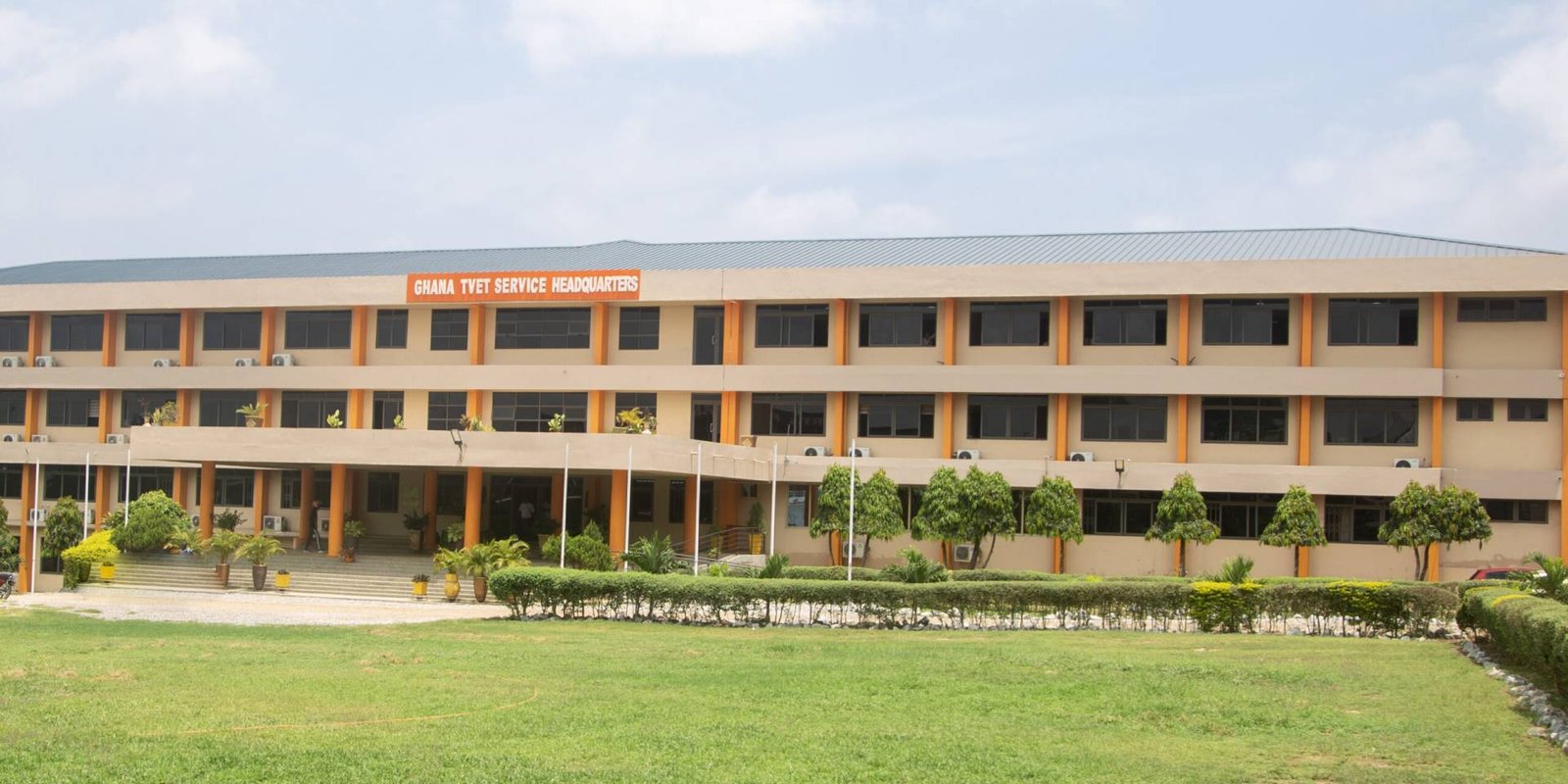
A discussion about the fate of 2026 Basic Education Certificate Examination (BECE) candidates who failed Mathematics and English Language and could not secure school placement has reignited the debate over the perception of Technical and Vocational Education and Training (TVET) in Ghana.
The discussion focused on possible alternatives for affected candidates to ensure that they do not drop out of school.
Out of concern for the young people, a contributor suggested that candidates who failed could be channelled into TVET institutions to acquire practical skills while continuing their formal education.
The suggestion, however, generated a brief but revealing exchange over the long-standing public perception that TVET is meant for academically weak students.
A Principal of a TVET institution responded politely to the suggestion, asking:
“Respectfully, why TVET?”
Mr Addo Andrews Sarfo, an IT Facilitator at J. G. Knol Technical Institute, also expressed concern about the mindset surrounding technical and vocational education.
“2026, and some people still have this mindset that TVET is meant for academically weak students. We need proper education on this as a country,” he said.
The reaction appeared to stem from the widespread belief that directing candidates who had failed English Language or Mathematics towards TVET suggests that technical education is a second-choice option or a destination for academically unsuccessful students.
However, the contributor who made the initial suggestion quickly clarified that this was not his intention.
Responding to the Principal, he said:
“Boss good evening, please I did not mean TVET schools are not academically good, my senior colleague was suggesting that those learners can learn a trade by the roadside but, I was of the view that TVET schools can give them the requisite skills and at the same time academic excellence. Thank you boss.”
The clarification has brought renewed attention to the need for public education about TVET and its role in Ghana’s educational system.
According to Seth Afum A. Dankwah of the J. G. Knol Technical Institute, the contributor’s intention was not to portray TVET as inferior but to advocate for a structured educational pathway for young people who may struggle academically or fail to secure placement.
The concern, he explained, was to ensure that such young people do not drop out of school or end up learning trades informally without access to structured training and academic progression.
The contributor believed that TVET institutions could provide learners with practical skills while also offering them opportunities to pursue academic excellence.
Mr Dankwah said the incident should therefore be used as an opportunity to address the misconception surrounding TVET rather than attack the contributor.
For many years, technical education has been wrongly portrayed in some Ghanaian homes as an option for children who do not perform well academically.
Parents have often warned their children with statements such as, “If you don’t learn hard, you will go to technical school.”
This perception has contributed to the belief that Technical and Vocational Education and Training is a dumping ground for students who fail subjects such as English Language, Mathematics and Integrated Science.
However, the official admission requirements for the 49 Public Colleges of Education for the 2026/2027 academic year show that TVET is part of Ghana’s recognised academic and tertiary education system.
Applications for the 2026/2027 academic year were invited from suitably qualified applicants to pursue four-year Bachelor of Education programmes at the 49 public Colleges of Education in Ghana.
Under the TVET admission category, applicants can qualify through a number of recognised routes.
One of the requirements states that an applicant must have TVET Certificate II Examinations with Lower Credit (C-) or better in six subjects, made up of three core subjects, including English, Mathematics and Integrated Science or Social Studies, as well as three relevant elective subjects.
Other recognised pathways include Certificate II qualifications in relevant trade areas awarded by the Technical Examinations Unit (TEU), National Vocational Training Institute (NVTI), City & Guilds and NABPTEX.
Applicants may also qualify through the National Certificate II qualification in Competency-Based Training (CBT) in a relevant trade area under the National TVET Qualification Framework.
The admission requirements also show that WASSCE applicants seeking admission into the Colleges of Education must obtain credit passes in six subjects comprising three core subjects, including English Language, Core Mathematics and Integrated Science or Social Studies, as well as three relevant elective subjects.
The requirements challenge the long-held perception that TVET is simply an educational option for students who cannot cope with academic work.
TVET applicants who gain admission into the public Colleges of Education are also pursuing recognised four-year Bachelor of Education (B.Ed) degree programmes.
Students can specialise in several subject areas, including Building Technology, Electrical Technology, Wood Technology, Visual Arts and Home Economics, among others.
Eight Colleges of Education have also been listed as institutions that offer TVET-related specialisations.
They are:
Mampong Technical College of Education
Ada College of Education
Akatsi College of Education
Bagabaga College of Education
N.J. Ahmadiyya College of Education, Wa
St. John Bosco College of Education
Wiawso College of Education
Komenda College of Education
The institutions are affiliated with public universities, with students pursuing recognised academic programmes and qualifications.
The 2026/2027 admission process also recognised both WASSCE and TVET Certificate II applicants, while candidates who were yet to write their examinations could apply as awaiting-results applicants.
Applicants were required to pay an application fee of GH¢350, while the deadline for applications was August 31, 2026.
The discussion surrounding the BECE candidates has therefore brought renewed attention to the need to change the way Ghanaian society talks about technical and vocational education.
The contributor at the centre of the discussion maintained that his suggestion was not intended to describe TVET schools as academically inferior.
His argument was that young people who do not secure placement should not be abandoned or left to drop out of the education system.
Instead, he believed that TVET institutions could provide them with the requisite practical skills while giving them opportunities for academic development and progression.
The debate has also renewed calls for parents and teachers to stop presenting technical education as a punishment for poor academic performance.
Rather than telling a child, “Your grades are low, so go to technical school,” the conversation should focus on the abilities, interests and talents of the learner.
Young people who enjoy creating, building, repairing, designing and innovating can pursue technical and vocational education as a meaningful educational pathway.
TVET combines theoretical knowledge with practical application and requires technical competence, creativity, discipline and problem-solving skills.
The ability to correctly wire a building, design and construct furniture or develop practical solutions requires knowledge, training and specialised skills.
The growing need for skilled professionals in technology, construction, manufacturing, agriculture and other sectors has also made technical and vocational education increasingly important to national development.
The exchange, according to Mr Dankwah, should therefore serve as an opportunity for public education.
The contributor clarified that his intention was to advocate for both skills development and academic excellence, particularly for young people who may otherwise be left without opportunities after failing to secure placement.
The central message is that TVET should not be viewed as a dumping ground for academic failures.
Instead, Ghana must begin to recognize technical and vocational education as an important pathway for developing skilled, innovative and productive young people for the future.


Dr Ayew Afriyie has delivered a blunt response after being asked about popular preacher Rev. Owusu-Bempah, dismissing the question with a sharp reference to the pastor.
The exchange has attracted attention because of the unusually strong language used by Dr Ayew, who appeared unwilling to engage extensively on the matter.
‘Forget About That False Prophet’
Responding to the question about Rev. Owusu-Bempah, Dr Ayew reportedly said:
“Forget about that false prophet.”
The comment immediately stood out, with the description of the preacher likely to generate further discussion among supporters and critics of both men.
Dr Ayew Refuses to Dwell on Owusu-Bempah
Rather than offering an extended response about Rev. Owusu-Bempah, Dr Ayew used the opportunity to distance himself from the subject.
His brief but pointed reaction has since become a talking point, particularly because of the direct nature of the remark.
Controversial Comment Sparks Attention
The exchange comes amid the continuing public interest in statements and predictions made by prominent religious figures in Ghana.
Dr Ayew’s choice of words is expected to fuel further debate, with some likely to question the basis for his description while others may view it as a firm rejection of the preacher’s views.
For now, however, his message appears clear: he does not want the discussion about Rev. Owusu-Bempah to distract from the issue at hand.
General News
‘Your Life Is a Joke If at 38 You’re Still Playing PlayStation’ — Pastor Sparks Outrage


A Ghanaian pastor has sparked a heated debate after questioning the priorities of adults who continue to play PlayStation games, particularly those who are approaching their 40s.
The preacher’s comments, directed at the lifestyle of a 38-year-old who still plays PlayStation at home, have triggered strong reactions on social media, with many debating whether gaming in adulthood should be considered a waste of time.
‘At 38, You’re Still Playing PlayStation?’
In remarks shared online, the pastor questioned why a person who has reached the age of 38 would still spend time playing PlayStation games.
He reportedly declared:
“At age 38 you still play PlayStation games at home, your life is a joke.”
The blunt statement has quickly gained attention, with clips and posts containing the remarks circulating across social media platforms.
Pastor’s Message Sparks Heated Debate
The preacher’s comments appear to be part of a broader message urging young people to focus more on their responsibilities, ambitions and personal development.
However, the sweeping criticism of PlayStation gaming has not gone down well with everyone.
Some social media users have questioned the idea that age should determine whether someone can enjoy video games, arguing that gaming can simply be a form of entertainment and relaxation.
‘Your Life Is a Joke’ Remark Divides Opinions
Others, however, have backed the pastor’s underlying message, arguing that adults should prioritise building their careers, businesses and families rather than spending excessive amounts of time on entertainment.
The controversy has therefore shifted beyond PlayStation itself to a bigger question: At what point does entertainment become an unproductive distraction?
Social Media Erupts
The comments have continued to generate reactions online, with some users describing the pastor’s remarks as unnecessarily harsh, while others say his message should be understood as a challenge to people who may be neglecting their responsibilities.
For now, one thing is clear — the pastor’s blunt warning has opened another fiery debate about adulthood, priorities and the place of video games in modern life.
General News
‘I Lived on Borrowed Food’ — Teacher Quits Teaching, Builds 2-Bedroom House as Okada Rider

A former teacher has revealed how financial hardship pushed him out of the classroom and into commercial motorcycle riding, a move he says has enabled him to build a two-bedroom house.
In a striking account of the struggles facing some workers, the former teacher said his decision to abandon teaching was not driven by a lack of passion for education but by the difficulty of meeting his basic needs.
‘I Lived on Borrowed Food’
According to the former teacher, life had become so financially challenging during his time in the teaching profession that he sometimes had to depend on others for food.
His blunt revelation — “I lived on borrowed food” — paints a painful picture of the economic pressures that influenced his decision to leave the profession.
Rather than remain trapped in a situation where he struggled to survive, he decided to explore another source of income.
From Classroom to Okada
The former teacher eventually turned to Okada riding, joining the growing number of people who rely on commercial motorcycle operations to make a living.
Although the job came with its own risks and challenges, he said the income he earned from riding gave him an opportunity to improve his financial situation.
What started as an alternative means of survival would eventually help him achieve something he had struggled to accomplish while teaching.
Okada Earnings Help Build Two-Bedroom House
One of the most remarkable aspects of his story is that he has reportedly used his earnings as an Okada rider to build a two-bedroom house.
The achievement has sparked conversations about the economic realities confronting workers and the difficult choices some people make when their regular employment fails to provide enough income.
For the former teacher, leaving the classroom may have been a difficult decision, but his experience demonstrates the lengths to which individuals can go when searching for financial stability.
A Bigger Conversation About Teachers’ Welfare
His story has also renewed questions about the welfare and remuneration of teachers, particularly those who struggle to meet their basic needs despite working in an important profession.
While teaching is widely regarded as a noble calling, financial pressure can force some educators to reconsider their career choices.
The former teacher’s journey from the classroom to an Okada motorcycle — and eventually to owning a two-bedroom house — is therefore more than a personal success story.
It is also a reflection of the economic pressures that can push skilled professionals to seek opportunities outside their chosen careers.

Smith Prosper Boateng Calls for PPP to Rescue ECG from Revenue Leakages

TVET is not for the academically weak – Advocate calls for change in Ghana’s mindset

‘Forget About That False Prophet’ — Dr Ayew Fires Back at Question on Rev Owusu-Bempah



-

 Entertainment1 week ago
Oswald Okaitei Explains the Real Vision Behind Ghana’s Black Star Experience
-
 General News2 weeks ago
GES Urged to Review Student Sexual Misconduct Rule Over Alleged Discrimination Against Boys
-

 Entertainment3 days ago
Mahama Is First President to Put GH¢40m Seed Money into Creative Arts Fund: Kojo Preko Dankwa
-
General News2 weeks ago
GES Opens WAEC Portal for 2026 School Placement Data Upload
-
 General News1 week ago
COCOBOD Settles GH¢2.3 Billion DDEP Bond Obligations for 2026
-

 Entertainment1 week ago
Joana Gyan Cudjoe Ends Seven-Year Professional Ties with Keche Global
-
 General News2 weeks ago
Police Suspend Concrete Mixer Truck Operations in Accra, Tema From August 28
-

 Entertainment2 weeks ago
Shatta Wale Made Ama Trend Everywhere – Nana Ama McBrown Praises Dancehall Star