
Entertainment
Stephanie Benson Warns Women: ‘Quick Fixes’ Won’t Help You When You’re Older


Ghanaian-British singer Stephanie Benson has cautioned women against relying on cosmetic procedures to achieve their desired body shapes, urging them to embrace exercise, discipline and healthy eating instead.
Speaking on Hitz FM’s Daybreak Hitz, Stephanie Benson said many people are too quick to seek what she described as “quick fixes” without considering the possible long-term consequences.
“Exercise is great. People take it for granted. Nowadays, people are too quick to do the quick fixes. They don’t think about the future and how it is going to be for them when they are a lot older, and they need to be mindful about that, because those quick fixes don’t work. It won’t help you,” she said.
She questioned how some women who undergo procedures to enhance certain parts of their bodies might feel about the results as they grow older.
“For your buttocks to be bigger, so when you turn 50, how are you going to walk? If the men didn’t like bigger buttocks, it wouldn’t trigger the ladies to go for quick fixes,” Stephanie said.
According to her, pressure to meet certain beauty standards and attract men can push some women into making decisions about their bodies that may not necessarily benefit them in the long run.
“Me, my buttocks are flat, so if you look, will you come close to me? I’m exercising now, so it looks like it is increasing in size nowadays,” she added.
The singer used herself as an example, explaining that her physique has been shaped largely by years of exercise, discipline and conscious lifestyle choices rather than cosmetic surgery.
She said people who admire her appearance and want to achieve a similar physique must understand that it is the result of years of commitment.
“When people say, ‘Stephanie, I want to be like you,’ I’m thinking it’s the hard work that I put into myself, right from a very young age, that is important. You have to start at some point. So somebody says, ‘I’m going to be like you when I’m 60 years old,’ you have to start now. It doesn’t happen that way,” she explained.
Stephanie Benson also dismissed claims that she has undergone cosmetic surgery because of her appearance at her age.
“So, I think people make a lot of assumptions that, at my age, looking and feeling the way I feel, I have done some kind of surgery. But I have never had liposuction or anything like that before. The only surgery I have had is when I had a mastectomy from cancer. Otherwise, everything is pure hard work and discipline,” she stated.
She maintained that discipline is key to maintaining a healthy body, particularly when it comes to food and exercise.
“Discipline is everything. What I eat is important to me. I eat everything, though, but only in moderation,” she said.
Stephanie Benson explained that she does not completely deprive herself of the foods she enjoys but focuses on moderation as part of her long-term approach to staying fit and healthy.




















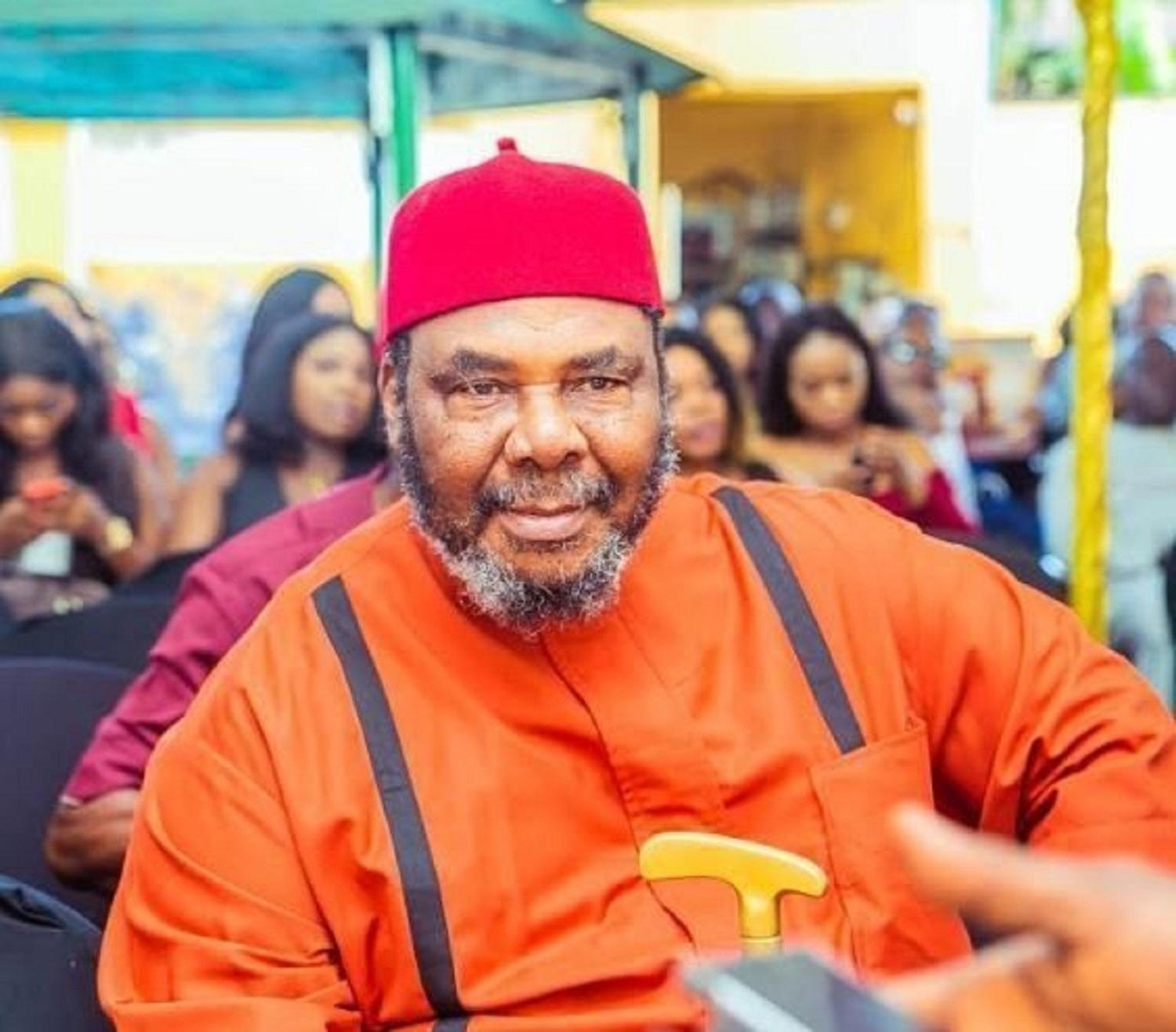
Veteran Nigerian actor PetePete Edochie has opened up about the factors he believes have helped him remain faithful to his wife throughout their 57-year marriage.
The celebrated actor made the revelation at his Legacy Gala Night, when he was asked what had enabled him to remain committed to one woman for nearly six decades.
Pete Edochie said he does not easily get distracted by women and credited his lifestyle, including his deep appreciation for classical music, for helping him remain focused.
According to the actor, he spends a considerable amount of time listening to classical music, which he described as a form of cerebral appreciation rather than mere entertainment.
“I married early; I have been married for 57 years. It is difficult to believe, but it is true. I don’t get distracted easily, and that is one of the biggest blessings that I have. I listen to classical music a lot. Classical music is for cerebral appreciation. It is not the kind of thing you will listen to and get distracted by women,” he said.
Pete Edochie also spoke about some of the personal habits he had to overcome, revealing that he was once a heavy smoker and drinker before giving up both.
“I was a big drinker and smoker, but I have given up on all that. You may not believe me, but I am a very big Christian. Women don’t distract me. It doesn’t mean I’m a wonderful man; it’s just that my lifestyle does not permit that kind of distraction,” he added.

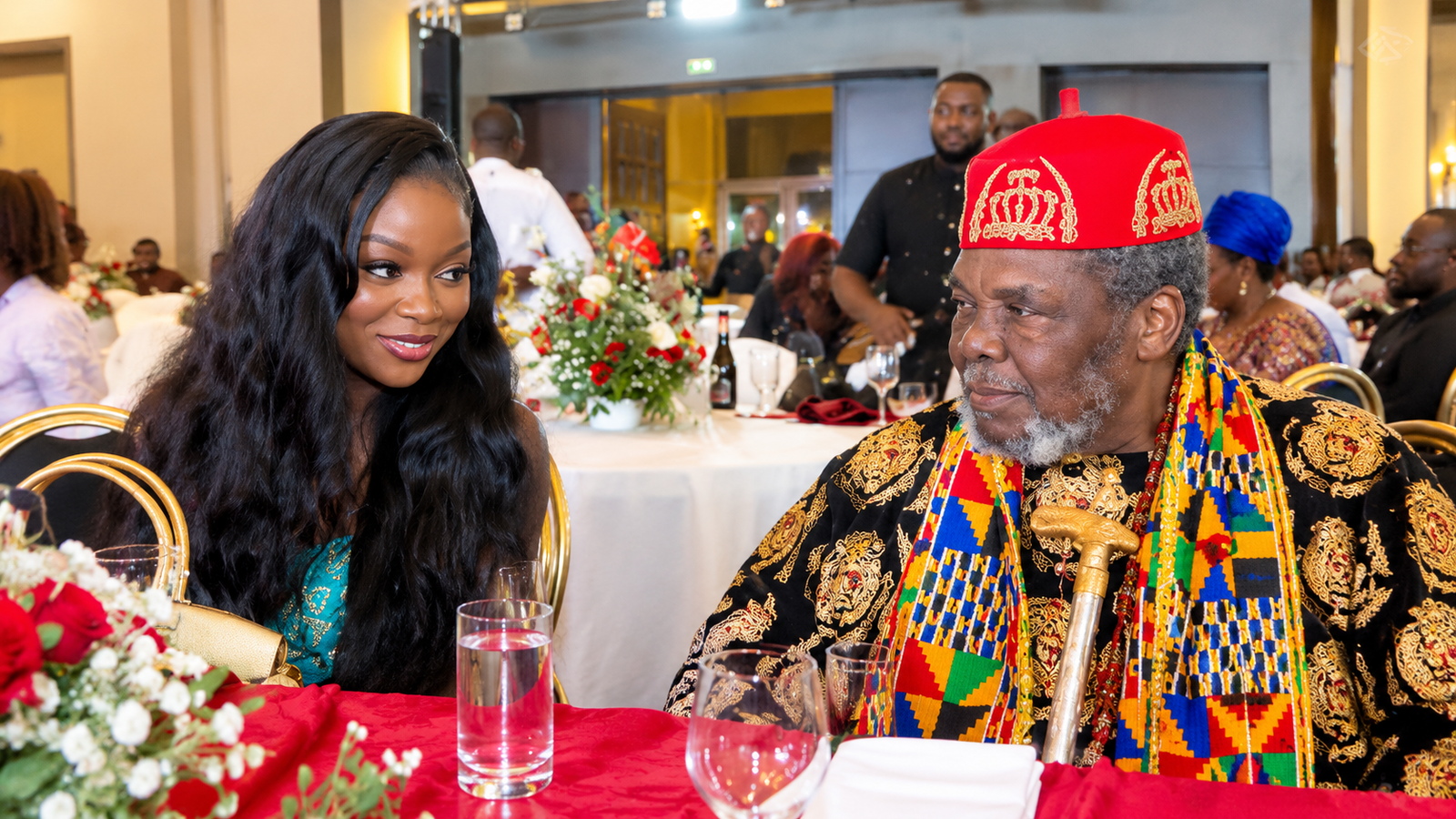
Accra, Ghana — October 7, 2026: Ghanaian actress Jackie Appiah has called for a stronger focus on the professionals working behind the scenes as the country seeks to rebuild its film industry.
Speaking at the Pete Edochie Legacy Project, Appiah said Ghana could take important lessons from Nigeria’s Nollywood, particularly its ability to create opportunities for a broad network of creative professionals beyond actors.
According to the actress, Nollywood’s strength lies partly in the depth of its production ecosystem. She pointed to scriptwriters, camera operators, costume designers and other technical and creative workers whose contributions help keep productions running.
“It’s not just about being in front of the camera,” Appiah said, stressing the importance of creating jobs and opportunities behind the scenes.
She encouraged young Ghanaians with filmmaking skills not to remain on the sidelines. Writers, cinematographers, costume professionals and other creatives, she said, should actively approach producers, present their ideas and seek opportunities to contribute to productions.
A changing Ghanaian film industry
Ghana’s movie industry has experienced a significant decline from the period when locally produced films were released at a much higher frequency. Appiah acknowledged that production levels are no longer what they once were, but expressed optimism that the sector is gradually recovering.
She called for more producers and investors to support the industry and help create an environment where creative professionals can build sustainable careers.
Her comments come as Ghana’s film sector continues to grapple with questions around investment, production capacity, distribution and the development of professional talent.
What Ghana can learn from Nollywood
Appiah’s argument places the spotlight on an aspect of filmmaking that is sometimes overshadowed by actors and celebrities.
A successful film production depends on a wide range of professionals, including writers, directors, cinematographers, editors, costume designers, makeup artists, sound engineers, producers and production managers.
Nigeria’s film industry has developed a large ecosystem around these roles, helping create opportunities beyond acting. Appiah believes Ghana can strengthen its own industry by giving similar attention to the people working away from the screen.
The actress therefore urged young creatives to make their skills visible rather than waiting for opportunities to come to them.
“If you’re there and you’re talented; you know how to write scripts, you are a creative camera person, costumier, don’t hide. Look for a producer and share your ideas,” she said.
Investment remains crucial
While developing behind-the-scenes talent could strengthen Ghana’s production base, Appiah also highlighted the need for greater investment.
More producers, investors and creative professionals, she suggested, must work together to increase production and create more opportunities throughout the industry.
Her comments offer a broader vision of recovery: rather than focusing exclusively on finding the next major actor, Ghana could rebuild its film industry by developing the entire chain of professionals needed to make, market and distribute films.
For Appiah, the revival of Ghanaian cinema will ultimately require more people willing to invest their skills, ideas and resources into the sector.

There was a time when some of the simplest things in Ghana came without a price attached.
A neighbour could lend you a cup of sugar without expecting anything in return. Children could spend an entire afternoon playing outside without paying for entertainment. People could sit and chat with friends without buying anything, and communities often relied on shared resources that cost little or nothing.
Today, life is different.
The cost of living has changed the way people work, socialize and even carry out ordinary daily activities. Things that were once freely available or largely taken for granted now often come with a price.
For many Ghanaians, the change is most noticeable not in major purchases, but in the small expenses that appear repeatedly throughout the day.
A few cedis here.
Another payment there.
Individually, the amounts may appear insignificant. Together, they can become a considerable part of a person’s monthly spending.
Water is no longer simply water
For generations, access to water was closely connected to community life.
People fetched water from household taps, public standpipes, wells, streams and other sources depending on where they lived.
Today, bottled and sachet water have become a normal part of everyday life.
A person leaving home for work may buy water on the roadside. A passenger travelling across town may purchase a sachet. Someone attending an event may buy bottled water.
The amounts paid each time may be small, but regular purchases add up.
What was once something people expected to access from home or nearby sources has become a daily expense for many people.
Charging a phone has become a business
The mobile phone has become one of the most important items in modern Ghanaian life.
But keeping a phone powered can sometimes require spending money, particularly for people who do not have reliable electricity or access to convenient charging facilities.
Phone charging businesses have become common in some communities.
A person whose battery is running low may have to pay to charge the device while away from home.
It is a small service, but it illustrates how technology has created new everyday expenses.
The phone itself may be essential.
Keeping it alive can also cost money.
The public toilet has become part of the daily budget
One of the clearest examples of a basic activity becoming a paid service is the public toilet.
For people without access to private toilet facilities, public toilets remain an important part of everyday life.
But using one usually requires payment.
The amount may not appear significant to an individual user, yet someone who relies on such facilities regularly can see the cost accumulate.
It is another reminder that some of the most basic necessities of daily life are now part of household expenditure.
Parking is no longer something you simply do
Finding somewhere to park a vehicle was once largely about finding a suitable space.
Today, parking fees have become common in many commercial areas, shopping centres, business districts and private facilities.
Drivers may have to pay simply to leave their vehicles while they attend to an errand.
For someone who makes several stops during the day, parking can become another expense that has to be considered.
It is particularly noticeable in busy urban areas where available space is increasingly valuable.
The old neighborhood gathering is changing
Perhaps one of the biggest changes is not a fee imposed by a business.
It is the growing cost of socializing.
There was a time when friends could sit outside someone’s home, talk for hours and enjoy each other’s company without needing to spend money.
Today, social gatherings increasingly take place in restaurants, pubs, lounges, shopping centres, cafés and other commercial spaces.
The expectation can sometimes be that everyone orders something.
Meeting a friend for a simple conversation can therefore turn into spending money on food, drinks or transportation.
Even entertainment has become increasingly commercial.
Children’s entertainment has a price tag
Ghanaian children once needed very little to entertain themselves.
They played football in the street.
They played ampe.
They played hide-and-seek, skipping games and other traditional games.
A group of children could spend hours together using nothing more than a ball, stones, bottle tops or whatever they found around them.
Today, children’s entertainment is increasingly connected to technology and commercial activities.
Video games, internet bundles, streaming services, smartphones, gaming centres and paid recreational facilities all require money.
Even when children are simply watching content online, someone has paid for the device, electricity or internet connection that makes it possible.
Information itself has changed
The way Ghanaians access information has also changed.
Radio and free-to-air television once provided large audiences with news and entertainment without requiring individual subscriptions.
Today, people can still access free radio and television, but the digital environment has introduced additional costs.
Internet bundles are necessary for people who want to watch livestreams, follow social media, read online publications, stream music or watch videos.
The information may be free to view.
The data required to access it is not.
For heavy internet users, the monthly cost of staying connected can become a significant expense.
Convenience now has a price
One of the biggest reasons these small costs have increased is the value placed on convenience.
Modern life is faster,People work longer hours.,Traffic consumes time,Families have busy schedules.
As a result, people are often willing to pay for services that save time.
Instead of walking home, someone takes a ride-hailing service.
Instead of preparing a meal, they order food.
Instead of washing clothes at home, some people use laundry services.
Instead of travelling to a shop, they pay for delivery.
Instead of spending hours looking for something, they pay someone to do it for them.
The service may make life easier.
But convenience comes with a price.
Some traditional activities that once depended heavily on community participation have also become increasingly commercialized.
Events that were once organized largely through family and community support can now involve professional decorators, caterers, photographers, videographers, event planners, DJs, MCs and rented venues.
This is particularly noticeable around weddings, birthdays, funerals and other major ceremonies.
The cultural practice remains.
But the cost of organizing it has changed dramatically.
The small payments nobody notices
Perhaps the most interesting part of this change is that many people do not notice the total cost immediately.
A person may spend a few cedi’s on water.
Another amount on transportation.
Another on mobile data.
Another on parking.
Another on food.
Another on a quick purchase from a roadside vendor.
At the end of the day, the individual payments may appear harmless.
At the end of the month, they can tell a different story.
The modern Ghanaian household is therefore dealing not only with major expenses such as rent, school fees, food and utilities, but also with dozens of smaller payments that have become normal.
Has Ghana become more expensive, or simply more convenient?
That is a question worth asking.
Some things that now cost money provide services that did not exist before.
Ride-hailing applications, food delivery, digital entertainment, private recreational centres and other services have created convenience that previous generations did not have.
So the issue is not simply that everything has become worse or more expensive.
The bigger change is that more aspects of everyday life have become commercialised.
Things that once depended on community, shared resources or personal effort can now be purchased as services.
There are clear benefits.
People have more choices.
Consumers can compare services.
Technology has created new businesses and jobs.
A person can order food from home, get transportation quickly, pay bills digitally and access information from almost anywhere.
For businesses, these changes have created entire industries that did not exist in their current form decades ago.
But there is another side.
As more everyday activities become commercial, people may become increasingly dependent on money to perform tasks that were once handled through community relationships or personal effort.
And what might we be losing?
The biggest loss may not be the few cedis spent on these services.
It may be the culture of sharing that once made some things possible without money.
A neighbour helping another neighbour.
Children entertaining themselves without expensive equipment.
Friends gathering at someone’s house instead of meeting at a commercial venue.
Relatives contributing their time and skills to help with an event.
Communities sharing resources.
These practices have not disappeared from Ghana.
They are still very much alive in many places.
But they compete with a modern culture where convenience can often be purchased rather than created collectively.
The Ghanaian economy has changed — and everyday life shows it
Economic change is usually discussed through inflation figures, fuel prices, exchange rates, interest rates and household incomes.
But ordinary people often experience economic change differently.
They experience it through the price of the water they buy.
The cost of transportation.
The money spent on mobile data.
The price of parking.
The cost of eating outside.
The fee for entertainment.
The amount paid for services that used to be handled personally or collectively.
These small transactions tell another story about how Ghanaian life is changing.
The question is not whether Ghana should return to the past.
It cannot.
And not everything from the past was better.
The more important question is whether, in paying for greater convenience and modern services, Ghanaians are also gradually losing some of the habits of sharing, community and self-sufficiency that once made everyday life feel less dependent on money.
Because sometimes, the biggest changes in a society are not found in government reports or economic statistics.
They are found in the small things people suddenly realise they now have to pay for.

Veteran Nigerian actor and African screen legend Pete Edochie has paid a courtesy call on the Chief Executive Officer of the Ghana Gold Board (GoldBod), Sammy Gyamfi, during his visit to Ghana for the launch of his African Legacy Project.
The meeting formed part of Edochie’s engagements in Ghana as he officially introduces the project, which is designed to preserve his legacy while creating opportunities for young Africans to learn from the experiences of accomplished personalities
The African Legacy Project comprises a book, a documentary film and an African Youth Mentorship Initiative targeted at reaching approximately 500,000 young people across Africa.
The mentorship component is intended to expose young people to knowledge, guidance and experiences that can help them develop their potential and make meaningful contributions to society.
During the courtesy call, Sammy Gyamfi welcomed the opportunity for GoldBod to support the youth mentorship initiative, describing it as an undertaking that aligns with the Board’s broader social-impact agenda.

GoldBod’s Special Intervention Programme (SIP) is focused on supporting communities and individuals through interventions designed to improve livelihoods and contribute to social and economic empowerment. The Board has previously highlighted the programme as an important part of its efforts to ensure that the benefits of its operations extend beyond the gold-trading sector.
The proposed collaboration with Edochie’s mentorship initiative therefore creates an opportunity for GoldBod to extend its social-impact work into youth development and mentorship on a continental scale.

The meeting also had a strong connection to the themes explored in Edochie’s new book. GoldBod’s work is referenced in the publication, particularly in relation to Ghana’s efforts to ensure that the country derives greater value from its gold resources and uses its mineral wealth to support national development.
GoldBod has positioned itself as the institution responsible for the buying, selling, weighing, grading, assaying, valuation and export of gold and other precious minerals in Ghana. It has also placed emphasis on value addition, responsible sourcing and retaining greater value from the country’s mineral resources.
The inclusion of GoldBod in Edochie’s book reflects the wider African conversation about how countries can better manage their natural resources and ensure that mineral wealth contributes to economic transformation.
Edochie’s visit to Ghana comes as his Legacy Project brings together entertainment, culture, mentorship and African development. The project was formally unveiled in Ghana on October 4, 2026, with personalities from Ghana’s creative and public sectors participating in the celebration

The actor, widely recognised for his decades-long contribution to African film and television, has used the project to emphasise the importance of preserving the knowledge and experiences of Africa’s pioneering figures while deliberately transferring that knowledge to younger generations.
The engagement with GoldBod consequently adds an economic and youth-development dimension to the project, linking Edochie’s legacy and mentorship vision with Ghana’s efforts to maximise the social and economic benefits of its natural resources.

Calvin Fosu, son of the late highlife legend Daddy Lumba, has announced a special legacy concert following his father’s passing.
The concert, scheduled for December 19, 2026, will be held at the University of Professional Studies, Accra (UPSA), and will bring together family, friends and fans of the legendary musician to celebrate his life and enduring contribution to Ghanaian music.
In a video shared on his TikTok page, Calvin invited Ghanaians and Daddy Lumba’s fans to join the family for the special memorial event.
According to him, the concert will be dedicated to celebrating the life, legacy and timeless music of his father, Charles Kwadwo Fosu, popularly known as Daddy Lumba.
“On the 19th of December, I plead with you all to come and support us on behalf of our late father, Charles Kwadwo Fosu, also known as Daddy Lumba, to celebrate his one-year memorial at UPSA,” Calvin said.
He described the event as a night that will bring together music, celebration and cherished memories as the family and fans honour the highlife icon.
“This will be an unforgettable night of music, celebrations and memories as we honour the life, legacy and timeless music of our legend,” he added.
Daddy Lumba, whose career spanned several decades, remains one of Ghana’s most influential highlife musicians, with a catalogue of songs that continues to resonate with generations of music lovers.

Felicia Tegah explains why she left NPP delegates conference

‘I’m not afraid’ – Felicia Tegah reacts to Hawa Koomson’s election as NPP Women’s Organiser

Stephanie Benson Warns Women: ‘Quick Fixes’ Won’t Help You When You’re Older



-

 General News1 week ago
Fidelity Bank Chairman Named Ghana’s Topmost Transformational Board Chair 2026
-

 Technology2 weeks ago
Rolls-Royce Expands Aviation Business with Major Philippine Airlines Engine Agreement
-

 Entertainment2 weeks ago
Ras Caleb assesses institutions under the Tourism Ministry, highlighting key roles.
-

 Entertainment2 weeks ago
Ras Caleb Appiah-Levi: The musician, Pan-Africanist and organiser whose career spans four decades
-

 Entertainment1 week ago
Ras Caleb Appiah-Levi Reflects on Death, Wealth and Equality: “Death Neither Knows Rich Nor Poor”
-

 Business1 week ago
Rev. Dr. Christian Kwetey Kweitsu Honoured for Excellence in Audiology Practice in Kigali
-

 General News2 weeks ago
Sudan Chemical Weapons Allegations: UN Signals Readiness for Possible Investigation
-

 Sports2 weeks ago
Red Card After Gun Gesture Overshadows Israel’s Nations League Goal