
General News
TrustGH Records More Than 6,000 Suspected Scam Numbers as TikTok Emerges as Major Fraud Channel


TrustGH, a scam verification and reporting platform, has identified more than 6,000 telephone numbers linked to suspected fraudulent activity, following community reports and open-source intelligence (OSINT) investigations conducted by its team of certified cybersecurity professionals.
The findings point to an evolving digital fraud landscape in Ghana, with scammers increasingly using social media platforms, messaging applications, online business directories, telecommunications channels and fraudulent websites to target individuals and businesses.
According to TrustGH, TikTok accounts for approximately 50 per cent of the reported scam numbers in its database, making it the largest identified source of reported scam activity.
SMS and WhatsApp also feature prominently among the reported cases, while other scam indicators have been traced to Facebook, Google Business Profiles, conventional telephone calls and fake websites.
TrustGH said its investigations show that many of the schemes depend more on social engineering than sophisticated technical attacks.
Scammers often impersonate trusted individuals, institutions or professionals to establish credibility before manipulating victims into transferring money or providing sensitive information.
Common impersonation targets include bank officials, government representatives, company executives, police officers, financial agents, recruitment officers and legitimate business owners.
After establishing trust, fraudsters may pressure victims to make payments, disclose one-time passwords (OTPs), provide Mobile Money credentials or share other sensitive information.
TrustGH noted that such tactics can result in financial losses or the compromise of victims’ accounts without scammers necessarily obtaining direct technical access to their devices.
Mobile Money remains the main target
More than 90 per cent of the scam cases analysed by TrustGH involved attempts to obtain Mobile Money payments or gain unauthorised access to victims’ Mobile Money accounts.
The platform identified several recurring categories of fraud, including Mobile Money scams, financial impersonation, fake online sellers, fraudulent Google Business Profiles, fake recruitment schemes, prize and lottery scams, social media fraud, suspicious callers and phishing-related account takeover attempts.
In phishing and account-takeover schemes, fraudsters seek to obtain authentication credentials, OTPs, passwords and other information that could give them unauthorised access to victims’ accounts.
TrustGH described the high proportion of Mobile Money-related incidents as a significant cybersecurity concern, particularly because of the widespread use of mobile financial services in Ghana.
The platform also reported a growing trend involving the abuse of legitimate business identities.
According to TrustGH, scammers create fraudulent social media accounts, advertisements and Google Business Profiles that closely imitate genuine companies.
These fake profiles may use legitimate business names, logos, locations and other publicly available information to create an appearance of authenticity and convince potential victims that they are dealing with a genuine business.
TikTok emerges as a major fraud channel
TrustGH’s finding that approximately half of the reported scam numbers are associated with TikTok highlights the increasing role of social media in the country’s fraud ecosystem.
Scammers can use platforms such as TikTok to create fraudulent identities, advertise fake products and services, and reach large numbers of potential victims.
Communication can then shift to WhatsApp, SMS or telephone calls, where fraudsters employ social-engineering tactics to complete the scam.
This creates a multi-channel attack chain, with different digital platforms being used at different stages of the same fraudulent operation.
TrustGH working with authorities
TrustGH said it is a licensed platform and works with the Cybersecurity Authority and the Cyber Crime Unit of the Ghana Police Service to combat scam activity and support investigations involving reported telephone numbers.
The platform is encouraging members of the public to verify suspicious numbers before engaging with callers or making payments and to report numbers suspected of being associated with fraudulent activity.
Members of the public can verify and report suspicious numbers through TrustGH.com.
The statement was issued by: TrustGH
Public Scam Verification & Reporting Platform

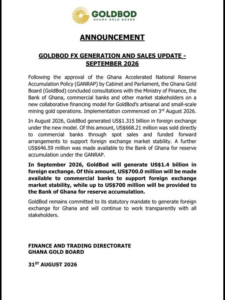
The Ghana Gold Board (GoldBod) has set a target to generate US$1.4 billion in foreign exchange (FX) in September 2026, as part of measures to support stability in Ghana’s foreign exchange market and boost the country’s international reserves.
The target follows GoldBod’s generation of US$1.315 billion in FX in August 2026 under a new financing model supporting its gold-purchasing operations in the artisanal and small-scale mining sector.
Of the projected US$1.4 billion for September, US$700 million is expected to be made available to commercial banks through spot sales and funded forward arrangements.
The move is intended to improve FX liquidity and help maintain stability in the foreign exchange market.
A further up to US$700 million will be provided to the Bank of Ghana (BoG) for reserve accumulation under the Ghana Accelerated National Reserve Accumulation Policy (GANRAP).
GoldBod said it generated US$1.315 billion in FX in August following the implementation of the new financing model on August 3.
The August proceeds were distributed as follows:
US$668.21 million was sold to commercial banks through spot sales and funded forward arrangements.
US$646.59 million made available to the Bank of Ghana for reserve accumulation under GANRAP.
The August performance pushed GoldBod’s monthly FX generation beyond the US$1.3 billion mark, with the proceeds broadly divided between supporting domestic FX liquidity and strengthening Ghana’s reserves.
The financing arrangement followed Cabinet and Parliament’s approval of the Ghana Accelerated National Reserve Accumulation Policy.
GoldBod subsequently engaged the Ministry of Finance, Bank of Ghana, commercial banks and other key stakeholders before introducing the new model.
The arrangement is focused on financing and supporting GoldBod’s operations involving gold purchased from Ghana’s artisanal and small-scale mining sector.
The International Monetary Fund has also noted GoldBod’s expanded role in domestic gold purchasing, a function previously associated with the Bank of Ghana. The shift is intended, among other objectives, to reduce quasi-fiscal risks to the central bank while strengthening GoldBod’s role in gold purchases, trade and exports.
GoldBod’s September target of US$1.4 billion represents an increase of US$85 million, or approximately 6.5%, over the US$1.315 billion generated in August.
If achieved, GoldBod’s combined FX generation for August and September will reach approximately US$2.715 billion.
Across the two months, commercial banks could receive up to approximately US$1.368 billion, while the Bank of Ghana could receive about US$1.347 billion for reserve accumulation, based on the reported allocations.
GoldBod’s Finance and Trading Directorate announced on August 31, 2026, reaffirming the institution’s commitment to generating foreign exchange for Ghana and working transparently with stakeholders.
GoldBod September FX target at a glance
| Item | Amount |
|---|---|
| September projected FX generation | US$1.4bn |
| For commercial banks | US$700m |
| For BoG reserves | Up to US$700m |
| August FX generated | US$1.315bn |
| August sales to commercial banks | US$668.21m |
| August allocation to BoG reserves | US$646.59m |
| New financing model introduced | August 3, 2026 |

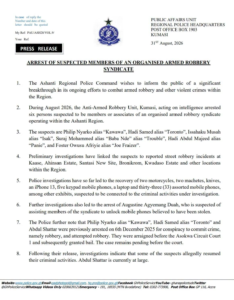
The Ashanti Regional Police Command has arrested six persons suspected to be members or associates of an organised armed robbery syndicate believed to be operating in parts of the Ashanti Region.
The arrests were made in August 2026 by the Anti-Armed Robbery Unit in Kumasi as part of intelligence-led operations aimed at disrupting armed robbery and other violent crimes in the region.
According to the Police, preliminary investigations have linked the suspects to several reported street robbery incidents in different parts of the Ashanti Region.
The six suspects have been identified as:
Philip Nyarko, alias “Kawawa”
Hadi Samed, alias “Toronto”
Issahaku Musah, alias “Isak”
Suraj Mohammed, alias “Baba Nde”, also known as “Trouble”
Hadi Abdul Majeed, alias “Panie”
Foster Owusu Afriyie, alias “Joe Fraizer”
Police sources indicate that the suspects are aged 23, 20, 23, 27, 23 and 45, respectively.
The Ashanti Regional Police Command said the suspects are being investigated over their alleged involvement in street robbery incidents reported at Kaase, Ahinsan Estate, Santasi New Site, Bronikrom, Kwadaso Estate and other locations within the region.
The intelligence-led operation has also led to the recovery of several items believed to be connected to the alleged criminal activities.
The exhibits recovered include: Two motorcycles, two machetes, Knives, one iPhone 13, five keypad mobile phones, one laptop,33 assorted mobile phones, and other items suspected to be linked to the activities under investigation
As part of searches conducted at the residences of the suspects, Police reportedly recovered a Kawasaki motorcycle with a 600cc engine from the residence of Philip Nyarko.
Investigators suspect that the motorcycle may have been used in some of the activities under investigation.
Further searches at the residences of other suspects also resulted in the recovery of knives and machetes.
Further investigations resulted in the arrest of Augustine Agyemang Duah, who Police suspect assisted members of the alleged syndicate in unlocking mobile phones believed to have been stolen.
A laptop suspected to have been used in unlocking the phones was recovered from his residence and retained by the Police as an exhibit.
The Police also suspect that Foster Owusu Afriyie, alias “Joe Fraizer”, purchased stolen mobile phones from members of the alleged syndicate.
A search of his residence reportedly resulted in the recovery of 33 mobile phones believed to have been taken from robbery victims.
Investigators are currently working to identify the rightful owners of the phones and determine how they came into Foster Owusu Afriyie’s possession.
The Ashanti Regional Police Command further disclosed that Philip Nyarko, Hadi Samed and Abdul Shattar had previously been arrested on December 6, 2025, in connection with allegations involving conspiracy to commit crime, including robbery and attempted robbery.
The three were subsequently arraigned before Asokwa Circuit Court 1 and granted bail.
The case remains pending before the court.
According to the Police, investigations conducted after their release indicated that some of the suspects allegedly returned to criminal activities.
Abdul Shattar, who was previously arrested with some of the suspects, is currently at large, according to the Police.
The Command has intensified efforts to locate and apprehend him, as well as other persons suspected of having links to the alleged syndicate.
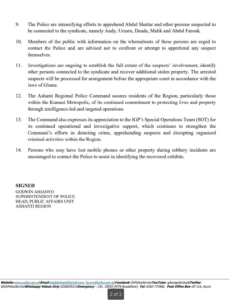
The persons being sought have been identified as: Andy, Umaru, Dauda, Malik, Abdul Farouk
The Police have appealed to anyone with credible information about the whereabouts of the wanted persons to contact the Police.
Members of the public have, however, been cautioned not to confront or attempt to apprehend the suspects themselves.
The Ashanti Regional Police Command said investigations are continuing to establish the full extent of the suspects’ alleged involvement in the reported robbery cases.
Investigators are also working to identify other persons who may be connected to the alleged syndicate and recover additional stolen property.
The arrested suspects are expected to be processed for arraignment before the appropriate court in accordance with Ghanaian law.
The Police stressed that being arrested or suspected of an offence does not in itself establish guilt, and that the guilt or otherwise of the accused persons will ultimately be determined through the judicial process.
The Command has also appealed to residents who may have lost mobile phones or other property during robbery incidents to contact the Police and assist investigators in identifying the recovered exhibits.
The Ashanti Regional Police Command has assured residents, particularly those within the Kumasi Metropolis, of its continued commitment to protecting lives and property through intelligence-led and targeted operations.
The Command also expressed appreciation to the Inspector-General of Police’s Special Operations Team (SOT) for its operational and investigative support in detecting crime, apprehending suspects and disrupting organised criminal activities in the region.
The Ghana Police Service’s Anti-Armed Robbery Unit is a specialised unit responsible for investigating armed robbery and related cases.
The Police have again encouraged anyone who believes their property may be among the recovered exhibits to come forward and assist investigators with identification.
Statement issued by the Ashanti Regional Police Command’s Public Affairs Unit on August 31, 2026, and signed by Superintendent of Police Godwin Ahianyo, Head of the Public Affairs Unit, Ashanti Region.

The National Disaster Management Organisation (NADMO) has recorded approximately 30 mining-related deaths in various mining communities across Ghana’s Eastern Region since January 2026.
Deputy Regional NADMO Director in charge of Technical and Disaster Risk Reduction, Emmanuel Konja Tullah, disclosed the figure following the latest galamsey-related tragedy at Asaman Tiamfoe in the Atewa East District.
The incident occurred on the night of Saturday, August 29, 2026, when a mining pit reportedly collapsed, trapping 11 illegal miners underground.
Rescue teams subsequently recovered the bodies of seven of the victims, while four others remained missing as search and recovery operations continued in the following days.
Personnel from the Anyinam District Police Command, Ghana National Ambulance Service, NADMO and local volunteers took part in the rescue and recovery exercise.
Speaking about the recurring incidents, Tullah called for the strict enforcement of regulations requiring mining pits to be properly covered after use.
In a video shared on X on August 31, 2026, by Citi FM, he stressed that stronger enforcement and oversight were necessary to prevent further loss of life associated with abandoned or unregulated mining pits.
“They should strengthen their oversight activities, ensuring that the necessary coordination and security measures are put in place so that these incidents are not recorded,” he said.
The latest tragedy at Asaman Tiamfoe has renewed concerns over the dangers posed by abandoned and improperly secured mining pits, particularly in communities where illegal mining activities remain prevalent.
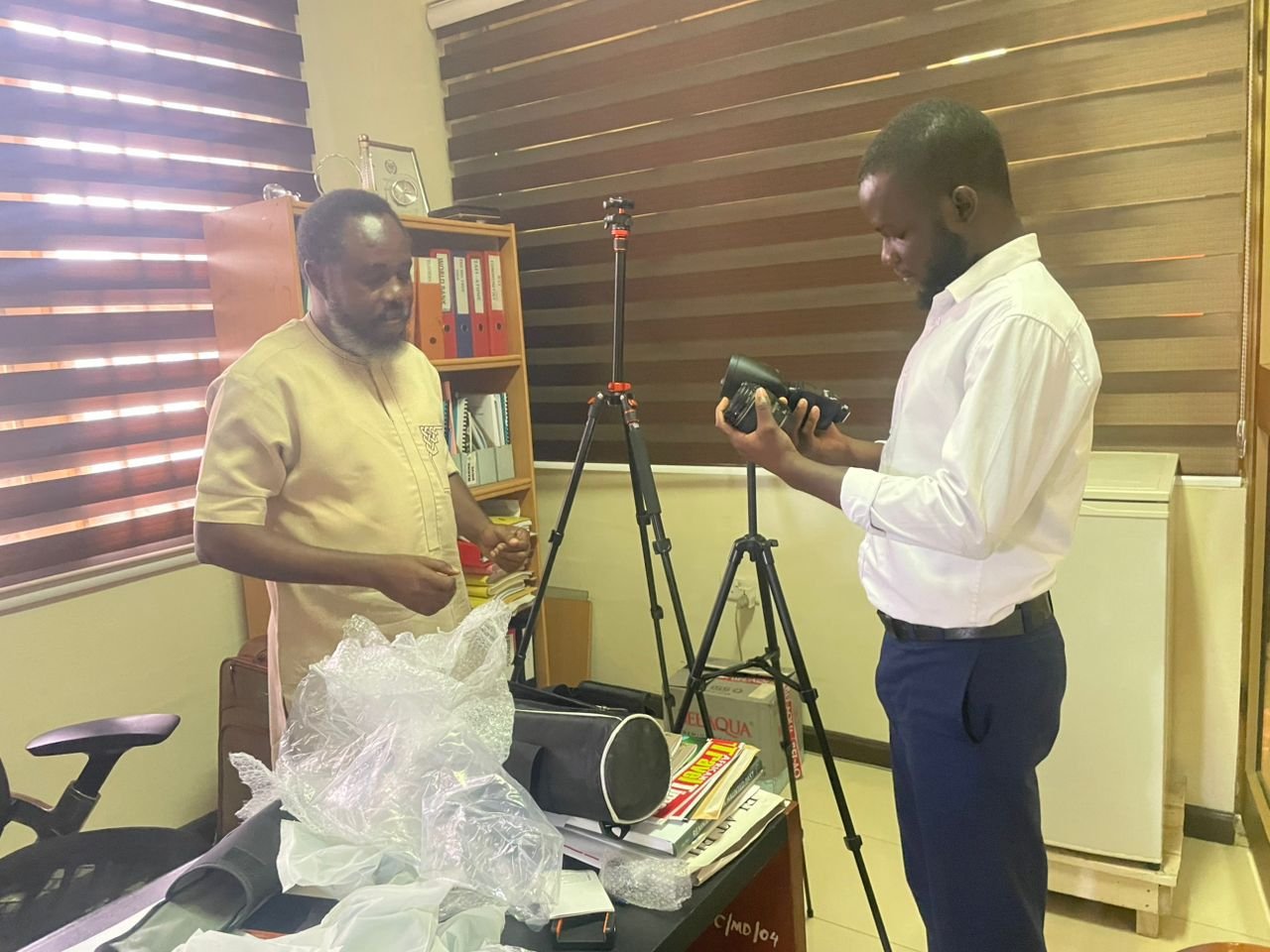
The Ghana Tourism Development Company (GTDC) has strengthened the operational capacity of its Marketing and Public Relations Department with the acquisition of modern digital and communication equipment.
The move forms part of efforts by the new leadership, led by Professor Kobby Mensah, to reposition the company and enhance its ability to promote Ghana’s tourism sector through effective communication and digital marketing.
The equipment includes professional cameras, high-quality lenses, tripod stands, call centre headsets, an iPhone and other essential digital accessories.
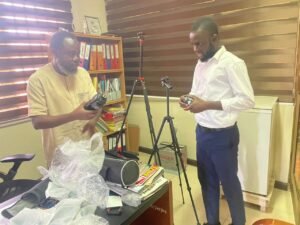
According to the company, the investment is expected to significantly improve the department’s ability to create and distribute high-quality photo and video content while documenting GTDC activities, programmes and events.
The modern tools will also support the department in undertaking more effective digital marketing campaigns and improving the company’s visibility across both traditional and digital media platforms.
The development represents a significant step in strengthening the communications machinery of the GTDC, particularly at a time when digital platforms have become increasingly important in promoting tourism destinations, products and experiences.
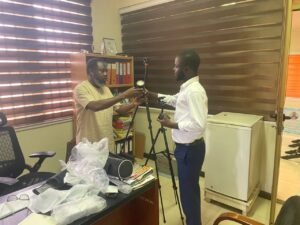
With access to professional photography and videography equipment, the Marketing and PR Department is expected to produce more compelling visual content capable of showcasing Ghana’s tourism offerings to local and international audiences.
The investment will also enhance the department’s ability to tell the GTDC story, promote its products and initiatives, engage audiences and communicate the company’s activities more professionally and consistently.
The new leadership under Professor Kobby Mensah has been working to reposition the GTDC from what had previously been described as a virtually inactive institution into an organisation with renewed capacity and a stronger focus on impact.
The provision of the equipment is therefore being viewed as part of a broader effort to equip staff with the necessary resources to deliver on the company’s mandate and improve its public visibility.
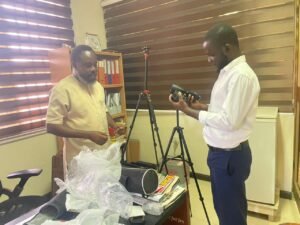
Through stronger marketing, public relations and digital communication, the GTDC is expected to better position its products and initiatives while contributing to the broader promotion and development of Ghana’s tourism industry.
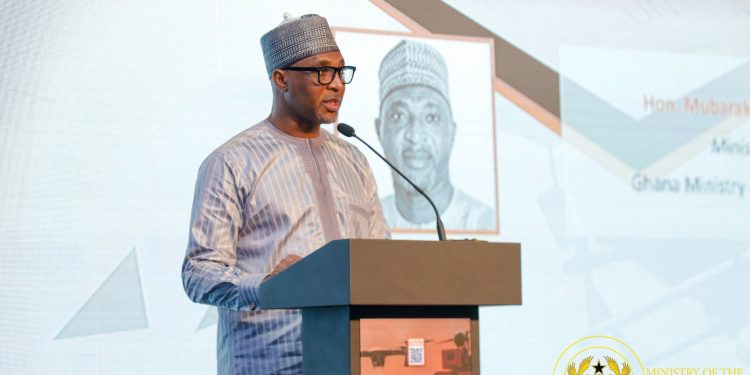
Ten recruits undergoing training in Ghana’s security services have been dismissed for violating a ban on mobile phones, Interior Minister Mohammed Muntaka Mubarak has disclosed.
The Minister said the dismissals were part of efforts to enforce discipline and ensure that recruits adhere strictly to the rules governing security service training.
Speaking to students of Sakafiya Islamic Senior High School in Kumasi on Saturday, August 29, Mr Muntaka said the incident reflected a broader concern about indiscipline among some young people entering the security services.
According to him, more than 500,000 people applied for positions in the latest security services recruitment exercise, but only about 10,000 were eventually selected.
He explained that recruits are required to surrender their mobile phones when they report to training school. However, some trainees allegedly concealed their devices and continued using them, particularly at night.
“Some of them were caught. At least, I have been written to, at least about 10 students have been dismissed from training school for holding phones,” the Minister said.
Mr Muntaka questioned why recruits would deliberately disregard clearly established rules, arguing that discipline should be developed from the secondary-school level.
He urged students to take school regulations seriously, noting that the ability to obey rules and respect authority is essential for anyone seeking a career in the security services.
In a related development, the Interior Minister disclosed that more than 6,000 applicants were disqualified during additional medical screening introduced as part of the security services recruitment process.
Speaking in an interview with Pan African TV on Saturday, Mr Muntaka revealed that more than 100,000 applicants underwent medical examinations.
Due to the large number of applicants and concerns about the physical and psychological well-being of personnel within the security services, authorities expanded the screening process to include drug testing and mental health assessments.
The Minister said more than 4,000 applicants tested positive for prohibited substances and consequently failed the drug screening.
Another 2,000 applicants were disqualified following mental health assessments.
“Interestingly, over 4,000 people failed the drug test, and we have over 2,000 who also failed due to mental health conditions,” he stated.
Mr Muntaka said the additional screening measures were necessary to ensure that individuals recruited into Ghana’s security agencies meet the required physical, psychological and professional standards.
Source:3News

TrustGH Records More Than 6,000 Suspected Scam Numbers as TikTok Emerges as Major Fraud Channel

GoldBod Targets US$1.4 Billion in FX Generation for September

Oswald Okaitei Explains the Real Vision Behind Ghana’s Black Star Experience



-

 General News1 week ago
Nana Adwoa Tutuwaa Named Global Humanitarian of the Year 2026
-

 General News2 weeks ago
Sammy Gyamfi to Feature in Government Accountability Series
-

 Entertainment1 week ago
Interfaith Tourism World Club Calls for Faith-Based Tolerance to Strengthen National Peace
-

 Education1 week ago
Cybersecurity Education in Schools: Should Students Learn Online Safety?
-
 General News1 week ago
Assemblies of God Ghana Clears Headquarters Loan, Slashes Overdraft by GH¢3.2m
-
 General News1 week ago
LMI Holdings: The Ghanaian Company Chosen to Revive the Saglemi Housing Project
-
 General News3 days ago
GES Urged to Review Student Sexual Misconduct Rule Over Alleged Discrimination Against Boys
-
 General News1 week ago
Energy Analyst Calls on GRIDCo to Explain Recurring Power Outages