
General News
IS MANASSEH AUDITING THE AUDITOR-GENERAL OR PUTTING ZOOMLION ON TRIAL AS USUAL?

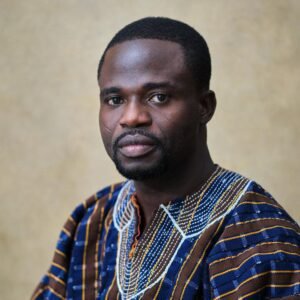
By Mashoud Bawa
Introduction: A Question of Fairness
I am a Ghanaian writer passionate about environmental sanitation and the work of private waste management companies, especially the prestigious Zoomlion Ghana Limited. I am concerned when people, including Manasseh Azure Awuni, appear to undermine a company that has created jobs, helped address sanitation challenges and contributed to Ghana becoming the West African regional hub for sanitation, waste management, and circular economy policy support.
For more than a decade, Manasseh has unjustifiably criticised Zoomlion and its owner, Dr. Joseph Siaw Agyepong, through articles and commentaries that, in my view, have focused almost exclusively on alleged wrongdoing while rarely acknowledging the company’s achievements or its owner’s ingenuity.
That raises a fundamental question: Can journalism be considered fair and balanced when its scrutiny of one company remains overwhelmingly negative over many years?
Constructive criticism, we all know, should identify problems, offer suggestions and acknowledge achievements where appropriate. Has Manasseh ever examined Zoomlion’s job creation, investments in waste-management infrastructure, technological initiatives, recycling operations, expansion beyond Ghana or contribution to environmental sanitation? If so, what did he find?
The Audit Discrepancy
These questions bring me to Manasseh’s current investigation, “Auditing the Auditor-General: How Special Audit Understated a COVID-19 Expenditure.”
The central issue is serious: Why did the Auditor-General’s special audit reportedly record GH¢96.3 million as fumigation expenditure when documents claim from the Ministries of Education, Local Government and Transport allegedly show expenditure of at least GH¢780 million?
That discrepancy requires careful examination.
How did the Auditor-General arrive at GH¢96.3 million? Who supplied and reviewed the figures? Which ministries submitted expenditure records? What methodology determined what qualified as COVID-19 expenditure? Why were some expenditures allegedly audited but not reflected in the reported fumigation figure? Who within the Audit Service made those decisions?
These questions go directly to the investigation’s central premise. If the allegation is that the Auditor-General understated COVID-19 expenditure, the audit process itself must receive detailed scrutiny.
Institutional Responsibility
My concern begins when a question about the Auditor-General’s alleged under-reporting gradually becomes a story about Zoomlion primarily.
The Auditor-General did not award Zoomlion the contracts. Zoomlion did not write the special audit report or determine which expenditures should be included or excluded.
Therefore, if the central allegation concerns an understatement by the Auditor-General, who should answer for it: Zoomlion or the Ghana Audit Service?
If the concern is procurement, equal attention should be given to the ministries and public officials who initiated the procurements, selected the contractor, obtained approvals, supervised the work, certified performance, approved invoices and authorised payment.
Zoomlion does not award itself government contracts. Ministries and public institutions must answer for the decisions they made; the procurement authorities for approvals and ratifications; public officials for supervision, certification and payment; and contractors for the work they were paid to perform.
Accountability should cover every institution and individual involved.
Zoomlion’s Relevance
Manasseh reports that approximately GH¢775 million of the GH¢780 million in fumigation expenditure he identified went to Zoomlion. That makes the company materially relevant to the investigation.
However, relevance does not eliminate the need for proportionality and fairness. The question is whether Zoomlion receives extensive attention because the evidence requires it, or whether the Auditor-General controversy has become another opportunity to revisit longstanding criticisms of the company.
The article also discusses previous Zoomlion contracts, World Bank sanctions, GYEEDA, earlier fumigation arrangements, a 2025 ministerial report and other controversies. This raises a legitimate question: Is it principally an investigation of the Auditor-General’s COVID-19 audit, or another broad prosecution of Zoomlion through journalism?
If Zoomlion received approximately GH¢775 million, it is reasonable to investigate whether it performed the contracted services, whether public authorities certified the work, whether the prices complied with procurement requirements and whether the state obtained value for money. But those questions should be addressed through evidence and accompanied by equal scrutiny of the institutions that awarded and paid for the contracts, not the contractor.
Journalistic Fairness and Consistency
The issue is broader than Dr. Otabil or Zoomlion. It concerns whether journalists apply consistent standards when reporting on people and institutions with whom they have different relationships.
When the Capital Bank saga broke out, some people, including me, called on Manasseh to comment on his pastor and godfather, Dr. Mensah Otabil’s involvement as then chairman of the board of directors. He responded that he would not do so because of their relationship.
That raises questions about consistency. Should the standard of scrutiny change depending on a journalist’s relationship with the person or institution involved? If personal relationships justify recusal in one case, should personal history, previous disputes or long-running negative campaigns against another organisation also be disclosed so readers can assess possible bias?
Rather than allege, without evidence, that Manasseh has paymasters who benefit from attacks on Zoomlion, I would ask him directly:
What explains the persistence and intensity of your focus on Zoomlion over more than a decade? Are there interests, relationships, funding arrangements or institutional considerations that readers should know about?
After years of predominantly negative reporting about the same company and entrepreneur, readers are entitled to examine not only the subject of the journalism but also its consistency, proportionality and fairness.
Conclusion: Auditor-General or Putting Zoomlion on Trial Again
Zoomlion should not be immune from scrutiny because it is Ghanaian, employs people or operates in an important sector. Companies handling public money must answer questions about procurement, performance and value for money.
But accountability cannot be selective. The Auditor-General must answer for the audit report. Ministries must answer for contracts they awarded. Procurement authorities must answer for approvals. Public officials must answer for certification and payment. Contractors must answer for the work they performed.
Journalists, too, should be open to legitimate questions about consistency, conflicts of interest, proportionality and fairness.
If we genuinely want accountability, the same torch must shine in every direction.
Are we auditing the Auditor-General, investigating COVID-19 expenditure, or simply putting Zoomlion on trial again?
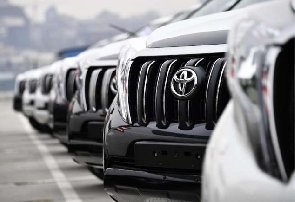
As MPs complete their parliamentary terms and new lawmakers take their seats, one question keeps resurfacing: what happens to the expensive vehicles associated with Ghanaian parliamentarians once they leave office?
The issue has become a recurring source of public debate, particularly because parliamentary vehicle arrangements have involved substantial financing and, in previous arrangements, tax concessions. But the reality is more complicated than the popular image of MPs simply being handed state-owned V8s.
Do MPs actually own the V8s?
Under the vehicle financing arrangement approved for the Eighth Parliament, government and the National Investment Bank entered into a US$28 million medium-term loan agreement to finance vehicles for MPs between 2021 and 2024. Parliament also approved tax and duty waivers for qualifying vehicles.
The arrangement required repayments to be deducted from MPs’ remuneration, meaning the vehicles were linked to a financing arrangement rather than simply being free gifts from the state.
More recently, Twifo Atti Morkwa MP David Vondee explained that MPs generally obtain loans to purchase their vehicles and are responsible for fuel and drivers, challenging the perception that government simply buys and maintains luxury cars for every MP.
So what happens when an MP loses the election?
This is where the distinction between a vehicle purchased through a loan and an official state vehicle becomes important.
If the vehicle was acquired under a financing arrangement in which the MP is the beneficiary and borrower, leaving Parliament does not automatically mean the vehicle becomes government property.
The outstanding financial obligations attached to the vehicle remain relevant. The exact treatment, however, depends on the terms of the particular financing arrangement.
That is very different from vehicles formally assigned to government officials for official duties.
Parliament itself wanted the system changed
Interestingly, Parliament’s own Finance Committee previously acknowledged the controversy surrounding the arrangement.
In 2021, the committee recommended discontinuing the then-existing vehicle loan system for MPs and Council of State members, arguing that public concern over the burden on the public purse could weaken confidence in Parliament.
The committee proposed that MPs should instead have duty-post vehicle arrangements similar to other Article 71 office holders.
That recommendation shows just how contentious the issue has become over the years.
Why the V8 debate refuses to disappear
For many Ghanaians, the sight of powerful 4×4 vehicles being associated with MPs has become a symbol of political privilege.
But MPs have consistently argued that their jobs require extensive travel between Accra and constituencies, including areas with difficult road networks.
Government Communications Minister Felix Kwakye Ofosu defended the provision of 4×4 vehicles in March 2026, arguing that MPs travel extensively, spend personal resources on constituents and require reliable transportation to perform their duties.
The debate, therefore, is not simply about whether an MP drives a V8. It is about who finances the vehicle, who owns it, who pays for its maintenance and what happens when the MP’s parliamentary term ends.
Don’t confuse MPs’ cars with ministers’ official vehicles
There is another important distinction.
At the end of the Akufo-Addo administration in 2024, the Presidency directed outgoing ministers, deputy ministers, regional ministers and other political appointees to return government vehicles to their respective ministries. It also stated that those appointees would not be allowed to acquire state vehicles as their terms ended.
That directive concerned official government vehicles, which are different from vehicles acquired by MPs through personal or parliamentary financing arrangements.
The bigger question: should the system continue?
The controversy surrounding parliamentary vehicles has persisted because it sits at the intersection of two competing concerns.
On one side is the argument that MPs need reliable vehicles to travel across their constituencies and perform their constitutional duties.
On the other is the concern over the cost to taxpayers and whether lawmakers should benefit from vehicle financing arrangements that ordinary citizens may not have access to.
Parliament’s own Finance Committee recognised this tension when it recommended changes to the vehicle arrangement in 2021.
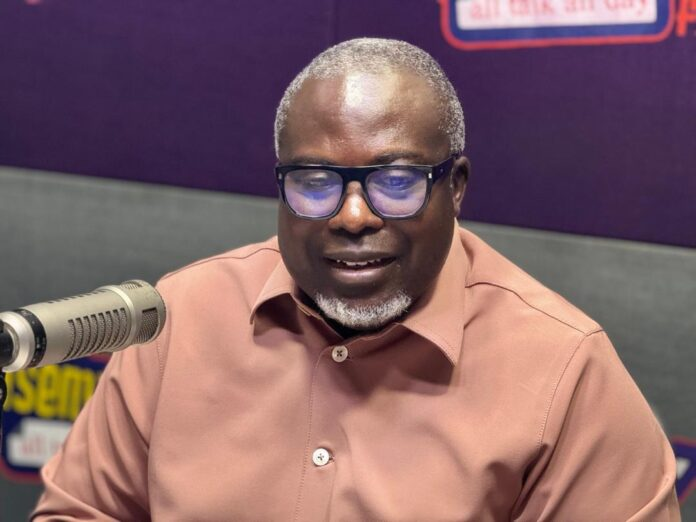
The Ghana Revenue Authority (GRA) has challenged the enforcement of a GH¢79.65 million judgment debt awarded to Servestar Minwax (WA) Limited, insisting that the amount must first be independently reconciled before any payment is made.
The dispute, which dates back to 2009, reportedly started over an alleged overpayment of import duties involving less than GH¢1 million.
Servestar Minwax subsequently secured judgment against the GRA. However, the Authority says the amount now being pursued through garnishee proceedings has risen to GH¢79,651,132, including what it describes as 35% daily compound interest.
On July 22, 2026, the High Court, Commercial Division 3, issued a Garnishee Order directing the Bank of Ghana to release the amount from the GRA’s Tax Refund Account to Servestar Minwax and its director, Henry Manly-Spain.
The GRA has since applied for the Garnishee Order Absolute to be set aside and has also filed a Notice of Appeal against the ruling.
A major development occurred on August 20, 2026, when the court allowed a forensic reconciliation of the judgment sum.
The decision allows an independent auditor to examine the calculations and determine the actual amount legitimately owed.
The GRA said its application for the reconciliation was intended to ensure that the correct figure is reflected in the proceedings.
“GRA’s application includes a request for a forensic reconciliation of the judgment sum as asserted by the plaintiff to ensure that the correct amount is reflected,” the Authority said.
According to the GRA, its own reconciliation indicates that the amount legitimately owed to Servestar Minwax is significantly lower than the GH¢79.65 million being pursued.
The Authority has also cited documents it says were submitted to the solicitor of Henry Manly-Spain, indicating that he disputes the GH¢79.65 million figure.
The GRA said the documents show that Mr Manly-Spain’s legitimate claim relating to overpaid duties and the value of containers sold since 2009 is considerably lower than the amount awarded by the court.
“His legitimate claim against GRA for overpaid duties and the value of containers sold, dating back to 2009, is significantly less than the GH¢79.7 million awarded by the Court,” the Authority said.
The GRA said Mr Manly-Spain’s position has been formally presented to the court as part of the proceedings seeking to set aside the garnishee order and establish the correct value of the judgment debt.
The Authority is also challenging the attachment of its Tax Refund Account at the Bank of Ghana.
It argues that the account is legally protected and was established specifically to facilitate the payment of legitimate tax refunds to taxpayers who have overpaid their taxes.
The GRA is relying on Section 69 of the Revenue Administration Act, 2016 (Act 915) in support of its position.
“GRA maintains that the Refund Account held at the Bank of Ghana…is a statutorily protected account designated for the payment of legitimate refunds to taxpayers who have overpaid and cannot be subjected to attachment in the manner directed,” it said.
The Authority’s initial application for a stay of execution was unsuccessful.
The GRA, however, says it intends to renew the application before the Court of Appeal at the beginning of the new legal year.
Meanwhile, the Commissioner-General has directed an internal audit into the reconciliation and litigation processes surrounding the case.
The audit is expected to establish whether any lapses occurred and identify measures to strengthen the Authority’s internal controls.
The GRA said the various steps being taken are aimed at protecting public funds while ensuring that lawful court decisions are respected.
“The Authority reiterates its commitment to abide by the rule of law and adherence to the lawful decisions of the honourable court in the interest of justice; while at the same time it exercises the legitimate responsibility to defend the interest of the state,” the Authority said.
General News
Radiant Media proposes 60-day national petroleum reserve to cushion Ghanaians against oil shocks

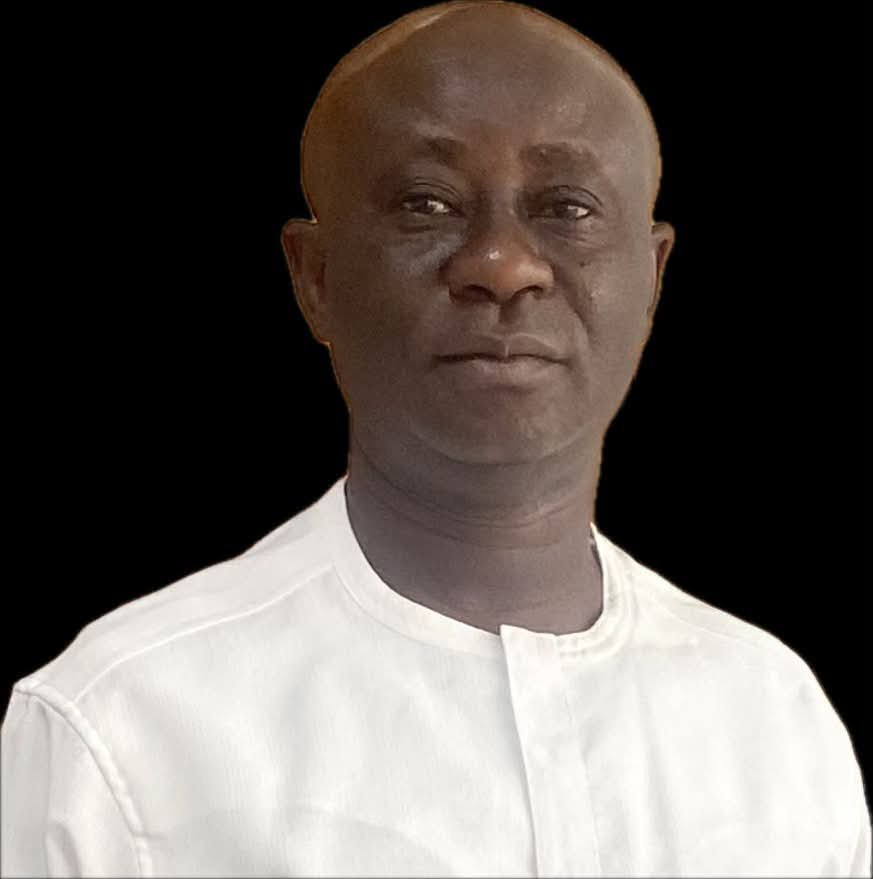
Emmanuel Duah, Executive Director of Radiant Media and Intelligence Hub, has proposed the establishment of a National Petroleum Reserve Buffer (NPRB) to protect Ghanaian consumers from sharp increases in fuel prices triggered by global crude oil price shocks and supply disruptions.
According to Emmanuel Duah, the proposed reserve would provide Ghana with a dedicated and auditable stock of refined petroleum products that could be released into the domestic market when international crude prices surge or major external disruptions threaten fuel supply.
In an energy security proposal, Mr Duah said Ghana may not be able to control international developments such as conflicts, attacks on oil infrastructure or disruptions along major shipping routes, but the country can strengthen its ability to absorb the resulting economic shock.
He described the situation as one where “the crisis is external, but the pain is local.”
Emmanuel Duah’s proposal comes against the backdrop of significant volatility on the international crude oil market.
The proposal notes that Brent crude had risen to $108.77 per barrel, a four-month high, with physical crude cargoes in Europe trading above $130 per barrel.
It cited North Sea Forties crude trading at about $136.75 per barrel, approaching the previous high of $147.37.
Mr Duah attributed the international price pressure to external developments, including the escalating US-Iran conflict, attacks affecting oil infrastructure, disruptions to oil production in Libya and threats to shipping through the Red Sea.
According to Emmanuel Duah, sustained increases in global crude prices could quickly translate into higher petroleum prices in Ghana.
He warned that the resulting pressure could affect pump prices, the Ghanaian cedi, transport fares and inflation.
“Ghana cannot control the Strait of Hormuz, but Ghana can control its buffer,” Mr Duah stated in the proposal.
He therefore wants Ghana to establish a strategic stock that can be deployed during periods of extreme international price volatility.
Under the proposal, the National Petroleum Reserve Buffer would be a sovereign strategic stock held strictly for national energy security and consumer protection.
Mr Duah stressed that the reserve should not be treated as additional stock for BOST’s normal commercial trading operations.
Instead, the petroleum products would be held specifically for emergency market intervention.
The proposal recommends maintaining:
- 45 days of petrol consumption
- 45 days of diesel consumption
- 30 days of LPG consumption
The stocks would be distributed across BOST’s six depots at Accra Plains, Kumasi, Buipe, Bolgatanga, Maame Water and Takoradi.
The proposal puts the combined storage capacity of the facilities at 760,000 cubic metres or more.
BOST would remain responsible for custody, storage and maintenance of the strategic stock but would not be allowed to trade the reserve commercially.
Emmanuel Duah is proposing the creation of a National Petroleum Reserve Committee (NPRC) under the proposed Modern NPA Act, 2026.
The committee would be chaired by the Minister for Energy and Green Transition, while the Chief Executive of BOST Energies would serve as Vice-Chair.
Other proposed members include representatives from:
- National Petroleum Authority
- Bank of Ghana
- National Security
- Ministry of Finance
- Energy Commission
- Chamber of Oil Marketing Companies
- Consumer Protection Agency
The NPA Chief Executive would serve as secretary and regulator, while BOST would act as the technical operator and custodian.
Mr Duah describes the proposed arrangement as “minister-led but not minister-controlled.”
To prevent political abuse or unilateral decisions, Emmanuel Duah proposes that any decision to release reserve stocks should require a two-thirds majority of the National Petroleum Reserve Committee.
He also proposes that every release decision be published in the Ghana Gazette within 24 hours, including the volume released and the anticipated price impact.
According to Mr Duah, the arrangement would provide greater transparency and accountability while limiting the possibility of arbitrary interventions.
Emmanuel Duah’s proposal calls for a financing structure that would not impose a new tax or levy on consumers.
The proposed funding model is:
- 30% from a ring-fenced portion of BOST’s existing margin
- 40% from a windfall mechanism
- 20% from the ESLA Stabilisation portion
- 10% from private-sector participation by members of the Chamber of Bulk Oil Distributors
Under the proposed windfall mechanism, when BOST’s annual trading profit exceeds GH¢500 million, 10% of the amount would be directed towards acquiring strategic petroleum stocks.
Mr Duah cited BOST’s reported GH¢683.96 million profit in 2025 as an indication of the potential financing base.
The proposal also calls for clearly defined conditions for releasing petroleum products from the reserve.
The first proposed trigger would be activated when the 30-day average Brent crude price exceeds $100 per barrel.
The second would apply when Ghana’s ex-pump petrol price crosses GH¢15.50 per litre.
The third would be triggered when the NPA declares a supply disruption resulting from an external shock, such as a major interruption in supplies or a disruption along a key international shipping route.
When the triggers are met, BOST would release the buffer stock at a subsidised ex-depot price.
The difference between the market price and the subsidised price would be absorbed by the proposed Buffer Fund, rather than by oil marketing companies.
Mr Duah argues that this structure would allow the price relief to reach consumers directly.
Emmanuel Duah also proposes that Ghana should restock the reserve once international crude prices ease.
Under his proposal, when Brent crude remains below $85 per barrel for 30 consecutive days, the reserve would begin to be replenished.
The mechanism is intended to allow Ghana to build up stocks during relatively favourable market conditions and deploy them during periods of severe price pressure.
A major element of Mr Duah’s proposal is the need to maintain BOST’s financial strength and commercial independence.
He argues that BOST’s commercial operations should remain separate from the strategic reserve so that the company can continue generating profits that could contribute to national energy security.
He cited BOST’s reported GH¢683.96 million profit in 2025 and GH¢34.2 million dividend payment to the government as evidence of the company’s ability to generate revenue.
Under the proposed framework, BOST would be the custodian and technical operator, NPA would regulate the reserve, the Energy Minister-led committee would make strategic release decisions, and Parliament would provide oversight.
Emmanuel Duah’s proposal also points to strategic petroleum reserves maintained or planned by other countries.
It cites the United States Strategic Petroleum Reserve, India’s Indian Strategic Petroleum Reserves Limited (ISPRL) and Kenya’s plans for a strategic reserve.
Mr Duah believes Ghana could establish itself as a regional leader in energy security by maintaining a 60-day petroleum buffer.
According to the proposal, a strategic reserve could help reduce the immediate impact of major increases in international crude prices.
Mr Duah estimates that if crude prices rise from approximately $80 to $130 per barrel, a reserve release could potentially reduce the increase in Ghanaian pump prices by between GH¢2 and GH¢3 per litre for 45 to 60 days.
He argues that such intervention could help cushion consumers, transport operators and businesses while limiting the impact of fuel-price increases on the cost of transporting food and other goods.
The proposal also suggests that the reserve could help prevent panic buying and shortages during major supply disruptions.
Mr Duah further argues that reducing the immediate transmission of global oil-price shocks into the domestic economy could give the Bank of Ghana additional room to manage pressure on the cedi.
Emmanuel Duah is therefore calling for the proposed Modern NPA Act, 2026 to provide a legal framework for establishing the National Petroleum Reserve Buffer.
Under his proposed arrangement, the Energy Minister-led committee would make strategic decisions, BOST would operate and safeguard the reserve, NPA would regulate it, and Parliament would provide oversight.
Mr Duah says the system would give Ghana a structured mechanism for responding to international oil-price shocks rather than allowing every external increase to be transmitted immediately to local consumers.
His proposal is based on the view that while Ghana cannot control international conflicts or disruptions to major oil supply routes, it can strengthen its domestic capacity to absorb their economic effects.
As Mr Duah puts it: “Ghana cannot stop missiles in Hormuz, but Ghana can stop the full missile hitting the Ghanaian consumer.”

By Angel No Lie | KPD Online | September 17, 2026
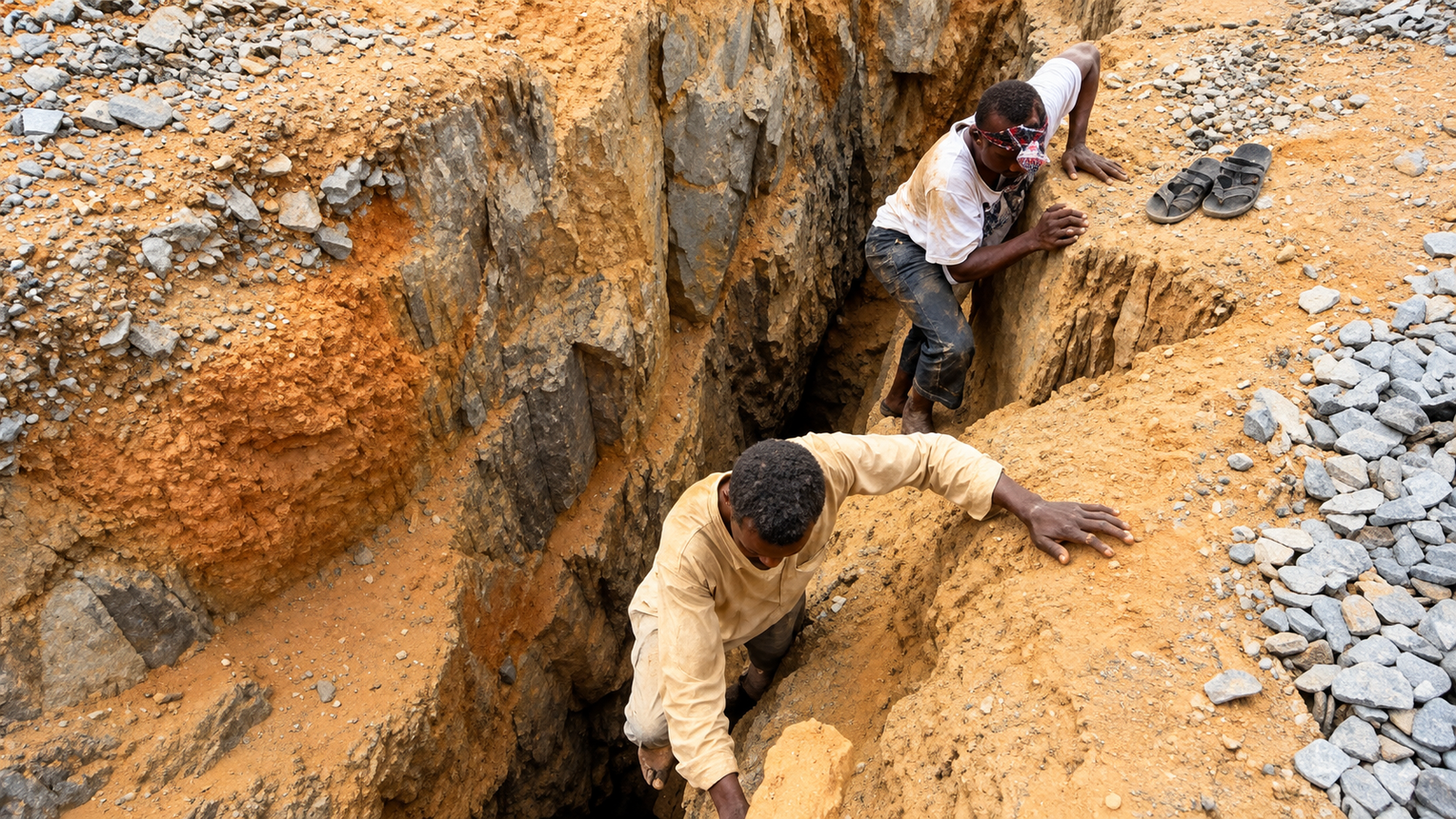
At least 82 people have died following the collapse of an informal gold mine in Sudan’s West Kordofan state, while an unknown number of miners remain missing beneath sand and rubble, according to local officials and community responders.
The disaster occurred at the al-Zara gold mine near al-Nuhud, an area controlled by Sudan’s paramilitary Rapid Support Forces (RSF). The collapse reportedly began in one shaft and spread to interconnected sections of the mining site.
A local administrator told AFP that 60 bodies had initially been recovered, followed by another 22 on Wednesday, bringing the reported death toll to 82. The same official said about 50 people were injured, while others remained trapped or unaccounted for.
Rescue operation faces severe challenges
The search for survivors has been hampered by a lack of specialised rescue equipment. According to an official cited by The Associated Press, only one privately owned forklift was available to help remove material from the collapsed site.
Survivors described the mine as a large and unstable area, with sections of the workings extending more than 30 metres underground. Rescue workers and local residents have been attempting to remove soil and debris while facing the continuing danger of further collapses.
The Kordofan Observatory, a monitoring group, also reported that the affected mining area stretches across more than a kilometre of fragile, sandy ground and that specialised rescue teams were not available.
Informal mining raises safety concerns
The al-Zara operation is among thousands of small-scale and informal mining sites spread across Sudan. Such operations provide livelihoods for many communities but often operate outside formal safety systems.
Sudan has experienced several deadly mine collapses in recent years. A collapse in 2021 killed dozens of miners, while another incident in 2023 also resulted in multiple deaths. The recurring accidents have highlighted the risks associated with poorly regulated mining and inadequate emergency-response capacity.
Disaster comes amid Sudan’s wider conflict
The latest mine disaster comes as Sudan continues to endure a war between the RSF and the Sudanese Armed Forces, which began in April 2023.
West Kordofan is among the areas affected by the conflict, complicating access to remote communities and limiting the availability of emergency services. The region is also important to Sudan’s gold industry, which has continued operating despite the war.
The Associated Press reported that gold production and trade have become closely connected to the country’s wartime economy, while experts cited by the agency have raised concerns about gold being smuggled from areas controlled by armed groups.
Death toll could rise
With rescuers still searching through the collapsed workings, the final death toll remains uncertain. Different reports have given varying figures during the recovery operation, reflecting the difficulty of counting victims at a remote site where many miners remain missing.
For families waiting for news of relatives, the immediate priority remains locating those still trapped and recovering those who did not survive.
This report is based on information available as of September 17, 2026. The casualty figures may change as rescue and recovery operations continue.
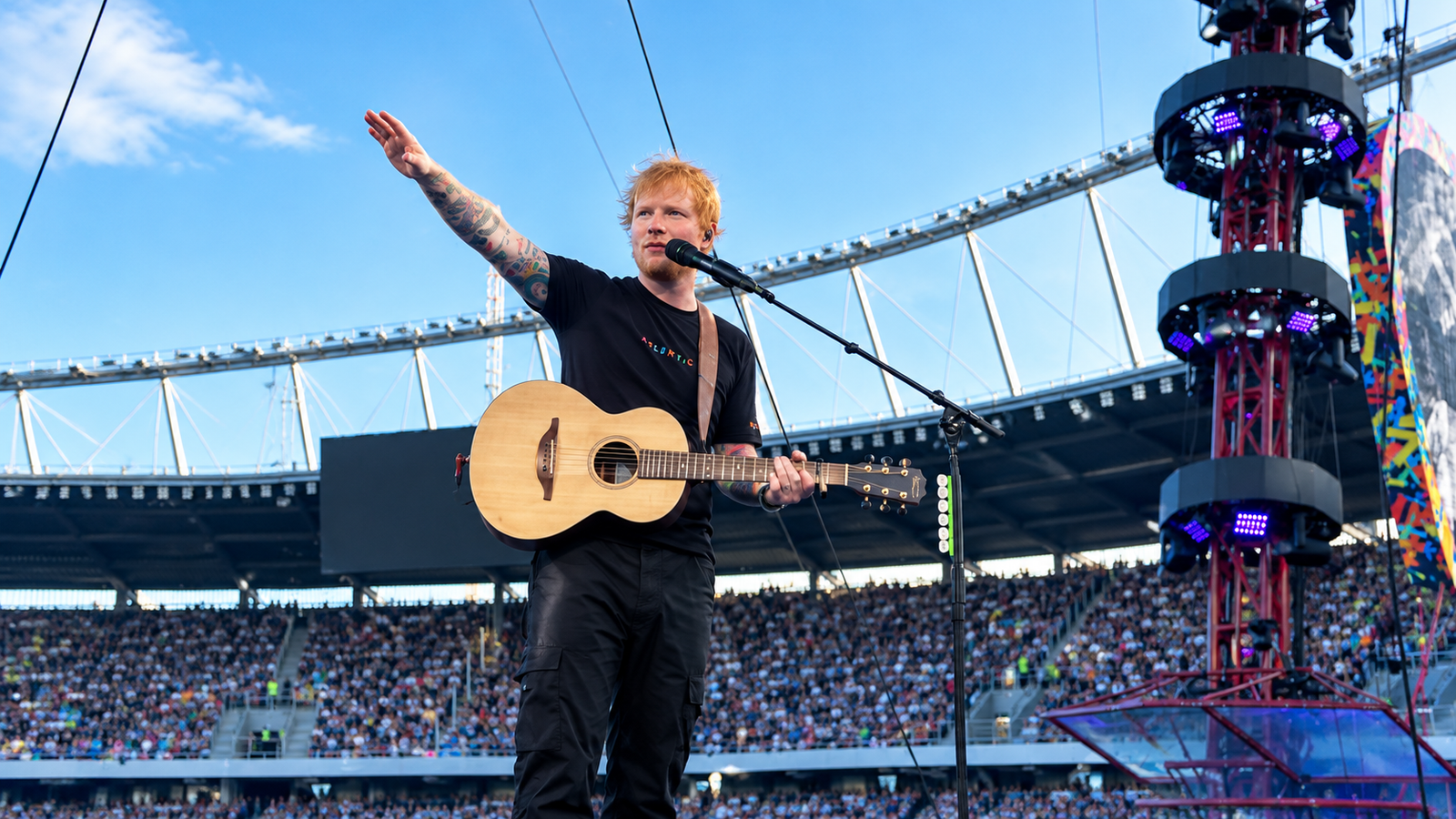
Ed Sheeran’s North American Loop Tour has lost all of its remaining scheduled supporting acts after rapper Macklemore was removed from the tour following pro-Palestinian comments he made during performances in New Jersey.
The departures involve Finneas, Lukas Graham, Aaron Rowe and Irish folk group Beoga, with the artists citing concerns about artistic expression and solidarity with Macklemore.

Ed Sheeran Tickets – Concert Tour Dates – AXS AU
Macklemore removed from remaining dates
Macklemore was scheduled to appear on several of Sheeran’s remaining US stadium dates. During Sheeran’s September shows at New Jersey’s MetLife Stadium, he made comments supporting Palestinians, including a call to “Free Palestine”, while performing his protest song Hind’s Hall.
The tour promoter, Messina Touring Group, subsequently announced that Macklemore would not perform the remaining support dates.
The promoter said venues on upcoming dates had indicated they would not host concerts with Macklemore on the bill, creating the possibility that shows could be cancelled.

New Macklemore Single ‘Growing Up (Sloane’s Song)’ Entrenches Old Camps
Sheeran says the decision was not his
Sheeran subsequently addressed the controversy, saying that removing Macklemore was the promoter’s decision rather than his own.
He said venues had communicated that they would withdraw their shows if Macklemore remained on the bill and that he had spoken with venues and other parties in an attempt to find a solution.
Sheeran also said he did not want to turn his concerts into a public political debate and emphasized his concern for fans, touring staff and musicians whose livelihoods depend on the shows.

First look at Ed Sheeran’s new Loop Tour stage in Auckland
Four supporting acts leave
Following Macklemore’s removal, the remaining support artists announced their departures.
| Artist | Role on tour | Development |
|---|---|---|
| Finneas | Supporting performer | Withdrew from the tour |
| Lukas Graham | Supporting act/replacement | Withdrew |
| Aaron Rowe | Supporting act/replacement | Withdrew |
| Beoga | Sheeran’s touring band | Withdrew |
Finneas said artists should not be silenced when speaking about people they believe are being oppressed. Beoga, meanwhile, had been performing alongside Sheeran during his shows.
Dispute involving Robert Kraft
Macklemore has said that billionaire businessman Robert Kraft, whose Kraft Group owns Gillette Stadium in Massachusetts, played a role in efforts to prevent him from appearing at some of the remaining shows.
Kraft has defended his opposition to Macklemore’s continued participation, citing what he described as the rapper’s broader history of antisemitic rhetoric and imagery. Those characterizations are disputed, and Macklemore has framed his comments as criticism of Israeli government policies and support for Palestinians rather than hostility toward Jewish people.
The promoter’s public explanation has focused on the positions taken by venues and the potential effect on the wider tour rather than attributing the decision solely to one venue owner.
Macklemore pledges tour earnings to Palestinian aid
The controversy has continued beyond the tour itself. Macklemore has said he intends to donate approximately $1 million in net earnings from his time on the Loop Tour to organizations providing humanitarian assistance to Palestinians.
He has also challenged Kraft to match the donation.
What happens to Sheeran’s tour?
The Loop Tour is scheduled to continue despite the departures. The immediate change is that Sheeran no longer has the group of support acts originally planned for the remaining dates.
The episode has also opened a broader debate within the music industry over the boundaries between concert entertainment, political expression and the commercial interests of artists, promoters and stadium operators.
The facts surrounding the dispute are relatively clear — Macklemore was removed, the other supporting acts subsequently withdrew, and Sheeran says the removal was made by the promoter. The competing explanations for why the decision was ultimately made remain contested.
Independent assessment
The incident illustrates how political statements made from a major concert stage can have consequences extending beyond an individual performer. It also raises questions about who ultimately controls the content of large commercial tours when artists, promoters and venue operators hold different positions.
The departures by the other artists make the dispute unusual because the consequences have extended across almost the entire remaining support lineup, rather than being limited to Macklemore’s own performances.
Sources: Associated Press, Reuters, The Guardian, ITV News, Variety and Al Jazeera.

Life after Parliament: What really happens to the V8s and luxury cars MPs drive?

GRA challenges GH¢79.65m judgment debt to Servestar Minwax

IS MANASSEH AUDITING THE AUDITOR-GENERAL OR PUTTING ZOOMLION ON TRIAL AS USUAL?



-

 Entertainment1 week ago
Mahama Is First President to Put GH¢40m Seed Money into Creative Arts Fund: Kojo Preko Dankwa
-

 Culinary1 week ago
The Green Heart of Ghanaian Cuisine: Celebrating Nkontomire and the Art of Abom
-
 General News2 weeks ago
Don’t Punish Them Retrospectively – Educationist Challenges New CSSPS Placement Rule
-
 General News2 weeks ago
OSP Opens Preliminary Investigation into Alleged GH¢70,000 Payment Linked to Parliament’s Vetting
-
 Entertainment1 week ago
Government Repatriates Musician Barosky from UK
-

 Entertainment1 week ago
Keche Supports Street Vendor with GH¢3,000 After She Struggles to Make Sales
-

 General News3 days ago
GTA’s Financial Strength Weakens Despite 2025 Tourism Activities
-

 General News1 week ago
TVET is not for the academically weak – Advocate calls for change in Ghana’s mindset