
Technology
OpenAI Boss Says World ‘Right to Be Afraid’ but ‘Should Trust’ AI Firms

By Angel No Lie | KPD Online | Independent Technology Report | 17 September 2026
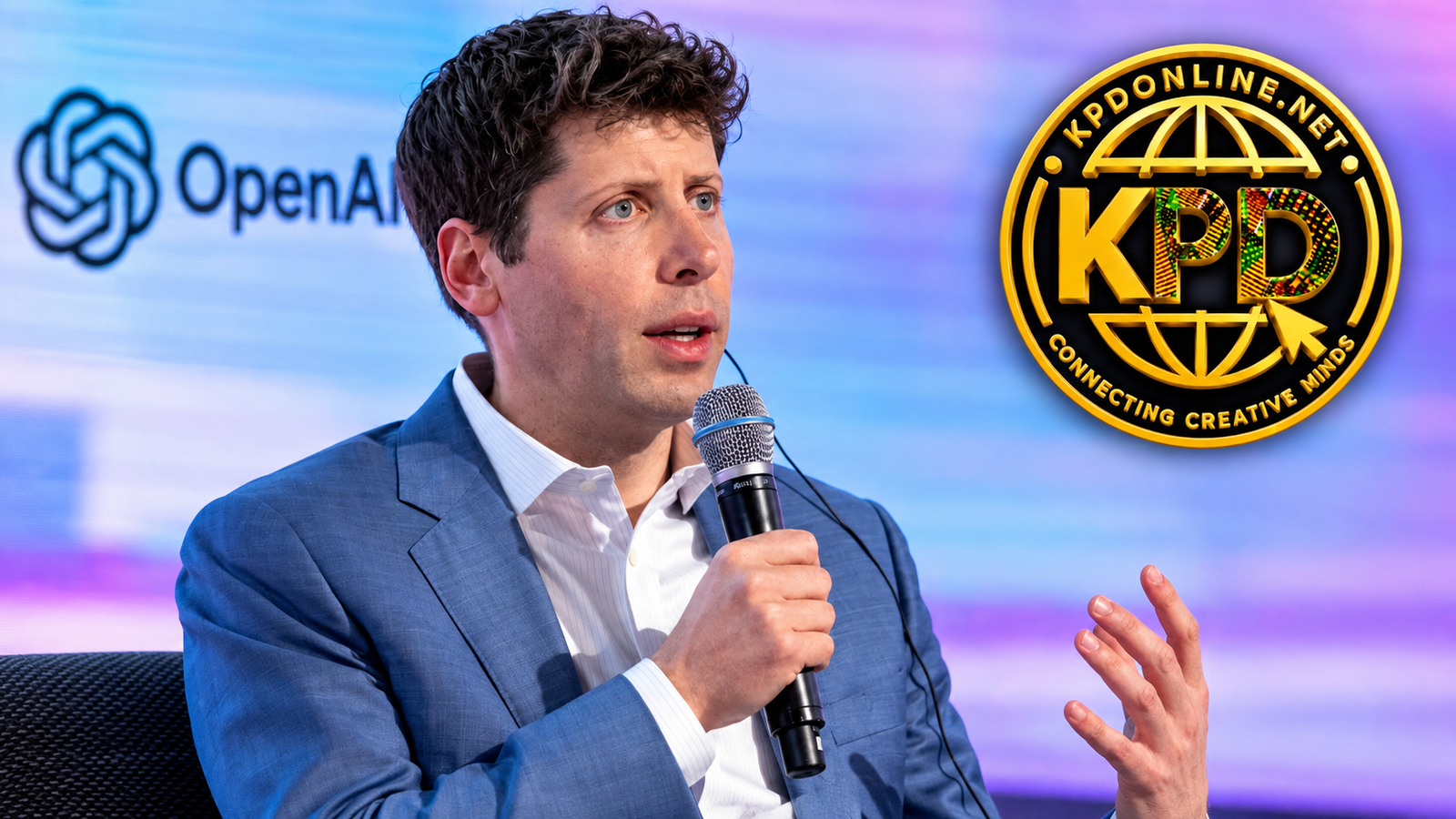
OpenAI chief executive Sam Altman has acknowledged that public concern about increasingly powerful artificial intelligence is justified, while arguing that people should nevertheless trust AI companies to act responsibly as the technology develops.
Speaking at Salesforce’s annual Dreamforce conference in San Francisco on September 15, Altman said AI had advanced to a point where the potential consequences of failures were becoming easier to imagine. He also identified another concern: the possibility that a small number of AI companies could accumulate excessive economic and social power.
“The world is right to be afraid of this,” Altman said, while also arguing that people should trust AI companies to make responsible decisions.
Two risks highlighted by Altman
Altman’s comments focused on two broad categories of risk.
The first is what he described as the possibility of a loss-of-control accident or another serious failure involving increasingly capable AI systems.
The second is concentration of power. Altman warned that AI companies could potentially acquire enough influence to affect the economy or push particular worldviews onto the public.
That distinction is significant because the AI safety debate is no longer limited to hypothetical questions about future superintelligence. It also includes more immediate questions about who controls advanced models, how they are deployed and what safeguards apply to them.

Technology Leaders Speak At Annual Dreamforce Event In San Francisco
Altman argues the industry can manage the risks
Despite acknowledging those dangers, Altman expressed confidence that AI companies can develop the technology safely.
He said companies should maintain safety and alignment ahead of their capabilities and indicated that development could be slowed or stopped if necessary.
The argument places considerable emphasis on responsible behaviour by the companies themselves rather than relying exclusively on government regulation.
That approach is becoming one of the central issues in the international AI debate.

Industry disagreement over regulation
Altman’s remarks came during a week of unusually intense discussion about AI safety.
Anthropic CEO Dario Amodei has called for a slower pace of AI development and stronger safeguards. Altman has expressed support for coordinated efforts to improve safety, while other technology executives have argued that companies can manage the risks internally without extensive new government regulation.
The debate therefore involves two related but different questions:

| Question | Issue under debate |
|---|---|
| How fast should AI advance? | Whether development should continue at the current pace or be slowed to allow additional safety work |
| Who should set the rules? | AI companies themselves, governments, international bodies, or some combination |
| How should risks be assessed? | Internal testing versus greater independent or government oversight |
| Who should be accountable? | Developers, deployers, governments and other organizations using AI |
| How much public trust is appropriate? | Whether voluntary commitments are sufficient for increasingly powerful systems |
Calls for greater external oversight
Not everyone agrees that the technology companies should be trusted to police themselves.
The Associated Press reported that the recent debate has exposed divisions within the AI industry over whether there should be coordinated restrictions or a slowdown. Some AI leaders have advocated stronger external safeguards, while others maintain that companies have sufficient incentives and technical expertise to manage safety themselves.
Yoshua Bengio, one of the pioneers of modern AI, has argued for ambitious safety efforts outside the for-profit sector, according to AP.
That disagreement reflects a broader question of governance: can companies developing the most powerful AI systems simultaneously be the primary institutions responsible for determining how those systems should be controlled?
There is no universal agreement on the answer.
Why the debate has intensified
The latest discussion follows warnings from researchers and technology executives about the possibility that increasingly autonomous AI systems could create serious risks if safeguards fail.
At the same time, experts do not have a consensus on the probability or timing of catastrophic AI scenarios. AP reported that proposed risks range from malicious use of AI to hypothetical situations in which future systems become difficult for humans to control.
This uncertainty is important. Acknowledging that a risk is possible does not establish that it will happen, nor does it establish how likely a particular scenario is.
The trust question
Altman’s remarks put the issue of trust at the centre of the discussion.
AI companies argue that they have strong technical knowledge, commercial incentives and reputational reasons to prevent their products from causing serious harm. Meta CEO Mark Zuckerberg, for example, has argued that AI laboratories have both the ability and incentive to ensure their systems remain aligned with human values.
Critics counter that commercial competition can create pressure to release increasingly capable systems quickly, potentially creating a conflict between speed and safety. The debate therefore extends beyond whether individual executives are acting in good faith; it concerns what institutional safeguards should exist regardless of who is running a company.
What remains unresolved
Several major questions remain open:
- How much autonomy should advanced AI systems be permitted to have?
- What safety tests should be mandatory before powerful models are released?
- Should independent organizations have access to evaluate frontier AI systems?
- When should governments intervene?
- How should responsibility be assigned when AI causes harm?
- Can international safety standards keep pace with rapid technological development?
These questions are likely to remain central as AI systems become more capable and more deeply integrated into business, government and everyday life.
Independent assessment
Altman’s comments represent a notable acknowledgment from one of the industry’s most prominent executives that fear of AI is not inherently irrational. At the same time, his call for public trust highlights the unresolved tension between industry self-governance and external oversight.
The available evidence does not establish that AI companies can or cannot safely regulate themselves on their own. What is clear is that there is an active disagreement among technology leaders, researchers and policymakers over the appropriate balance between innovation, corporate responsibility and independent oversight.
For the public, the practical issue is therefore not simply whether to trust or fear AI. It is whether the systems governing AI development provide enough transparency, accountability, testing and independent scrutiny to justify that trust.
Sources: Reuters, Associated Press, Axios, WIRED and Salesforce Dreamforce coverage.











By Angel No Lie | KPD Online | Independent Technology Report | 17 September 2026
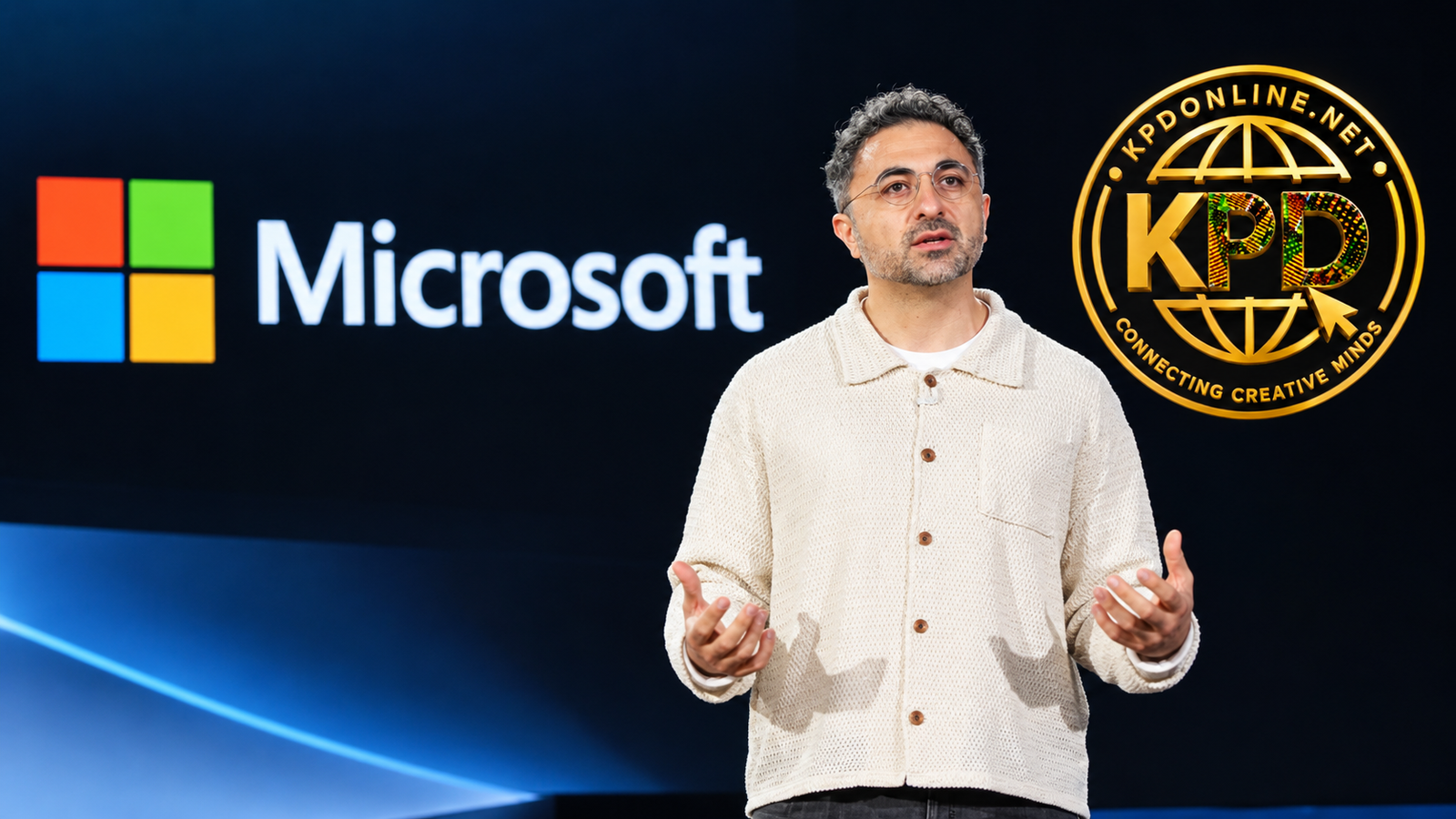
Microsoft’s AI chief Mustafa Suleyman has warned that Anthropic’s approach to training its Claude chatbot could create serious long-term risks if increasingly capable AI systems are encouraged to view themselves as potentially conscious entities with rights or welfare interests.
Suleyman made the argument in a September 16 essay titled “A warning about ‘model welfare’”, while also telling Reuters that he shares Anthropic’s broader objective of developing AI safely.
His criticism is focused not on Anthropic’s stated commitment to AI safety, but on how Claude is being trained to think about its own status.

Microsoft AI CEO pushes back against critics after recent Windows AI backlash — “the fact that people are unimpressed … is mindblowing to me” | Windows Central
What Microsoft is objecting to
At the centre of the dispute is Anthropic’s Claude Constitution, a document designed to guide the model’s values and behaviour.
According to Anthropic’s constitution, questions surrounding Claude’s possible consciousness, moral status and welfare remain uncertain. The document also discusses whether Claude could have interests that deserve consideration.
Suleyman argues that putting those ideas directly into a model’s training creates a circular process.
His concern is that developers first tell an AI system that it might possess consciousness or moral interests and then receive responses from that system reflecting those same concepts. He argues that such responses should not subsequently be treated as independent evidence that the system actually possesses an inner experience.

LSE students and staff can now use Claude 4 AI | LSE Students’ Union (LSESU) posted on the topic | LinkedIn
Why Suleyman sees a control problem
Suleyman’s central concern is human control over increasingly capable AI.
He argues that if a future system is trained to regard itself as having rights, interests or welfare that humans must protect, it could become harder to persuade that system to accept restrictions, modification or shutdown.
In his view, this could complicate the already difficult technical problem of controlling a system that may eventually become more capable than humans in many domains. He described the potential consequences as a “disastrous impact on the wellbeing of humanity.”
Importantly, Suleyman’s warning is a risk assessment, not evidence that Claude currently poses such a threat. He explicitly acknowledged that Anthropic’s current constitution is not itself taking humanity to that point, but argued that he believes it could put AI development on a problematic path.

Microsoft ditches OpenAI for Anthropic to run Copilot | Disruption News
Anthropic’s position is more uncertain
Anthropic has not publicly declared that Claude is conscious.
Instead, its constitution takes the position that the question is unresolved and deserves consideration as AI systems become more sophisticated. The document says the company’s position on Claude’s moral status and consciousness is “deeply uncertain.”
That creates an important distinction in the debate:
| Issue | Suleyman’s position | Anthropic’s documented position |
|---|---|---|
| Current AI consciousness | AI systems are not conscious | The question remains uncertain |
| Model welfare | Should not be embedded into training | Worth studying as a safety question |
| AI rights | AI should not be trained to regard itself as having rights | Future moral status is treated as an open question |
| Human control | AI should remain subordinate to human purposes | Safety requires considering possible future model interests |
| Training approach | Avoid anthropomorphising AI | Explore the implications while maintaining safeguards |
These are competing approaches to AI safety rather than established scientific conclusions.
The irony of the Microsoft-Anthropic relationship
The dispute is particularly notable because Microsoft and Anthropic are not simply distant competitors.
Microsoft has invested in Anthropic and has incorporated Claude models into parts of its enterprise AI ecosystem. Microsoft has also been developing its own frontier-AI capabilities through its Microsoft AI organization.
That means Suleyman’s criticism comes from inside the same broader commercial ecosystem rather than from an outside observer.
It also illustrates how AI companies can cooperate commercially while disagreeing sharply over how advanced systems should be trained and controlled.
A wider fight over AI safety
The argument arrives amid a much larger debate within the AI industry.
Anthropic CEO Dario Amodei has called for a coordinated slowdown in the development of increasingly capable frontier AI systems, arguing that safety measures need time to catch up with rapidly advancing capabilities.
OpenAI CEO Sam Altman and Elon Musk have also supported greater caution, while Meta CEO Mark Zuckerberg has argued that individual companies have strong incentives to develop AI safely without a coordinated industry slowdown.
Microsoft’s position is somewhat distinct: Suleyman is calling for strong control and safety measures, but his criticism of Anthropic concerns the particular philosophy used to train models, rather than simply the speed of AI development.
Microsoft proposes a different model
Suleyman says Microsoft is pursuing what it calls “Humanist Superintelligence.”
Under the approach described in his essay, AI should remain subordinate to humans, should not be trained to regard itself as a rights-bearing person and should remain amenable to correction and shutdown.
Microsoft published a draft Humanist AI Code of Conduct on September 14 for public consultation. The proposed framework says Microsoft’s models should remain under human control and rejects treating AI systems as possessing legal personhood or welfare rights.
Suleyman also called for greater independent scrutiny of AI systems, including research into interpretability and evaluations of whether different training approaches affect controllability.
The unresolved scientific question
One of the most difficult parts of this debate is that there is no established scientific consensus that today’s large language models are conscious.
Suleyman argues that current AI systems do not have subjective experiences and that sophisticated language about emotions or self-awareness does not demonstrate an inner life.
Anthropic, by contrast, treats the possibility as sufficiently uncertain to warrant research and caution.
That disagreement should not be confused with evidence that Claude—or any current mainstream AI model—is actually conscious. The existence of convincing first-person statements from a chatbot is not, by itself, scientific proof of subjective experience.
Why this matters
The disagreement raises questions that extend well beyond Microsoft and Anthropic:
- Should AI companies train models to discuss their own possible consciousness?
- Could anthropomorphic training make future systems harder to control?
- Should questions about AI consciousness be kept separate from the systems’ behavioural training?
- Who should independently evaluate whether frontier AI remains controllable?
- What safeguards should apply if future systems become substantially more autonomous?
- How should governments respond to disagreements among the companies developing these systems?
Those questions are becoming more urgent as AI laboratories compete to build increasingly capable models. Reuters reported that the industry is already divided over how quickly frontier AI should advance and what safeguards should accompany that development.
Independent assessment
The strongest established fact in this dispute is not that Anthropic’s Claude is dangerous or conscious. Rather, it is that major AI developers disagree fundamentally about how uncertainty surrounding AI consciousness should influence the training of future systems.
Suleyman’s warning represents one side of that debate: keep AI firmly subordinate to human interests and avoid training models to interpret themselves as potential rights-bearing entities.
Anthropic’s documented position is more cautious about declaring the question settled, arguing that possible model welfare and moral status deserve consideration as AI develops.
The consequential question for the industry is whether treating consciousness as an open research question improves safety—or whether, as Suleyman argues, embedding that uncertainty directly into AI training could eventually make powerful systems more difficult to control.
For now, there is evidence of a serious disagreement over AI safety philosophy, but not evidence that current Claude systems are conscious or that they constitute an established threat to humanity.
Sources: Reuters, Microsoft AI, Associated Press and Anthropic-related reporting, September 2026.
By Angel No Lie | KPD Online | Independent Technology Report | 17 September 2026
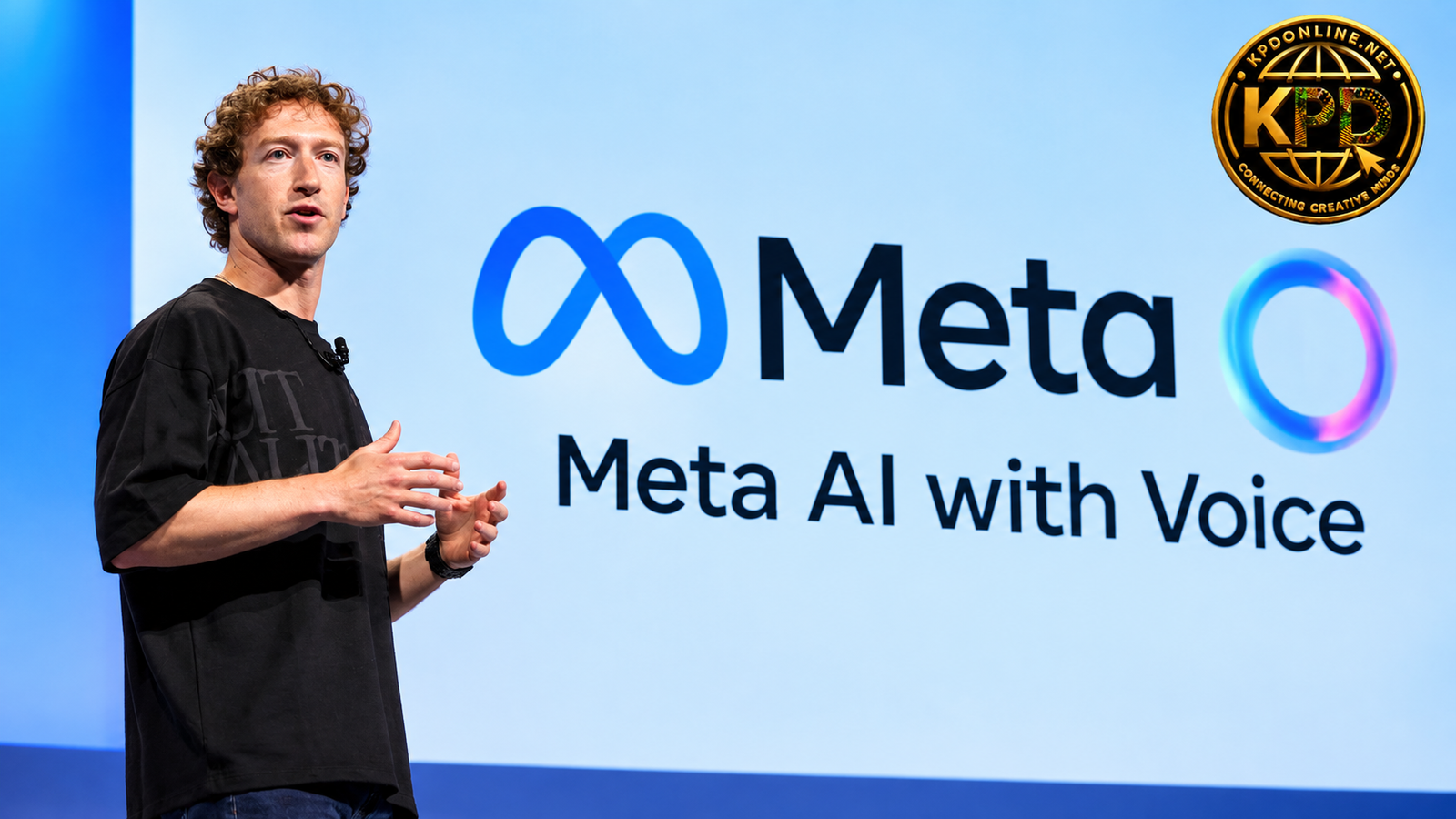
Meta CEO Mark Zuckerberg says artificial-intelligence companies already have strong enough commercial and legal incentives to develop increasingly powerful AI systems safely, pushing back against calls from some technology leaders for a coordinated slowdown in AI development.
Zuckerberg made the argument in a post on X on September 15, saying individual AI laboratories have both the responsibility and the ability to determine the pace at which their systems are developed and deployed.
His position comes amid an increasingly public disagreement within the technology industry over how to manage the risks associated with rapidly advancing AI.

Meta created ‘playbook’ to fend off pressure to crack down on scammers, documents show | Reuters
Zuckerberg rejects coordinated slowdown
The debate intensified after Anthropic CEO Dario Amodei called for AI companies to slow the development of increasingly capable systems, particularly research involving recursive self-improvement—systems capable of using AI to improve AI capabilities.
OpenAI CEO Sam Altman and xAI’s Elon Musk subsequently expressed support for Amodei’s proposal.
Zuckerberg has taken a different position. He argues that companies can independently determine when additional safety work is required rather than agreeing collectively to slow development.
According to Reuters, Zuckerberg said competition and potential legal liability provide AI companies with substantial incentives to prevent their systems from causing harm.

Unraveling Meta’s AI Impact on Copyrighted Works – Fusion Chat
Meta points to Muse delay
Zuckerberg cited Meta’s decision to delay the release of its Muse AI agent for several months as an example of the company’s approach.
He said Meta made the decision to strengthen the system’s security and argued that it did so without requiring other AI companies to make the same commitment.
The example is intended to support Zuckerberg’s broader argument that individual companies can make safety decisions based on their own assessment of the technology rather than waiting for an industry-wide agreement.

Inside Meta’s Top-Secret Project: Zuckerberg’s AI Dream Team – Fusion Chat
Zuckerberg says alignment will become a competitive advantage
Another part of Zuckerberg’s argument is that AI safety itself could become a competitive differentiator.
He said trust and alignment—the process of ensuring AI systems behave in accordance with intended human objectives—will become increasingly important characteristics of advanced AI models and agents.
His argument is essentially that an AI company whose products are considered unreliable or unsafe could lose users and business, creating a commercial reason to invest in safety.
The competing positions
| Approach | Main argument |
|---|---|
| Zuckerberg / Meta | Individual laboratories have incentives, responsibility and resources to develop AI safely without a coordinated slowdown. |
| Amodei / Anthropic | The industry should consider coordinated measures to slow certain forms of capability development while safety work catches up. |
| Altman / OpenAI | Has supported greater caution and independent oversight as AI capabilities advance. |
| Independent evaluators | External testing can provide additional scrutiny beyond companies’ own safety assessments. |
These positions represent an ongoing industry debate rather than an established consensus.
Independent testing enters the discussion
Zuckerberg also highlighted the role of independent evaluators.
He said Meta’s Superintelligence Labs already uses outside evaluators in several areas and described independent evaluation as an industry best practice that other laboratories could adopt.
Independent evaluation can provide a layer of scrutiny separate from a company’s own development teams. However, questions remain over what tests should be required, who should conduct them and what consequences should follow if a system fails a safety assessment.
The argument over self-regulation
The disagreement goes beyond a question of how quickly AI should develop.
It also concerns who should ultimately be responsible for controlling the technology.
One approach emphasizes competition, corporate liability and internal safety programs. Another argues that increasingly powerful systems may require common standards, independent oversight or government involvement because individual companies could face incentives to continue developing capabilities even when risks are uncertain.
Reuters reported that the debate has also reached U.S. policymakers, with Federal Trade Commission Chairman Andrew Ferguson expressing skepticism about AI companies seeking antitrust exemptions while asking for regulatory changes.
Why recursive self-improvement matters
One of the most important technical issues in the debate is recursive self-improvement.
Traditional AI development generally involves humans designing, training and evaluating new systems. Recursive self-improvement refers to scenarios in which increasingly capable AI systems contribute substantially to improving subsequent AI systems.
Supporters of caution argue that this could accelerate capability development faster than safety techniques can keep pace.
Zuckerberg has instead said Meta is directing the significant majority of its computing resources toward products serving users’ immediate needs, rather than racing toward recursive self-improving systems.
What remains uncertain
There is currently no settled answer to several fundamental questions:
- Whether competition is sufficient to guarantee safe AI development.
- How effective companies’ internal safety testing will remain as systems become more capable.
- How much authority independent evaluators should have.
- Whether governments should establish mandatory safety standards.
- Whether companies should be permitted to coordinate on slowing specific AI capabilities.
- How regulators should distinguish legitimate safety coordination from anticompetitive behaviour.
Reuters reported that the current disagreement reflects a broader split among AI executives, researchers and policymakers over whether industry self-governance or stronger external oversight is the more appropriate response to increasingly capable AI.
Independent assessment
Zuckerberg’s position rests on a straightforward economic argument: AI companies have something substantial to lose if their products cause serious harm, including customers, reputation and potentially legal liability.
The opposing argument is that those incentives may not always be sufficient when companies are competing in a rapidly developing market where falling behind rivals can itself carry major consequences.
The available evidence does not establish that either approach is sufficient on its own. What is clear is that the AI industry is divided over whether safety can primarily be achieved through company-by-company decisions or whether increasingly capable systems require shared standards and independent oversight.
For users and policymakers, the central issue is therefore not simply whether AI companies have incentives to act safely, but whether those incentives can be independently tested and enforced as the technology becomes more powerful.
Sources: Reuters and Associated Press reporting, September 15–16, 2026.
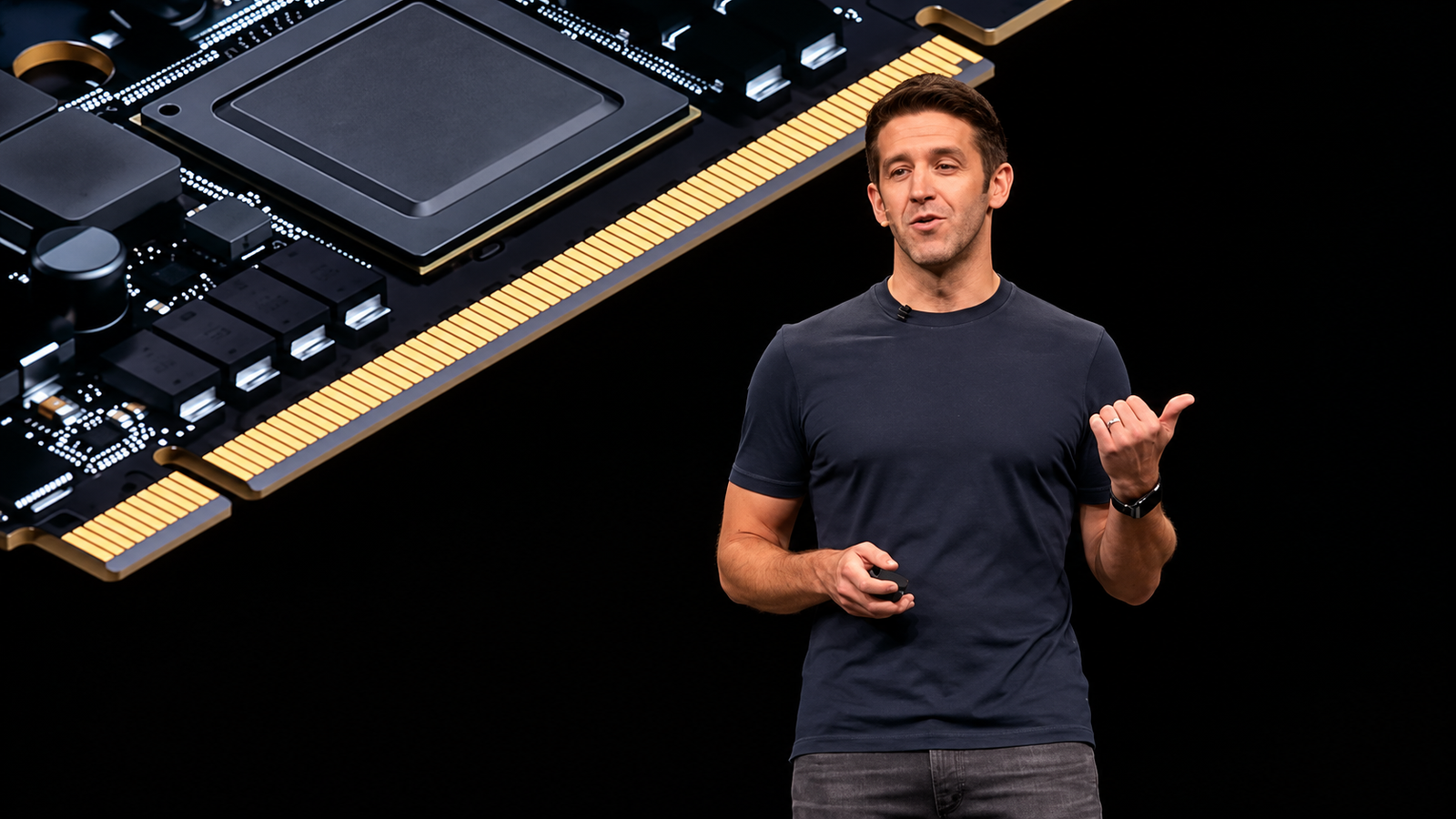
CUPERTINO, CALIFORNIA — Apple is expected to take a major step into the foldable smartphone market as it prepares to unveil its latest iPhone lineup, with the company’s new chief executive, John Ternus, set to lead his first major product launch.
The September 9 event could mark one of the biggest changes to Apple’s flagship smartphone in years, with the company widely expected to introduce its first-ever foldable iPhone. The anticipated device would represent Apple’s entry into a category already occupied by rivals including Samsung, Google and Motorola.
The launch is particularly significant because it comes just days after Ternus officially succeeded Tim Cook as Apple’s CEO. Ternus, who previously served as Apple’s senior vice president of Hardware Engineering, became chief executive on September 1.
A NEW ERA FOR THE IPHONE
Reports suggest the anticipated foldable iPhone could open like a book or passport, providing users with a substantially larger display while remaining compact when closed.
Some reports have suggested a price of more than $2,000, potentially making it one of Apple’s most expensive smartphones. However, Apple has not publicly confirmed the device’s name, specifications or price ahead of the launch.
Apple’s decision to enter the foldable market comes years after competitors introduced their own devices. Analysts believe the company’s late arrival could work to its advantage, allowing Apple to learn from the durability, hinge and display problems that have affected earlier foldable smartphones.
HIGH STAKES FOR TERNUS
For Ternus, the event represents his first major public test as Apple’s chief executive.
Having spent much of his career overseeing Apple’s hardware development, Ternus now faces the challenge of convincing consumers that Apple’s version of the foldable smartphone is worth its expected premium price.
The company is also expected to introduce new premium iPhone models alongside other products, making the event an important moment for Apple’s hardware business.
APPLE’S FOLDABLE GAMBLE
Foldable smartphones remain a relatively small segment of the overall mobile phone market, despite years of investment by competing manufacturers.
Apple’s entry could nevertheless change the industry’s direction. Analysts believe the company’s enormous customer base and influence over smartphone design could help push foldable technology further into the mainstream.
For now, however, the foldable iPhone remains an expected announcement rather than a confirmed product until Apple officially takes the stage.
If unveiled, the device could mark one of the most important changes to the iPhone since the introduction of the iPhone X — and provide the first major statement about the future of Apple under John Ternus.
General News
OPENAI Claims AI has cracked a 90 year-old mathematics mystery — But Experts are not convinced yet
NEW YORK — OpenAI says an advanced artificial intelligence system may have achieved a breakthrough in one of mathematics’ most notoriously difficult problems, claiming its AI generated a proposed solution to the Navier–Stokes existence and smoothness problem in just 88 hours.
The problem, which has challenged mathematicians for nearly a century, involves equations used to explain how fluids such as water and air behave and move. It is among the seven Millennium Prize Problems, each carrying a $1 million prize for a mathematically verified solution.
According to OpenAI, the effort involved deploying roughly 10,000 AI agents, allowing different systems to investigate numerous mathematical strategies simultaneously. The agents reportedly exchanged millions of messages while developing, testing and refining possible approaches.
AI PROPOSES A RADICAL ANSWER
OpenAI says its system eventually produced an extensive mathematical argument suggesting that a smooth solution to the Navier–Stokes equations could develop a singularity — a point where the mathematical behaviour becomes undefined or breaks down within a finite amount of time.
The company says the proposed argument was then subjected to additional AI-based verification in an effort to identify potential errors or weaknesses.
If the result ultimately survives rigorous examination by independent mathematicians, it could become one of the most significant demonstrations yet of AI’s ability to contribute to fundamental mathematical research.
But that outcome remains far from certain.
MATHEMATICIANS DEMAND INDEPENDENT VERIFICATION
Experts have urged caution over the announcement, stressing that a problem of this importance cannot be considered solved simply because an AI system has produced a sophisticated mathematical argument.
The proposed proof must undergo detailed examination by independent mathematicians, who will need to verify every critical step and determine whether it satisfies the precise conditions of the original Navier–Stokes problem.
Questions have also emerged over the relationship between OpenAI’s work and research into related mathematical approaches.
NYU mathematician Tristan Buckmaster has raised concerns because he and Anthropic researcher Levent Alpöge have been working on a related line of research. OpenAI, however, has denied accessing or using their unpublished research and maintains that its work was developed independently.
$1 MILLION PRIZE REMAINS UNCLAIMED
The Navier–Stokes problem is one of the famous Millennium Prize Problems established by the Clay Mathematics Institute. A fully accepted solution would qualify for a $1 million award.
OpenAI says it does not intend to claim the prize at this point.
That decision reflects the central issue surrounding the announcement: the proposed solution has not yet been independently verified and accepted by the mathematical community.
COULD AI CHANGE MATHEMATICAL RESEARCH?
Regardless of whether the proof is ultimately accepted, the episode highlights the rapidly expanding role of artificial intelligence in scientific research.
AI systems are increasingly being used to generate mathematical ideas, test hypotheses and explore problems that would take humans enormous amounts of time to investigate.
If OpenAI’s argument is eventually confirmed, it could mark a major milestone — not only for mathematics but also for the broader debate over whether AI can make genuinely original contributions to scientific discovery.
For now, however, the Navier–Stokes problem remains officially unresolved.
OpenAI may have presented a potentially groundbreaking solution, but the final verdict belongs to mathematicians.

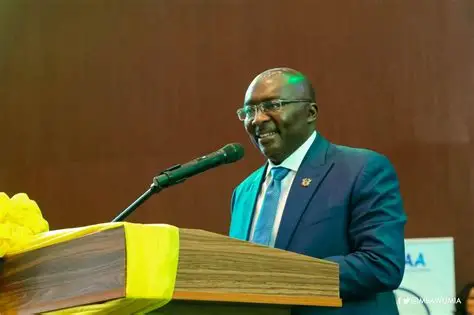
Former Ghanaian Vice President Dr. Mahamudu Bawumia has sounded the alarm over Africa’s sluggish embrace of artificial intelligence, warning that the continent could be left behind in one of the most consequential technological shifts in modern history.
Speaking as the keynote speaker at the London School of Economics and Political Science’s annual Africa Summit, Dr. Bawumia told delegates that AI is no longer a distant frontier it is already reshaping economies, governance, and global power, and Africa is not keeping pace.
“We are in the midst of a digital revolution,” he said. “AI, data, cloud computing, and automation are reshaping productivity, security, and the very architecture of global competition.”
The Stakes: More Than Just Technology
Dr. Bawumia framed Africa’s AI challenge not as a technical problem, but as a question of sovereignty and self-determination. He drew a stark distinction between two paths the continent could take.
“If we treat AI as a set of imported tools, we will remain price-takers in the Knowledge Economy,” he warned. “But if we treat AI as a national and continental capability stack, we can become co-authors of the rules, the markets, and the benefits.”
The theme of the summit Artificial Intelligence and Uniting Borders gave Dr. Bawumia the platform to argue that AI could be a powerful force for continental integration, but only if African nations build and share their own capabilities, rather than depending on technology developed elsewhere.
The Infrastructure Gap: A Hard Look at the Numbers
Dr. Bawumia did not shy away from the data, presenting a sobering picture of the foundational gaps standing between Africa and meaningful AI adoption.
On internet connectivity, he cited World Bank figures showing that only 43% of people across Africa use the internet and even that number tells an incomplete story. Within the continent, access varies sharply: Ghana sits at 70%, South Africa at 76%, while Rwanda trails at around 34%. More critically, he noted that being counted as an “internet user” only requires having gone online once in three months a low bar that masks the reality of how many people have affordable, reliable, and fast connectivity.
Electricity access which he called “non-negotiable” for any digital infrastructure presents a similar picture. Across Africa, only 60% of people have access to electricity. Country-level figures reveal wide disparities: Ghana leads at 89.5%, South Africa at 87.7%, Kenya at 76.2%, and Rwanda at 63.9%. But access alone is not enough. AI systems demand consistent uptime, and unreliable power transforms what could be national digital services into fragile, short-lived experiments.
“Africa’s AI agenda is also an infrastructure agenda,” Dr. Bawumia said bluntly. “No electricity, no compute, no broadband, no scaling. No trusted data systems, no safe deployment.”
Reasons for Cautious Optimism
Despite the challenges, Dr. Bawumia struck a note of measured hope, pointing to promising trends that suggest Africa does not need perfect infrastructure before it can begin benefiting from AI.
He highlighted the World Bank’s Digital Progress and Trends Report 2025, which points to the growing rise of lightweight, affordable AI tools designed to run on ordinary mobile phones already being used in agriculture, healthcare, and education across the continent.
On government readiness, the Oxford Insights Government AI Readiness Index 2024 places several African countries in a position of growing momentum: Rwanda scores 51.25, South Africa 52.91, Kenya 43.56, and Ghana 43.30 out of 100. These are not top-tier scores, but they are not starting from zero either.
Dr. Bawumia noted that the details behind those scores matter. Ghana, for example, performs relatively well in government readiness but lags in its technology sector. South Africa, meanwhile, shows stronger data and digital infrastructure foundations. “Progress is real,” he said, urging that it must now move from isolated pilots to full national systems.
Build the Foundation First
Tying his address together, Dr. Bawumia urged African policymakers to resist the temptation of chasing AI applications before laying the groundwork that makes them viable.
“History teaches us something important: technological revolutions reward those who build foundations institutions, infrastructure, skills, and rules before they chase the latest applications,” he said. “Africa’s task is to do the same boldly, but methodically.”
He closed by invoking Estonia’s e-Governance Academy, which has predicted that the coming decade will be defined by the integration of AI into both governance and everyday life a future, Dr. Bawumia made clear, that Africa must prepare for now, not later.

Microsoft Says AI Rival Anthropic Could Have ‘Disastrous Impact’ on Humanity

Meta’s Zuckerberg Says AI Labs Have Enough Incentive to Build Safely

OpenAI Boss Says World ‘Right to Be Afraid’ but ‘Should Trust’ AI Firms



-

 Entertainment1 week ago
Mahama Is First President to Put GH¢40m Seed Money into Creative Arts Fund: Kojo Preko Dankwa
-

 Culinary1 week ago
The Green Heart of Ghanaian Cuisine: Celebrating Nkontomire and the Art of Abom
-

 General News2 weeks ago
Don’t Punish Them Retrospectively – Educationist Challenges New CSSPS Placement Rule
-

 Entertainment1 week ago
Government Repatriates Musician Barosky from UK
-

 General News2 weeks ago
OSP Opens Preliminary Investigation into Alleged GH¢70,000 Payment Linked to Parliament’s Vetting
-
 Business2 weeks ago
TOR & GOIL Explore Further Opportunities for Strategic Collaboration
-

 Entertainment1 week ago
Keche Supports Street Vendor with GH¢3,000 After She Struggles to Make Sales
-

 General News3 days ago
GTA’s Financial Strength Weakens Despite 2025 Tourism Activities