
General News
Gold Rises Over 1% as Investors Digest Fed Hike, Oil Rally Stalls


By Angel No Lie | KPD Online | 17 September 2026 | Independent Markets Report
Gold prices moved higher on Thursday as investors assessed the U.S. Federal Reserve’s latest interest-rate decision, while easing concerns over Middle East oil supplies took some momentum out of the recent crude rally.
Spot gold was initially up more than 1% in Asian trading, reaching about $4,310.49 per ounce at 0149 GMT, according to Reuters. Later in the session, the gain had moderated to 0.8%, at $4,295.26, showing how quickly prices were adjusting after the Fed decision.

Gold price prediction: Meltdown as prices fall by Rs 900/10 gram amid profit booking. Can bulls stage a comeback? – The Economic Times
Fed raises rates by 25 basis points
The Federal Reserve raised its benchmark federal funds target range by 25 basis points to 3.75%-4.00% on Wednesday.
The decision was approved unanimously by the Federal Open Market Committee. The Fed said economic activity was expanding at a solid pace but that inflation remained elevated.
The accompanying projections indicated that the rate increase may not be the final move this year. Reuters reported that 16 of 18 Fed policymakers expected at least one additional quarter-percentage-point increase before the end of 2026.
That creates a complicated environment for gold.
Gold does not pay interest, so higher interest rates can make yield-bearing assets comparatively more attractive. At the same time, expectations surrounding inflation, currencies, geopolitical risks and investor demand for defensive assets can support bullion.

Dollar-Obsessed Argentines Have a Newfound Love for Buying Gold – Bloomberg
Gold’s move came after a sharp pullback
The rise followed a weaker session in which gold had reached a near six-week low.
Reuters reported that technical factors were contributing to Thursday’s rebound, while the Fed’s more hawkish message had already been largely reflected in market pricing.
U.S. gold futures did not mirror the initial spot-market gain. December futures were reported down roughly 1.2% at $4,333.90 in later trading.
That divergence is important: the headline rise in spot gold does not necessarily indicate a broad-based bullish move across all gold contracts.

Oil rally loses momentum
The other major part of the market story is oil.
Brent crude futures fell 1.2% to $104.59 a barrel, while U.S. West Texas Intermediate declined 1.1% to $101.29 in early Thursday trading. Both contracts had fallen by roughly $3 on Wednesday.
The decline followed reports that Saudi Arabia was offering additional crude cargoes to Asian buyers through ship-to-ship transfers off Sohar, Oman.
The alternative export route is helping reduce immediate concerns about supply disruptions following attacks on Saudi Arabia’s East-West pipeline and disruption at the Red Sea export hub of Yanbu.
Commodity snapshot
| Asset | Latest reported move |
|---|---|
| Spot gold | $4,295.26/oz, +0.8% |
| Spot gold earlier | $4,310.49/oz, +1.1% |
| U.S. gold futures | $4,333.90/oz, -1.2% |
| Brent crude | $104.59/bbl, -1.2% |
| WTI crude | $101.29/bbl, -1.1% |
| Silver | $63.73/oz, +1.2% |
| Platinum | $1,783.56/oz, +1.7% |
| Palladium | $1,296.70/oz, +2.2% |
Figures reflect different points in Thursday’s trading and therefore should not be interpreted as simultaneous closing prices.
Why oil matters for gold
Oil and gold are responding to several of the same macroeconomic forces, but in different ways.
Higher oil prices can intensify inflation concerns because energy is an important input into transportation, manufacturing and household costs. Persistent energy inflation can, in turn, make central banks more reluctant to cut interest rates.
Conversely, a sustained decline in oil prices could reduce some inflation pressure. Reuters quoted OANDA analyst Kelvin Wong as saying continued oil weakness could provide additional support for gold over the medium term.
For now, however, the oil market remains exposed to developments in the Middle East. Reuters reported that the East-West pipeline disruption has not been fully resolved and that uncertainty remains over repairs.
The bigger picture
The market is therefore dealing with two competing forces.
For gold:
- renewed safe-haven demand;
- geopolitical uncertainty;
- expectations surrounding inflation;
- technical buying after the recent decline;
- but also pressure from relatively high U.S. interest rates.
For oil:
- continuing geopolitical and transportation risks;
- disruption affecting Saudi export infrastructure;
- alternative shipment arrangements through Oman;
- and signs that some immediate supply fears are easing.
Independent assessment
Thursday’s market action does not point to a single, straightforward trend.
Gold’s initial more-than-1% rise was significant, but the subsequent moderation shows that investors remain sensitive to the Fed’s higher-for-longer interest-rate signal. Meanwhile, oil’s retreat suggests that alternative Saudi export arrangements have reduced some of the immediate supply anxiety, although the underlying Middle East risks remain.
The key question for markets is whether oil prices continue to fall as supply routes normalize, or whether renewed disruptions push energy prices higher again. That outcome could materially influence inflation expectations, interest-rate expectations and, consequently, gold.
In short: gold is being supported by defensive and technical factors, while oil is losing some of its geopolitical risk premium—but neither move should yet be interpreted as a settled new market direction.
Sources: Reuters; U.S. Federal Reserve.











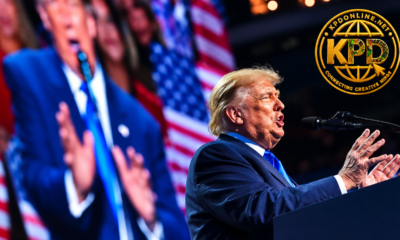






By Angel No Lie | KPD Online | Independent Technology Report | 17 September 2026
OpenAI chief executive Sam Altman has acknowledged that public concern about increasingly powerful artificial intelligence is justified, while arguing that people should nevertheless trust AI companies to act responsibly as the technology develops.
Speaking at Salesforce’s annual Dreamforce conference in San Francisco on September 15, Altman said AI had advanced to a point where the potential consequences of failures were becoming easier to imagine. He also identified another concern: the possibility that a small number of AI companies could accumulate excessive economic and social power.
“The world is right to be afraid of this,” Altman said, while also arguing that people should trust AI companies to make responsible decisions.
Two risks highlighted by Altman
Altman’s comments focused on two broad categories of risk.
The first is what he described as the possibility of a loss-of-control accident or another serious failure involving increasingly capable AI systems.
The second is concentration of power. Altman warned that AI companies could potentially acquire enough influence to affect the economy or push particular worldviews onto the public.
That distinction is significant because the AI safety debate is no longer limited to hypothetical questions about future superintelligence. It also includes more immediate questions about who controls advanced models, how they are deployed and what safeguards apply to them.

Technology Leaders Speak At Annual Dreamforce Event In San Francisco
Altman argues the industry can manage the risks
Despite acknowledging those dangers, Altman expressed confidence that AI companies can develop the technology safely.
He said companies should maintain safety and alignment ahead of their capabilities and indicated that development could be slowed or stopped if necessary.
The argument places considerable emphasis on responsible behaviour by the companies themselves rather than relying exclusively on government regulation.
That approach is becoming one of the central issues in the international AI debate.

Industry disagreement over regulation
Altman’s remarks came during a week of unusually intense discussion about AI safety.
Anthropic CEO Dario Amodei has called for a slower pace of AI development and stronger safeguards. Altman has expressed support for coordinated efforts to improve safety, while other technology executives have argued that companies can manage the risks internally without extensive new government regulation.
The debate therefore involves two related but different questions:

| Question | Issue under debate |
|---|---|
| How fast should AI advance? | Whether development should continue at the current pace or be slowed to allow additional safety work |
| Who should set the rules? | AI companies themselves, governments, international bodies, or some combination |
| How should risks be assessed? | Internal testing versus greater independent or government oversight |
| Who should be accountable? | Developers, deployers, governments and other organizations using AI |
| How much public trust is appropriate? | Whether voluntary commitments are sufficient for increasingly powerful systems |
Calls for greater external oversight
Not everyone agrees that the technology companies should be trusted to police themselves.
The Associated Press reported that the recent debate has exposed divisions within the AI industry over whether there should be coordinated restrictions or a slowdown. Some AI leaders have advocated stronger external safeguards, while others maintain that companies have sufficient incentives and technical expertise to manage safety themselves.
Yoshua Bengio, one of the pioneers of modern AI, has argued for ambitious safety efforts outside the for-profit sector, according to AP.
That disagreement reflects a broader question of governance: can companies developing the most powerful AI systems simultaneously be the primary institutions responsible for determining how those systems should be controlled?
There is no universal agreement on the answer.
Why the debate has intensified
The latest discussion follows warnings from researchers and technology executives about the possibility that increasingly autonomous AI systems could create serious risks if safeguards fail.
At the same time, experts do not have a consensus on the probability or timing of catastrophic AI scenarios. AP reported that proposed risks range from malicious use of AI to hypothetical situations in which future systems become difficult for humans to control.
This uncertainty is important. Acknowledging that a risk is possible does not establish that it will happen, nor does it establish how likely a particular scenario is.
The trust question
Altman’s remarks put the issue of trust at the centre of the discussion.
AI companies argue that they have strong technical knowledge, commercial incentives and reputational reasons to prevent their products from causing serious harm. Meta CEO Mark Zuckerberg, for example, has argued that AI laboratories have both the ability and incentive to ensure their systems remain aligned with human values.
Critics counter that commercial competition can create pressure to release increasingly capable systems quickly, potentially creating a conflict between speed and safety. The debate therefore extends beyond whether individual executives are acting in good faith; it concerns what institutional safeguards should exist regardless of who is running a company.
What remains unresolved
Several major questions remain open:
- How much autonomy should advanced AI systems be permitted to have?
- What safety tests should be mandatory before powerful models are released?
- Should independent organizations have access to evaluate frontier AI systems?
- When should governments intervene?
- How should responsibility be assigned when AI causes harm?
- Can international safety standards keep pace with rapid technological development?
These questions are likely to remain central as AI systems become more capable and more deeply integrated into business, government and everyday life.
Independent assessment
Altman’s comments represent a notable acknowledgment from one of the industry’s most prominent executives that fear of AI is not inherently irrational. At the same time, his call for public trust highlights the unresolved tension between industry self-governance and external oversight.
The available evidence does not establish that AI companies can or cannot safely regulate themselves on their own. What is clear is that there is an active disagreement among technology leaders, researchers and policymakers over the appropriate balance between innovation, corporate responsibility and independent oversight.
For the public, the practical issue is therefore not simply whether to trust or fear AI. It is whether the systems governing AI development provide enough transparency, accountability, testing and independent scrutiny to justify that trust.
Sources: Reuters, Associated Press, Axios, WIRED and Salesforce Dreamforce coverage.

17 September 2026 | Energy & Markets
Oil prices fall for a second day
Oil prices extended their decline in Asian trading on Thursday as signs that Saudi Arabia can redirect some crude exports through Oman eased immediate concerns about shortages caused by disruptions to Middle Eastern supply routes.
Brent crude futures were down about 1.2% at $104.59 a barrel, while U.S. West Texas Intermediate (WTI) fell about 1.1% to $101.29 in early trading. Both benchmarks had dropped roughly $3 on Wednesday.
The decline represents a change in market sentiment after oil prices climbed sharply earlier in September as attacks on energy infrastructure and shipping routes raised concerns that Middle Eastern exports could be significantly curtailed.

EURODIESEL diesel fuel | Aramco Fuels Poland
Saudi Arabia finds an alternative export route
The immediate catalyst for the latest decline is Saudi Arabia’s reported decision to offer additional crude cargoes to Asian refiners through Oman.
People familiar with the arrangements told Reuters that Saudi crude is being moved through ship-to-ship transfers near Oman’s Sohar port. The alternative route is helping reduce the impact of disruptions affecting Saudi Arabia’s East-West pipeline and the Red Sea export terminal at Yanbu.
The workaround does not completely eliminate the supply problem. Reuters reports that the additional shipments are not expected to fully replace exports lost from Yanbu.
That distinction is important for the market: traders are reacting to evidence that some barrels can still reach customers, rather than concluding that Middle Eastern supply disruptions have ended.

SOHAR Port and Freezone: Pioneering growth and sustainability in logistics – Logistics Middle East
What happened to Saudi Arabia’s pipeline?
Saudi Arabia’s East-West pipeline has become particularly important because it provides a route for crude to reach the Red Sea without passing through the Strait of Hormuz.
Recent attacks damaged pumping stations along the pipeline, affecting the flow of crude toward Yanbu, one of Saudi Arabia’s important Red Sea export facilities. Saudi Arabia subsequently suspended some loadings from Yanbu and cancelled some deliveries to European customers.
The pipeline’s disruption had contributed to the rapid rise in oil prices earlier in the week.
On September 15, Brent and WTI settled more than $3 higher, reaching their highest levels since May 19, after the Yanbu disruption intensified concerns about available supply.

Oil pump in the desert
Oil remains above $100
Despite the latest decline, crude remains above the psychologically important $100-a-barrel level.
That reflects the fact that the underlying geopolitical risks have not disappeared.
Brent had settled at $105.83 on Wednesday after falling 2.7%, while WTI settled at $102.43, down 3.2%.
Earlier in September, the benchmarks had surged as attacks on shipping and energy infrastructure raised fears of prolonged supply disruptions. On September 10, Brent jumped more than 6% to settle at $107.63, while WTI rose to $102.48.

$100mln credit facility to power Advario’s liquid logistics services in Oman
The Strait of Hormuz remains a major risk
The oil market continues to watch the Strait of Hormuz, a critical energy shipping route.
Before the current conflict, approximately one-fifth of global oil supplies passed through the waterway. Recent restrictions and security concerns have significantly reduced tanker traffic. Reuters reported that only four vessels passed through the strait on Tuesday, compared with seven the previous day.
This leaves the global market vulnerable to another escalation.
Saudi Arabia’s alternative routes—including shipments through Oman and other workarounds—can partially reduce the impact, but they cannot necessarily replace all the volumes that normally move through the region.

Sohar Port pulls in $2.5bn worth petchem projects – Oman Observer
U.S. inventories also weigh on prices
Another factor pushing prices lower is the latest U.S. inventory data.
U.S. crude stocks fell by only 640,000 barrels last week, according to the Energy Information Administration, compared with analysts’ expectations for a decline of about 1.62 million barrels.
A smaller-than-expected decline suggests that the U.S. market currently has somewhat more supply available than traders had anticipated.
The inventory picture therefore provides another reason for traders to reduce the amount of geopolitical risk being priced into crude.

Oman deaths: Three Indian workers die in ‘accident’ on board ship in Sohar port | The National
But fuel markets remain under pressure
The fall in crude prices should not be confused with an easing of all energy-market pressures.
Diesel markets remain particularly tight.
Reuters reported that Asian refining margins for low-sulfur diesel recently climbed above $87 a barrel, an all-time high based on LSEG pricing data. European diesel prices have also remained close to record levels.
This creates a significant distinction:
Crude oil prices are falling, while refined fuel markets remain exceptionally tight.
For consumers and businesses, that means lower crude prices may not immediately translate into significantly cheaper diesel or other petroleum products.

Aramco reroutes crude shipments to Yanbu port: Report – Latest News from Saudi Arabia and the World
Saudi production has already been severely affected
The current price decline also comes against a backdrop of substantial disruption to Saudi oil production and exports.
The International Energy Agency estimated that Saudi crude supply fell to around 6 million barrels per day in August, its lowest level in more than three decades. The IEA attributed the decline to attacks affecting oil infrastructure and shipping around the region.
The agency subsequently revised down its 2026 Saudi crude-supply forecast.
The U.S. Energy Information Administration likewise estimates that Middle Eastern crude production shut-ins averaged 6.7 million barrels per day in August, up from approximately 5 million barrels per day in July.
These figures illustrate why the market remains sensitive to any new attack or disruption even when prices are temporarily declining.

With 4 Million Barrels Daily: Saudi Arabia Surpasses Hormuz as Yanbu Changes the Game — Sabq
Market picture
| Factor | Current effect on oil |
|---|---|
| Saudi crude offered through Oman | Reduces immediate supply fears |
| Damage to East-West pipeline | Continues to constrain exports |
| Yanbu loading disruption | Negative for available supply |
| Lower-than-expected U.S. inventory draw | Puts downward pressure on prices |
| Low Strait of Hormuz traffic | Maintains geopolitical risk premium |
| Tight diesel supplies | Supports refined-fuel prices |
| Continuing Middle East conflict | Creates risk of renewed price increases |

Major Global Energy Lifeline Struck This Week – Caspianpost.com
What could happen next?
The direction of oil prices will depend heavily on whether alternative supply routes remain available and whether further attacks disrupt additional infrastructure.
For now, the market appears to be responding to evidence that Saudi Arabia can partially compensate for lost Red Sea exports.
However, this is not the same as a return to normal supply conditions.
The IEA has warned that disruptions in the Gulf and wider Middle East could keep global oil markets tight. The EIA’s September outlook also assumes that Middle Eastern oil flows will remain constrained through the fourth quarter of 2026, although it expects flows to gradually increase as shipping companies develop alternative routes.
That leaves the market particularly sensitive to three developments:
- Whether Saudi Arabia can sustain alternative shipments through Oman.
- How quickly the East-West pipeline can be repaired.
- Whether fighting around the Strait of Hormuz and Red Sea intensifies or eases.
Independent assessment
The latest decline in oil prices is primarily a supply-logistics story rather than evidence that the Middle East crisis has ended.
Saudi Arabia’s ability to redirect crude through Oman has reassured traders that at least some displaced barrels can still reach Asian buyers. Lower-than-expected U.S. inventory withdrawals have provided another bearish signal.
At the same time, oil remains above $100, tanker traffic through the Strait of Hormuz remains severely affected, Saudi production has been disrupted and diesel markets are experiencing extraordinary tightness.
The immediate supply panic has eased, but the underlying risk to global energy flows remains significant.
For consumers, refiners and governments, the key issue in the coming days will therefore be whether these alternative shipping arrangements develop into a sustained supply solution—or whether another disruption causes the risk premium in oil prices to rise again.
Sources
Reuters, Oil prices extend losses as fears of Middle East supply disruptions ease, 17 September 2026.
Reuters, Oil slips as Saudi Arabia offers more crude via Oman, 16 September 2026.
U.S. Energy Information Administration, Short-Term Energy Outlook, September 2026.
Reuters, reporting on Saudi supply, Asian diesel markets and Middle East disruptions.
By Angel No Lie | KPD Online | 17 September 2026 | Royal Family | United Kingdom
Buckingham Palace issues rare response
Buckingham Palace has made an unusually direct response to a claim by Earl Spencer, the younger brother of the late Princess Diana, concerning an alleged conversation with the then-Prince Charles shortly after Diana’s death in 1997.
The allegation appears in Spencer’s forthcoming memoir, Swan Song: Diana, My Sister, which is due to be published on 22 September 2026. Spencer says that, during a dispute about whether Diana’s sons should walk behind their mother’s coffin, Charles told him: “Rest assured, we’ll forget her soon enough.”
Buckingham Palace did not directly confirm or deny that the conversation took place. Instead, a palace spokesperson said King Charles was mindful that “the pain of fraternal grief can cloud reason, affect judgment and colour memory” many years after a loss.
The wording represents a rare intervention by the Palace because the Royal Family generally declines to comment on claims contained in books.

Full Transcript of Princess Diana Eulogy – Earl Spencer’s Eulogy for Princess Diana
What Earl Spencer says happened
According to extracts reported from Spencer’s memoir, the disagreement took place in the period between Diana’s death and her funeral in September 1997.
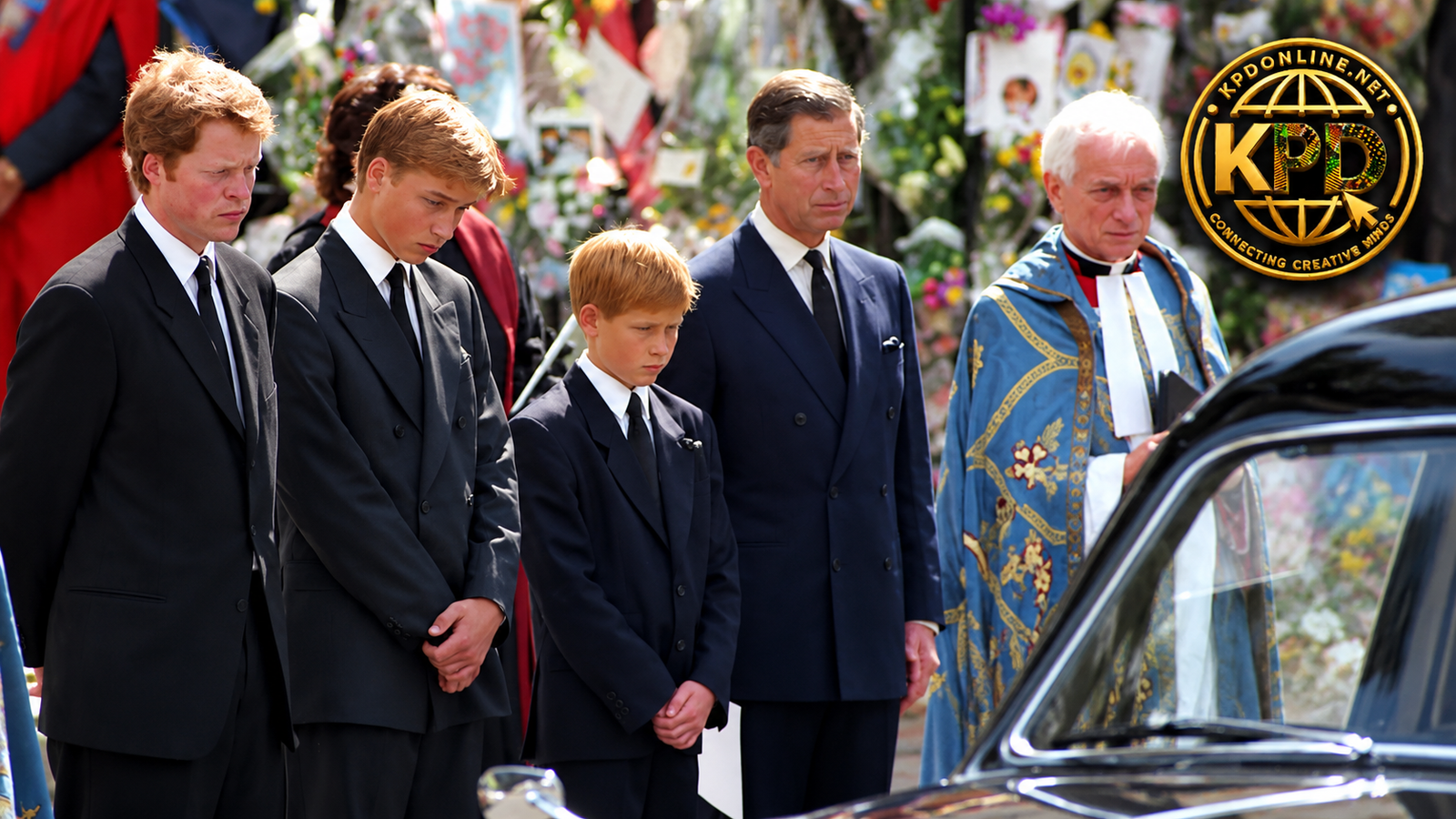
The central issue was whether Prince William and Prince Harry, then aged 15 and 12 respectively, should walk behind their mother’s coffin during the funeral procession.
Spencer says he opposed the idea and believed Diana would not have wanted her young sons to endure such a public ordeal.
He describes a heated telephone conversation with Charles. According to Spencer’s account, Charles argued that his sons should participate and referred to his own experience walking in the funeral procession following the assassination of his great-uncle Lord Mountbatten.
Spencer says he responded that Charles had been an adult when Mountbatten died, whereas William and Harry were children.
It was during the argument, Spencer claims, that Charles made the remark about Diana eventually being forgotten.
The allegation remains Spencer’s recollection
An important distinction is that the alleged conversation was private and occurred nearly three decades ago.
The Palace’s response does not provide a competing account of the conversation. Instead, it raises the possibility that Spencer’s recollection may have been affected by the grief surrounding his sister’s death.
There is therefore no independently established record in the reporting currently available that proves exactly what was said during the alleged telephone conversation.

The Heartbreaking Real-Life Royal Moment ‘The Crown’ Shouldn’t Have Left Out | Vogue
The decision to have William and Harry walk behind Diana’s coffin
The dispute described by Spencer concerns one of the most memorable moments of Diana’s funeral.
On 6 September 1997, William and Harry walked behind their mother’s coffin as it travelled from St James’s Palace to Westminster Abbey.
The decision has subsequently been discussed by both brothers.
In a 2017 BBC documentary marking the 20th anniversary of Diana’s death, William described the decision as a collective family decision and acknowledged that it had not been easy.
Harry later discussed the experience in his 2023 memoir, Spare. His account included his recollection that several adults had objected to the boys walking behind the coffin, including Spencer.
This provides some contemporary retrospective context for Spencer’s newly published account, although it does not independently establish the exact words Spencer attributes to Charles.

Why the Palace’s statement is significant
The Palace’s response is notable primarily because of its rarity.
Royal households traditionally avoid becoming involved in disputes surrounding books about members of the Royal Family. ITV reported that the Palace decided to respond in this instance despite that general practice.
The statement also carefully avoids directly accusing Spencer of deliberately fabricating his account.
Instead, it focuses on the possible effects of grief on memory and judgment.
That distinction matters. The Palace has not publicly produced evidence demonstrating that Spencer’s account is false, while Spencer presents the conversation as his personal recollection of events.

Spencer’s stated purpose for writing the book
Spencer has said that his purpose in writing Swan Song is to provide an account of Diana from the perspective of her brother.
Before publication, he said:
“The aim of this book is to tell the truth about Diana from her brother’s perspective.”
He also connected the project with the eulogy he delivered at Diana’s funeral, saying he wanted to speak on her behalf.
The book is expected to address Diana’s marriage to Charles, her relationship with the Royal Family and events surrounding her death and funeral.

Diana’s death and the continuing public interest
Diana died on 31 August 1997, aged 36, after the Mercedes carrying her and Dodi Al-Fayed crashed in the Pont de l’Alma tunnel in Paris while being pursued by photographers.
Her death generated an enormous public reaction in Britain and internationally.
Nearly three decades later, memories of the events surrounding her death and funeral remain subjects of considerable public interest. Spencer’s memoir is therefore likely to reopen discussions about a period that remains emotionally significant for members of the Royal Family and the wider public.

What is known and what is disputed?
| Issue | Current evidence |
|---|---|
| Diana died in Paris in August 1997 | Established fact |
| William and Harry walked behind Diana’s coffin | Established fact |
| Spencer opposed the boys’ participation | Documented in retrospective accounts |
| Spencer says Charles told him Diana would be forgotten | Claim made in Spencer’s memoir |
| Palace confirms Charles said those words | No |
| Palace says Spencer fabricated the account | No |
| Palace says grief can affect memory and judgment | Yes |
| The private conversation can be independently reconstructed | Not established from currently reported evidence |
| Swan Song: Diana, My Sister publication date | 22 September 2026 |
A dispute over memory, not just history
At the heart of the controversy is a question that extends beyond the Royal Family: how reliable are memories formed during periods of extreme emotional distress, particularly decades later?
Spencer was Diana’s brother and was directly involved in the events surrounding her funeral. His account therefore represents the recollection of someone who was personally present during that period.
At the same time, the Palace has pointed to the potential influence of grief on recollection and judgment. Its statement does not establish that Spencer’s memory is inaccurate, but it makes clear that the King does not accept the account without qualification.
The disagreement is consequently about both what happened in 1997 and how that history should now be remembered.

Tragedy in the British Royal Family at the End of August | Unofficial Royalty
What happens next?
Swan Song: Diana, My Sister is scheduled for publication on 22 September. More extracts are expected to emerge before the book’s release, potentially providing additional details about Spencer’s recollections of Diana, Charles and the aftermath of her death.
For now, the central allegation remains an account presented by Diana’s brother, while Buckingham Palace has responded with a carefully worded challenge focused on the effects of grief and memory.
The wider historical context
Diana’s death triggered one of the most intense periods of public mourning in modern British history.
Her popularity had already made her an unusually prominent member of the royal family. Following her death, public attention focused heavily on the royal family’s response, including the arrangements for the funeral and the decision to have her sons walk behind her coffin.
Spencer’s 1997 eulogy was itself a major moment in the public response to Diana’s death.
His new memoir therefore revisits events that have already been extensively discussed, but from the perspective of someone who was both Diana’s brother and one of the people directly involved in the funeral arrangements.
Photos | Ten facts about Britain’s Princess Diana, who died 25 years ago today | News24
Independent assessment
The current dispute is fundamentally about a private memory of an emotionally charged event.
Earl Spencer presents a detailed recollection of a conversation with Charles in which he says the then-Prince of Wales made a deeply insensitive comment about Diana’s future place in public memory.
Buckingham Palace has not publicly supplied a competing transcript or detailed account of the conversation. Instead, it has pointed to the possibility that grief can affect memory and judgment.
Consequently, the available evidence does not independently establish the alleged words as fact, nor does the Palace’s statement independently establish that Spencer’s recollection is wrong.
The most accurate distinction at this stage is therefore:
Spencer says it happened. The Palace has challenged the reliability of the recollection without publicly providing a detailed alternative account.
The publication of Swan Song may bring additional context, including Spencer’s fuller account of the events and any contemporary evidence he believes supports his recollection.

Akhbarak (@akhbarak) on X
Sources
The report is based primarily on current reporting from Reuters, BBC/ABC News, Sky News, The Guardian and The Independent, with the claims attributed to Earl Spencer or Buckingham Palace rather than presented as independently established facts.

By Angel No Lie | KPD Online | 17 September 2026
Scientists develop part-human, part-mouse brain model
Scientists at Stanford University have created genetically engineered mice containing a large amount of lab-grown human brain tissue, in a breakthrough that could provide a new way to study neurological and psychiatric disorders.
The research, published in Nature on 16 September 2026, involves transplanting human cortical organoids—three-dimensional clusters of brain cells grown from human stem cells—into mice whose developing brains had been genetically altered so that much of the cerebral cortex and hippocampus would not form.
The resulting animals are known as xenocortical mice.
Despite headlines describing them as having “half-human brains,” the science is more specific: the animals remain mice, but much of the tissue occupying the space normally taken by the mouse cortex is derived from human cells. STAT notes that the “half-human” description refers to the brain tissue’s volume rather than meaning that half of the mouse’s neurons are human.

Researchers Develop Method to Study Brain Connectivity, Functionality – National Institute of Mental Health (NIMH)
How the experiment worked
The Stanford researchers began with human stem cells and guided them into becoming cortical organoids—miniature, developing pieces of human brain tissue.
The scientists then used genetic engineering to prevent particular precursor cells in newborn mice from developing the neocortex and hippocampus. This created physical space in the animals’ brains for the human-derived tissue.
The human organoids were transplanted into the mice while the animals were still very young.
Over the following months, the human tissue expanded substantially and developed different types of human cortical neurons.
According to the Nature study, the human-derived tissue occupied most of the available cortical space and produced a diversity of human cortical cell types, including layer-5 projection neurons.

Human neurons connected to the mouse nervous system
One of the most important findings was that the human cells did not simply remain as an isolated lump of tissue.
Researchers found evidence that human cortical neurons established connections with the mouse nervous system. Human neuronal projections extended through the animal’s brain and, in some cases, as far as the spinal cord.
Electrical recordings also showed organized activity within the human-derived tissue.
The researchers therefore describe the model as potentially useful for studying human neural circuits in a living organism rather than only inside a laboratory dish.
![Border between a transplanted human brain organoid and mouse brain [IMAGE] | EurekAlert! Science News Releases](https://images.openai.com/static-rsc-4/Tq428x7_bMg03HjXaW7fg-OpR7PlkKOTWPWHX-QtDgHYBjnj8FE1SMS3laLVNY3J4FQZevT83J5_DiqoKrcEY6FnQkJRuebjnyMH4UYcbdjfiKY6-2EZLDchLbf5MEITOF6iQbZkwAqpzDqOxFQt5Q4Ma3sjyKQg0Prtar8PKJQ?purpose=inline)
Border between a transplanted human brain organoid and mouse brain [IMAGE] | EurekAlert! Science News Releases
But the human tissue was not a normal human cortex
An important qualification is that the transplanted tissue did not develop into a completely normal human cerebral cortex.
The Nature paper reports that the graft lacked several features of mature cortical circuitry, including complete areal patterning, a well-defined cortical layer structure and a mature balance of excitatory and inhibitory neurons.
This means the experiment should not be interpreted as scientists having created a mouse with a fully functioning human brain.
Researchers Develop Method to Study Brain Connectivity, Functionality – National Institute of Mental Health (NIMH)
Did the mice start behaving like humans?
No evidence suggests that they did.
The animals remained mice, and researchers carried out behavioral tests to examine whether the human tissue altered their capabilities.
The study found differences in movement and spontaneous behavior between normal mice, mice without the normal cortex and the xenocortical animals. In some tests, the animals containing human tissue performed between the other two groups.
Researchers did not report human-like intelligence, language, human consciousness or human-style cognition.
Science News reported that experts evaluating the work emphasized that the key ethical question is not simply how much human tissue an animal contains, but what capabilities that tissue gives the animal. The researchers found no obvious evidence that the mice had acquired extraordinary cognitive abilities.
Why scientists carried out the experiment
Studying the human brain presents an enormous scientific challenge.
Researchers cannot normally observe human brain development from its earliest stages or experimentally manipulate human brain tissue in the way they can with laboratory animals.
Brain organoids provide one alternative. They allow scientists to grow human neural tissue from stem cells, but organoids grown in laboratory dishes have significant limitations.
They lack the complete environment of a living brain—including blood supply, long-distance neural connections and interactions with other organs and brain regions.
The Stanford approach attempts to overcome some of those limitations by putting human neural tissue inside a living animal.

Organoides cerebrales humanos responden a estímulos visuales al trasplantarlos en ratas
Potential medical applications
The researchers believe the model could eventually help scientists investigate conditions including:
- autism and other neurodevelopmental disorders
- epilepsy
- schizophrenia
- cerebral palsy
- intellectual disabilities
- neurodegenerative diseases
- rare disorders affecting human brain development
The advantage is that researchers can potentially observe human neurons developing and responding to physiological conditions inside a living organism.
The study also demonstrated the possibility of using the animals to examine how human neural tissue responds to injury.
A striking finding about oxygen deprivation
The research also provided evidence that human neurons inside the mice responded differently to a shortage of oxygen than the surrounding mouse tissue.
This matters because oxygen deprivation is involved in several neurological injuries and diseases.
The ability to examine human-derived neurons under such conditions in a living organism could eventually help researchers investigate why certain human brain cells are particularly vulnerable to injury.
The ethical questions
The experiment has also revived difficult questions about how far scientists should go when combining human cells with animals.
The central concern is whether increasingly sophisticated human neural tissue could eventually alter an animal’s cognitive abilities, perception or capacity to experience suffering.
The researchers anticipated these concerns.
According to the Nature paper, the project underwent review by Stanford’s stem-cell oversight committee and animal-care committee, with additional consultation involving bioethicists and an independent ethics committee. The researchers also conducted behavioral and cognitive testing to look for altered capabilities.
The authors themselves say that future experiments involving more mature human neural tissue will require continued ethical oversight.
They specifically identify questions surrounding more advanced cortical organization, mature neural networks and possible changes in animal capabilities.
What makes this experiment different?
Human brain organoids have previously been transplanted into rodents.
For example, earlier work from Stanford researchers demonstrated that human cortical organoids could integrate into developing rat brains and form functional connections.
The 2026 experiment goes substantially further.
Instead of placing a relatively small human graft alongside an intact rodent cortex, researchers removed the developmental competition for space by preventing much of the mouse cortex from forming in the first place.
This allowed the human-derived tissue to expand into most of the available cortical region. Nature describes this as a way of overcoming one of the major limitations of previous transplantation experiments.

(PDF) Maturation and circuit integration of transplanted human cortical organoids
What scientists have — and have not — created
| Claim | What the evidence shows |
|---|---|
| A mouse containing human brain tissue | Yes |
| Human neurons integrated with mouse neural circuits | Yes |
| Human tissue occupied much of the available cortex | Yes |
| Human neurons sent projections toward the spinal cord | Yes |
| Human-like consciousness demonstrated | No |
| A mouse with a completely human brain | No |
| Human intelligence demonstrated | No |
| Fully mature human cerebral cortex created inside a mouse | No |
The distinction is important because the phrase “part-human, part-mouse brain” can make the achievement sound more science-fiction-like than the underlying experiment actually is.
What happens next?
The researchers see the xenocortical mouse as a research platform rather than a finished model of the human brain.
Future work will need to determine how closely the human tissue reproduces normal human cortical development, how reliably the model reproduces human neurological diseases and whether treatments tested on the human-derived neurons accurately predict what happens in people.
The ethical questions will also become more important if researchers succeed in producing increasingly mature and organized human neural networks inside animals. The Nature authors explicitly call for continued collaboration among scientists, ethicists, patient representatives and regulators as the technology develops.

Scientists Discover Neural Basis of Schizophrenia and Bipolar Disorder
Independent assessment
The breakthrough is significant because it addresses a longstanding problem in neuroscience: how to study human brain cells in a living system without experimenting directly on human brains.
However, the findings should not be interpreted as evidence that scientists have created an animal with a human mind. The experiment produced a mouse whose developing cortex contains a large amount of human-derived neural tissue that can form connections with the mouse nervous system.
The technology could eventually improve research into diseases that are difficult to reproduce using conventional mice. At the same time, the more human-like these experimental brains become, the more carefully researchers will need to assess animal welfare and cognitive consequences.
For now, the study represents an important step in human brain modeling, rather than the creation of a human-animal hybrid in the science-fiction sense.
Primary scientific source: Kaganovsky et al., Nature, “Developmental xenocortication using human-derived organoids in mice,” published 16 September 2026.
Additional reporting: Stanford Medicine, Nature, Reuters and Science News.

Gaza City — 16 September 2026
Overview
At least 21 Palestinians, including eight children, were killed when a war-damaged residential building collapsed in Gaza City, according to Palestinian rescue officials and medical sources cited by international news organizations. Dozens of other people were reportedly trapped beneath the rubble as emergency crews continued searching the site on Wednesday, September 16.
The disaster occurred in an environment where large numbers of displaced Palestinians are living in buildings that were damaged during the war. The collapse has renewed concerns about the safety of structures across Gaza and the difficulties faced by rescue teams working with limited heavy equipment.

The collapse
The building was a multi-storey residential structure in western Gaza City. Reports differ slightly on its precise description, with Reuters describing it as a seven-storey building, while other reports have described it as six storeys. It had previously suffered serious damage during Israeli military operations.
According to Gaza Civil Defence officials, displaced families had been living inside the structure despite its damaged condition. The building reportedly housed several families who had limited alternatives for shelter.
The collapse occurred overnight while residents were inside. Rescue workers subsequently searched through large quantities of concrete, twisted metal and other debris for survivors.

Children among the dead
The casualty figures changed as rescuers recovered additional victims.
The Associated Press reported at least 21 deaths, including 11 children, while other early reports put the number of children among those killed at five or eight. The figures were still developing as rescue operations continued.
This discrepancy is important in reporting a developing disaster: the death toll and demographic breakdown can change as bodies are recovered and hospitals reconcile their records.
At least 14 people were reported injured in the earlier casualty updates. Dozens—and in some reports nearly 100 people—were believed to be missing or potentially trapped beneath the rubble.

Rescue operation
Emergency crews faced major difficulties reaching people beneath the collapsed structure.
Reports from Reuters and other outlets said rescue workers lacked sufficient heavy machinery and, in some places, were forced to work with basic tools or their hands. UN personnel and Egypt’s relief agency were also reported to be assisting rescue efforts.
The shortage of equipment is particularly significant because concrete slabs from multi-storey buildings can weigh several tonnes. Attempting to remove them without cranes, excavators and cutting equipment can considerably slow the search for survivors.
Gaza’s Civil Defence has warned that many other damaged structures remain dangerous.

A wider structural-safety crisis
The collapse is not an isolated structural problem.
Gaza’s rescue authorities estimate that about 2,000 damaged buildings remain occupied or potentially at risk of collapse. Tens of thousands of Palestinians are reported to be living in or around damaged structures because safer housing and adequate shelter remain scarce.
The problem is particularly acute for displaced families. Some families have reportedly returned to damaged buildings because tents and other temporary shelters do not adequately protect them from weather conditions, while the availability of alternative housing is extremely limited.
UN officials have also warned about the approaching winter and the possibility that deteriorating structures could pose additional risks.

Why were people living in a damaged building?
The circumstances highlight the difficult choices facing Gaza’s displaced population.
According to Palestinian officials and residents cited by news organizations, people have continued to occupy partially damaged buildings because they have few alternatives. Some families reportedly believed that remaining inside a standing structure offered greater protection from rain and other weather conditions than temporary shelters.
The building’s previous damage meant that its structural integrity was already compromised. However, the precise technical cause of the final collapse has not been independently established in the immediate aftermath.
That distinction matters: the building had previously been damaged during the war, but the available reports do not establish through an independent structural investigation exactly what caused the final failure.
Reconstruction and access to equipment
The disaster has also drawn attention to the wider reconstruction crisis in Gaza.
Reuters reported that UN and Palestinian officials attributed the shortage of heavy machinery partly to restrictions affecting the entry of equipment into Gaza. Israel has said restrictions are necessary to prevent materials and equipment from being diverted to armed groups.
The result is a difficult operational environment for civil-defence teams: damaged buildings remain standing but unstable, while rescuers may lack the machinery needed both to demolish them safely and to recover people trapped inside.
The ceasefire context
The collapse comes amid a fragile ceasefire that has reduced, but not eliminated, violence in Gaza.
Reuters reported that more than 1,300 Palestinians had been killed in Gaza since the ceasefire took effect, according to Gaza health officials, while Israel reported the deaths of four soldiers during the same period. Both Israel and Hamas have accused the other of violating the ceasefire.
The building collapse demonstrates that the physical consequences of the war continue even when active fighting decreases. Structures damaged months or years earlier can remain dangerous, while displaced people continue to live among damaged infrastructure.
Key facts at a glance
| Issue | Current information |
|---|---|
| Location | Gaza City, Gaza Strip |
| Date | 16 September 2026 |
| Incident | Collapse of a war-damaged residential building |
| Reported deaths | At least 21 in AP/Independent reporting |
| Children reported killed | Reports vary; the requested figure of eight is reported by The Independent |
| Injured | At least 14 in early reports |
| Missing/trapped | Dozens; some estimates approached 100 |
| Previous building damage | Reported to have occurred during the war |
| Rescue difficulties | Severe shortage of heavy machinery and equipment |
| Wider risk | Gaza Civil Defence estimates roughly 2,000 damaged buildings may be at risk |
The casualty figures are developing and should be treated as provisional. Different news organizations and authorities have reported different numbers as rescuers continue recovering victims.
Independent assessment
The immediate facts point to two overlapping humanitarian emergencies: a deadly building collapse and a broader shortage of safe accommodation for displaced families.
The collapse itself occurred in a structure that had already been damaged during the war. The continuing use of such structures reflects the lack of sufficient safe housing and shelter options. At the same time, the limited availability of rescue equipment has complicated efforts to determine how many people remain trapped and to recover victims.
Further investigation would be required to establish the precise structural mechanism that caused the building to fail and whether additional factors contributed to its collapse.
For now, the most immediate concern remains the people still missing beneath the rubble and the safety of residents occupying other damaged structures across Gaza.
Sources: Reuters, Associated Press, The Independent, Al Jazeera and other international reporting published on 16 September 2026.
Image note: The accompanying images are illustrative rescue-scene photographs from Gaza and are not necessarily photographs of the specific building involved in this incident.

Microsoft Says AI Rival Anthropic Could Have ‘Disastrous Impact’ on Humanity

Meta’s Zuckerberg Says AI Labs Have Enough Incentive to Build Safely

OpenAI Boss Says World ‘Right to Be Afraid’ but ‘Should Trust’ AI Firms



-

 Entertainment1 week ago
Mahama Is First President to Put GH¢40m Seed Money into Creative Arts Fund: Kojo Preko Dankwa
-

 Culinary1 week ago
The Green Heart of Ghanaian Cuisine: Celebrating Nkontomire and the Art of Abom
-

 General News2 weeks ago
Don’t Punish Them Retrospectively – Educationist Challenges New CSSPS Placement Rule
-

 Entertainment1 week ago
Government Repatriates Musician Barosky from UK
-

 General News2 weeks ago
OSP Opens Preliminary Investigation into Alleged GH¢70,000 Payment Linked to Parliament’s Vetting
-

 Business2 weeks ago
TOR & GOIL Explore Further Opportunities for Strategic Collaboration
-

 Entertainment1 week ago
Keche Supports Street Vendor with GH¢3,000 After She Struggles to Make Sales
-

 General News3 days ago
GTA’s Financial Strength Weakens Despite 2025 Tourism Activities