
Entertainment
Akwaboah’s Marriage Advice to Men Triggers Social Media Debate


Ghanaian musician Akwaboah has sparked another wave of discussion on social media after advising men against allowing their wives to work for other men.
In a post on X, the musician shared the blunt message, urging men to carefully consider certain issues before deciding to marry.
Akwaboah also encouraged men to secure stable employment and establish reliable sources of income before entering marriage.
His latest comments form part of a series of relationship-related posts he has shared in recent times, where he has offered his perspectives on love, marriage and the responsibilities of men and women in relationships.
The latest statement has attracted particular attention because of its suggestion that men should consider whether their future wives will be employed by other men after marriage.
The comments have also renewed interest in Akwaboah’s own marriage, with some social media users questioning whether his views are influenced by personal experiences or are simply his general thoughts on relationships.
The musician, however, has previously explained that his relationship posts are intended as general advice to his followers and should not necessarily be interpreted as statements about his personal marriage.
Akwaboah has also stated in an interview that he is happily married.
Previously, rumours circulated on social media suggesting that alleged problems in his marriage were affecting his physical appearance and health.
The musician dismissed those claims, rejecting suggestions that he was experiencing difficulties in his marriage.
His latest post has nevertheless generated fresh debate online, with social media users offering differing views on whether a woman’s employment after marriage should be a concern for her husband.

Ghanaian musician Black Sherif has challenged the popular expectation that one artiste should be responsible for taking Ghanaian music to the global stage, insisting that the task requires collective effort from the entire industry.
According to the award-winning artiste, although a musician can become a prominent representative of the country’s sound internationally, achieving sustainable global success cannot depend on the efforts of a single individual.
“It is not realistic for one person to carry an entire nation to the global stage as people assume. It can never be the work of an individual artiste,” he said.
Black Sherif made the remarks while discussing the state of Ghana’s music industry and the country’s prospects of expanding its presence in the international market.
His comments came amid conversations about his growing international profile, having gained recognition beyond Ghana and performed alongside international acts.
However, he maintained that the industry’s ambitions should not be centred on one musician, arguing that the progress of Ghanaian music depends on the combined contributions of artistes, businesses and other stakeholders.
He described the process as a “collective motion”, stressing that the industry must work together to create an environment where musicians can thrive.
Reflecting on areas where Ghana is making progress, Black Sherif said the country was doing well in music production, while businesses and other aspects of the industry were also gaining momentum.
“It does not sound real if we’re talking about one person taking it. It doesn’t sound real. It’s not realistic. I think with the music making, we’re doing well. The businesses and all of the things we are picking up momentum,” he added.
The musician further explained that developing a sustainable music industry requires more than producing successful artistes.
He believes industry players must work together to create opportunities, provide value for musicians and inspire younger generations to consider music as a viable career.
“When we bring value to artistes and make kids growing up see some things and want to pursue music, we need people,” he said.
Black Sherif also expressed confidence in the willingness of his generation of musicians to contribute to the industry’s development and help create better opportunities for emerging talents.
Source: AdomOnline
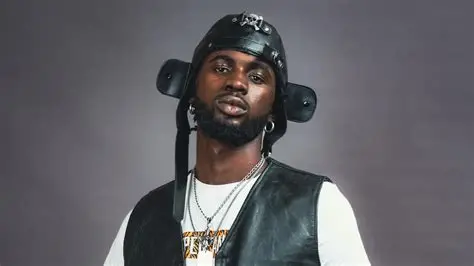
Ghanaian musician Black Sherif has opened up about the evolution of his music, insisting that although his sound has changed considerably over the years, the person behind the music remains the same.
The award-winning artiste made the revelation during an interview on TV3 on September 22, 2026, as he reflected on his musical journey, his early recordings and the different sides of his artistry that he continues to explore.
Black Sherif rose to widespread recognition with songs such as First Sermon, Second Sermon and Kwaku the Traveller.
The records, particularly First Sermon and Second Sermon, helped establish him as an artiste with a distinctive raw, grungy and emotionally intense sound, while Kwaku the Traveller further expanded his audience both locally and internationally.
However, Black Sherif acknowledged that his music today sounds considerably different from the work he was producing around the time of his breakthrough.
According to him, listeners who compare the music he made in 2021 with his output in 2025 and 2026 will notice a clear transformation in his sound.
Despite the changes, he stressed that his evolution as an artiste should not be mistaken for a change in his identity.
“Me as the man, the doer, nothing has changed about me. Because First Sermon, Second Sermon, Kwaku the Traveller- how raw, how grungy they are- I was making music before that. I’m still the man who got that recognition,” he said.
Black Sherif explained that the difference becomes particularly obvious when his older and newer songs are placed side by side.
He said the music he was creating in 2021 carries a noticeably different sound from what he is producing in 2025 and 2026, but he sees the two periods as connected parts of the same journey.
“The music sounds different. Like when you put them side by side, the 2021 music I was making and the 2025–2026 music I’m making, they sound different when I hear them. It’s the same man,” he explained.
The musician’s comments point to his belief that an artiste can evolve sonically without abandoning the identity that shaped their earlier work.
For Black Sherif, the changes in his music represent growth and exploration rather than a complete departure from the artiste who first captured the attention of music lovers.
Black Sherif also traced elements of his present-day musical identity to a period long before he became a household name.
Reflecting on his teenage years, he recalled the music he was making while in high school in 2019, as well as the period after he completed high school in June 2019.
According to him, some of the music he was creating during that period already contained elements of the sound and artistic personality that listeners would later associate with him.
“The music I was making in high school in 2019 and getting out of high school in June 2019, during the pandemic, sounds like Sun Sherif,” he stated.
His recollection suggests that his current artistic direction did not suddenly emerge after his breakthrough but had been developing through different stages of his musical life.
The period also predates the songs that eventually brought him mainstream recognition, giving insight into how long he has been experimenting with his sound and artistic identity.
The musician described his current phase as a reintroduction of himself to his audience.
He explained that his newer music is giving listeners an opportunity to discover different sides of his personality and artistry that may not have been fully visible during his breakthrough period.
“It’s just like a reintroduction of the entertainer or the type of artist I really want to be to the people and how many layers there are to me,” he shared.
The statement reflects Black Sherif’s desire to demonstrate that there are several dimensions to his artistry beyond the raw and grungy style that initially became closely associated with his name.
Rather than being confined to one musical identity, he appears to be using his recent work to explore other sounds, emotions and creative expressions.
Black Sherif also admitted that his artistic journey is closely connected to an ongoing process of self-discovery.
The Kwaku the Traveller hitmaker said parts of his personality remain unknown even to him, so his music continues to help him understand himself.
“A lot of who I am is very unknown to me as well, so I’m still discovering myself,” he added.
His remarks help explain the changes listeners have observed in his music over the years.
For Black Sherif, musical evolution is not necessarily about abandoning an old identity and adopting a new one. Instead, it is about allowing different parts of the same person to emerge at different stages of his career.
From the raw energy of First Sermon and Second Sermon to the global appeal of Kwaku the Traveller and the direction of his music in 2025 and 2026, Black Sherif says the journey remains connected to the same individual.

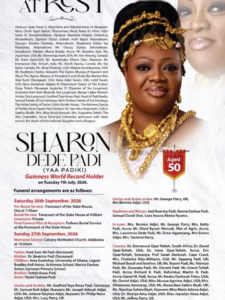
Funeral arrangements have been released for the late Ghanaian artist and Guinness World Record holder Sharon Dede Padi, popularly known as Padiki, who died on Tuesday, July 7, 2026.
The funeral rites are scheduled to commence on Saturday, September 26, 2026, with a pre-burial service at the Forecourt of the State House in Osu at 7:30 a.m.
A burial service will follow at 9:00 a.m., while a memorial service in her honour will take place on Sunday, September 27, 2026, at Calvary Methodist Church in Adabraka.
Padiki, who was the founder and Chief Executive Officer of Padiki Art Gallery, earned international acclaim for her remarkable artistic achievement in setting the Guinness World Record for the largest leaf-print painting.
Her record-breaking artwork measured 54.33 square metres and was created entirely from natural leaves, with the design depicting the Ghanaian national flag.
The accomplishment demonstrated her creativity and originality while drawing attention to the artistic possibilities of sustainable and naturally sourced materials.
Beyond her record-breaking achievement, Padiki was celebrated for her dedication to promoting Ghanaian cultural heritage and providing opportunities for emerging artists.
Through her gallery and various artistic projects, she encouraged creativity, mentorship and the use of art as a medium for storytelling and cultural expression.
Her work contributed to efforts to preserve Ghana’s artistic identity while inspiring others to explore
innovative ways of expressing themselves through art.
The funeral is expected to attract family members, friends, colleagues and well-wishers, who will gather to bid farewell to the late artist and honour her contributions to Ghana’s creative arts industry.
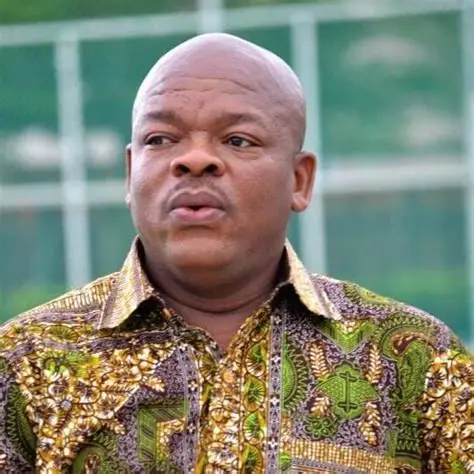
Veteran Ghanaian broadcaster and comic actor Kwame Dzokoto has disclosed that businessman Ibrahim Mahama financed his medical surgery abroad after the First Lady, Lordina Mahama, became aware of his heart-related health challenges.
The actor, popularly known as Efiewura, made the revelation during an interview with broadcaster Blakk Rasta on Blakk Empire Television’s The Black Pot on Tuesday, September 22, 2026.
The discussion focused on his health, career and financial difficulties, following the circulation of a video showing him at a public event in Cape Coast. His appearance in the footage had raised concerns among some fans about his well-being.
Recounting his health struggles, Dzokoto explained that the First Lady was the first person to learn about his condition. According to him, Lordina Mahama subsequently intervened and urged Ibrahim Mahama to support him.
He said the businessman arranged for him to travel abroad for surgery, adding that he has since recovered and is currently doing well.
Dzokoto stated:
“I was battling with BP related to the heart and all sorts of things, but by his grace, the First Lady got to know of it, and then she pressured Ibrahim Mahama. He took me outside for the surgery and all. In fact, I am healthy and doing well.”
The actor expressed appreciation to the Mahama family for coming to his aid during a difficult period.
He also commended their philanthropic activities, saying more people willing to support others could make the world a better place.
“I’m proud of the Mahama family. When it comes to serving humanity, if we have about eight people who decide to take charge to help people in their philanthropic way, I think the world will be a lovely place to live,” he said.
Addressing the video from Cape Coast, Dzokoto dismissed suggestions that his appearance reflected a serious deterioration in his health.
He explained that the bloating visible in the footage was associated with a honey product he had been consuming as an alternative to sugar.
According to him, he later discovered that the product contained caramel sugar mixed with the honey. He said the swelling reduced after he stopped taking it.
“That picture was exaggerated, and that was it. But naturally I’m fine,” he clarified.
Beyond his health concerns, Dzokoto spoke about his political involvement and disappointment over not securing an official appointment from the National Democratic Congress (NDC).
He disclosed that despite holding an LLB and a master’s degree, as well as contributing to the party’s Tourism, Arts and Culture manifesto, he had not been appointed to a formal position.
The entertainer also revealed that he had expressed interest in becoming a District Chief Executive in his area but was overlooked. He said no explanation was provided for the decision.
Reflecting on his broadcasting career, Dzokoto recounted his journey from radio in Takoradi to working in Accra and Kumasi.
He gained recognition for his comic performances, including his portrayal of Daddy Cash on a drive-time programme and his role in the popular television series Efiewura.
The veteran entertainer said he remains open to returning to broadcasting or taking up a position in public service.
However, he stressed that he was looking for a stable job that would provide regular income rather than occasional financial assistance.
When asked about his means of transportation during the interview, Dzokoto responded humorously: “I drive my wife’s car.”

Nigerian singer Peter Okoye has told a Federal High Court in Lagos that he received more than $800,000 in royalties from France-based music rights organisation SACEM for songs recorded by the former music group P-Square.
Peter disclosed while testifying virtually before Justice Alexander Owoeye. He was cross-examined by Clement Onwuewunor, SAN, who is representing his brother, Jude Okoye.
SACEM is responsible for collecting and distributing royalties to songwriters, composers and music publishers.
Jude Okoye and his company, Northside Music Limited, are facing a seven-count charge filed by the Economic and Financial Crimes Commission (EFCC) over alleged fraud involving ₦1.3 billion and $1 million. Jude has pleaded not guilty to the charges.
During the proceedings, Peter was questioned about his earlier claim that Jude delayed for more than three months before providing him with P-Square’s royalty records after he requested the documents in 2022.
His lawyer told the court that the request was made on October 16, 2022, and that Jude obtained and sent the records six days later, on October 22.
Peter disagreed with the suggestion that he had only requested the documents in October 2022, maintaining that he had asked for them earlier in the year.
However, when asked to provide a text message, email or any other evidence showing that he requested before October 16, 2022, he admitted that he could not.
“No. I don’t have any, and I can’t recall,” he said.
Peter confirmed that he eventually received the royalty statement from Jude. According to him, the document covered royalties earned between 2016 and 2022, including payments linked to Lex Records.
He told the court that he wanted the records because some people had expressed interest in purchasing P-Square’s music catalogue.
Peter also confirmed that Jude sent him the account details in 2022 and that the EFCC knew the documents had been forwarded to him.
The singer rejected Jude’s claim to a share of the SACEM royalties, insisting that the money belonged to him and his twin brother, Paul Okoye.
When asked about the SACEM agreement, which was signed by Jude rather than Peter or Paul, he said it was signed by “the team.”
Peter maintained that Jude was not a member of the team.
He also confirmed that the 10 songs that generated the SACEM royalties were P-Square songs.
Peter told the court that he had previously given Jude 25 per cent of his SACEM earnings. However, he denied that Jude later demanded quarterly payments, according to the portion of the report visible in the supplied material.
When questioned about claims that he received approximately $800,000 from SACEM between 2016 and 2026, Peter admitted that he received the money.
He, however, maintained that the funds belonged to the artists and that Jude did not receive any portion of the payments.
Asked whether he had told Jude about the money, Peter responded: “No, the money was for the artists.”
On Jude’s position as P-Square’s manager, Peter told the court that they did not have an employment agreement with each other.
He explained that their business arrangement was conducted through Northside Entertainment Limited.
When asked whether Jude was a member of P-Square, Peter stated: “Jude is not part of P-Square.”
He further maintained that he and Paul wrote, composed and produced all the group’s songs, although he acknowledged that Jude directed some of P-Square’s music videos.
The court subsequently adjourned the case until December 8 and 9, 2026, for further hearing.
Source: dailypost.ng

One Person Cannot Carry a Nation – Black Sherif on Taking Ghanaian Music Global

“It’s the Same Man”: Black Sherif Explains How His Music Has Changed

GES Orders SHS Heads to Stop Unauthorised Fees, Refund Parents



-

 General News1 week ago
GTA Cash Reserves Halve to GH¢640,000 Despite Improved Liquidity Ratio
-

 General News1 week ago
GTA’s Financial Strength Weakens Despite 2025 Tourism Activities
-

 General News1 week ago
Creative Arts Agency Records GH¢2.01m Revenue in FY2025 Despite Financial Reporting Gaps
-

 Culinary1 week ago
Oranges: More Than Just Juice — The Nutritious Fruit Adding Flavour to Ghanaian Life
-
Culinary3 days ago
Kofi Brokeman: The Simple Ghanaian Snack That Has Stood the Test of Time
-

 General News1 week ago
National Theatre balances cultural mandate with commercial survival
-
 Business2 weeks ago
TOR Stuns Ghana With Historic GH¢1.09bn Profit After Years of Losses
-
General News1 week ago
GTA’s Income Falls 18.6% as Government Funding Slumps