
Politics
Bagbin Recalls Parliament for September 29 Sitting Amid Cocaine Seizure Concerns

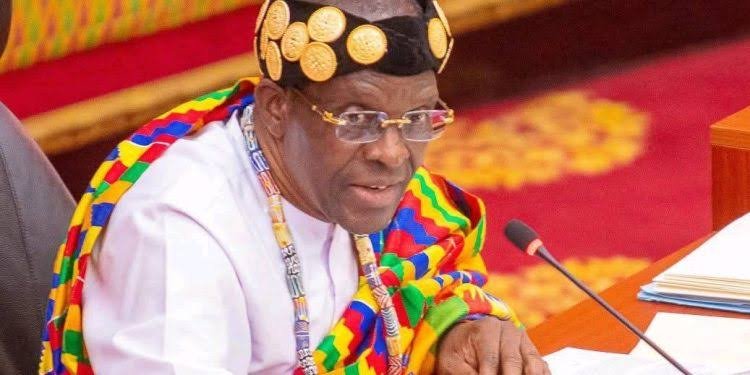
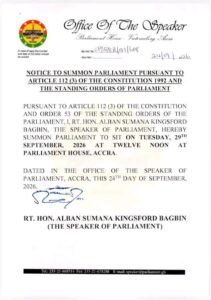
Parliament will reconvene from recess on Tuesday, September 29, 2026, following a formal summons issued by Speaker Alban Sumana Kingsford Bagbin.
In a notice dated Thursday, September 24, the Speaker directed Members of Parliament to report to the Chamber at Parliament House in Accra at 12 noon.
The recall comes against the backdrop of growing concerns over a number of major narcotics seizures involving consignments linked to Ghana, with the Minority in Parliament calling for the House to scrutinise the circumstances surrounding the incidents.
The Speaker’s notice, however, did not specify the particular business or matters that Parliament will consider when it meets.
The notice stated: “Pursuant to Article 112(3) of the Constitution and Order 53 of the Standing Orders of the Parliament, I, Rt. Hon. Alban Sumana Kingsford Bagbin, the Speaker of Parliament, hereby summon Parliament to sit on Tuesday, 29th September, 2026 at twelve noon at Parliament House, Accra.”
The summons follows a petition by the Minority seeking an extraordinary sitting to address what it considers urgent national security concerns arising from several major drug seizures linked to Ghana. The Minority invoked Article 112(3) of the 1992 Constitution and Order 53 of Parliament’s Standing Orders in its request.
At the centre of the concerns is the seizure by French authorities of nearly 3.9 tonnes of cocaine at the Port of Dunkirk on September 10, 2026. The cocaine was reportedly concealed in a container of plastic waste that had arrived in France from Ghana.
The Minority has also drawn attention to other narcotics-related seizures recorded since 2025, arguing that the series of incidents raises questions about Ghana’s port security, customs procedures, intelligence gathering and the effectiveness of institutions responsible for combating drug trafficking.
Among the other cases cited is the seizure of more than 3.3 tonnes of cocaine at Pedu Junction in March 2025. The Minority has also referenced the seizure of 866 parcels of suspected cocaine at a warehouse within the Tema Harbour enclave in August 2026, as well as a 320-kilogramme methamphetamine seizure in Australia involving a consignment reportedly traced to Ghana.
The Caucus wants Parliament to establish how the consignments were processed, inspected, cleared and exported from Ghana, while also seeking information on the companies and institutions involved and the progress of investigations into the cases.
It has called for relevant Ministers and officials from institutions including the Narcotics Control Commission, Ghana Ports and Harbours Authority, Ghana Revenue Authority and National Intelligence Bureau to provide answers to Parliament.
The Minority is also seeking scrutiny of the country’s scanning, surveillance, intelligence and security systems at ports, airports and other entry and exit points, as well as the measures being taken to identify the financiers, organisers and networks behind major international narcotics operations.
The push for the recall had generated differing views among lawmakers. While the Minority argued that the scale and frequency of the seizures warranted an extraordinary sitting, some Majority MPs questioned the need to recall the entire House while investigations by the relevant state agencies were ongoing.
Wa West MP and Vice Chairman of Parliament’s Defence and Interior Committee, Peter Lanchene Toobu, previously argued that existing parliamentary committees could investigate the matter without requiring the full House to return from recess. He pointed to the Defence and Interior, Transport, and Trade and Industry committees as having relevant oversight responsibilities.
With Speaker Bagbin now having formally summoned Parliament, the House is scheduled to meet at noon on September 29. The specific business for the sitting remains undisclosed in the Speaker’s notice, although the narcotics seizures and the Minority’s demand for parliamentary scrutiny are expected to form an important part of the discussions surrounding the recall.
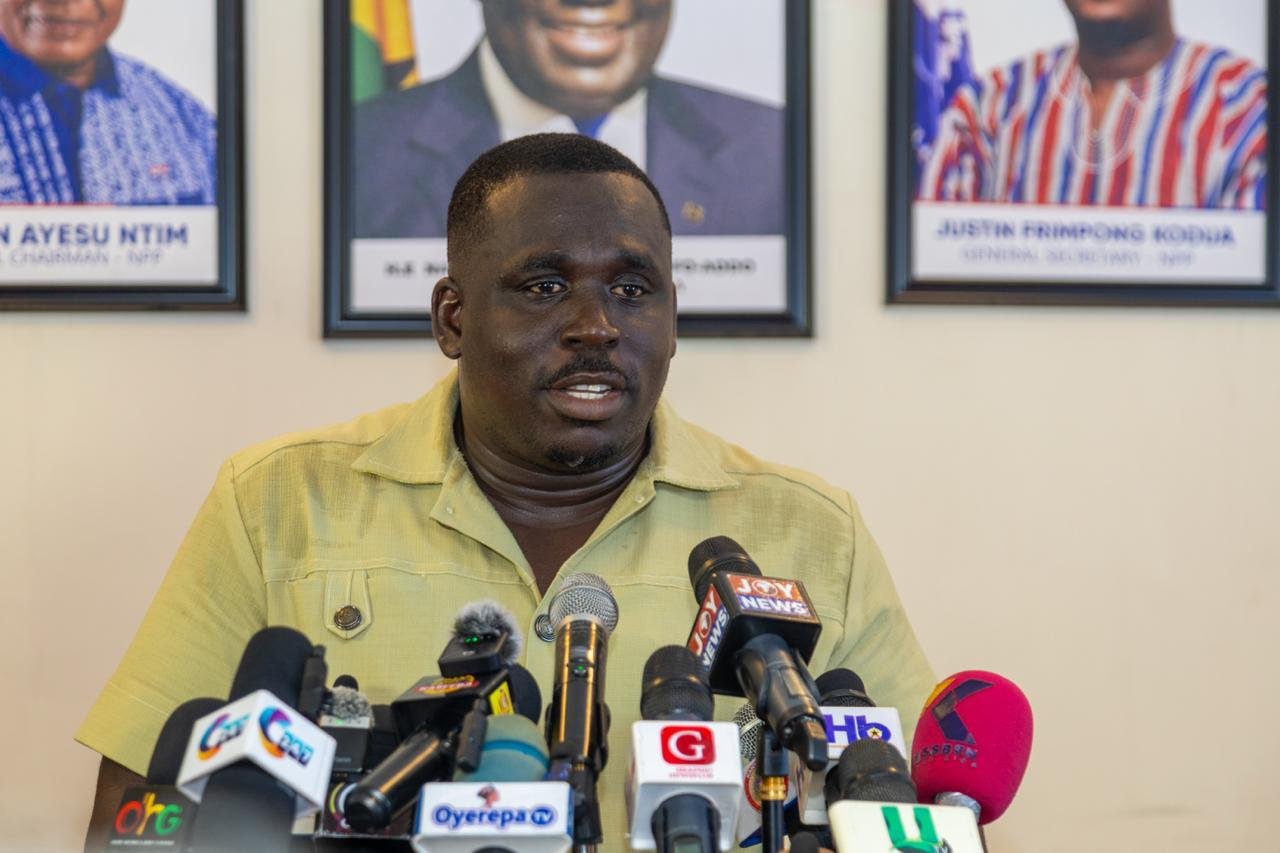
Former Deputy Communications Director of the New Patriotic Party (NPP), George Krobea Asante, has raised concerns over delays in the voting process, alleging that the situation was deliberately engineered to frustrate delegates.
In a statement, Mr. Krobea Asante said the voting process was “intentionally and artificially delayed,” describing the development as disappointing.
According to him, the delay created unnecessary difficulties for delegates who had gathered to participate in the exercise. His comments come amid concerns about the organisation and management of the voting process at the event.
“The voting process was intentionally and artificially delayed to frustrate the delegates which is so disappointing,” Mr. Krobea Asante said.
His remarks suggest concerns over whether the delays were merely administrative or formed part of a deliberate attempt to inconvenience participants. However, he did not provide specific evidence or identify individuals or groups he believes were responsible for the alleged delay.
The claim is expected to draw attention to the conduct of the voting exercise and the measures put in place to ensure an efficient process for delegates.
As of the time of publication, there was no response from the organisers addressing the allegation or providing an explanation for the reported delays.
Mr. Krobea Asante is a former Deputy Communications Director of the NPP and remains a commentator on political developments within the party.
Politics
AGYARKO’S SHOCK CHAIRMANSHIP COLLAPSE: The Plan Was Ready—Then Everything Suddenly Changed!
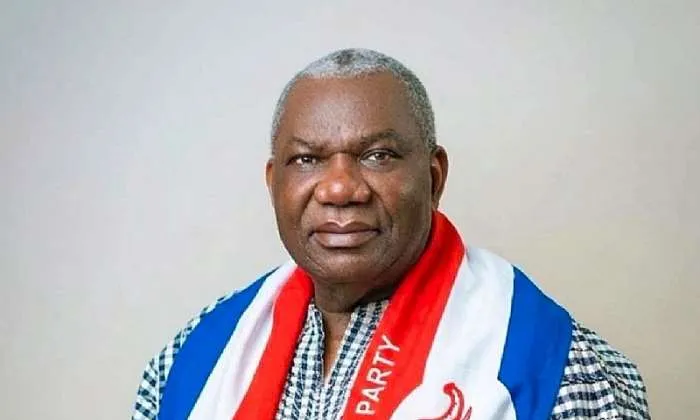
The groundwork had been laid. The political machinery appeared to be in motion. Confidence was building. Then, in a dramatic twist, Boakye Agyarko’s bid for the NPP chairmanship came crashing down.
For Boakye Agyarko and his supporters, what appeared to be a carefully prepared political journey towards the coveted chairmanship position has ended in a stunning setback.
According to George Krobea Asante, former Deputy Communications Director of the New Patriotic Party (NPP), the groundwork for Agyarko’s ambition had been firmly established well before the contest.
The signs, he suggested, were there.
The preparations had been made. The political calculations were underway. The expectation of a strong showing appeared to be growing.
But then came the unexpected.
What was seemingly shaping up as a carefully mapped-out path to the NPP chairmanship suddenly took a dramatic turn, leaving Agyarko on the losing side of a contest that had generated considerable political interest.
The question now gripping political circles is: What went wrong?
How did a campaign that appeared to have significant groundwork behind it ultimately lose momentum at the crucial moment?
For supporters and observers who had watched the race unfold, the outcome has inevitably raised eyebrows and triggered fresh conversations about the internal dynamics, alliances and political calculations that can determine the fate of high-stakes party contests.
Krobea Asante’s comments have added another layer of intrigue to an already dramatic political episode.
The former NPP Deputy Communications Director’s account suggests that Agyarko’s journey to the chairmanship was not an impulsive venture. Rather, the foundation had reportedly been laid long before the final showdown.
Yet politics, as the saying goes, can change in the blink of an eye.
And in this case, something did.
The groundwork was there. The ambition was clear. The expectations were high. But the final result delivered a shock.
Boakye Agyarko’s chairmanship defeat has therefore opened a new chapter of debate within the NPP, with attention now turning to the events and political dynamics that transformed a seemingly promising bid into a dramatic loss.
One thing is certain: the chairmanship battle may be over, but the questions surrounding Agyarko’s unexpected defeat are far from settled.
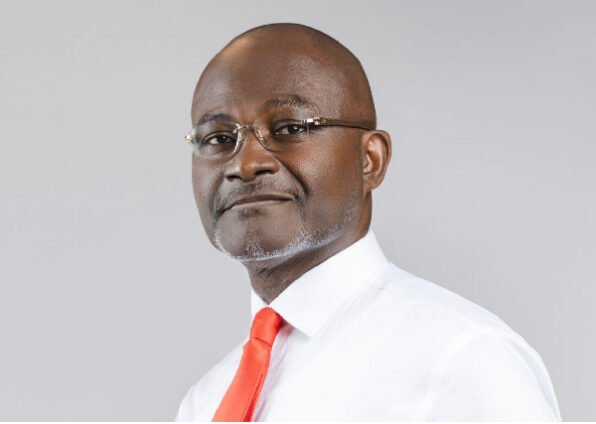
New Patriotic Party (NPP) Third Vice Chairperson, Nana Akomea, has disclosed that he has not received an update on the report of the party’s National Disciplinary Committee regarding former presidential aspirant Kennedy Agyapong.
According to him, the committee, which was tasked to investigate petitions against the former Assin Central lawmaker, was initially given two weeks to complete its work but later requested an extension.
Speaking on the matter, Nana Akomea said he was unaware whether the committee had submitted its findings following the extension.
“Frankly, I haven’t had any update. They were given a two-week period… and I know at the next council meeting there was a report that they had asked for an extension,” he said.
He explained that he would refrain from expressing his personal position on the matter until the committee presents its recommendations to the party’s National Council.
Nana Akomea noted that commenting on the case before the committee concludes its work could prejudice the process.
He further indicated that the NPP remains open to reconciliation with aggrieved members, including those who may have fallen out with the party.
However, he stressed that reconciliation requires a willingness from the individuals involved to engage with the party and work towards moving forward.
The disciplinary case follows petitions filed against Mr Agyapong over comments some party members considered detrimental to the unity and cohesion of the NPP.
Politics
President Mahama Pardons 863 Convicted Persons to Mark Ghana’s 70th Independence Anniversary
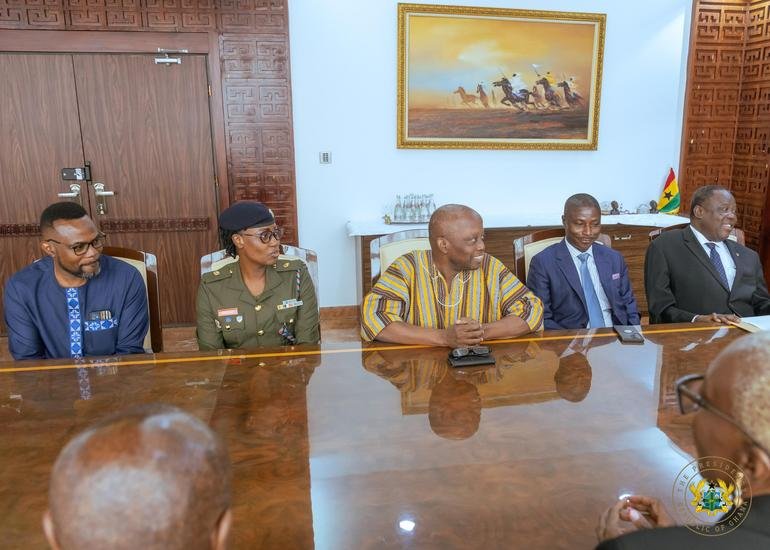
President John Dramani Mahama has granted presidential pardon to 863 convicted persons as part of activities commemorating Ghana’s 70th Independence Anniversary.
According to a statement signed by Felix Kwakye Ofosu, Spokesperson to the President and Minister for Government Communications, the decision was taken under Article 72(1) of the 1992 Constitution and after consultation with the Council of State.
Hundreds to Benefit from Presidential Mercy
The pardon covers several categories of convicted persons, with 819 first offenders receiving outright release.
Also benefiting are 13 persons aged 70 years and above, who have been granted outright release, while six seriously ill inmates will also be released.
The statement further indicates that 11 death sentences will be commuted to life imprisonment, while six life sentences will be reduced to 20-year definite terms.
Petitions and Special Cases Included
Two persons under special recommendation will receive outright release, while three petitions and three other cases are also covered by the presidential decision.
In total, the various categories account for the 863 convicted persons granted presidential pardon.
State Institutions Directed to Act
The Presidency said the decision forms part of Ghana’s commemoration of its 70th Independence Anniversary, describing the gesture as an act of mercy and national reflection.
Relevant state institutions have been directed to take the necessary steps to implement the President’s decision and give effect to the pardons.
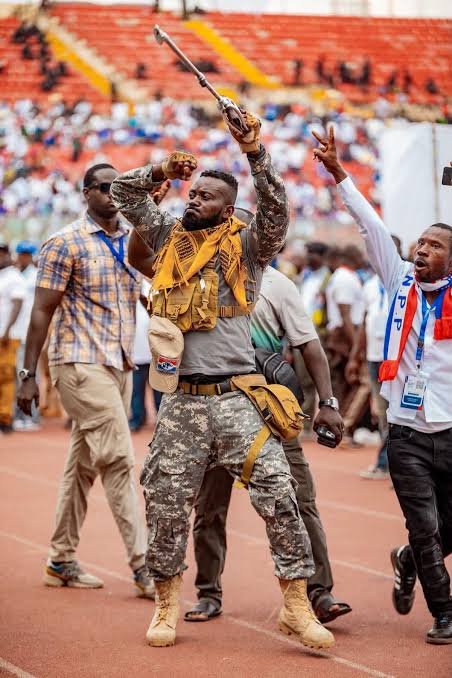
The New Patriotic Party’s (NPP) 2026 national elections produced several unexpected outcomes, as delegates handed victory to some candidates who defied predictions while delivering commanding wins for others.
From Kojo ‘Bamba’ Fosu Boadu’s stunning victory in the First Vice Chairman race to John Kwame Fordjour’s overwhelming performance, the elections provided plenty of talking points.
Here are five of the biggest surprises from the contest:
1. Kojo ‘Bamba’ Pulls Off the Biggest Upset
Perhaps the biggest surprise of the elections was Kojo ‘Bamba’ Fosu Boadu’s emergence as First National Vice Chairman.
Bamba entered a crowded race featuring 13 contestants and faced several better-known party figures.
Despite the stiff competition, he secured the support needed to emerge victorious, defeating established names and demonstrating the power of grassroots mobilisation.
His victory was one of the clearest indications that the delegates were prepared to defy expectations and reward candidates they believed could connect with the party’s grassroots.
2. JFK’s Landslide Victory
Another striking development was the emphatic victory of John Kwame Fordjour (JFK).
Rather than scraping through a closely contested race, Fordjour secured a commanding victory, demonstrating substantial support among delegates.
The scale of the win made it one of the most decisive outcomes of the elections and immediately positioned him as one of the prominent figures in the party’s new leadership structure.
3. Big Names Forced to Settle for Defeat
The elections also produced disappointment for several candidates who entered the contest with considerable political experience and strong public profiles.
Some established figures failed to secure the positions they were seeking, highlighting the unpredictable nature of internal party elections.
The results demonstrated that name recognition alone was not enough to guarantee victory.
4. The Grassroots Had Their Say
Perhaps the broader surprise was the extent to which grassroots considerations appeared to influence the outcome.
Several successful candidates campaigned heavily on messages centred on rebuilding the party from the polling-station level, empowering party activists and reconnecting leadership with ordinary members.
The results suggest that delegates were paying close attention to candidates who presented themselves as accessible and committed to strengthening the party’s base.
5. A New Leadership Era Begins
The election of John Boadu as National Chairman, alongside the new team of national executives, represents another major turning point for the NPP.
The new leadership inherits a party facing the difficult task of rebuilding after its defeat in the 2024 general election and preparing for the 2028 contest.
The unexpected victories recorded at the conference could also influence the party’s direction in the coming years, particularly if the new executives succeed in turning their campaign promises into organisational reforms.
The Bigger Picture
The NPP’s 2026 elections were more than a routine change of executives.
They exposed shifting alliances, rewarded some unexpected candidates and demonstrated that internal party politics can be just as unpredictable as national elections.
From Bamba’s surprise triumph to JFK’s emphatic victory, the message from the delegates was unmistakable: the NPP’s new leadership has been given a fresh mandate — and the real test now begins.

Stephanie Benson Warns Women: ‘Quick Fixes’ Won’t Help You When You’re Older

‘I Don’t Get Distracted Easily’ – Pete Edochie on His 57-Year Marriage

World Cup Visa Storm: Kojo’s GTA Questions Resurface as Minority Demands Action



-

 General News1 week ago
Fidelity Bank Chairman Named Ghana’s Topmost Transformational Board Chair 2026
-
 Technology2 weeks ago
Rolls-Royce Expands Aviation Business with Major Philippine Airlines Engine Agreement
-
 Entertainment2 weeks ago
Ras Caleb assesses institutions under the Tourism Ministry, highlighting key roles.
-
 Entertainment2 weeks ago
Ras Caleb Appiah-Levi: The musician, Pan-Africanist and organiser whose career spans four decades
-
 Entertainment1 week ago
Ras Caleb Appiah-Levi Reflects on Death, Wealth and Equality: “Death Neither Knows Rich Nor Poor”
-
 General News2 weeks ago
Sudan Chemical Weapons Allegations: UN Signals Readiness for Possible Investigation
-
 Business1 week ago
Rev. Dr. Christian Kwetey Kweitsu Honoured for Excellence in Audiology Practice in Kigali
-
 Sports2 weeks ago
Red Card After Gun Gesture Overshadows Israel’s Nations League Goal