
General News
From Nkrumah to Mahama: Ghana Set for 25th Presidential Address at UNGA

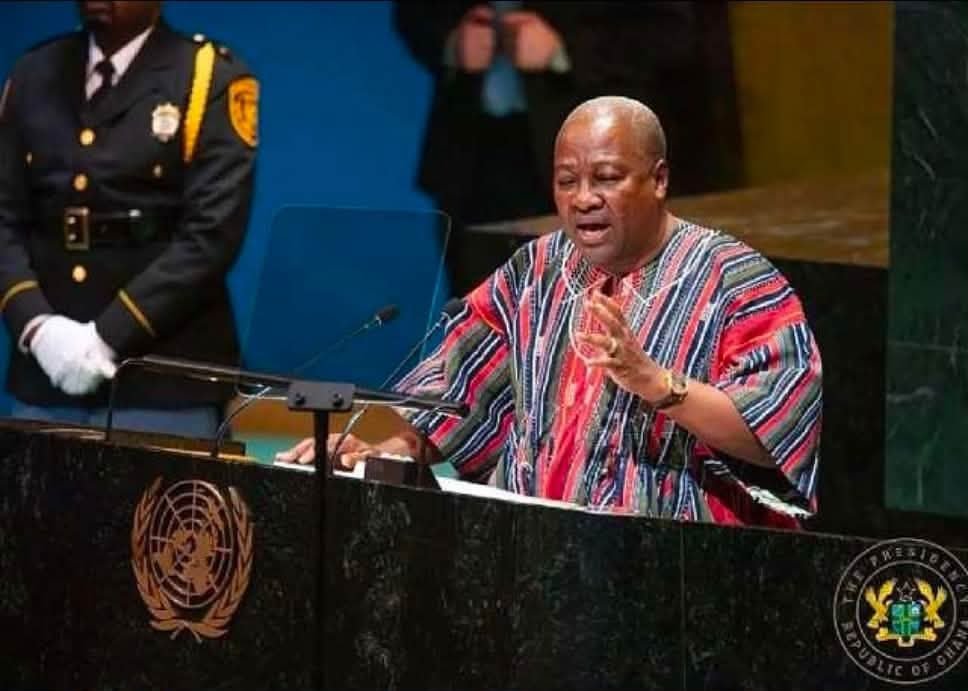
President John Dramani Mahama is scheduled to address the 81st Session of the United Nations General Assembly (UNGA) on Thursday, September 24, 2026, in what is expected to become Ghana’s 25th presidential appearance at the Assembly’s General Debate.
The historic occasion will mark 66 years since Ghana’s first presidential address to the United Nations, delivered by the country’s founding President, Osagyefo Dr Kwame Nkrumah, on September 23, 1960.
According to the historical account, Ghanaian Presidents had collectively addressed the General Assembly 24 times as of the 80th Session in 2025.
Mahama’s scheduled appearance will increase that number to 25, continuing a tradition of presidential participation in one of the United Nations’ major annual diplomatic gatherings.
Nkrumah began Ghana’s presidential UNGA tradition in 1960
Ghana’s participation at the presidential level began during the tenure of Dr Kwame Nkrumah, who addressed the Assembly on September 23, 1960, at its 5th Session.
However, it took 38 years before another Ghanaian President personally mounted the UNGA podium.
Former President Jerry John Rawlings delivered Ghana’s next presidential address on September 22, 1998, during the 53rd Session.
The lengthy interval between the two appearances does not mean Ghana was absent from the United Nations during those years.
Historical records cited in the account indicate that Ghana continued to be represented by other senior government officials.
For instance, Ako Adjei, Ghana’s then Minister for Foreign Affairs, addressed the Assembly in 1961, while Kojo Botsio, who also served as Foreign Affairs Minister, addressed it in 1963.
In other years, High-Level Government Officials represented the country and delivered statements.
Kufuor delivered six presidential addresses
Former President John Agyekum Kufuor addressed the General Assembly six times during his presidency.
His appearances were recorded at the following sessions:
* September 13, 2002 – 57th Session
* September 24, 2003 – 58th Session
* September 17, 2005 – 60th Session
* September 19, 2006 – 61st Session
* September 25, 2007 – 62nd Session
* September 24, 2008 – 63rd Session
Kufuor’s appearances formed a significant part of Ghana’s presidential participation in the General Debate during the Fourth Republic.
Atta Mills addressed the Assembly twice
Former President John Evans Atta Mills delivered Ghana’s address to the General Assembly on two occasions.
He spoke on September 24, 2009, during the 64th Session, and returned to the podium on September 23, 2011, at the 66th Session.
His appearances continued Ghana’s presidential participation following Kufuor’s tenure.
Mahama’s previous six appearances
President John Dramani Mahama has previously addressed the General Assembly six times, according to the supplied historical account.
His previous appearances were:
* September 26, 2012 – 67th Session
* September 26, 2013 – 68th Session
* September 25, 2014 – 69th Session
* September 30, 2015 – 70th Session
* September 21, 2016 – 71st Session
* September 25, 2025 – 80th Session
His scheduled address on September 24, 2026, will mark his seventh appearance based on the dates listed.
The address will also add to the cumulative number of presidential appearances attributed to Ghana since Nkrumah’s first speech in 1960.
Akufo-Addo recorded eight appearances
Former President Nana Addo Dankwa Akufo-Addo delivered Ghana’s address to the General Assembly eight times during his presidency.
His appearances were recorded as follows:
* September 21, 2017 – 72nd Session
* September 26, 2018 – 73rd Session
* September 25, 2019 – 74th Session
* September 21, 2020 – 75th Session
* September 22, 2021 – 76th Session
* September 21, 2022 – 77th Session
* September 20, 2023 – 78th Session
* September 25, 2024 – 79th Session
The eight addresses constitute the highest number attributed to an individual President in the supplied timeline.
A milestone in Ghana’s diplomatic history
Mahama’s scheduled address comes nearly seven decades after Nkrumah began Ghana’s presidential participation at the United Nations.
It will also mark the continuation of a pattern established during the Fourth Republic, when Rawlings returned the presidency to the UN podium in 1998.
The historical account describes the 2026 address as Ghana’s 25th presidential appearance at the General Debate, involving seven Presidents over the period since 1960.
However, the breakdown provided names six Presidents and accounts for 24 appearances before the scheduled 2026 address.
The account identifies the United Nations General Assembly Official Records and UN Photo as its sources.
Source: United Nations General Assembly Official Records, UN Photo.
John Dramani Mahama
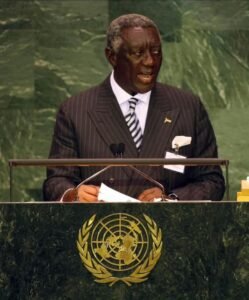
John Agyekum Kufuor
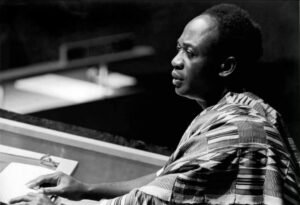
Kwame Nkrumah
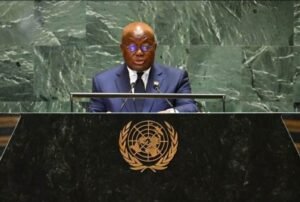
Nana Akufo-Addo
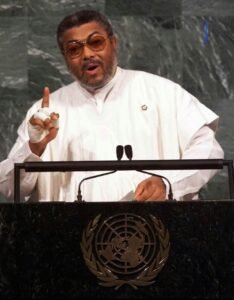
Jerry John Rawlings

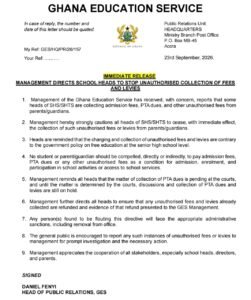
- Heads of SHSs and SHTSs immediately stop collecting unauthorised fees and levies.
- Admission fees, PTA dues and other unauthorised charges must not be demanded from parents or guardians.
- Students and parents must not be compelled to make such payments as a condition for admission, enrolment, participation in school activities or access to school services.
- The collection of unauthorised charges is contrary to the government’s Free SHS policy.
- The collection of PTA dues and levies remains on hold while the matter is before the courts.
- Schools that have already collected unauthorised fees must refund the money.
- School heads must submit evidence of the refunds to GES Management.
- Persons who breach the directive may face administrative sanctions, including removal from office.
- Parents and members of the public are encouraged to report violations to GES.
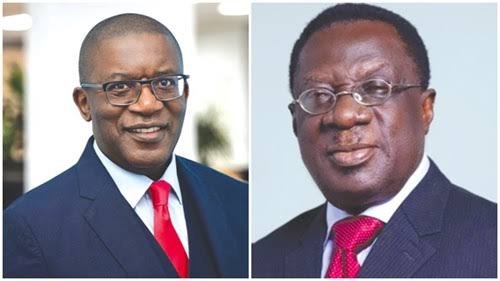
The long-running US$2 million Sky Train case involving former Ghana Infrastructure Investment Fund (GIIF) Chief Executive Officer Solomon Asamoah and former GIIF Board Chairman Prof. Christopher Ameyaw-Akumfi has entered a fresh phase.
The two accused persons have now filed their witness statements, paving the way for the defence stage of the trial after months of procedural twists at the Accra High Court.
According to a case update issued by Deputy Attorney General and Minister for Justice Justice Srem-Sai, the witness statements were filed on Wednesday, September 23, 2026, the final deadline set by the High Court for the accused persons to present their defence.
From no-case submission to defence
The development comes after the prosecution closed its case in May 2026 following the testimony of three witnesses.
The State alleges that a US$2 million payment connected to the proposed Accra Sky Train project was made by GIIF without the necessary Board approval. The project was never constructed. Both Asamoah and Prof. Ameyaw-Akumfi have pleaded not guilty to the charges against them.
On July 2, 2026, Justice Audrey Kocuvie-Tay dismissed submissions of no case filed by the two accused and ordered them to open their defence. The ruling did not amount to a finding of guilt; it meant the court considered there was sufficient prosecution evidence for the accused to be called upon to answer the case.
Defence deadline extended three times
The case subsequently became embroiled in a series of procedural applications.
The accused persons were initially given 21 days to file their defence processes. When they did not do so within that period, the court granted additional time.
By August 2026, the High Court had given them another extension, with September 23, 2026 set as the deadline for filing their witness statements.
The delay also coincided with a Supreme Court challenge by Asamoah against aspects of the High Court’s ruling. His application for an interlocutory injunction was dismissed by the Supreme Court on August 31, 2026.
$2m at the centre of the case
At the heart of the prosecution’s case is the alleged payment of US$2 million in 2019 in connection with the proposed Sky Train project.
The prosecution has argued that the transaction was undertaken without the required approval from the GIIF Board. Witnesses called during the trial have also testified that the Board did not grant final approval for the investment.
With the filing of the witness statements, the case now moves firmly into the defence phase, where Asamoah and Prof. Ameyaw-Akumfi will have the opportunity to respond to the allegations against them.
The latest development marks another major twist in a case that has been closely watched because of the US$2 million transaction and the abandoned Accra Sky Train project.
The accused persons remain presumed innocent unless and until proven guilty by a court of competent jurisdiction.

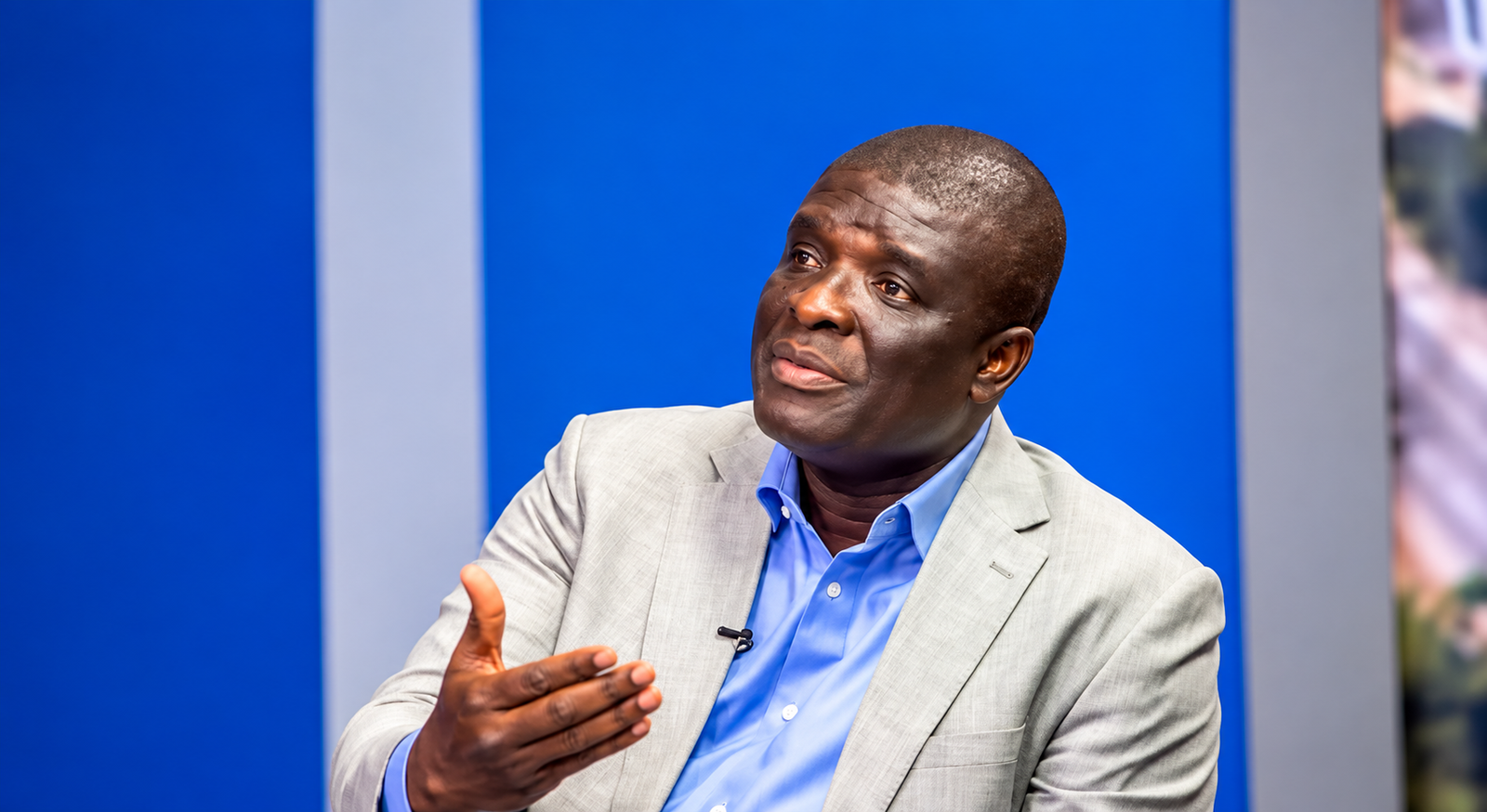
Deputy Communications Director of the New Patriotic Party (NPP), Kamaldeen Abdullai, has criticised the attempted arrest of Manhyia South MP Nana Agyei Baffour Awuah by officials of the Economic and Organised Crime Office (EOCO), describing the incident at the Accra High Court as “needless and avoidable.”
According to Abdullai, due process must remain central to law enforcement in a constitutional democracy. He argued that procedure is “as good as the law” and warned against allowing emotions to override established legal processes.
His comments follow Wednesday’s confrontation at the Accra High Court, where EOCO officials attempted to take Baffour Awuah into custody. The MP later alleged that the woman who approached him failed to provide identification, proof of authority or an arrest warrant when challenged.
EOCO, however, has presented a different account. The agency says Baffour Awuah had failed to honour two invitations issued in February 2026 in connection with an ongoing investigation, prompting it to take what it described as lawful steps to secure his attendance. EOCO said the arrest was abandoned after the situation escalated and officers concluded that further action could endanger public safety.
Abdullai also stressed the importance of the media in Ghana’s democracy, citing the constitutional protection of press freedom, and called for strict adherence to the rule of law.
Turning to the wider debate over hate speech and social-media abuse, the NPP communicator said it was unfortunate that President John Mahama was having to devote attention to organising dialogue on the issue instead of focusing solely on development. He nevertheless described the dialogue initiative as “a good call, but late.”
He further called for individuals who threatened the country’s peace to be publicly identified and held accountable under the law.
By Maurice Otoo
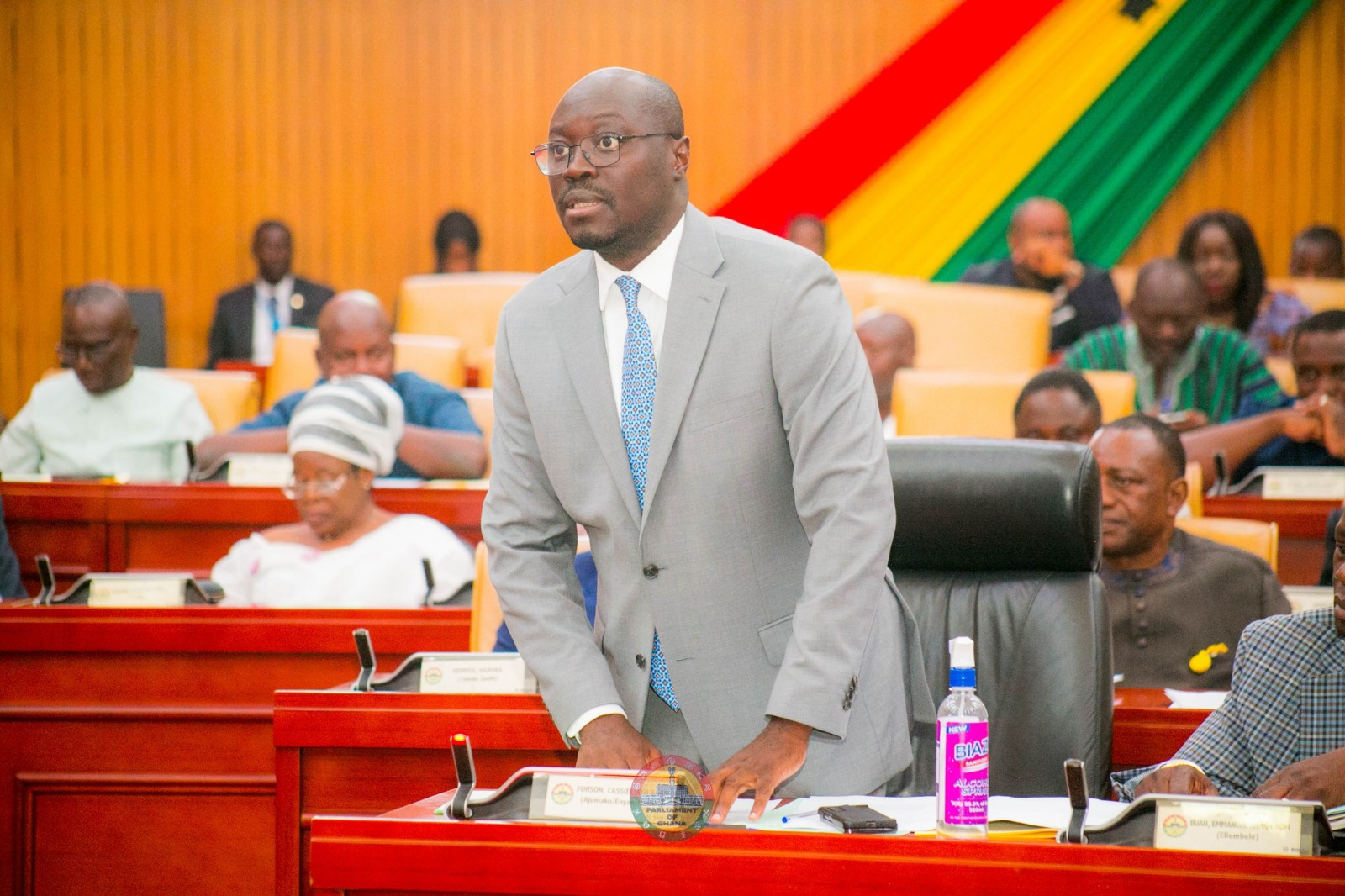
Former Metropolitan, Municipal and District Chief Executives (MMDCEs) who served under the first term of former President Nana Addo Dankwa Akufo-Addo have appealed to the Ministry of Finance to pay their outstanding terminal benefits.
In a letter dated October 2, 2026, and addressed to the Finance Minister, Dr Cassiel Ato Forson, the former MMDCEs said they had been left out of payments despite repeated efforts to secure the benefits due them after leaving office.
The letter was signed by Leo-Nelson Adzidogah, a former Municipal Chief Executive (MCE) for Akatsi South, on behalf of the affected former local government appointees.
The group comprises 134 MMDCEs who were not renominated for a second term after serving during the first administration of former President Akufo-Addo.
According to the letter, the affected officials were initially instructed to remain in office at the beginning of the former president’s second term while awaiting the nomination of new MMDCEs.
The nominations were eventually made in October 2021, resulting in 134 of the former appointees losing their positions.
However, the former MMDCEs said they had not received their terminal benefits following their exit from office, despite pursuing the matter with the relevant authorities.
The group said they had initially expected their terminal benefits to be paid after the end of the second administration, alongside those of their successors.
They said their expectations were not met, as their successors had received their terminal benefits while they continued to wait for their payments.
The former MMDCEs also pointed to what they described as unequal treatment regarding the period between January and October 2021.
They said colleagues who were renominated to serve another term had received payments covering the same period, even though they had also served during those months.
According to the letter, the failure to pay those who were not renominated, while their colleagues who continued in office received benefits for the same period, was unfair.
The former MMDCEs maintained that their departure from office during or before the end of the second term of the Akufo-Addo administration should not be used as a reason to deny them their terminal benefits.
They described the situation as an oversight and appealed to Dr Ato Forson to give the matter urgent consideration.
The group is asking the Finance Minister to authorize payment of the outstanding benefits owed to the affected former MMDCEs.
In concluding their appeal, they expressed hope that the minister would give their request favorable consideration and respond to their concerns.
A copy of the letter was also addressed to the Deputy Minister of Finance.
General News
‘EOCO must not treat Parliament with disrespect’ — Dafeamekpor fumes over alleged arrest of MP

One Person Cannot Carry a Nation – Black Sherif on Taking Ghanaian Music Global

“It’s the Same Man”: Black Sherif Explains How His Music Has Changed

GES Orders SHS Heads to Stop Unauthorised Fees, Refund Parents



-

 General News1 week ago
GTA Cash Reserves Halve to GH¢640,000 Despite Improved Liquidity Ratio
-

 General News1 week ago
GTA’s Financial Strength Weakens Despite 2025 Tourism Activities
-

 General News1 week ago
Creative Arts Agency Records GH¢2.01m Revenue in FY2025 Despite Financial Reporting Gaps
-

 Culinary1 week ago
Oranges: More Than Just Juice — The Nutritious Fruit Adding Flavour to Ghanaian Life
-
Culinary3 days ago
Kofi Brokeman: The Simple Ghanaian Snack That Has Stood the Test of Time
-
 General News1 week ago
National Theatre balances cultural mandate with commercial survival
-
 Business2 weeks ago
TOR Stuns Ghana With Historic GH¢1.09bn Profit After Years of Losses
-
General News1 week ago
GTA’s Income Falls 18.6% as Government Funding Slumps