
Entertainment
When Visibility Replaces Value, The Cost to Ghana’s Creative Industry


“I TRIED TO MAKE THEM UNDERSTAND”: A Song, a Warning, and the Future of Ghana’s Creative Industry
By Socrate Safo
There is a line in Culture’s song that refuses to let me rest:
“The more victimisation is on their back, the more foolish they become.”
It is a hard line. Uncomfortable. But painfully accurate for where Ghana’s creative industry is heading today.
For a long time now, some of us have tried, and tried, and tried to call attention to a dangerous pattern forming across the industry. We are not speaking from a place of bitterness or fear of change. We are speaking from memory. We watched the film industry walk this same road. We know where it ends.
Yet, as the song says, they just can’t understand.
Repeating a Familiar Tragedy
The film industry once beat its drums by night and by day. The movies were everywhere. The audience was loud. But the money was thin. Free access became normal. Piracy became tolerated. Value disappeared. Eventually, the noise faded, the investors vanished, and the industry collapsed quietly.
Today, music and other creative sectors are repeating that mistake, only this time, on a far larger and more dangerous scale.
Artists now spend huge sums to organise stadium shows, throw the gates open for free, and fill the stands. Drone shots fly. Photos circulate. Social media cheers. The artist boasts.
But after the applause fades, the truth appears: losses, debts, regret.
Still, instead of asking hard questions, many satisfy themselves with less.
Victimhood as a Disguise for Foolishness.
Whenever this issue is raised, the response is often framed as victimhood. “The industry is hard.” “Streaming platforms are cheating us.” “Sponsors don’t pay enough.” “People don’t support creatives.”
All of that may be true. But as Culture warned, the more victimisation is upon their back, the more foolish they become.
Under the cover of victimhood, destructive decisions are justified. Free concerts become “promotion.” Free songs become “strategy.” Empty profits are celebrated as success. Numbers replace income. Visibility replaces value.
Artists now pay studios, producers, and engineers to create music, only to release it for free. All that matters is how many streams they get. That is what they brag about. But streams do not pay studio bills. Streams do not build pensions. Streams do not sustain an industry on their own.
Meanwhile, the fee-paying audience, the very foundation of any creative economy. Is disappearing. Just like the people who used to buy films, those who once bought music are being trained out of the habit.
Teaching the Audience to Expect Nothing to Cost Anything
The same thing is happening with live events. Some shows are funded by artists themselves. Others rely on sponsors. Either way, the audience is learning one thing: wait long enough and the gate will be opened.
They come early. They wait outside. They know that eventually, someone will shout “free entry.” Over time, paying for tickets begins to feel foolish. Why pay when patience works?
Again, they satisfy the Lord for less.
Investors Will Learn Faster Than Artists
While creatives argue and boast, investors are watching. They put in money and see no returns. Sponsors fund concerts and realize there are cheaper ways to get visibility. When they finally get wise, they will not argue on social media. They will simply invest elsewhere.
And when that happens, the industry will not just be on its knees. It will be crawling, on its belly.
A Simpler, Harder, Wiser Path
There is another way, though it is less glamorous. Organise shows in venues that attract fee-paying audiences, even if they are small. Build slowly. Respect value. Let people pay, no matter how few they are.
This approach is often dismissed as “old school.” But old school is not the enemy. Forgetting lessons is.
Culture’s song keeps asking: “When will they ever learn?”
That question hangs heavily over Ghana’s creative industry today.
Some of us have beaten the drum by day and by night. We have tried to make them notice. We have tried to make them know. But still, they just can’t understand. And yet, the future is waiting.
Fix yourself up, the song says. Prepare. Aim for more, not less.
Because if we continue down this road, mistaking noise for progress and victimhood for wisdom, we will soon look back, just like we did with film, and realize that we were not cursed.
We were warned.
NB:I AM HUMAN, I AM GETTING TIRED OF THESE WARNINGS.



















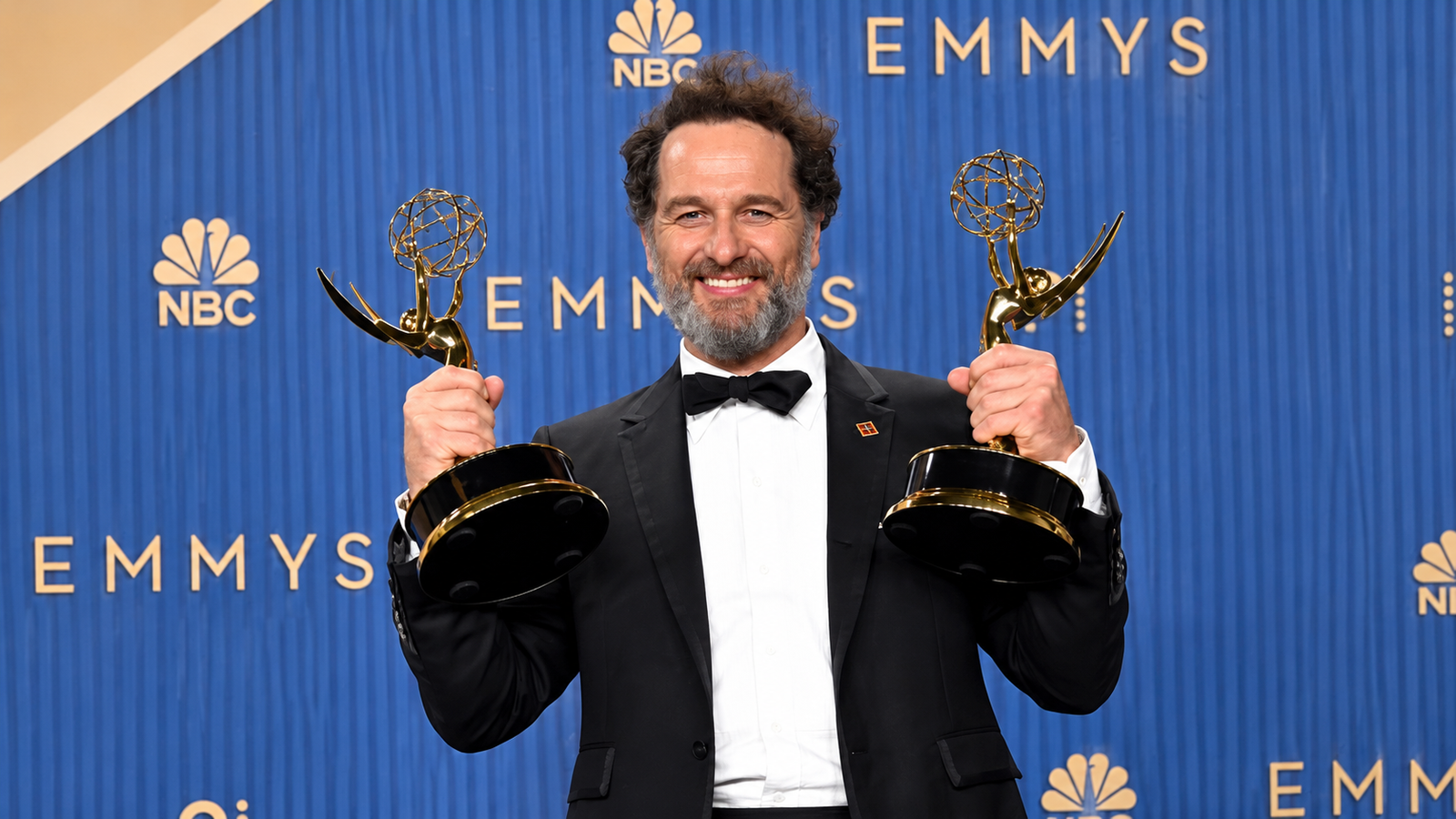
Welsh actor Matthew Rhys has made television history after becoming the first male performer to win two lead acting Emmy Awards in the same ceremony, capping a remarkable night at the 78th Primetime Emmy Awards in Los Angeles.
Rhys first took home the Outstanding Lead Actor in a Limited or Anthology Series or Movie award for his performance as Nile Jarvis in Netflix’s The Beast in Me. He later won Outstanding Lead Actor in a Comedy Series for playing Mayor Tom Loftis in Apple TV+’s Widow’s Bay.


A RECORD-BREAKING NIGHT
The achievement puts Rhys in an elite position in Emmy history. Following his earlier victory for The Americans in 2018, he has now won lead acting honours across drama, limited series and comedy categories.
His latest victories also brought his total number of Emmy wins to three, from eight career nominations.
EMOTIONAL ACCEPTANCE SPEECH
Rhys received a standing ovation during the ceremony and used his speeches to acknowledge the people who helped shape his career.
He thanked his family, his colleagues and, in particular, the people of Wales, describing his homeland as a powerful influence on his journey as an actor.
‘WIDOW’S BAY’ ENJOYS A BIG NIGHT
Rhys’s success was part of a broader triumph for Widow’s Bay. The Apple TV+ series dominated the ceremony, collecting multiple awards, including Outstanding Comedy Series, while also earning acting, writing and directing honours.
The series entered the awards with 19 nominations and ultimately emerged as one of the biggest winners of the night.
A CAREER MILESTONE
For Rhys, the double victory represents another major chapter in a career that has included acclaimed performances in Brothers & Sisters, The Americans and Perry Mason.
At 51, the Welsh actor has now established himself as one of the rare performers to win Emmy recognition across three major lead-acting categories—an achievement that could stand for years as one of the ceremony’s defining moments.



Hollywood’s biggest television stars brought glamour, bold fashion and plenty of star power to Los Angeles on Monday, September 14, as the 78th Primetime Emmy Awards got underway at the Peacock Theater.
Although traditionally known as the red carpet, this year’s arrivals area featured a peacock-blue carpet, part of NBC’s celebrations marking its 100th anniversary.
Among the most talked-about arrivals were Zendaya, Selena Gomez, Nicole Kidman, Mariska Hargitay, Florence Pugh, Riz Ahmed and Harrison Ford, with celebrities embracing everything from shimmering metallic gowns to classic tailoring.


ZENDAYA MAKES A STATEMENT
Zendaya was among the evening’s standout fashion moments, arriving in a crystal-embellished custom Prada gown. Her shimmering look immediately attracted attention as cameras followed the Emmy nominees along the carpet.
SELENA GOMEZ GOES FOR GOLD
Selena Gomez opted for a striking gold Louis Vuitton gown that echoed the colour of the Emmy statuette. The metallic design became one of the most memorable looks of the night.


A MIX OF COLOUR, GLAMOUR AND CLASSIC STYLE
The carpet also featured a wide range of colours and styles. Sarah Pidgeon appeared in Chanel, while Elle Fanning chose a pistachio-green Ralph Lauren gown. Rhea Seehorn stood out in red, while other stars embraced shades of pink, white, baby blue and metallic gold.
MARISKA HARGITAY MAKES IT A FAMILY AFFAIR
Host Mariska Hargitay made a memorable entrance in a red sequined gown and was joined on the carpet by her husband, Peter Hermann, and their three children. Hargitay and her daughter Amaya coordinated in matching red looks, creating one of the evening’s most photographed family appearances.


NICOLE KIDMAN AND MEGAN STALTER TURN HEADS
Nicole Kidman brought a glamorous touch to the carpet in a cream Chanel gown featuring floral detailing. Meanwhile, Megan Stalter delivered one of the most unconventional looks of the evening, covering herself in gold and styling the appearance to resemble the Emmy statuette.
HOLLYWOOD’S TELEVISION ELITE
The arrivals reflected the breadth of the television industry, with stars from major productions including The Pitt, Hacks, Widow’s Bay and Margo’s Got Money Troubles gathering for the ceremony.
Beyond the competition for television’s biggest honours, the red carpet once again provided a major fashion showcase, with celebrities using their appearances to combine traditional awards-season glamour with more adventurous personal styles.
The 78th Emmy Awards took place at the Peacock Theater in Los Angeles on September 14, 2026, with Mariska Hargitay serving as host.


Bernice Offei built a career that went beyond being a recording artist. She was a gospel musician, songwriter, guitarist and banker who spent more than three decades using music to communicate messages of faith, perseverance, gratitude and hope.
She was born in Accra and had her basic education at Royal Preparatory School at Osu before continuing to Achimota School, where her interest in gospel music began to take shape. During her secondary school years, she was called upon to sing at Scripture Union meetings and other Christian programmes.
Her involvement in Christian music deepened in the late 1970s when she joined the Calvary Road Singers in 1978. She performed with the group at various Christian programmes, gaining experience that later helped shape her career as a solo gospel artiste.
Offei was also a guitarist. She learned to play the instrument and would sometimes accompany herself during performances, a skill that distinguished her from many female gospel singers of her generation.
Offei’s transition into professional gospel music was gradual. She was encouraged to develop her songwriting abilities and eventually moved from performing mainly at Christian gatherings to recording her own material.
Her first album, We Are Victors, was released in 1991. The project marked the beginning of a recording career that would eventually produce several albums and more than 40 songs.
She followed it with projects including Hold On, Me Kosu, Grateful and Life. Some sources also list Victory among her later recorded works.
“Hold On” establishes her as a gospel voice
Among the songs that helped establish Bernice Offei’s name was “Hold On.”
The song carried a message of endurance, encouraging listeners not to give up in difficult circumstances. Its message of remaining steadfast in faith became closely associated with Offei and contributed to her popularity among Ghanaian gospel audiences.
Hold On also demonstrated an important feature of Offei’s music: she often used everyday struggles and experiences as a starting point for messages rooted in Christian faith.
“Life Is Short” becomes a defining song
Another major song in her catalogue was Life Is Short, from her 2007 album Life.
The song reflected on the temporary nature of human life and encouraged listeners to consider how they spend the time available to them. Its message of mortality, purpose and reflection became one of the defining themes associated with Offei’s musical legacy.
The song was particularly important to her career because Life earned her two major honours at the 2009 Ghana Music Awards. She won Best Female Vocal Performance for Life and Songwriter of the Year for the same work. The official Ghana Music Awards records confirm both awards.
A songwriter as well as a singer
Offei’s contribution to gospel music was not limited to her ability to sing.
She was also recognised as a songwriter, with her compositions often focusing on Christian faith, God’s grace, perseverance and the realities of human life.
Her catalogue includes songs such as Nyame Kokroko, Kaa She Gbeyei, N’adom Ara Kwa, It’s By Grace, No One Compares, Who Am I, Me Gyefo Te Ase, Suomo, Your Handiwork, Take Your Glory and Nyame Aye Bi Ama Yen.
The variety of titles reflects the recurring themes in her music: worship, gratitude, dependence on God, God’s faithfulness and encouragement during difficult periods.
Music alongside a banking career
Away from the stage, Bernice Offei pursued a professional career in banking.
She worked with Standard Chartered Bank while continuing her gospel ministry. For years, she maintained a balance between her professional responsibilities and her music.
Her academic background was equally notable. She studied at the University of Ghana, where she obtained an MPhil in Crop Science, and later pursued a master’s degree in Information Technology in the United Kingdom.
In 2016, she reportedly left banking to concentrate fully on gospel music and ministry. The decision marked a major transition from balancing two careers to dedicating herself entirely to the calling she had pursued for decades.
Her philosophy about gospel music
Offei also spoke publicly about what she believed gospel music should represent.
In a 2019 interview on Hitz FM’s This Is Gospel, she advised gospel musicians not to make awards their primary motivation.
She argued that gospel artistes should focus on their calling and on spreading the Christian message rather than pursuing recognition. For Offei, awards were secondary to the spiritual purpose of gospel music.
That position matched the themes that ran through her own career. Despite receiving major industry recognition, including two Ghana Music Awards in 2009, she continued to emphasise faith and ministry.
Awards and recognition
Bernice Offei’s contribution to Ghanaian gospel music earned her several awards during her career.
Her most prominent recognition came at the 2009 Ghana Music Awards, where she won:
- Best Female Vocal Performance – “Life”
- Songwriter of the Year – “Life”
The official Ghana Music Awards archive confirms both wins.
A University of Education, Winneba academic source also records other honours associated with her career, including recognition at the Ceval Gospel Music Awards and the Unity Awards.
A legacy that goes beyond awards
For many listeners, however, Bernice Offei’s importance was not simply measured by the number of awards she won.
Her music became associated with messages that were easy to understand and relevant to everyday life. “Hold On” spoke to perseverance, while “Life Is Short” encouraged reflection on mortality. Other songs focused on God’s grace, goodness and faithfulness.
Her ability to combine those messages with a distinctive vocal style helped her remain relevant across generations.
With six albums and more than 40 songs credited to her career, Offei became one of the veteran female voices whose work helped shape Ghana’s gospel music landscape.
Family and personal life
Away from music and banking, Offei was married to Prof. Samuel Kwame Offei, a former Pro-Vice Chancellor of the University of Ghana. The couple had two children.
Those close to her also remembered her for her Christian faith and disciplined lifestyle, qualities that were reflected in the messages she communicated through her music.
The meaning of her musical legacy
Bernice Offei’s catalogue provides a window into a particular era of Ghanaian gospel music—one in which songs were often built around testimony, Scripture, encouragement and reflection on life.
Her journey from a young singer at Scripture Union meetings, to a member of the Calvary Road Singers, to a recording artiste, award-winning songwriter and eventually a full-time gospel minister represents a career built steadily over several decades.
Her best-known songs, particularly “Hold On” and “Life Is Short,” ensured that her voice remained familiar to generations of Ghanaian gospel listeners.
Following her death at 63 on September 12, 2026, tributes have continued to focus on both her music and the values she represented. Ghana News Agency described her as an artiste whose work inspired faith, hope and resilience, while noting that her music continues to form part of Ghana’s gospel music heritage.
Veteran Ghanaian gospel musician Bernice Offei battled dementia for about four to five years before her death at the age of 63, her former manager, Kwasi Ernest, has revealed.
Ernest disclosed this during an interview on Max TV on Monday, September 14, 2026, while discussing the circumstances surrounding the singer’s death and her disappearance shortly before she passed away.
According to him, Offei’s condition had gradually affected her memory, orientation and ability to carry out some everyday activities.
He explained that the illness eventually became severe, leaving the musician disoriented and unable to find her way home after leaving the house.
Kwasi Ernest said Offei went missing from home at a time when her condition had deteriorated.
Her family initially conducted a private search for her, but after their efforts proved unsuccessful, they made the disappearance public and appealed to members of the public for assistance.
Offei, who had reportedly been reported missing on September 2, 2026, was later found.
Following her discovery, the gospel musician was taken to a hospital for medical assessment and treatment rather than being taken directly home.
Ernest said Offei appeared to be in relatively good condition when she was found, but her health subsequently deteriorated while she was receiving medical care.
She died on Saturday, September 12, 2026, at the age of 63.
Reflecting on Offei’s life and character, Kwasi Ernest described her as a disciplined and deeply God-fearing woman whose Christian faith extended beyond her music.
He said Offei made a conscious effort to live according to the Christian principles she professed through her songs and ministry.
Bernice Offei was one of the respected names in Ghana’s gospel music industry, with songs such as “Life Is Too Short” and “Hold On” among her notable works.
Her death has since attracted tributes from fellow musicians, fans and admirers, who have remembered her for her contribution to Ghanaian gospel music.
The revelation about her long battle with dementia has also shed more light on the circumstances surrounding her disappearance in the days leading up to her death.

Matthew Rhys makes Emmy history with two lead acting wins in one night

Israeli Minister Threatens to Revoke Filmmakers’ Citizenship Over Gaza Documentary

In Pictures: Stars light up the red carpet at the 2026 Emmy Awards in Los Angeles



-

 Entertainment1 week ago
Mahama Is First President to Put GH¢40m Seed Money into Creative Arts Fund: Kojo Preko Dankwa
-

 Culinary1 week ago
The Green Heart of Ghanaian Cuisine: Celebrating Nkontomire and the Art of Abom
-

 General News2 weeks ago
Don’t Punish Them Retrospectively – Educationist Challenges New CSSPS Placement Rule
-

 General News2 weeks ago
OSP Opens Preliminary Investigation into Alleged GH¢70,000 Payment Linked to Parliament’s Vetting
-

 Entertainment1 week ago
Government Repatriates Musician Barosky from UK
-

 Culinary2 weeks ago
Pineapple: The Spiky Tropical Fruit Packed With Sweetness and Nutrients
-

 Business2 weeks ago
TOR & GOIL Explore Further Opportunities for Strategic Collaboration
-

 Entertainment2 weeks ago
Ras Caleb Appiah-Levi: Hate Me for the Truth That I Represent