
General News
Africa Cannot Be a ‘Jewel in a Desert of Distress’ — Mahama


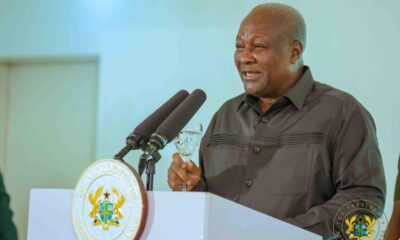
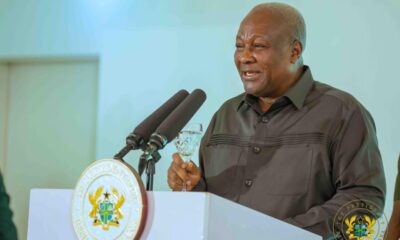
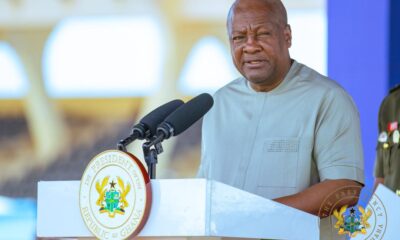
President of Ghana, H.E. John Dramani Mahama, has called for deeper African cooperation and a fundamental reset of the continent’s development model, warning that isolated national successes will not be enough in a rapidly changing global order.
Speaking at a high-level convening of the Accra Research Initiative on the sidelines of the World Economic Forum in Davos, President Mahama said Africa must move collectively to escape cycles of dependency and underdevelopment.
“However admirable Ghana’s turnaround story is, it is not enough. We cannot be a jewel in a desert of distress. We must work together as Africa,” President Mahama said.
A Changing Global Order
The Ghanaian leader warned that the multilateral governance system established after the Second World War is weakening, with bilateral relations increasingly driven by narrow, transactional interests.
“Our world as we know it is at an inflection point. The global, multilateral governance system is breaking down, and Africa cannot afford to be passive in this moment,” he stated.
According to President Mahama, Africa must be an active participant in shaping the emerging global order rather than adapting to decisions made elsewhere.
“While no name has yet been coined for the new global system that will emerge, Africa intends to be at the table in determining what that new global order will look like,” he said.
Breaking the Dependency Cycle
President Mahama said Africa remains trapped in what he described as a “triple dependency”—reliance on external actors for security, donor funding for social services, and the export of raw materials without value addition.
“We supply the world’s critical minerals, but capture almost none of the value. This is not sovereignty; it is a trap, and it is getting worse,” he warned.
He pointed to shrinking global humanitarian assistance and shifting geopolitical priorities as evidence that Africa must urgently build internal capacity.
“Global humanitarian assistance is declining, and many countries are cutting development aid. Africa must pull itself up by its own bootstraps,” Mahama said.
Lessons from COVID-19
The President cited the COVID-19 pandemic as a defining moment that exposed Africa’s vulnerability in global systems, particularly in access to vaccines and medical supplies.
“Africa was the last continent to begin receiving vaccines during a global pandemic. That experience was a wake-up call for all of us,” he noted.
Ghana’s Turnaround, Africa’s Challenge
Highlighting Ghana’s recent economic recovery, President Mahama said disciplined leadership and accountability have helped restore macroeconomic stability.
“From a debt-distressed, crisis-ridden economy, we have achieved a strong turnaround by cutting waste, restoring confidence, and focusing on execution,” he said.
However, he stressed that sustainable progress requires a continental approach.
“No African country can industrialise on its own. We must knit together our success stories and scale them across the continent,” he added.
The Accra Reset Vision
President Mahama described the Accra Research Initiative as a practical framework for coordinated African action, focusing on skills development, regional manufacturing, and collective negotiation on minerals, trade, and climate finance.
“This is not a talk shop or another declaration. It is a practical blueprint for building real sovereignty—measured in jobs created, industries built, and young people thriving,” he said.
A Call for Partnership, Not Pity
Concluding his remarks, President Mahama called on global partners to engage Africa on the basis of mutual respect and shared interests.
“We did not come here to ask for charity. We came to propose a partnership of the willing—based on dignity, responsibility, and shared prosperity,” he said.
Looking to the future, the President framed Africa’s challenge as both urgent and hopeful.
“The question before us is not whether change is needed, but whether we have the courage to build it together,” Mahama said.







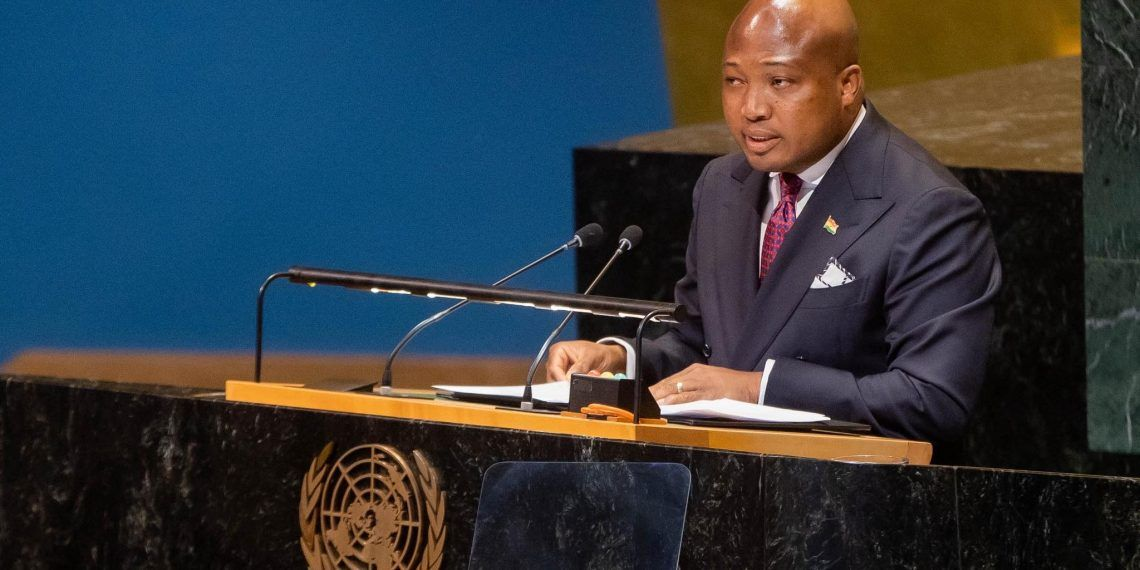
The Economic Community of West African States (ECOWAS) has approved a donation of US$250,000 (approximately GH¢3 million) to support victims of Ghana’s recent devastating floods, Foreign Affairs Minister Samuel Okudzeto Ablakwa has announced.
In a statement shared on Sunday, Mr. Ablakwa said the Ministry of Foreign Affairs had been officially notified by ECOWAS of the regional body’s decision to provide financial assistance to affected communities.
According to the Minister, the government is committed to ensuring full transparency and accountability in the management of the donation.
“I wish to announce, in the spirit of transparency and accountability, that the Foreign Ministry has just been notified by ECOWAS that they have decided to donate US$250,000.00 (about GH¢3 million) to Ghana for victims of the recent devastating floods,” he stated.
Mr. Ablakwa assured the public that the Ministry of Foreign Affairs would transfer the entire amount to the appropriate authorities immediately after the funds are received into the ministry’s account.
“As can be expected, the Foreign Ministry will hand over the entire funds as soon as we receive it in our accounts,” he added.
The Minister also conveyed the Government of Ghana’s heartfelt appreciation to ECOWAS for the timely intervention, describing the gesture as a demonstration of regional solidarity and African unity.
“The Government of Ghana conveys boundless appreciation to ECOWAS for their solidarity and true African compassion,” he said.
The donation comes as relief efforts continue in several flood-hit communities across the country, where thousands of residents have been affected by heavy rains that caused widespread destruction of homes, businesses, and public infrastructure.
The ECOWAS support is expected to complement ongoing government and humanitarian efforts aimed at providing relief and assisting affected families in rebuilding their lives.
General News
Ebo Taylor Funeral: Legendary Ghanaian Highlife Icon to Be Buried in Saltpond on August 2

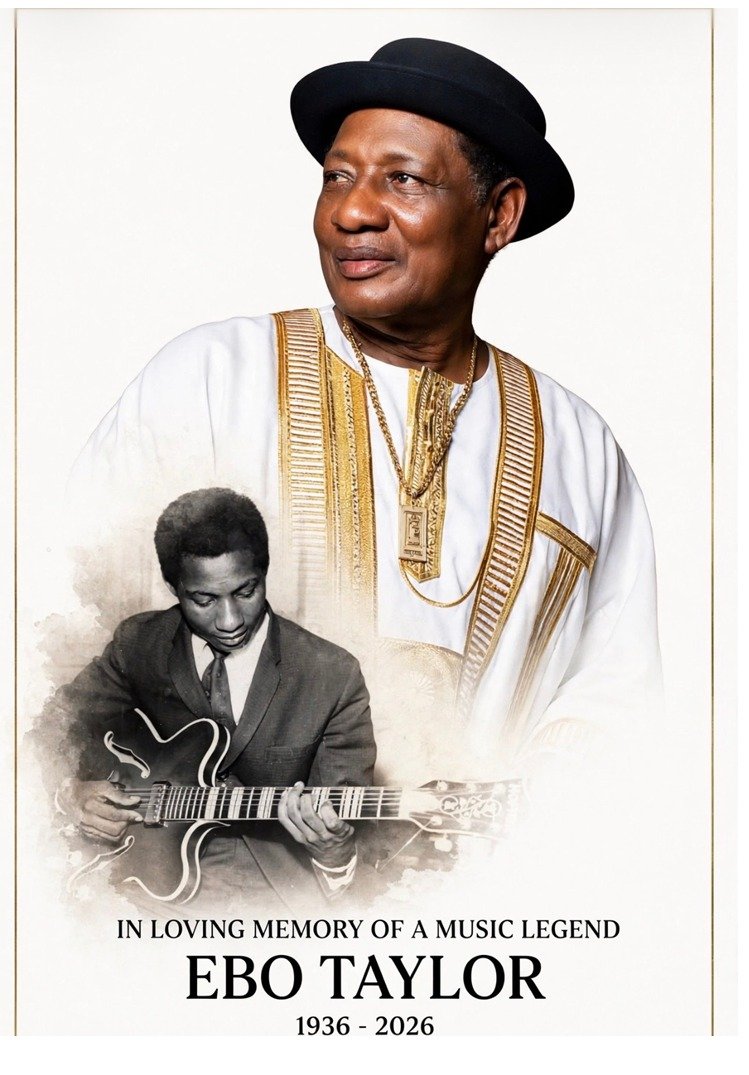
Ebo Taylor Funeral: The family of legendary Ghanaian Highlife and Afrobeat pioneer Ebo Taylor has officially announced the details of his final funeral rites, with the iconic musician set to be laid to rest in his beloved hometown of Saltpond on Sunday, August 2, 2026.
According to the official funeral brochure, the burial and thanksgiving service for the late music legend, born Deroy Ebo Taylor (1936–2026), will begin at 9:00 a.m. at the Wesley Methodist Church, Saltpond, before a final farewell ceremony at Victoria Park, Saltpond, from 12:00 p.m. to 6:00 p.m.
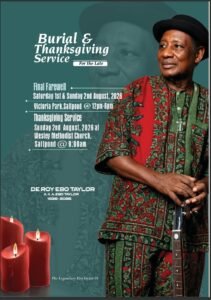
The funeral service will be led by senior clergy of the Methodist Church, including Rt. Rev. Richardson Aboakye Andam, Bishop of the Cape Diocese, alongside other ministers from the Saltpond Circuit.
A life dedicated to Ghanaian music
The funeral brochure celebrates Ebo Taylor as one of Ghana’s greatest musical icons whose career transformed Highlife and Afrobeat for generations.
Born on January 6, 1936, in Cape Coast to Samuel Taylor and Sarah Taylor (Ewuraba Esi Nkrumah), Ebo Taylor developed his passion for music from an early age. After attending Jubilee School and St. Augustine’s Secondary School, he earned a government scholarship from Ghana’s first President, Dr Kwame Nkrumah, in 1962 to study at the Eric Gilder School of Music in London.
During his stay in London, he formed lifelong creative relationships with music legends including Fela Kuti, Teddy Osei, and Sol Amarfio, collaborations that helped shape the foundations of Afrobeat and modern African music.
Shaping Ghana’s golden era of Highlife
After returning to Ghana, Ebo Taylor became one of the country’s most influential composers, arrangers and music directors.
Serving as Musical Director at Essiebons Records, he played a significant role in the careers of celebrated musicians including Pat Thomas, Gyedu-Blay Ambolley, Papa Yankson, Jewel Ackah, C.K. Mann, A.B. Crentsil, and K. Frimpong.
The brochure describes him as the “architect of the Ghanaian Golden Era,” noting that he successfully blended indigenous Fante rhythms with jazz, soul, funk and Afrobeat while preserving authentic African musical traditions.
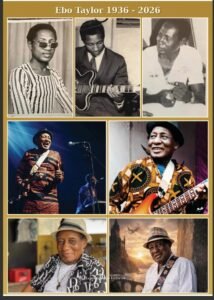
Academic and international legacy
Beyond performing, Ebo Taylor also contributed to music education.
In 2001, he joined the University of Ghana’s Department of Music, where he taught Highlife performance, composition and improvisation, helping establish Highlife as an academic discipline.
His extensive discography includes:
- My Love and Music (1975)
- Ebo Taylor (1977)
- Twer Nyame (1978)
- Conflict Nkru! (1980)
- Love and Death (2010)
- Appia Kwa Bridge (2012)
- Yen Ara (2018)
- Palaver
- Ebo Taylor JID022 (2025)
The brochure also highlights his global resurgence through labels including Strut Records, BBE Music, and Jazz Is Dead, while revealing that his music has been sampled by international stars such as Usher, The Black Eyed Peas, Kelly Rowland, Jidenna, Vic Mensa, and Rapsody.
National and international honours
Throughout his illustrious career, Ebo Taylor received numerous accolades, including:
- Government of Ghana Scholarship (1962)
- VGMA Lifetime Achievement Award (2014)
- Ghana Business Awards Music Legend of the Year (2019)
- Music In Africa Honorary Award (2019)
- Highlife Music Awards Lifetime Achievement Award (2019)
The brochure notes that international record labels also reissued much of his music, cementing his reputation as one of Africa’s greatest musical ambassadors.
Family pays emotional tribute.
In an emotional tribute, his widow,Mrs. Elina Taylor, described her late husband as not only a global music legend but also her companion, best friend and devoted family man.
She praised his forgiving nature, recalling that regardless of the circumstances, he would always respond with the words, “It’s alright,” a phrase she said reflected the grace, peace and compassion that defined his life.
His children also honoured him as their greatest teacher and role model, saying his humility, integrity, compassion and dedication to family would continue to inspire generations.
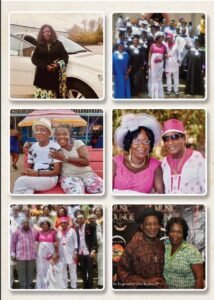
A lasting musical legacy
Ebo Taylor passed away peacefully in Saltpond on February 7, 2026, at the age of 90. He is survived by his wife, Mrs Elina Taylor, children, grandchildren, and a worldwide community of admirers.
His funeral is expected to attract musicians, traditional leaders, government officials, industry stakeholders and fans from Ghana and across the world as they gather to celebrate the extraordinary life and enduring legacy of one of Africa’s most influential Highlife pioneers.
General News
VIP Jeoun Bus Robbery Leaves Five Shot as Armed Men Attack Two Coaches on Ghana Highways

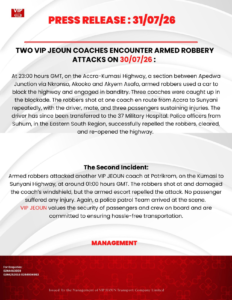
A VIP Jeoun bus robbery has left five people with gunshot wounds after armed robbers ambushed one of the company’s coaches on the Accra-Kumasi Highway late Thursday night. Just hours later, they targeted another bus on the Kumasi-Sunyani Highway.
The first attack occurred at approximately 11:00 p.m. on July 30, 2026, along the stretch between Apedwa Junction, Nkronso, Akooko, and Akyem Asafo. The armed robbers reportedly used a vehicle to block the highway before launching a coordinated assault on motorists.
According to a statement issued by VIP Jeoun on Friday, July 31, three commercial buses became trapped after the criminals set up the roadblock, leaving passengers vulnerable to the attack. The company’s coach, which was travelling from Accra to Sunyani, came under heavy gunfire. As a result, the driver, his mate, and three passengers sustained gunshot injuries.
The injured were rushed to the hospital for emergency treatment. The driver was later transferred to the 37 Military Hospital for specialised medical care.
VIP Jeoun reported that officers from the Suhum Divisional Police Command responded quickly after receiving reports of the robbery. The police engaged the armed robbers in a gun battle, forcing them to flee the scene. Officers subsequently cleared the obstruction from the highway, restoring the flow of traffic.
The company commended the police for their swift intervention, which prevented further casualties and allowed the road to reopen to motorists.
In a separate incident at around 1:00 a.m., another attempted robbery occurred involving a VIP Jeoun bus at Potrikrom on the Kumasi-Sunyani Highway. The robbers opened fire on the coach, damaging its windscreen. However, an armed security escort travelling on board returned fire, forcing the attackers to retreat before they could rob the passengers or take control of the vehicle.
A police patrol team later arrived at the scene to secure the area, and no injuries were reported in the second incident.
Following these consecutive attacks, VIP Jeoun reaffirmed its commitment to protecting the lives of its passengers and staff. The company stated that it remains dedicated to providing safe, secure, and reliable transport services across the country, despite the recent security incidents. They also expressed appreciation to the Ghana Police Service for its prompt response.
The VIP Jeoun bus robberies have raised concerns about the increasing incidents of highway robbery on major roads, leading many travellers to call for intensified police patrols and enhanced security measures to safeguard commuters.
General News
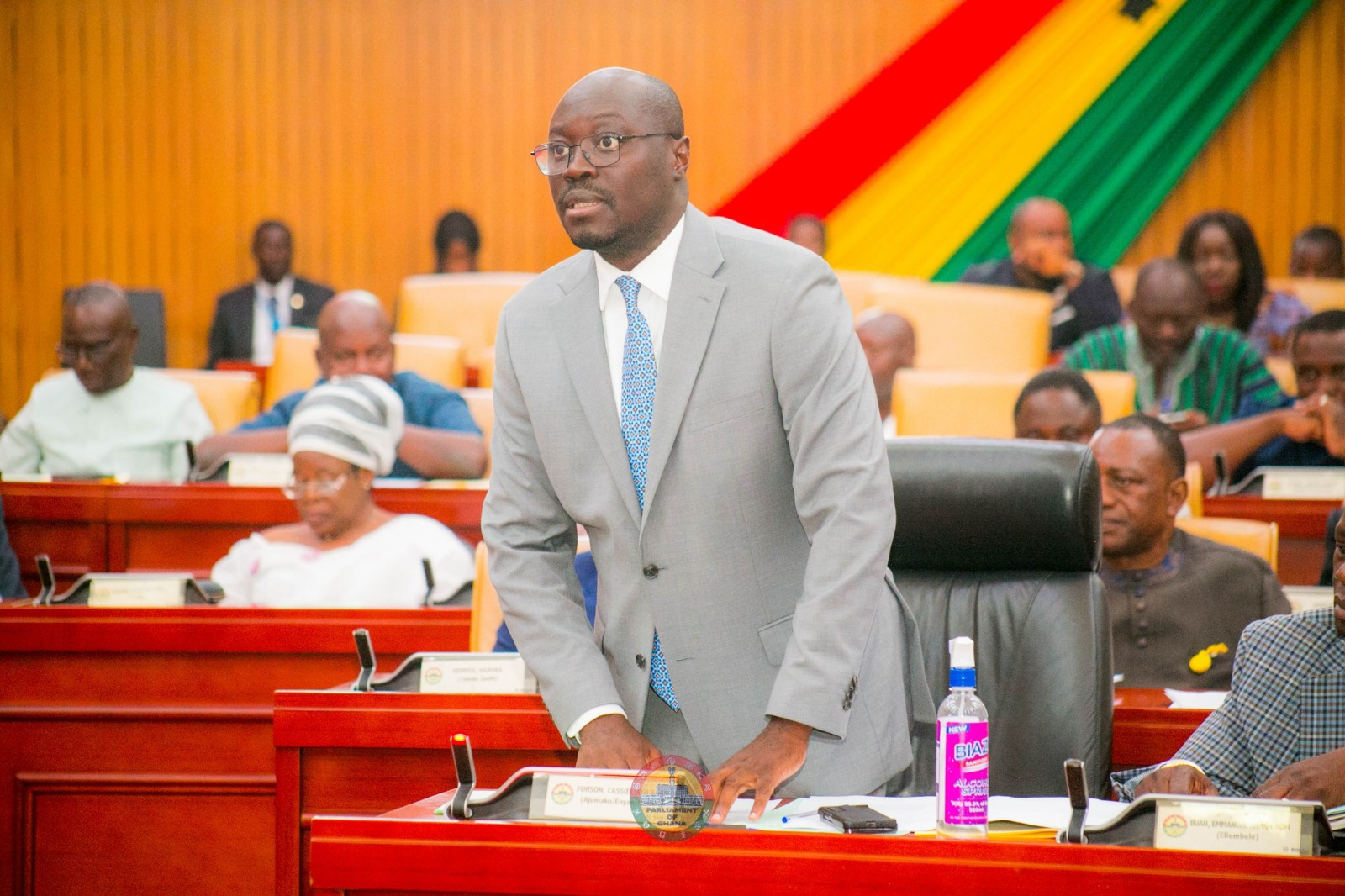
Parliament Passes Energy Sector Levies Bill 2026 to Tackle Fuel Tax Evasion and Subsidy Abuse


Member of Parliament for Ahafo Ano South East, Hon. Yakubu Mohammed, has issued an unreserved and unqualified apology following public backlash over a comment he made to a basic school pupil during a visit to Parliament House.
The Yakubu Mohammed apology, contained in a statement dated July 31, 2026, follows the circulation of a viral video showing the MP describing a pupil from The Citadel School in the Sagnarigu Constituency as “beautiful” and saying he would marry her when she grows up.
The remark sparked widespread criticism on social media, with many expressing concern over the appropriateness of the statement.
Addressing the issue, the legislator explained that his comment was made within the context of the long-standing playful cultural relationship between the Mossi and Dagomba ethnic groups.
According to him, as a Mossi speaking to members of the Dagomba community, his remarks were intended as part of the friendly exchanges that have historically existed between the two groups and were not meant to offend anyone.
He stressed that the statement was never intended to cause harm, disrespect, embarrassment or discomfort to the pupil, her family, the school authorities, the Dagomba community or the general public.
Despite the explanation, Yakubu Mohammed admitted that the comment was inappropriate because it involved a child.
“I fully acknowledge that, irrespective of my intention or the traditional context in which the statement was made, the comment was inappropriate because it involved a child,” he stated.
In the Yakubu Mohammed apology, the MP expressed deep regret over his choice of words and offered an unreserved apology to the relevant authorities, the management of The Citadel School, the pupil, her parents and family, and the general public.
He also reaffirmed his commitment to upholding the responsibilities of his office, noting that he recognises the impact of his words and public conduct.
“As a Member of Parliament, I recognise the responsibility attached to my words and public conduct. I remain firmly committed to protecting and respecting the dignity, welfare and rights of every child,” he said.
Yakubu Mohammed concluded the statement by once again extending his sincere and unqualified apology, saying he deeply regrets the incident and the offence his remarks may have caused.

ECOWAS Donates US$250,000 to Support Ghana Flood Victims – Foreign Minister Ablakwa

Hon. Joana Gyan Cudjoe Driving Development in Amenfi Central Through Healthcare, Education and Jobs

Shattafest UK Cancelled Following Serious Incident Outside Venue



-
 Entertainment1 week ago
Ghana Secures $3.5 Million UNESCO Heritage Support During Tourism Minister’s South Korea Visit
-
 General News2 weeks ago
Dr. Charles Dwamena Sues Hubtel for GH¢5 Million Over Alleged Campaign USSD Sabotage
-
 Entertainment2 weeks ago
DJ K.A Apologises Over Viral Video, Says It Was Recorded Four Years Ago
-
 General News5 days ago
CLOSSAG Elections in Dambai: Tension Mounts Over Candidate Disqualifications
-
 General News2 weeks ago
Chairman Wontumi Sentenced to 20 Years in Prison Over Illegal Mining
-
 Entertainment2 weeks ago
“Hits Rule Everything Now” — Perez Musik Says Legends Like Bob Marley Would Face Challenges Today
-
 General News6 days ago
EOCO Declares Emmanuel Ababio Wanted Over Alleged Fraud
-

 Entertainment6 days ago
FOCAP Welcomes New Cultural Attachés, Hails Boost for Ghana’s Creative Diplomacy