
Entertainment
Captain Smart defends Abu Trica interview: ‘I only acted in my role as a journalist’

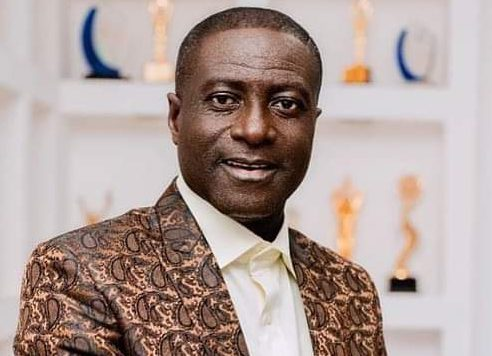
Veteran Ghanaian broadcaster Captain Smart has defended his decision to interview businessman and socialite Abu Trica, insisting he merely performed his duties as a journalist and did nothing to interfere with the ongoing extradition proceedings against his guest.
The broadcaster’s comments come after Abu Trica’s lawyer, Osagyefo Oliver Barker-Vormawor, criticised the television appearance, arguing that no lawyer would advise a client to publicly discuss a case that is still before the courts.
Speaking to journalists after a recent court hearing, Barker-Vormawor said individuals facing active legal proceedings should refrain from making public statements that could complicate their defence.
“No responsible lawyer would advise a client to grant a television interview and publicly discuss a case that is still before the courts,” he said.
Responding to the criticism, Captain Smart maintained that he had simply fulfilled his professional responsibility by giving Abu Trica an opportunity to tell his side of the story.
“I am not a court, first of all. I am not a lawyer, and I only acted in my role as a journalist,” he said.
Captain Smart also dismissed suggestions that the interview had negatively affected Abu Trica’s extradition case.
“Why should it affect him? I am not sure it has affected him,” he stated when asked whether the television appearance had placed the businessman at a legal disadvantage.
Addressing criticism on social media, where some users claimed the interview may have weakened Abu Trica’s legal position, the broadcaster declined to engage with those opinions.
“That is their opinion, and opinion is like noses. I do not see why I should comment on a post written by someone I have no knowledge of,” he added.
The controversy stems from Abu Trica’s appearance on Onua TV in June, during which he denied allegations linking him to an $8 million romance fraud scheme. During the interview, he claimed investigators had informed him that only $13,000 was directly connected to his case and also recounted aspects of his interrogation following his arrest.
The interview sparked widespread public debate, with some legal observers questioning whether it was appropriate for a suspect facing extradition to publicly discuss matters that remain before the courts.
Abu Trica is currently at the centre of extradition proceedings after the Accra High Court dismissed his application to stop his transfer to the United States, where he is wanted over allegations of wire fraud and money laundering. He has denied all wrongdoing and continues to challenge the allegations against him.


Ghanaian musician Mzbel has revealed that any partner who wants to have sex with her must inform her several days in advance because she does not like being approached unexpectedly for intimacy.
In an interview with ZionFelix, Mzbel shared her perspective on relationships, intimacy and the personal boundaries she expects her partners to respect.
According to Mzbel, she needs adequate notice to prepare herself mentally and physically before becoming intimate with a partner.
She explained that her partners cannot simply decide to have sex with her at the spur of the moment.
“I don’t really like sex. My sex is even boring. If I’m dating you and you want to have sex, you have to book an appointment with me.”
Mzbel said that a partner who intends to be intimate with her must communicate his plans in advance.
“You have to let me know that, let’s say, Friday, you want to have sex with me. You have to tell me.”
She explained that the advance notice gives her enough time to preselfto also determine whether she wants to proceed ahead with the encounter.
“I am not a machine; I have to know, I have to prepare myself. If you book an appointment before wanting to have sex, then I ask some questions. If I like the answers, then I agree to have sex.”
The musician further suggested that her arrangement has not been a major problem for the men she has dated because, according to her, they enjoy their intimate experiences with her.
She described her sexuality in unusually expressive terms, saying:
“My pussy is like a God space; it needs to be worshipped. If you can’t worship it, you can’t have it.”
Mzbel claimed that the men she has been involved with have generally been willing to respect her conditions because of the satisfaction they derive from being intimate with her.
“The men I have been with can comply because my vagina is very sweet.”
She also claimed that her former partners often want to return even after their relationships have ended.
“There is no one I have dated that, when we break up, they do not want to reconcile again. You will always want to come back.”
During the discussion, Mzbel also shared her broader perspective on romantic relationships, stating that she does not believe in love.
She described love as a scam, reinforcing her unconventional approach to relationships.
“I don’t believe in love; it’s a scam.”
Her comments come as part of her wider willingness to speak openly about relationships and her personal choices.
Mzbel was also asked about whether her requirement for partners to plan intimacy could encourage a partner to seek sex elsewhere.
The musician said she would not be concerned if a partner chose to cheat.
According to her, infidelity would not make her feel diminished, although she would rather not be told about it.
She made it clear that she does not want a cheating partner to involve her in the situation or bring information about the other person to her.
“You can cheat, cheat well.”
She added:
“I don’t care how many times you want to cheat because it won’t take anything away from me. I just don’t have to know.”
Mzbel further advised that the person a partner is cheating with should also not contact her or involve her in the affair.
“Or whoever you’re cheating on me with shouldn’t know me, so they don’t come and worry me.”

Ghanaian gospel musician Perez Musik has opened up about how the way some parents disciplined their children while growing up may have affected their confidence and ability to express themselves.
Speaking on TV3, Perez Musik reflected on his childhood experiences and said children who were frequently shouted at or scolded by their parents, particularly in public, could grow into adults who struggle to speak confidently.
According to the musician, parents of his generation often disciplined their children without paying attention to where they were or who was around.
“When we were growing up, our parents didn’t care where we were before they beat or scolded us,” he said.
Perez Musik believes that repeated public reprimands could leave lasting effects on children, especially when they are expected to speak, share their opinions or express themselves before other people.
“I also think that’s what made some of us timid,” he explained.
He noted that children who were constantly shouted at while growing up could become overly cautious because they were afraid of saying the wrong thing.
“Because of the way your parents will shout at you when you are in public, and you have to express yourself, you’re a bit laid back. You’re calculating if you should say something or not,” he stated.
Perez Musik contrasted this with children who grow up in homes where they are encouraged to communicate freely and share their thoughts.
He said such children are more likely to develop confidence because they are given the freedom to express themselves without constantly worrying about being reprimanded.
“You will realise that kids that come from a home where they’re allowed to express themselves are more confident,” he shared.
The musician’s comments came while he was discussing his own experiences as a leader and some of the lessons he has learnt from dealing with people.
Perez Musik admitted that he has sometimes been too harsh when correcting others, revealing that some people have left because they felt he spoke to them too strongly.
“I’ve also been a type of leader where I’ve lashed out at people when I didn’t have to, and I’ve discouraged them. Some people have left because maybe I spoke too harshly,” he noted.
He explained that although his intention was often to push people to perform better and get things done, he later realised that his approach could discourage people rather than motivate them.
“I wanted to see things done in a certain way and it’s not being done. Maybe I expressed myself wrongly in a way that I shouldn’t have. At that moment I thought I was pushing the person to get the work done, but it’s not seen like that,” he added.
Perez Musik also reflected on the importance of recognising that people have different personalities and approaches to work.
“You just have to understand that people are different. The people who will come in later are those who will make the thing more beautiful, but that doesn’t mean you neglect those you started with,” he said.
His reflections highlight the importance of how parents and leaders communicate with the people they are responsible for, particularly when correction is necessary.
Entertainment
Interfaith Tourism World Club Calls for Faith-Based Tolerance to Strengthen National Peace
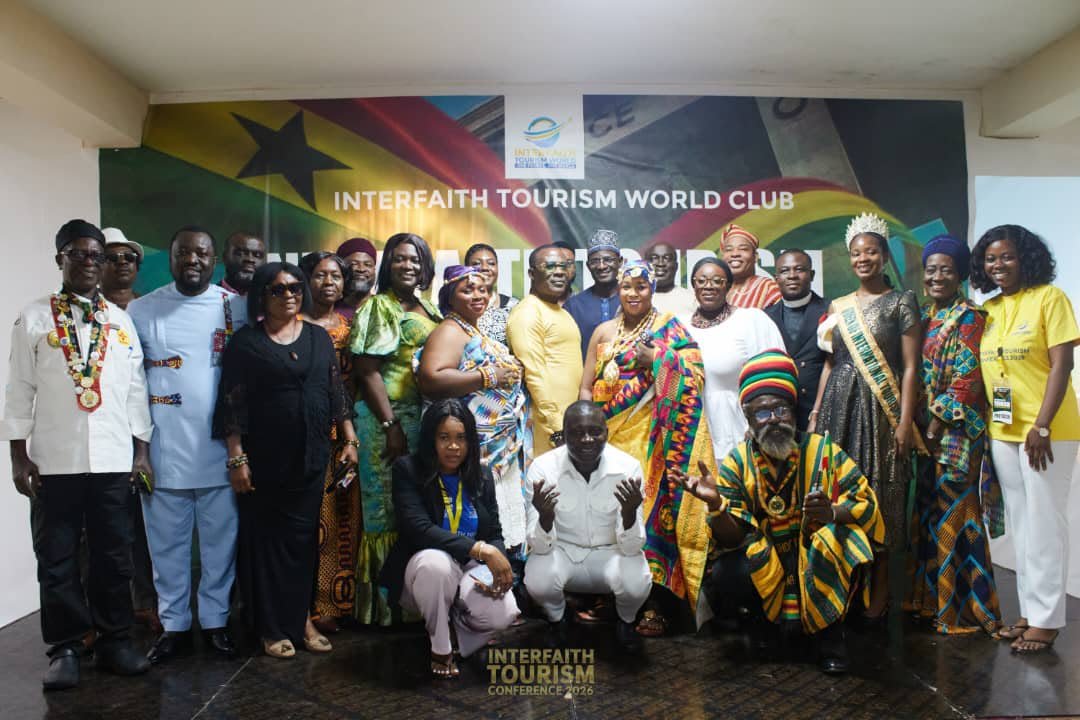
The Interfaith Tourism World Club (ITW Club) has called on Ghanaians to embrace faith-based tolerance and use tourism and cultural exchange as tools for promoting peace, unity and social cohesion across the country.
In a statement issued on August 20, 2026, the organisation said Ghana’s religious diversity should be regarded as a source of strength rather than division, stressing that people of different faiths can coexist peacefully despite differences in their beliefs and forms of worship.
The statement, issued by the Chief Executive Officer and President of the Interfaith Tourism World Club, Ernest K. Boateng, noted that Ghana is a country where church bells, calls to prayer and traditional drums can be heard within the same communities.
According to the organisation, this religious diversity demonstrates the country’s ability to accommodate different faith traditions while maintaining national unity.
“Faith-based tolerance” was described as the willingness to live peacefully with people who do not share the same beliefs, while working together, trading together and contributing to the development of Ghana.
The ITW Club said Christianity, Islam, African Traditional Religion and other faith traditions share important values, including love for neighbours, compassion and respect for the dignity of every human being.
The organisation further highlighted the role tourism can play in promoting understanding among people of different religious backgrounds.
It said visits to mosques, cathedrals, shrines, sacred groves and other religious and cultural sites should not be viewed as a threat to an individual’s faith.
Instead, the organisation believes such experiences can help people gain a deeper understanding of other religious traditions and cultures.
The ITW Club encouraged Christians to participate in Muslim festivals, Muslims to explore Christian heritage sites and all Ghanaians to respect traditional customs and sacred practices.
According to the organisation, such interactions can help people recognise the shared values of peace and human dignity that exist across different faith traditions.
The Interfaith Tourism World Club stressed that religious tolerance should not be passive but should involve deliberate actions aimed at protecting peace and strengthening relationships among communities.
It said tolerance should involve choosing dialogue instead of insults, protecting places of worship and teaching children that religious differences should not be viewed as threats.
The organisation also urged Ghanaians to recognise religious diversity as an asset that can contribute to national development.
The ITW Club called on young people to use tourism as an opportunity to learn about different communities, cultures and faiths.
It urged the youth to travel, interact with people from different religious backgrounds and become “Ambassadors of Harmony” who can promote peaceful coexistence.
The organisation believes increased interaction among young people from different faith traditions can help reduce prejudice and create stronger bonds across communities.
Faith leaders were also encouraged to play a greater role in promoting religious unity.
The ITW Club called on religious leaders to continue preaching unity from their pulpits, minbars and traditional shrines while openly condemning hate and supporting peaceful coexistence.
It said religious leaders have an important responsibility to influence their followers positively and ensure that places of worship become platforms for peace rather than division.
The organisation further appealed to communities to collectively protect sacred and religious sites across the country.
It called for festivals and cultural celebrations to be used as opportunities for interaction and understanding, rather than occasions that create barriers between people.
The ITW Club said communities can strengthen national unity by allowing cultural and religious festivals to serve as bridges connecting people from different backgrounds.
The organisation also appealed directly to all Ghanaians to reject hostility towards people of different faiths.
It stressed that a person with a different religious belief should not be regarded as an enemy, but as a fellow Ghanaian who can be a neighbour, brother, sister, business partner and contributor to national development.
The ITW Club said its mission extends beyond tourism, explaining that it seeks to unite people of diverse faiths across Africa and the diaspora through travel and cultural exchange.
Through its activities, the organisation aims to promote interfaith dialogue and mutual understanding while contributing to peace, social cohesion and sustainable tourism.
The organisation described Ghana’s peaceful coexistence among different religious communities as one of the country’s most important tourism assets.
It said Ghana’s tourism appeal should not be measured only by its beaches, castles and other physical attractions, but also by the country’s ability to maintain peace despite religious differences.
The ITW Club said the ability of Ghanaians to disagree on matters of faith while remaining united as citizens is a strength that should be protected and promoted.
The organisation concluded its appeal by urging Ghanaians to live in harmony, travel in unity and work together towards building a peaceful and united Ghana.
The statement was issued by Ernest K. Boateng, CEO and President of the Interfaith Tourism World Club (ITW Club).
For further information, the organisation provided info@itwclub.org and +233 246362838.
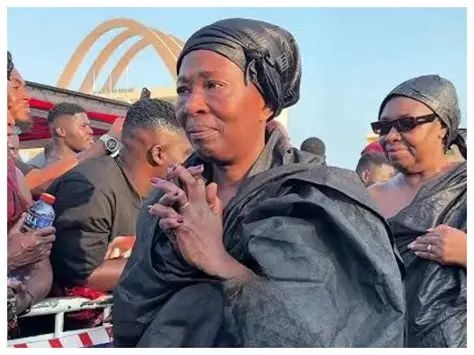
Akosua Serwaa, widow of late highlife legend Charles Kwadwo Fosu, popularly known as Daddy Lumba, has commenced legal action against Victor Kofi Owusu, also known as Abusuapanin Tupac, and Alex Kofi Boadi Ampong, popularly known as Sir Alex, over alleged defamatory statements concerning her marriage to the late musician.
The suit, filed at the Kumasi High Court, revolves around claims challenging the authenticity of a German marriage certificate presented by Akosua Serwaa and allegations that she was not legally married to Daddy Lumba.
According to the statement of claim, Akosua Serwaa wants the court to declare the alleged statements false and defamatory. She is also asking for an order preventing the defendants from repeating or publishing similar claims in the future.
She is further seeking an order directing the defendants to publicly retract the statements and issue an unqualified apology. In addition, she is demanding GH¢3 million in general and aggravated damages, or another amount the court may determine.
The lawsuit traces part of the controversy to an appearance by Victor Kofi Owusu on UTV’s United Showbiz programme on November 29, 2025.
The discussion reportedly touched on Akosua Serwaa’s relationship with Daddy Lumba and the German marriage certificate she relies on as evidence of their marriage.
Akosua Serwaa alleges that comments made during the programme suggested that the marriage certificate was fake. She maintains that the allegation was false and defamatory because it questioned both her marital status and the authenticity of an official German civil-status document.
She has also denied claims that the certificate was manufactured, forged or fabricated in Ashanti New Town or elsewhere in Kumasi.
According to the suit, similar allegations allegedly resurfaced in publications on June 8 and July 5, 2026.
Akosua Serwaa argues that the continued circulation of the claims has affected her reputation by casting doubt on her marriage to Daddy Lumba, her position as his lawful widow, and her honesty and integrity.
She further contends that the allegations reached a wider audience through television and social media. She says the United Showbiz had the potential to reach viewers across Ghana, while material posted on TikTok could easily be recorded, shared and reposted.
The plaintiff also claims that the controversy resulted in abusive comments from some social media users, who allegedly repeated the disputed allegations as though they had been established as fact.
Akosua Serwaa says the allegations have also affected her professional reputation as a nurse based in Germany.
She argues that accusations suggesting she forged or relied on a fraudulent German marriage certificate could negatively affect how others perceive her honesty, integrity and trustworthiness, which she considers important qualities in her profession.
She further maintains that the allegations have affected her personal dignity by creating uncertainty over whether she was genuinely married to Daddy Lumba.
The dispute, according to the claim, also has implications for her status as the late musician’s widow and her involvement in matters connected to his estate and family affairs.
Among the reliefs being sought, Akosua Serwaa wants the Kumasi High Court to declare the alleged statements false and defamatory.
She is also seeking a permanent injunction restraining the defendants, their representatives or anyone acting on their behalf from publishing or repeating allegations that her German marriage certificate is fake, forged or fabricated.
The proposed injunction would also cover claims that the certificate was produced in Ashanti New Town, Kumasi, as well as allegations that Akosua Serwaa was never legally married to Daddy Lumba.
She is asking that Victor Kofi Owusu be ordered to publish a retraction and apology on UTV and other television, online and social-media platforms where the disputed claims were allegedly circulated, subject to the court’s directions.
For Alex Kofi Boadi Ampong, she is seeking a similar order requiring the publication of a retraction and apology on TikTok and any other social-media platforms allegedly used to disseminate the statements.
Akosua Serwaa is ultimately seeking GH¢3 million in general and aggravated damages for defamation, or any other amount the court considers appropriate.
The allegations in the lawsuit are the plaintiff’s claims and have yet to be determined by the court.
https://youtu.be/CF7ze-mLc6g?si=BTByAqjEsoR9l5id
Source:pulse

Ayawaso West Wuogon Member of Parliament John Dumelo has sought to correct the impression that entering Parliament automatically comes with significant financial rewards.
The actor-turned-politician made the clarification while responding to a question on X about the financial benefits and privileges associated with serving as a Member of Parliament.
According to Dumelo, individuals pursue political office for different reasons, but he does not consider parliamentary service a particularly lucrative venture.
“People have different reasons for wanting to go to Parliament… but money no dey inside like that. You can, however, use your position as an MP as leverage for certain things,” he said.
Dumelo explained that while MPs may have access to opportunities because of the positions they occupy, the parliamentary office itself should not be viewed as a guaranteed avenue for personal wealth.
His comments come amid public discussions about the financial benefits, privileges and opportunities available to elected lawmakers.
Dumelo, who moved from a successful acting career into active politics, has been serving as the MP for Ayawaso West Wuogon after making the transition from entertainment into public service.
https://x.com/johndumelo/status/2090389887342063646?s=20

United Party Petitions State Institutions Over Alleged $1m Extortion Claim Against Afenyo-Markin

Gordon Asare-Bediako Withdraws from NPP Communications Director Race, Endorses Dennis Miracles Aboagye

Assemblies of God Ghana Clears Headquarters Loan, Slashes Overdraft by GH¢3.2m



-

 Education1 week ago
Online Classes and Education: Are They the Future of Learning?
-

 Entertainment2 weeks ago
Domestic Tourism In Ghana Grows 7% As Visits Reach 1.79 Million In 2025
-

 General News2 weeks ago
Abla Gomashie to Account for Tourism, Culture and Creative Arts Sector at Government Accountability Series
-
 Entertainment2 weeks ago
Let Them Come Home: Ras Caleb Urges Africa to Embrace Diaspora Returnees
-

 General News2 weeks ago
Sammy Gyamfi Dismisses GH¢200m GoldBod Theft Claims as ‘Laughable’
-

 General News6 days ago
KFC Ghana Faces Legal Scrutiny Over Customer Safety During GH¢15 Anniversary Promotion
-

 Entertainment2 weeks ago
Gov’t Allocates GH¢20m Film Development Fund To Boost Ghana’s Film Industry
-

 Entertainment2 weeks ago
Say a Prayer and Make a Move – Sarkodie to Fans