
Business
Evoking Authentic Leadership Through Neuroscience and Coaching – Scofray Nana Yaw Yeboah


The world of leadership is evolving rapidly, shaped by advancements in artificial intelligence, neuroscience, and the growing demand for emotional intelligence. As a transformational executive coach, I recently shared my insights in a post by the International Coaching Federation (ICF) across its social media platforms. The discussion revolved around the key differences between coaching, mentoring, and consulting—each of which plays a unique role in personal and professional development.
I highlighted the distinctions as follows:
Mentorship is ideal for those seeking guidance from someone with extensive experience in a related field.
Consulting is the best choice when an expert’s analysis and solution-provision skills are needed to accomplish a task.
Coaching, however, is a transformative process designed to unlock growth, development, and life-altering shifts in mindset, behavior, and attitude. It is an investment in one’s personal and professional evolution.
This perspective resonated deeply when applied to leadership. Leadership today is not just about casting vision, charisma, or decision-making for productivity. Instead, it demands emergence and authenticity—qualities that coaching nurtures through a revolutionary approach known as mBraining.
Coaching and the Three Brains: Head, Heart, and Gut
Modern neuroscience has revealed that human intelligence extends beyond the cephalic (head) brain. mBraining—a concept introduced by Grant Soosalu and Marvin Oka—emphasizes three key neural networks:
The Head Brain – Responsible for cognition, perception, and meaning-making.
The Heart Brain – Governs emotions, values, and relational connections.
The Gut Brain – Focuses on core identity, self-preservation, and decision-making intuition.
When these three brains work in harmony, leaders can develop creativity (head), compassion (heart), and courage (gut)—three pillars of authentic and effective leadership. Coaching helps leaders align these neural networks, enabling them to make more insightful decisions, inspire their teams, and foster organizational growth.
The Science Behind Leadership Coaching
Research supports the power of coaching in leadership transformation:
The Gallup Global Leadership Report highlights that employees look to leaders for hope, trust, compassion, and stability.
McKinsey & Company found that emotionally intelligent leaders drive 20% higher financial returns.
The ICF Global Coaching Study reported that 86% of companies investing in professional coaching see a return on investment, with 80% of individuals experiencing enhanced self-confidence and 70% noting improved work performance.
The Harvard Business Review (HBR) has consistently advocated for executive coaching, linking it to higher emotional intelligence, stronger leadership skills, and more effective decision-making.
Heart Intelligence and the Power of Coherence
The HeartMath Institute, a global leader in heart intelligence research, has demonstrated that the heart possesses its own nervous system and electromagnetic field. The institute’s studies show that leaders who maintain heart coherence experience:
Improved emotional stability and resilience
Greater team influence and performance
Stronger employee loyalty and trust
The emWave device, developed by HeartMath, measures heart rate variability (HRV) and is used by coaches to help leaders regulate emotions and enhance decision-making. Oprah Winfrey, in an HBR podcast, emphasized that leading with empathy fosters trust and deep human connection—a quality nurtured through coaching.
Gut Intuition: A Key to Strategic Leadership
Many of the world’s top business leaders—including Steve Jobs (Apple), Jeff Bezos (Amazon), and Richard Branson (Virgin Group)—have credited gut intuition for major strategic decisions. Neuroscientist Dr. Antonio Damasio has explored the role of intuition in decision-making, demonstrating that gut intelligence is crucial when logic and data are insufficient.
Coaching helps leaders harness this intelligence to navigate complex business environments with agility, adaptability, and strategic foresight. The gut, with its 500 million neurons, plays a critical role in leadership development.
Why Coaching Is a Game-Changer for Leadership
Leadership is no longer static; it is fluid, like water, adapting to changing landscapes. Coaching activates, synchronizes, and expands human intelligence, creating a more holistic and impactful approach to leadership.
By integrating neuroscience-backed coaching, leaders can:
Enhance personal and organizational performance
Build stronger, more cohesive teams
Navigate uncertainty with confidence and agility
Lead with authenticity, empathy, and strategic insight
The Future of Leadership: Head, Heart, and Gut in Harmony
In today’s corporate world, leadership demands both strategic intelligence and emotional depth. The future belongs to those who think with their heads, feel with their hearts, and decide with their guts. Neuroscience-driven coaching empowers leaders to unlock their fullest potential—transforming not just businesses, but lives.
Scofray Nana Yaw Yeboah, PCC FInstCM
Transformational Executive Coach | mBIT Master Coach | mBIT Trainer | President, ICF Ghana Chapter | Lead Consultant, Zoweh Global Consult
📩 Contact: +233 243 085 932 | Email: scofray@gmail.com
🌐 Website: www.coachscofray.com
📱 Socials: LinkedIn, Facebook, YouTube, Instagram, TikTok, Twitter – @Scofray

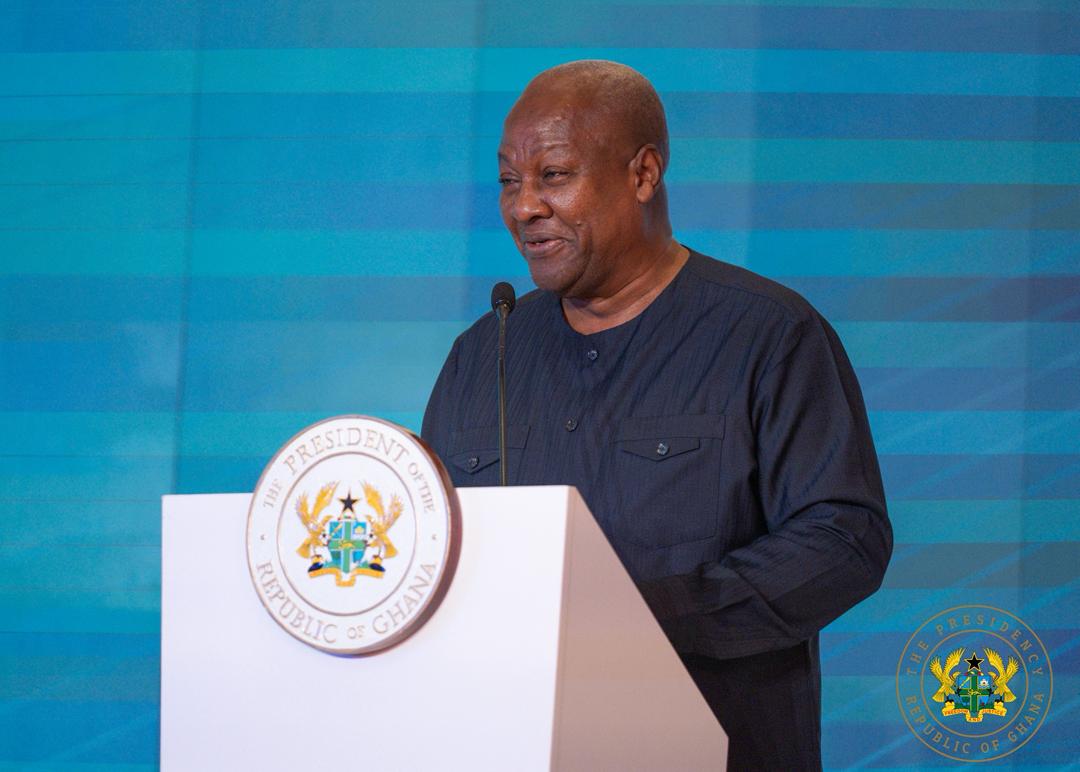
President John Dramani Mahama has urged African countries to bring an end to the export of raw materials, warning that the continent will continue to lose jobs, revenue and industrial capacity if it fails to add value to its natural resources.
Speaking at the Africa Trade Summit on Wednesday, President Mahama said Africa’s long-standing dependence on primary commodity exports had entrenched economic vulnerability and stunted industrial development.
“Africa cannot continue to export raw materials and re-import finished goods at many times their original value,” he said, describing the model as one that “exports wealth and imports unemployment.”
The President cited cocoa as a clear example of the structural imbalance facing African economies, noting that while Africa produces the majority of the world’s cocoa, it earns only a small share of the value generated by the global chocolate industry.
“This situation is not unique to cocoa,” he said. “We see the same pattern in oil, textiles, timber and mineral resources, where Africa remains at the bottom of the value chain.”
President Mahama stressed that industrialization on the continent must be anchored in value addition and beneficiation, arguing that processing Africa’s resources locally would create jobs, support technology transfer and expand domestic revenue.
Turning to Ghana’s experience, he said the country was deliberately shifting away from a commodity-export model towards a value-added economy. According to him, this strategy prioritizes agro-processing, manufacturing and industrial clusters aligned with Ghana’s natural endowments.
“Our focus is to add value to what we produce—cocoa, cashew, oil palm, cassava, petroleum, gold, manganese and bauxite—so that these resources can drive real economic transformation,” President Mahama said.
He added that value addition was also critical to the success of the African Continental Free Trade Area (AfCFTA), noting that meaningful intra-African trade would only be achieved if countries traded finished and semi-finished goods rather than raw materials.
“Beneficiation is not optional; it is essential if Africa is to industrialize, compete globally and secure prosperity for its people,” he said.
The Africa Trade Summit brings together heads of state, policymakers, business leaders and development partners to discuss strategies for boosting industrialization, strengthening regional value chains and expanding intra-African trade.
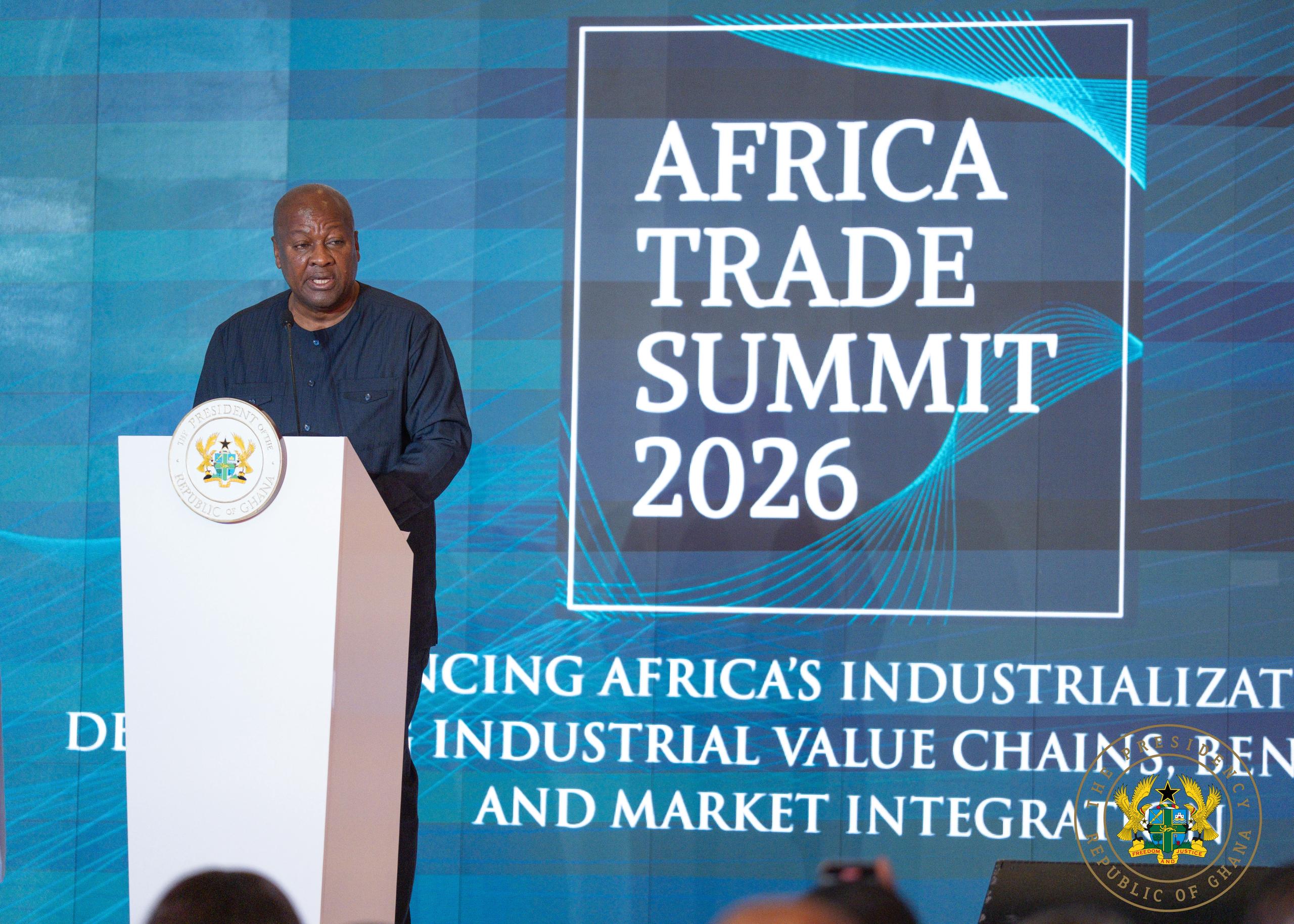
President John Dramani Mahama on Wednesday 28th January, 2026 said Ghana’s recent reforms in the gold sector demonstrate how African countries can reclaim control over their natural resources while strengthening economic sovereignty.
Speaking at the Africa Trade Summit 2026, President Mahama argued that Africa must move away from what he described as a colonial-style system of resource extraction that benefits foreign interests at the expense of domestic development.
“On the issue of resource sovereignty, we must break the colonial mode of large, foreign-owned concessions that extract value for the benefit of foreign interests while Africa remains in poverty,” President Mahama said.
He urged African leaders to pursue policies that ensure their countries retain a fairer share of the value generated from natural resources, insisting that this approach is essential for sustainable development.
“We must be boldly selfish and claim a fairer share of our natural resource endowment,” he stated.
President Mahama cited the establishment of the Ghana ‘Goldbod’ as a key reform that has significantly improved oversight and foreign-exchange retention in the small-scale mining sector.
According to him, Ghana exported about 63 tonnes of gold from small-scale mining in 2024, but foreign-exchange repatriation accounted for only around 40 tonnes, meaning the proceeds from 23 tonnes of gold did not return to the country.
“That situation was unacceptable for a country seeking to build economic resilience,” Mahama noted.
He explained that since the Gold Board was established in April 2025, export volumes have increased while financial controls have been strengthened.
“Exports from the small-scale mining sector have now risen to 104 tonnes, and 100 per cent of the foreign exchange is being repatriated through the Bank of Ghana,” President Mahama said.
He described the outcome as clear evidence that resource sovereignty does not hinder production but instead enhances national benefits.
“This is what reclaiming resource control looks like in practice — higher exports, full value retention, and national ownership of our wealth,” he added.
The Africa Trade Summit 2026 brought together African leaders, policymakers, and business executives to discuss strategies for deepening intra-African trade, accelerating industrialisation, and strengthening economic self-reliance under the African Continental Free Trade Area (AfCFTA).
President Mahama’s remarks have renewed calls for African governments to review mining regimes and resource governance frameworks as part of broader efforts to transform the continent’s economies.
Business
Wealth Is Built After Work Hours, Mike Ohene-Effah Urges Goal-Focused Living in New Year Message
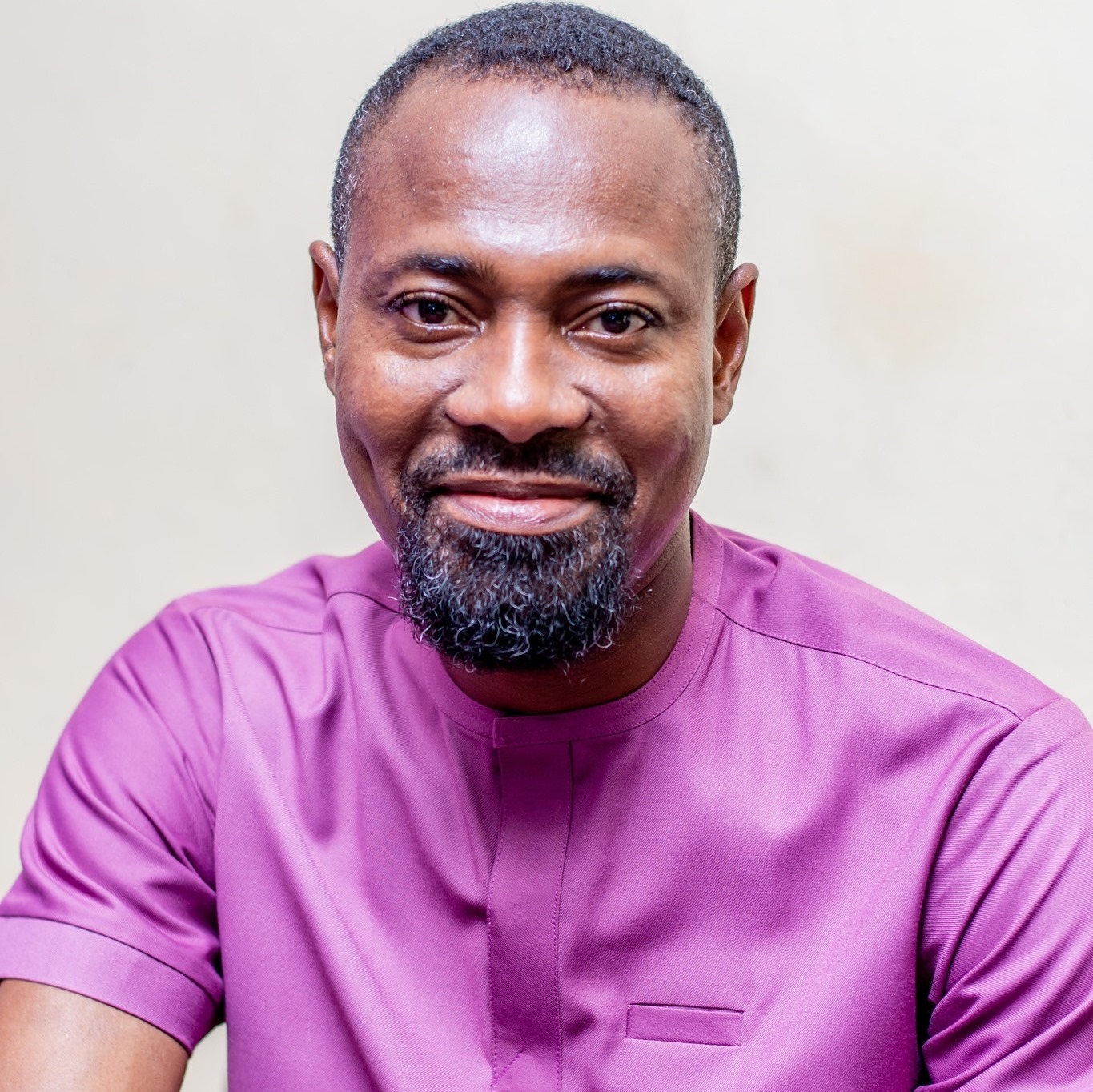
As a new year begins, many people are eager to turn their resolutions into real progress. According to Mike Ohene-Effah, Co-Founder and Lead of Afrique International, true success does not come from good intentions alone but from intentional planning, disciplined time use, and consistent personal development.
Speaking during the Effective Living series live on Citi 97.3fm on Tuesday, January 6, Mike emphasized the importance of managing time wisely and setting clear goals.
“You make income between 8 a.m. and 5 p.m. Wealth, however, is created between 7 p.m. and 8 a.m. That is when you truly create value for your future,” he said.
He explained that every day can be divided into three eight-hour blocks, sleep, work, and personal time. While most people plan for sleep and work, the personal time block is often wasted on distractions. Mike noted that using this period for learning, skill development, and personal growth can significantly change one’s life.
Three Levels of Goal-Setting
Mike outlined a simple but powerful framework for goal-setting, built around three levels.
Outcome goals describe what you want to achieve by the end of the year. These could include earning a specific income, completing a major project, or reaching a career milestone. However, outcome goals are often influenced by external factors and may not be fully within one’s control.
Performance goals focus on personal standards and how well tasks are executed. These goals are about improvement, consistency, and measurable progress, giving individuals greater control over their success.
Process goals are the daily habits and actions that lead to long-term results. These include routines such as studying, networking, practicing a skill, or working on key projects. Mike stressed that although people often avoid process goals because they require daily effort, they are the most important drivers of lasting change.
“Nothing in your life will change in 2026 if you do not change or improve,” he said. “Focus on what you can control, your daily actions, habits, and behaviours. That is where real wealth and success are built.”
The Power of the Hidden Hour
Mike’s central message focused on what he calls the hidden hour, the time outside regular work hours when real growth happens. While salaries are earned during the day, long-term wealth, knowledge, and mastery are built through deliberate effort during personal time.
By committing this hidden hour to focused growth and disciplined goal-setting, individuals can turn ordinary days into powerful building blocks for a more successful future.

Africa must stop raw material exports – President Mahama

President Mahama highlights ‘GoldBod’ Gains as Ghana reclaims resource control

Alcohol Brand Ban Threatens Livelihoods of Ghanaian Musicians, Says FOCAP President


-

 Entertainment2 weeks ago
[EDITORIAL] Why Ayisi is not Getting the Expected Mileage in Ghana’s Music Industry
-

 Entertainment1 week ago
The Exposé that Redefined the Creative Vote: Inside Kojo Preko Dankwa’s Deep Dive into the Creative Arts Agency
-

 Entertainment2 weeks ago
Comedians are Chasing MC Roles: What Should Professional MCs Do?
-

 Entertainment1 week ago
8 Events that Ignited Detty December in Ghana
-

 Entertainment1 week ago
Creative Diplomacy in Limbo as PanAfrica–Ghana Awaits Government Response on Healing Africa Tour
-
 Lifestyle1 week ago
Most People Aren’t Afraid of Failure. They’re Afraid of Knowing Themselves
-
Culture9 hours ago
“We Entertain Stupidity in This Country” — GHOne’s Lilly Mohammed Slams Foreign Affairs Minister Ablakwa Over IShowSpeed Passport Saga
-
 Entertainment5 days ago
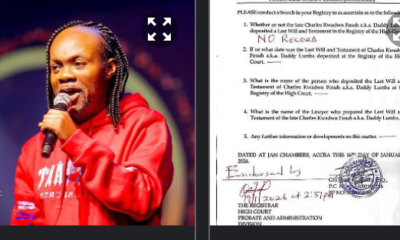
High Court Confirms No Will on Record for Late Highlife Icon Daddy Lumba