
Entertainment
Fameye Opens Up on the Deeper Meaning Behind ‘GenZ’

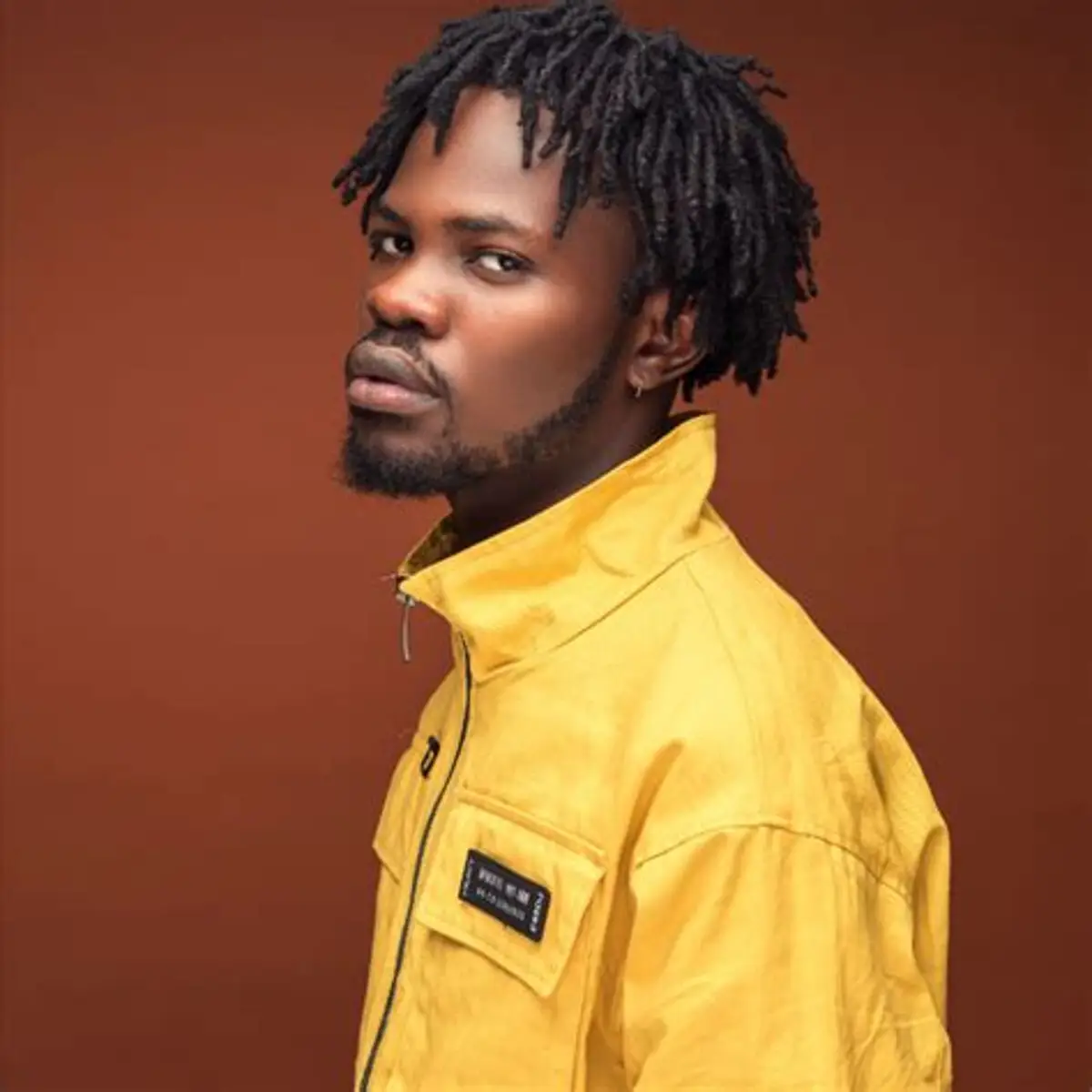
Ghanaian musician Fameye has opened up about the deeper inspiration behind his viral song GenZ, explaining that the track goes beyond describing the struggles and realities of young people.
According to the musician, GenZ is also a deeply personal prayer and an honest conversation between him and God, reflecting his faith, personal weaknesses, struggles and desire for divine direction.
Speaking during an interview with Kwadwo Sheldon, Fameye explained that the song captures his personal relationship with God and his continuous search for guidance despite admitting that he can sometimes be stubborn.
“It’s a prayer; it’s a very deep and serious prayer. In the song, I said I went to bed last night and had a conversation with God. He almost gave up on me because I am stubborn,” he said.
Fameye revealed that his understanding of prayer and faith was influenced partly by what he was taught while growing up. He recalled lessons from Sunday school about God’s love and how prayers may sometimes receive unexpected answers.
He said those childhood teachings helped him understand that God does not always respond to prayers according to people’s preferred timing or expectations.
For Fameye, one of the major messages embedded in GenZ is the need for people to trust God’s timing, even when they do not immediately understand why certain prayers or desires have not been granted.
He admitted that he sometimes becomes impatient when his prayers are not answered quickly and struggles to understand when God says no.
“Sometimes God will say no to my prayer, but when He says no, I will not understand Him. Instead of me calming down and waiting on Him, I am in a haste,” Fameye said.
The musician used the example of receiving an expensive luxury car to explain why getting what one wants at the wrong time can sometimes become a problem rather than a blessing.
According to him, a person who does not have enough money to take care of themselves may not necessarily be prepared to maintain a luxury vehicle such as a Lamborghini.
“If you don’t have money to maintain yourself and God gives you a Lamborghini, it’s a problem because you’re not ready for it. So when He gives you a Honda, you accept it.”
Fameye also acknowledged that Gen Z reflects some of his own personal struggles, particularly his efforts to remain on the right path while dealing with his imperfections.
Although he seeks God’s guidance and support, the musician admitted that he does not always live up to the standards he sets for himself and sometimes finds himself making choices that contradict the path he wants to follow.
He further explained that his decision to mention issues such as smoking, nightlife and other everyday experiences in the song was deliberate.
Fameye said he wanted the song to address realities that exist in society instead of avoiding subjects simply because they may be uncomfortable or controversial.
He noted that smoking, for instance, is an issue that many people encounter in real life and believes such subjects should be openly discussed rather than ignored.
“People are even saying, ‘Why did you talk about smoking?’ But that’s the reality. People are smoking; if I don’t say it, who will? Who will address these issues?” he asked.
Through GenZ, Fameye therefore presents a personal account of his struggles, imperfections, faith and conversations with God while also touching on some of the social realities surrounding young people.
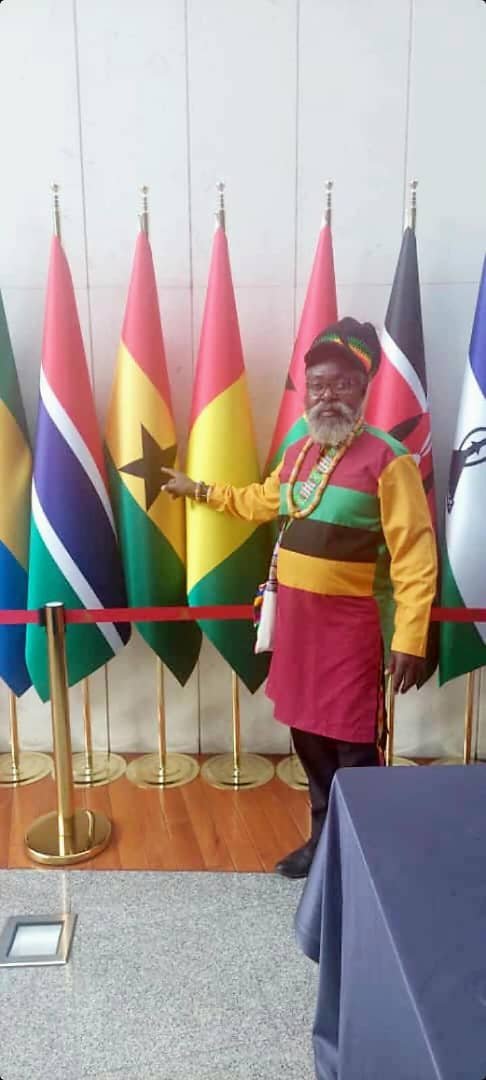
PanAfrica-Ghana (PAG) has proposed a major four-part Pan-African initiative aimed at promoting African unity, humanitarian support, healing and stronger relations between Africans on the continent and those in the Diaspora.
The proposal is contained in an official position paper titled African Unity Can Be Achieved — Let Us Champion It to the Core!, presented by Ras Caleb Appiah-Levi, a musician, writer and rural planner, who is the Founding President of PanAfrica-Ghana (PAG) and the Prodigy International Productions Association (PIPA).
The initiative is being proposed as preparations begin across Ghana, Africa and the African Diaspora towards what PAG describes as a historic gathering in 2028.
According to the position paper, 2028 has been deliberately chosen because it will mark 128 years after the First Pan-African Congress held in London in 1900.
PAG is proposing that the launch of four interconnected initiatives take place in Ghana, West Africa, as part of a broader effort to promote the ideals of Pan-Africanism and strengthen the bonds among African people.
The four initiatives are:
1. Healing Africa Tour (HAT)
The first component is the Healing Africa Tour (HAT), which forms part of the proposed programmes designed to contribute to the broader vision of African healing and unity.
2. Give Your Heart To Africa Consolidated Relief Fund (GYHTACRF)
The second initiative is the Give Your Heart To Africa Consolidated Relief Fund (GYHTACRF).
The fund is included as part of PAG’s proposed humanitarian and solidarity efforts, with the broader programme seeking to encourage support for Africa and its people.
3. Global Pan-African Congress (GPAC)
The third component is the Global Pan-African Congress (GPAC).
The proposed congress is expected to serve as a major platform for Pan-African engagement, bringing together people and stakeholders around the shared objective of advancing African unity.
4. Africa Family Re-Union Jam Benefit Concerts (AFREJABEC)
The fourth initiative is the Africa Family Re-Union Jam Benefit Concerts (AFREJABEC).
The concerts form part of the proposed cultural and humanitarian programme and are intended to help strengthen the relationship between Africans across the continent and members of the African Diaspora.
PanAfrica-Ghana said the overall purpose of the four initiatives is to advance continental unity while paying a living tribute to the Founding Fathers of the Organization of African Unity (OAU), which has since evolved into the African Union (AU).
The organisation’s position is that African unity remains an achievable objective and that there is a need for Africans and people of African descent to actively champion the cause.
PAG’s proposal therefore seeks to use the 2028 milestone as an opportunity to renew attention to the ideals that inspired the Pan-African movement and to create platforms through which Africans can come together.
The organisation is positioning the proposed activities as an interconnected programme rather than isolated events, combining the themes of healing, humanitarian assistance, Pan-African dialogue, cultural reunion and continental unity.
The initiative is being championed by Ras Caleb Appiah-Levi, whose professional background spans music, writing and rural planning. He is also identified in the position paper as the Founding President of PanAfrica-Ghana (PAG) and Prodigy International Productions Association (PIPA).
PAG says preparations are expected to involve stakeholders in Ghana, across Africa and within the Diaspora, with the ultimate objective of using the proposed 2028 gathering to strengthen the idea of Africa as one family.
The position paper, under the theme African Unity Can Be Achieved — Let Us Champion It to the Core!, presents the 2028 programme as a proposed milestone for renewing the Pan-African unity agenda and keeping alive the vision associated with the continent’s founding Pan-African leaders.
Entertainment
PanAfrica-Ghana Proposes Continental Union Government, Single African Currency and Common African Market
PanAfrica-Ghana (PAG) has proposed a broad continental integration agenda aimed at accelerating African unity, strengthening economic independence and laying the foundation for a future Union Government of Africa.
The proposal was contained in an official position paper presented by Ras Caleb Appiah-Levi, musician, writer and rural planner, who is the Founding President of PanAfrica-Ghana (PAG) and the Prodigy International Productions Association (PIPA).
Under the theme “African Unity Can Be Achieved — Let Us Champion It to the Core!”, PAG is calling on Africans on the continent and in the Diaspora, as well as friends of Africa, to support the proposed initiatives.
The organisation is proposing 2028 as the target year for the launch of four interconnected initiatives in Ghana and West Africa. These are the Healing Africa Tour (HAT), the Give Your Heart To Africa Consolidated Relief Fund (GYHTACRF), the Global Pan-African Congress (GPAC) and the Africa Family Re-Union Jam Benefit Concerts (AFREJABEC).
According to PAG, the initiatives are intended to advance continental unity while paying living tribute to the founding fathers of the Organisation of African Unity (OAU), which has since evolved into the African Union (AU).
The organisation says the 2028 programme would come 128 years after the First Pan-African Congress held in London in 1900.
PAG said the founders of the OAU understood that unity and peace among independent African states were essential to the continent’s political, social, cultural and economic progress.
It cited Ghana’s first President, Osagyefo Dr Kwame Nkrumah, and his famous position that Ghana’s independence would have little meaning unless it was connected to the liberation of the African continent.
The OAU was established on May 25, 1963, before eventually being transformed into the African Union.
PAG argues that while Africa has made significant progress in achieving political independence, the continent still faces questions surrounding economic independence and its ability to translate political freedom into improved living standards.
The position paper identifies five broad objectives associated with continental cooperation: strengthening unity among African states, improving living standards, defending the sovereignty and territorial integrity of member states, combating colonialism and neo-colonialism, and promoting international cooperation and human rights.
PAG, however, poses a central question: how can these objectives be translated into tangible improvements in the lives of ordinary Africans, including traders, farmers and workers?
The organisation identifies two possible approaches to achieving African unity.
The first is to allow individual countries to solve their national challenges before addressing continental integration.
The second is to tackle the continental challenge first and establish a framework within which national problems can progressively be addressed.
PAG supports the second approach, arguing that Africa’s founding fathers were right to pursue continental unity.
The organisation also points to previous discussions on an African Union Government, including initiatives and committees that examined the concept in the early 2000s.
According to PAG, Africa needs to develop its own model of integration rather than simply copying existing political structures elsewhere in the world.
It argues that no single African country can adequately withstand global economic pressures on its own and that deeper integration is therefore necessary.
Despite its call for a continental government, PAG acknowledges that significant obstacles stand in the way.
These include the existence of more than 50 sovereign African states with different political systems and cultures, concerns among governments about surrendering aspects of national sovereignty and limited resources available to continental institutions.
Rather than demanding an immediate political merger, PAG proposes a gradualist roadmap.
It wants existing institutions and regional organisations strengthened and used as building blocks towards deeper political and economic integration.
Among the institutions identified are the African Union Commission, Pan-African Parliament, Executive Council, NEPAD and regional economic communities and blocs, including ECOWAS, SADC, COMESA, UMA and AES.
PAG also places culture at the centre of its proposed integration strategy.
It argues that Africa’s diverse cultural traditions should become tools for unity rather than sources of division.
Through the proposed Healing Africa Tour, the organisation intends to identify what it describes as cultural “knots” that create difficulties among Africans.
One issue raised is whether African countries can develop shared principles around marriage and family systems, including courtship, dowry, weddings, divorce and widowhood.
PAG argues that harmonising certain cultural practices could make movement and interaction among Africans easier and potentially contribute to greater economic integration.
A major component of the proposal is economic integration.
PAG is questioning why African countries trading with neighbouring states often have to rely on currencies such as the US dollar or British pound.
It is therefore proposing the creation of an African Common Market, with priority given to intra-African trade.
The organisation is also calling for the creation of a single African currency, which it refers to as the CUSA, arguing that a continental currency could reduce dependence on external currencies.
PAG further wants Africa to have greater control over the pricing of its natural resources.
It questions why commodities such as cocoa, gold and diamonds continue to have major price-determination centres outside Africa.
The position paper proposes the establishment of an African Diamond Bank, Gold Bullion Bank and African Diamond Market on African soil.
PAG is also calling for a stronger continental identity.
It argues that Africans generally identify themselves first by nationality — such as Ghanaian, Nigerian or Ethiopian — rather than primarily as Africans.
The organisation therefore proposes that African become the primary continental identity while national identities continue to exist.
As part of this proposal, PAG wants an AU African Passport that would facilitate continental movement and symbolise African identity.
It has also proposed what it calls a Border Post Account.
Under the idea, a percentage of revenues generated from fees at African border posts would be channelled into a central account managed through the AU Commission.
PAG suggests that 50 per cent of border revenue across Africa could be deposited into the account, potentially creating a major source of funding for continental programmes.
The organisation believes such a mechanism could make ordinary traders direct contributors to African integration and give citizens a stronger sense of ownership of the Union.
At the centre of the position paper is the proposal to transform the African Union into what PAG calls the Continental Union States of Africa (CUSA), which it simply describes as Africa.
Under the proposed structure, sitting African Heads of State would, at an appropriate stage, transition into full-time members of a Great African Parliament.
The proposed parliament would constitute an Electoral College responsible for electing a President of Africa, Vice President of Africa, African Cabinet members, ambassadors and representatives to international bodies.
PAG says the Great African Parliament would also be expected to establish several key continental institutions, including:
An African Constitution
A common currency known as CUSA
An African Stock Exchange
An African Diamond Bank and Gold Bullion Bank
African Border Post Accounts
An African High Command
An African Court of Justice
An African Common Market
Under the proposed system, individual member states would retain Prime Ministers as heads of government, but they would be accountable to the African President and operate under a single continental constitution.
PAG’s proposal also addresses military interventions and political divisions across Africa.
It wants an African High Command under which national armed forces would swear allegiance to the continental constitution and serve as its custodians.
The organisation argues that this system could help prevent unconstitutional changes of government and ensure that political transitions take place democratically and constitutionally.
PAG also proposes limiting continental political competition to three political parties.
Each party, according to the proposal, would be required to establish branches in all member states.
The organisation compares the proposed model to football clubs, where people from different ethnic and national backgrounds can support the same team.
To build public support for the agenda, PAG says it will launch the Musicians On Pan Africa Tour (MOPATOUR) Campaign.
The campaign is expected to use music and cultural activities to advocate for African unity, sensitise citizens and mobilise resources for the proposed agenda through the AU and regional blocs.
PAG describes the overall initiative as a people’s agenda, stressing that its success would depend on Africans and friends of Africa supporting the organising process.
The organisation has invited comments, criticisms and contributions from the public as it develops the proposals.
The position paper was presented by Ras Caleb Appiah-Levi, Founding President of PanAfrica-Ghana (PAG) and Prodigy International Productions Association (PIPA), and Project Coordinator, musician and rural planner.
Peter Raymond Zwennes, Esq., listed as the legal representative for PAG and PIPA, is based at Chesterfield Close, Kpehe-Accra.
The document has been distributed to the AU Commission Chairperson and Deputy, African Heads of State, Pan-African Parliament, NEPAD, the UN Secretary-General, UNESCO, Ghana’s Presidency and Parliament leadership, the AU Diaspora Mission Ghana, the W.E.B. Du Bois Centre and the Pan African Writers Association.
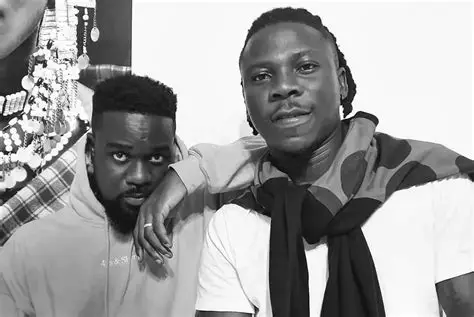
Dancehall artiste Stonebwoy has opened up about his long-standing dispute with rapper Sarkodie, claiming that Sarkodie reported him to the police following a confrontation at Independence Square during the 2020 Black Love Concert.
Stonebwoy made the revelation during a TikTok Live session on September 8, 2026, while recounting what he said happened before, during and after the virtual concert held in August 2020.
According to the dancehall musician, he travelled from Togo to Ghana to support the concert despite being unwell. He said he expected to participate in the programme but alleged that he was subjected to what he described as “inhumane treatment” after arriving at the venue.
Stonebwoy claimed he was kept backstage for several hours and became frustrated because the arrangements he encountered were different from what he had initially been told.
“I came all the way, I landed, I came here, the backstage, and you guys gave me the inhumane treatment. I am not blaming you directly for it, but it’s your name only. Y’all gave me the most inhumane treatment ever. You humiliated me; you kept me behind the stage,” he recalled.
He said that despite his health condition, he stayed at the venue throughout the programme and waited for several hours.
Stonebwoy explained that tensions eventually rose after he woke up and realised that the situation surrounding his participation had changed. He subsequently confronted Sarkodie’s manager, Angel Town.
According to Stonebwoy, he was later accused of hitting or slapping Angel Town, an allegation he firmly rejected.
“Then they told me, say I came to hit him, I came to slap him. All of those were on the side. That notwithstanding, if I had the intention to hit or slap or cause chaos, would I come there in the first place when I’m sick?” he questioned.
Stonebwoy said he had already been informed that he would not be performing at the concert, but he nevertheless remained at the venue until the event came to an end.
He explained that his decision to stay was influenced by the discipline and principles he had been raised with, saying he did not want to leave the situation unresolved.
The artiste further disclosed that he eventually approached Sarkodie personally in an attempt to settle the matter and apologise.
“I decided to come and talk to you directly and say, yo, Killer, no slap nobody. Boys dey hold boys, tempers flare. Boy said my hand entered eye. If my hand had entered your eye, okay, cool. I’m here to apologise before I go. That’s what I did,” he recounted.
However, Stonebwoy claimed that his attempt to resolve the matter did not prevent the issue from reaching the police.
He alleged that Sarkodie and people associated with him subsequently reported the incident to the police, with a claim that Angel Town had been injured during the confrontation.
Stonebwoy further alleged that a statement presented to the police claimed he had been carrying weapons, including a knife and guns, during the incident.
He recalled being questioned by an investigator about the allegations. According to Stonebwoy, the investigator informed him that he could be arrested if investigations established that he had been carrying weapons at the venue.
The musician said the development left him concerned about how the incident had escalated, particularly because he maintained that he had travelled to Ghana while ill and had initially gone to the concert to offer his support.
Stonebwoy also revealed that he later chose to apologise publicly over the matter, although he now regrets taking that step.
According to him, his lawyer has remained unhappy with his decision to issue the public apology because he believes it created the impression that Stonebwoy was admitting responsibility for the incident.
“Till today, my lawyer is angry at me for that move that I picked. Before they gonna realise, what did I do? I came online to come and apologise, rather as if I caused anything,” he said.
Stonebwoy maintained that he never went to the concert with the intention of causing trouble. He said his actions during the incident were aimed at dealing with the disagreement and finding a peaceful way to resolve the tension.
Ghanaian rapper Sarkodie has responded to concerns and accusations raised by fellow musician Stonebwoy over their relationship, social media posts and alleged tensions between the two artistes.
In a lengthy statement posted on his X page, Sarkodie denied deliberately targeting Stonebwoy with any of his recent social media posts and questioned why the dancehall artiste interpreted them as being directed at him.
Sarkodie said the first question he asked Stonebwoy when they spoke on the phone was, “What is your problem?”
He explained that he has never made a social media post intended to shade Stonebwoy and does not allow fans to determine the meaning of his posts based on their own interpretations.
According to Sarkodie, if Stonebwoy connected himself to the post, that should make him examine why he felt the message was directed at him.
He added that he was only responding publicly because the concerns were coming directly from Stonebwoy.
Sarkodie also maintained that he does not take most issues in the entertainment industry personally because he has real-life situations that require his attention.
He said he had already told Stonebwoy during their phone conversation that nobody is under an obligation to forgive or forget someone if they do not want to.
However, he stressed that people also have the right to decide independently how they deal with situations and relationships.
According to Sarkodie, the only common objective the two musicians may have is to succeed together when possible, but if that does not happen, he is equally comfortable with it.
He explained that people have different ways of responding to situations, noting that while he may overlook certain things, there are others he believes require a response.
Sarkodie said this difference in approach should not automatically be interpreted as hostility.
He also pointed to his actions towards Stonebwoy as evidence that he has no personal problem with him.
“If I had any issues with you, I wouldn’t have been the one to pick up the phone, call you, and invite you to my RAH show,” Sarkodie wrote on X.
He was referring to his invitation to Stonebwoy to be part of his Royal Albert Hall show in the United Kingdom.
Sarkodie further addressed concerns surrounding Stonebwoy’s relationships with people who have allegedly disrespected him.
He explained that although Stonebwoy may associate with such individuals, he would never automatically conclude that Stonebwoy supports their actions.
The rapper questioned why Stonebwoy appeared to expect the same consideration from him when it came to his own relationships and associations.
Sarkodie said Stonebwoy’s concerns were not new, revealing that similar misunderstandings had occurred in the past.
He claimed that whenever Stonebwoy expressed such feelings, he made the effort to reach out, speak with him and resolve the matter privately.
He also noted that despite previous disagreements, he had continued to support Stonebwoy publicly, including celebrating his achievements and reaching out to discuss possible performances together.
Sarkodie therefore urged Stonebwoy not to attach meanings to his statements that were never intended.
“So there’s really no need to twist my words or make them mean something they don’t,” he stated in the X post.
He ended his statement with a blunt message to Stonebwoy:
“And my G, you don’t need to fk with me. I’m pretty sure I add no value to your life to even worry about me.”**
The latest disagreement reportedly followed a series of social media posts by Sarkodie after Stonebwoy’s BhimFest concert at the OVO Arena Wembley in London.
One of Sarkodie’s posts featured a video showing an amputee attempting to kick another person.
Although Stonebwoy was not mentioned by name, some fans and industry observers interpreted the post as a possible indirect message aimed at him, particularly because Stonebwoy’s leg and knee condition has previously been the subject of public discussion and mockery.
Sarkodie later shared another message on X on September 7, 2026, cautioning artistes against allowing fans to create unnecessary rivalries between musicians.
“To the artistes: just because a fan shs on another brand to elevate you doesn’t mean they love you more. Be careful about entertaining that energy,” he wrote.
He added that some people deliberately fuel conflicts because they are interested in engagement and personal gain.
Stonebwoy subsequently reacted to Sarkodie’s posts and accused the rapper of hypocrisy.
He recalled that following Sarkodie’s Royal Albert Hall performance, he personally called the rapper the next day to congratulate him.
According to Stonebwoy, the two spoke for approximately 10 minutes during that conversation.
Stonebwoy also referred to the period following his own OVO Arena Wembley performance, claiming that Sarkodie subsequently shared another video on social media that he believed contained an indirect message aimed at him.
“After my OVO, you posted the second video on social media… Whatever message you meant to send across, only you can explain,” Stonebwoy said.
Stonebwoy explained that despite his concerns about the posts, he still contacted Sarkodie because he wanted clarification.
He said Sarkodie returned his call almost immediately, and although he initially missed it, he later called back.
The two musicians reportedly had an extended conversation lasting more than an hour, during which they discussed the music industry, their individual approaches to situations and their differing perspectives.
Stonebwoy said he came away from the conversation believing that Sarkodie did not think artistes should necessarily be expected to maintain certain principles if doing so did not benefit them.
The disagreement later intensified when Stonebwoy addressed the issue during a live social media session.
During the session, he accused Sarkodie of disrespect and alleged that he had been subjected to inhumane treatment.
Stonebwoy also raised accusations of hypocrisy and betrayal while discussing his grievances against the rapper.
His comments generated significant reactions online, with fans of both musicians debating the history of their relationship and whether Sarkodie’s social media posts were indeed directed at Stonebwoy.

Ghanaian music duo Keche has extended support to a street vendor at Gomoa Fetteh after noticing that she had struggled to sell her products throughout the night.
In a video shared online, the musicians said they spotted the woman while performing on stage and realised she had been selling for several hours without much success.
According to the duo, the vendor had been selling from 4 p.m. until almost 4 a.m., but many of her items remained unsold.
After noticing her situation, Keche decided to support her business with GH¢3,000.
“She’s been selling from 4 p.m. till almost 4 a.m. When we saw her, the things had not been bought, so we thought to support her with 3k to support her business,” the duo explained in the video.
The musicians later invited the vendor onto the stage and asked her how much the items she was selling cost.
During the interaction, Keche Joshua jokingly commented, “They don’t even serve good food,” as they engaged with the woman.
However, the vendor appeared unable to mention the exact price of the products.
Keche then told her they would buy all the toffees she had brought with her. After purchasing the sweets, the duo continued their performance and threw the toffees into the crowd for fans to catch.

Ghana Moves to Tighten Financial Controls as Finance Ministry Announces Independent Fiscal Council

Education Ministry cautions against forged school placement slips, Refers Case to Cyber Security Authority

Ghana’s SHS Placement System Under Fire as Parents Demand Answers



-

 Entertainment1 week ago
Oswald Okaitei Explains the Real Vision Behind Ghana’s Black Star Experience
-
 General News2 weeks ago
GES Urged to Review Student Sexual Misconduct Rule Over Alleged Discrimination Against Boys
-

 Entertainment2 days ago
Mahama Is First President to Put GH¢40m Seed Money into Creative Arts Fund: Kojo Preko Dankwa
-
 General News2 weeks ago
Oti Region Youth Endorse John Boadu, Cite Experience as Key to NPP Victory
-

 General News2 weeks ago
Zanetor and Ayariga Face Parliamentary Vetting Today
-
General News2 weeks ago
GES Opens WAEC Portal for 2026 School Placement Data Upload
-
 General News2 weeks ago
Police Suspend Concrete Mixer Truck Operations in Accra, Tema From August 28
-

 Entertainment2 weeks ago
Shatta Wale Made Ama Trend Everywhere – Nana Ama McBrown Praises Dancehall Star