
Uncategorized
Ghana facing illicit opioids crisis


Minister of Health, Mr. Kwabena Mintah Akandoh, and the Pharmaceutical Society of Ghana (PSGH) have issued stark warnings about the growing threat of illicit opioids in Ghana.
In a statement delivered to Parliament, Mr. Akandoh emphasized that the increasing infiltration of these dangerous substances is “a matter of grave public health and national security concern.”
“Mr. Speaker, the opioid crisis is not just a health issue but a national emergency. We need a coordinated and sustained response from all relevant sectors and the public,” he declared.
Unregistered drugs and border vulnerabilities
Mr. Akandoh revealed that Ghana’s Food and Drugs Authority had confirmed the presence of several unregistered Tramadol brands, including Trafanol, Tarapamol, and Tramaking, which have entered the country through unapproved routes.
He also cited a recent investigative report by BBC Africa Eye, which exposed the alleged exportation of unapproved drugs containing tapentadol and carisoprodol.
These revelations have intensified concerns over the effectiveness of current border controls and regulatory measures, highlighting vulnerabilities that illicit drug traffickers continue to exploit.
Immediate govt response and coordinated action
In response to the crisis, the Sector Minister informed Parliament that the Ministry of Health has taken immediate actions to combat the menace.
These measures include tightening border inspections to intensify checks at major entry points, increased monitoring of over-the-counter drug sales, seizure of unauthorised opioids, and initiating legal action against offenders.
In addition, a national education campaign has been launched to raise public awareness about the dangers of illicit opioid use.
The Minister also stressed the need for inter-agency collaboration, urging all relevant bodies to close loopholes, tighten regulations, and hold those responsible accountable.
“Mr. Speaker, we must close the loopholes, tighten the rules, and hold those responsible for this crisis accountable,” he stated.
Broad political and professional consensus
The alarming situation has garnered widespread attention from various political and professional stakeholders.
Dr. Zanetor Agyeman-Rawlings, NDC MP for Klottey Korle, described the phenomenon as truly alarming, citing the devastating impact of illicit drugs on public health and safety.
Mr. Kwame Anyimadu-Antwi, NPP MP for Asante-Akim Central, highlighted the rising addiction among youth as a clarion call for strengthened border monitoring and enhanced cooperation between the Ministry of Health, Customs, and the Narcotics Control Board.
Professor Titus Kofi Bayuo, NDC MP for Lambussie, called for strict regulation of these drugs, warning that failure to do so would only exacerbate the widespread social and economic challenges associated with substance abuse.
PSGH condemns illicit importation
The Pharmaceutical Society of Ghana (PSGH) has unequivocally condemned the illicit importation of highly dangerous opioids into Ghana and other West African countries.
In its statement, PSGH decried the proliferation of unapproved pharmaceutical products, particularly those containing tapentadol and carisoprodol, which pose severe public health risks.
The society referenced a BBC documentary that exposed how companies like Aveo Pharmaceuticals of India exported unlicensed and unregistered opioid formulations—such as Tafrodol, Timaking, and Super Royal-225—into Ghana.
These drugs, which are not approved for medical use anywhere in the world, have been linked to a rising number of addiction cases and severe health complications in the region.
Call for a thorough investigation and stronger controls
PSGH emphasized that the abuse of opioids has devastated communities, contributing to increased substance dependency, mental health disorders, and broader socio-economic challenges. The society called on regulatory agencies, including the FDA, the Pharmacy Council, the Ghana Revenue Authority (GRA)-Customs Division, the Criminal Investigation Department of the Ghana Police Service, the Narcotics Control Authority, the National Intelligence Bureau, and all other relevant bodies, to expedite a thorough, independent investigation into these allegations.
“If any local pharmaceutical company is found to have breached regulatory protocols, appropriate sanctions should be enforced to maintain the integrity of the pharmaceutical supply chain in Ghana,” PSGH stated.
Additionally, PSGH called for enhanced border controls, strict pharmaco-vigilance measures, interagency cooperation, and robust public education and awareness campaigns to combat the illicit opioid trade.
“The PSGH remains committed to ensuring that only safe, effective, and approved medicines are available in Ghana. We urge all stakeholders, including the government, regulatory bodies, healthcare professionals, and the general public, to join hands in combatting this dangerous illicit trade,” the statement concluded.
Source: NewsCenta




ECG financial irregularities have been uncovered by the Auditor-General, with the Electricity Company of Ghana (ECG) found to have overspent its approved budget by GH¢168.169 million in the 2023 financial year without obtaining the required approval from its Board of Directors.
The findings are contained in the Auditor-General’s report on ECG’s 2023 financial statements and were disclosed during the Public Accounts Committee (PAC) sitting of Parliament.
According to the report, ECG management exceeded approved budget allocations across several expenditure areas, raising concerns about the company’s financial controls and compliance with internal approval procedures.
PAC Ranking Member, Samuel Atta Mills, said the audit revealed that ECG spent GH¢273.6 million on 11 major expenditure items, despite having an approved budget of GH¢105.431 million.
The Auditor-General noted that the additional spending was undertaken without the necessary authorisation from the company’s Board of Directors.
Breakdown of ECG’s Budget Overruns
The report highlighted the following excess expenditures:
Foreign Training
- Approved budget: GH¢31 million
- Actual expenditure: GH¢91 million
- Excess spending: GH¢60 million
Cleaning Expenses
- Approved budget: GH¢2.8 million
- Actual expenditure: GH¢10.4 million
- Excess spending: GH¢7.6 million
Honorarium Expenses
- Approved budget: GH¢3.8 million
- Actual expenditure: GH¢4.6 million
- Excess spending: GH¢800,000
Hotel Expenses
- Approved budget: GH¢9.3 million
- Actual expenditure: GH¢12.2 million
- Excess spending: GH¢2.9 million
Staff Fuel
- Approved budget: GH¢2.8 million
- Actual expenditure: GH¢3.6 million
- Excess spending: GH¢800,000
Communication Expenses
- Approved budget: GH¢4.2 million
- Actual expenditure: GH¢7.9 million
- Excess spending: GH¢3.7 million
Consultancy Services
- Approved budget: GH¢40 million
- Actual expenditure: GH¢58.6 million
- Excess spending: GH¢18.6 million
Industrial Relations
- Approved budget: GH¢2 million
- Actual expenditure: GH¢13 million
- Excess spending: GH¢11 million
Stakeholder Expenses
- Approved budget: GH¢3.1 million
- Actual expenditure: GH¢49 million
- Excess spending: GH¢45.9 million
Publicity Expenses
- Approved budget: GH¢5.7 million
- Actual expenditure: GH¢21.8 million
- Excess spending: GH¢16.1 million
Professional Fees and Subscriptions
- Approved budget: GH¢731,000
- Actual expenditure: GH¢1.5 million
- Excess spending: GH¢769,000
The revelations have renewed calls for improved financial discipline and stronger oversight mechanisms within state-owned enterprises.
Members of the Public Accounts Committee questioned why ECG management committed expenditures beyond approved limits without seeking authorisation from the company’s Board of Directors.
The Auditor-General’s report adds to growing concerns over financial irregularities among public institutions, particularly regarding budget compliance, expenditure controls, and accountability in the use of public funds.
Source:www.ghanaweb.com

Sarkodie’s tribute to Daddy Lumba has touched the hearts of many music lovers as the rapper marked the first anniversary of the legendary musician’s passing with an emotional message.
In a post shared on X on July 26, 2026, Sarkodie reflected on the painful moment he received news of Daddy Lumba’s death, revealing that the loss left him completely devastated.
The rapper, who shared a close relationship with the late Highlife icon, said it was difficult for him to accept the heartbreaking reality.
“A year ago today, we heard the heartbreaking news of your passing. I still remember vividly where I was when I received the news. It completely shattered me, and it was so difficult to believe,” Sarkodie wrote.
Sarkodie further revealed that he misses the words of encouragement he regularly received from Daddy Lumba throughout his music career.
According to him, the Highlife legend often sent him messages encouraging him to continue pushing forward and expressing how proud he was of his achievements.
“I miss your texts every now and then, telling me to keep pushing and reminding me how proud you were of me,” he added.
The rapper concluded his tribute by expressing his love and admiration for the late musician, saying Daddy Lumba’s legacy would forever remain alive in the hearts of his fans and loved ones.
“Daddy, we miss you, and you will forever remain in our hearts. May God be with you until we meet again. We love you always,” Sarkodie wrote.
Daddy Lumba, one of Ghana’s greatest Highlife musicians, continues to be remembered for his remarkable contribution to Ghanaian music and his influence on generations of artistes.
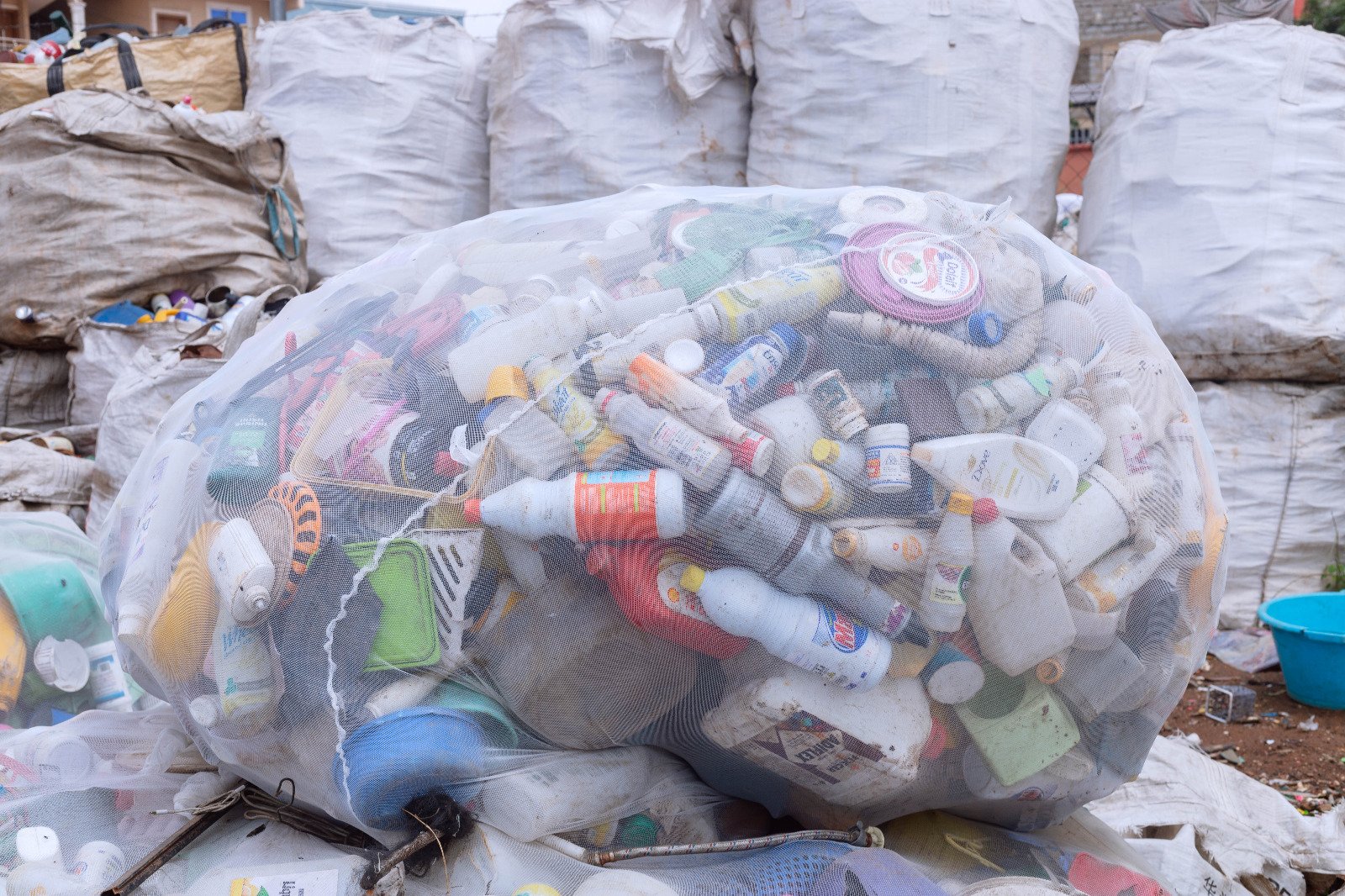
Plastic has become one of the world’s most widely used materials. Since large-scale production began in the 1950s, global plastic production has grown exponentially because of its versatility, durability, and relatively low cost.
According to the United Nations Environment Programme (UNEP), the world now produces more than 430 million tonnes of plastic every year. Yet only about nine per cent of all plastic waste is recycled, around 19 per cent is incinerated, while nearly 50 per cent ends up in landfills. The remaining 22 per cent is openly dumped, burned or leaks into rivers, lakes and oceans, making plastic pollution one of the defining environmental challenges of our time.
UNEP estimates that the African continent generates approximately 17 million tonnes of plastic waste every year, while recycling rates remain among the lowest globally.
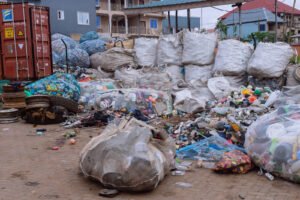
In Ghana, studies by the Ministry of Environment, Science and Technology, the Environmental Protection Agency (EPA), and development partners estimate that Ghana generates between 1.1 and 1.3 million tonnes of plastic waste annually, representing roughly 12 to 14 per cent of the country’s municipal solid waste stream. This translates into more than 3,000 tonnes of plastic waste every day.
The challenge is not simply the volume of plastics generated but what happens after they are discarded.
It is estimated that only about 10 to 15 per cent of Ghana’s plastic waste is collected for recycling, while the vast majority is mixed with other waste.
Recent flooding
The recent floods have reignited the debate, but the answer may lie not in banning plastics, but in collecting, recycling and giving them a second life.
As Ghana joined the rest of the world to mark International Plastic Bag Free Day on July 3, environmental experts, policymakers and industry players renewed calls for decisive action against plastic pollution. Yet amid the growing calls for bans on plastics, a more fundamental question emerged:
Can Ghana realistically do away with plastics altogether?
For many experts, the answer is no, not yet. Plastics have become woven into almost every aspect of modern life. From food packaging and drinking water sachets to medicine, agriculture, construction, healthcare and manufacturing, plastics offer affordability, durability and convenience that few alternative materials can currently match.
The real challenge, therefore, is not the existence of plastics, but what happens after they have served their purpose.
The Floods Told a Painful Story
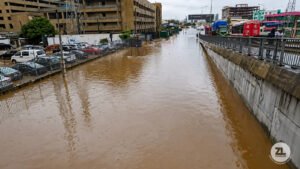
The recent floods served as a harsh reminder that Ghana’s greatest problem is poor plastic waste management.
Corporate Affairs Officer of Zoomlion Ghana Limited, Mr. James Deku, believes the floods revealed the country’s inability to effectively manage the enormous quantities of plastic waste generated every day.
Speaking at a Metro TV discussion to mark the day, he said plastics themselves are not inherently dangerous. Rather, it is the indiscriminate disposal of plastic waste into drains, streams and open spaces that turns a useful product into an environmental hazard.
“When plastics block drains,” he noted, “they prevent the free flow of water, causing floods that destroy homes, businesses and sometimes even claim lives.”
Mr. Deku advocates stronger enforcement of sanitation by-laws, continuous public education and policies that encourage recycling instead of simply outlawing plastics.
He also believes Ghana can revive some traditional packaging methods, including the use of leaves for selected products, while gradually reducing unnecessary single-use plastics.
Collection, sorting and recycling
The difference lies in effective collection, sorting and recycling systems.
This was the view shared by the Production Planner of Universal Plastic Products and Recycling (UPPR) Ghana Limited, Mr. Gabriel Kudiabor, who argued that plastics should not be demonised.
According to him, Ghana’s problem is one of waste management and public behaviour rather than the material itself.
He believes sustained public education on waste segregation, coupled with greater investment in recycling infrastructure, will significantly reduce plastic pollution.
Mr. Kudiabor also proposed the introduction of a deposit-return system for beverage bottles, allowing consumers to return empty plastic bottles in exchange for financial incentives or rewards.
Such systems have proven successful in several countries by dramatically increasing collection rates while supplying recycling plants with valuable raw materials.
Giving Plastic a Second Life
Rather than viewing used plastic bottles as waste, UPPR sees them as valuable raw materials waiting to be transformed into new products.
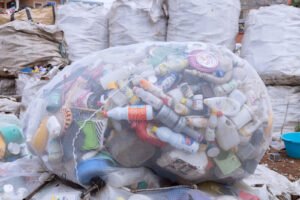
Every day, thousands of discarded PET (Polyethylene Terephthalate) bottles are collected, sorted, washed and processed at the company’s modern recycling facility.
These bottles are converted into high-quality PET flakes, which serve as industrial raw materials for manufacturing a wide range of products including polyester fibre, yarn, textiles, reflector jackets and other industrial applications.
The initiative is not only reducing plastic pollution but is also creating jobs, supporting Ghana’s circular economy and generating export revenue.
Beyond PET bottles, the Jospong Group has expanded its recycling ambitions to include other hard plastics such as Polypropylene (PP) and Polyethylene (PE), materials commonly found in household containers, buckets, detergent bottles, food packaging, crates and industrial packaging.
These plastics can equally be recycled into new products, reducing dependence on virgin plastic materials while conserving natural resources.
“What many people see as rubbish is increasingly becoming an important industrial raw material,” Mr. Kudiabor argues.
A shared responsibility
The panelists including Nii Moi Omaboe of the Ghana National Action on Plastics (GNPAPS), agreed that government alone cannot solve Ghana’s plastic challenge.
Until affordable, durable and environmentally friendly alternatives become widely available, plastics will remain an essential part of everyday life.
“The future therefore lies not in declaring war on plastics, but in building a nationwide recycling culture where every bottle, container and plastic package is collected, processed and transformed into something useful,” Mr. Kudiabor says adding,
“If government, industry and citizens work together, Ghana can reduce plastic pollution, create green jobs, strengthen local manufacturing and minimise flooding.”


Source:Adade Gyamfi

Nigerian content creator and streamer Peller was left surprised during a recent livestream after discovering that Ghanaian actor Yaw Dabo possesses a 10-year United States visa, despite Peller’s own unsuccessful attempts to obtain one.
The conversation, which has since gone viral on social media, became even more interesting when Peller also learned that Yaw Dabo is friends with England and Real Madrid midfielder Jude Bellingham.
When asked about his relationship with the football star, Dabo confidently responded:
“Jude is my good friend, I have his number.”
The revelation visibly impressed Peller, who admitted that he is a huge admirer of Bellingham.
Speaking in pidgin English, Peller said he had spent $15,000 in an effort to secure an American visa but was unsuccessful. He appealed to Dabo to help him obtain one.
“I am one of his big fans. I do American visa, $15,000, visa they no give me. I don cry online, they no refund the money. Can you help me get the visa?” Peller asked.
In response, Yaw Dabo explained that he had no influence over the US visa application process and could not assist in obtaining a visa through personal connections.
Instead, he advised Peller to follow the official procedure by applying through the United States Embassy in Nigeria.
According to Dabo, embassy officials would assess applicants based on their background and online influence before making a decision.
“You have to go to the American Embassy in Nigeria and talk to the ambassador. When you go, they will check your background and your internet influencing history. If you qualify, they will give you,” Dabo said.
Still unconvinced by Dabo’s explanation, Peller jokingly suggested an unusual solution. He asked the Ghanaian actor to transfer one year of the validity of his 10-year US visa to him so that Dabo would still have nine years remaining.
In his humorous plea, Peller said:”Make them commot one year from your own make them give me. Carry one year give me from your 10 year visa, it will remain nine years. Abeg.

Ghanaian musician Lasmid has expressed deep appreciation to legendary hiplife icon Okomfour Kwadee, acknowledging the profound influence the veteran artiste has had on today’s generation of musicians.
During a recent visit, Lasmid shared his excitement about meeting Okomfour Kwadee in person for the first time, describing the moment as a memorable and emotional experience.
Reflecting on his musical upbringing, the singer revealed that he grew up listening to Okomfour Kwadee’s songs, which played a key role in shaping his artistry and career.
“We came here today to show our appreciation because you’ve truly inspired us. This is my first time meeting you, and I’m incredibly happy and grateful. Thank you for everything you’ve done for us,” Lasmid said.
He added that Okomfour Kwadee’s distinctive musical style has inspired many young artistes, including himself, noting that his generation has drawn heavily from the hiplife legend’s sound.
“We listened to your music while growing up and took a lot of inspiration from it. Today, we create similar sounds because of your influence. That’s why we decided to come and visit you personally,” he added.

2026 BECE Results Out; WAEC Takes Firm Action Against Examination Malpractice

VALCO Strategic Equity Capitalization: Minority Backs Workers, Demands Full Transparency

Supreme Court: OSP Can Probe Corruption but Cannot Independently Prosecute Without Attorney-General’s Authority



-
 Entertainment1 week ago
DJ K.A Apologises Over Viral Video, Says It Was Recorded Four Years Ago
-

 General News1 week ago
Dr. Charles Dwamena Sues Hubtel for GH¢5 Million Over Alleged Campaign USSD Sabotage
-

 General News2 weeks ago
Okatakyie Afrifa Granted GH¢100,000 Bail Over Alleged Disruption of NPP Constituency Elections
-

 Entertainment2 weeks ago
Ghanaians Question Akwaboah’s Advice to Save GH¢8,000 Monthly Before Marriage
-
 General News1 week ago
Chairman Wontumi Sentenced to 20 Years in Prison Over Illegal Mining
-
 Entertainment3 days ago
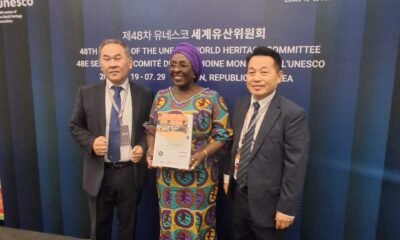
Ghana Secures $3.5 Million UNESCO Heritage Support During Tourism Minister’s South Korea Visit
-

 Entertainment1 week ago
“Hits Rule Everything Now” — Perez Musik Says Legends Like Bob Marley Would Face Challenges Today
-

 Entertainment1 week ago
Ramatu Gumah Named Chairperson and Head of Africa Diaspora Relations at Africa Development Council