
Business
Ghana Records 32.4% Year-on-Year Increase in Job Adverts in July

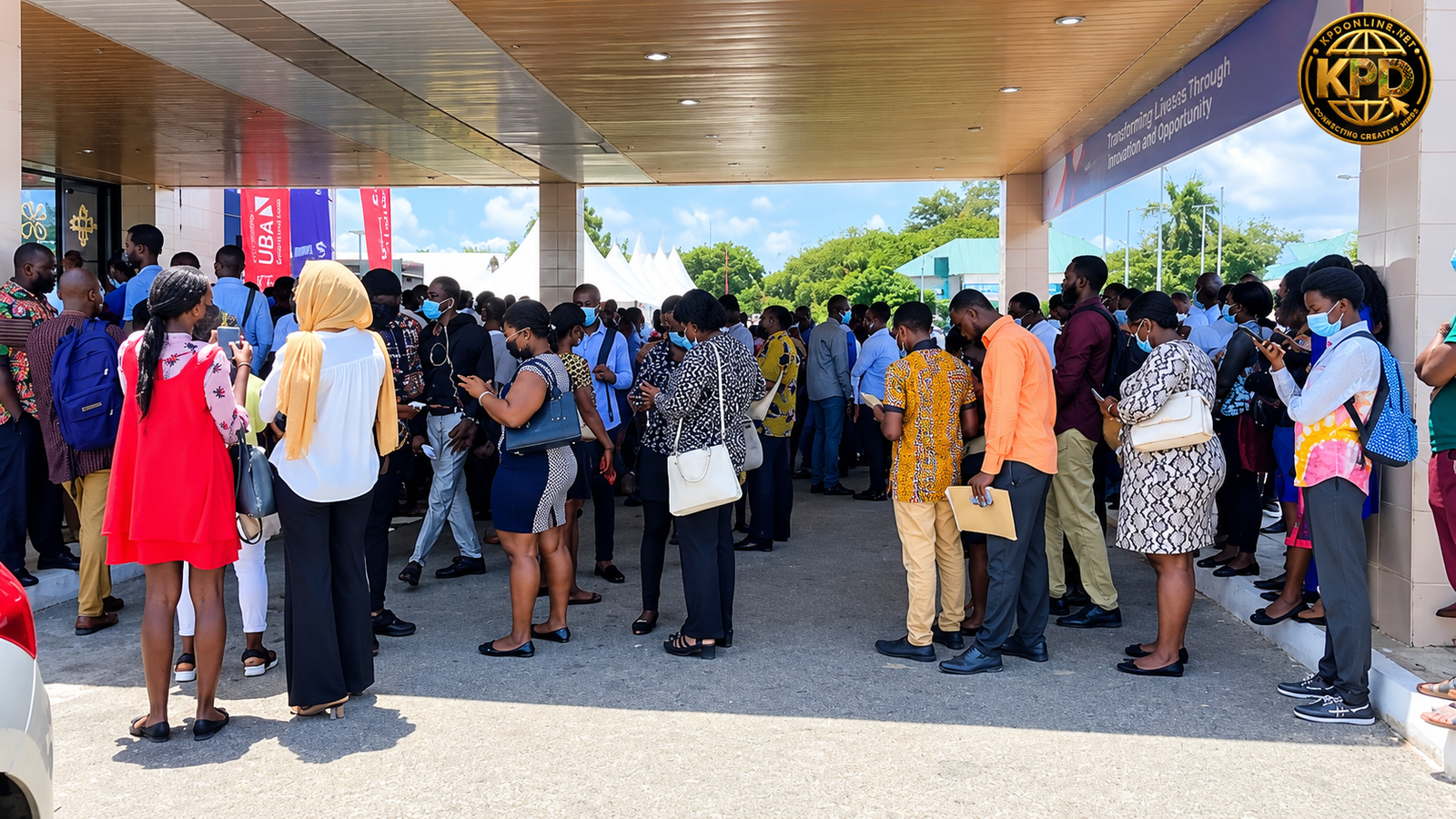
Ghana recorded a significant increase in advertised job vacancies in July 2026, with the number of job adverts rising by 32.4% year-on-year, according to figures cited in the September 2026 Monetary Policy Report.
The report recorded 3,578 job adverts in selected print and online media in July, compared with 2,703 during the same month in 2025. The figures offer an indication of labour demand across the economy, although they do not represent the total number of jobs created or people employed.
Despite the annual increase, advertised vacancies declined slightly on a month-on-month basis. The July figure was 1.4% lower than the 3,629 vacancies recorded in June 2026.
Cumulative job adverts increase by 8.2%
For the first seven months of 2026, the total number of advertised vacancies reached 23,052, representing an 8.2% increase over the 21,307 recorded during the corresponding period in 2025.
The cumulative figures suggest that advertised recruitment opportunities increased over the period, even as the monthly data showed a modest decline between June and July.
However, job advertisements are only one indicator of labour-market activity. They do not necessarily translate into completed recruitment, and the figures cover vacancies advertised in selected media rather than every recruitment channel in Ghana.
Private-sector contributors also increase
The report also indicated an improvement in private-sector employment conditions, as measured by contributors to the Social Security and National Insurance Trust (SSNIT).
The number of private-sector SSNIT contributors rose by 6.1% year-on-year to 1,178,451 in July 2026, up from 1,110,976 in July 2025.
On a monthly basis, the figure remained largely stable, compared with 1,176,723 contributors in June.
What the figures mean
The increase in job advertisements and private-sector pension contributors provides two indicators of activity in Ghana’s labour market. However, neither figure alone establishes the extent of unemployment, the quality of available jobs, or whether employment opportunities are keeping pace with the number of people seeking work.
Further information on actual recruitment, wages, job security and unemployment would be needed to assess the broader impact on workers and job seekers.
The figures were reported by Joy Business, citing the September 2026 Monetary Policy Report.
Important data clarification: The 3,578 figure refers to job adverts in July 2026, not the total for all seven months. The cumulative total for January–July was 23,052, up 8.2% year-on-year.















Accra, Ghana — October 14, 2026
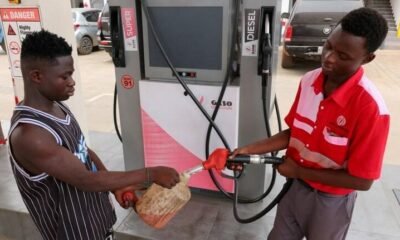
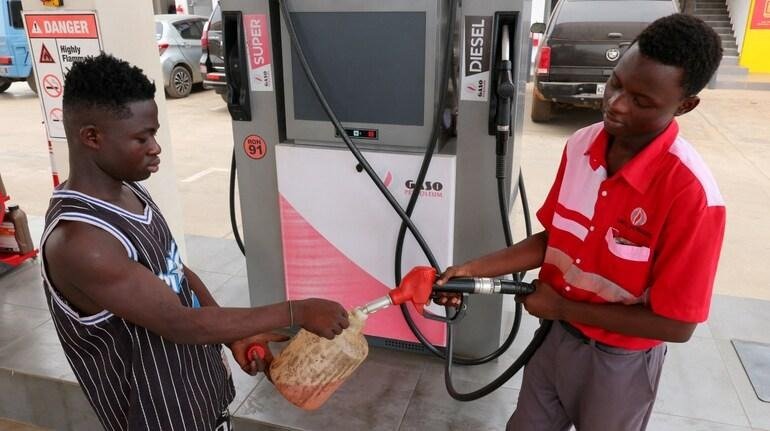
Petrol and diesel prices at fuel stations across Ghana are expected to decline from Friday, October 16, offering modest relief to motorists and businesses, while liquefied petroleum gas (LPG) is projected to record a sharp increase of 18.5% per kilogramme.

Petrol Prices Expected to Decline
The anticipated changes are contained in the latest pricing outlook from the Chamber of Oil Marketing Companies (COMAC) for the second petroleum pricing window of October.
Under the projections, petrol is expected to sell at approximately GH¢17.67 per litre, representing a decline of about 1.67%. Diesel prices are projected to fall by 3.32% to GH¢19.30 per litre.
LPG, however, is expected to move in the opposite direction, rising by 18.5% to approximately GH¢20.60 per kilogramme. The increase could put additional pressure on households, food vendors, restaurants and other businesses that rely on cooking gas.

LPG Prices Face an 18.5% Increase
Motorists May Receive Some Relief
The projected reductions in petrol and diesel prices could ease operating costs for commercial drivers, transport companies and businesses that depend on road transportation.
Lower fuel prices may also help moderate some transport-related expenses for households and traders. However, the actual effect on transport fares and the prices of goods will depend on how individual operators respond to the changes.
The extent of the relief will also depend on the prices charged by individual Oil Marketing Companies (OMCs), as retail prices can vary across filling stations.

Drivers Await Fuel Price Relief
LPG Consumers Face Higher Costs
While motorists could benefit from lower petrol and diesel prices, the expected increase in LPG prices presents a challenge for households and businesses that use gas for cooking.
A rise to GH¢20.60 per kilogramme could increase the cost of refilling gas cylinders and operating commercial kitchens, potentially placing further pressure on already stretched household budgets.
For small food vendors and restaurants, higher LPG costs could add to daily operating expenses. Whether these businesses absorb the additional cost or pass some of it on to customers remains to be seen.

New Fuel Pricing Window Begins October 16
International Markets and the Cedi Remain Key Factors
COMAC’s projections come amid mixed movements in international petroleum product prices and pressure on the local currency.
According to the Chamber’s outlook, average crude oil prices rose by 2.03% to US$126.73 per barrel during the review period. However, refined products recorded different price movements: international LPG prices increased, while petrol and diesel prices declined.
The Ghana cedi also depreciated by 1.61% against the US dollar over the period reviewed, trading at an average bank rate of GH¢11.8222 to the dollar between September 26 and October 11, 2026.
These developments illustrate how local fuel prices can respond differently to international product costs and foreign-exchange movements.
NPA Revises Minimum Price Floors
Separately, the National Petroleum Authority (NPA) has revised the minimum price floors for the second October pricing window.
The minimum price for petrol has been reduced from GH¢16.45 to GH¢16.09 per litre, while diesel’s minimum price has fallen from GH¢17.97 to GH¢17.09 per litre.
The minimum LPG price floor, however, has increased from GH¢11.10 to GH¢13.87 per kilogramme.
These price floors are not the same as the projected retail prices. Additional premiums and operating and marketing margins may affect the final amounts consumers pay at filling stations and LPG outlets.
Outlook
The expected price adjustments present a mixed picture for Ghanaian consumers. Motorists may receive some relief from lower petrol and diesel prices, but households and businesses dependent on LPG could face a substantial increase in cooking fuel expenses.
Consumers will need to monitor prices at individual outlets from October 16, when the new pricing window begins, to determine how the projections translate into actual pump and LPG refill prices.
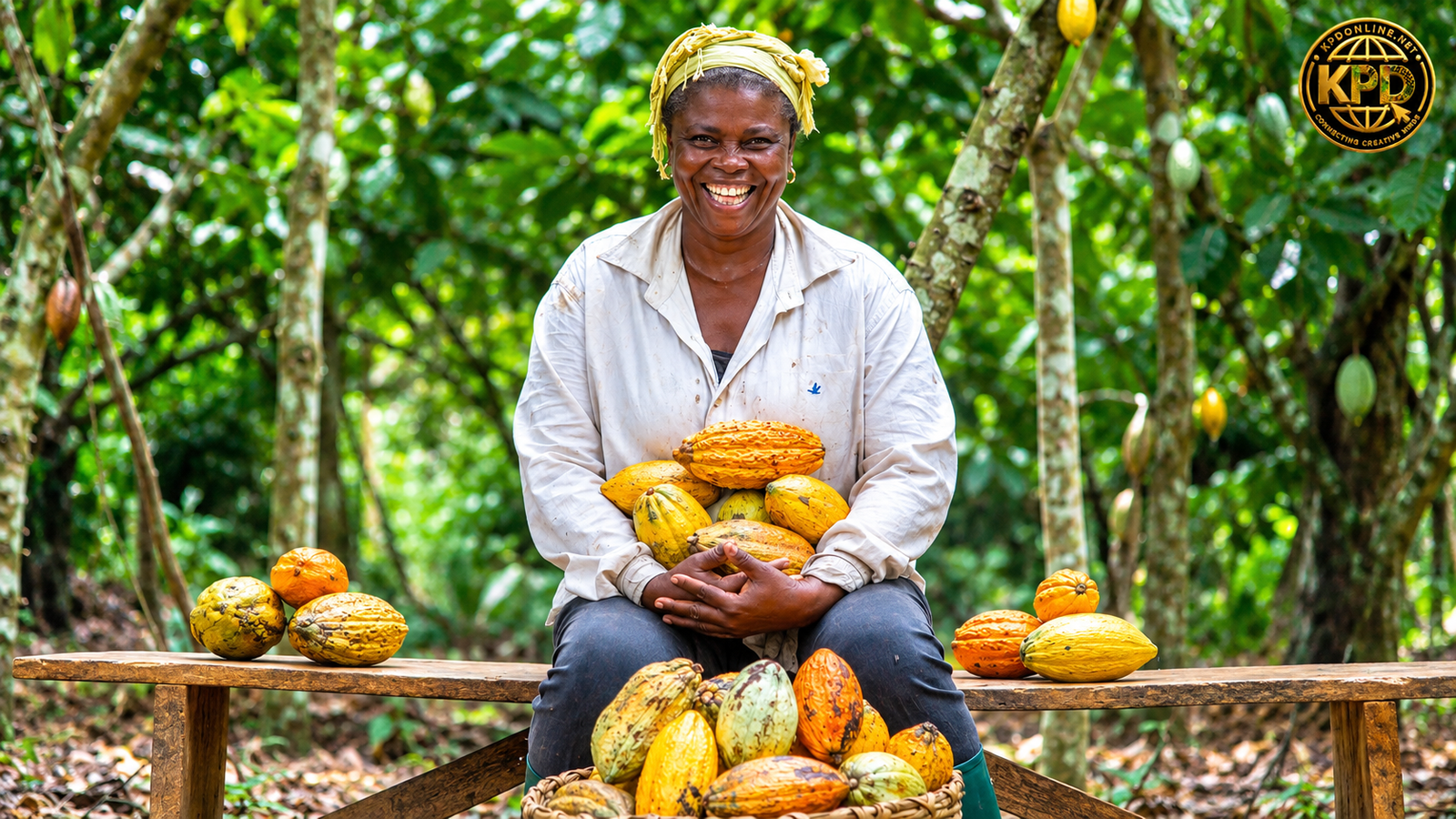
ACCRA, Ghana — The Ghana Cocoa Board (COCOBOD) has raised GH¢3.396 billion from domestic institutional investors through its inaugural commercial paper issuance, marking a significant step in its efforts to secure financing for cocoa purchases through Ghana’s local capital market.

Cocoa Farmers at the Centre of COCOBOD’s New Financing Plan
The fundraising was conducted through Cocoa Capital PLC, a wholly owned subsidiary established to mobilise funds for approved cocoa-sector financing and refinancing activities. Its inaugural commercial paper has been admitted to the Ghana Fixed Income Market (GFIM) of the Ghana Stock Exchange.
The transaction forms part of a broader GH¢16.3 billion Domestic Cocoa Notes Programme designed to diversify COCOBOD’s funding sources and strengthen the financial position of the cocoa sector.
According to details released at the listing ceremony on October 14, the first issuance attracted bids totalling approximately GH¢3.586 billion from 38 institutional investors. A total of 36 successful bids, amounting to GH¢3.396 billion, were accepted at a uniform clearing yield of 11 per cent.

COCOBOD Moves to Strengthen Cocoa Sector Financing
Funds to support cocoa purchases
The proceeds are expected to provide working capital for cocoa purchases during the 2026/27 crop season. The financing is intended to help ensure funds are available to purchase cocoa beans from farmers and support the movement of beans through the domestic supply chain.
The fundraising comes as COCOBOD seeks alternatives to its traditional dependence on external financing arrangements. Access to domestic investors is expected to give the institution another source of cedi-denominated funding for its seasonal operational needs.
However, the successful issuance alone does not establish whether all outstanding payment obligations to farmers and licensed buying companies have been settled. The impact will depend on how quickly the proceeds are deployed and how effectively the financing arrangements support purchases and payments.

Cocoa Capital PLC Makes Its Debut on Ghana’s Fixed Income Market
GH¢16.3bn financing programme
The wider Domestic Cocoa Notes Programme has a maximum target of GH¢16.3 billion. Of this amount, up to GH¢14 billion is earmarked for commercial paper to finance cocoa purchases, while a further GH¢2.3 billion is intended to be raised through bonds to refinance existing cocoa-sector debt.
Commercial paper provides short-term financing, while bonds are intended to address longer-term funding requirements. The two components are designed to support different financial needs within COCOBOD’s operations.
Cocoa Capital PLC serves as the dedicated financing vehicle for the programme, allowing COCOBOD to access the domestic debt market through a separate corporate structure.

GH¢3.4bn Fundraising Targets Cocoa Purchases for 2026/27 Season
How investors will be repaid
Repayment obligations are supported by receivables from selected executed cocoa forward-sales contracts assigned to Cocoa Capital PLC. Collections from these contracts are to be channelled through designated accounts and distributed according to an agreed payment structure.
COCOBOD has indicated that the arrangements are intended to improve cash-flow management and provide investors with greater visibility over repayment.
The commercial paper remains a senior unsecured obligation of Cocoa Capital PLC. The receivables and cash-management arrangements form part of the wider transaction structure and should not be interpreted as a blanket government guarantee.

Domestic Investment Could Help Sustain Ghana’s Cocoa Supply Chain
Implications for Ghana’s cocoa industry
The listing expands the range of fixed-income instruments available to investors on the Ghana Fixed Income Market and creates a route for domestic savings to support one of Ghana’s major export industries.
For COCOBOD, the longer-term objective is to diversify financing risks, reduce reliance on offshore borrowing and establish a more flexible funding model for seasonal cocoa purchases.
The programme’s performance will depend on continued investor participation, effective financial controls and the institution’s ability to meet its repayment obligations. Transparent reporting on how the proceeds are used will also be important in assessing whether the arrangement delivers the intended benefits.
While the first issuance has mobilised nearly GH¢3.4 billion, the wider programme is substantially larger. Further fundraising and effective management of the funds will therefore be central to determining its contribution to the cocoa sector.
The admission of Cocoa Capital PLC’s inaugural commercial paper to GFIM marks the beginning of the programme’s implementation, with its eventual success likely to be measured by the sustainability of the financing model and its practical impact on cocoa purchases, farmer payments and the sector’s financial stability.
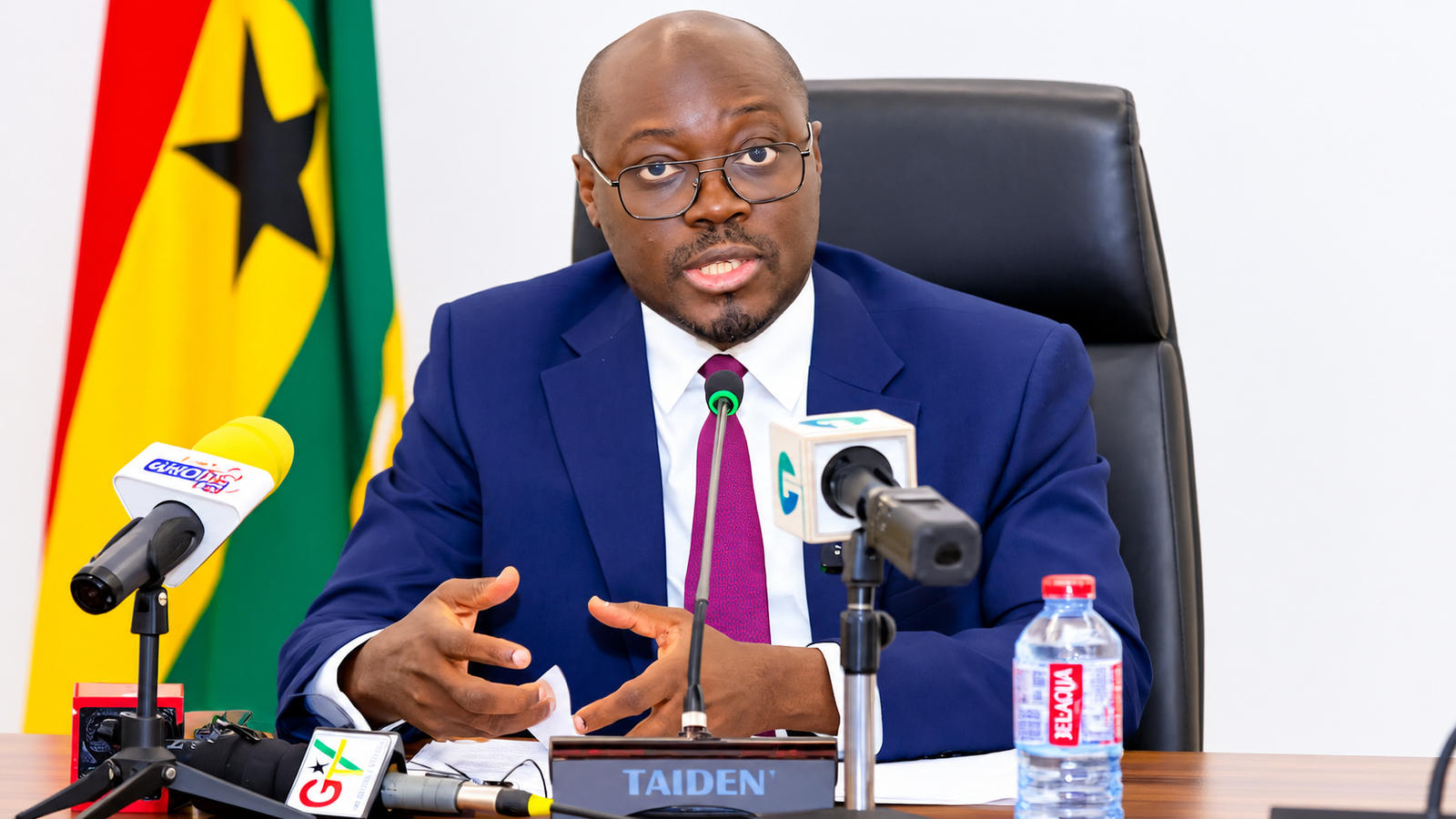
ACCRA, Ghana — Finance Minister Dr Cassiel Ato Forson has called on public officials to strengthen accountability in the management of state resources, insisting that public funds belong to the people of Ghana and not the officials entrusted with their administration.
Speaking at an engagement with regional ministers and metropolitan, municipal and district chief executives on the 2025 Auditor-General’s Report, Dr Forson urged public officeholders to account for every cedi placed in their care.
He stressed that public officials serve as custodians of national resources and have a responsibility to ensure that government funds are managed transparently, prudently and in the public interest.
According to the minister, effective public financial management must go beyond recovering money after irregularities have occurred. He called for stronger systems to prevent financial losses and ensure that public resources are used for their intended purposes.
Dr Forson also urged officials to pursue the recovery of all recoverable public funds and improve the processes through which government expenditure is monitored and accounted for.
The minister’s remarks place renewed emphasis on the responsibility of public institutions to protect taxpayers’ money and ensure that state resources deliver tangible benefits to citizens.
Public funds support essential services and infrastructure, including healthcare, education, sanitation, roads and local development projects. Weak financial controls, waste and the mismanagement of state resources can therefore affect the quality of services available to communities.
The engagement on the Auditor-General’s Report was aimed at strengthening financial accountability and encouraging public officials to address audit findings and improve compliance with public financial management requirements.
Dr Forson’s message was clear: accountability should be a routine responsibility of public administration rather than an exercise undertaken only when financial irregularities are identified.
The call also highlights the importance of ensuring that public expenditure translates into measurable improvements in the lives of Ghanaians.
Ultimately, the effectiveness of such commitments will depend on how consistently public institutions enforce financial controls, address audit findings, recover funds where necessary and prevent similar irregularities from recurring.

ACCRA, Ghana — October 14, 2026
Ghana’s economic activity recorded mixed results during the first seven months of 2026, with improvements in tax collections and vehicle registrations contrasting with weaker retail sales in July and a significant decline in cement sales, according to the Bank of Ghana’s September 2026 Monetary Policy Report.
The figures highlight differences in performance across key sectors, suggesting that gains in some areas of the economy have not translated into equally strong activity across the board.
Consumer Spending Shows Mixed Trends
Domestic Value Added Tax (VAT) collections rose by 11.5 per cent year-on-year to GH¢2.142 billion in July 2026, compared with GH¢1.922 billion in July 2025.
For the first seven months of the year, cumulative domestic VAT collections increased by 13.8 per cent to GH¢13.617 billion, up from GH¢11.965 billion over the corresponding period last year.
Retail sales, however, moved in the opposite direction in July. They fell by 1.5 per cent year-on-year to GH¢236.41 million, compared with GH¢239.89 million a year earlier.
Despite the July decline, cumulative retail sales for January to July rose by 2.2 per cent compared with the same period in 2025.
The figures suggest that consumer-related indicators remain uneven, with tax collections increasing even as retail sales weakened during the month under review.
Manufacturing Indicators Improve
Manufacturing-related indicators recorded growth during the period, supported by higher direct tax collections and increased pension contributions from private-sector workers.
Direct tax collections rose by 53.5 per cent year-on-year to GH¢8.085 billion in July 2026, compared with GH¢5.265 billion in July 2025.
Cumulatively, direct tax collections for the first seven months increased by 27.7 per cent to GH¢60.771 billion, from GH¢47.592 billion in the corresponding period of 2025.
Private-sector workers’ contributions to the Social Security and National Insurance Trust (SSNIT) Tier-1 pension scheme also increased by 11.2 per cent in July to GH¢570.59 million, up from GH¢513.34 million a year earlier.
For January to July, contributions rose by 10.7 per cent to GH¢3.856 billion, compared with GH¢3.482 billion in the same period last year.
These indicators point to improvements in selected measures associated with formal-sector economic activity. However, they do not, on their own, establish the overall performance of manufacturing output.
Cement Sales Decline by 10.3%
The construction sector recorded one of the clearest signs of weakness, as cement sales fell substantially during the first seven months of 2026.
Cement sales declined by 4.9 per cent year-on-year in July to approximately 202,218 tonnes, down from 212,735 tonnes in July 2025.
Sales also slipped by 0.6 per cent compared with June 2026, when approximately 203,435 tonnes were recorded.
For the January-to-July period, total cement sales fell by 10.3 per cent to approximately 1.475 million tonnes, compared with 1.644 million tonnes in the same period of 2025.
The Bank of Ghana attributed the year-on-year decline to a moderation in construction activity during the review period.
The reduction is significant because cement sales provide an indication of activity in construction, a sector linked to housing, infrastructure development, building-material suppliers and employment.
However, the figures alone do not establish whether the decline resulted from reduced public infrastructure spending, weaker private property development, changes in inventories or other market conditions.
Vehicle Registrations Record Strong Growth
In contrast to the construction sector, vehicle registrations increased considerably.
New vehicle registrations recorded by the Driver and Vehicle Licensing Authority (DVLA) rose by 51.7 per cent year-on-year to 31,909 in July 2026, compared with 21,038 in July 2025.
Cumulatively, registrations during the first seven months increased by 52.7 per cent to 228,261, up from 149,440 in the corresponding period last year.
The increase points to stronger activity in vehicle registration, although registration figures alone do not necessarily reflect an equivalent rise in vehicle sales or overall transport-sector output.
What the Figures Mean for Ghana’s Economy
The latest indicators present a varied picture of Ghana’s economy. Higher tax collections, increased private-sector pension contributions and stronger vehicle registrations contrast with weaker retail sales in July and declining cement sales over the first seven months.
For businesses, the trends underline the importance of monitoring conditions across individual sectors rather than relying on a single indicator to assess economic performance.
Construction companies, building-material suppliers and property developers may need to pay close attention to demand conditions, while manufacturers and service providers will be watching whether improvements in selected indicators continue.
The overall picture is one of uneven performance. Whether the stronger indicators translate into broader and more sustained economic activity will depend on developments in the months ahead.
Source: Bank of Ghana.

ACCRA, Ghana — The cost of refinancing Ghana’s short-term domestic debt has declined substantially, with the yield on the government’s one-year Treasury bill falling to 10.1% at the end of August 2026, down from almost 30% in December 2024.
The development offers some relief to government finances by reducing the interest cost associated with refinancing maturing Treasury bills. According to report S&P Global, the yield on the six-month Treasury bill also fell to approximately 6.5% over the same period.
Treasury bills, commonly known as T-bills, are short-term government securities used to raise funds to meet public financing needs. When existing bills mature, the government may issue new ones to repay the outstanding obligations. Lower yields can reduce the cost of this refinancing, provided the government can continue borrowing at comparable rates.
Debt Management Strategy and Market Conditions
Ghana’s reliance on Treasury bills increased after the domestic debt restructuring in 2022. The government subsequently restricted the issuance of new medium- and long-term domestic bonds for three years, leaving short-term securities as an important source of local-currency financing.
The decline in yields has helped ease borrowing pressures. However, the government has also begun issuing longer-term domestic bonds in 2026, a move intended to extend the maturity profile of its domestic debt and reduce the frequency with which obligations must be refinanced.
Extending maturities can help manage refinancing risks, although the interest rates demanded by investors remain an important consideration.
Higher Financing Needs Could Slow Further Declines
Despite the improvement, pressure on government financing has not disappeared.
Recent Treasury bill auctions have seen the government increase the amount it seeks to raise following several weeks when accepted bids fell below its targets. The latest issuance target cited in the report was GH¢5.02 billion, compared with GH¢3.91 billion in bills falling due.
The government raised GH¢1.53 billion above the previous week’s target, potentially providing temporary relief to its funding position. Nevertheless, analysts expect yields to remain broadly stable as elevated financing requirements limit the scope for further declines.
External Risks Remain
The outlook also faces risks from international developments. S&P Global warned that conflict in the Middle East could push inflation and financing costs higher, while increasing pressure on Ghana’s currency, the cedi.
Higher inflation or currency pressures could complicate efforts to sustain lower domestic borrowing costs.
For Ghana, the fall in Treasury bill yields represents a significant improvement from the high-interest-rate environment of late 2024. Sustaining the gains will depend on continued fiscal discipline, investor confidence, debt-management reforms and economic stability.
While lower yields can reduce the government’s refinancing burden, they do not automatically resolve broader public debt challenges. The long-term outcome will depend on the government’s ability to manage borrowing needs while gradually shifting towards more sustainable financing arrangements.

Meta Removes 3.7 Million Accounts in Major West African Fraud Crackdown

CAF Raises Annual Funding for 54 Member Associations to $700,000

Kofi Adams Rejects Calls for Dismissal as World Cup Visa Controversy Deepens

IRAWMA 2025: Shatta Wale Wins 3 Major Awards Including Best Music Video

Samini Secures Promotional Deal with Audiomack for Upcoming Album “THE ORIGIN8A”

AirtelTigo losing GH₵20m monthly; total debts exceed $200million – Sam George


-

 Politics2 weeks ago
Asiedu Nketiah to Chair Launch of Six NDC Historiographies on Ghana’s Political Journey
-

 General News1 week ago
World Cup Visa Storm: Kojo’s GTA Questions Resurface as Minority Demands Action
-

 General News2 weeks ago
Can TVET Teachers Join the September GES Strike? Legal Questions Emerge
-

 General News2 weeks ago
SSNIT Unveils Big Plans to Transform Labadi, La Palm Beachfront into Tourism Hub
-

 General News2 weeks ago
NEIP to Support 10,000 Young Entrepreneurs Annually Under Adwumawura Programme
-

 Sports2 weeks ago
“I Leave With Respect, Gratitude and Pride” – Carlos Queiroz Bids Farewell to Ghana
-

 Sports2 weeks ago
Real Madrid Send Major Dossier to UEFA Over Barcelona Payments Case
-

 Entertainment2 weeks ago
Rick Ross Arrested in Miami Beach on Domestic Violence-Related Charges