
Business
Ghanaian Entrepreneurship Can Drive National Development – Ibrahim Mahama


Accra, Ghana – Businessman and industrialist Ibrahim Mahama has reiterated his confidence in the ability of Ghanaian entrepreneurs to spearhead the country’s economic transformation, stressing that local businesses possess the talent, expertise and determination needed to undertake major development projects.
Speaking at a gathering focused on entrepreneurship and economic growth, Mahama encouraged greater investment in indigenous enterprises, arguing that Ghana’s long-term prosperity depends on empowering local innovators and business leaders.
According to him, many of the challenges facing the country can be addressed through homegrown solutions if entrepreneurs are provided with the necessary support, financing and opportunities. He noted that Ghanaian-owned businesses have repeatedly demonstrated their capacity to deliver results across sectors including construction, manufacturing, logistics and mining.
Mahama emphasized that fostering local enterprise would not only create jobs but also help retain wealth within the country, strengthening the broader economy. He urged policymakers, financial institutions and private-sector stakeholders to work together to create an environment where Ghanaian businesses can thrive and compete effectively.
The businessman further highlighted the importance of innovation, skills development and strategic partnerships in building sustainable enterprises capable of contributing meaningfully to national development.
His remarks come amid ongoing discussions about industrialisation, economic diversification and the role of local businesses in driving growth. Advocates of indigenous entrepreneurship argue that increasing support for Ghanaian-owned companies can accelerate economic expansion while reducing dependence on foreign expertise and imports.
Mahama’s message centered on self-belief and local capacity, with a call for Ghanaians to take a leading role in shaping the nation’s future through entrepreneurship, innovation and investment in domestic industries.















By Angel No Lie | KPD Online | October 8, 2026
The Bank of Ghana (BoG) has renewed its warning to the public over the growing threat of digital financial fraud, particularly schemes promising unusually high or guaranteed returns through online platforms.
The warning comes as the central bank intensifies efforts to protect consumers from fraudulent financial operators and unlicensed digital businesses operating through social media, mobile applications and other digital channels.
In a statement published on October 7, the BoG urged the public to be particularly cautious of financial products that are complicated, difficult to understand or promoted with promises of quick and attractive profits. The central bank said such offers could be indicators of fraudulent investment arrangements, including Ponzi-type schemes.
‘Double Your Money’ schemes under scrutiny
The BoG has specifically warned against so-called “money doubling” and “card loading” schemes, in which individuals are encouraged through traditional or social media platforms to deposit funds in exchange for promised attractive returns.
The central bank has previously stressed that it has not licensed individuals or entities to operate money-doubling schemes and has advised the public not to participate in such activities.
The warning has gained renewed relevance after the Bank identified a fraudulent operation using the name “Worldremit” in Ghana. The BoG clarified that the scheme is unrelated to the legitimate international money-transfer company WorldRemit and cautioned consumers against falling for the impersonation.
BoG urges consumers to verify licences
The central bank is urging Ghanaians to verify the regulatory status of any financial institution, investment platform, digital lender or payment service before sending money.
The BoG has repeatedly advised consumers to deal only with institutions that have the appropriate licence or authorisation and to exercise caution when approached through social media or messaging platforms with investment opportunities promising unusually high returns.
Unlicensed digital lenders also flagged
The crackdown extends beyond money-doubling schemes.
In September, the BoG published a list of unlicensed digital credit providers operating in Ghana. The central bank said such operators were providing digital loans without the required authorisation and warned the public against engaging with them.
The Bank has also said unlicensed digital-credit operations can create significant concerns around consumer protection and customer data privacy, while urging banks, specialised deposit-taking institutions and payment service providers not to facilitate transactions for unauthorised digital lenders.
How to spot a potential scam
Financial experts and regulators generally advise consumers to be cautious when an online financial opportunity:
- Promises to double money within a short period.
- Guarantees unusually high returns with little or no risk.
- Pressures users to deposit money immediately.
- Relies heavily on referrals or recruitment of other participants.
- Cannot clearly explain how profits are generated.
- Claims to be regulated but cannot provide verifiable licensing information.
- Requests sensitive banking, mobile-money or identification details through unofficial channels.
The BoG has also urged the public to report suspicious financial activities to the appropriate authorities rather than transferring money to questionable operators.
A warning for Ghana’s increasingly digital economy
As mobile payments, digital lending, online investments and other financial technologies become increasingly accessible, regulators face the challenge of protecting consumers from operators exploiting the convenience and reach of digital platforms.
The latest warnings from the BoG underline the importance of verifying financial service providers before committing funds, particularly when an offer appears too good to be true.
For consumers, the central message is straightforward: verify first, pay later — and do not assume that a professional-looking website, social-media page or mobile application means an operator is licensed.
Source: Bank of Ghana notices and public statements.
Accra, Ghana — October 8, 2026
The Bank of Ghana (BoG) has issued a fresh warning to the public to protect sensitive personal and financial information as digital banking and mobile money services continue to expand across the country.

The central bank is urging customers to keep information such as Mobile Money PINs, ATM PINs, internet banking passwords, One-Time Passwords (OTPs) and verification codes strictly confidential. The warning forms part of the BoG’s financial literacy and consumer-protection efforts aimed at reducing digital financial fraud.
Financial institutions will not ask for your PIN
The BoG stressed that legitimate banks, mobile money operators, payment service providers and other regulated financial institutions will not request customers’ PINs, passwords or OTPs through phone calls, text messages, emails or social media.

Customers are therefore being advised to treat unexpected requests for confidential information as potential fraud attempts and avoid responding to suspicious messages or links.
The warning comes as fraudsters increasingly use impersonation and digital communication channels to convince unsuspecting customers that they are dealing with banks, mobile money companies or other legitimate institutions.
Public urged to be cautious with suspicious messages
The central bank is also encouraging financial consumers to exercise caution when they receive unsolicited phone calls, SMS messages, emails, social media messages or online links requesting personal or financial information.
Customers should independently verify the identity of anyone claiming to represent a financial institution before taking action, particularly when the request involves transferring money or providing account credentials.
The BoG has also advised customers to regularly monitor transaction alerts, bank statements and mobile money notifications so that unauthorised transactions can be detected as quickly as possible.

Warning over “double-your-money” schemes
The central bank’s alert extends beyond stolen PINs and passwords to investment-related scams.
The BoG has advised the public to verify investment opportunities before making payments or transfers and to be particularly suspicious of schemes promising unusually high returns with little or no risk.
It specifically warned against “double-your-money” schemes, online Ponzi schemes and suspicious digital investment platforms, which could expose members of the public to substantial financial losses.

Strong passwords and vigilance encouraged
The BoG is encouraging customers to use strong passwords and update them regularly as an additional layer of protection for digital financial accounts.
The central bank says the fight against digital financial fraud requires cooperation between financial institutions, regulators and consumers. Its consumer-protection office is responsible, among other things, for educating customers about their rights and responsibilities and receiving complaints involving financial services.
With more Ghanaians relying on mobile money, internet banking and other electronic payment services, the BoG’s message is straightforward: protect your financial credentials, question unexpected requests and never disclose your PIN or OTP to someone who contacts you asking for it.
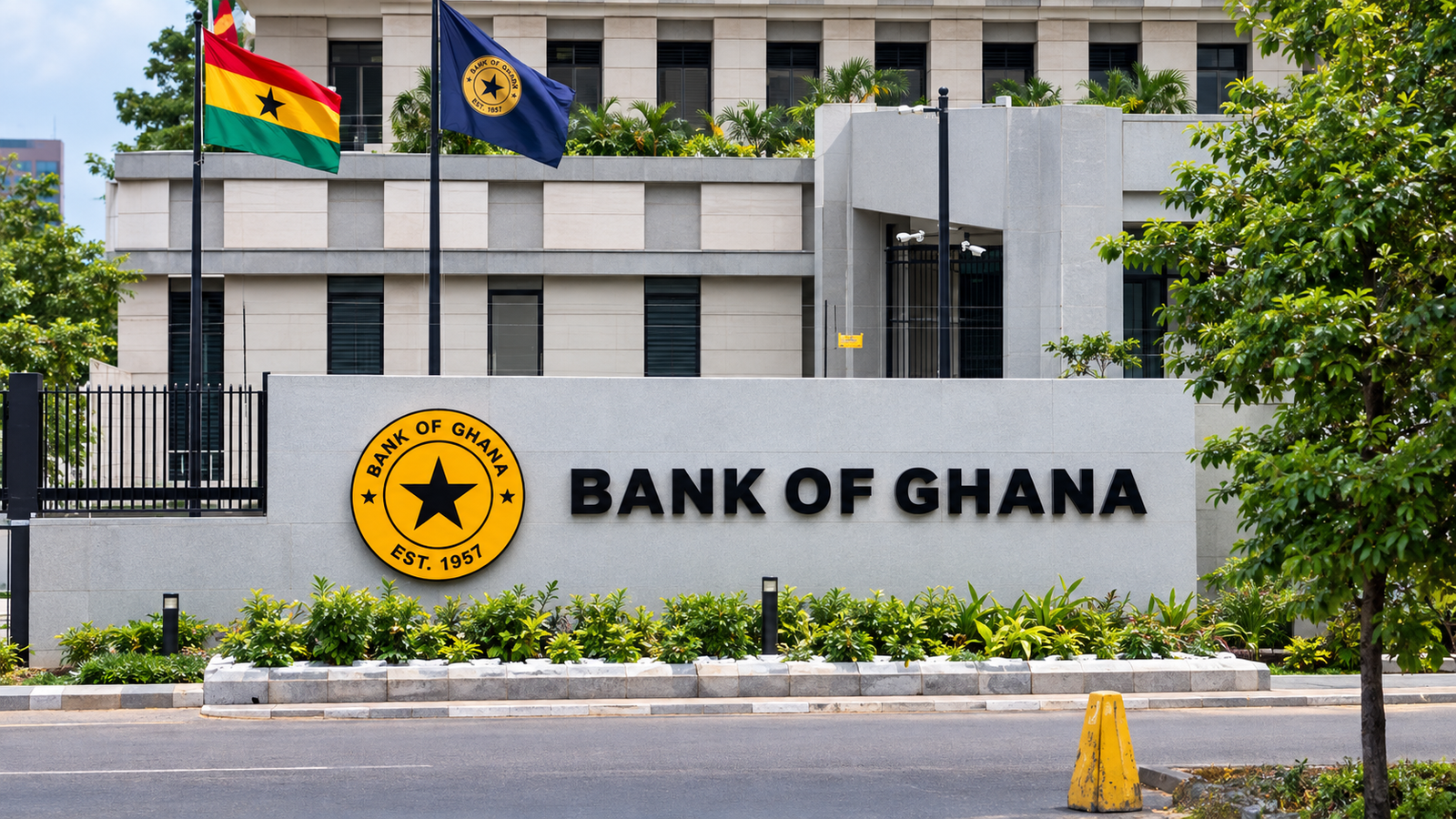
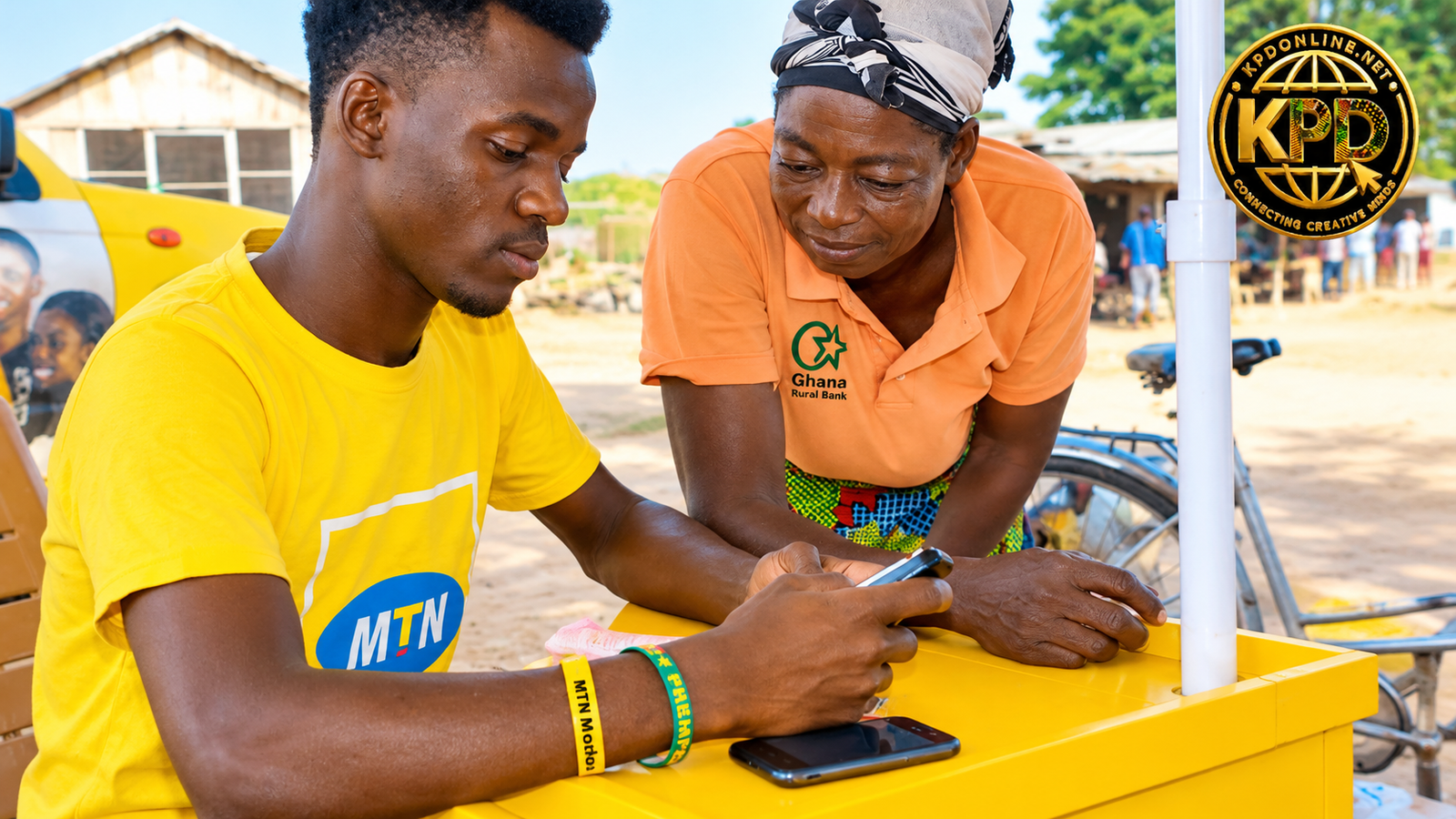
The Bank of Ghana (BoG) has cautioned the public against engaging with 20 mobile loan applications that are operating without the required regulatory approval.
According to the central bank, the identified applications are not licensed to provide digital lending services in Ghana and may expose users to financial, privacy, and consumer protection risks. The regulator urged Ghanaians to exercise caution before downloading or using loan apps that have not been approved by the relevant authorities.
BoG noted that some unauthorized lenders may employ aggressive debt collection tactics, misuse personal data, or operate outside established consumer protection standards. The warning forms part of ongoing efforts by the central bank to strengthen oversight of the digital financial services sector and protect consumers from potentially harmful practices.
The regulator encouraged borrowers to verify the licensing status of financial service providers before sharing personal information or accepting loan offers. Consumers were also advised to report suspicious lending platforms to the appropriate authorities.
The latest advisory comes as mobile-based lending services continue to grow in popularity, offering quick access to credit through smartphones. While digital lending has improved financial inclusion for many users, regulators have repeatedly emphasized the importance of dealing only with licensed and regulated institutions.
BoG reaffirmed its commitment to safeguarding the integrity of Ghana’s financial system and urged the public to remain vigilant when seeking loans through digital platforms.

Accra, October 7, 2026 — Ghana’s annual consumer inflation rate increased to 5.2% in September 2026, up from 5.0% in August, marking a modest acceleration in price growth and highlighting continued pressure from non-food items and services.
The latest figure, reported by the Ghana Statistical Service (GSS), represents a 0.2 percentage-point increase over the previous month. Although inflation remains substantially lower than the levels recorded a year earlier, the September increase suggests that the disinflation process is facing some renewed challenges.
Services remain a concern
Services have remained one of the more persistent sources of inflationary pressure in Ghana. In August, services inflation stood at 8.6%, substantially above goods inflation of 3.8%.
The disparity means that while prices of many physical goods have been rising relatively slowly, households continue to face significant increases in areas such as housing, transport, education, insurance and other domestic services.
The persistence of services inflation is particularly important because many of these costs are driven by domestic factors, including wages, rent, transportation expenses, utility charges and business operating costs.
Cost pressures extend beyond food
Ghana’s recent inflation pattern has increasingly shifted away from food as the dominant source of price pressure. In August, non-food inflation reached 6.8%, while food inflation eased to 3.0%. Non-food items accounted for about 71% of total inflation, according to figures reported by the GSS.
Housing, water, electricity, gas and other fuels were among the largest contributors, followed by food and non-alcoholic beverages and transport. Education and restaurants and hotels also contributed to overall price pressures.
For consumers, the distinction between falling inflation and falling prices remains important. A lower inflation rate means prices are increasing more slowly; it does not mean that the prices of goods and services have returned to their previous levels.
Economic outlook
The September inflation reading comes as policymakers continue to assess risks to Ghana’s economic recovery. The Bank of Ghana’s Monetary Policy Committee said in September that global inflationary pressures had increased, with elevated energy costs and geopolitical uncertainty presenting risks to the inflation outlook.
The latest inflation figure therefore presents policymakers with a delicate balance: maintaining progress in reducing inflation while ensuring that monetary conditions do not unnecessarily weaken economic activity.
For households and businesses, the continued strength of services inflation is likely to remain a major concern, particularly because services such as rent, transport, education and utilities form a significant part of monthly expenditure.
What the 5.2% figure means
The September increase does not signal a return to the extremely high inflation Ghana experienced previously. Instead, it points to a slight reversal in the recent easing trend and reinforces concerns that the final stage of bringing inflation down may prove more difficult.
With services continuing to record relatively high price increases, economists and policymakers will be watching closely to determine whether September’s increase is temporary or the beginning of a more sustained rise in inflationary pressure.
Business
AI Could Accelerate Poverty Reduction in Ghana — But Only If the Benefits Are Widely Shared
By Angel No Lie | KPD Online | October 7, 2026
Artificial intelligence could become a significant tool for reducing poverty in Ghana if its economic benefits reach households and communities beyond those already equipped to use the technology, according to new World Bank analysis.
Distributional simulations cited in the Bank’s latest Africa Economic Update indicate that broadly shared gains from artificial intelligence could lift three times as many people out of poverty compared with a scenario in which AI-related gains are concentrated among households that are already positioned to use the technology.
The finding places access and inclusion at the centre of Ghana’s emerging AI agenda. Rather than measuring progress simply by the availability of mobile networks or digital services, the analysis highlights whether poorer households can actually afford the devices, electricity, connectivity and data needed to benefit from AI.
Connectivity seen as key to wider AI benefits
The World Bank says Ghana will need to expand access to affordable and reliable high-speed connectivity, including 5G or the best available mobile broadband technology.
However, network coverage alone may not be sufficient. The Bank’s analysis points to the need for complementary investments in electricity, digital skills, computing capacity and affordable devices so that people outside established technology hubs can participate in the emerging digital economy.
The report recommends prioritising investments in productive urban centres and secondary cities, where businesses, workers and digital infrastructure can reinforce one another and accelerate AI adoption. At the same time, poorer and rural communities would need connections to these economic centres through lower-cost infrastructure and targeted digital services.
Ghana’s technology sector shows signs of momentum
The opportunities come as Ghana’s digital ecosystem continues to develop.
The World Bank has highlighted increasing software-development activity across Africa and says Ghana’s developer community on GitHub has grown substantially since 2020. The broader regional picture suggests that AI could support productivity, entrepreneurship and job creation if countries build the foundations needed for adoption.
The Bank’s wider World Development Report 2026: The Promise of Artificial Intelligence argues that developing countries do not necessarily need to build expensive frontier AI systems to benefit from the technology. Instead, governments and businesses can adapt relatively inexpensive AI applications to local needs in areas such as education, agriculture, healthcare and public administration.
The risk of a wider digital divide
The potential poverty-reduction effect also comes with a warning.
If AI tools are primarily accessible to wealthier households, highly skilled workers and businesses in well-connected locations, the technology could reinforce existing economic inequalities rather than reduce them.
That makes affordability a critical issue. A household may technically live within a high-speed network area but still be unable to benefit if it cannot afford a suitable smartphone or computer, maintain reliable electricity or purchase sufficient data.
The World Bank therefore frames AI readiness as more than a technology issue. It involves building infrastructure, developing human capital and creating conditions that allow businesses and workers across different income groups to participate.
AI could become a development tool
The World Bank’s broader research suggests that the biggest opportunity for developing economies may be using AI to extend scarce expertise, rather than simply replacing workers. AI applications can help farmers make better decisions, support teachers and students, assist healthcare workers and improve the delivery of government services.
For Ghana, the latest poverty simulations suggest that the distribution of those benefits could be just as important as the technology itself.
If AI-driven productivity gains are widely shared, the technology could contribute to faster poverty reduction. If access remains concentrated among those already digitally connected, the potential impact on poverty could be considerably smaller.
The challenge for policymakers, therefore, is not simply to encourage AI adoption, but to ensure that ordinary households, small businesses, workers and underserved communities are able to participate in the AI economy.

BoG Sounds Alarm Over Online Scams as ‘Double Your Money’ Schemes Target Ghanaians

BoG Warns Ghanaians: Never Share Your PINs, Passwords or Verification Codes

Bank of Ghana Identifies 20 Mobile Loan Apps Operating Without Approval



-

 General News1 week ago
Fidelity Bank Chairman Named Ghana’s Topmost Transformational Board Chair 2026
-

 Technology2 weeks ago
Rolls-Royce Expands Aviation Business with Major Philippine Airlines Engine Agreement
-

 Entertainment2 weeks ago
Ras Caleb assesses institutions under the Tourism Ministry, highlighting key roles.
-

 Entertainment2 weeks ago
Ras Caleb Appiah-Levi: The musician, Pan-Africanist and organiser whose career spans four decades
-

 Entertainment1 week ago
Ras Caleb Appiah-Levi Reflects on Death, Wealth and Equality: “Death Neither Knows Rich Nor Poor”
-

 Business2 weeks ago
Rev. Dr. Christian Kwetey Kweitsu Honoured for Excellence in Audiology Practice in Kigali
-

 General News2 weeks ago
Sudan Chemical Weapons Allegations: UN Signals Readiness for Possible Investigation
-

 General News1 week ago
When 5 oranges become mangoes – Teacher’s viral classroom moment sparks fresh debate over teachers’ grievances