
Business
Ghana’s Mobile Money Surge Hits GH¢447.4bn in February, Cementing Digital Payments Dominance

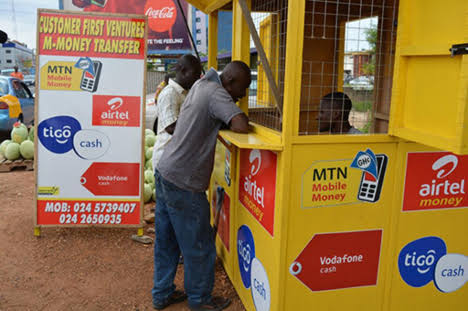
Ghana’s mobile money ecosystem continues its rapid expansion, with transaction values reaching GH¢447.4 billion in February 2026—underscoring its growing dominance as the country’s leading platform for digital payments and financial inclusion.
According to the latest Summary of Economic and Financial Data released by the Bank of Ghana on March 17, 2026, the figure marks a sharp increase from GH¢316.2 billion recorded in February 2025, reflecting sustained year-on-year growth in digital financial activity.
The data shows that mobile money platforms processed 899 million transactions in February. Although this represents a slight decline from the 949 million recorded in January and the peak of 982 million in December 2025, transaction volumes remain significantly higher than the 698 million recorded during the same period last year—highlighting strong underlying momentum.
Agent Network Expansion Drives Reach
The infrastructure supporting mobile money services is also deepening. The number of registered agents rose to 976,000 in February 2026, up from 896,000 a year earlier. More notably, active agents—those consistently facilitating transactions—increased to 515,000 from 411,000, signaling stronger engagement and accessibility at the community level.
Meanwhile, balances held in mobile money float accounts stood at GH¢33.9 billion. Though slightly lower than January’s GH¢35.6 billion, the figure represents a substantial increase from GH¢27.9 billion in February 2025.
Interoperability Gains Momentum
Cross-network transactions are becoming increasingly seamless. Interoperability transactions climbed to GH¢4.9 billion in February, up from GH¢2.9 billion a year earlier. In volume terms, transactions rose to 27.2 million from 19.7 million, reflecting growing user confidence in transferring funds across different mobile money platforms.
Rising Account Penetration
Mobile money adoption continues to broaden. Registered accounts increased marginally to 81.8 million in February, from 81.2 million in January. Active accounts—defined as those used within the past 90 days—reached 26.5 million, pointing to a large and engaged user base driving the ecosystem.
Wider Economic Signals
The mobile money performance forms part of a broader macroeconomic snapshot by the Bank of Ghana, which also highlighted easing inflation, shifts in interest rates, currency developments, and strong capital market performance. Notably, the GSE Composite Index recorded an impressive year-to-date growth of 46.7 percent as of February 2026, with market capitalization rising to GH¢235.7 billion.
Overall, the February figures reinforce mobile money’s central role in Ghana’s financial system—driving digital transactions, expanding financial access, and shaping the future of payments despite seasonal fluctuations in transaction volumes.




Ghana’s gold reserves have recorded a slight rebound, rising to 19.2 tonnes in February 2026 from 18.6 tonnes in December 2025, according to the latest Summary of Economic and Financial Data released by the Bank of Ghana.
The modest increase signals a gradual recovery after a steep decline in late 2025 that sparked widespread public concern over the management of the country’s reserve assets.
Data from the central bank shows that Ghana’s gold holdings had followed a strong upward trajectory, climbing from 27.2 tonnes in September 2024 to a peak of 37.1 tonnes in September 2025. The surge reflected an aggressive gold accumulation strategy aimed at strengthening the country’s reserve position.
However, the trend reversed sharply, with reserves plunging to 18.6 tonnes by December 2025—nearly a 50 percent drop from the peak. The sudden fall fueled debate about whether the country’s gold assets were being depleted.
The Bank of Ghana has since clarified that the decline was not due to a loss of assets but rather a strategic rebalancing of its reserve portfolio.
Governor Johnson Asiama explained that gold had grown to account for more than 40 percent of Ghana’s total international reserves at one point—well above the typical 20 to 25 percent range seen in comparable economies.
To reduce exposure and manage concentration risk, the central bank converted part of its gold holdings into foreign exchange assets. According to the Governor, the proceeds from this conversion remain within Ghana’s international reserves and are being actively invested to enhance returns and support overall reserve growth.
He emphasized that the move represents a shift in asset composition rather than a depletion of national wealth, noting that effective reserve management requires periodic adjustments in response to changing market conditions and risk levels.
The central bank added that it will continue to closely monitor its reserve portfolio and make necessary adjustments in line with global best practices, as it seeks to balance stability, liquidity, and returns.
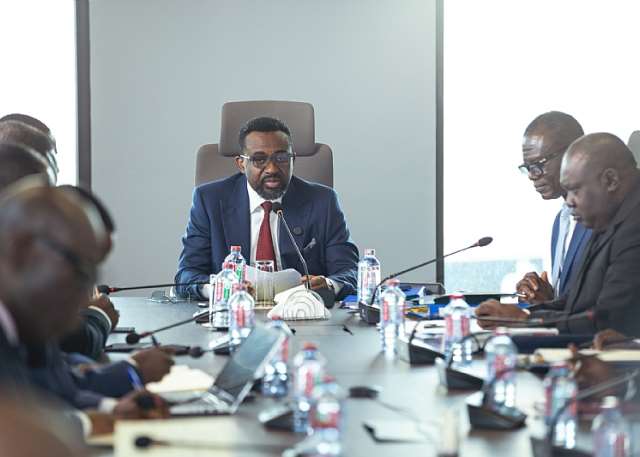
Ghana’s external reserves have increased to about $14.5 billion, according to the Bank of Ghana, offering approximately 5.8 months of import cover and reinforcing the country’s external stability.
The latest figure represents an improvement from just over $13 billion recorded during the previous Monetary Policy Committee meeting in January 2026, indicating a continued build-up of buffers to cushion the economy against external shocks.
Speaking at the opening of the 129th Monetary Policy Committee meeting on Monday, March 16, Governor Johnson Pandit Asiama said the increase reflects broader gains in macroeconomic performance, with the economy showing stronger-than-expected resilience.
Inflation, he noted, has continued on a downward trend, falling to 3.3 percent in February and marking 14 consecutive months of decline. The rate now sits below the central bank’s medium-term target band, presenting new considerations for policymakers.
On the fiscal front, Ghana recorded a primary surplus of 2.6 percent of GDP at the end of 2025. The Governor also indicated that economic activity in the real sector is gradually strengthening, supported by improving business and consumer confidence, alongside a modest recovery in credit growth.
He said the combined indicators point to a faster pace of economic stabilisation than previously anticipated, reflecting the impact of sustained policy measures.
The stronger reserve position, he added, is critical for maintaining investor confidence and improving Ghana’s capacity to absorb global economic shocks.
Reserve accumulation is expected to remain a key focus under the Ghana Accelerated National Reserve Accumulation Programme (GANRAP), which aims to significantly expand the country’s external buffers over the medium term. The programme targets reserves equivalent to 50 months of import cover by 2028, up from the current level of about 5.8 months.
However, the Governor cautioned that such targets require careful policy coordination, noting potential implications for liquidity conditions, the central bank’s balance sheet and overall monetary policy management.
Despite the positive outlook, he stressed that policymakers must focus not only on recent gains but also on sustaining them in a challenging global environment. Rising tensions in the Middle East, he warned, are already affecting global energy markets and shipping routes, increasing the risk of imported inflation and presenting new uncertainties for the economy.
First Atlantic Bank PLC has announced that it will hold its 2026 Annual General Meeting (AGM) on Tuesday, April 7, 2026, marking the bank’s first shareholder meeting since listing on the Ghana Stock Exchange.
In a formal notice to shareholders, the bank said the meeting will take place in person at the Omanye Hall of Labadi Beach Hotel in Accra at 10:00 a.m.
The AGM will give shareholders the opportunity to review the bank’s performance for the 2025 financial year and take decisions on several key corporate and governance matters.
Key agenda items
At the meeting, shareholders will consider the Directors’ Report together with the bank’s audited financial statements for the year ended December 31, 2025, as well as the report of the external auditors.
The board will also present a proposal for the declaration of a final dividend for the 2025 financial year, subject to regulatory approval from the Bank of Ghana.
Another major item on the agenda is the appointment of four Independent Non Executive Directors to the board. Three of the appointments will replace retiring independent directors, while the fourth will expand the board to strengthen minority shareholder representation and ensure compliance with regulatory requirements. These appointments will also require approval from the Bank of Ghana.
Shareholders will further be asked to authorise the board to determine the remuneration of the bank’s external auditors for the 2026 financial year and to approve directors’ remuneration for the same period.
The notice announcing the meeting was issued by the Company Secretary, Mark Ofori Kwafo, on behalf of the board.
Voting and participation
Shareholders who are unable to attend the meeting in person may appoint a proxy to attend and vote on their behalf. The proxy does not need to be a shareholder of the bank.
Voting at the AGM will generally be conducted by a show of hands unless a poll is demanded in line with the company’s constitution and the Companies Act, 2019 (Act 992). Under a poll, each shareholder present in person or by proxy will be entitled to one vote for every share held.
All shareholders and proxies attending the meeting will be required to present valid identification for entry.
Proxy forms can be downloaded from the bank’s website and submitted to the registrar, Central Securities Depository (GH) Limited, by email, post, or by depositing them at the registrar’s office in Accra.
Completed proxy forms must be submitted no later than 10:00 a.m. GMT on March 31, 2026.
First AGM since stock market listing
The upcoming AGM comes months after First Atlantic Bank transitioned into a public company and successfully listed on the Ghana Stock Exchange.
Trading in the bank’s shares began on December 19, 2025, following an oversubscribed Initial Public Offering that offered about 101.7 million shares at GH¢7.30 each.
The public offer attracted strong participation from institutional and retail investors and raised approximately GH¢786 million, surpassing the bank’s initial fundraising target.
The listing was considered a significant milestone for Ghana’s capital market as it ended more than seven years without a new primary listing on the main board of the exchange.
According to the bank, funds raised from the public offering will be used to strengthen its capital base, support expansion across West Africa, and improve working capital while providing liquidity for existing shareholders.
With the listing completed, the April AGM will give shareholders their first formal opportunity to engage with the bank’s leadership as a publicly traded financial institution.

Ghana’s Gold Reserves Edge Up to 19.2 Tonnes After Sharp 2025 Drop

Ghana’s Mobile Money Surge Hits GH¢447.4bn in February, Cementing Digital Payments Dominance

“I Slept with Someone in Church and Had a Child,” Gospel Singer Broda Sammy Confesses



-

 Entertainment1 week ago
“Go to Lumba’s house and exhume his body” — Counsellor George Lutterodt incites Ga youth
-

 Entertainment7 days ago
Legendary musician Sloppy Mike Gyamfi Accuses Kuami Eugene of Song Theft
-

 Entertainment7 days ago
Shatta Wale hints at contesting Ablekuma South seat as independent candidate in 2028
-
 General News2 weeks ago
Ghana Marks 69th Independence Day Under Theme ‘Building Prosperity, Inspiring Hope’
-

 Politics2 weeks ago
Baba Jamal Wins Ayawaso East By-Election With Decisive Margin
-
 Business2 weeks ago
Ghana Stock Exchange Composite Index Surpasses 14,000 Points for First Time
-

 Sports6 days ago
Midfielder Foster Apetogbor joins Sandefjord FC in Norway
-

 Sports6 days ago
Ignatius Fosu eyes Asante Kotoko Coaching Role