
General News
GoldBod Commits GH¢8.4 Million to Rehabilitate Water Systems Damaged by Illegal Mining

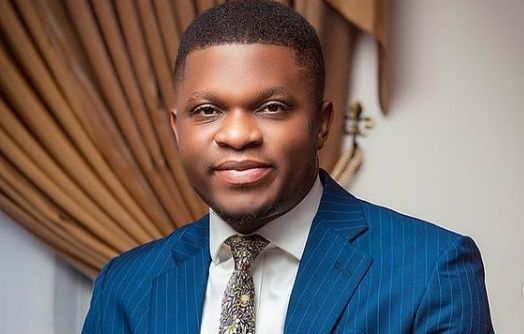
The Ghana Gold Board (GoldBod) has committed GH¢8.4 million towards the first phase of rehabilitating water treatment systems affected by illegal mining activities in the Western and Central Regions.
The intervention was announced during the signing of a Water Infrastructure Rehabilitation Funding and Implementation Agreement between GoldBod and Ghana Water Limited (GWL).
According to the Chief Executive Officer of GoldBod, Sammy Gyamfi, the support goes beyond the board’s gold trading mandate and forms part of its broader responsibility to promote environmental restoration and sustainability.
He explained that the Ghana Gold Board Act, 2025 (Act 1140) gives the institution additional responsibilities, including supporting reclamation and environmental protection initiatives.
“Parliament, in passing the Ghana Gold Board Act 2025, Act 1140, gave the Gold Board a number of other functions that are complementary to the gold trading mandates,” Mr Gyamfi said.
He noted that Ghana Water Limited had approached GoldBod after illegal mining, sand winning and other human activities caused severe degradation to six major water supply systems.
The affected facilities include Abonsa, Daboase, Skyereheman and Wiemoase, among others, where excessive siltation has affected the ability of the plants to treat safe drinking water.
Mr Gyamfi said GoldBod conducted feasibility studies through its Environmental, Social and Governance (ESG) officers in collaboration with Ghana Water Limited and confirmed the severity of the damage.
“We indeed confirmed that the siltation levels of water bodies were very extreme,” he stated.
Due to financial limitations, GoldBod will undertake the project in phases, beginning with the rehabilitation of three out of the six affected water systems.
The first phase will focus on the Abunsa, Abwasi and Enyirasi water supply systems.
The CEO stressed that the environmental challenges caused by illegal mining existed before the establishment of GoldBod, adding that the priority is finding solutions rather than assigning blame.
“We are not the ones that created the problem we are talking about, but it’s all about Ghana. It is not about when the problem happens, it is about how we can solve it,” he said.
Scope of rehabilitation works
The GH¢8.4 million project will cover:
- Desilting of affected water systems
- Dredging and sediment removal
- Hydrographic surveys
- Reservoir capacity assessments
- Stabilization of intake infrastructure
- Water quality restoration and monitoring
- Engineering supervision and technical verification
Mr Gyamfi assured that GoldBod would not simply release funds without monitoring the project.
He said the board would assign representatives to supervise the implementation while Ghana Water Limited executes the works with qualified personnel.
“We don’t want to just emit money. We want to ensure that the money is used for the intended purpose,” he added.
Water crisis persisted for nine years – GWL MD
The Managing Director of Ghana Water Limited, Hon. Adam Mutawakilu, disclosed that the high turbidity affecting several water treatment plants in the Central and Western Regions has persisted for more than nine years.
He said the situation had become too extensive for Ghana Water Limited to handle alone, forcing the company to seek support from other institutions.
“The issue of high turbidity has been with us for over nine years now. Ghana Water alone cannot handle the need, so we have to approach other agencies to come to our aid,” he stated.
Mr Mutawakilu praised GoldBod for its swift response after receiving the company’s request.
He explained that technical teams from both institutions visited the affected sites and confirmed the urgent need for intervention.
The GWL boss assured that the company would ensure transparency and accountability in the execution of the GH¢8.4 million project.
“Whatever you are giving us, we are giving you everything that you need. At the end of the day, we will work together to ensure that whatever is outlined in the agreement comes out,” he said.
He added that successful completion of the first phase would create the opportunity for GoldBod to support the rehabilitation of the remaining three water systems.
The affected communities, including Bonsa, Abwasi, Enyirasi and surrounding areas, are expected to benefit from improved access to safe and reliable drinking water once the rehabilitation is completed.
GoldBod says the initiative is part of its commitment under the Ghana Gold Board Act 2025 (Act 1140) to support environmental restoration and sustainable development.








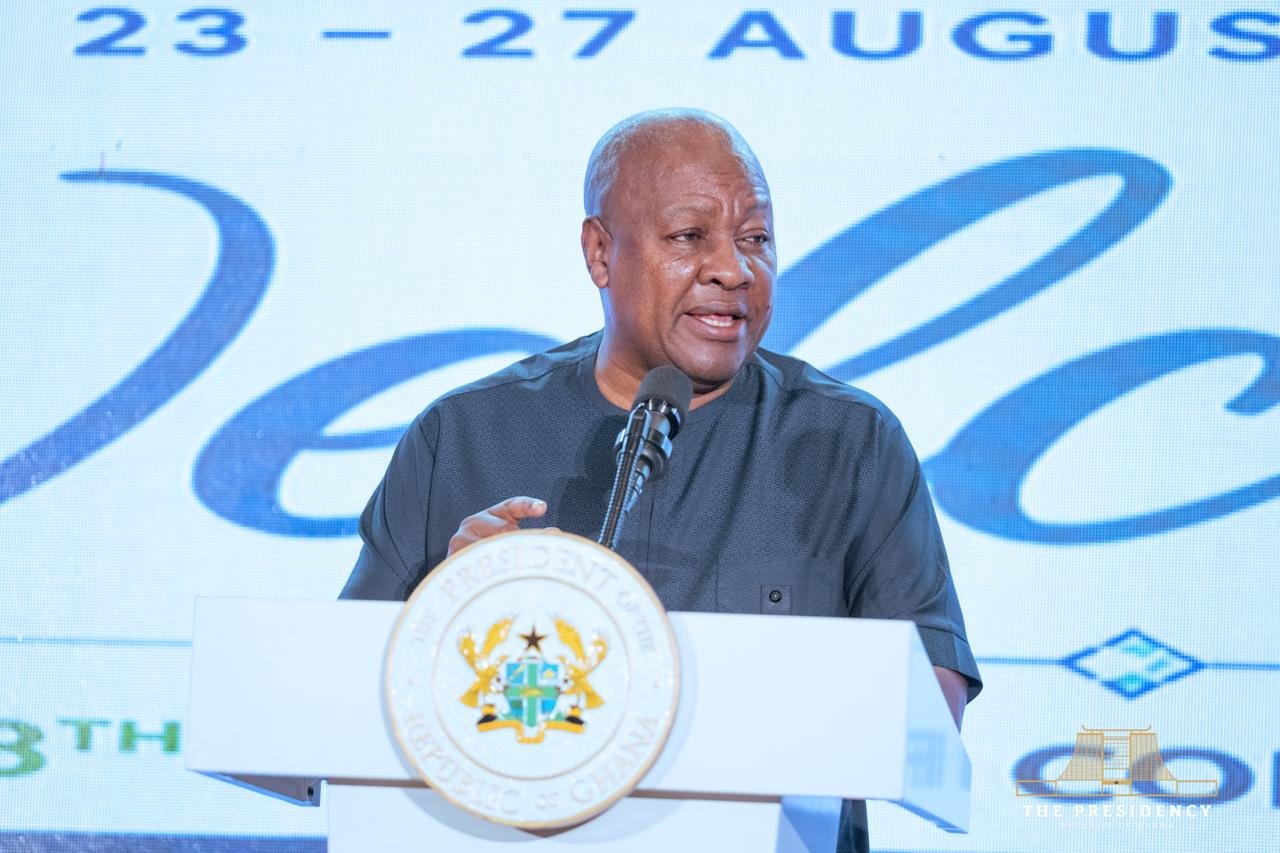
President John Dramani Mahama has announced that Ghana is targeting at least 70 percent local production of medicines consumed in the country under a new five-year plan aimed at strengthening the nation’s health sovereignty.
The President said the initiative is intended to reverse Ghana’s current dependence on imported medicines, with about 70 percent of medicines consumed within the country’s health system currently sourced from abroad.
President Mahama made the disclosure at the 28th Annual Conference of the Association of Medical Councils of Africa (AMCOA) in Accra.
He said Ghana’s drive for health sovereignty would not mean isolation but would focus on building the capacity to meet the healthcare needs of the population through local expertise, production and mutually beneficial international partnerships.
“Health sovereignty does not mean isolation; it is the capacity to meet our people’s needs confidently, competently, and through mutually respectful partnerships,” he said.
President Mahama said the country must invest in its health workforce, mobilise sustainable financing, expand local production of medicines, vaccines and health technologies, and build reliable health data systems.
“We’ve come up with a five-year plan to make sure that we reverse that, and that at least 70% of the medicines we consume must be produced locally in Ghana,” he stated.
The President also underscored the importance of strong governance, ethics and effective regulation in achieving the objective.
He said strong, independent and adequately resourced regulatory institutions would be essential to ensuring that locally produced medicines and health technologies meet required standards and safeguard public health.
President Mahama further called on African countries to strengthen domestic health systems and production capacity while maintaining partnerships that support knowledge, technology and resource sharing.
He said greater investment in local pharmaceutical production would help Africa build more resilient health systems and improve the continent’s ability to respond to future health emergencies.
President John Dramani Mahama has disclosed that Ghana’s national health insurance coverage currently stands at 76 percent, with government targeting an increase to 90 percent as part of efforts to achieve universal health coverage.
According to President Mahama, while reaching 90 percent coverage would represent significant progress, it would still leave a portion of the population without access to the National Health Insurance Scheme (NHIS).
Speaking at the opening ceremony of the 28th Annual Conference of the Association of Medical Councils of Africa in Accra, he said government was therefore implementing additional healthcare interventions to complement the NHIS.
“Ghana’s health agenda is anchored on equity, equality, and sustainability. We are strengthening the National Health Insurance Scheme, and we currently have a national coverage of 76 percent. We are hoping to push up to 90 percent,” President Mahama said.
He said government’s Free Primary Healthcare programme was one of the key interventions aimed at closing the remaining gaps in access to healthcare.
The President explained that the programme was partly modelled on Kenya’s free primary healthcare system and has so far been introduced in about 160 of Ghana’s 260 districts.
He said government intends to extend the programme to the remaining 100 districts to ensure more Ghanaians, particularly those in underserved rural communities, can access essential healthcare services.
President Mahama said the programme would also strengthen preventive healthcare and provide free treatment at CHPS compounds and mobile health kiosks for people who may otherwise struggle to access healthcare facilities.
“They can go to any of the CHPS compounds, the mobile health kiosk, and receive treatment free of charge without showing any identification,” he said.
He expressed appreciation to the World Health Organization, development partners and the government of Kenya for their support and contribution to Ghana’s efforts to expand primary healthcare.
Beyond primary healthcare, President Mahama said government was also using the Ghana Medical Trust Fund to protect people living with chronic and high-cost medical conditions from financial hardship.
He said the combined interventions were designed to ensure that the cost of healthcare does not prevent citizens from seeking treatment when they need it.
“We’re pursuing free primary healthcare so that cost does not prevent people from receiving essential care at the point of need. Through the Ghana Medical Trust Fund too, we are seeking to protect persons living with chronic and high-cost conditions from financial hardship,” he said.
President Mahama said the initiatives formed part of government’s broader strategy to move Ghana closer to universal health coverage by improving access, reducing financial barriers and strengthening both preventive and primary healthcare delivery.
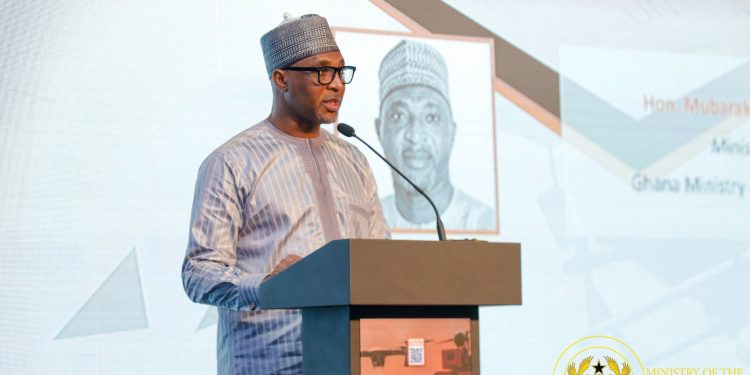
More than 8,500 kilograms of narcotic drugs have been seized, while approximately 45.4 million tramadol tablets have been intercepted over the past 20 months as authorities step up efforts to combat drug trafficking and substance abuse.
Interior Minister Mohammed Mubarak Muntaka disclosed the figures on Monday, August 24, 2026, during the Government Accountability Series, highlighting what he described as increased efforts by the Narcotics Control Commission (NACOC) to tackle the illicit drug trade.
According to the Minister, the enforcement campaign has also resulted in 217 arrests, with 165 cases prosecuted within the period.
He said the large quantity of tramadol intercepted was particularly concerning given the increasing use of synthetic and pharmaceutical drugs among young people.
“Narcotics Control has intensified its efforts, and imagine that in less than two years, over 45 million tablets of tramadol were seized and intercepted,” Mr Muntaka said.
Beyond the seizure of narcotics, the government is also targeting the financial networks and assets allegedly linked to drug trafficking.
Mr Muntaka revealed that 73 assets had been recovered as part of investigations into suspected drug-related activities.
Authorities have also seized about 19 kilograms of gold in cases involving suspected drug-related money laundering.
In addition, approximately GH¢6.9 million and US$440,000 in cash believed to be connected to suspected narcotics activities have been seized.
The measures form part of efforts to prevent suspected traffickers from benefiting financially from the illegal drug trade.
The Interior Minister said enforcement alone would not be enough to address the country’s drug problem, stressing the importance of prevention and public education.
He disclosed that NACOC had conducted more than 2,000 educational sessions across the country to raise awareness about the dangers of substance abuse.
The programmes have targeted a wide range of groups and institutions, including schools, tertiary institutions, religious organisations, communities and workplaces.
The breakdown includes 1,153 sessions at the basic school level, 185 at secondary schools and 41 at tertiary institutions.
NACOC also organised 187 sessions in faith-based institutions, 147 in communities and 235 in workplaces.
Despite the progress in enforcement and education, Mr Muntaka identified rehabilitation as a significant weakness in Ghana’s response to substance abuse.
He noted that Ghana currently does not have a state-owned rehabilitation centre, creating a major gap in efforts to support people struggling with drug dependency.
The Minister’s disclosure underscores the growing scale of Ghana’s narcotics challenge, with authorities combining arrests and seizures with financial investigations, public education and calls for stronger rehabilitation support.
The National Lottery Authority (NLA) has appealed to its staff to suspend their ongoing sit-down strike and return to the negotiation table as efforts continue to resolve a dispute over the proposed 2026 salary adjustment.
The call follows the rejection by the workers’ union of management’s 12% salary increase. The union is demanding a 17% adjustment, arguing that a higher increment is needed to cushion employees against the impact of changes to their take-home pay.
In a statement issued on Monday, August 24, 2026, the NLA said it remained committed to finding a solution and had engaged the National Labour Commission (NLC) to help settle the disagreement.
“The Management of the National Lottery Authority remains fully committed to resolving the issues at stake and is calling on the local Union and all staff to call off their sit-down strike and return to the negotiation table,” the Authority stated.
The NLA explained that its proposed 12% increase was influenced by financial pressures facing the Authority, including a tax liability of more than GH¢5 million.
According to management, the liability arose from the incorrect application of income tax on staff salaries between 2016 and 2022.
The Authority said it was notified of the outstanding amount by the Ghana Revenue Authority (GRA) and subsequently reached an arrangement with the tax agency to settle the arrears.
Management said it agreed to absorb the tax burden rather than pass the cost on to employees.
However, the tax adjustment still affected workers’ net salaries, which became a key factor behind the union’s demand for a 17% salary increase.
“The Union therefore pushed for a 17% salary increase to cushion staff,” the NLA said.
The Authority disclosed that its Board initially approved a 10% salary increase after considering the tax liability and other financial pressures reflected in its budget.
Management later secured an additional 2%, raising the proposed increment to 12%.
The union rejected the revised offer, declared the negotiations deadlocked and subsequently referred the matter to the NLC.
The NLA also disclosed that it had sought guidance from the Fair Wages and Salaries Commission (FWSC).
In a response dated June 11, the FWSC reportedly advised the Authority to implement an 8% salary increase based on its financial position.
Despite the recommendation, management said it increased its offer to 12% as part of efforts to reach a compromise with the union.
The disagreement escalated after the union informed management on August 21 of its decision to embark on a sit-down strike and demonstration from Monday, August 24.
The NLA is now calling on the workers to suspend the industrial action and resume negotiations while the dispute is addressed through the established labour relations process.
Management said it remained hopeful that its ongoing engagements with the NLC would produce a mutually acceptable outcome, including the possibility of resolving the matter through arbitration.
Interior Minister Muntaka Mubarak Mohammed has disclosed that Ghana removed 2,281 migrant beggars and 774 other illegal immigrants linked to transnational organised crime in 2025.
Speaking at the Government Accountability Series on Monday, August 24, 2026, Mr Muntaka said the Ghana Immigration Service had intensified efforts to address irregular migration and unlawful activities involving foreign nationals.
“By the end of 2025, the Ghana Immigration Service had 2,281 migrant beggars on our streets and 774 other illegal immigrants involved in transnational organised crime that had been removed from Ghana,” he stated.
He added that the enforcement exercise had continued into 2026, with 960 migrant beggars removed from the streets of Accra and Kumasi as of July. During the same period, another 186 illegal immigrants were also removed from the country.
The Interior Minister said the government was carrying out the removals while taking into account Ghana’s obligations under the ECOWAS Protocol on Free Movement of Persons, as well as the country’s diplomatic relations and longstanding ties with other nations.
“We are pursuing this removal fully conscious of Ghana’s obligation under the ECOWAS Protocol on free movement of persons as well as the diplomatic relations and long-standing ties we and other countries have,” Mr Muntaka said.
He explained that the government’s goal was to reduce irregular migration and unlawful activities associated with it while ensuring that enforcement operations were conducted within the law and with respect for human dignity.
“Our objective is to reduce irregular migration and unlawful activities associated with it to the barest minimum, while ensuring that enforcement actions are lawful, undertaken by the appropriate authorities and carried out in a manner that is respectful of human dignity,” he said.
Mr Muntaka also dismissed suggestions that the government lacked the political will, security intelligence or leadership to tackle irregular migration.
According to him, the major challenge was the level of skills and operational capacity available to effectively deal with the situation.
“Let me be clear that the challenge before us is not a lack of political will, security, intelligence or leadership. It is principally a question of skill,” he stated.
He assured the public that government had reached a high-level consensus to provide the necessary logistical support to strengthen the relevant agencies and expand the scale of migration enforcement.
“And I can assure the public that there is a high-level consensus that with earmarked logistical support to increase the scale of the removals and strengthen our bodies, evidence of that will soon be apparent,” he added.
The Interior Minister said Ghana would continue to uphold its tradition of hospitality while maintaining a firm stance on national security, public order and respect for the rule of law.

Ghana targets 70% local medicine production under five-year plan – Mahama
Ghana’s health insurance coverage hits 76% as Mahama sets 90% target

Nana Ama McBrown Urges Youth to Learn Trades Despite Formal Education



-
 Education2 weeks ago
Online Classes and Education: Are They the Future of Learning?
-
 Entertainment2 weeks ago
Let Them Come Home: Ras Caleb Urges Africa to Embrace Diaspora Returnees
-
 General News1 week ago
KFC Ghana Faces Legal Scrutiny Over Customer Safety During GH¢15 Anniversary Promotion
-

 Entertainment2 weeks ago
Say a Prayer and Make a Move – Sarkodie to Fans
-

 Entertainment2 weeks ago
Tima Kumkum Confirms Marriage Has Ended After One Year, Nine Months
-
 General News2 weeks ago
IGP Promotes 25 Police Personnel for Exceptional Performance in the Fight Against Crime
-
 General News1 week ago
BOST Makes Over GH¢10 Million From Faulty Flow Meter Charges, Tanker Drivers Claim
-

 Entertainment2 weeks ago
Tourism Minister responds to concerns over support for comedians, says Creative Arts Agency will engage industry