
General News
BOST Makes Over GH¢10 Million From Faulty Flow Meter Charges, Tanker Drivers Claim

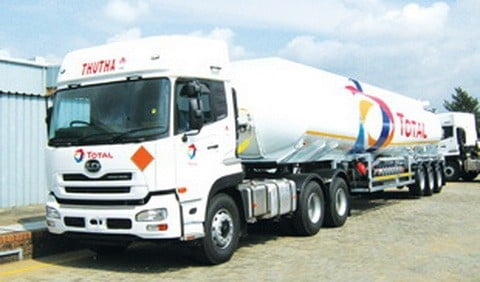
Tanker drivers in Kumasi have accused the Bulk Oil Storage and Transportation Company Limited (BOST) of making more than GH¢10 million from charges arising from alleged inaccurate readings by an automated flow-meter system at its Terminal 3 depot.
The allegation forms part of a broader dispute that has led tanker drivers in Kumasi to begin a three-day sit-down strike over persistent product shortages recorded during the discharge of petroleum products.
According to a statement issued by the affected stakeholders, the shortage problem has existed since 2022 and has created serious financial and operational difficulties for tanker owners and drivers.
The stakeholders insist that the reported shortages are not the result of theft or actual loss of petroleum products but are allegedly caused by inaccuracies in the automated flow-meter system used at the BOST depot.
They claim the machine records shortages of between 200 and 400 litres per tanker discharge, with tanker owners subsequently being billed for the differences.
The stakeholders allege that the current BOST management is aware of the problem but continues to pass the cost of the alleged artificial shortages on to tanker owners.
They claim that the resulting deductions have generated more than GH¢10 million for BOST.
The allegation has not been independently verified, and BOST has not, in the information provided, publicly confirmed the claimed amount or the basis of the charges.
The stakeholders say the problem began after a previous BOST management replaced the traditional manual T-bar measurement system with an automated flow meter.
They allege that the automated technology has consistently produced inaccurate readings and is therefore unsuitable for accurately measuring petroleum products discharged into storage facilities.
According to them, previous management acknowledged the alleged inaccuracies and decided not to transfer the cost of the discrepancies to tanker owners.
They contend that the current policy represents a departure from that approach.
Tanker owners face financial losses
The stakeholders argue that tanker owners are being forced to absorb losses arising from the alleged meter inaccuracies.
They say the deductions are particularly burdensome because owners already incur high costs to secure petroleum-product loads.
They allege that tanker owners can pay as much as GH¢10,000 to secure BOST loads from the Accra Plane Depot before transporting the products to Kumasi.
When deductions are subsequently made at the Kumasi depot because of shortages recorded by the meter, the owners’ earnings are allegedly reduced further.
Drivers complain about unpaid salaries
The financial pressure on tanker owners is also said to be affecting drivers.
The stakeholders claim that some owners are struggling to pay drivers’ salaries because of the accumulated deductions.
They say the situation has caused psychological distress among some drivers.
One driver has reportedly argued that the stress associated with unpaid salaries could be contributing to recent tanker accidents on Ghanaian roads.
That claim has not been independently established, and the causes of specific road crashes would require investigation by the appropriate authorities.
Strike threatens fuel distribution
The dispute has now resulted in a three-day sit-down strike by tanker drivers in Kumasi.
The drivers say some operators are also refusing to transport petroleum products to the depot because of the recurring shortage deductions.
They warn that if the situation persists, fuel distribution in Kumasi and other parts of the Ashanti Region could be severely affected.
A prolonged disruption could put pressure on the downstream petroleum supply chain because tanker operators are responsible for transporting fuel from storage facilities to various destinations and filling stations.
Parking problems add to grievances
The drivers are also demanding improved parking arrangements at the Kumasi depot.
They say inadequate parking space forces tanker operators to park their vehicles along roadsides while waiting to load or discharge petroleum products.
According to the drivers, the situation creates safety risks and inconvenience for other road users, particularly on busy routes.
They are therefore calling for a suitable, secure and designated parking facility for tanker operators.
The stakeholders say the National Petroleum Authority (NPA) has intervened several times in an attempt to resolve the shortage dispute.
However, they allege that the shortages continue to recur after NPA officials leave the depot.
They are consequently calling for a permanent technical solution rather than temporary interventions.
The statement further alleges that BOST has asked two senior staff members, identified as Josiah and Sam Yalley, to step aside.
However, the stakeholders say the action has failed to resolve the alleged underlying technical problem, as shortage incidents reportedly continue.
They are therefore demanding an investigation into the flow-meter system, its calibration and the procedures used to determine shortages.
Calls for government intervention
The stakeholders are calling on the government to intervene urgently and have proposed three key measures.
They want authorities to:
Immediately replace or recalibrate the disputed flow meters.
Order an independent audit of all shortage billings dating back to 2022
Compel BOST to return to the previous policy of not passing alleged artificial shortage costs on to tanker owners.
The stakeholders warn that failure to resolve the dispute could lead to a wider breakdown of fuel logistics in the Ashanti Region.
The tanker drivers say they are ready to return to work once concrete measures are taken to address the metering concerns, review the disputed deductions and provide adequate parking facilities.
For now, the three-day sit-down strike remains in force as the drivers push for what they describe as a fair and lasting resolution.




















By KPD News Online Business Desk | October 8, 2026
Gold prices recovered on Thursday after touching a two-month low, as a pullback in the U.S. dollar provided some support to the precious metal.
Spot gold rose about 0.5% to $4,132.66 per ounce by 0140 GMT, while U.S. gold futures for December delivery gained 0.4% to $4,157.60. The rebound followed Wednesday’s decline, when bullion fell to its lowest level since August 5.
The recovery came as the dollar eased from an 18-month peak. Because gold is priced in dollars, a weaker greenback can make the metal less expensive for buyers using other currencies, potentially supporting demand.
Dollar and interest rates remain key
Despite Thursday’s recovery, analysts say the outlook for gold remains uncertain. Higher U.S. Treasury yields and expectations that the Federal Reserve could raise interest rates again have continued to weigh on bullion.
Higher interest rates can reduce the appeal of gold because the metal does not generate interest income.
Market pricing currently points to a relatively low probability of a U.S. rate increase in October, while expectations for a December hike remain considerably higher.
Chris Weston, head of research at Pepperstone, said gold would need to break above $4,275 an ounce for the short-term outlook to become more constructive.
The World Gold Council has also highlighted the influence of rising U.S. yields and the stronger dollar on gold’s recent weakness. At the same time, global gold exchange-traded funds recorded significant inflows in September despite the fall in prices, pointing to continued investor interest in the metal.
Precious metals also move higher
Other precious metals also recorded gains. Silver was around $60.18 an ounce, while platinum climbed about 2.1% to $1,665 and palladium gained roughly 1.6% to $1,142.86.
For gold traders, attention now remains firmly on the U.S. dollar, Treasury yields and signals from the Federal Reserve as investors assess whether Thursday’s rebound marks the beginning of a broader recovery or simply a temporary pause in the recent decline.
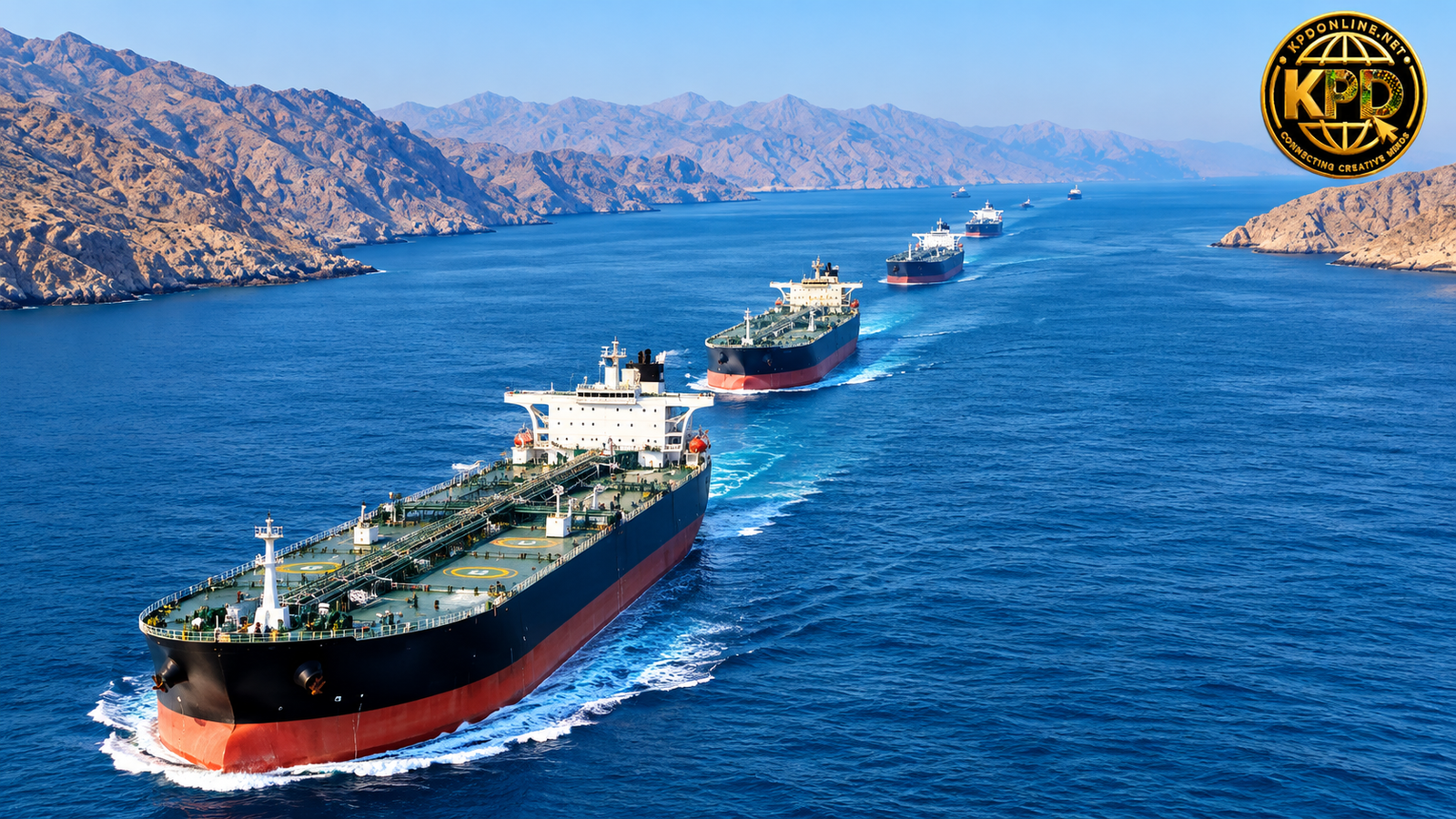
SINGAPORE, October 8, 2026 — Commercial shipping through the Strait of Hormuz has fallen to its lowest level in more than two months, as a renewed wave of attacks and security threats pushes shipping operators to reassess the risks of using the strategically important waterway.

Vessels navigating the Strait of Hormuz amid heightened regional tensions
Data from maritime analytics firm Kpler showed that only seven commodity-carrying vessels crossed the strait on Tuesday, the lowest daily figure recorded since July 23. The decline comes after tanker-related incidents in the region reached their highest weekly level since the start of the ongoing U.S.-Israeli war with Iran.
The reduction in vessel traffic is also reflected in crude oil flows. Kpler data indicated that crude shipments through Hormuz fell 27% from a wartime peak, to about 10.1 million barrels per day. That remains substantially below the waterway’s pre-war level.

Oil tanker sailing through the Strait of Hormuz
The Strait of Hormuz is one of the world’s most important energy corridors. Before the conflict, roughly 20% of global crude oil and liquefied natural gas supplies moved through the passage, making any prolonged disruption a major concern for energy markets.
SECURITY CONCERNS GROW
Shipping activity has weakened as vessels face greater uncertainty over their safety. Reuters reported that at least 12 tanker-related incidents were recorded between September 28 and October 5, including attacks, attempted attacks and harassment. The Joint Maritime Information Center said the incidents reflected heightened activity around key shipping routes.

A separate tanker incident near Qatar has added to concerns about the wider security environment in the Gulf. The latest attacks have increased insurance and operational risks for companies moving oil and other commodities through the region.

Despite the sharp reduction in traffic through Hormuz, Middle Eastern oil exports have not collapsed. Alternative routes and increased shipments from areas outside the strait have helped keep regional exports flowing. Reuters reported that exports from the Gulf of Oman coast and the Red Sea had risen to around 6.7 million barrels per day, more than twice their pre-war level.
OIL PRICES UNDER PRESSURE
The shipping slowdown has nevertheless added fresh uncertainty to global energy markets. Brent crude was trading above $100 a barrel on Thursday, while U.S. West Texas Intermediate was also higher as traders assessed the possibility of further supply disruptions.

Oil tankers in the Gulf as Hormuz shipping activity falls
For countries that depend heavily on imported fuel, prolonged disruption around Hormuz could increase transportation, electricity and consumer costs if alternative supplies and shipping routes become more expensive.
For now, the latest figures suggest that vessels are still moving through the waterway, but at considerably reduced levels. The key question for energy markets is whether the decline represents a temporary reaction to heightened attacks or the beginning of a longer period of restricted maritime traffic.

BEIRUT, Lebanon — October 8, 2026: Hezbollah has reportedly received $200 million from Iran to provide financial assistance to Lebanese families displaced by this year’s war with Israel, according to two people with direct knowledge of the transfer.

The reported payment would represent the first major assistance from Hezbollah to supporters affected by the conflict, after hundreds of thousands of people were forced from their homes during Israeli bombardments and ground operations in southern Lebanon and other Hezbollah strongholds.

According to the sources, the funds arrived in Lebanon last month despite mounting US pressure on Iran and increasingly difficult channels for transferring money to Hezbollah. Intermediaries involved in moving the funds reportedly charged a 20% fee, reflecting the financial and legal risks associated with the transaction.

A Hezbollah official confirmed that an amount of money had been secured and said the group would announce a distribution plan, but did not publicly confirm that the funds came from Iran.

$3,000 planned for some families
The reported plan would initially provide approximately $3,000 per family, with priority given to people from villages that have been destroyed or remain inaccessible because of the conflict.

One source estimated that around 50,000 families could be covered by the initial payments.
The development comes after months of criticism over the limited assistance available to Hezbollah’s displaced supporters. The group’s ability to provide financial support and reconstruction assistance has historically been an important part of its relationship with communities in southern Lebanon and Beirut’s southern suburbs.

After the 2006 war with Israel, Hezbollah distributed cash assistance and helped finance reconstruction in areas heavily damaged by fighting. This year’s conflict, however, has produced extensive destruction while reconstruction has been much slower.

Washington disputes the reported transfer
The United States has challenged the claim that the $200 million was transferred from Iran.
US State Department spokesperson Tommy Pigott said the money was not there and accused Hezbollah of attempting to bolster its image by promoting what Washington described as false reports of Iranian financial support.

Iranian officials and Lebanon’s government did not immediately respond to requests for comment, according to the Reuters report.
Iran has historically been a major financial backer of Hezbollah, although Tehran does not publicly acknowledge financing the organization. US officials have previously reported substantial Iranian financial support for the group.

A difficult road ahead
The reported transfer comes as Hezbollah faces serious financial pressures following the conflict and intensified US sanctions targeting Iranian and Hezbollah-linked financial networks.
The war has also left large areas of southern Lebanon heavily damaged. Lebanese officials have warned that rebuilding the country following successive conflicts since 2024 could cost more than $27 billion.

For displaced families, the immediate challenge remains finding secure housing and restoring basic livelihoods. Whether the reported funds reach the intended recipients — and how widely the payments are distributed — is expected to become clearer once Hezbollah announces its assistance programme.
The reported $200 million transfer has not been independently confirmed by Iran, and Washington disputes the claim.
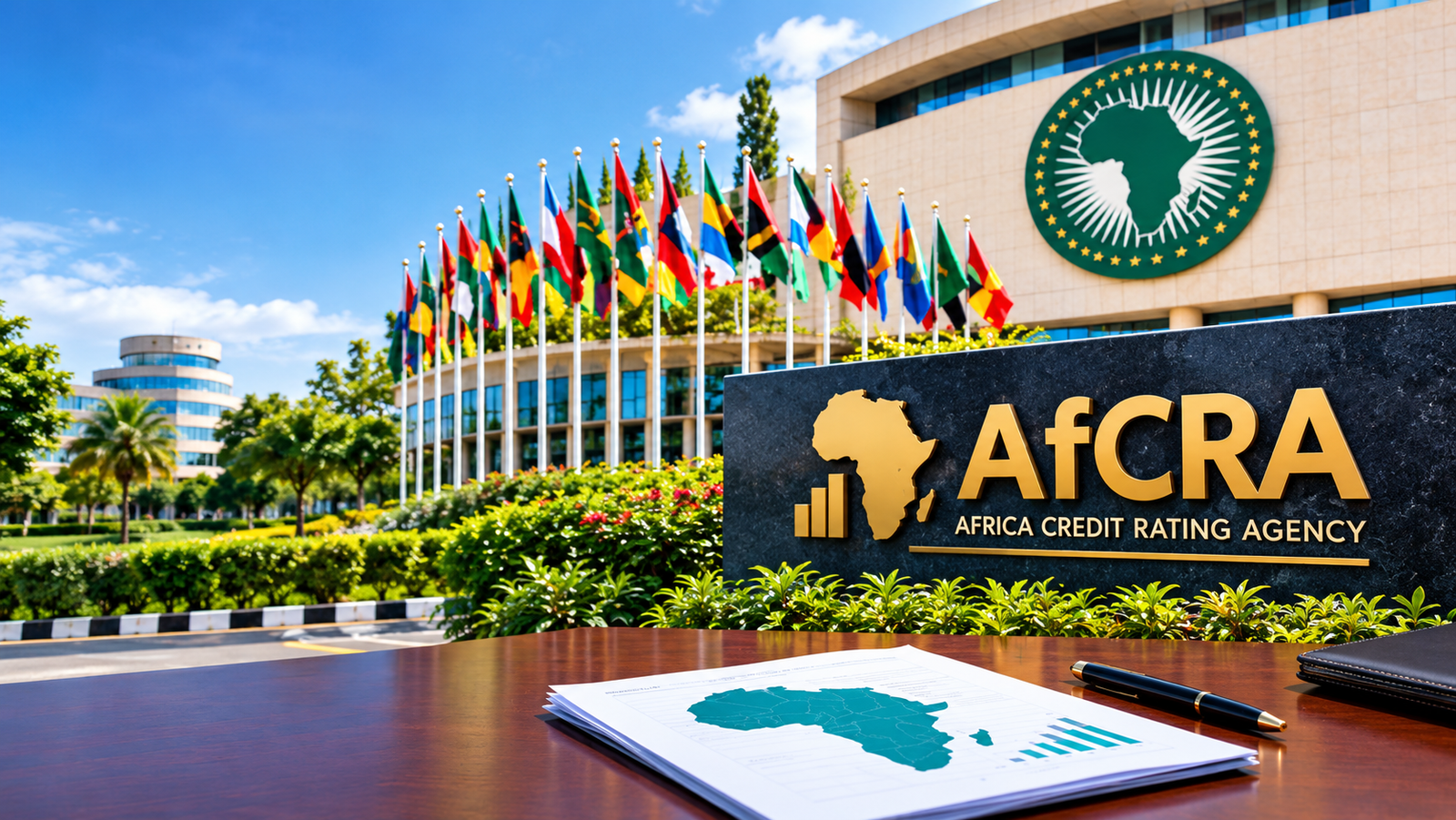
Port Louis, Mauritius — October 7, 2026: The African Union has launched the Africa Credit Rating Agency (AfCRA) in Mauritius, establishing the continent’s first Africa-focused credit rating institution as African governments seek a stronger voice in international financial markets.
The agency was officially unveiled in Port Louis on Wednesday after years of discussions and institutional preparation led by the African Peer Review Mechanism (APRM) under an AU mandate. African leaders endorsed the idea of a continental credit-rating agency in 2018.
AfCRA is intended to provide independent assessments of the creditworthiness of African governments, sub-national entities, businesses and financial institutions. Its methodology is expected to draw more heavily on African data, economic conditions and local expertise while complementing, rather than replacing, existing international ratings agencies.
Challenging the established ratings system
For years, African policymakers have criticised the dominant international ratings firms — S&P Global, Moody’s and Fitch — arguing that their assessments can fail to fully capture conditions on the continent and contribute to higher borrowing costs.
The AU says AfCRA is designed to provide investors with additional information and context when evaluating African economies. The agency is also expected to help address gaps in ratings coverage, with the AU saying that 23 of its 55 member states currently do not have ratings from the three major global agencies.
Supporters argue that a deeper understanding of African economies could help reduce the risk premium attached to some African borrowers and improve access to international capital.
Focus on credibility and independence
Despite being created under an AU mandate, AfCRA is designed to operate as a private-sector-driven, self-funded and independent institution. The AU says governments cannot own shares in the agency, a measure intended to protect it from political influence and strengthen its credibility with investors.
That independence will be closely watched. Credit ratings influence how investors assess risk and can affect the interest rates governments and companies pay when raising money. Any perception that ratings are politically influenced could undermine the agency’s purpose.
A potential boost for African capital markets
The launch comes as many African governments continue to face significant financing pressures and high debt-servicing costs. The AU sees AfCRA as part of a broader effort to strengthen the continent’s financial architecture and increase Africa’s influence over how its economies are assessed globally.
The agency will therefore face a major test: whether it can establish a reputation for accurate, transparent and internationally credible ratings while offering a genuinely Africa-focused perspective.
Its success could potentially give African governments and companies another avenue for accessing capital and provide international investors with additional information when making decisions about the continent.
For the AU, however, the launch represents more than a new financial institution. It is being presented as part of a broader push for greater financial sovereignty and a stronger African voice in the global financial system.

The Ghana Police Service has confirmed that Harold Norman, husband of fashion personality Rosemond Akua Adobea, popularly known as Nana Akua Addo, could not appear before court on Wednesday, October 7, after being admitted to hospital.
Norman was expected to be arraigned in connection with allegations of domestic abuse made against him by his wife. The Criminal Investigations Department (CID) said his lawyer notified investigators that he had been hospitalised and was therefore unable to attend the scheduled court proceedings.
The Police said officers from the Domestic Violence and Victim Support Unit (DOVVSU) subsequently visited the hospital to verify the claim. Investigators are also monitoring the situation and are expected to ensure that Norman appears before court immediately after his discharge.
The development follows a petition Nana Akua submitted to the Director-General of the CID on August 20, 2026. According to the Police, she alleged that her husband had subjected her to physical, emotional and economic abuse.
Police investigations also established that a case involving the couple had previously been handled by DOVVSU at the Lakeside and Ministries Police Stations in July.
Norman was arrested at his residence on August 27 to assist with investigations. After giving a caution statement, he was granted police enquiry bail with two sureties on August 29 while investigations continued.
The Police have also disclosed that they are working with the Ministry of Gender, Children and Social Protection to provide social welfare support for Nana Akua and her children.
The case has attracted significant public attention following the circulation of videos and images on social media. Norman’s lawyers have separately denied allegations against their client and urged the media to exercise caution in reporting matters that are before investigators and the courts.
The Police have maintained that the allegations remain subject to investigation and have reiterated their commitment to handling domestic violence complaints professionally and fairly.

Gold Prices Rebound as Dollar Retreat Offers Relief to Bullion Market

Hormuz shipping traffic falls to two-month low after tanker attacks

Bezos Signals Blue Origin Could Go Public in Coming Years



-

 General News1 week ago
Fidelity Bank Chairman Named Ghana’s Topmost Transformational Board Chair 2026
-

 Technology2 weeks ago
Rolls-Royce Expands Aviation Business with Major Philippine Airlines Engine Agreement
-

 Entertainment2 weeks ago
Ras Caleb assesses institutions under the Tourism Ministry, highlighting key roles.
-

 Entertainment2 weeks ago
Ras Caleb Appiah-Levi: The musician, Pan-Africanist and organiser whose career spans four decades
-

 Entertainment1 week ago
Ras Caleb Appiah-Levi Reflects on Death, Wealth and Equality: “Death Neither Knows Rich Nor Poor”
-

 Business2 weeks ago
Rev. Dr. Christian Kwetey Kweitsu Honoured for Excellence in Audiology Practice in Kigali
-
 General News2 weeks ago
Sudan Chemical Weapons Allegations: UN Signals Readiness for Possible Investigation
-

 General News1 week ago
When 5 oranges become mangoes – Teacher’s viral classroom moment sparks fresh debate over teachers’ grievances