
General News
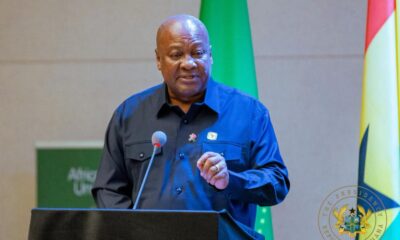
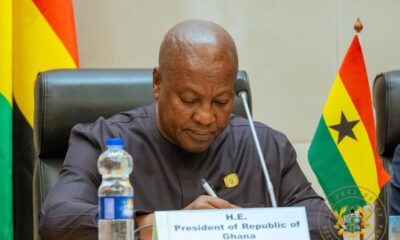
Mahama Calls for Reimagined Global Alliances at World Governments Summit 2026

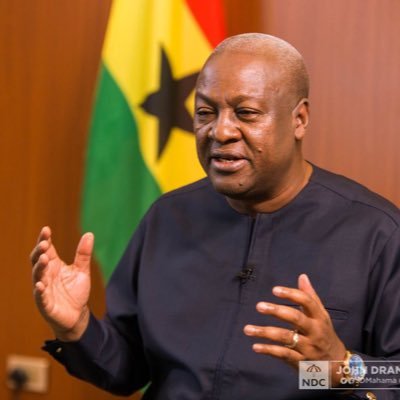
President John Dramani Mahama has called for a bold rethinking of global alliances to address emerging international challenges, stressing the need for cooperation rooted in shared responsibility and mutual respect.
Speaking at the World Governments Summit 2026 held from February 3 to 5, President Mahama said the international system is undergoing profound transformation and requires partnerships that reflect modern global realities.
“The central question before us today is not whether global alliances will endure, but how they must be reimagined and renewed to remain effective, inclusive, and responsive to the demands of our time,” he stated.
Call for Stronger Global Cooperation
Addressing global leaders, policymakers and representatives of international organisations, President Mahama highlighted the growing complexity of global threats including climate change, food insecurity, terrorism, technological disruption and widening inequality.
He emphasised that such challenges transcend national borders and require collective action.
“These challenges demand cooperation not as a matter of choice but as an imperative. The alliances of the future must therefore be rooted in shared responsibility and based on our common destiny,” Mahama said.
Africa’s Role in the New Global Order
The Ghanaian leader underscored Africa’s growing importance in shaping the global economy and international diplomacy. He described the continent as a hub of opportunity driven by its youthful population, natural resources and expanding markets.
“The future of global alliances cannot be meaningfully imagined without Africa. Africa is not merely a space of competition; it is a continent of solutions, opportunities, and rising influence,” he noted.
President Mahama also called for stronger investment partnerships aimed at boosting industrialisation, renewable energy, digital transformation and human capital development across the continent.
He stressed that Africa must transition from reliance on aid to sustainable economic partnerships.
“Africa welcomes global partners not merely to trade with, but to transform with through investments that build industries, strengthen supply chains, and create shared opportunity,” he said.
Promoting Resource Sovereignty
President Mahama highlighted Ghana’s efforts to increase value addition to its natural resources and strengthen economic sovereignty. He pointed to the establishment of Goldbod, which he said has generated significant returns.
“New alliances with Africa must aim at adding value to Africa’s natural resources. They must aim at granting Africa greater sovereignty and control of its natural resources,” he stated.
Security and Regional Stability
Touching on regional security, President Mahama expressed concern about the rising threat of terrorism in parts of West Africa and the Sahel. He reaffirmed Ghana’s commitment to peace and democratic stability through the Economic Community of West African States (ECOWAS).
“Peace remains the essential foundation on which development is built,” he said.
He further highlighted Ghana’s recent High-Level Consultative Conference on Regional Cooperation and Security as part of efforts to strengthen collective responses to regional threats.
Technology and Inclusive Innovation
President Mahama also addressed the growing influence of artificial intelligence, biotechnology and digital transformation, urging stronger global governance frameworks to ensure fairness and inclusion.
“The digital future must not be the privilege of a few nations. We must ensure that innovation becomes a shared global good, not a source of new inequality,” he stressed.
Climate Justice and Global Responsibility
On climate change, President Mahama called for fairness in global climate action, noting that Africa bears disproportionate climate impacts despite contributing the least to global emissions.
“Climate action must therefore be matched by climate justice,” he said, highlighting Ghana’s partnership with the United Arab Emirates to advance climate initiatives.
Strengthening Multilateralism
President Mahama concluded by calling for reforms in global governance institutions to make them more representative and equitable.
“The legitimacy of global governance depends on fairness, and fairness remains the cornerstone of trust,” he stated.
He reaffirmed Ghana’s commitment to diplomacy, cooperation and inclusive global progress.
“The future of global alliances is ultimately not about treaties alone. It is about the kind of world we choose to build — a world where cooperation triumphs over division and where nations rise together, not apart.”
The World Governments Summit brings together global leaders annually to discuss emerging governance challenges and opportunities shaping the future of international relations.






General News
PHOTO: Ghana Breaks Ground on First Farmer Services Centre in Afram Plains, Signalling Shift in Agricultural Policy
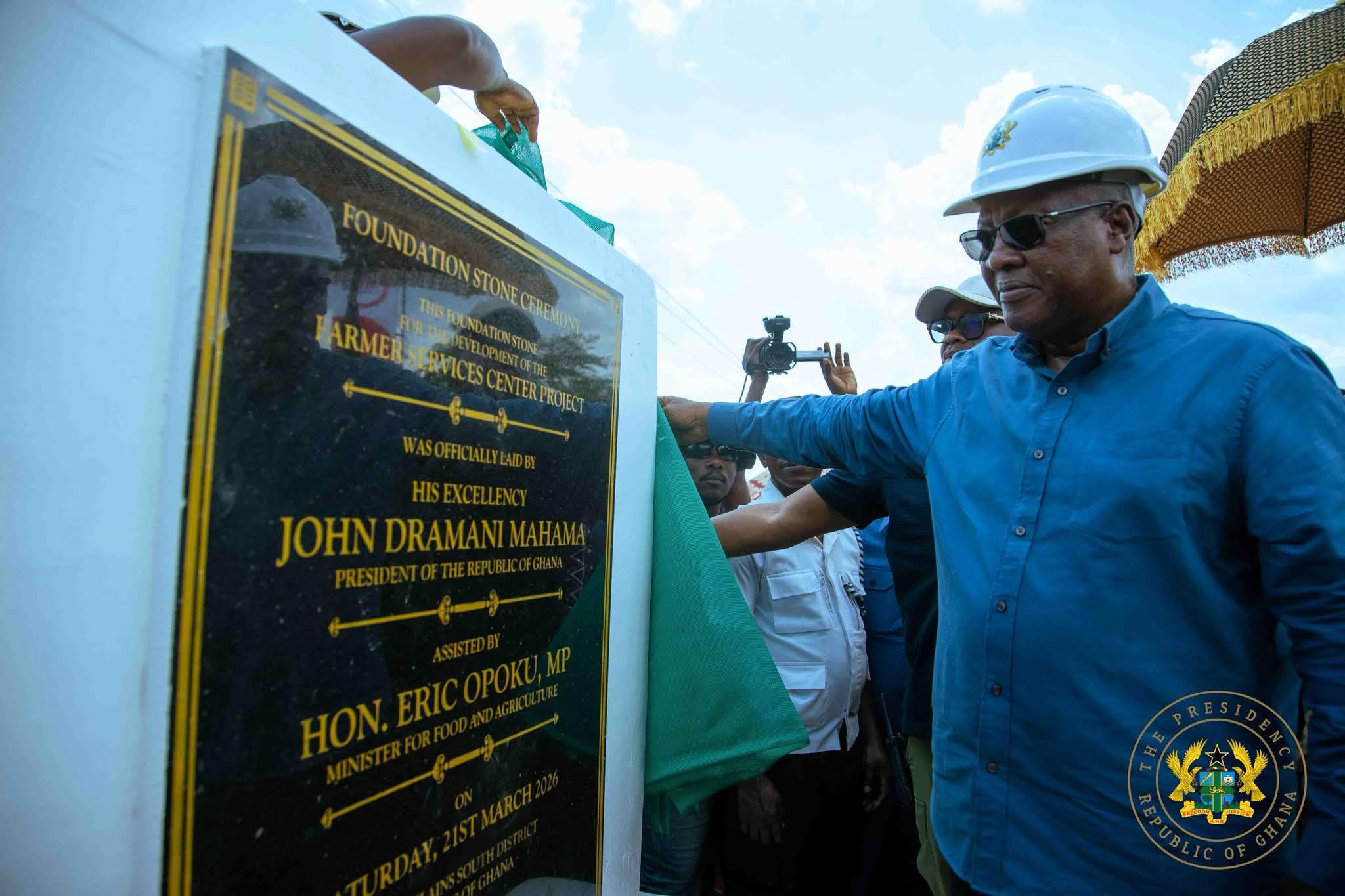
TAKORATWENE, AFRAM PLAINS — President John Dramani Mahama on Tuesday broke ground on Ghana’s first Farmer Services Centre in Takoratwene, launching what the government describes as a cornerstone of its effort to modernise the country’s agricultural sector and move smallholder farmers away from subsistence farming.
The centre, sited in the Afram Plains — a region the government has identified as a key agricultural growth corridor — is designed to operate as a one-stop hub offering farmers access to mechanised equipment, farm inputs, soil testing, storage facilities, extension training, and direct market linkages. Officials say the facility addresses long-running structural weaknesses that have kept Ghana’s farming sector from reaching its productive potential.
“This is how we transform agriculture — through practical, targeted investments,” President Mahama said at the groundbreaking ceremony.
The initiative is part of a broader national rollout, with government planning to establish 50 such centres across the country. Eleven are expected to begin construction this year.
Speaking at the event, Mahama framed the project as a deliberate policy shift, arguing that agriculture — which underpins the livelihoods of millions of Ghanaians — has long been held back by limited mechanisation, poor storage infrastructure, weak extension services, and fragmented market access. The new centres, he said, are intended to tackle all four at once.
The government is partnering with B5 Plus Group Limited on the project, with Mahama citing public-private collaboration as essential to the programme’s scale and sustainability. Beyond infrastructure, he said the broader agricultural agenda includes expanded irrigation, rural road development, climate-resilient farming practices, and value addition to boost farmer incomes.
Mahama also used the occasion to address input costs and pricing, assuring farmers that policies are in place to ease the financial burden of farming and guarantee fair prices for their produce.
Officials say the Afram Plains was selected for the first centre due to its substantial arable land and untapped potential for both crop and livestock production. The government hopes the facility will curb post-harvest losses, attract youth into commercial farming, and generate employment in the surrounding communities.
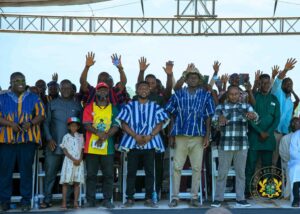
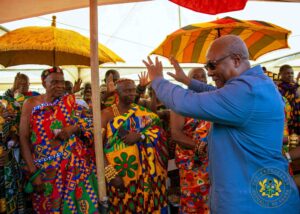
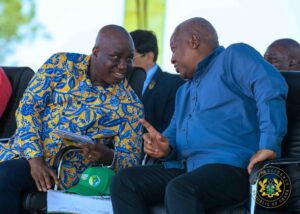
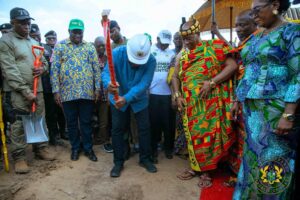
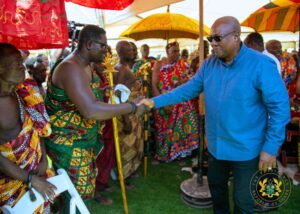
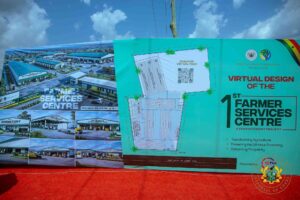
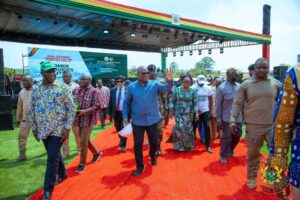
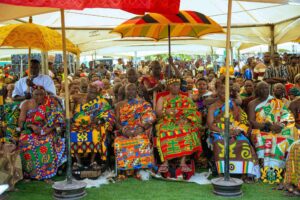
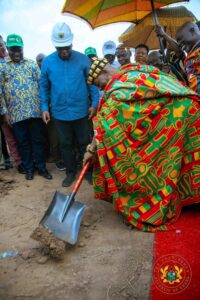
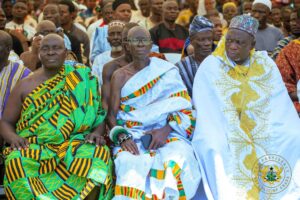
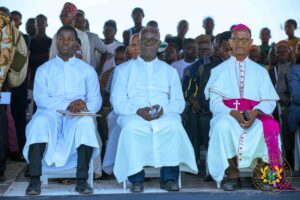
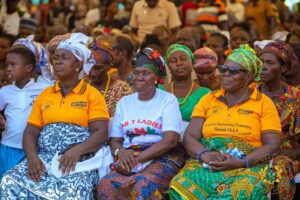
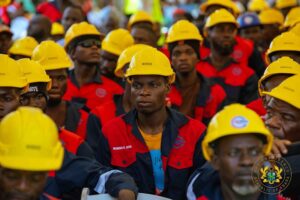
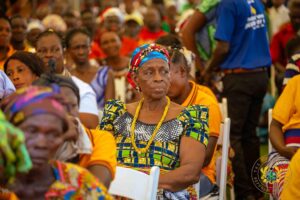
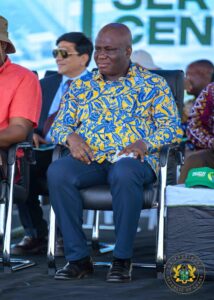
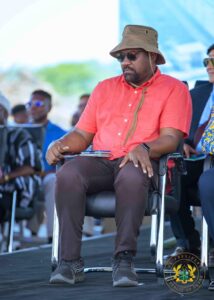
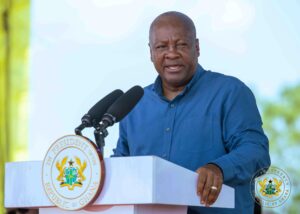
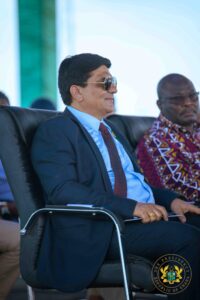
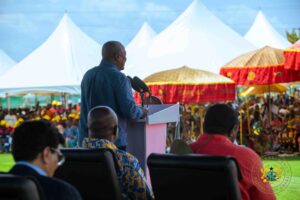
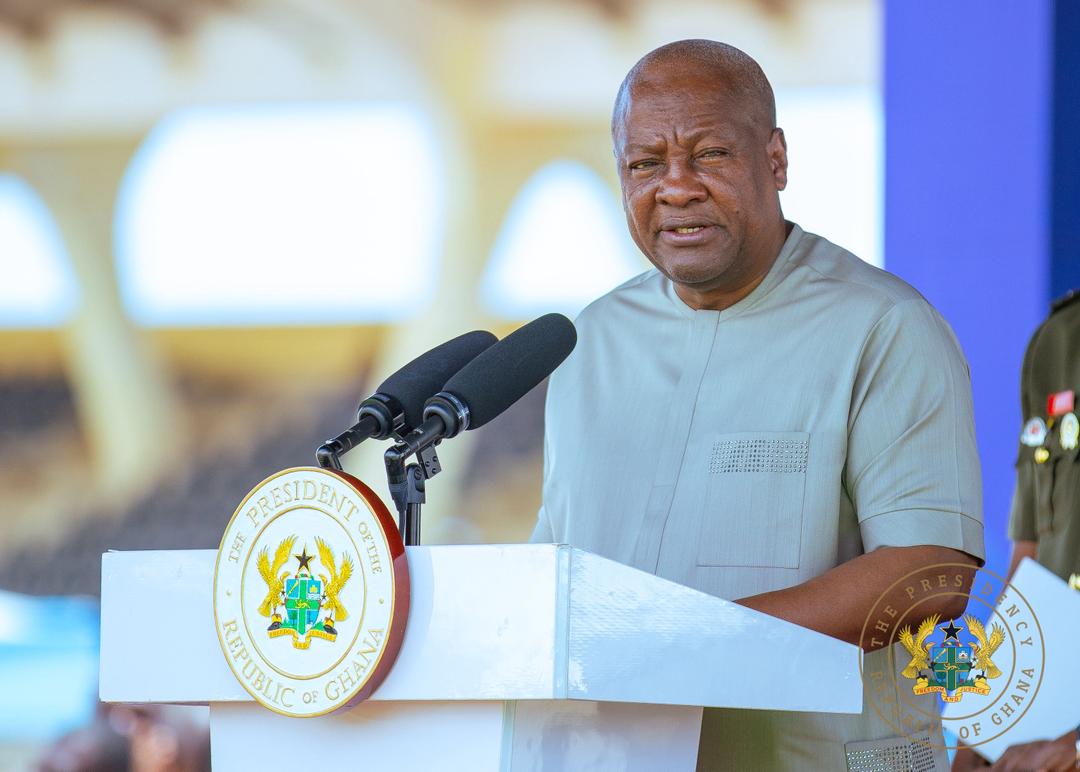
BEREKUM WEST DISTRICT — President John Dramani Mahama has toured the site of the 80-kilometre Jinijini–Sampa Road project in the Berekum West District, using the visit to reassure residents that the long-delayed highway will be fully asphalted by the end of 2027.
The inspection was part of Mahama’s ongoing “Resetting Ghana Tour,” a nationwide initiative through which the president has been making direct appearances in communities to monitor infrastructure projects and take stock of citizen concerns.
Flanked by traditional rulers, including chiefs and queen mothers, as well as community leaders and local residents, the president walked the project site and listened to firsthand accounts of how the road’s deteriorating condition has affected daily life and commerce in the area. He thanked residents for their reception and used the occasion to restate his administration’s commitment to transparency and accountability.
Mahama struck an optimistic note on the economy, pointing to what he described as early signs of stabilisation among them a decline in inflation and a strengthening of the cedi against major foreign currencies. He argued that restoring investor confidence and attracting fresh foreign direct investment would be crucial to sustaining that momentum.
Beyond the road itself, the president outlined a slate of flagship programmes his administration is pursuing, including the Big Push economic agenda, the Mahama Cares social initiative, Nkoko Nkitinkiti, and a 24-hour market programme designed to extend trading hours and boost local commerce. He referenced a recent sod-cutting ceremony for a 24-hour market in the region as a tangible sign of that agenda taking shape.
President Mahama closed by urging residents to attend an upcoming stakeholder engagement in Sunyani, saying that public input remained central to how his government intends to design and deliver policy.
The rewrite strips out the hashtags and press-release tone, tightens the structure into an inverted pyramid format, and adds geographic and contextual grounding to make it read like a filed news report.
General News
Mahama to Table UN Resolution Declaring Transatlantic Slave Trade the Gravest Crime Against Humanity

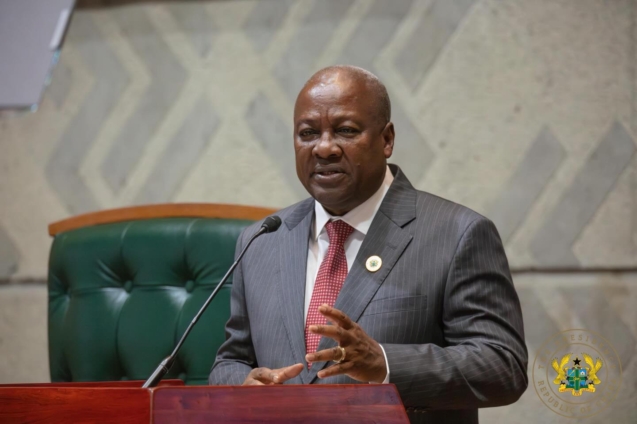
President John Dramani Mahama is set to table a landmark United Nations (UN) resolution seeking to declare the Transatlantic Slave Trade as the gravest crime against humanity on March 25, 2026.
The move fulfills a commitment made by President Mahama during his address to the UN General Assembly last year.
Ghana, acting in its role as the African Union (AU) Champion on Reparations, is spearheading the initiative in collaboration with the Caribbean Community (CARICOM) and representatives of people of African descent globally. The draft resolution is scheduled for consideration and possible adoption by the UN General Assembly on Wednesday, March 25.
The proposed resolution aims to formally recognise the trafficking of enslaved Africans and the system of racialised chattel slavery as the gravest crime against humanity. It cites the unprecedented scale, duration, systemic character, brutality, and enduring global consequences of the Transatlantic Slave Trade as grounds for this designation.
If adopted, it would represent the first comprehensive UN resolution addressing slavery and the Transatlantic Slave Trade in the organisation’s 80-year history.
The resolution is expected to reinforce historical truth as a foundation for justice and reconciliation, while advancing calls for reparatory justice, accountability, and healing.
Its consideration coincides with the International Day of Remembrance of the Victims of Slavery and the Transatlantic Slave Trade. Analysts say the initiative marks a significant step toward acknowledging historical injustices and confronting their long-term effects on global inequalities, development disparities, and structural imbalances.
Following a potential adoption, Ghana is expected to intensify multilateral efforts toward reparatory justice under the African Union’s Decade of Action on Reparations and African Heritage (2026–2036).
Ahead of the UN session, a wreath-laying ceremony will be held at the African Burial Ground in New York on March 24 at 8:00 a.m., followed by a high-level event on reparatory justice at 10:00 a.m. in Conference Room 3 at the UN headquarters.
The Ministry of Foreign Affairs has expressed appreciation to key partners, including the African Union Commission, UNESCO, CARICOM, the Community of Latin American and Caribbean States (CELAC), as well as experts, diplomats, academics, and activists who contributed to the development of the resolution.
Ghana has called on all UN member states to support the initiative, urging them to “stand on the right side of history and justice.”
Officials available for interviews include the Minister for Foreign Affairs, Samuel Okudzeto Ablakwa; Deputy Minister James Gyakye Quayson; Ambassador Francis Danti Kotia; Ambassador Harold Adlai Agyeman; and Special Envoy for Reparations, Dr. Ekwow Spio-Garbrah.

Forward Thomas Asante Scores for Coventry City in Massive Win Over Swansea

PHOTO: Ghana Breaks Ground on First Farmer Services Centre in Afram Plains, Signalling Shift in Agricultural Policy

Breaking News: Legendary Actor Chuck Norris Dies at 86



-

 Entertainment2 weeks ago
Legendary musician Sloppy Mike Gyamfi Accuses Kuami Eugene of Song Theft
-

 Entertainment2 weeks ago
Shatta Wale hints at contesting Ablekuma South seat as independent candidate in 2028
-

 Business5 days ago
Ghana’s Mobile Money Surge Hits GH¢447.4bn in February, Cementing Digital Payments Dominance
-

 Entertainment1 week ago
Global Movement WAHANGELA KINGDOM Set for Historic Launch and Royal Crowning in Ghana
-

 Sports2 weeks ago
Midfielder Foster Apetogbor joins Sandefjord FC in Norway
-
 General News5 days ago
Mahama Inspects Jinijini–Sampa Road, Pledges Completion by 2027
-

 Entertainment5 days ago
“I Slept with Someone in Church and Had a Child,” Gospel Singer Broda Sammy Confesses
-
 Business5 days ago
Burkina Faso Bans Fresh Tomato Exports to Shield Domestic Processing Industry