
General News
Man Accused of Creating Fake Nigerian Government Agency Faces Court

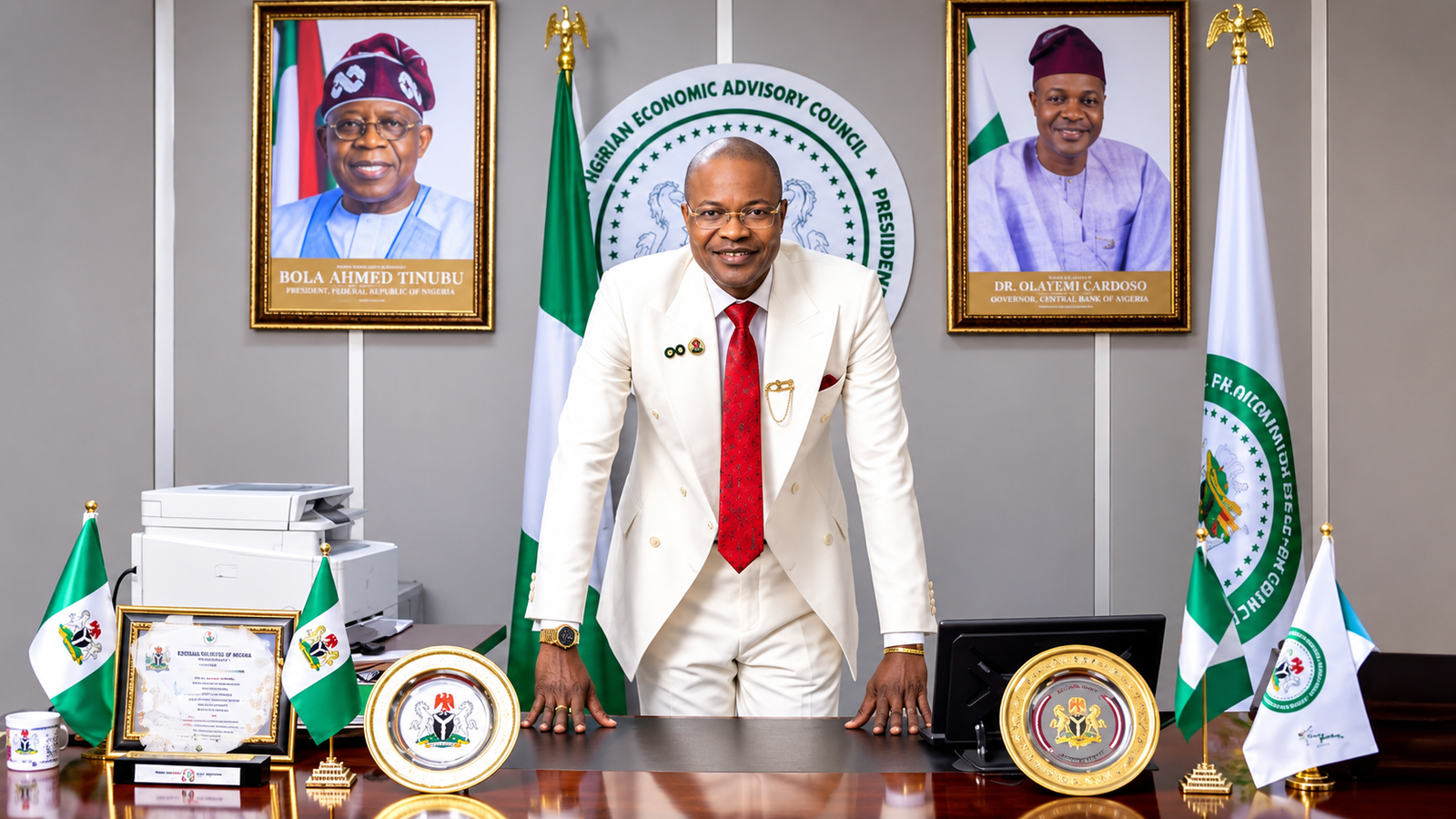
ABUJA, Nigeria — October 2, 2026 — Nigerian authorities have charged a man accused of creating a government agency that the presidency says was never established, after the purported organisation allegedly obtained government office space, secured a budget allocation and attempted to open accounts with the Central Bank of Nigeria.
Adeniyi Adeyemi Matthew appeared before the Federal High Court in Abuja on September 30, where he faced charges including forgery and impersonation. Prosecutors allege that Adeyemi had presented himself since 2024 as director-general of the Presidential Foreign Investment Promotion Council (PFIPC), despite the presidency saying the body had no legal or presidential authorization.
The case has drawn attention because the alleged organisation reportedly managed to operate within Nigeria’s federal administrative system despite the government’s position that it did not exist.

















October 2, 2026 — Sports
A game-worn Michael Jordan jersey from the Chicago Bulls’ celebrated 1998 championship season has sold for $12.3 million (£9.3 million), setting a new auction record for Jordan memorabilia.
The jersey was worn by Jordan during Game 3 of the 1998 NBA Finals, when the Bulls faced the Utah Jazz during what became known as Jordan’s “Last Dance” season.
The sale was conducted through Joopiter, the digital auction platform founded by Pharrell Williams. Entrepreneur Ryan Gough had put the jersey on the market, with Joopiter estimating before the auction that it could fetch between $10 million and $15 million.

Image: Michael Jordan in his Chicago Bulls jersey during Game 3 of the 1998 NBA Finals against Utah Jazz. Image title: “Michael Jordan in Action During the 1998 NBA Finals” Caption: Jordan wore the jersey during Game 3 of the 1998 NBA Finals, part of his final championship season with the Chicago Bulls.
A record for Jordan memorabilia
The final price surpassed the previous record for a piece of Jordan memorabilia: $10.091 million, paid in 2022 for the jersey he wore during Game 1 of the same 1998 NBA Finals.
Jordan and the Bulls eventually defeated the Jazz 4-2 in the Finals, giving the superstar his sixth NBA championship. He was also named Finals MVP, as he had been for each of his six championship-winning series.
The 1997-98 campaign was Jordan’s final season with the Bulls and became one of the defining chapters of his career. The team won its second three-peat before Jordan retired from the NBA for a second time.

Image: Clear photograph of the actual red Chicago Bulls No. 23 jersey. Image title: “The £9.3m ‘Last Dance’ Jersey” Caption: The game-worn jersey has become the most expensive piece of Michael Jordan memorabilia sold at auction.
More than a jersey
The auction reflects the continued demand for memorabilia connected to Jordan’s final championship season with Chicago.
Joopiter described the Game 3 jersey as a particularly significant piece of sporting history, pointing to its connection with the end of the Bulls’ championship era and Jordan’s influence on basketball’s global popularity.
Another Jordan collectible was also sold alongside the jersey. His 1997 Ferrari 550 Maranello reportedly fetched about $2.7 million (£2 million), around four times the previous auction record for that model.

Image: Jordan celebrating with the Bulls during the 1998 championship run. Image title: “The Final Championship Era” Caption: Jordan led Chicago to its sixth NBA championship during the 1997-98 season.
It is not the overall sports-memorabilia record
Despite the enormous price, Jordan’s jersey does not hold the record for the most expensive game-worn sports item.
That distinction remains with Babe Ruth’s 1932 World Series jersey, which sold for $24.12 million (£18.2 million) in 2024.
For Jordan collectors, however, the latest sale establishes a new benchmark for memorabilia associated with one of the most significant seasons of his career.

Moscow, October 2, 2026 — Russian President Vladimir Putin has warned that Moscow would consider using all weapons available to it if Russia or its Baltic exclave of Kaliningrad came under direct attack, escalating an already tense exchange between Moscow and NATO over security in the Baltic region.
Putin made the remarks on Thursday during the annual meeting of the Valdai Discussion Club in Moscow, saying Russia did not intend to attack European countries but would respond if its territory were attacked.
The comments followed a Russian diplomatic warning to NATO that Moscow could use its entire military arsenal, including nuclear weapons, if the alliance attempted to isolate Kaliningrad from the rest of Russia.



Questions have emerged over whether teachers who were formerly under the Ghana Education Service (GES) but have since migrated to the Ghana TVET Service can join the nationwide strike declared by the Ghana National Association of Teachers (GNAT), the National Association of Graduate Teachers (NAGRAT) and the Pre-Tertiary Education Teachers Union of Ghana (PRETAG).
The debate has become particularly significant following the nationwide strike declared on September 25, 2026, over concerns including promotions, the 20 per cent deprived-area allowance and the GES Collective Agreement.
A guidance and counselling analysis by Seth Afum A. Dankwah of J. G. Knol Technical Institute at Adukrom-Akuapem argues that the central issue is not simply union membership but the identity of the employer against whom the industrial action was declared.
The analysis contends that the reorganisation of pre-tertiary education has created two distinct public education services — the Ghana Education Service and the Ghana TVET Service — making it necessary for future strike declarations to clearly identify the affected employer.
The Ghana TVET Service was established under the Pre-Tertiary Education Act, 2020 (Act 1049), as a corporate body responsible for managing, overseeing and implementing approved national policies and programmes relating to pre-tertiary technical and vocational education and training.
The establishment of the Service also resulted in the realignment of TVET institutions previously operating under different ministries and agencies. The Ghana TVET Service says institutions formerly associated with GES-TVED, NVTI, OIC, Social Welfare Training Centres, Youth Leadership Training Institutes, GRATIS, Technology Solution Centres, Farm Institutes and other entities were brought under the Service.
The restructuring means that technical and vocational institutions that were previously administered through GES are now managed within the Ghana TVET Service structure.
The Service’s Human Resource Management and Development Division is responsible for functions including recruitment and placement, performance management, staff development and labour-related advisory matters.
According to the analysis, several teachers who were originally employed through GES technical institutions migrated to the Ghana TVET Service.
However, some of those migrated teachers retained their memberships in unions including GNAT, NAGRAT and PRETAG and continue to pay union dues.
That situation, the analysis argues, has created confusion whenever the unions declare industrial action involving GES.
The analysis recounts an incident on Monday, September 29, 2026, when a parent in Accra reportedly called his son, who was attending a technical institute, after hearing that teachers had gone on strike.
The student reportedly told the parent that some teachers had said they were on strike, but the Principal had instructed students to remain in class because the teachers were TVET teachers rather than GES teachers.
According to the analysis, some migrated TVET teachers were similarly uncertain about whether they were expected to join the industrial action because they remained members of the unions that declared it.
The position reportedly communicated by some principals was that the strike concerned the Ghana Education Service and therefore did not apply to employees whose current employer is the Ghana TVET Service.
The analysis makes a distinction between union membership and the employer involved in an industrial dispute.
It argues that a teacher can remain a member of GNAT, NAGRAT or PRETAG after migrating from GES to the Ghana TVET Service, but that membership alone does not automatically make every industrial action declared by the union applicable to the teacher’s current employer.
The analysis therefore maintains that the September 25 strike was directed at GES and that teachers whose employment is now with the Ghana TVET Service should not automatically withdraw their services from TVET institutions.
This interpretation, however, is presented as a legal and labour-relations analysis rather than a formal determination by the National Labour Commission or a court.
The analysis relies heavily on the Labour Act, 2003 (Act 651), particularly the provisions dealing with strikes and sympathy action.
Section 168(1) provides that, subject to the requirements in Sections 159 and 160, a strike may be lawful where it is undertaken in sympathy with or in support of another group of workers engaged in an industrial dispute with their employer.
The same section, however, places restrictions on how sympathy action may be conducted.
Section 168(3) provides that the form of a sympathy strike must be agreed with the management of the sympathising workers and must not disrupt the operational activities of the enterprise whose workers are expressing sympathy.
The analysis consequently argues that migrated TVET teachers could potentially express solidarity with GES teachers, but that such solidarity would have to comply with the requirements of Act 651.
Examples suggested include wearing red armbands or issuing a statement of solidarity without abandoning teaching duties.
The analysis maintains that a complete withdrawal of services at a TVET institution could raise a different legal issue because the Ghana TVET Service is not the employer involved in the GES dispute.
Section 168(4) of Act 651 states that a worker who participates in an illegal strike may have their services terminated without notice for breach of the employment contract or may forfeit remuneration for the period of the illegal strike.
The analysis therefore cautions migrated teachers against assuming that union membership, by itself, provides protection for participating in a strike that concerns a different employer.
At the same time, Section 169 provides legal protection for employment relationships during a lawful strike or lockout, making the distinction between lawful and unlawful industrial action important.
According to the analysis, GNAT, NAGRAT and PRETAG declared the September 25 nationwide strike over issues involving GES, including promotions, the 20 per cent deprived-area allowance and the GES Collective Agreement.
It argues that the use of the phrase Nationwide Strike by Pre-Tertiary Teachers in the communication created ambiguity because the phrase “pre-tertiary teachers” can now encompass employees operating under both GES and the Ghana TVET Service.
The analysis suggests that specifying pre-tertiary teachers under GES would have made the scope of the action clearer to migrated TVET personnel.
The analysis further states that six unions have members within various TVET institutions:
- Public Services Workers’ Union (PSWU)
- Ghana National Association of Teachers (GNAT)
- National Association of Graduate Teachers (NAGRAT)
- Pre-Tertiary Education Teachers Union of Ghana (PRETAG)
- Teachers and Educational Workers’ Union (TEWU)
- Civil and Local Government Staff Association, Ghana (CLOGSAG)
It argues that the presence of these unions within TVET institutions does not change the fact that the Ghana TVET Service is the employer responsible for those institutions.
The analysis also contrasts the September GES strike with an earlier industrial dispute involving the Ghana TVET Service.
It states that the Public Services Workers’ Union declared a strike against the Ghana TVET Service on March 24, 2026.
According to the analysis, TVET staff who were members of GNAT, NAGRAT and PRETAG continued working during that action because their unions had not instructed them to participate.
The analysis says TVET management subsequently invited the unions affiliated with the Service to discussions concerning the validation of the TVET Conditions of Service.
It lists PSWU, GNAT, NAGRAT, TEWU, CLOGSAG and PRETAG among the unions involved in the TVET labour discussions.
The analysis argues that this episode demonstrates the importance of identifying the employer involved in every industrial dispute.
The analysis also points to concerns affecting migrated staff, including alleged 2024 arrears, migration downgrades, movement of points and delays relating to Conditions of Service.
It argues that these issues are separate from the concerns cited in the September GES strike.
According to the analysis, if TVET unions collectively wished to take industrial action over those TVET-specific concerns, the dispute would need to be directed at the Ghana TVET Service rather than GES.
Another issue raised is whether union officers involved in the September action should visit TVET institutions to encourage staff to join the strike.
The analysis argues against such enforcement, citing three main reasons.
First, it says TVET institutions are no longer under GES administration.
Second, it argues that enforcing a GES strike against employees of the Ghana TVET Service would involve workers whose employer is not a party to the underlying dispute.
Third, it refers to Section 171 of Act 651 on picketing.
The analysis says peaceful picketing is tied to the workplace of the workers involved in the dispute and therefore questions attempts to enforce the GES strike at TVET institutions.
It further argues that Section 168(3), which governs sympathy action, prevents such action from disrupting the operations of the sympathising enterprise.
To address the confusion, the analysis proposes that GNAT, NAGRAT and PRETAG issue a clarification to migrated members working under the Ghana TVET Service.
The proposed clarification would state that the September 25 strike concerns GES issues and advise members now employed by the Ghana TVET Service to remain at post while pursuing their TVET-specific concerns through the appropriate engagement channels.
It also proposes that any solidarity action should comply with Section 168(3) of Act 651 and should not disrupt teaching and learning within TVET institutions.
The central argument of the analysis is that the phrase “pre-tertiary teacher” can no longer automatically be treated as synonymous with “GES teacher.”
The Ghana TVET Service is now a separate statutory institution responsible for pre-tertiary technical and vocational education and training under Act 1049.
Consequently, the analysis calls on unions to clearly identify the employer targeted whenever they announce future industrial action.
It argues that a simple clarification such as a nationwide strike by pre-tertiary teachers under GES could prevent similar confusion among staff who migrated from GES to the Ghana TVET Service but retained membership in their former unions.
The issue ultimately turns on the relationship between union membership, the worker’s current employer and the legal requirements governing industrial action.
Under Act 651, sympathy strikes are recognised, but the law also places conditions on how such action can be conducted.
The analysis therefore concludes that the September dispute should not be treated as automatically extending to all teachers working within Ghana’s wider pre-tertiary education system without considering the employer and the legal basis of the industrial action.


Ghanaian rapper Sarkodie has called for a new approach to the relationship between corporate Ghana and the creative industry, urging businesses to move beyond traditional concert sponsorships and build long-term partnerships that create value for both sides.
The rapper made the call when he, together with his management and the production team behind Rapperholic, paid a courtesy visit to the offices of Mobile Money Fintech Ltd (MMF) on Wednesday, September 30, 2026.
The meeting aimed to strengthen the relationship between Sarkodie and MMF ahead of this year’s Rapperholic concert in Kumasi, while also exploring opportunities for a broader partnership between the two sides.
Sarkodie said corporate organisations and creatives should not approach their relationship simply as a transaction where a company provides money for an event and the engagement ends after the programme.
“For a long time, there has been this gap between the corporate and entertainment worlds. It took time for us to understand how important the two can be when they come together to achieve a common goal,” he said.
Explaining why he personally joined the visit, Sarkodie said he wanted to demonstrate that his relationship with MMF should go beyond securing sponsorship for Rapperholic.
“I’m not here in the usual way where we get sponsorship for our show, and that’s it. I’m actually here myself because I think it goes beyond just coming in here to support us,” he said.
The rapper said both sides have objectives that could align to create a partnership that benefits the company, the artiste, and the wider creative ecosystem.
According to Sarkodie, Rapperholic and his other creative projects have specific goals, while MMF also has products and services that it wants to introduce to the Ghanaian public.
“How best do we build our relationship where everyone feels like, ‘I was able to gain something out of this,’ and not just give your money away or give your talent away without necessarily gaining anything?” he asked.
“Today’s conversation, to me, is more about what we could do together and not just limited to Rapperholic,” he added.
Sarkodie further indicated that artistes have plans that extend beyond individual concerts, including tours, album projects, brand initiatives and engagements with different communities.
He therefore wants corporate partnerships to be designed around those wider plans rather than being limited to individual events.
In a separate account of the meeting, Sarkodie stressed that he did not want his relationship with MMF to end with Rapperholic.
“I don’t want it to end with Rapperholic. What does MoMo have in the pipeline? What is your roadmap, and how do we come together to achieve something great?” he stated.
He also proposed that his planned campus tour could provide an opportunity for MMF to engage directly with young people.
Sarkodie explained that the tour could be used to communicate information about the company’s services, including its new MoMo application, while allowing the financial technology company to become part of the artiste’s engagement with students and young audiences.
“I think we have a plan of going on tour as far as the campuses are concerned. So it’s more of me being able to communicate what you guys want to put out there, and also you guys making it possible for us to be on the journey,” he explained.
For MMF, the proposed collaboration is also about reaching a large audience with information on financial services.
The company’s Chief Executive Officer, Shaibu Haruna, said MMF sees the entertainment industry as an important platform because of its ability to connect businesses with large numbers of Ghanaians.
He explained that MMF has developed financial solutions designed to bring more people into Ghana’s financial ecosystem, but reaching and educating potential users about those services remains important.
“We have developed solutions that solve problems in terms of including the masses in Ghana’s financial ecosystem. And you are also connected with these customers,” Haruna said.
He said MMF’s services have expanded beyond basic mobile-money transactions to include products such as savings, loans, investments and event ticketing.
Haruna argued that artistes with significant audiences can help communicate information about such services in ways that connect with the public.
“Music is a universal language, and we believe that through collaboration with people who have a mass following, we will be able to communicate how people can use our services safely and expose them to the different services that we provide on our platform,” he said.
He also described the relationship between MMF and Ghana’s entertainment industry as part of the company’s contribution to the creative sector.
According to Haruna, Ghanaian music plays an important role in how the country is recognised internationally, alongside football.
“When we travel out of this country, apart from football, I believe that one of the key ways in which Ghanaians are identified is actually the music,” he said.
The engagement therefore centred on finding ways for the fintech and entertainment sectors to work together on areas such as financial inclusion, digital financial services, audience engagement and opportunities within Ghana’s creative economy.
For Sarkodie, the discussion represents a push for a relationship in which both the corporate partner and creative industry gain measurable value rather than treating sponsorship as a one-way financial transaction.
The rapper and his team are expected to continue discussions with MMF on possible areas of collaboration as preparations for Rapperholic and his wider creative projects continue.
Source: Graphics Online

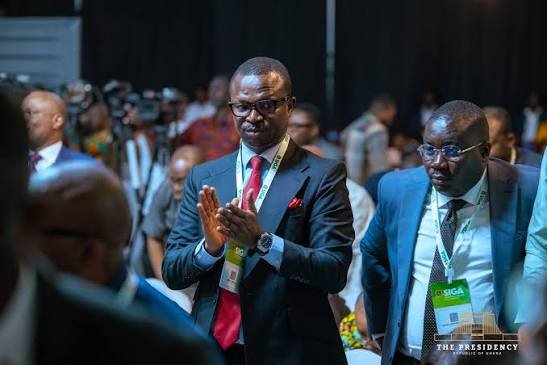
The first cohort of the ‘Adwumawura Programme’ has already supported 10,887 young entrepreneurs with capacity building, business advisory services, and mentorship.
Of this number, 3,625 beneficiaries received grants through a transparent and competitive approach managed by an independent Grant Management Committee consisting of academics, seasoned entrepreneurs, financial institutions, The Ministry of Finance, The Ministry of Youth Development and Empowerment, and other government agencies
Beyond the grant support, we are also strengthening the financing architecture available to Ghanaian businesses.
In partnership with the Venture Capital Trust Fund (VCTF), we have established a Fund that will provide debt and equity financing to highly impactful businesses, enabling promising businesses to access the patient and growth capital required to expand, create jobs, and scale their impact.
In addition, we are also developing entrepreneurship much earlier through the Students Entrepreneurship and Enterprise Development Programme, SEED, in partnership with the National Union of Ghana Students, The Universities Innovation Hubs (THINK NETWORK) and the National Service Authority.

Jordan’s 1998 NBA Finals Jersey Sells for £9m in Landmark Auction

Putin Warns Russia Could Use Full Arsenal if Kaliningrad Is Attacked

New Mexico Seeks Up to $40 Billion in Penalties From Meta After Privacy Trial



-
 General News2 weeks ago
Two political parties, one lesson: Afuntummireku and Tikro Nkɔ Agyina for Ghana
-

 Culinary2 weeks ago
Kofi Brokeman: The Simple Ghanaian Snack That Has Stood the Test of Time
-

 General News1 week ago
Free Speech, False Publication and Presidential Criticism in Ghana: Where Does the Law Draw the Line?
-
 General News1 week ago
Rev. Dr. Christian Kwetey Kweitsu Set for International Recognition at 100 Most Influential Persons Awards in Kigali
-

 General News1 week ago
Don’t Expect Concerts When People Can’t Afford Food – Rex Omar on Black Star Experience
-

 General News3 days ago
Fidelity Bank Chairman Named Ghana’s Topmost Transformational Board Chair 2026
-

 Culture2 weeks ago
Odwira Festival: History, Meaning, Traditions and the Full Celebration in Akuapem
-

 Entertainment2 weeks ago
Can’t Anything Good Come Out of Ghana? – Ras Caleb Appiah-Levi Fires Back at Critics