By Angel No Lie | KPD Online | September 14, 2026
Few television medical dramas have received the kind of endorsement that The Pitt has earned from the people who actually work in emergency rooms.

Noah Wyle poses in the press room during night two of the Creative Arts Emmy Awards on Sunday, Sept. 6, 2026, in Los Angeles. (AP Photo/Chris Pizzello)
But beyond Hollywood’s awards race, The Pitt has developed an unusually enthusiastic audience among emergency physicians and other healthcare professionals — largely because many of them say the fictional hospital looks remarkably close to the reality of their working lives.
A medical drama that feels different
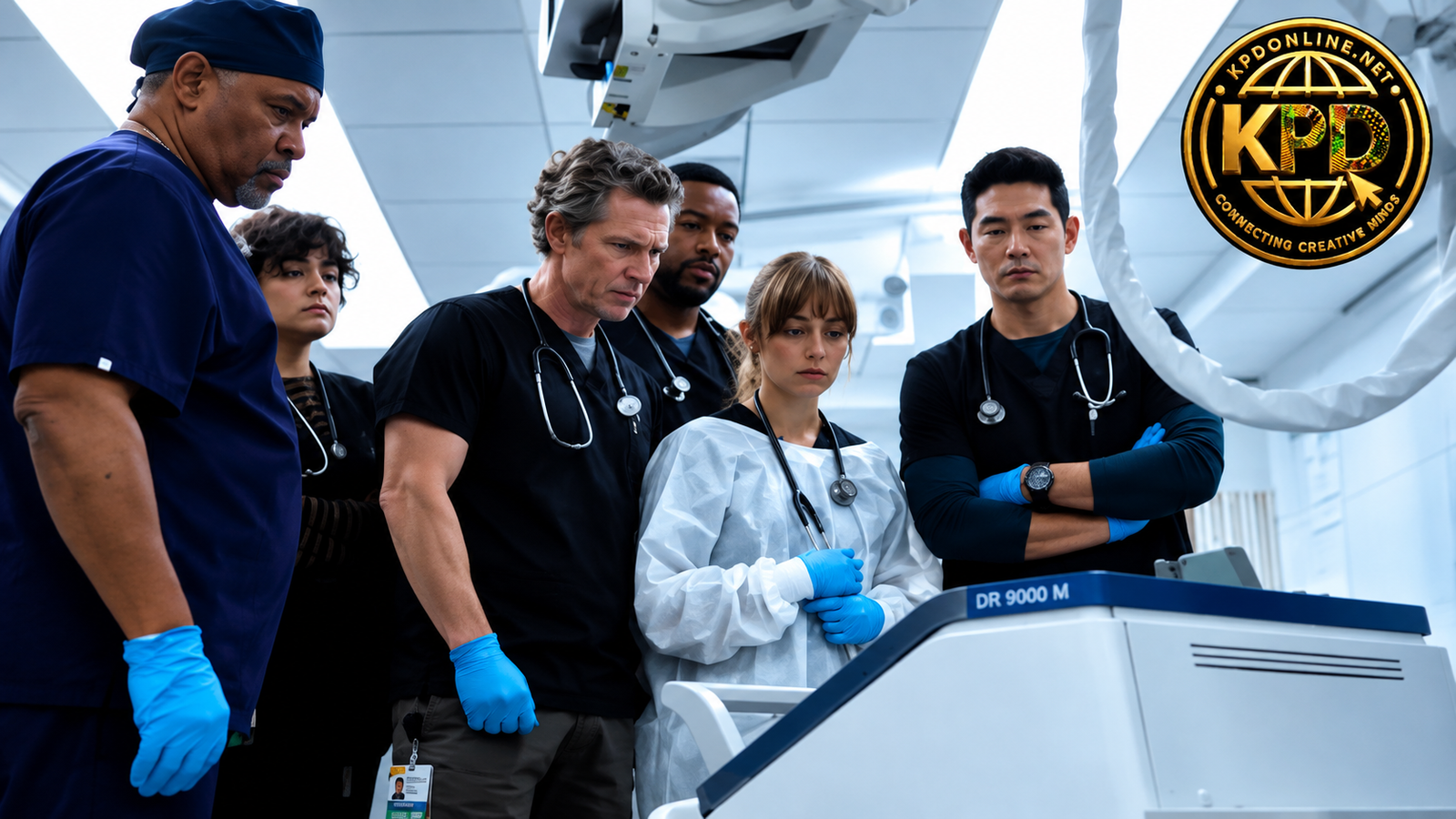
Focused Medical Team in Protective Gear. Gerran Howell, left, Amielynn Abellera, Noah Wyle, Sepideh Moafi and Supriyah Ganesh in a scene from Season 2 of “The Pitt.” (Warrick Page/HBO Max)
Set in the emergency department of the fictional Pittsburgh Trauma Medical Center, The Pitt follows doctors, nurses and patients through the pressure of a busy hospital.
Each episode covers part of a working shift, allowing the series to focus not only on dramatic medical emergencies but also on the less glamorous realities of emergency medicine: overcrowding, long waits, difficult patients, exhausted staff, limited resources and the emotional consequences of making rapid decisions.
That attention to detail has caught the attention of doctors.

Show host Mariska Hargitay poses for photographs during a press preview for the 78th Primetime Emmy Awards on Thursday, Sept. 10, 2026, in Los Angeles. (Photo by Caroline Brehman/Invision/AP)
Dr. Steven A. Valassis, an emergency physician at Hartford HealthCare St. Vincent Medical Center, described the series as a “strikingly authentic portrayal of emergency medicine”, particularly its depiction of what happens inside a busy emergency department.
Other emergency physicians have made similar observations. Harvard’s review of the programme spoke with four doctors about its accuracy, examining everything from patient volume and emergency-room culture to the notorious waiting room.
Why doctors see themselves in the show

This combination of images shows, from left to right on the top row: Macaulay Culkin, Alan Cumming, Jon Hamm, Marcello Hernández, and Dan Levy. On the bottom row, from left to right: Niecy Nash-Betts, Keke Palmer, Amy Poehler, Florence Pugh, and Zendaya. (AP Photo)
For many healthcare workers, the attraction isn’t simply the medical procedures.
It is the environment.
Real emergency departments frequently involve simultaneous emergencies, overcrowding and difficult decisions about which patient needs attention first. Doctors and nurses must balance speed with safety while dealing with patients and families who may be frightened, angry or confused.
Those pressures are central to The Pitt.
A 2026 analysis by emergency-medicine expert Jesse M. Pines noted that the series captures issues such as staffing shortages, emergency-department crowding and the practice of keeping admitted patients in emergency departments because hospital beds are unavailable.
That realism can be reassuring for medical professionals — but it can also be uncomfortable.
Some emergency workers have said the programme is so close to their professional experience that watching it after work can feel like returning for another shift. Others have recommended it to relatives as a way of helping them understand what working in emergency medicine is actually like.
The realism starts behind the cameras
The authenticity is not accidental.

The team from “Widow’s Bay” poses in the press room with the award for outstanding sound mixing for a comedy or drama series (half-hour) and animation during night two of the Creative Arts Emmy Awards on Sunday, Sept. 6, 2026, in Los Angeles. (AP Photo/Chris Pizzello)
The production has relied on practicing medical professionals to help actors understand how emergency departments operate and how medical procedures are performed.
UCLA Health emergency physician Dr. Jacob Lentz, for example, has served as a medical consultant on the series. He and other real emergency doctors helped train members of the cast in skills including suturing, using stethoscopes, putting on sterile gloves and applying other clinical techniques.
The series also has medical expertise within its production team. Executive producer Joe Sachs is himself a practicing emergency physician, bringing first-hand knowledge of the profession into the show’s development.
The result is a production where small details matter — from how doctors move around a patient to the way staff communicate during a crisis.
Not everything is completely real
Doctors are not claiming that The Pitt is a documentary.
Television still has to tell stories, and that means compressing events, increasing drama and occasionally taking creative liberties.
But the distinction is important: medical professionals appear to value the show precisely because its departures from reality occur within a setting that otherwise feels familiar.
As Dr. Pines observed, The Pitt is still television, but many of its emergency cases and the operational pressures surrounding them resemble real-life emergency medicine far more closely than many earlier medical dramas.
From critical success to Emmy favourite
The show’s realism has been accompanied by major awards recognition.
The Pitt won Outstanding Drama Series at the 2025 Emmys, while Noah Wyle won Outstanding Lead Actor for his portrayal of Dr. Michael “Robby” Robinavitch. The series subsequently returned with an even larger Emmy presence in 2026.
This year, the series leads all Emmy nominees with 25 nominations. Wyle is again nominated for lead actor, while Katherine LaNasa, Taylor Dearden, Fiona Dourif and Sepideh Moafi are among the performers recognised in supporting actress categories. Patrick Ball, Gerran Howell and Shawn Hatosy are among the supporting-actor nominees.
The Television Academy’s records show that The Pitt has accumulated 38 nominations and nine Emmy wins across its two seasons.
The ultimate compliment may come from the hospital floor
For a television drama, Emmy nominations are an important measure of success.
But for The Pitt, perhaps an even more meaningful achievement is that people who actually work in emergency departments are watching it and recognising their profession.
The series does not portray emergency medicine as a succession of miraculous diagnoses and heroic saves. Instead, it shows a demanding workplace where exhaustion, uncertainty, overcrowding, teamwork and difficult human decisions are part of the job.
That may explain why the programme has connected so strongly with doctors.
Hollywood may be handing out the trophies, but some of The Pitt‘s most important critics are the doctors watching from the emergency room.