
General News
National Lottery Authority Pays GH¢10 Million Dividend to Government for First Time Since 2017

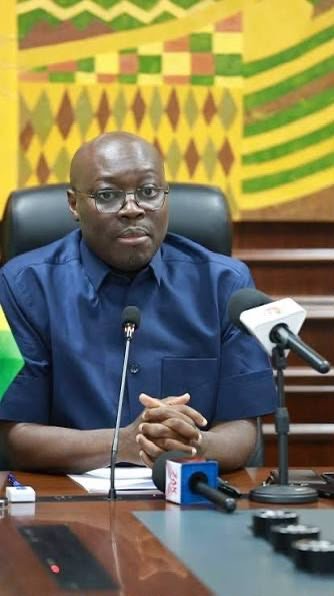
For the first time in nearly a decade, the National Lottery Authority (NLA) has paid a GH¢10 million dividend to the Government of Ghana, marking a significant development in the authority’s contribution to national revenue.
The payment, which comes after years without a dividend to government, has been welcomed as a positive step toward ensuring that the proceeds generated from Ghana’s lottery sector translate into greater benefits for the taxpayer.
However, the development also raises a bigger question: Is GH¢10 million enough?
A Welcome Return, But More Is Expected The dividend payment represents the first such contribution since 2017 and could signal a renewed focus on improving the financial performance of the NLA.
While the GH¢10 million payment is commendable, concerns remain over whether it adequately reflects the revenue-generating potential of the lottery industry.
For many taxpayers, the expectation is that a state institution operating in such a lucrative sector should be capable of making substantially larger contributions to the national purse.
Taxpayers Deserve More The return of dividends is undoubtedly welcome, but it should not become a one-off gesture or a symbolic payment.
The NLA must demonstrate that it can consistently generate stronger returns for the state while maintaining transparency and accountability in its operations.
A sustainable dividend stream could provide government with additional resources to support critical sectors such as healthcare, education, infrastructure and social protection.
The Real Test Begins Now The GH¢10 million dividend should therefore be viewed as a starting point rather than the final achievement.
The bigger challenge is for the NLA to improve its operations, strengthen revenue mobilisation and ensure that future dividends reflect the full potential of the institution.
The Ghanaian taxpayer deserves more than a symbolic dividend. What is needed is a sustained and growing contribution to the national purse.
General News
The Finance Minister respectfully needs to get his facts right about the benefits Ghanaian taxpayers received from the lottery business.

Ghanaian taxpayers, through the Ghana Revenue Authority (GRA), received over GHS 153 million from KGL on April 16, 2026, for the 2025 financial year alone.
Again, taxpayers, through the National Lottery Authority (NLA), benefited from over GHS 173 million from KGL.
As Finance Minister, he needs to be interested in understanding how the NLA received GHS 173 million from KGL, while the Ministry of Finance received only GHS 10 million in dividends from the NLA.
For the records, other 29 private lotto operators licensed by National Lottery Authority(NLA) also paid GHS 44.9 million to the NLA in 2025. I sincerely believe that these 29 licensed private lotto operators equally pay taxes to the Ghana Revenue Authority(GRA).
Therefore, strictly speaking, the Finance Minister has engaged in misinformation on this particular subject matter. It is NEVER TRUE that this is the first time the taxpayers are benefitting from lottery business since 2018.
The major problem of NLA is wastage of financial resources. It does not make sense for NLA to use over 90% of its income on Good Causes Foundation & other CSR activities and pays only GHS 10 million dividend to the Ministry of Finance.
It is not necessarily about reviewing of agreements but it is about tackling wastage of financial resources at the NLA as a resetting government. The more NLA receives the more they used the money on needless internal operations and activities at the detriment of the taxpayers.

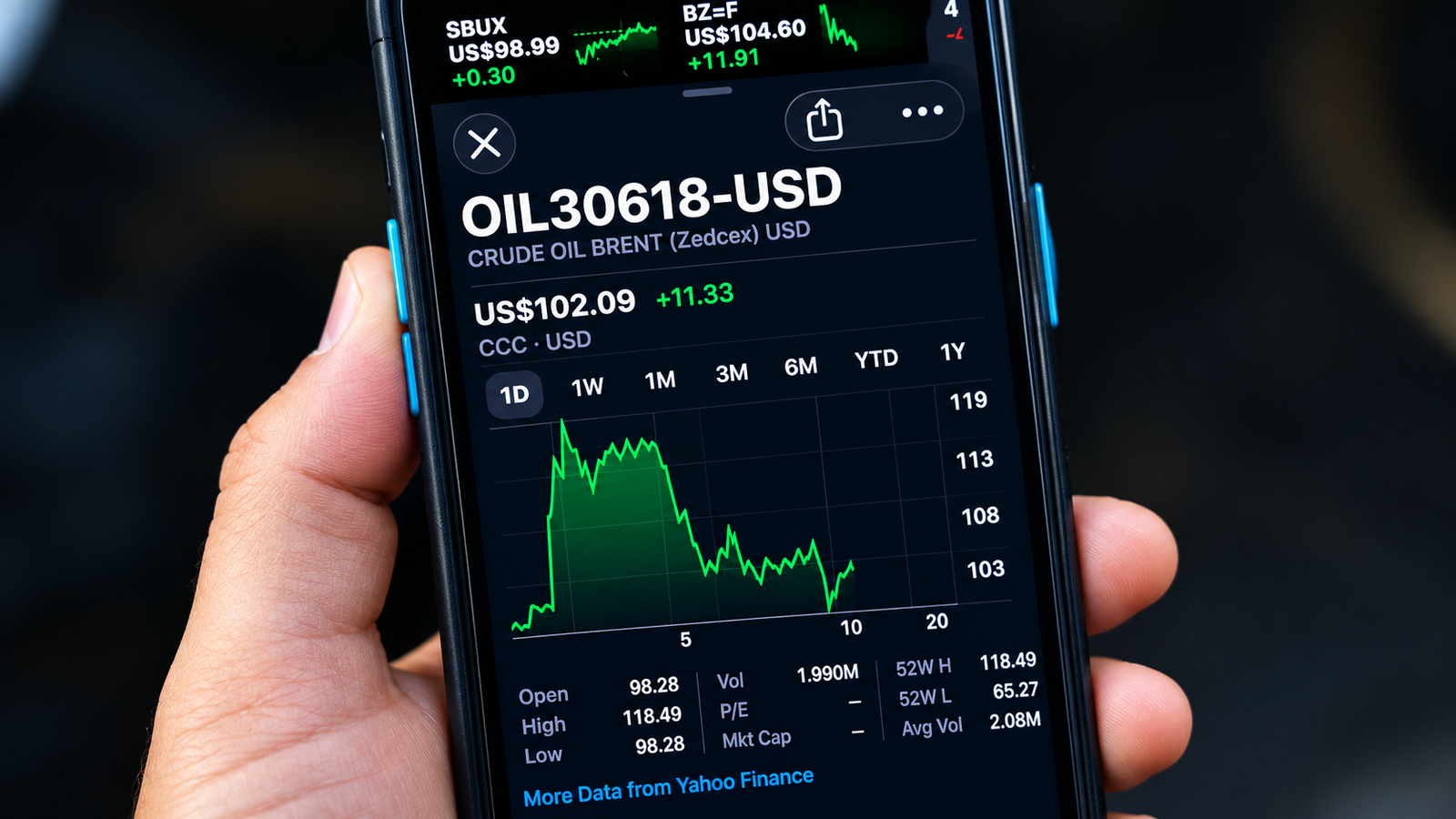
October 2, 2026 — Oil markets remained volatile on Friday as traders assessed competing signals about crude and refined-product supplies, with geopolitical uncertainty continuing to influence prices.
Brent crude was recently trading around the $101–$102 per barrel area, while U.S. West Texas Intermediate (WTI) was around $92 per barrel. Prices have been moving in both directions as investors assess whether improving crude flows will offset continuing concerns over fuel supplies and geopolitical risks.

Image title: Oil Prices Under Pressure From Shifting Supply Expectations Caption: An oil pumpjack operates as traders assess changing global crude-supply conditions.
Supply picture remains mixed
One of the main factors weighing on the market is the prospect of recovering oil exports from the Middle East. Improved tanker movements and indications of stronger Gulf crude exports have eased some concerns about the availability of crude.
At the same time, refined products remain under pressure. Diesel supplies have been particularly tight, while disruptions and restrictions affecting refined-fuel exports are complicating the broader supply picture.
China has also announced restrictions on refined-product exports for October as it prioritises domestic supply, adding another factor for traders to consider.

Image title: Global Oil Flows Remain a Key Market Focus Caption: An oil tanker loads crude at a terminal as markets monitor international energy shipments.
Geopolitical risks keep traders cautious
Developments involving the United States and Iran remain another source of uncertainty. Markets continue to monitor the possibility of renewed tensions in the Middle East, where any disruption to major oil-producing or shipping routes could quickly affect global supplies.
Earlier disruptions around the Strait of Hormuz demonstrated how sensitive oil prices can be to threats affecting energy transportation.

Image title: Refined-Fuel Supplies Add to Market Uncertainty Caption: Storage tanks at an oil facility illustrate the infrastructure behind the global petroleum supply chain.
OPEC+ policy also in focus
The Organization of the Petroleum Exporting Countries and its allies, known as OPEC+, kept its October production policy unchanged at its September meeting. The group is also dealing with longer-term questions about production quotas and members’ capacity.
For traders, the combination of recovering crude flows, tight refined-product markets and geopolitical uncertainty makes the direction of prices difficult to establish in the short term.
Markets watch the next move
Oil’s latest movements come after a sharp rise on Thursday, when Brent gained significantly before giving back some of those gains in Friday trading. Reuters reported that Brent was down about 0.7% at $101.61 and WTI was down about 0.9% at $92.02 in Friday trading, with both benchmarks heading toward weekly losses at that point.
The competing supply signals mean traders are likely to remain sensitive to developments in Middle Eastern shipping, refinery operations, inventories and government export policies.
With Brent still close to the psychologically important $100-per-barrel level, relatively small changes in expectations around supply or geopolitical risk could continue to produce sizeable price swings.
October 2, 2026 — Sports
A game-worn Michael Jordan jersey from the Chicago Bulls’ celebrated 1998 championship season has sold for $12.3 million (£9.3 million), setting a new auction record for Jordan memorabilia.
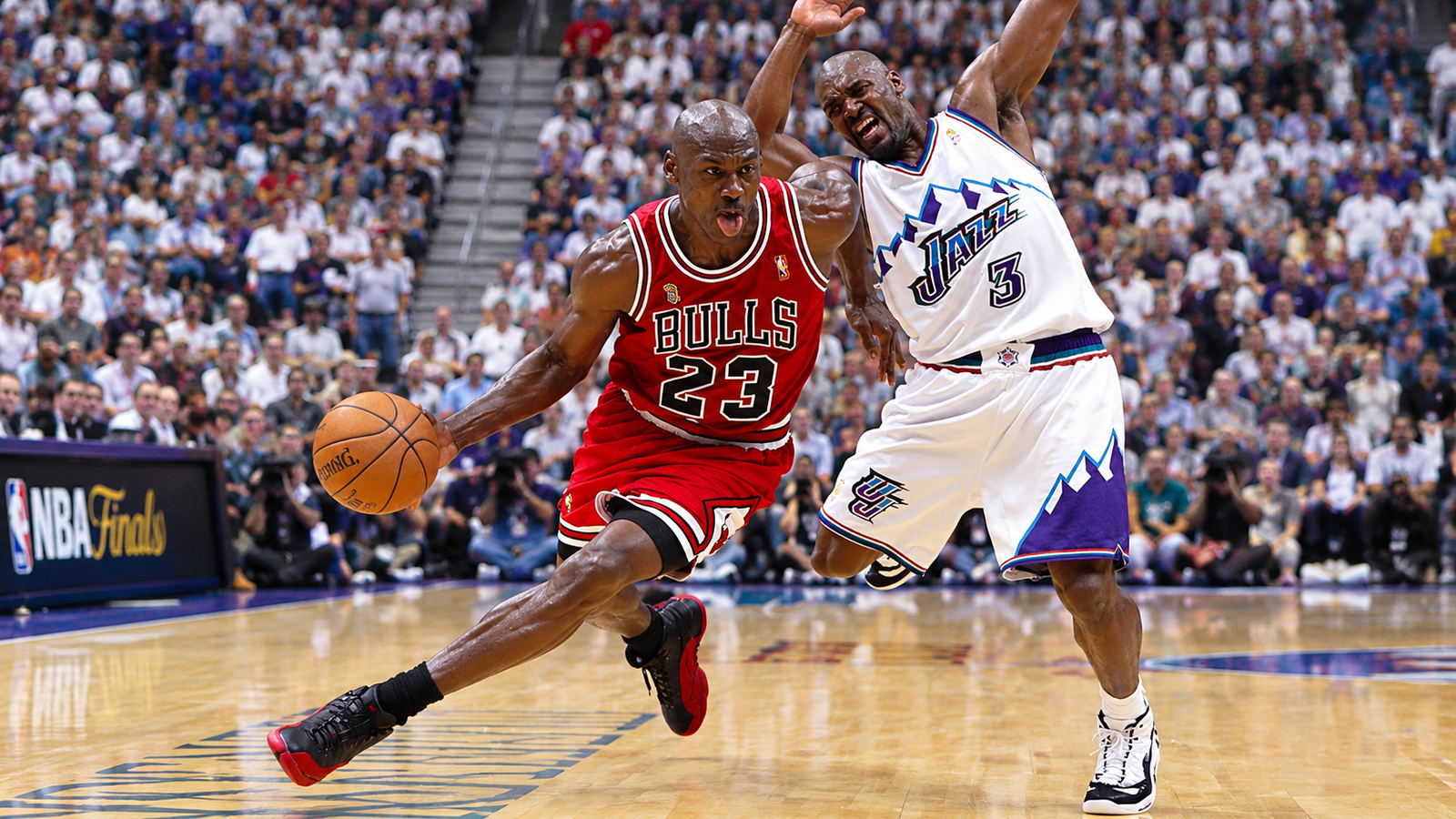
The jersey was worn by Jordan during Game 3 of the 1998 NBA Finals, when the Bulls faced the Utah Jazz during what became known as Jordan’s “Last Dance” season.
The sale was conducted through Joopiter, the digital auction platform founded by Pharrell Williams. Entrepreneur Ryan Gough had put the jersey on the market, with Joopiter estimating before the auction that it could fetch between $10 million and $15 million.

Image: Michael Jordan in his Chicago Bulls jersey during Game 3 of the 1998 NBA Finals against Utah Jazz. Image title: “Michael Jordan in Action During the 1998 NBA Finals” Caption: Jordan wore the jersey during Game 3 of the 1998 NBA Finals, part of his final championship season with the Chicago Bulls.
A record for Jordan memorabilia
The final price surpassed the previous record for a piece of Jordan memorabilia: $10.091 million, paid in 2022 for the jersey he wore during Game 1 of the same 1998 NBA Finals.
Jordan and the Bulls eventually defeated the Jazz 4-2 in the Finals, giving the superstar his sixth NBA championship. He was also named Finals MVP, as he had been for each of his six championship-winning series.
The 1997-98 campaign was Jordan’s final season with the Bulls and became one of the defining chapters of his career. The team won its second three-peat before Jordan retired from the NBA for a second time.

Image: Clear photograph of the actual red Chicago Bulls No. 23 jersey. Image title: “The £9.3m ‘Last Dance’ Jersey” Caption: The game-worn jersey has become the most expensive piece of Michael Jordan memorabilia sold at auction.
More than a jersey
The auction reflects the continued demand for memorabilia connected to Jordan’s final championship season with Chicago.
Joopiter described the Game 3 jersey as a particularly significant piece of sporting history, pointing to its connection with the end of the Bulls’ championship era and Jordan’s influence on basketball’s global popularity.
Another Jordan collectible was also sold alongside the jersey. His 1997 Ferrari 550 Maranello reportedly fetched about $2.7 million (£2 million), around four times the previous auction record for that model.

Image: Jordan celebrating with the Bulls during the 1998 championship run. Image title: “The Final Championship Era” Caption: Jordan led Chicago to its sixth NBA championship during the 1997-98 season.
It is not the overall sports-memorabilia record
Despite the enormous price, Jordan’s jersey does not hold the record for the most expensive game-worn sports item.
That distinction remains with Babe Ruth’s 1932 World Series jersey, which sold for $24.12 million (£18.2 million) in 2024.
For Jordan collectors, however, the latest sale establishes a new benchmark for memorabilia associated with one of the most significant seasons of his career.

Moscow, October 2, 2026 — Russian President Vladimir Putin has warned that Moscow would consider using all weapons available to it if Russia or its Baltic exclave of Kaliningrad came under direct attack, escalating an already tense exchange between Moscow and NATO over security in the Baltic region.
Putin made the remarks on Thursday during the annual meeting of the Valdai Discussion Club in Moscow, saying Russia did not intend to attack European countries but would respond if its territory were attacked.
The comments followed a Russian diplomatic warning to NATO that Moscow could use its entire military arsenal, including nuclear weapons, if the alliance attempted to isolate Kaliningrad from the rest of Russia.


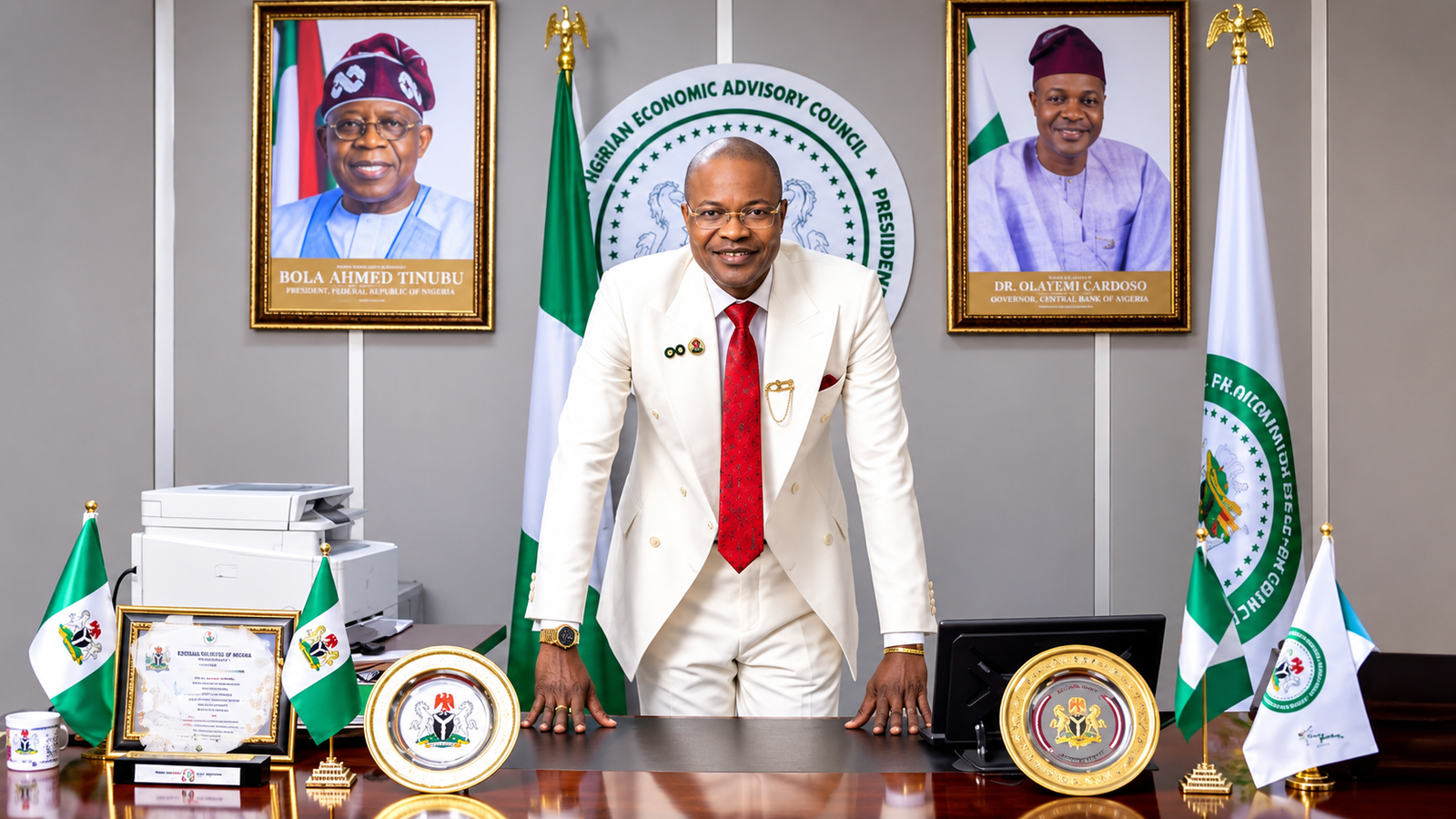
ABUJA, Nigeria — October 2, 2026 — Nigerian authorities have charged a man accused of creating a government agency that the presidency says was never established, after the purported organisation allegedly obtained government office space, secured a budget allocation and attempted to open accounts with the Central Bank of Nigeria.
Adeniyi Adeyemi Matthew appeared before the Federal High Court in Abuja on September 30, where he faced charges including forgery and impersonation. Prosecutors allege that Adeyemi had presented himself since 2024 as director-general of the Presidential Foreign Investment Promotion Council (PFIPC), despite the presidency saying the body had no legal or presidential authorization.
The case has drawn attention because the alleged organisation reportedly managed to operate within Nigeria’s federal administrative system despite the government’s position that it did not exist.


The Finance Minister respectfully needs to get his facts right about the benefits Ghanaian taxpayers received from the lottery business.

National Lottery Authority Pays GH¢10 Million Dividend to Government for First Time Since 2017

Ghana ‘Sitting on a Time Bomb’ Over Narcotics Trade — Peter Wonder Warns



-
 General News2 weeks ago
Two political parties, one lesson: Afuntummireku and Tikro Nkɔ Agyina for Ghana
-

 Culinary2 weeks ago
Kofi Brokeman: The Simple Ghanaian Snack That Has Stood the Test of Time
-

 General News1 week ago
Free Speech, False Publication and Presidential Criticism in Ghana: Where Does the Law Draw the Line?
-

 General News1 week ago
Rev. Dr. Christian Kwetey Kweitsu Set for International Recognition at 100 Most Influential Persons Awards in Kigali
-

 General News3 days ago
Fidelity Bank Chairman Named Ghana’s Topmost Transformational Board Chair 2026
-

 General News1 week ago
Don’t Expect Concerts When People Can’t Afford Food – Rex Omar on Black Star Experience
-

 Culture2 weeks ago
Odwira Festival: History, Meaning, Traditions and the Full Celebration in Akuapem
-

 Entertainment2 weeks ago
Can’t Anything Good Come Out of Ghana? – Ras Caleb Appiah-Levi Fires Back at Critics