
Entertainment
Only Shallow Thinkers Criticizes ‘Osoro Ne Me Fie”‘ – Florence Obinim fires back

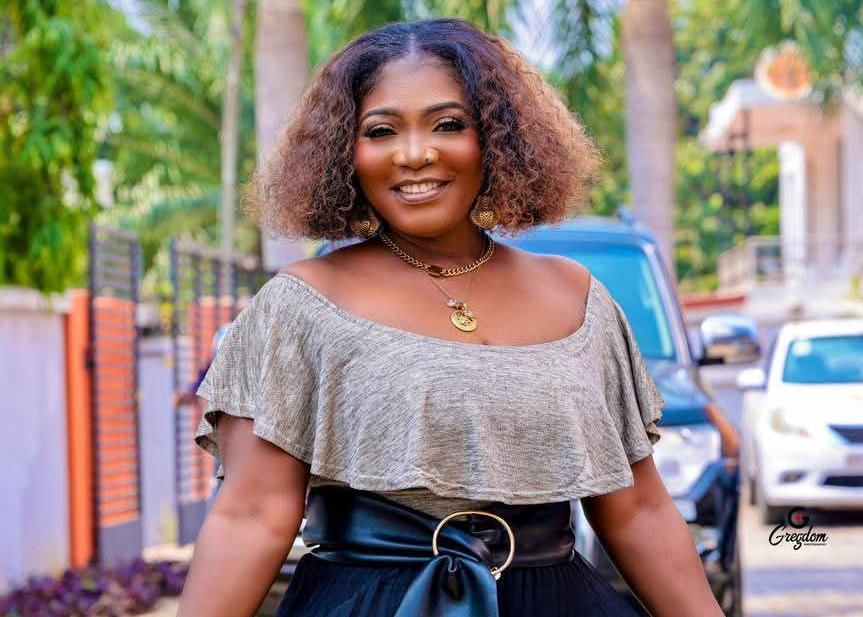
Gospel musician Florence Obinim has hit back at critics who believe she is living a lifestyle contrary to the message in her song, Osoro Ne Me Fie.
Background
Recently, many critics have argued that although she preaches repentance and modesty, her lifestyle appears to contradict the message of the song. This follows narratives shared by some netizens about her appearance and the numerous properties she and her husband have acquired, which they claim go against what the song preaches.

Speaking on Max morning show on Max TV, the host Akosua Takyiwaa asked what her response would be to netizens who believe she is overly focused on worldly possessions, contrary to the message in her song.
Mrs. Obinim stated that people who are wise and knowledgeable in the Word of God understand the true meaning of the song and would not condemn it.
“Excuse my words, those who are shallow thinkers in the Word of God may not understand you, so I’m careful with how I speak. That ‘Osoro Ne Me Fie’ song is based on the words of our Lord Jesus Christ in the Bible, which I used to create the song. When Jesus came, He often spoke in parables. In Matthew 6:19, He said something from which I drew inspiration for the song.
She continued to argue that the song does not condemn wealth or property acquisition, but rather cautions people against placing worldly possessions above God. According to her, the message of Osoro Ne Me Fie is rooted in seeking God first before everything else.
“I’m saying this for people watching me to understand. I know that pastors who are wise and knowledgeable will never condemn ‘Osoro Ne Me Fie’ because they understand its message. They even know more than what I am about to say. The song advises people not to chase properties and rely solely on them, making them more important than God. Rather, seek ye first the kingdom of God, and He will add the rest, including all your needs. That is the message the song conveys.
Addressing concerns about her family’s wealth and properties, Mrs. Obinim maintained that their success came as a result of remaining faithful to God despite life’s hardships. She stressed that their possessions are a testimony of seeking God first, not a contradiction of the song’s message.
“Regarding the property aspect, I went through life’s struggles and never compromised my faith. God has now blessed us with all the properties we have because we sought the kingdom of God first.”










By Angel No Lie | KPD Online | 26 September 2026
A woman who accused rapper Jay-Z, whose legal name is Shawn Carter, of rape in a 2024 civil lawsuit has now formally recanted her allegation, saying she never met or spoke with him and that there was no truth to her claims against him.
The woman, identified in court documents as Jane Doe, made the statement in a declaration filed in federal court in New York on Thursday, September 24. Her new account represents a major change from the allegations contained in the lawsuit she filed in 2024.

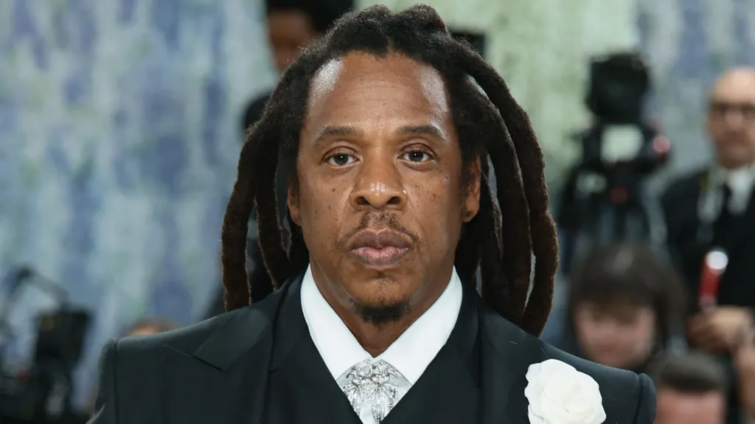
Jay-Z at the 2026 Met Gala in New York. A former accuser has now withdrawn her allegations against the rapper in a federal court declaration.
Woman says allegation against Jay-Z was false
In the declaration, Jane Doe said Carter “never raped me” and that she had never met or spoken with him.
She also stated that Carter had never behaved inappropriately toward her and apologized for what she described as the harm caused by her previous accusations.
Her lawyer, J. Blair Newman, offered an important qualification. He said the woman maintains that she was sexually assaulted but that she was mistaken in identifying Carter as the person who assaulted her.
That distinction is significant because the recantation concerns the allegation against Carter specifically; it does not establish that every aspect of the woman’s account of sexual assault was fabricated.

Court Filing Brings Major Reversal in Jay-Z Sexual-Assault Case
What she originally alleged
The original lawsuit was filed in 2024. Jane Doe alleged that she had been 13 years old when she was sexually assaulted following the MTV Video Music Awards in New York in 2000.
She initially accused Sean “Diddy” Combs and later added Jay-Z to the lawsuit.
The allegations against Carter were strongly denied from the beginning. The lawsuit was eventually voluntarily dismissed in February 2025.
The original allegations were separate from the criminal case involving Combs that resulted in his 2025 conviction on two counts of transportation to engage in prostitution.

Jay-Z’s Legal Battle Continues After Accuser Withdraws Claim
Questions surrounding how the lawsuit was prepared
In her new declaration, Jane Doe also raised questions about the legal process that preceded the filing of the original case.
She said the lawyers handling her case did not conduct what she considered adequate independent investigation or obtain corroborating evidence before filing the complaint. She also said she was not shown a draft of the lawsuit before it was filed.
She said she had responded to a Facebook advertisement seeking people who might have information about sexual abuse involving Combs.
According to her declaration, the advertisement triggered memories of an assault she says occurred when she was 13. She subsequently contacted a law firm and was connected to attorneys who eventually brought the case.
Former lawyer disputes aspects of the new account
The woman’s former attorney, Tony Buzbee, has disputed aspects of her new account.
Buzbee told The New York Times that the woman had provided the same detailed account to four lawyers before meeting him and said his firm had hired a former major-crimes police detective to examine the facts.
His comments present a different account of the level of investigation that preceded the lawsuit.
The competing accounts are now part of the wider legal dispute between Carter and his former legal representatives.
Jay-Z’s legal case continues
Jay-Z had previously filed a lawsuit against Jane Doe and her former lawyers, alleging defamation and malicious prosecution.
Following the woman’s new declaration, Carter’s attorneys said they were dropping her as a defendant in that case. The claims against her former attorney remain.
Reuters reported that representatives for Jay-Z did not provide a further comment on the latest development.
The woman also stated that she was not receiving money or a promise of financial compensation from Carter in exchange for her new statements.
A significant reversal
The case has undergone several major changes since the original allegations became public:
| Date | Development |
|---|---|
| 2024 | Jane Doe filed a civil lawsuit alleging sexual assault involving Combs and later Jay-Z |
| February 2025 | The civil lawsuit was voluntarily dismissed |
| 2025 | Jay-Z pursued legal action against the accuser and her former lawyers |
| September 2026 | Jane Doe filed a declaration saying her allegations against Carter were false and that she had never met him |
| September 2026 | Carter’s lawyers moved to remove Jane Doe from their case |
What the recantation does — and does not — establish
The latest declaration substantially changes the status of the allegations against Jay-Z.
However, a recantation is not itself a judicial finding about every factual question surrounding an allegation. The available reports show that the woman has changed her account and that the civil litigation has developed accordingly.
Her current attorney maintains that she was a victim of sexual assault but was mistaken about Carter’s involvement. Her former attorney disputes aspects of her account of how the original case was investigated.
The development therefore needs to be reported separately from the original allegations and without treating either account as independently established beyond what the court record supports.
Impact on Jay-Z
Carter has previously described the allegations as deeply damaging to him and his family. He has also spoken publicly about the emotional impact of the lawsuit and rejected suggestions that he should settle the matter privately.
With the woman now removed from the defamation case, the remaining legal dispute is focused largely on the conduct of the lawyers involved in bringing the original allegations.
Independent assessment
The central new fact is straightforward: the woman who previously accused Jay-Z has now formally said that her allegations against him were false and that she never met him.
The circumstances behind the original allegation, the preparation of the lawsuit and the conflicting accounts from the woman and her former lawyers remain subjects of legal dispute. The latest court filing changes the posture of the case but does not, by itself, resolve every underlying question surrounding the episode.
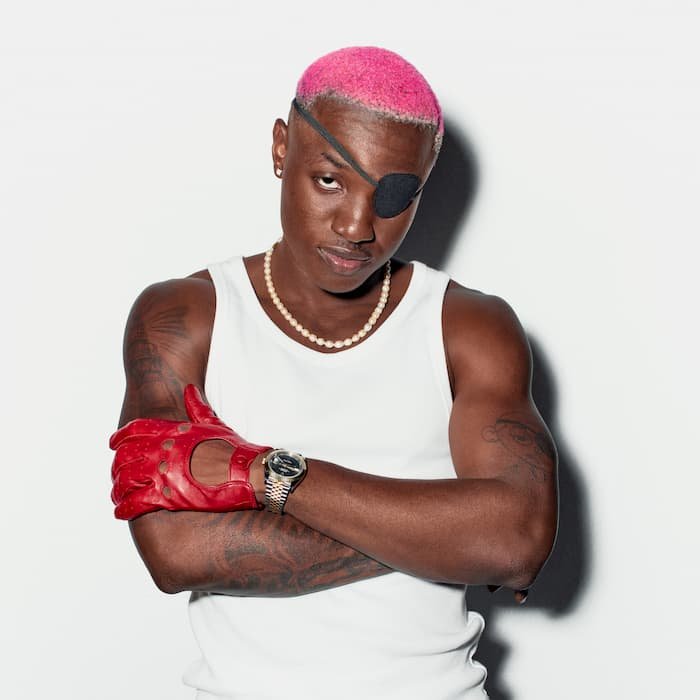
Nigerian Afrobeats musician Ruger has arrived in Ghana ahead of his scheduled performance as part of the 2026 Odwira Festival celebrations in Akropong in the Eastern Region.
The singer touched down in Ghana on Friday, September 25, where he received a colourful traditional welcome featuring dancers and other cultural displays.
His arrival was marked by an Adowa dance performance, while he was also presented with a bouquet and ceremonial sash as part of the reception.
The welcome has attracted attention on social media, particularly because of the cultural setting surrounding his visit as the Akuapem traditional area celebrates a major milestone in the history of the Odwira Festival.
Ruger is expected to perform at Superb Lounge in Akropong, adding a contemporary Afrobeats touch to this year’s celebrations.
The 2026 edition of the Odwira Festival is especially significant as it marks the 200th anniversary of the festival. The celebrations, which began on September 21 and run through October 2, include traditional rites, cultural activities, durbars and entertainment programmes across Akuapem.
Friday, September 25, is also scheduled for the Okuapeman Odwira @200 Grand Durbar in Akropong, alongside other activities including Children’s Day and health-screening exercises.
Ruger’s participation therefore comes at a time when Akuapem is using the anniversary celebrations to showcase its history, customs and cultural heritage while also creating space for contemporary entertainment.
The Nigerian musician, born Michael Adebayo Olayinka, has established himself as one of the prominent names in the Afrobeats scene, with songs such as “Bounce,” “Dior” and “Asiwaju” contributing to his popularity across Africa.
His music has also earned him a strong following among Ghanaian music fans, making his inclusion in the Odwira entertainment programme a major attraction for young audiences.
Beyond the Akropong performance, Ruger is also scheduled to appear in Accra on Sunday, September 27, 2026, giving his Ghanaian fans another opportunity to see him perform.
His arrival has added further excitement to the ongoing Odwira @200 celebrations, with attention now turning to his highly anticipated performance in Akropong.
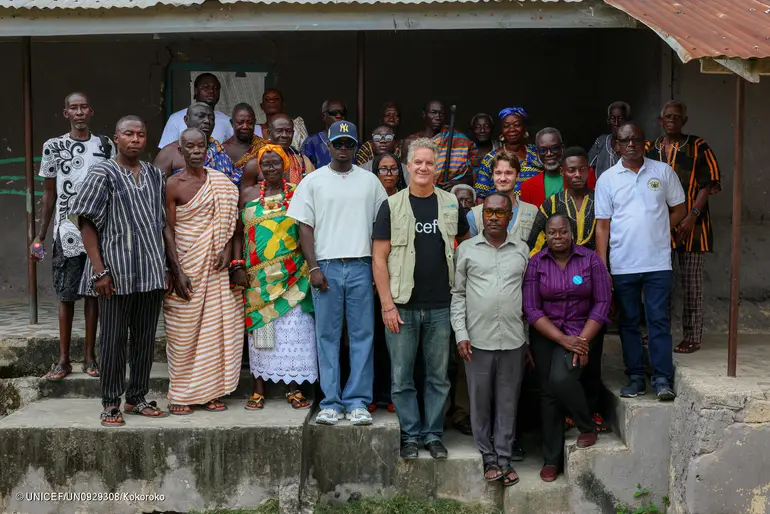
Ghanaian musician Kuami Eugene has teamed up with UNICEF Ghana and the Births and Deaths Registry to encourage parents to register their children’s births, following concerns over the number of children without official birth records.
Data from UNICEF Ghana indicates that 588,972 births were registered by the end of 2025, accounting for 73.4% of the expected births nationwide. This leaves 26.6% of expected births unregistered.
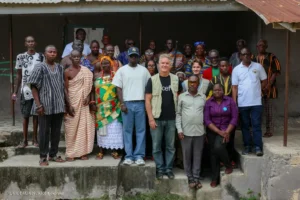
Kuami Eugene joined officials from UNICEF Ghana and the Births and Deaths Registry for a Birth Registration Month outreach programme in Bepoase in the Eastern Region, where they engaged families and community members on the importance of registering children within their first year.
The outreach was also attended by UNICEF Representative in Ghana, Andy Brooks, officials of the Births and Deaths Registry, community leaders, families and frontline birth registration officers.

The Eastern Region saw some progress in birth registration, with coverage increasing from approximately 60% in 2024 to 65% in 2025. Despite the improvement, UNICEF noted that the region continues to rank among those with the lowest birth registration coverage in Ghana.
According to UNICEF, access remains a major challenge for families living in rural and hard-to-reach communities.
Long distances to registration centres, poor road networks, seasonal difficulties in accessing certain communities and inadequate transportation can make the process both challenging and expensive for families.
The organisation also identified limited resources as another obstacle, including shortages of registration personnel, transportation, information and communications technology equipment and community-level registration centres.
UNICEF stressed that registering a child’s birth is more than an administrative requirement, describing it as the child’s first official proof of identity.
A birth certificate helps establish important details such as a child’s name, age, place of birth, nationality and family relationships. It can also support access to healthcare, education, social protection and other essential services.
Children without proof of birth may face difficulties when applying for documents such as passports and national identification cards, potentially creating further barriers to accessing public services.
UNICEF Ghana and the Births and Deaths Registry are therefore calling for registration services to be brought closer to communities and integrated more effectively into health facilities and other community-based services.
The two institutions say improving access, particularly in rural and underserved areas, will be critical to ensuring that more children receive official recognition from birth.
source:pulse

Ghanaian musician Kelvyn Boy has opened up about how loyalty to Stonebwoy influenced some of his past comments about members of another camp in the Ghanaian music industry.
Speaking in an interview on Hitz FM on September 25, 2026, Kelvyn Boy was asked about a recent comment by rapper Sarkodie concerning the way loyalty can sometimes influence fans and artistes to attack others.
Kelvyn Boy said Sarkodie’s observation resonated with him because of his own experience while he was associated with Stonebwoy.
“When I was with Stonebwoy, I used loyalty to say things about the other camp, and I feel bad for taking sides at that time.”
He explained that during his time with Stonebwoy, there were occasions when he felt compelled to defend the dancehall musician, particularly amid tensions involving rival camps within the music industry.
According to Kelvyn Boy, loyalty sometimes influenced the things he said, leading him to make comments about people on the other side of the rivalry.
He acknowledged that, with hindsight, he regrets allowing his allegiance to influence his public statements.
“What Sarkodie said is true because when I was with Stone, we sometimes used loyalty to say some things about the other camp. I mean, I feel bad for taking sides because of where I was at the moment. But we love them all,” he added.
Kelvyn Boy also reflected on his past exchanges with Shatta Wale, admitting that his loyalty to Stonebwoy had previously led him to insult the dancehall artiste.
He said he understood why Shatta Wale was offended by some of the things he said but revealed that Shatta Wale eventually forgave him.
“I mean, people bashed me too, and then the Militants used me. We said some things. I’m like, you know, loyalty said all those things, and Shatta even forgave that, and I don’t take that lightly, you understand?” he said.
Kelvyn Boy described Shatta Wale as a “very free-spirited person” while recalling how their relationship eventually developed.
He mentioned his song Excellent, explaining that Shatta Wale heard the song, contacted Medikal, and later linked up with them.
“He is a very free-spirited person… We dropped Excellent, and he called Medikal and he liked the song, and we linked up. The time I met him and the energy and …”
The available quotation ends at that point, so the remainder of his statement could not be established.
Kelvyn Boy’s latest comments suggest a more reflective view of the intense rivalries and loyalties that have characterized sections of Ghana’s music industry.
While acknowledging that he took sides during his time with Stonebwoy, he said he now regrets some of the things he said because of where he was at the time.
His remarks also reinforce his agreement with Sarkodie’s observation that loyalty can sometimes become a reason for people to make negative comments about artistes from another camp.
Kelvyn Boy, however, stressed that despite the divisions and rivalries, “we love them all.”
Entertainment
Ras Caleb Appiah-Levi: The musician, Pan-Africanist and organiser whose career spans four decades

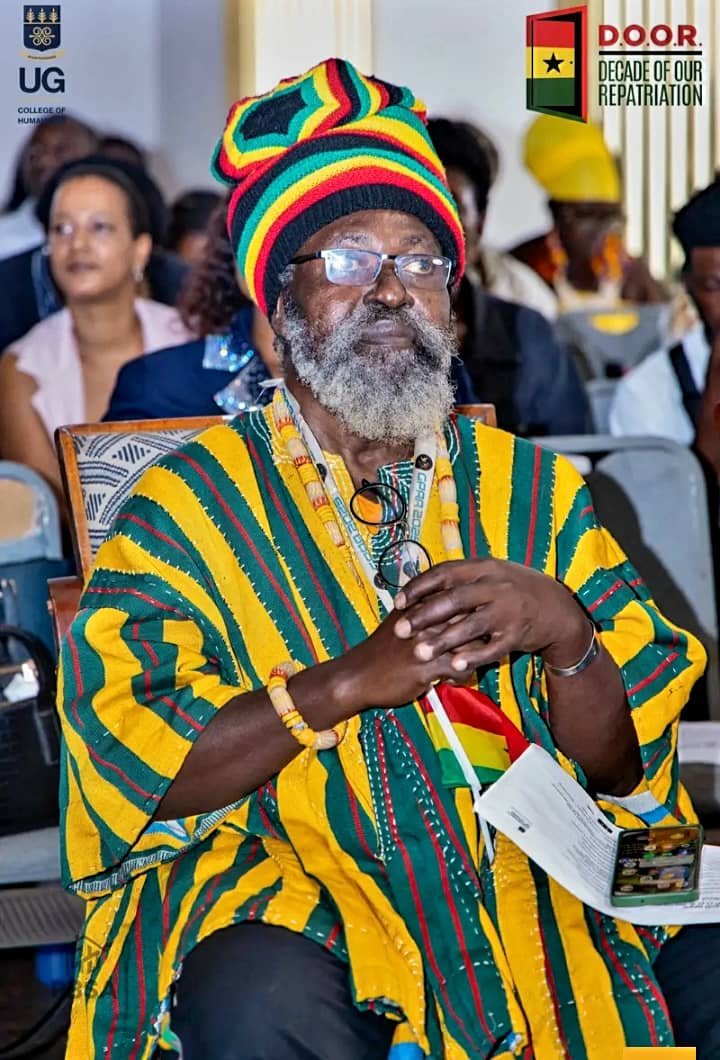
Ghanaian musician, broadcaster, songwriter and Pan-Africanist Ras Caleb Appiah-Levi has built a career spanning more than four decades, combining music, cultural activism, trade union engagement, Pan-African advocacy and organised efforts to promote the development of Ghana’s creative industry.
Born on June 26, 1957, Ras Caleb Appiah-Levi was born to the late Cofie Essah Appiah of Boso near Anum and Mary Maku Hadjor of Ada-Alata.
He speaks English, French, Akwapim Twi, Guan and Ga-Adangbe, reflecting the cultural and linguistic experiences that have influenced his work as a musician and Pan-Africanist.
His formal education began at Hecta International School in Akim Oda in 1959, before he later attended the Emit Electronics Institute at Mataheko in Accra in 1978.
His involvement in Ghana’s music industry dates back to June 1982, when he became a member of the Musicians Union of Ghana (MUSIGA).
From Charlie Buck to Ras Caleb
Ras Caleb’s professional music journey took a major turn in February 1984, when, then known as Charlie Buck, he made his professional stage debut as a member of Alpha Blondy and the Natty Rebels, later known as the Solar System, in Côte d’Ivoire.
His early career saw him perform on major stages and television platforms in both Côte d’Ivoire and Ghana alongside internationally recognised reggae musicians including Alpha Blondy, Burning Spear and Jimmy Cliff.
He also worked as a radio broadcaster and presenter, interviewing prominent reggae figures including Alpha Blondy and Burning Spear on Radio Côte d’Ivoire Internationale.
His first major music concert came on December 15, 1984, at Samedi Soir in Abidjan, followed by what is described as his first reggae festival in Abidjan at the Palais d’Sports in Treichville on September 28, 1985.
In 1986, he performed at the Accra and Kumasi Sports Stadia with Alpha Blondy and the Solar System on August 2 and August 9, respectively.
He later supported Burning Spear and the Burning Band Côte d’Ivoire in December 1986.
In 1987, Ras Caleb toured Côte d’Ivoire and Burkina Faso with Ismael Isaac et les Frères Keita, further expanding his experience across the West African music circuit.
He returned to Ghana in 1989, performing at the Independence Festival at Orion Cinema on March 6.
On March 18, 1989, he served as the opening act for Jimmy Cliff and the ONENESS Band at the Accra Sports Stadium, backed by the BIBIBA Band.
His involvement in major reggae and cultural events continued through the 1990s. In 1991, he participated in a Tribute to Bob Marley Concert in Accra and won the Reggae Dance Competition at the Afro Caribbean Center in Kokomlemle.
In 1992, he represented Ghana at the Ouidah ’92 Festival in Benin, travelling through Cotonou, Ouidah and Porto Novo.
He also participated in various editions of PANAFEST, including the 1992, 1994 and 1997 editions.
In 1994, Ras Caleb launched the Cultural Divine Music Festival of African Rhythms project, linking his musical activities to wider cultural promotion.
His international engagements later included participation in the World Association of Non-Governmental Organizations (WANGO) Annual Conference in Bangkok in 2003, the World Press Conference in Accra in 2004, and the 2nd International Conference of African Renaissance Ambassadors in Cotonou, Benin, in 2004.
In 2005, he coordinated the first Nescafé African Revelation event at the Black Star Square in Accra.
His music
While his career has involved extensive organisational and Pan-African work, Ras Caleb has continued to identify himself as a roots-reggae musician.
His recorded works include Ghana Is Calling, How Long, Life Is a Beach, Jah Sacred Feast, Slimbelly Man, and Suffer in a Limbo.
His music catalogue is also represented on digital platforms, with songs such as Slimbelly Man, Jah Sacred Feast, Life Is a Beach, How Long, and Ghana Is Calling listed among his recordings. His album Have Faith (African Teacher) was released in 2018.
How Long, one of the songs from the album, was released on May 1, 2018, through GAO Records Label, with Ras Caleb credited as performer and songwriter.
The themes of his work have generally reflected his interest in African identity, spirituality, social conditions, peace, development and Pan-African consciousness.
Building PanAfrica-Ghana
Beyond music, Ras Caleb has played a prominent role in Pan-African activities through PanAfrica-Ghana (PAG).
The PanAfrica movement seeks to promote Pan-Africanism as a dynamic force for the development of African peoples through economic integration, enlightenment, human rights, freedom and stronger relationships between Africa and its diaspora.
The movement’s strategy is linked to the 7th Pan-African Congress held in Cotonou, Benin, from February 11 to 15, 1991.
Following the congress, the World Council of PanAfrican Organizations (PANAFRICA) was formed, with Vizir Olofin II Akande Olofinji serving as Founding President.
The Ghana Section was subsequently established on February 24, 2004, with its Certificate of Incorporation issued on April 8, 2004, and its Certificate to Commence Business issued on April 13, 2004.
Ghanaian Pan-Africanists led by Ras Caleb Appiah-Levi established PANAFRICA-GHANA (PAG) as part of efforts to advance the movement’s objectives in Ghana.
Among PAG’s stated objectives are the promotion of Pan-Africanism and the African Renaissance, the protection of ties between Africa and its diaspora, the preservation and promotion of African culture, the promotion of human rights and fundamental freedoms, and the advancement of economic integration.
The organisation also advocates the free movement of goods and people, cooperation among African states, support for non-governmental and commercial organisations, and collective action on issues affecting Africans.
Another central objective is the promotion of worldwide brotherhood and sisterhood, with Africa recognised as the cradle of humanity.
Pan-Africanism through music and development
Ras Caleb has sought to use his position as a musician to connect culture with broader development objectives.
One of the projects associated with his Pan-African work is the Music for Development initiative.
The project was presented to the African Union Commission and the Pan-African Parliament in Addis Ababa on April 23, 2025, and was also presented to the President of Ghana at Jubilee House on March 7, 2025.
The initiative seeks to position musicians and creative arts practitioners not only as entertainers but also as participants in national and continental development.
His work has also earned him roles including Founding President of PanAfrica-Ghana, Global Ambassador for PANAFEST and Emancipation Day Celebrations through the PANAFEST Foundation, and Global Ambassador for Apprise Music and Media and Distribution.
Ras Caleb’s involvement with MUSIGA has been another major part of his career.
He served as Director of Reggae Music within MUSIGA from 2011 to 2015 and later became Chairman of the MUSIGA Greater Accra Regional Branch, a position he held from 2016 to 2023, according to his professional profile.
His tenure in Greater Accra involved extensive participation in welfare activities, cultural programmes, industry events, stakeholder meetings and initiatives involving musicians and other creative-sector workers.
In August 2016, he was elected Chairman of the Greater Accra branch.
One of his early activities was co-coordinating the Peace Walk – “Using Music for National Cohesion During Election 2016” on September 30, 2016, in collaboration with the National Commission for Civic Education (NCCE) and the Ghana Police Service, with support from STAR-Ghana.
He also played a role in the organisation of the 4th MUSIGA Grand Ball, held on November 4, 2016, at the Banquet Hall of the State House in Osu, Accra.
On December 6, 2016, he co-coordinated the National Peace Concert at the GBC forecourt. The programme was jointly organised by MUSIGA and the Ghana Broadcasting Corporation, with STAR-Ghana as sponsor.
Welfare and social protection for musicians
Ras Caleb’s activities within MUSIGA were not limited to concerts.
In March and April 2017, he participated in the UNIWA Welfare Scheme Training Programme at the TUC Conference Room.
On March 31, 2017, he attended the WASSA celebration organised by the Ghana Police Parliamentary Protection Unit at the State House forecourt, where he received a citation.
He also participated in the Informal Economy Needs Analysis Workshop on April 20, 2017, and the 2017 National May Day Forum on April 26.
His work with musicians also involved pension and welfare issues. He participated in meetings concerning the UNIWA Pension Scheme, attended the launch of International Pensions Day on September 15, 2017, and took part in a stakeholder forum on the three-tier pension scheme at the National Theatre on September 20, 2017.
These activities formed part of wider efforts to improve social protection and welfare for workers in Ghana’s informal and creative sectors.
Supporting veteran musicians
One of the areas that became particularly associated with his Greater Accra leadership was support for veteran musicians.
In July 2017, Ras Caleb sought sponsorship from Reginald Daniel Laryea, popularly known as Gaddy, Managing Director of Media Magique and Research Systems, for the Ageing Musicians Welfare Fund (AMWeF).
The initiative supported the participation of veteran musicians at the PANAFEST/Emancipation Highlife Legends Night at the Cape Coast Sports Stadium on July 28, 2017.
The programme featured legendary performers including Naa Amanua, Kente Queen Asabea Cropper and Bob Pinodo, backed by the King Shabo International Band.
Ras Caleb also personally assisted the veteran musicians during the event, including serving as their chauffeur.
On September 7, 2017, Ras Caleb received a trophy for the 12-minute MUSIGA Greater Accra Nation Peace Song.
The song had been recorded at Dr Ray Beat Studios ahead of the 2016 elections and featured 22 musicians.
A video was also produced for the song, which later received recognition at the maiden Ghana Peace Awards organised in late 2016 by Stability Foundation International.
His activities during the period also included stakeholder engagements on sanitation, pension schemes, copyright, the informal economy, tourism and the creative industries.
When veteran musician Paapa Yankson died, Ras Caleb was involved in preparations for his funeral.
On October 21, 2017, he helped distribute hundreds of letters and invitation cards to government institutions, diplomatic missions, media organisations, corporate bodies and members of the creative industry ahead of the funeral rites.
He also participated in meetings of the Ghana Culture Forum, including its general meeting at the National Theatre on November 9, 2017.
In December 2017, he participated in the UNIWA Leadership Retreat at Erata Hotel and later helped with arrangements for the 5th MUSIGA Grand Ball.
Ras Caleb was also present at the Marine Drive Project sod-cutting ceremony on December 15, 2017, an initiative announced as a large-scale tourism and development project involving Ghana’s coastline.
He later participated in the MUSIGA Greater Accra end-of-year activities on December 26, 2017.
His role within the union also involved attending funerals, cultural festivals, stakeholder meetings and industry programmes across the country.
Another significant episode came in February 2018, following the death of veteran highlife musician Awurama Badu.
Ras Caleb mobilised members of the MUSIGA Greater Accra branch to attend the funeral in the Ashanti Region.
A bus carrying members was arranged through the Ghana Tourism Authority, with about 27 Greater Accra MUSIGA members participating.
According to his profile, he also helped the Ashanti branch reach out to a number of prominent personalities for support for the funeral.
Those contacted included business leaders, politicians, media personalities, public officials and figures within the creative industry, among them Dr Osei Kwame Despite, Dr Kwame Kyei, Dr Ernest Ofori Sarpong, former President John Agyekum Kufuor, Oscar Yao Doe, Nana Appiah Mensah, Kennedy Agyepong, former President John Dramani Mahama, Vice President Mahamudu Bawumia, Samira Bawumia, Frema Osei-Opare, Nana Asante Bediatuo, Kwasi Agyeman, Stephen Amoah, Maame Afia Akoto, David Asante Apeatu, Kwadwo Odame Antwi, Oheneba Akua Manfo, Akwasi Agyeman, Rebecca Akufo-Addo, Nana Akomea, Kwame Osei Prempeh, John Ofori Tenkorang, Jerry John Rawlings, Nana Konadu Agyeman-Rawlings, Mike Ocquaye and Barbara Ayisi.
Ras Caleb was also involved in the activities surrounding the death of Ghanaian dancehall artiste Ebony Reigns in 2018.
He co-led the MUSIGA leadership in activities surrounding her one-week observance on February 18, 2018, and her funeral on March 24, 2018.
He helped secure the Ghana International Trade Fair Centre for a tribute concert held on March 23, 2018.
The concert was organised by Ruff Town Entertainment, MUSIGA, the Ministry of Tourism, Arts and Culture and Kasapreko, with more than 300 invitations dispatched to stakeholders.
Earlier that year, he had also organised the Time With MGA Variety programme at Alliance Française in Accra on March 2, 2018, as part of Ghana’s 61st Independence celebrations.
The programme brought together different genres, including Highlife, Hiplife, Reggae, Traditional and Gospel music.
Ras Caleb’s welfare activities extended to musicians and industry professionals facing difficult circumstances.
In March 2018, he assisted then-MUSIGA Administrator Rev. Fiifi Khan Agyarkwah during his treatment at the 37 Military Hospital.
Rev. Agyarkwah was later discharged on March 10 but died on March 11, 2018.
Ras Caleb also mobilised members of the Greater Accra branch and Women in Gospel for the funeral of Emmanuel Alfred Ofori Gyamo.
According to the profile, Obour contributed GH¢500, Women in Gospel contributed GH¢1,000, while the bus cost GH¢1,600, with contributions from the Greater Accra branch, Women in Gospel and Ras Caleb himself.
On March 14, 2018, Ras Caleb participated in a stakeholder dialogue on Ghana Culture Day and Ghana Month at the Ghana-India Kofi Annan ICT Centre.
He served on the Performance Task Team for MUSIGA.
He also participated in a Copyright Industries Contribution Workshop on May 10, 2018, and another Informal Economy Needs Analysis Workshop on May 14.
On May 31, 2018, he represented the MUSIGA President at a Music Business Dialogue on TV3’s Adesa programme.
Ras Caleb has also been involved in attempts to expand the international distribution of Ghanaian music.
On July 9, 2018, Apprise Music and Media and the MUSIGA Greater Accra branch signed an MOU aimed at promoting and distributing the music of members internationally.
The platforms involved included iTunes, Spotify, Tidal, Apple Music, Deezer, Amazon, Google Play and YouTube, among others.
The agreement was intended to create additional opportunities for Ghanaian musicians to reach international audiences through digital distribution.
Okomfour Kwadee and musician welfare
On July 24, 2018, Ras Caleb joined a MUSIGA delegation that visited Ghanaian rapper Okomfour Kwadee at the Willing Ways Foundation at Kwamo near Ejisu.
The delegation included the MUSIGA Greater Accra leadership and representatives from the Ashanti branch.
The visit was aimed at assessing the musician’s situation and exploring ways of supporting him.
The delegation also included welfare officials, while support was received from institutions and individuals including the Ghana Tourism Authority, Kasapreko, Natural Way Herbal Clinic and Ras Caleb.
The visit was reported publicly at the time, with Ras Caleb identified as MUSIGA Greater Accra chairman and part of the delegation.
Following the visit, a second welfare bank account for the MUSIGA Greater Accra branch was opened at the GCB Ministries Branch, with an initial GH¢1,000 contribution from the then-Ghana Tourism Authority CEO, according to the profile.
Ras Caleb continued to participate in creative-sector programmes throughout 2018.
He attended the launch of the Ashaiman Music Awards Festival on June 17 at Hotel Beulah. The main awards event was later held on August 31, with dancehall musician Stonebwoy among those honoured.
He participated in the Agoro International Symposium on Arts, Health and Wellness from June 25 to 27 at the National Theatre.
He also attended the launch of the KRAAPO Movement album on July 21 at Ultimate Bar & Restaurant in Teshie.
Other activities included the Ghana Modelling Industry Awards/Heroes Awards press launch on July 25 at the Accra Tourist Information Centre and the Ghana-Nigeria Tourism, Culture Showcase Conference and Awards on July 26.
He also attended the UNIWA/Accra Metropolitan Assembly stakeholder forum at Baiden Powell Hall.
Ras Caleb was involved in activities surrounding the death of veteran musician Jewel Ackah, including the one-week observance on May 12 and the funeral on August 4, 2018, at Community 11 in Tema.
He also participated in the EVAG media launch at the Red Carpet Events Centre in East Legon on August 7.
In October 2018, Ras Caleb was part of the Greater Accra leadership that participated in the first National Biennial MUSIGA Conference.
The conference was held in Cape Coast from October 13 to 14, 2018, under the theme Building a Vibrant Union for National Development.
Ras Caleb and five other executives served on the Business Development Committee.
Ras Caleb’s activities within MUSIGA eventually extended to the national leadership level.
In 2019, he launched his campaign for the MUSIGA presidency under the motto “Vibrancy – Taking Ghanaian Musicians Global.”
Contemporary reports described him as a veteran roots-reggae musician, broadcaster, songwriter and composer, as well as the then Greater Accra Regional Chairman of MUSIGA.
He subsequently filed his nomination to contest the MUSIGA presidency.
When the MUSIGA election process was revisited in 2022, reports indicated that Ras Caleb was among the candidates alongside Bessa Simons and Deborah Freeman, although the election was postponed indefinitely at the time due to issues surrounding the compilation of the voters’ register.
His campaign centred on strengthening MUSIGA, improving opportunities for musicians and taking Ghanaian music to a wider international audience.
A career that links music, culture and development
Ras Caleb Appiah-Levi’s career therefore extends beyond the recording studio and stage.
From his early years performing with Alpha Blondy and other reggae legends in Côte d’Ivoire, to his return to Ghana and subsequent involvement in MUSIGA, PANAFEST, PanAfrica-Ghana, cultural programmes and musician welfare initiatives, his work has consistently combined music with cultural and social engagement.
His professional journey has included performing, broadcasting, songwriting, music administration, Pan-African advocacy, cultural diplomacy, musician welfare and creative-industry development.
His recorded songs — including Ghana Is Calling, How Long, Life Is a Beach, Jah Sacred Feast, Slimbelly Man, and Suffer in a Limbo — remain part of a musical catalogue that reflects his roots-reggae identity.
At the organisational level, his work through PanAfrica-Ghana has focused on Pan-Africanism, African unity, human rights, cultural preservation, economic integration and stronger Africa-diaspora relations.
Within MUSIGA, his record includes peace initiatives, welfare programmes, pension advocacy, support for veteran musicians, industry stakeholder engagements, international music distribution efforts and mobilisation around the funerals and welfare of musicians.
For more than four decades, Ras Caleb Appiah-Levi has maintained a presence across several interconnected areas of Ghana’s cultural landscape — from reggae and broadcasting to Pan-African activism, musicians’ welfare and the broader development of the creative industry.

Mourinho’s Real Madrid Reset Faces Early Tactical Tests

Ghana’s AFCON 2027 Campaign Faces Early Test After Gambia’s Victory

Manchester City Facing Major Fallout as Reports Say 114 of 115 Charges Were Upheld



-

 General News2 weeks ago
GTA Cash Reserves Halve to GH¢640,000 Despite Improved Liquidity Ratio
-

 General News2 weeks ago
GTA’s Financial Strength Weakens Despite 2025 Tourism Activities
-

 General News2 weeks ago
Creative Arts Agency Records GH¢2.01m Revenue in FY2025 Despite Financial Reporting Gaps
-

 Culinary2 weeks ago
Oranges: More Than Just Juice — The Nutritious Fruit Adding Flavour to Ghanaian Life
-
Culinary5 days ago
Kofi Brokeman: The Simple Ghanaian Snack That Has Stood the Test of Time
-
 General News5 days ago
Two political parties, one lesson: Afuntummireku and Tikro Nkɔ Agyina for Ghana
-
 General News1 week ago
Bost Energies Made GH¢684 Million Profit: Why Use The NPA Bill, 2026 To Weaken Its Operations?
-
General News2 weeks ago
GTA’s Income Falls 18.6% as Government Funding Slumps