
Entertainment
Paramount Reaches Deal With 12 States, Removing Major Hurdle to Warner Bros. Acquisition


By Angel No Lie | KPD Online | September 22, 2026
LOS ANGELES — September 22, 2026 — Paramount Skydance has reached a settlement with California and 11 other U.S. states, resolving a major legal challenge to its proposed acquisition of Warner Bros. Discovery and clearing a key obstacle to the roughly $110 billion transaction.
The agreement ends an antitrust lawsuit filed in July by a coalition of state attorneys general. The states had argued that combining Paramount and Warner Bros. Discovery could reduce competition across movie production, television, streaming and cable markets.
Conditions attached to the settlement
Under the agreement, the combined company will face several court-enforceable commitments over a period of up to five years.
Among the most significant provisions is a requirement to maintain a minimum level of theatrical movie production. The company must release at least 30 films annually during the first two years, rising to 32 films a year for the following three years. Financial penalties can apply if the commitments are not met.
Paramount has also committed to spending an additional $300 million annually on domestic film production, representing at least $1.5 billion in additional investment over five years. The settlement also establishes a $47.5 million fund for workers affected by the transaction.
The agreement includes provisions concerning cable negotiations and establishes measures intended to protect editorial independence at CBS News and CNN, two major news organizations that would come under the same corporate ownership following the transaction.
A major change for Hollywood
If completed, the acquisition would combine Paramount and Warner Bros. Discovery’s extensive entertainment operations, including the Paramount and Warner Bros. film studios, CBS and CNN, and streaming services Paramount+ and HBO Max.
The Justice Department had previously cleared the transaction, while the lawsuit by the 12 states became a significant remaining obstacle. The settlement is subject to court approval.
California Attorney General Rob Bonta, whose office led the states’ legal challenge, said the settlement should not be interpreted as an endorsement of the merger. The states had originally sought to prevent the transaction, arguing that it could affect competition and consumers.
Paramount CEO David Ellison has described the merger as beneficial to consumers and the entertainment industry. The company is now moving toward completion of the acquisition, although the settlement’s court approval remains an important procedural step.
The proposed transaction would mark one of the largest consolidations in the modern U.S. entertainment industry, bringing two major Hollywood studios and their television, streaming and news operations under a single corporate structure.














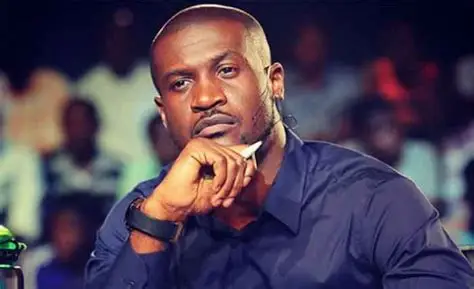
Nigerian singer Peter Okoye has told a Federal High Court in Lagos that he received more than $800,000 in royalties from France-based music rights organisation SACEM for songs recorded by the former music group P-Square.
Peter disclosed while testifying virtually before Justice Alexander Owoeye. He was cross-examined by Clement Onwuewunor, SAN, who is representing his brother, Jude Okoye.
SACEM is responsible for collecting and distributing royalties to songwriters, composers and music publishers.
Jude Okoye and his company, Northside Music Limited, are facing a seven-count charge filed by the Economic and Financial Crimes Commission (EFCC) over alleged fraud involving ₦1.3 billion and $1 million. Jude has pleaded not guilty to the charges.
During the proceedings, Peter was questioned about his earlier claim that Jude delayed for more than three months before providing him with P-Square’s royalty records after he requested the documents in 2022.
His lawyer told the court that the request was made on October 16, 2022, and that Jude obtained and sent the records six days later, on October 22.
Peter disagreed with the suggestion that he had only requested the documents in October 2022, maintaining that he had asked for them earlier in the year.
However, when asked to provide a text message, email or any other evidence showing that he requested before October 16, 2022, he admitted that he could not.
“No. I don’t have any, and I can’t recall,” he said.
Peter confirmed that he eventually received the royalty statement from Jude. According to him, the document covered royalties earned between 2016 and 2022, including payments linked to Lex Records.
He told the court that he wanted the records because some people had expressed interest in purchasing P-Square’s music catalogue.
Peter also confirmed that Jude sent him the account details in 2022 and that the EFCC knew the documents had been forwarded to him.
The singer rejected Jude’s claim to a share of the SACEM royalties, insisting that the money belonged to him and his twin brother, Paul Okoye.
When asked about the SACEM agreement, which was signed by Jude rather than Peter or Paul, he said it was signed by “the team.”
Peter maintained that Jude was not a member of the team.
He also confirmed that the 10 songs that generated the SACEM royalties were P-Square songs.
Peter told the court that he had previously given Jude 25 per cent of his SACEM earnings. However, he denied that Jude later demanded quarterly payments, according to the portion of the report visible in the supplied material.
When questioned about claims that he received approximately $800,000 from SACEM between 2016 and 2026, Peter admitted that he received the money.
He, however, maintained that the funds belonged to the artists and that Jude did not receive any portion of the payments.
Asked whether he had told Jude about the money, Peter responded: “No, the money was for the artists.”
On Jude’s position as P-Square’s manager, Peter told the court that they did not have an employment agreement with each other.
He explained that their business arrangement was conducted through Northside Entertainment Limited.
When asked whether Jude was a member of P-Square, Peter stated: “Jude is not part of P-Square.”
He further maintained that he and Paul wrote, composed and produced all the group’s songs, although he acknowledged that Jude directed some of P-Square’s music videos.
The court subsequently adjourned the case until December 8 and 9, 2026, for further hearing.
Source: dailypost.ng
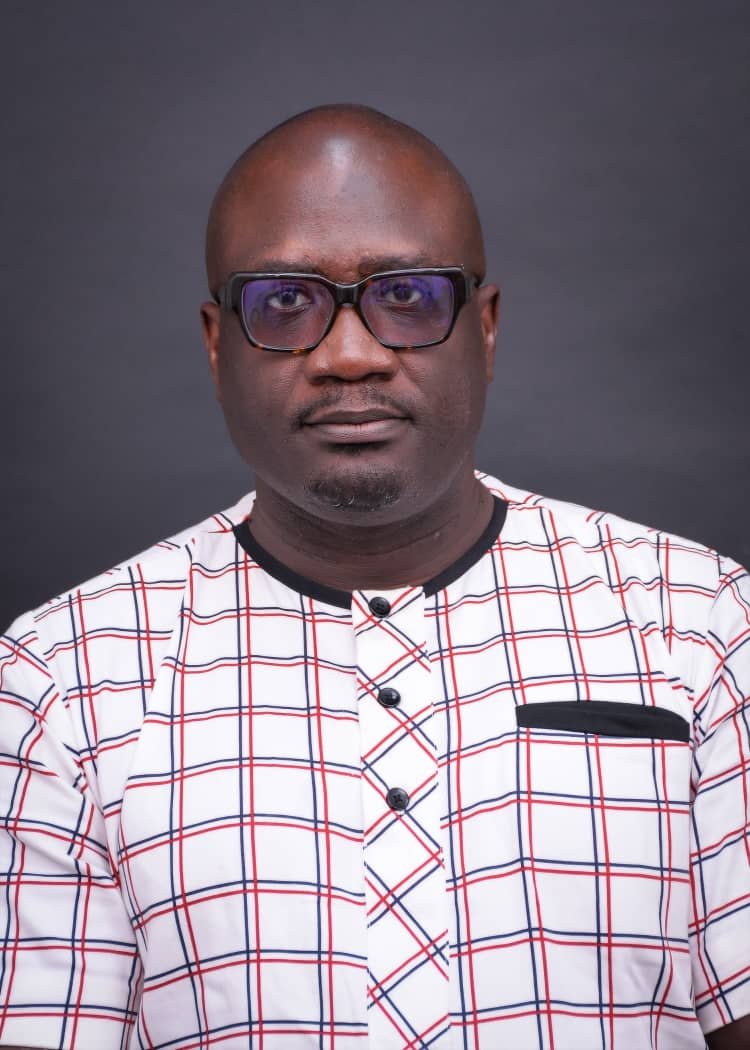
President of the Foundation of Concerned Arts Professionals (FOCAP), Kojo Preko Dankwa, has called for a thorough investigation into the affairs of the Ghana Tourism Authority (GTA) in connection with arrangements made for Ghanaians who travelled to watch the Black Stars during the World Cup.
In an interview with kpdonline, Dankwa is demanding that an investigation or committee be established to assess how the GTA managed its allocation and arrangements for supporters expected to attend Ghana’s matches.
“I am asking for that investigation or a committee to look into how they dealt with the World Cup in terms of getting people to go watch the Black Stars during the World Cup,” he said.
His call follows what he described as videos and reports concerning alleged visa-related scandals involving some individuals who sought to travel to watch the tournament.
“I have watched some videos talking about some scandals that really happened during the getting of visas and getting visas to go watch the matches,” Kojo Preko Dankwa stated.
He also raised questions about Bright Asempa, whom he identified as a former Corporate Affairs Manager of the Ghana Tourism Authority, saying the official’s name had allegedly surfaced in discussions surrounding the visa controversies.
“I have heard a name who I hear is the Corporate Affairs Manager of the Ghana Tourism Authority, and now he is not there. The CEO has sacked him without telling the general public why he was sacked or removed. That we need to know,” he said.
“His name is Bright Asempa, and his name has appeared in scandals that are happening within the visa connections and visa racketeering when it comes to the World Cup.”
However, the allegations raised by Kojo Preko Dankwa have not, on the information available here, been independently established as fact.
He argued that the Ghana Tourism Authority must clarify its position if its name continues to feature in allegations surrounding the World Cup visa arrangements.
“I have heard his name mentioned and I have also heard about GTA name dragged into the mud with other stories that are connected to the same World Cup,” he said.
Kojo Preko Dankwa further questioned what happened to spaces allegedly allocated to the GTA to facilitate the attendance of Ghanaians at Black Stars matches.
“Because we were told that they had a certain number of slots that they needed to use to take people to go watch the Black Stars during the World Cup, specifically the Black Stars matches.”
He subsequently asked whether those spaces were sold or otherwise accounted for.
“Because if they had a number of slots that they were supposed to deal with, did they sell it? And if they did not sell it, why is their former or current Corporate Affairs Manager Bright Asempa’s name flying in and out of these scandals coming from National Sports Council?”
He also referred to videos which he said had raised questions about possible GTA involvement in the alleged Black Stars visa controversy.
“And videos also talking about GTA involvement in the Black Stars visa scandals,” he added.
Kojo Preko Dankwa is therefore calling for a comprehensive investigation to establish what happened and determine whether any individual or institution breached the law or applicable procedures.
“We want a thorough investigation done into the same World Cup Black Stars visa issues where GTA had a certain number of slots to take Ghanaians to go watch the Black Stars’ matches at the World Cup.”
The FOCAP president also referenced previous visa-related controversies involving a former Deputy Sports Minister, saying Ghanaians should not have to deal with similar allegations again.
“Because what was done to a certain previous government where we saw, or we heard, the former Deputy Sports Minister also in connection with this Australia Visa racketeering,” he said.
“We do not want to hear any other stories again when it comes to some of these things.”
According to him, an investigation would also help establish whether the Ghana Tourism Authority had any involvement in the alleged visa-related activities and protect the credibility of the institution.
“And if Ghana Tourism Authority’s name is being dragged into it because of their former Corporate Affairs Director Bright Asempa’s name being involved, then we need to get the credibility of GTA up for us to know whether they were involved in all these things that are happening,” Kojo Preko Dankwa said.
He further questioned the circumstances surrounding Bright Asempa’s reported departure from the Authority.
“What actually even made GTA CEO Mame sack or remove Bright Asempa, we need to know,” he said.
“Because I am told he is not there. And if he is not there, what made him go or get sacked?”
Kojo Preko Dankwa also recalled an earlier disagreement over Bright Asempa’s communication role at the Authority.
“Once upon a time, this same Bright Asempa issued statements here and there telling everybody that he is the one who is supposed to tell us who speaks for Ghana Tourism Authority,” he said.
“That issue, we raised it. CEO Mame told us she was going to come back to it. It never happened.”
He said the renewed mention of Bright Asempa’s name in the World Cup-related allegations makes the need for clarification even more pressing.
“Today, we are hearing his name again, Bright Asempa again, in all these scandals that are coming in,” he stated.
“We want to know why he was sacked. We want a thorough investigation done on this same World Cup Black Star visa issue where GTA had a certain number of slots to take Ghanaians to go watch the Black Star match at the World Cup.”
Kojo Preko Dankwa maintained that the matter should be investigated rather than allowed to generate further speculation.
“That we need to know. Because we cannot sit and see corruption. We cannot sit and see other things that are done to make the whole GTA look bad in the eyes of the people.”
“We need to investigate. We need to understand what is really happening,” he concluded.
Entertainment
Ras Caleb Appiah-Levi Honoured for Pan-African Cultural Leadership and Creative Legacy

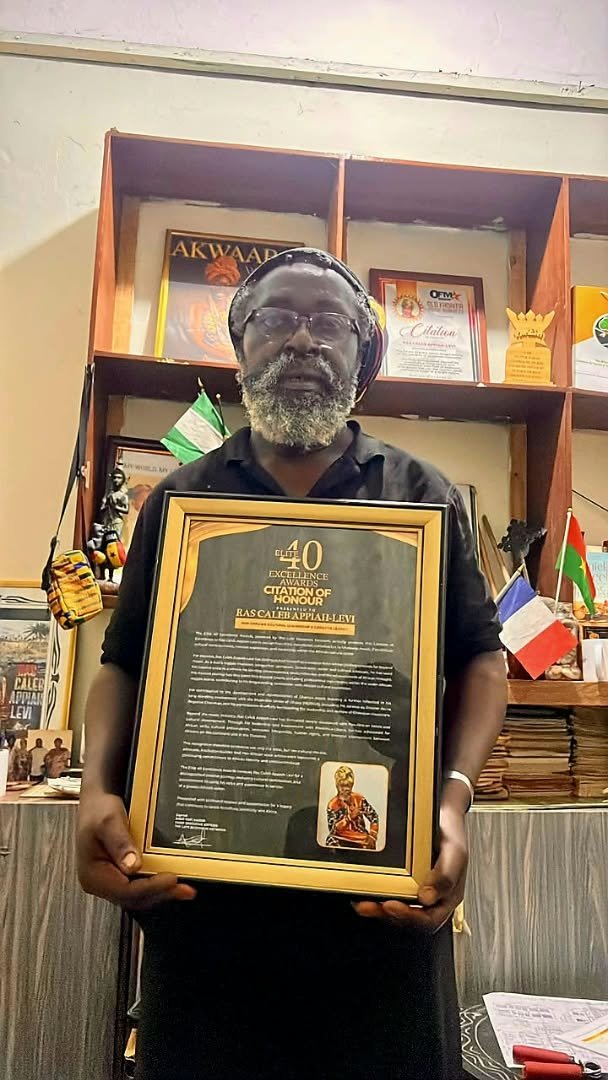
Ghanaian roots reggae musician, songwriter, composer, broadcaster, writer and cultural advocate, Ras Caleb Appiah-Levi, has been honoured by the Elite 40 Excellence Awards, powered by The Late Bloomers Network, for his contribution to Ghanaian music, Pan-African cultural consciousness and creative development.
The veteran creative received a Citation of Honour under the category “Pan-African Cultural Leadership & Creative Legacy” at a ceremony recognising individuals whose careers and contributions have made a significant impact in their respective fields.
The citation, dated September 22, 2026, was signed by Andy Kofi Kaiser, Chief Executive Officer of The Late Bloomers Network.
According to the citation, the recognition celebrates Ras Caleb Appiah-Levi’s remarkable contribution to Ghanaian music, Pan-African cultural consciousness, creative expression, and leadership within the African cultural space.
For decades, Ras Caleb Appiah-Levi has built a career that extends beyond his work as a musician.
The citation describes him as a creative force who has used music and other forms of creative expression to promote identity, consciousness, social reflection and African thought.
As a roots reggae musician, songwriter and composer, his artistic journey has also taken him beyond Ghana, including professional experiences within the wider African reggae scene.
These experiences, according to the citation, have strengthened his longstanding connection with African cultural expression and Pan-African ideals.
Ras Caleb Appiah-Levi’s contribution to Ghana’s music industry has also included long-standing involvement with the Musicians Union of Ghana (MUSIGA).
His service includes his tenure as Greater Accra Regional Chairman of MUSIGA, where he participated in efforts relating to the leadership and welfare of Ghanaian musicians.
His involvement with the musicians’ union forms part of a broader career in which he has combined creative work with advocacy for the development and representation of Ghana’s music industry.
Beyond the music industry, Ras Caleb Appiah-Levi has remained closely associated with Pan-African cultural development.
Through his leadership and involvement with PanAfrica-Ghana, he has advocated for issues including African unity, cultural preservation, economic integration, human rights and stronger connections between Africans on the continent and those in the Diaspora.
His work in this area has positioned him not only as a musician and creative practitioner but also as a cultural advocate and voice on issues concerning Africa’s identity and development.
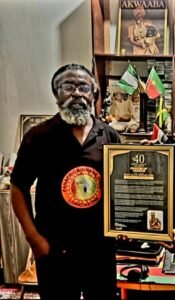
The Elite 40 Excellence Awards citation emphasised that the honour was not solely for Ras Caleb Appiah-Levi’s achievements as an artist.
It described him as a cultural thinker, advocate, institution builder and Pan-African voice, highlighting his continued commitment to African identity and creative heritage.
The organisers said the award celebrates his “distinguished creative journey, enduring cultural contribution” and commitment to using his voice and experience in service of a broader African vision.
The citation concluded by expressing profound respect and appreciation for a legacy that continues to speak to culture, creativity and Africa.
The honour adds another recognition to Ras Caleb Appiah-Levi’s longstanding involvement in Ghana’s creative and cultural landscape, particularly his work connecting music, cultural consciousness and Pan-African advocacy.
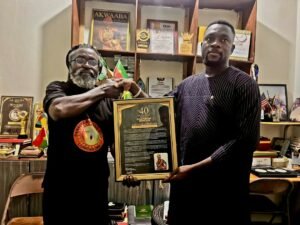
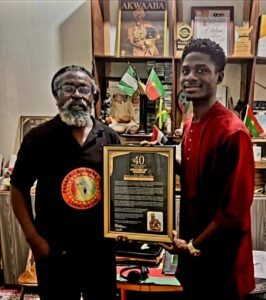
The Citation of Honour was formally presented by Andy Kofi Kaiser, CEO of The Late Bloomers Network, on September 22, 2026.
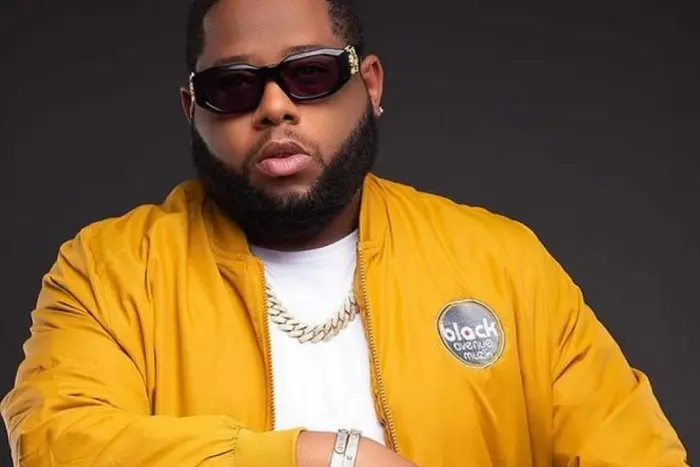
Ghanaian musician and entrepreneur D-Black has raised concerns over the reported decision by Antoine Semenyo and Inaki Williams to withdraw from the Black Stars squad ahead of Ghana’s upcoming 2027 Africa Cup of Nations (AFCON) qualifying matches.
The rapper questioned the circumstances surrounding the players’ absence, suggesting that the development could point to deeper concerns within the Ghana Football Association (GFA).
In a post shared on X on September 22, 2026, D-Black reacted to reports of the withdrawals, expressing surprise that key players were becoming unavailable for the national team at this stage of the AFCON qualification campaign.
“Inaki Williams, now Semenyo, withdrawing from playing for Black Stars for AFCON… Something must be very wrong up there.”
Semenyo has reportedly requested to be excused from the squad for the September/October international window.
His reported absence comes after Inaki Williams was also said to have withdrawn from the team, raising further questions among some followers of the national team.
Black Stars head coach Carlos Queiroz is also expected to be without another important attacking option, Mohammed Kudus, who is reportedly unavailable because of an ankle injury.
Kudus’ reported injury comes after the Manchester City forward scored twice in his club’s 5-3 Premier League victory over Sunderland, a result that reportedly helped City move to the top of the league table.
The withdrawals come at a crucial period for Ghana as the Black Stars prepare for two AFCON qualifying fixtures.
Ghana are scheduled to travel to Bouaké to face Côte d’Ivoire on September 24, 2026, before hosting The Gambia in Accra on September 29.
The Black Stars will then round off the international break with a friendly against Morocco on October 4, 2026.
With several notable players potentially unavailable, Queiroz will have to assess his options and reorganise his squad ahead of the important fixtures.
Ghana will be seeking strong results from the qualifying matches as the team continues its campaign for a place at the 2027 AFCON tournament.
Source: Pulse




:format(jpeg):mode_rgb():quality(40)/discogs-images/A-98707-1473955827-9001.jpeg.jpg)



‘This is a retrogression’ — Martin Kpebu condemns alleged EOCO attempt to arrest MP

Minority Demands Presidential Intervention After Reported EOCO–MP Confrontation

EOCO Explains Attempted Arrest of Manhyia South MP Baffour Awuah



-

 General News1 week ago
GTA’s Financial Strength Weakens Despite 2025 Tourism Activities
-

 General News1 week ago
GTA Cash Reserves Halve to GH¢640,000 Despite Improved Liquidity Ratio
-

 General News2 weeks ago
TVET is not for the academically weak – Advocate calls for change in Ghana’s mindset
-

 General News1 week ago
Creative Arts Agency Records GH¢2.01m Revenue in FY2025 Despite Financial Reporting Gaps
-

 General News2 weeks ago
Police Launch Manhunt for Missing Assin Fosu Man as Captors Demand GH¢49,500 Ransom
-

 Culinary1 week ago
Oranges: More Than Just Juice — The Nutritious Fruit Adding Flavour to Ghanaian Life
-
 General News1 week ago
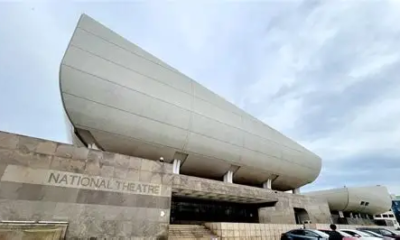
National Theatre balances cultural mandate with commercial survival
-
Culinary2 days ago
Kofi Brokeman: The Simple Ghanaian Snack That Has Stood the Test of Time