
General News
President Mahama Inaugurates New Ghana Hajj Board, Calls for Digital Revolution in Pilgrimage Management


President Mahama Inaugurates New Ghana Hajj Board, Calls for Digital Revolution in Pilgrimage Management
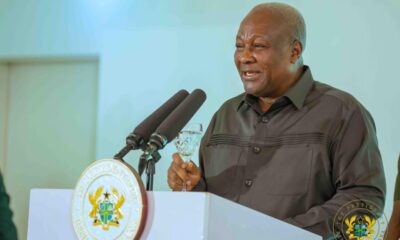
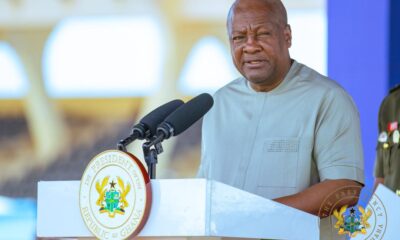
President John Dramani Mahama has officially inaugurated Ghana’s six (6) new Hajj Board out of nine members , The ceremony proceeded without the Chairman of the Board and two female members who are currently in Mecca. President Mahama emphasized the sacred responsibility of managing the annual pilgrimage to Mecca and calling for comprehensive reforms to ensure transparency and efficiency in the process.
Speaking at the ceremony, President Mahama described the Hajj Board as “more than just an administrative body,” stating that “it is an institution that ensures that thousands of Ghanaian pilgrims fulfil one of the highest pillars of Islam with dignity and peace every year.”
Zero Tolerance for Exploitation:
The President took a strong stance against the exploitation of pilgrims, declaring: “The Ghana Hajj must never be a source of exploitation or profiteering. It is haram to exploit the sweat of a poor pilgrim.”
He emphasized that many pilgrims “have saved for years” for this sacred journey and should not “suffer anxiety, confusion, or unfair treatment at the hands of officials or especially middlemen.”
Digital Transformation Initiative:
In a significant policy announcement, President Mahama revealed plans for comprehensive digitization of Hajj operations. “Operations of the Hajj Board must be fully digitized. From this year, all authorized payments must be receipted electronically and verifiably,” he stated.
The digital transformation will include:
– E-registration of pilgrims
– SMS notifications to mobile phones
– A dedicated Hajj mobile application
– An online portal for registration, payment tracking, and travel information
“We can use digital technology not only to reduce fraud and congestion, but also to improve data management for future planning,” the President explained.
Five-Point Reform Agenda:
President Mahama outlined five critical areas for the new Board to focus on:
Early Planning: “Begin preparations immediately for the next Hajj. Announce schedules, registration processes, and cost structures promptly,” he instructed, adding that “last-minute changes must become a thing of the past.”
Transparency: “Pilgrims and their families must know how their money is used. All payments must pass through approved traceable channels. No unofficial levies. No hidden charges.”
Safety and Welfare: The President emphasized coordination with health services and diplomatic missions, stating: “Pay special attention to elderly pilgrims, women, and persons with disabilities. Their comfort is also a sacred duty of the Hajj Board.”
Professional Conduct: “Every official from the Board members to volunteers must act with courtesy, discipline, fairness, and honesty.”
Partnership: “Keep open and constant engagement with the Office of the National Chief Imam, with your regional imams, with our travel partners and agents, and especially with the Saudi authorities.”
National Unity and Religious Harmony:
Reflecting on Ghana’s religious diversity, President Mahama noted: “Our country has always drawn strength from our diversity. Christians, Muslims, and people of other faiths live peacefully together in harmony, celebrating each other’s seasons of worship.”
He emphasized that “the Hajj belongs to the entire Muslim community across Ghana. It is not a monopoly of any one group. From the Zongos of Accra to Tamale, from Wa to Bolgatanga, from Koforidua to Takoradi, the Hajj belongs to the whole of Ghana.”
Accountability Measures:
The President announced that the Hajj Board will operate under strict oversight, with “periodic reporting to the Office of the Chief of Staff.” He expects “a comprehensive report that covers the finances, logistics, health, and safety outcomes, and the lessons learned to be presented to the Chief of Staff for preparation for the following year.”
Spiritual Significance:
President Mahama reminded the new Board members of their sacred duty: “Remember that every pilgrim carries a personal dream, a lifetime aspiration, to stand on the plains of Arafat and give his supplications to the Almighty Allah. And so treat that dream they have with reverence.”
The President invoked Quranic guidance, referencing “Surah An-Nisa, Chapter 4, verse 58, that whoever is entrusted with a trust must faithfully discharge that trust.”
The new Hajj Board is expected to begin immediate preparations for the upcoming pilgrimage season, with the digital transformation initiatives set to be implemented before the next registration period opens.











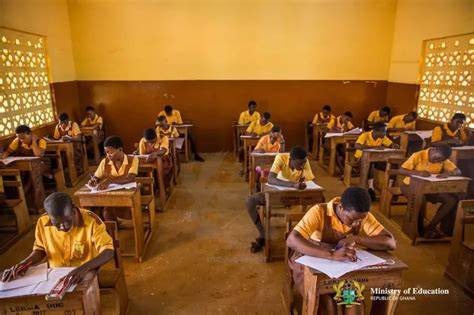
The West African Examinations Council (WAEC) has officially released the provisional 2026 Basic Education Certificate Examination (BECE) Results for school candidates.
In a statement issued on Wednesday, July 29, 2026, WAEC announced that candidates who sat for the examination can check their provisional results through their respective schools. The Council also stated that candidates who wish to access their results online may do so through its official website.
According to WAEC, the release of the 2026 BECE Results follows the completion of the marking process and the consideration of examination irregularities by the appropriate committee.
The Council noted that investigations into examination malpractice led to the cancellation and withholding of a number of candidates’ results.
WAEC disclosed that 105 candidates had their entire results cancelled, while the subject results of 496 candidates were also cancelled.
In addition, the Council announced that the subject results of 119 candidates have been withheld, while the entire results of 48 candidates have also been withheld pending further investigations.
According to the Council, these sanctions were approved following investigations into cases of irregularity detected during the conduct of the examination and the marking of scripts.
WAEC explained that the decisions were taken by the 37th Meeting of the Final Awards and Examiners’ Appointment Committee for the BECE, 2026, held on Tuesday, July 21, 2026.
The approved sanctions are as follows:
- Cancellation of Subject Results of 496 candidates;
- Cancellation of Entire Results of 105 candidates;
- Withholding of Subject Results of 119 candidates; and
- Withholding of Entire Results of 48 candidates.
The Council further revealed that the subject results of 2,722 candidates from 229 schools have been withheld for further scrutiny.
It explained that the withheld results may either be released or cancelled depending on the outcome of the ongoing investigations, which are expected to be completed by August 31, 2026.
WAEC stated:
“Meanwhile, the subject results of 2,722 candidates from 229 schools have been withheld for further scrutiny. The withheld results may be cancelled or released based on the outcome of investigations by August 31, 2026.”
The Council urged candidates, parents, guardians and other stakeholders to use only official channels to access the 2026 BECE Results, adding that candidates can obtain their results either through their respective schools or via WAEC’s official online results portal.
The release of the 2026 BECE Results marks the end of this year’s examination process, although investigations into examination malpractice involving affected candidates will continue until the Council reaches a final determination on the withheld results.

A fresh dispute has erupted within the Kantanka family ahead of the funeral and burial of the late Apostle Prof. Emeritus Kwadwo Safo, as lawyer and former MP Sarah Adwoa Safo has issued a strong warning to her younger brother, Israel Kwadwo Safo Kantanka, popularly known as Akofena.
The disagreement centers on the scheduled funeral and burial rites, which are expected to take place on Thursday, July 30, and Friday, July 31. While Akofena, who describes himself as the leader of the Kristo Asafo Church, insists that no funeral activities will be held on those dates, Adwoa Safo has maintained that the ceremony will proceed as planned.
The latest disagreement follows an earlier confrontation between the siblings during Akofena’s installation ceremony as head of the Kristo Asafo family. The incident reportedly turned violent, with Adwoa Safo alleging that gunshots were fired at her vehicle. She was subsequently taken to the hospital for medical attention.
Speaking at a recent press conference, Akofena urged members of the Kristo Asafo Mission and the public to disregard the announced funeral dates.
“I stand by my authority as the head of the Kantanka family and leader of Kristo Asafo to say that any date circulating should be ignored. There is no truth in it,” he stated.
However, during an interview on Okay FM’s morning show, Adwoa Safo dismissed Akofena’s claims, insisting that the funeral arrangements remain unchanged.
“He did not set the funeral date, neither is he the leader. The funeral will go ahead exactly as scheduled,” she said.
Adwoa Safo further revealed that the family has formally requested police protection and informed state authorities about the event to ensure adequate security.
According to her, several high-profile dignitaries, including the Chief of Staff, Speaker of Parliament Alban Bagbin, and the New Patriotic Party’s flagbearer, Dr. Mahamudu Bawumia, are expected to attend the funeral.
She also cautioned Akofena against attempting to disrupt the event, reminding him that he and others involved in the earlier confrontation are reportedly on bail and are required to maintain good behavior.
“He should not dare come to the funeral to create chaos. By the grace of God, he failed in his alleged attempt to kill me. We have notified all the security agencies, and anyone who tries to cause violence will face the full force of the law,” Adwoa Safo said.
The public disagreement has intensified tensions within the Kantanka family as preparations continue for the late Apostle Kwadwo Safo’s final funeral rites.
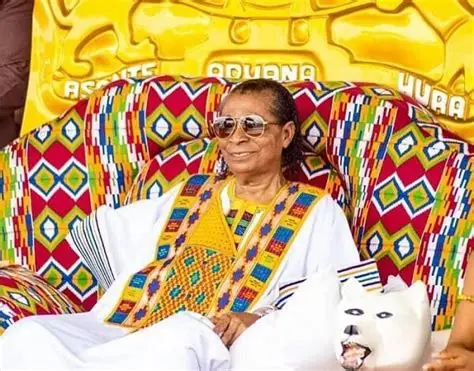
Apostle Kwadwo Safo Kantanka funeral arrangements have been temporarily suspended after the High Court in Accra granted a 10-day interim injunction stopping the planned burial and funeral ceremonies.
The court’s order prevents the Kristo Asafo Mission and all individuals involved in organizing the funeral from proceeding with any burial rites or related activities scheduled for July 30 and 31, 2026.
According to the court’s ruling, all funeral events must be put on hold until the expiration of the 10-day injunction or until the court issues further directives on the matter.
The reasons behind the legal application that resulted in the injunction have not yet been made public.
The Apostle Kwadwo Safo Kantanka funeral had been planned as a two-day state-recognised event expected to attract thousands of mourners, dignitaries, church members, and sympathizers from across Ghana and beyond.
Apostle Kwadwo Safo Kantanka, founder and spiritual leader of the Kristo Asafo Mission, passed away earlier this year. His death marked the end of an era for one of Ghana’s most influential religious leaders, widely known for his contributions to faith, education, technology, and local industrial development.
With the interim injunction now in force, the future of the Apostle Kwadwo Safo Kantanka funeral remains subject to the outcome of the ongoing legal proceedings before the High Court.
General News
GRIDCo Breakdown Triggered Nationwide Power Outage – Energy Expert Calls for Urgent Grid Overhaul

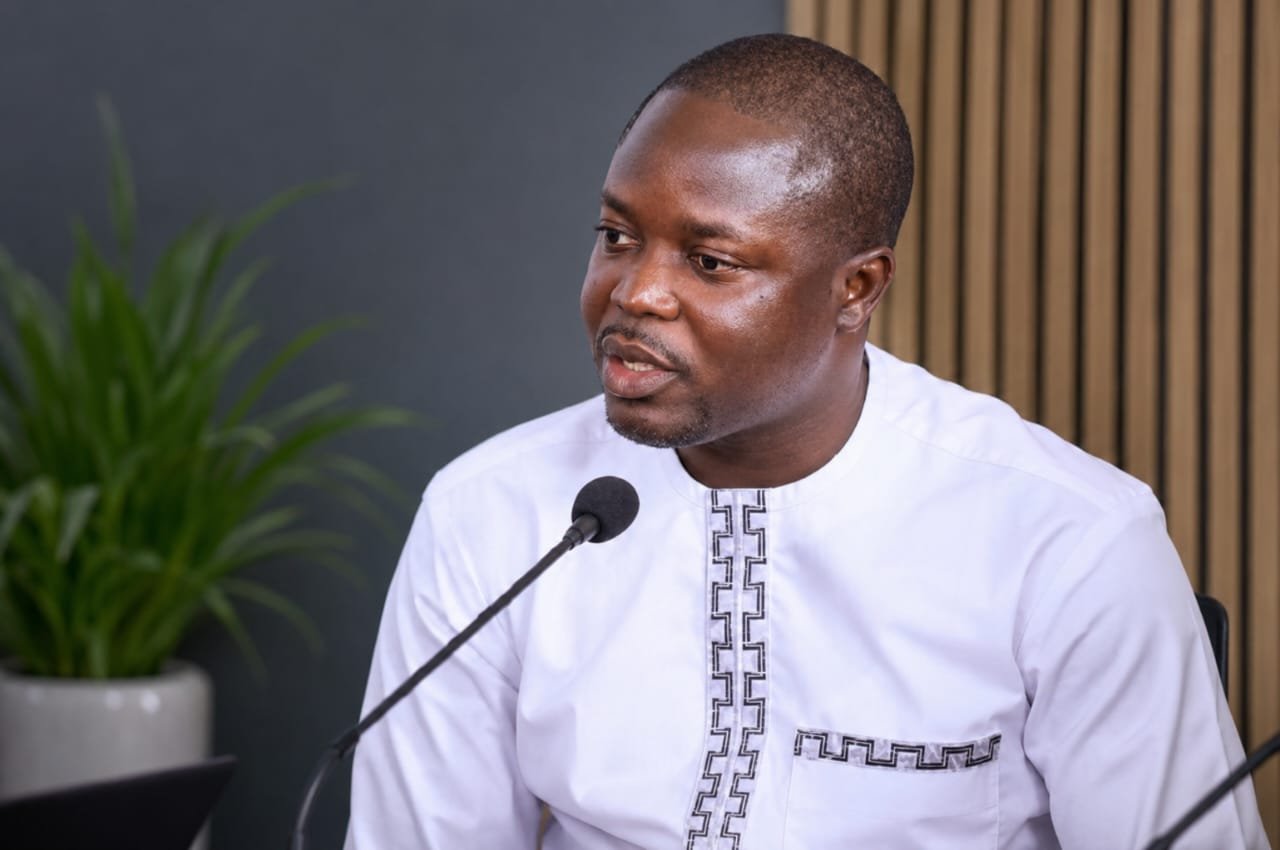
The Executive Director of the Centre for Environmental Management and Sustainable Energy (CEMSE), Benjamin Nsiah, has attributed the nationwide power outage that occurred around 3:11 a.m. on Wednesday, July 29, 2026, to a system failure at the Ghana Grid Company (GRIDCo).
In an interview with Kojo Preko Dankwa on Kessben Maakye show in Accra, Mr. Nsiah insisted, Ghana’s transmission network is heavily integrated, with all major power generation sources connected through the GRIDCo platform to a single transmission system. He explained that when GRIDCo’s system developed a fault, it disrupted power transmission from generating plants, including those operated by the Volta River Authority (VRA) and Independent Power Producers (IPPs).
He noted that GRIDCo must first resolve the transmission fault before IPPs can restore electricity to the national grid for distribution to consumers.
Mr. Nsiah said reports of electricity returning to some areas indicate that GRIDCo is gradually restoring its network, allowing power plants to reconnect and feed electricity back into the system.
The energy expert, however, warned that the incident exposes the vulnerability of Ghana’s integrated national grid. He called for the establishment of isolated or “islanded” power systems that can continue supplying electricity to parts of the country even when the main grid suffers a major failure.
According to him, such a policy should be developed by the Ministry of Energy and implemented by GRIDCo to strengthen the country’s energy security.
He also urged the government to provide adequate resources to GRIDCo to improve the resilience of the transmission network and prevent similar nationwide outages in the future.
Mr. Nsiah further commended the government for taking steps to decentralize power generation, noting that relocating some VRA generation facilities to the Ashanti Region is a positive move that will improve electricity reliability and strengthen regional power supply.
By Maurice Otoo

2026 BECE Results Out; WAEC Takes Firm Action Against Examination Malpractice

VALCO Strategic Equity Capitalization: Minority Backs Workers, Demands Full Transparency

Supreme Court: OSP Can Probe Corruption but Cannot Independently Prosecute Without Attorney-General’s Authority



-

 Entertainment1 week ago
DJ K.A Apologises Over Viral Video, Says It Was Recorded Four Years Ago
-
 General News1 week ago
Dr. Charles Dwamena Sues Hubtel for GH¢5 Million Over Alleged Campaign USSD Sabotage
-

 General News2 weeks ago
Okatakyie Afrifa Granted GH¢100,000 Bail Over Alleged Disruption of NPP Constituency Elections
-

 Entertainment2 weeks ago
Ghanaians Question Akwaboah’s Advice to Save GH¢8,000 Monthly Before Marriage
-

 General News1 week ago
Chairman Wontumi Sentenced to 20 Years in Prison Over Illegal Mining
-
 Entertainment3 days ago
Ghana Secures $3.5 Million UNESCO Heritage Support During Tourism Minister’s South Korea Visit
-

 Entertainment1 week ago
“Hits Rule Everything Now” — Perez Musik Says Legends Like Bob Marley Would Face Challenges Today
-

 Entertainment1 week ago
Ramatu Gumah Named Chairperson and Head of Africa Diaspora Relations at Africa Development Council