
General News
Tertiary Business Sense Challenge: ICAG commits to developing next generation business leaders

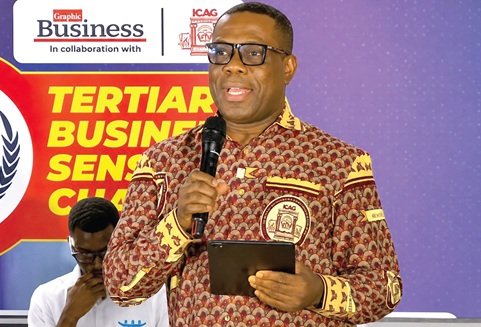
The Institute of Chartered Accountants, Ghana (ICAG) has reaffirmed its commitment to nurturing a new generation of ethical, competent and innovative business leaders through its partnership with the Tertiary Business Sense Challenge (TBSC).
The commitment was reiterated by ICAG Chief Executive Officer, Eric Oduro Osae, FCA, at the grand finale of the eighth edition of the national competition held at Zenith University College in Accra.
‘We are investing in people’
According to Mr Osae, ICAG’s involvement in the competition goes far beyond sponsoring an academic contest or identifying winners.
He described the initiative as an investment in young people, providing them with early exposure, intellectual development, mentorship and leadership opportunities before they enter the professional world.
“Our investment in the Tertiary Business Sense Challenge is, fundamentally, an investment in people.”
He said platforms such as the TBSC are critical to building the skills required to compete in an increasingly complex global economy.
From classroom knowledge to real-world business
The TBSC, organised by Graphic Business in partnership with ICAG, is designed to bridge the gap between academic learning and practical business challenges.
The competition tests students’ knowledge across areas including accounting, finance, economics, taxation, management and business law, while also placing emphasis on critical thinking, teamwork, communication and problem-solving.
ICAG believes these competencies are increasingly important as graduates enter a business environment shaped by technology, global competition and rapid economic changes.
‘Every profession needs an accountant’
Mr Osae also challenged the traditional perception of accountancy as simply a profession centred on numbers and bookkeeping.
He explained that the modern Chartered Accountant has become a strategic business partner involved in decision-making, risk management, governance and sustainable organisational growth.
“Every profession needs an accountant,” he emphasised, arguing that doctors, lawyers, engineers, entrepreneurs and professionals in other fields all make decisions with financial and commercial implications.
ICAG pushes mentorship and leadership development
The ICAG CEO urged tertiary students to engage early with the accountancy profession and take advantage of opportunities offered through the ICAG Students’ Association.
Such opportunities, he said, could expose students to mentorship, professional networking, career guidance and interaction with experienced Chartered Accountants.
He further encouraged students to develop qualities beyond academic excellence, including integrity, communication, leadership, professional discipline and sound judgement.
UCC emerges national champion
The eighth edition of the TBSC ended with the University of Cape Coast (UCC) emerging as national champions.
UCC finished the grand finale ahead of the University of Ghana and Kwame Nkrumah University of Science and Technology, reclaiming the title after previously winning the competition in 2019 and 2021.
The victory capped weeks of intense competition involving tertiary institutions from across Ghana and highlighted the depth of business and analytical talent emerging from the country’s universities.
A pipeline for Ghana’s future leaders
For ICAG, the significance of the TBSC extends well beyond the trophy.
The institute says continued investment in such initiatives will help identify talent early, strengthen professional capacity and equip young Ghanaians with the skills and values needed to contribute meaningfully to national development.
As Ghana looks toward a future increasingly driven by innovation, entrepreneurship and knowledge-based industries, the message from ICAG is clear: the next generation of business leaders must be prepared long before they occupy the boardroom.

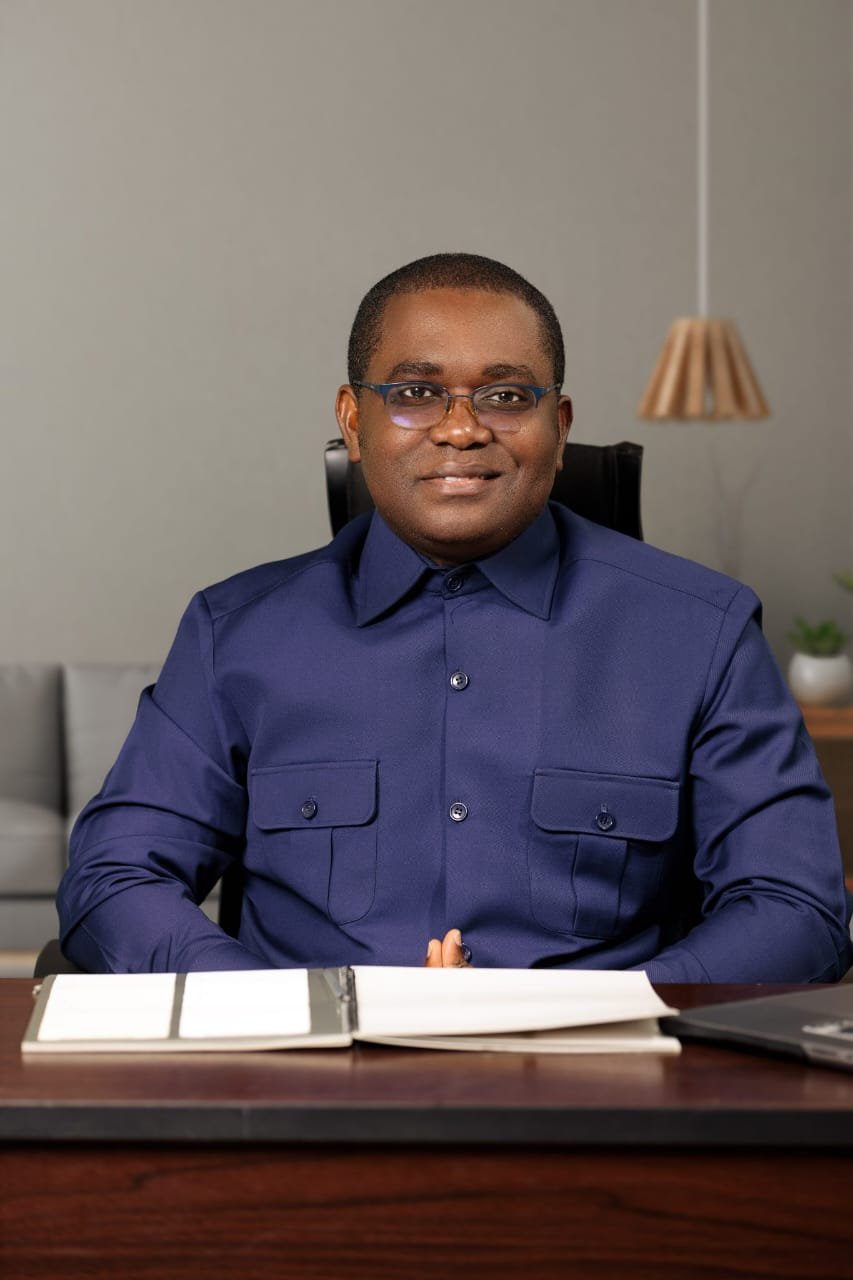
Dr Charles Dwamena, popularly known as Dr China, is being presented by his supporters as an experienced, disciplined and decisive leader capable of helping the New Patriotic Party (NPP) rebuild its structures and prepare for a return to power in the 2028 general elections.
Supporters of the NPP National Treasurer argue that his extensive background in party administration, campaign organisation, diplomacy, finance, and grassroots leadership makes him a strong candidate for General Secretary.
Dr Dwamena, who has officially offered himself for the General Secretary position, is campaigning on the message: Let’s Rebuild to Restore the Lost Love.
According to his supporters, the message reflects the need to restore internal confidence, strengthen grassroots participation, rebuild party structures and improve discipline within the NPP.
Dr Dwamena is not new to NPP affairs. Over the years, he has served the party and Ghana in several capacities.
His political and administrative record includes serving as former Deputy Ambassador of Ghana to the People’s Republic of China and former Director of Finance and Administration at the NPP Headquarters.
He also served as Secretary to the 2016 NPP National Campaign Team, which coordinated the party’s successful campaign that led to the election of former President Nana Addo Dankwa Akufo-Addo and the NPP’s return to power in 2017.
Dr Dwamena is also a founding member of the NPP China Branch and served as Chairman of the NPP China Branch for two terms.
His other leadership roles include serving as Chair of the Asia-Pacific Caucus of the NPP, NPP Representative to the 2016 ECOWAS Commission Internal Party Democracy and Administration Process, and the New Patriotic Party’s representative at the 2016 UNDP Democratic Governance Cluster Annual Retreat.
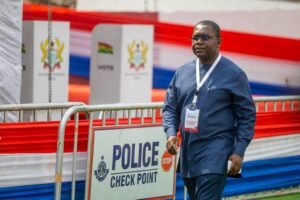
He currently serves as the National Treasurer of the NPP.
Supporters believe his experience in these various roles has equipped him with a deep understanding of the party’s administration, structures, finances and organisational needs.
The campaign for Dr Dwamena places particular emphasis on the importance of discipline and accountability as the NPP prepares for the future.
According to his supporters, the position of General Secretary requires more than popularity or political connections.
They argue that the office demands a leader who understands party administration, appreciates the concerns of grassroots members, coordinates executives at different levels, manages competing interests and enforces discipline fairly.
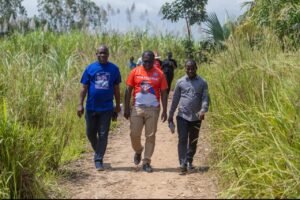
They maintain that the NPP needs a General Secretary who understands systems, structures, people, administration, data, finance and political strategy.
Supporters of Dr Dwamena say his combination of experience in diplomacy, party administration, campaign organisation and financial management makes him well-positioned to perform those responsibilities.
They also describe him as a disciplined, firm, honest and decisive party man, capable of bringing greater accountability, order and efficiency into the party’s structures.
As the current National Treasurer of the NPP, Dr Dwamena has also been involved in the party’s financial administration.
His supporters point to his experience in strengthening financial systems and improving internally generated funds as an important qualification for the General Secretary position.
They say improved accountability, engagement and financial systems are essential to building a stronger political organisation.
According to his campaign narrative, a party seeking to rebuild and return to power requires strong institutions rather than personalities.
Supporters argue that the NPP must strengthen its internal systems, improve accountability, support grassroots structures and develop a more efficient administrative machinery as it prepares for the 2028 elections.
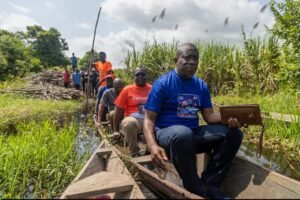
Dr Dwamena’s campaign has outlined several ideas aimed at strengthening the NPP beyond election cycles.
Among the areas he has highlighted are the strengthening of polling-station structures, improved support for party executives, increased use of research and data-driven decision-making, and programmes aimed at improving the welfare and capacity of party members.
His proposed initiatives also include political mentorship, business incubation, human-resource empowerment, accidental insurance for party supporters and support for polling-station executives.
Another aspect of his vision is the development of a modern NPP National Headquarters complex.
The proposed facility could serve multiple purposes, including party administration, training, conferences and the preservation of the party’s history.
Supporters say these proposals demonstrate an ambition to build a stronger and more modern political organisation capable of functioning effectively beyond individual election campaigns.
Supporters of Dr Dwamena say the upcoming contest for the General Secretary position presents delegates with an important decision about the future direction of the party.
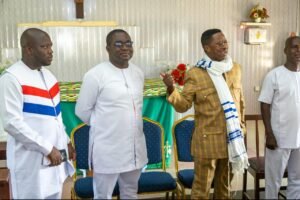
They argue that the contest should focus on competence, experience, discipline, integrity, organisational knowledge and the ability to rebuild the party.
For them, the key questions are straightforward:
Does the NPP need experience?
They say Dr China has it.
Does the party need discipline?
They say Dr China stands for it.
Does the NPP need decisive leadership?
They believe Dr China offers it.
Does the party need a General Secretary with administrative, financial, diplomatic and campaign experience?
Supporters say Dr Charles Dwamena has served in all these areas.
They also believe his vision for grassroots engagement, institutional strengthening and party rebuilding could help position the NPP for the 2028 general elections
The campaign is also urging NPP delegates to look beyond personal interests, factional considerations and short-term political calculations.
According to supporters, the party needs a General Secretary capable of bringing people together, strengthening unity, restoring discipline and improving the efficiency of party structures from the grassroots to the national level.
They believe the next General Secretary will play a crucial role in coordinating party executives, managing the party’s administration and helping to rebuild public confidence ahead of the 2028 elections.
Dr Dwamena’s supporters insist that his years of service to the party, knowledge of its structures and leadership experience make him a compelling candidate.
Beyond politics, Dr Charles Dwamena also has an extensive academic and professional background.
He is a medical doctor with additional qualifications in leadership, sustainability, clinical sciences and political financing.
His academic credentials include:
PhD in Political Financing
MSc in Clinical Sciences (Otolaryngology-ENT) – Plymouth University
Master of Business Administration in Leadership and Sustainability – University of Cumbria
Bachelor of Medicine, Bachelor of Surgery (MBBS) – Wenzhou Medical University
Teaching Certificate (CELTA) – Cambridge University
His supporters say his academic background, combined with his professional, diplomatic and political experience, gives him a broad range of skills relevant to leadership and administration.
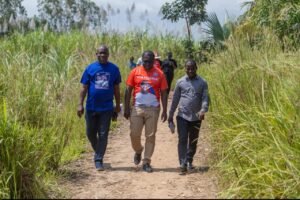
Campaign Message
As the contest for the NPP General Secretary position gathers momentum, supporters of Dr Charles Dwamena are rallying behind a message centred on experience, discipline, integrity, competence, unity and decisive leadership.
They believe the party requires a leader with a proven record of service and a clear vision for rebuilding its structures.
Their message to delegates is:
Choose experience.
Choose discipline.
Choose integrity.
Choose decisive leadership.
Choose competence.
Choose unity.
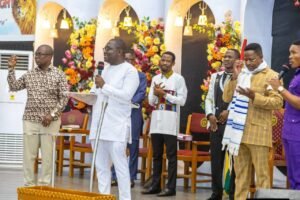
They are therefore urging delegates to support Dr Charles Dwamena, popularly known as Dr China, as the next General Secretary of the New Patriotic Party.
“Let’s Rebuild to Restore the Lost Love.”
Dr Charles Dwamena — Experienced. Disciplined. Decisive. Ready to Lead.
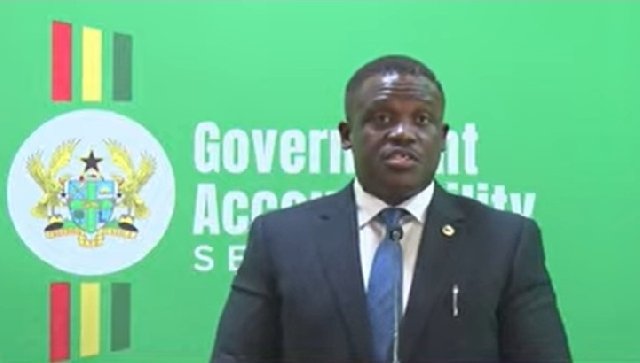
Telecel Ghana has increased its capital investment by 60% between 2023 and 2026 compared with the previous four-year period, Minister for Communication, Digital Technology and Innovations, Samuel Nartey George, has revealed.
Speaking at the Government Accountability Series held at Jubilee House in Accra on Monday, September 7, 2026, Mr George said the increase highlights Telecel Ghana’s growing commitment to expanding and modernising the country’s telecommunications infrastructure.
According to the minister, the company invested approximately $893 million in the four years preceding its transition. Since then, its capital investment has risen to about $1.4 billion and is expected to reach $1.5 billion.
As part of the increased investment, Telecel Ghana is undertaking approximately 2,900 network site upgrades nationwide. The company is also migrating parts of its network from 3G to 4G to provide customers with faster and more reliable mobile broadband services.
Mr George said the ongoing upgrades form part of Telecel Ghana’s wider efforts to modernise its infrastructure, expand network coverage and improve the quality of services provided to customers.
He described the growth in investment as a clear indication of the role private-sector participation plays in developing Ghana’s telecommunications industry.
The minister noted that the increased spending demonstrates that Telecel Ghana is committing significantly more resources to strengthening its network than it did during the preceding four-year period.
The development comes as the government continues efforts to improve Ghana’s telecommunications infrastructure and create an environment that encourages network operators to invest in expanding connectivity and digital services.
Mr George stressed that sustained investment in telecommunications infrastructure remains essential to the growth of Ghana’s digital economy, as reliable and high-quality connectivity is increasingly important to businesses, households and public institutions.
With nearly 2,900 sites currently undergoing upgrades, Telecel Ghana is expected to expand its 4G coverage and improve the speed, quality and availability of mobile connectivity across the country.
Communications, Digital Technology and Innovations Minister Samuel Nartey George has disclosed that illegal mining, popularly known as galamsey, accounts for about 25 per cent of fibre-optic cable cuts recorded across Ghana.
He said the increasing destruction of underground fibre infrastructure by illegal miners poses a serious threat to the stability and reliability of the country’s telecommunications network.
Speaking at the Government Accountability Series on Monday, September 7, Mr George said galamsey has emerged as one of the major causes of fibre network disruptions, alongside road construction and activities by private developers.
According to him, illegal miners frequently damage underground fibre cables while excavating, often without notifying telecommunications companies or the relevant authorities.
“25 per cent of fibre cuts are a result of galamsey. The telecom industry is one of the worst hit by the activities of galamsey operators,” he said.
Mr George explained that while road contractors generally report incidents involving damage to fibre infrastructure, illegal miners often fail to do so, making it difficult for telecommunications companies to respond quickly and restore affected services.
He said the situation was particularly concerning because fibre-optic networks form a critical part of Ghana’s telecommunications infrastructure, carrying large volumes of voice and data traffic across the country.
Any damage to the network, he noted, could disrupt internet connectivity and other communication services, particularly in areas where alternative fibre routes are unavailable.
The Minister further noted that frequent fibre cuts impose high financial costs on telecommunications companies, which must deploy personnel and specialised equipment to locate damaged cables, carry out repairs and restore services.
He warned that the continued destruction of telecommunications infrastructure through illegal mining could undermine the reliability of digital services and worsen network disruptions across the country.
General News
‘May God forgive them’ — Prof. Frimpong-Manso speaks on painful attacks over National Cathedral
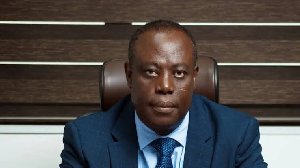
Renowned theologian and former General Superintendent of the Assemblies of God, Ghana, Reverend Professor Yaw Frimpong-Manso, has opened up about what he describes as painful attacks and criticism surrounding the controversial National Cathedral project.
The respected clergyman has expressed deep disappointment over the treatment he and others associated with the project have received, saying some of the attacks have been hurtful.
In an emotional reflection, Prof. Frimpong-Manso called for forgiveness, leaving a striking message for those he believes have unfairly criticised or attacked him over the project.
‘May God forgive them’
Prof. Frimpong-Manso did not hide his pain over the criticism.
While discussing the controversy, he appealed to God to forgive those behind what he considers unfair attacks.
His remarks highlight the deeply personal dimension of a debate that has largely centred on the finances, construction and political controversy surrounding the National Cathedral.
From vision to controversy
The National Cathedral was conceived as a major Christian landmark and a symbol of Ghana’s faith and national identity.
However, the project has faced intense public scrutiny over its financing, construction progress and expenditure, with critics repeatedly questioning whether public resources should have been committed to it.
The controversy has continued to generate political and religious debate, placing several prominent figures associated with the initiative under the spotlight.
‘The attacks have been painful’
For Prof. Frimpong-Manso, however, the issue goes beyond political disagreements.
His latest comments suggest that the criticism has taken a personal toll, particularly given his involvement in the broader religious conversation surrounding the project.
Rather than responding with an equally aggressive attack, he chose a more conciliatory message — asking God to forgive those who have caused him pain.
A controversy that refuses to die
The National Cathedral remains one of Ghana’s most fiercely debated public projects.
Supporters continue to view it as an important national Christian monument, while critics have questioned its cost, management and the government’s role in financing it.
The continuing debate has ensured that individuals who supported or championed the project remain under public scrutiny.
A powerful message amid the storm
Prof. Frimpong-Manso’s latest intervention adds an emotional dimension to the long-running National Cathedral controversy.
His response suggests that, despite the criticism and personal attacks, he would rather leave the matter in God’s hands.
“May God forgive them.”
Those few words capture the pain behind his response — and show that the National Cathedral controversy is no longer simply about a building, money or politics. For some of those involved, it has become deeply personal.
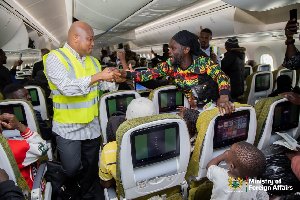
Fresh figures surrounding Ghana’s evacuation of citizens from South Africa have triggered questions over how much the government spent to bring affected Ghanaians home — and how much direct support they received after arrival.
The government, through the Ministry of Foreign Affairs, has been undertaking an evacuation exercise for Ghanaians affected by xenophobic attacks and unrest in parts of South Africa.
Since May 2026, more than 1,300 Ghanaians had been evacuated, with the government assuring returnees of support to help them restart their lives in Ghana.
The eye-catching figures
The latest discussion centres on the cost of the exercise, with reports putting the overall expenditure at about GH¢38 million.
The amount has raised eyebrows, particularly when compared with the financial assistance provided directly to returnees.
Earlier government disclosures indicated that the first phase, involving 926 Ghanaians, cost approximately GH¢5.1 million, while the second phase, which brought another 1,000 people home, cost about GH¢5.5 million.
The government subsequently continued the evacuation, with the final groups also being brought home.
GH¢10 support? Here’s what the figures actually show
The headline figure referring to GH¢10 appears to relate to the broader expenditure calculation rather than suggesting that each evacuee literally received GH¢10 in cash.
Government previously announced a GH¢5,000 reintegration grant for returnees, in addition to GH¢500 for travel and transportation for each person evacuated.
The Ministry has also said the returnees would be assessed according to their skills and aspirations so they could receive appropriate livelihood and employment support.
Government insists it footed the bill
The Foreign Affairs Ministry has been emphatic that Ghana did not rely on financial or material assistance from South Africa to conduct its evacuation.
The government said the exercise was financed by Ghana and Ghanaian partners, meaning Ghana would not be among the countries asked by South Africa to reimburse costs associated with repatriating foreign nationals.
That clarification became necessary after reports emerged that South Africa was seeking reimbursement from some countries for expenses incurred in repatriating their nationals.
More than 1,300 Ghanaians brought home
By August 4, the Ministry announced that another 150 Ghanaians had arrived safely in Accra, pushing the total number evacuated from South Africa since May to 1,324.
The government described the evacuation as part of its responsibility to protect Ghanaian citizens abroad, particularly amid reports of xenophobic attacks.
Returnees were received at the Kotoka International Airport and were promised assistance with reintegration.
The bigger question
While the government says human life is invaluable and no cost should stand in the way of protecting Ghanaians, the figures have inevitably placed the financial side of the operation under the spotlight.
How much was ultimately spent on flights, buses, logistics, accommodation and other evacuation arrangements?
How much came from the government, and how much came from private-sector partners?
And, perhaps most importantly, how much did each returning Ghanaian actually receive to rebuild their lives?
The Foreign Affairs Ministry has indicated that it will provide a comprehensive account of expenditure and donations received later in the year.
For now, the evacuation may have brought hundreds of distressed Ghanaians safely home — but the millions spent on the operation are likely to remain a subject of intense public scrutiny.

Dr Charles Dwamena Presented as the Experienced Hand the NPP Needs for 2028

Tertiary Business Sense Challenge: ICAG commits to developing next generation business leaders

Should Skilled Trade Education for Children Be Compulsory From Childhood?



-

 Entertainment1 week ago
Oswald Okaitei Explains the Real Vision Behind Ghana’s Black Star Experience
-
 General News2 weeks ago
GES Urged to Review Student Sexual Misconduct Rule Over Alleged Discrimination Against Boys
-
 General News2 weeks ago
Oti Region Youth Endorse John Boadu, Cite Experience as Key to NPP Victory
-

 Entertainment22 hours ago
Mahama Is First President to Put GH¢40m Seed Money into Creative Arts Fund: Kojo Preko Dankwa
-
 General News2 weeks ago
Zanetor and Ayariga Face Parliamentary Vetting Today
-
 General News2 weeks ago
President Mahama makes further ministerial changes
-
 General News2 weeks ago
Police Suspend Concrete Mixer Truck Operations in Accra, Tema From August 28
-
General News2 weeks ago
GES Opens WAEC Portal for 2026 School Placement Data Upload