
Entertainment
Tima Kumkum’s Husband Breaks Silence Amid Divorce


Ghanaian media personality Cynthia Tima Yeboah, popularly known as Tima Kumkum, has revealed that she has been separated from her husband, Dominic Duodu, since April 2025, as their second marriage goes through divorce proceedings.
Mr Dominic Duodu has taken to Instagram to share a cryptic message about his decision to remain silent during the difficult period.
In a post shared on his Instagram page, Dominic explained that his silence should not be mistaken for having nothing to say.
“Silence isn’t empty; it’s full of answers,” he wrote.
He added that he had deliberately stepped away from social media and the noise surrounding controversies, saying the decision had helped him find peace, heal and gain clarity.
“I stepped away from all the noise, and peace looked like this today, lost in the green, found in myself,” he stated.
Dominic concluded his message with a reflection on the therapeutic value of nature.
“Sometimes nature is the only therapy you need,” he added.
His post comes shortly after Tima Kumkum opened up about the end of her second marriage, confirming that the couple have been separated for more than a year.

Gospel musician Ohemaa Mercy has opened up about a painful chapter in her life that inspired her hit song, “Se Abotare Twen Me.”
Speaking in an interview on Joy Prime, the award-winning singer revealed that the song was born out of a difficult period characterised by humiliation, disappointment and financial struggles.
According to Ohemaa Mercy, the experience remains deeply emotional for her, and performing the song often takes her back to the difficult moments that inspired its message.
She recalled an incident when she was in a classroom, and a creditor arrived to demand money she owed.
“I remember when I was in a classroom. I was owing someone, and the person came around to collect the money. I had to leave the classroom, and while leaving, one of my shoes got torn, so I had to carry one of them,” she recounted.
Ohemaa Mercy said the situation became even more embarrassing when a man intervened and pleaded with the woman demanding the money to spare her further humiliation.
The man, she said, promised to settle the debt, allowing her to leave the situation.
After the incident, Ohemaa Mercy returned to her office in tears, overwhelmed by the experience.
She said it was during that emotional moment that she heard what she described as a loud, divine voice giving her a message of hope.
“I heard this loud voice that said, ‘Be calm and wait on me because I don’t break my promises like they assume I do,’” she recalled.
The gospel singer said the experience was one of the most difficult seasons of her life and remains unforgettable.
“It is something I will remember for the rest of my life. It wasn’t easy. It was a season of disgrace and disappointment, but this is a message God gave me, and honestly, it has transformed many lives,” she stated.
Ohemaa Mercy explained that the message became her source of strength as she navigated the difficult period.
She said she continued to encourage herself and held on to the message until she eventually received further direction.
“I had to encourage myself because that message really spoke to me. Until God unveiled me, that was the only message I carried to the studio,” she said.
She further disclosed that renowned Ghanaian musician and producer Nacee later helped transform the message and experience into powerful songs.
“Lo and behold, Nacee helped me write all those powerful songs,” she added.
For Ohemaa Mercy, “Se Abotare Twen Me” is therefore more than just a gospel song. It represents a personal testimony of hardship, faith, perseverance and hope, which she believes has continued to touch and transform the lives of many people.
Entertainment
Nearly 30 Years On, Tupac Shakur’s Murder Finally Ends in a Guilty Verdict30 Years On, Tupac Shakur’s Murder Finally Ends in a Guilty Verdict
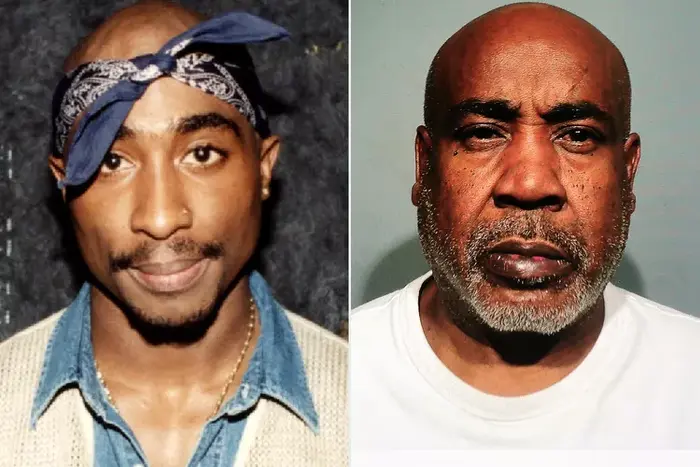
Nearly 30 years after Tupac Shakur was fatally shot in Las Vegas, a Nevada jury has found former gang member Duane “Keffe D” Davis guilty of murder in connection with the killing.
Davis, 63, was convicted of murder with a deadly weapon for his role in the September 7, 1996, shooting that claimed the life of one of hip-hop’s most influential figures.
The verdict marks a significant breakthrough in a case that remained unresolved for almost three decades and generated countless theories about who was behind Shakur’s death.
Prosecutors did not allege that Davis was the gunman. Instead, they told jurors that he organised the attack and supplied the firearm used in the shooting.
How the deadly confrontation began
According to prosecutors, the events that led to Shakur’s death began earlier that night when Orlando Anderson, Davis’ nephew and a member of the South Side Compton Crips, was involved in a physical confrontation with Shakur and members of the rapper’s entourage in Las Vegas.
Investigators and prosecutors have long linked the shooting to the confrontation, arguing that it prompted members of Anderson’s group to seek revenge.
The prosecution’s case was that Davis helped organise the retaliation and was inside the white Cadillac from which gunfire was directed at Shakur’s vehicle.
Anderson had been considered a person of interest in the case for years but was never charged. He died in 1998.
A major part of the prosecution’s case centred on statements Davis made over several years about the shooting.
Davis has repeatedly acknowledged that he was inside the Cadillac when the shots were fired.
His statements included information given during a 2008 confidential police interview. That interview was originally connected to an investigation into the murder of another major rapper, Christopher Wallace, popularly known as The Notorious B.I.G.
Davis also described his alleged involvement in his 2019 memoir, Compton Street Legend, as well as during interviews and other public appearances.
Prosecutors argued that these accounts amounted to admissions that Davis played a leading role in the attack.
During closing arguments, prosecutor Binu Palal described Davis as the person directing events, telling jurors that he had repeatedly portrayed himself as the leader of the South Side Crips.
Palal also argued that Davis’ position inside the vehicle when the shooting occurred demonstrated his responsibility for the attack.
Davis’ lawyers rejected the prosecution’s interpretation of his statements.
Defence attorney Michael Sanft argued that Davis had a history of exaggerating his involvement in notorious events to build his reputation and profit from books, interviews and media appearances.
The defence urged jurors to view Davis’ accounts as gang-related bravado rather than credible confessions to murder.
Sanft told the jury that there was no proof establishing Davis’ responsibility for Shakur’s death.
The jury ultimately disagreed and returned a guilty verdict after a relatively brief period of deliberation.
Davis showed little visible emotion as the verdict was read in court.
Shakur’s relatives, however, reacted emotionally, with members of the family holding hands, embracing and crying following the decision.
Outside the courthouse, fans of the late rapper gathered to mark the development, with some celebrating the conviction while others expressed their emotions over the decades-long wait for a verdict.
Shakur was only 25 when he was killed. By then, he had already become one of the most prominent figures in hip-hop.
His music and influence continued to grow after his death, with the rapper eventually selling more than 75 million records worldwide.
The case had remained one of the most prominent unsolved murders in music history.
Shakur’s killing occurred during an era marked by intense tensions within hip-hop, particularly the rivalry between East Coast and West Coast rap communities. Gang affiliations involving the Bloods and Crips also formed part of the wider backdrop surrounding the feud.
For years, the absence of an arrest or conviction fuelled speculation about the identities and motives of those responsible.
Davis’ conviction is now the first successful prosecution directly connected to Shakur’s murder.
Following the verdict, Shakur’s sister embraced one of the prosecutors as members of the family continued to process the outcome.
Davis is due back in court on October 13 for sentencing.
Before leaving the courtroom, he asked Judge Carli Kierny about recovering some of his personal belongings, including his phone.
He also made clear that he intends to challenge the verdict.
“I would like to appeal this matter,” Davis told the judge.
Judge Kierny informed him that he could pursue an appeal following sentencing.
The conviction brings a major legal development to a murder that has remained etched in hip-hop history since the night Tupac Shakur was shot in Las Vegas in 1996.
Source:Pulse
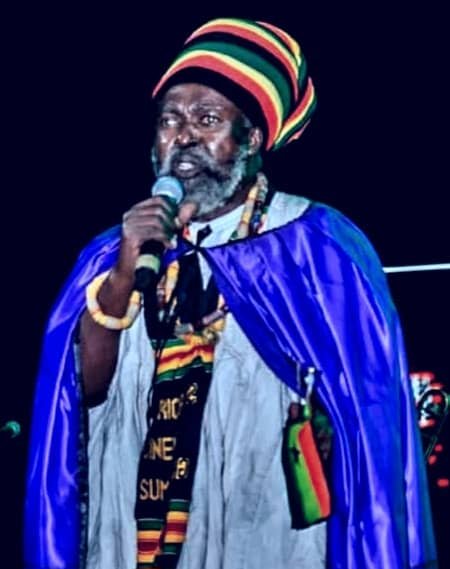
Ras Caleb Appiah-Levi has called on Ghanaians, particularly young people, to stop using insults and abusive comments when engaging with issues on social media.
In a message titled “Stop These Stupid Comments. Insults Don’t Make You a Wise and Intelligent Person,” Ras Caleb said the growing culture of insults on platforms such as Facebook, TikTok and news pages was undermining constructive public discourse.
He argued that many social media users resort to personal attacks when discussing national issues, politics, religion and public figures, believing that the ability to insult others demonstrates intelligence or courage.
According to him, insults do not make a person wise or intelligent but rather expose a lack of meaningful ideas.
He urged people to distinguish between genuine criticism and personal attacks, stressing that disagreement should be based on facts, ideas and possible solutions.
Ras Caleb said hiding behind a phone to insult another person should not be mistaken for courage.
He maintained that true bravery involves confronting issues honestly and respectfully, while wisdom is demonstrated through the ability to correct others without resorting to abuse.
He also challenged young people who frequently insult successful individuals online to examine their own achievements rather than use social media as a platform for personal attacks.
He further warned that abusive online comments could have consequences beyond social media.
According to him, potential employers, business partners, future spouses and other important people may come across a person’s social media activity and form opinions based on what they see.
He described social media comments as a reflection of an individual’s character, cautioning that constant negativity, insults and bitterness could damage future opportunities.
Ras Caleb also urged people to focus on ideas when they disagree with public officials or other individuals.
Using Ghana’s independence struggle as an example, he cited Osagyefo Dr Kwame Nkrumah, arguing that meaningful change comes from advancing stronger ideas rather than simply attacking opponents with insults.
He said people should be able to identify what they believe is wrong and explain how it can be improved.
For him, criticism without facts, ideas or solutions amounts to “noise” and does little to contribute to national development.
Ras Caleb further appealed to Ghanaians and Africans to maintain respect in their interactions, particularly when disagreeing with elders, leaders and other public figures.
He said being outspoken or “woke” should not be confused with being rude or disrespectful.
He encouraged people to remain critical while maintaining civility, stressing that it is possible to be firm, radical and passionate without becoming abusive.
Addressing young people directly, Ras Caleb urged them to think carefully before commenting on social media.
He encouraged those who disagree with an issue to use facts, those who are angry to channel their anger into solutions, and those who have nothing constructive to contribute to consider remaining silent.
He said people should strive to make their contributions bring “light, not darkness” to public discussions.
Ras Caleb concluded his message with a call for people to focus less on winning arguments through insults and more on building, planting, improving and contributing positively to society.
His central message was that wisdom should be demonstrated through constructive ideas and meaningful action, rather than through insults and abusive social media comments.
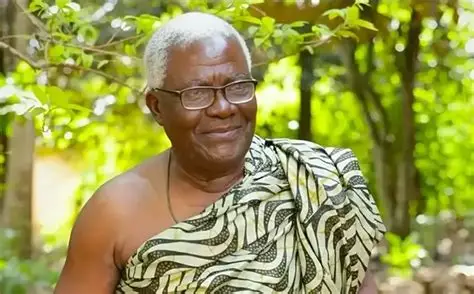
Veteran Kumawood actor Paa George has expressed gratitude to President John Dramani Mahama for providing him with financial assistance over several years, describing the support as a major source of help in his life.
The 89-year-old actor said this during an interview on TV3, where he acknowledged President Mahama and other individuals who have supported him throughout his long-acting career and into his old age.
According to Paa George, President Mahama has consistently assisted him financially for several years.
He also singled out veteran actress Mabel Amétor Asso, whom he said has been paying his monthly bills for more than three years.
The actor further expressed appreciation to actress Nana Ama McBrown and other colleagues who have supported him at various stages of his life and career.
“I am grateful to President John Dramani Mahama for helping me financially for several years, and actress Mabel Amétor Asso pays my bills every month for over three years.”
Looking back on his remarkable career in Ghana’s entertainment industry, Paa George said his journey in acting dates back to 1957, the year Ghana gained independence.
He recalled beginning his acting career through Brigade Concert, where he worked with several entertainers who have since passed away.
“I started acting during brigade concert, since 1957. Many people I started with are no more,” he said.
Paa George also attributed his continued physical strength and activity in old age to the demands of his profession.
He explained that travelling to different locations for film productions has kept him physically active over the years.
“Acting gave me the privilege to exercise because I go to different locations like the Atwea Mountains to film. Which is why I am still strong,” he noted.
Paa George remains one of Ghana’s longest-serving screen personalities, having contributed significantly to the country’s theatre and film industry for decades.
He rose to prominence through the popular Concert Party tradition, performing alongside notable personalities including Agya Ntow, Bob Vans, Lord Bob Cole and Appiah Agyekum.
He was also a member of the Ebibiman drama group, further establishing his presence in Ghana’s theatre scene.
In the 2000s, Paa George experienced renewed popularity in Ghana’s mainstream film industry. During that period, he appeared in numerous productions alongside prominent actors including Agya Koo, Mercy Asiedu, Nana Ama McBrown, Kyeiwaa, Miracle Afranie and Bill Asamoah.

Oswald Okaitei has provided a detailed explanation of the original concept behind the Black Star Experience, arguing that the programme was designed as a straightforward and executable government initiative aimed at using Ghana’s culture, arts and tourism sectors to drive national identity, tourism and job creation.
Speaking on the Kessben Entertainment show on Kessben Radio/TV with host Kojo Preko Dankwa, Mr Okaitei said the initiative, as outlined from the perspective of the NDC Manifesto Committee, was fundamentally intended to be a deliberate government-led investment in Ghana’s cultural and creative heritage.
According to him, the programme was built around three main objectives: reviving Ghanaian cultural heritage and strengthening national self-identity, making Ghana a preferred tourism destination—at least within the sub-region—and creating employment opportunities.
Mr Okaitei explained that the manifesto had already outlined several ways through which the objectives of the Black Star Experience could be achieved.
The first, he said, was through investment in the existing domains of the Ministry responsible for tourism, culture and the arts, which are already managed through government institutions and agencies.
He mentioned institutions such as the Ghana Tourism Authority (GTA), National Commission on Culture, Ghana Tourism Development Company (GTDC) and the Creative Arts Agency (CAA) as examples.
He argued that under this approach, the performance and achievements of the various agencies could directly contribute to measuring the success of the Black Star Experience.
“By this, any success achieved by any of the agencies is a success measure of the flagship programme,” he explained.
The second component, according to Mr Okaitei, involved special initiatives and investments designed to strengthen Ghana’s cultural and tourism infrastructure.
He cited proposals such as the construction of a second National Theatre in Kumasi and the development of a new city in the Volta Region as examples.
He noted that if such projects were successfully executed, they would also constitute tangible success measures of the Black Star Experience.
Mr Okaitei said another major component of the programme, which has attracted considerable public attention, is Tourism 360.
He explained that Tourism 360 was conceived as a year-round tourism programme intended to boost both domestic and international tourism by creating a structured calendar around Ghana’s diverse cultural heritage.
Under the concept, different aspects of Ghanaian culture would be highlighted and celebrated each month.
Among the examples he mentioned were a month dedicated to Ghanaian food and medicine, another focusing on Ghanaian sports heritage, a month for Ghanaian clothing and fashion, and another dedicated to Ghanaian literary heritage.
The monthly activities, he said, could take different forms, including colloquiums, conversations, festivals, concerts and other cultural events.
Mr Okaitei further explained that the Tourism 360 component was not necessarily intended to mean that government would personally organise every event on the calendar.
Instead, he said, the model was expected to encourage individuals, institutions, organisations and corporate bodies with an interest in promoting Ghanaian culture and tourism to submit proposals for consideration.
He compared the proposed approach to the model used for Ghana Month, where interested stakeholders can develop activities around the celebration.
According to him, successful proposals would be incorporated into the Black Star Experience activities for the relevant month, while the proponents would largely take responsibility for funding their projects.
This, he suggested, would allow government to provide coordination, promotion and an overarching national framework without necessarily bearing the entire financial burden of every activity.
Based on this structure, Mr Okaitei expressed the view that implementing the Black Star Experience should not be particularly difficult.
He maintained that the initiative was designed around existing government institutions, targeted investments and partnerships with private-sector and other stakeholders.
“By this, I do not think executing this beautiful programme should be a problem,” he said.
Mr Okaitei said his explanation formed the basis of his submission during his appearance on the Kessben Entertainment programme on Kessben Radio/TV.
He argued that the Black Star Experience should therefore be understood as a broad national framework for coordinating investments, cultural activities, tourism promotion and creative-sector development rather than being limited to a single event or activity.

Ohemaa Mercy Reveals Painful Experience That Inspired ‘Se Abotare Twen Me’

Tima Kumkum’s Husband Breaks Silence Amid Divorce

Police Deploy Reinforcements as Violence Erupts in New Winneba; 3 Dead, 15 Injured



-

 General News1 week ago
Nana Adwoa Tutuwaa Named Global Humanitarian of the Year 2026
-

 Entertainment2 weeks ago
Interfaith Tourism World Club Calls for Faith-Based Tolerance to Strengthen National Peace
-

 Education2 weeks ago
Cybersecurity Education in Schools: Should Students Learn Online Safety?
-

 General News1 week ago
Assemblies of God Ghana Clears Headquarters Loan, Slashes Overdraft by GH¢3.2m
-

 General News2 weeks ago
LMI Holdings: The Ghanaian Company Chosen to Revive the Saglemi Housing Project
-

 General News4 days ago
GES Urged to Review Student Sexual Misconduct Rule Over Alleged Discrimination Against Boys
-

 General News1 week ago
OSP Assesses Extortion Allegations Against Afenyo-Markin
-
 General News1 week ago
Police Arrest Suspect in GH¢1.1m Fake Gold Scam at Berekum