
Entertainment
Tourism Emerges as New Engine for Youth Jobs and Entrepreneurship in Ghana

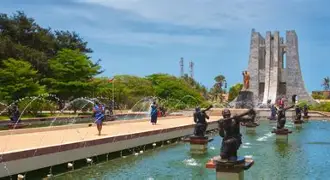
Ghana’s tourism industry is increasingly emerging as a major pathway for youth employment, skills development and entrepreneurship, with the Ghana Tourism Authority (GTA), in partnership with the Ghana Tourism Federation (GHATOF), rolling out programmes aimed at equipping young people with practical skills and creating sustainable career opportunities across the tourism value chain.
The growing focus on tourism employment comes at a time when the sector continues to recover and expand following the disruptions caused by the COVID-19 pandemic.
Tourism employment on the rise
Available tourism sector data show that tourism-related employment increased from 252,714 jobs in 2021 to 276,985 jobs in 2022, representing an increase of more than 24,000 jobs in one year.
More detailed figures from the Ministry of Tourism in 2023 indicated that direct employment in the tourism industry had reached approximately 204,591 jobs. These included workers in hotels and restaurants, travel agencies and tour operators, airlines, recreational facilities, tour guiding, tourist shops and other tourism-related organisations.
When indirect employment generated through supporting activities such as handicrafts and other tourism-related businesses was included, total tourism employment was estimated at approximately 429,641 jobs in 2023.
The sector’s expansion continued in 2024, when Ghana recorded 1,288,804 international tourist arrivals. During the same period, the number of licensed tourism enterprises increased from 5,786 in 2023 to 6,702 in 2024.
Tourism also generated approximately US$4.8 billion in revenue in 2024, creating greater demand for workers and businesses across accommodation, food services, transportation, tour operations, entertainment, events and other related sectors.
In 2025, international tourist arrivals increased further to 1,306,962, representing a 1.4 per cent increase over 2024.
Although comparable national tourism-employment figures are not available for every year from 2021 to 2025 within a single official series, the available data point to a clear post-pandemic recovery and continued expansion of the sector.
GTEM programme targets graduate unemployment
One of the key interventions being introduced to connect young people directly to opportunities in tourism is the Graduate Tourism Employment and Mobility (GTEM) Programme.
Under the programme, 200 graduates will be trained and certified as professional tour guides. Following their training, the graduates will be deployed to hotels, tour companies, cultural sites and events across the country.
The programme is also expected to address one of the major challenges facing young tourism entrepreneurs—access to vehicles.
Through a structured work-and-pay vehicle system, beneficiaries will receive mobility support that can enable them to operate their businesses and provide tourism services without having to bear the immediate cost of acquiring a vehicle.
GTA Chief Executive Officer Maame Efua Houadjeto said the programme is intended not only to train young people but also to connect their skills directly to economic opportunities.
“We are going to train and certify 200 graduates as professional tour guides, standardise and improve the quality of tour guiding across Ghana, and deploy them into hotels, tour companies, cultural sites, and events,” she said.
She further explained that the initiative is designed to move beneficiaries beyond unemployment and into enterprise.
“This is how we move from unemployment to enterprise. It is not just about training, but about linking opportunity directly to productivity,” she added.
One tourism job can support several livelihoods
The impact of tourism employment extends beyond the individual who receives a job.
A professional tour guide, for instance, can generate income for drivers, hotels, restaurants, attraction managers, photographers, artisans, event organisers and other local businesses.
This makes tourism an important sector for creating both direct and indirect employment, as expenditure by one visitor can spread across several businesses and communities.
Training and certification for tourism workers
Beyond the GTEM Programme, the National Professional Training and Certification Programme is also being used to strengthen Ghana’s tourism and hospitality workforce.
The programme targets frontline workers including tour guides, waiters, housekeepers, front-office staff and restaurant managers, providing them with access to professional training and recognised certification.
GHATOF President Seth Ocran stressed the importance of ensuring that certification is accessible to workers across the sector.
“I want to speak directly to our frontline workers: this programme was designed with you in mind… certification must be accessible, not just aspirational,” he said.
Professional certification can improve workers’ employability, strengthen service standards and create opportunities for young people to progress into better-paying positions within the tourism and hospitality industry.
Tourism creates opportunities beyond hotels
The tourism economy is also creating opportunities for young people outside traditional hotel and travel-agency jobs.
Young Ghanaians can establish businesses as tour operators, content creators, car-rental operators, photographers, event organisers, food vendors, travel consultants and digital marketers.
Social media content creators, for example, can promote Ghana’s beaches, waterfalls, historical sites, festivals, food and cultural experiences to domestic and international audiences.
Tour operators can transform these attractions into organised travel experiences, while car-rental companies and professional drivers provide the transportation required by visitors.
The result is a broader tourism ecosystem in which a single tourist can generate income for several businesses and workers.
Opportunities outside Accra
Tourism also has the potential to distribute employment opportunities across the country.
Young people living near beaches, waterfalls, heritage sites, national parks, festivals and cultural attractions can provide services including tour guiding, transportation, accommodation, food, entertainment and creative content.
This presents an opportunity to reduce pressure on the major urban centres by enabling young people in tourism destinations to build livelihoods within their own communities.
Tourism and the fight against youth unemployment
The expansion of tourism provides Ghana with several ways to tackle youth unemployment.
First, skills training and certification can prepare young people for employment in hotels, restaurants, tour companies and tourist attractions.
Second, entrepreneurship and mobility support, including the assistance provided under the GTEM Programme, can help graduates establish their own businesses rather than depend solely on formal employment.
Third, tourism can create opportunities for young people in communities where major attractions are located, allowing residents to benefit directly from visitor spending.
Finally, the sector’s ability to generate both direct and indirect employment means that investment in tourism workers can have a wider economic impact.
The GTA has emphasised that transforming Ghana’s tourism industry will require collaboration among government, businesses, workers and other stakeholders.
“No single institution can transform the sector alone… but together, we can build a sector that is professional, competitive, and globally respected,” Maame Efua Houadjeto said.
With continued investment in training, certification, mobility, entrepreneurship and tourism infrastructure, Ghana’s tourism sector has the potential to become an even stronger engine of youth employment.
The objective, however, goes beyond simply creating jobs. It is to equip young Ghanaians with the skills, confidence and resources to become employees, entrepreneurs and employers within the tourism economy.
The continued increase in tourist arrivals, licensed tourism enterprises and tourism revenue between 2021 and 2025 provides a strong foundation. The next challenge is ensuring that Ghanaian youth are adequately equipped to capture a greater share of the economic opportunities generated by every visitor who enters the country.
By Maureen Eduafo-Mensah, Intern, Corporate Affairs, Ghana Tourism Authority
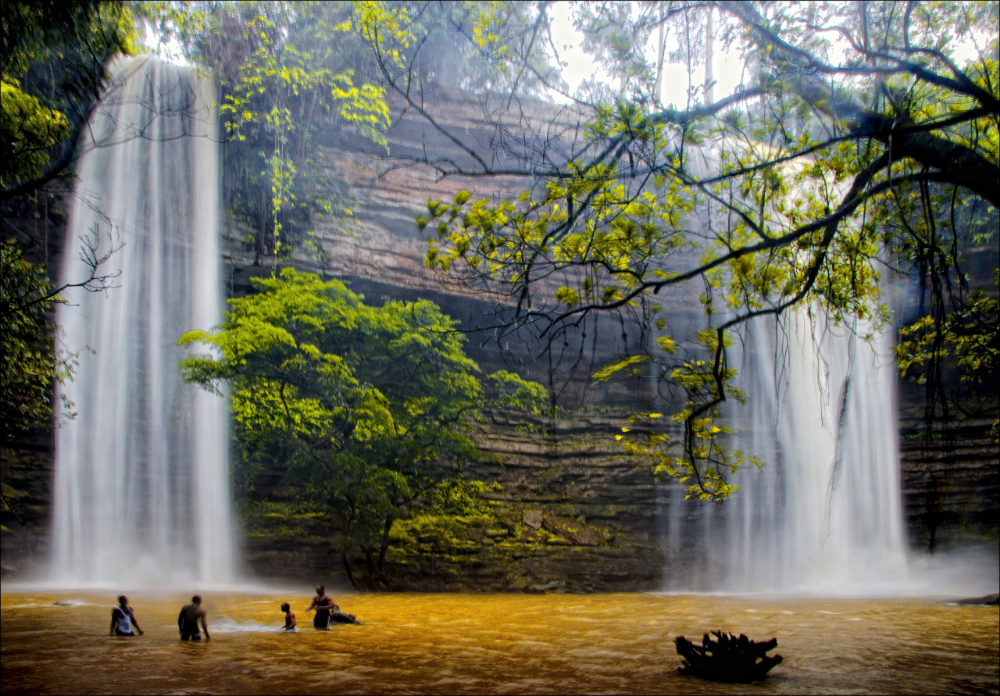
Ghanaians have been urged to explore more of their own country as a way of reconnecting with their cultural heritage and strengthening national identity.
The call was made in an article by Maame Ama Boa Effah, an Intern with the Corporate Affairs Department of the Ghana Tourism Authority, who argues that increased domestic tourism could help preserve important aspects of Ghanaian culture.
According to her, social media and globalisation are influencing the way Ghanaians speak, dress, eat and interact, creating concerns that some traditional aspects of Ghanaian identity are gradually being lost.
She noted that the situation is particularly worrying because many Ghanaians travel within the country mainly for social obligations such as funerals, reunions and work-related activities, rather than for leisure and cultural exploration.
Effah pointed out that while Ghanaians readily mention international destinations such as the Eiffel Tower and Burj Khalifa when discussing places they want to visit, many have not explored the attractions and communities within Ghana.
She cited Ghana Tourism Authority data indicating that domestic tourism recorded 1.79 million visits in 2025, compared with Ghana’s population of more than 34 million.
She questioned how Ghanaians could preserve their heritage when they rarely visit the communities, historical sites and cultural centres where their traditions are preserved.
Effah also highlighted existing initiatives designed to promote domestic tourism, including the See Ghana, Eat Ghana, Wear Ghana, Feel Ghana campaign, which encourages citizens to travel within the country, experience local cuisine, appreciate Ghanaian fashion and engage with local music, folklore and traditions.
She also mentioned the VisitCapeCoast campaign, which seeks to position Cape Coast as a major tourism destination for both international visitors and Ghanaians.
However, she acknowledged that several challenges continue to discourage domestic tourism.
According to her, financial constraints, expensive inter-regional transportation, poor road conditions and high hotel prices make leisure travel difficult for many Ghanaians.
She noted that while air travel could reduce long travel times, airfares remain expensive and not every region has an airport.
Effah further argued that accommodation costs can discourage domestic tourists, particularly when residents face hotel rates they consider too high.
She suggested that hotels could introduce subsidised or tiered pricing for Ghanaian residents to make domestic tourism more affordable.
She also proposed that the Ghana Tourism Authority organise budget-friendly weekend group tours for residents and that regional exchange trips be incorporated into school programmes to expose young people to the different cultures and traditions across the country.
Effah welcomed ongoing efforts to improve regional connectivity, including plans for new and regional airports. She noted that developments such as the proposed Bolgatanga Airport and other regional airport projects could reduce travel times and encourage more inter-regional tourism.
She stressed that domestic tourism should not be viewed solely as recreation but also as a means of preserving Ghana’s cultural identity.
“Our identity is never truly lost; it waits in every village and festival and every story,” she wrote, arguing that the culture Ghanaians fear losing may still be available to them if they make the effort to explore their own country.
Effah concluded that reconnecting with Ghanaian culture could begin with something as simple as taking a bus to another part of the country and experiencing its people, traditions, food, stories and history.
By Maame Ama Boa Effah, Intern, Corporate Affairs, Ghana Tourism Authority.

Dolly Parton was one of the most influential figures in American country music, building a career that stretched across music, film, television, business and philanthropy.

Born on January 19, 1946, in Locust Ridge, Tennessee, Parton grew up in a large and poor family. Music was an important part of her childhood, and she began writing songs and performing at a very young age.
Her uncle, Bill Owens, gave her a guitar when she was seven, helping to strengthen her interest in songwriting and performance. As a child, she began appearing on local radio and television programmes.

At 13, Parton made her debut at the Grand Ole Opry in Nashville. She was introduced by Johnny Cash, one of the biggest names in country music at the time.
Her early recording career was not immediately successful. Some of her first releases, including Puppy Love and Happy, Happy Birthday Baby, failed to make a major impact on the charts.

Her breakthrough came when country music star Porter Wagoner invited her to join his television programme. The two became a successful musical partnership, recording numerous duets and helping Parton gain national recognition.
Their 1968 recording of The Last Thing on My Mind became a Top 10 country hit and was followed by several other successful collaborations.
Parton eventually established herself as a major solo artist and songwriter. Her ability to turn personal experiences and stories about ordinary people into powerful songs became one of the defining features of her career.

Dolly Parton’s Most Famous Songs
Jolene
Released in 1973, Jolene became one of Parton’s signature songs. It tells the story of a woman desperately pleading with another woman named Jolene not to take away her partner.
The song became internationally recognised and has been covered by numerous artists.
I Will Always Love You
Parton wrote I Will Always Love You in 1973 after deciding to end her professional partnership with Porter Wagoner.
She originally recorded the song herself, and it became a major country hit. Years later, Whitney Houston recorded a powerful version for the 1992 movie The Bodyguard. Houston’s version became a worldwide phenomenon and introduced Parton’s songwriting to an entirely new generation.
Coat of Many Colors
Released in 1971, Coat of Many Colors was inspired by Parton’s childhood and her family’s poverty.
The song tells the story of a coat her mother made for her from pieces of fabric. Although Parton was poor, the song emphasises the love and pride associated with her family rather than material wealth.
9 to 5
Written for the 1980 film 9 to 5, in which Parton also starred, the song became one of her biggest commercial successes.
It captured the frustrations of working life and became an anthem for workers, particularly women seeking better treatment and opportunities in the workplace.
Here You Come Again
Released in 1977, Here You Come Again became one of Parton’s major crossover hits. It helped expand her audience beyond traditional country music and demonstrated her ability to succeed in the wider pop market.
Two Doors Down
Released in 1978, Two Doors Down became another popular Parton recording and showcased her talent for combining country storytelling with accessible melodies.
Islands in the Stream
Parton teamed up with Kenny Rogers for Islands in the Stream, released in 1983. Written by the Bee Gees, the song became a massive international hit and remains one of the most recognised country-pop duets.
Real Love
Released in 1985, Real Love became another successful Parton recording and continued her run of country and crossover releases.
Why’d You Come in Here Lookin’ Like That
Released in 1989, the song became a popular country hit and reflected Parton’s playful and energetic musical personality.
Travelin’ Thru
Parton wrote and recorded Travelin’ Thru for the 2005 film Transamerica. The song earned an Academy Award nomination and demonstrated that her songwriting remained relevant decades into her career.
A Career Beyond Music
Parton’s achievements were not limited to recording and songwriting. She became an actress, television personality, author, businesswoman and philanthropist.
She appeared in films including 9 to 5, The Best Little Whorehouse in Texas, Steel Magnolias and The Beverly Hillbillies.
She also became closely associated with Dollywood, the theme park in Tennessee that developed into one of the region’s major tourist attractions.
Through her philanthropy, Parton also became known for supporting education and literacy. Her Imagination Library programme has provided millions of free books to children.

A Lasting Musical Legacy
Parton’s songwriting was heavily influenced by her childhood, family, relationships and observations of everyday life. She had a rare ability to transform personal experiences into stories that connected with audiences around the world.
From Jolene and Coat of Many Colors to I Will Always Love You and 9 to 5, her songs crossed generations and musical genres.

With more than 3,000 songs credited to her songwriting career and more than 100 million records sold worldwide, Dolly Parton’s influence extends far beyond country music.

Legendary American country music singer, songwriter and entertainer Dolly Parton has died at the age of 80, bringing an end to a remarkable six-decade career that established her as one of the most influential and recognizable figures in country music.
Parton sold more than 100 million records worldwide and wrote more than 3,000 songs throughout her career. Her team described the legacy she leaves behind as one built on “love, compassion, and resilience.”
Born into a large family and raised in poverty on a farm in Tennessee, Parton developed a passion for music at an early age. Her musical journey took a major step forward when her uncle, Bill Owens, gave her a guitar when she was seven years old.
While still a child, she began performing regularly on radio and quickly demonstrated a talent that would eventually take her to the international stage. In 1959, at just 13, Parton made her debut at the Grand Ole Opry, where she was introduced by country music legend Johnny Cash.
Her first efforts to establish herself as a recording artist were met with limited success. Early releases, including Puppy Love and Happy, Happy Birthday Baby, failed to make a significant impact on the charts.
Parton’s career changed dramatically after she joined forces with country singer Porter Wagoner. Their partnership produced a series of successful recordings, beginning with their 1968 duet The Last Thing on My Mind, which reached the country music Top 10.
The collaboration launched a six-year run of hits and helped establish Parton as a major force in country music. However, her most enduring contribution would come through the songs she wrote herself.
Among her best-known compositions were Jolene, Coat of Many Colors and I Will Always Love You. Her songwriting frequently drew from her personal experiences, exploring themes of love, poverty, family, heartbreak, perseverance and resilience.
I Will Always Love You became one of her most celebrated compositions. Although Parton originally recorded the song herself, it achieved worldwide popularity decades later when Whitney Houston recorded a version for the 1992 film The Bodyguard. Houston’s rendition introduced Parton’s songwriting to millions of listeners around the world and cemented the song as a global classic.
Despite decades of success, Parton never abandoned songwriting. In a 2016 interview, she revealed that inspiration continued to come to her regularly.
“Almost every day I come up with a few song titles or a sweet melody,” she said.
Parton’s influence extended far beyond music. Her career encompassed film, television and philanthropy, while her distinctive appearance, colourful personality and unmistakable voice helped make her one of the most recognisable entertainers in the world.
Her journey from a poor childhood in rural Tennessee to international superstardom became one of the most celebrated success stories in popular music.
Over the course of her career, Parton inspired generations of singers, songwriters and performers while building a vast catalogue of music that transcended country music and reached audiences across the world.
Her death marks the passing of an extraordinary entertainer whose songs, performances and songwriting legacy will continue to influence popular music for generations to come.

Source:BBC
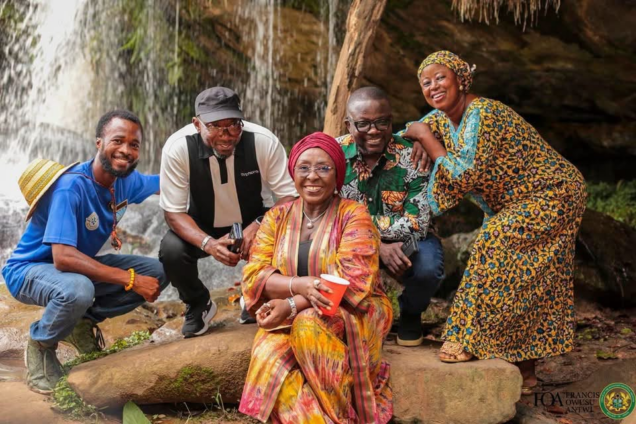
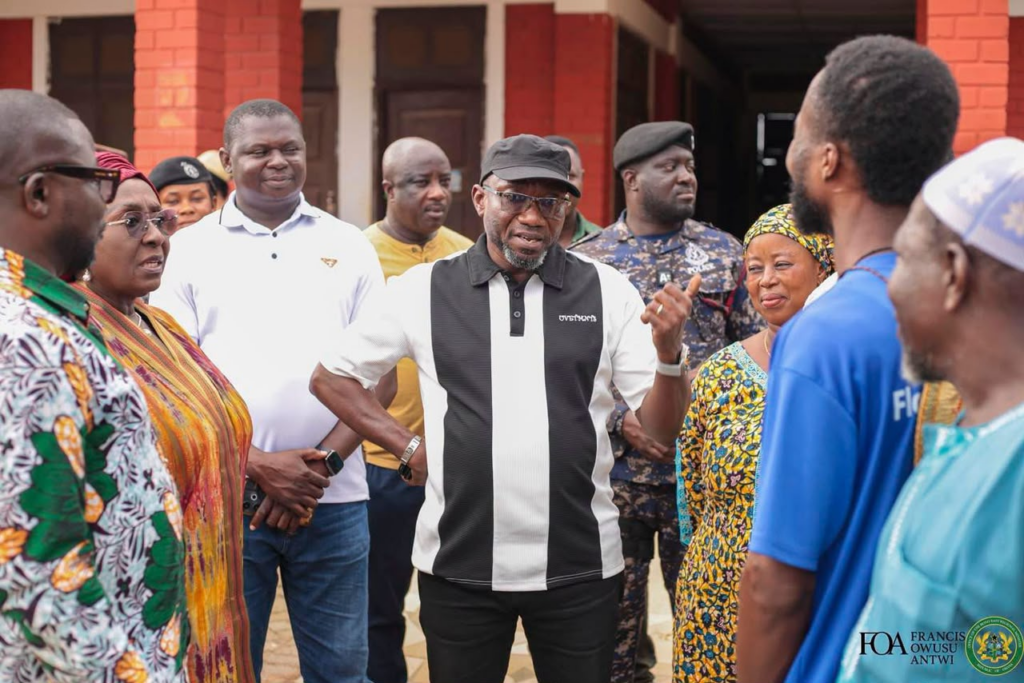
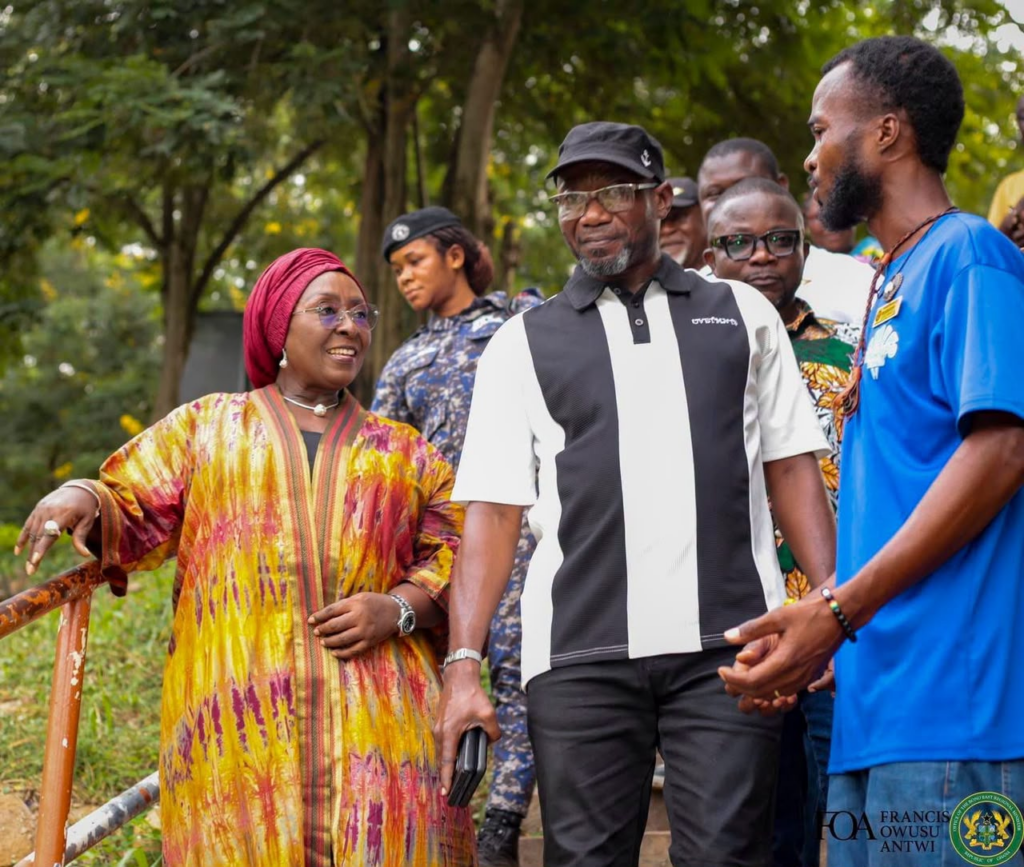
The Kintampo Waterfalls in the Bono East Region have come under renewed attention following a three-day familiarisation tour of the Bono and Bono East regions by the Minister for Tourism, Creative Arts and Culture, Dzifa Abla Gomashie.
The Minister, who visited the iconic tourist attraction on Monday, praised traditional authorities, municipal officials and community members for their efforts in preserving the natural environment.
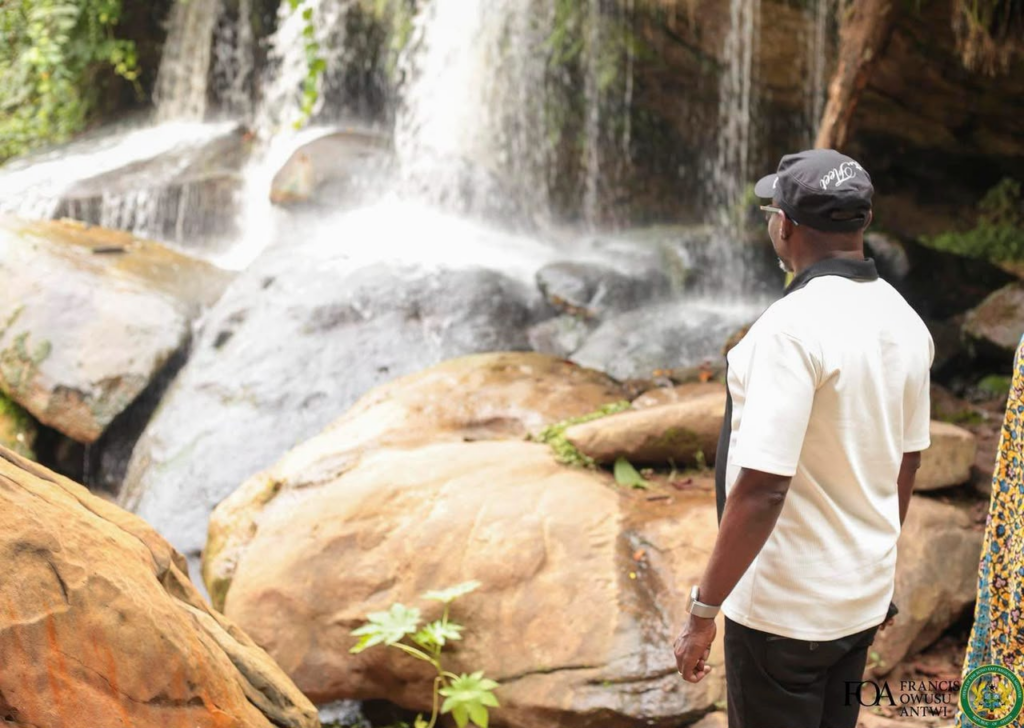
Minister praises Kintampo Waterfalls
Expressing her admiration for the site, Minister Gomashie described the Kintampo Waterfalls as a national treasure and commended local stakeholders for protecting it.
“I commend Nananom, the Municipal authorities, and the good people of this community for their stewardship. To see this environment so well preserved is a testament to your dedication. You have done Ghana proud,” she said.
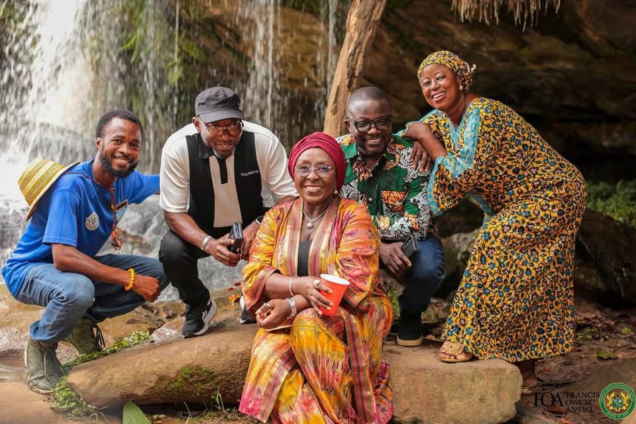
Located about four kilometres from Kintampo township, the waterfalls descend approximately 70 metres in three stages, making it one of Ghana’s notable and accessible waterfalls.
The attraction also features a canopy walkway that allows visitors to experience the surrounding forest from above while enjoying panoramic views of the landscape.
Strong warning to land grabbers
Despite her praise for the site’s preservation, the Minister issued a strong warning to individuals seeking to encroach on or develop parts of the protected area.
She cautioned prospective land grabbers and developers to stay away from the enclave, stressing that the government would take action to protect the site.
“Let me be clear to those who are dreaming of encroaching on this land: stay away before the government comes after you. This environment is a national treasure, and we will protect it at all costs,” she warned.
The warning forms part of the Minister’s broader efforts to protect Ghana’s tourism and heritage assets from unauthorised development and encroachment.
Earlier this month, she directed the removal of unauthorised structures around some of Ghana’s forts and castles, arguing that such developments could undermine the preservation of the country’s cultural heritage.
Call to tourists and investors
Minister Gomashie also encouraged Ghanaians, members of the diaspora and tourism-focused investors to explore the opportunities available in Kintampo.
Describing the area as the “centre of Ghana,” she said the town and its surrounding communities have several attractions capable of supporting tourism and local economic development.
“I urge all Ghanaians and those in the diaspora who have tourism at heart to come and see what Kintampo has to offer. This is the centre of Ghana, full of attractions. You must pay a visit,” she said.
Beyond the waterfalls, the Bono East Region boasts other attractions, including the canopy walkway, Boabeng Fiema Monkey Sanctuary and Digya National Park.
The Kintampo Waterfalls also offers opportunities for activities such as swimming, hiking and bird watching, making it an attractive stop for travellers moving between Kumasi and Tamale, as well as tourists heading towards Mole National Park.
Tourism as a driver of regional development
The Minister’s tour of the Bono and Bono East regions forms part of the Ministry’s wider assessment of tourism, cultural and creative arts sites across Ghana.
Her engagements with regional and local authorities are expected to inform efforts to improve tourism infrastructure, promote sustainable development and unlock the economic potential of attractions across the regions.
Source:myjoyonline

Ghanaian rapper Sarkodie is set to return to Kumasi with the 2026 edition of his highly anticipated Rapperholic concert.
Dubbed “Rapperholic26,” the event is scheduled for Saturday, October 24, 2026, at the Baba Yara Sports Stadium in Kumasi.
The announcement comes after the success of the 2025 edition, which was held in the Ashanti Regional capital under the theme “Rapperholic: The Homecoming.”
Last year’s concert marked a significant moment for Sarkodie, as it symbolised his return to Kumasi, the city where he grew up and began building his music career.
Following the strong reception to the homecoming edition, Sarkodie has decided to keep the concert in Kumasi for a second consecutive year, once again choosing the Baba Yara Sports Stadium as the venue.

Rapperholic26 is expected to draw thousands of music fans from across the country for another major celebration of Sarkodie’s music and career.

James Agalga Appointed New NDC Majority Leader in Parliament

Tourism Emerges as New Engine for Youth Jobs and Entrepreneurship in Ghana

Reconnecting With Home: Exploring Ghana Can Strengthen Our Cultural Identity



-

 Education2 weeks ago
Online Classes and Education: Are They the Future of Learning?
-
 General News1 week ago
KFC Ghana Faces Legal Scrutiny Over Customer Safety During GH¢15 Anniversary Promotion
-
 General News1 week ago
BOST Makes Over GH¢10 Million From Faulty Flow Meter Charges, Tanker Drivers Claim
-

 Entertainment2 weeks ago
Tima Kumkum Confirms Marriage Has Ended After One Year, Nine Months
-

 Entertainment2 weeks ago
Tourism Minister responds to concerns over support for comedians, says Creative Arts Agency will engage industry
-

 Politics2 weeks ago
Where Is Sedina ? — Hawk Newspaper Managing Editor Charles McCarthy Questions Government
-
 General News1 week ago
Western North NPP Election: 27 Candidates Listed for 11 Regional Executive Positions
-

 Entertainment2 weeks ago
Please Wait till Next Year – Lil Win Appeals to Ghanaians Over Private Videos