
General News
Transport Operators Push for 30% Fare Hike, Government Negotiates 10–15%

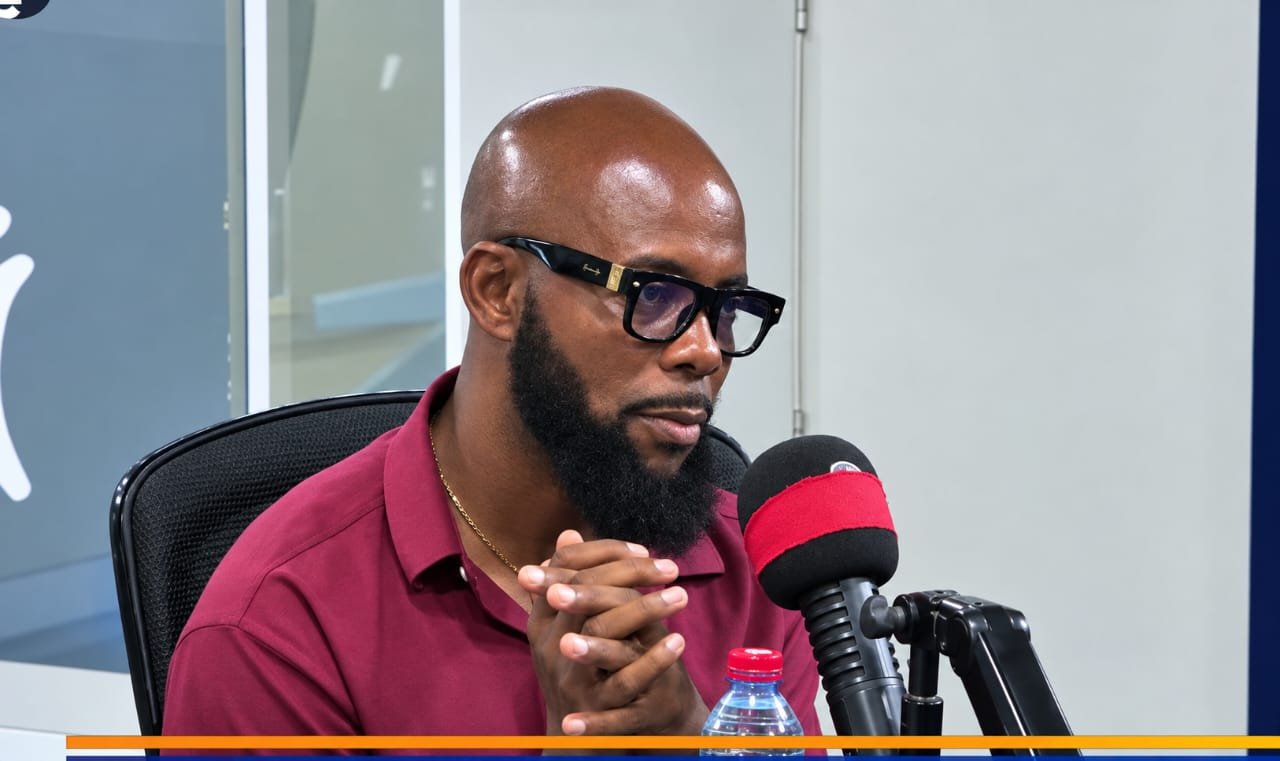
The Ghana Private Road Transport Union (GPRTU) has disclosed that transport operators initially demanded a 30% increase in transport fares, citing rising fuel prices and other operational costs.
According to the union, the Ministry of Transport has been engaging transport operators over the proposed adjustment, with negotiations seeking to bring the increase down to between 10% and 15% to reduce the burden on passengers.
Speaking to the GPRTU Deputy National PRO, Samuel Amish on Kesben Maakye show in Accra, he revealed that discussions over fuel price increases began in August, prompting the government’s GHC 2 subsidy intervention and an inquiry by the Transport Ministry into the various factors contributing to demands for higher fares.
He added that subsequent stakeholders meeting was scheduled for today September 22, 2026 to determine what percentage of increments would be approved for transport fares as fuel prices surge.
The union noted that although some spare-parts dealers had claimed prices had fallen, a committee of inquiry found no significant reduction in spare-parts prices.
He further stated that some commercial drivers have already increased their fares without approval. The union stressed that such increases remain unauthorized until an official adjustment is agreed upon.
According to the GPRTU, once the approved fares are announced, passengers will be assured of standardized charges, while drivers who disregard the officially approved rates could face arrest and prosecution under the new Legislative Instrument (LI 251).
By Maurice Otoo
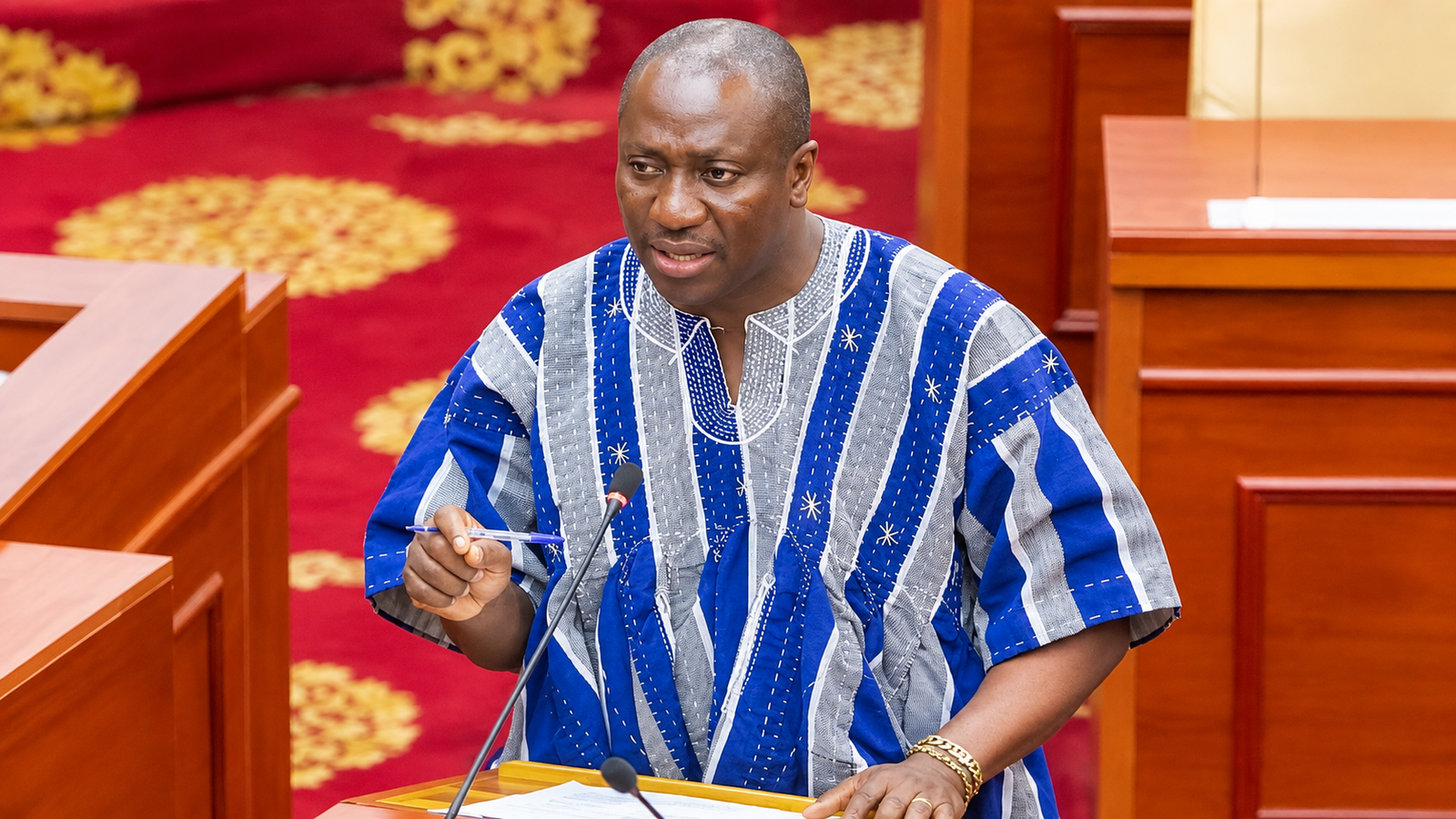
The Minority in Ghana’s Parliament has called on President John Dramani Mahama to direct his appointees to operate within the law following a reported attempt by officials of the Economic and Organised Crime Office (EOCO) to arrest Manhyia South Member of Parliament Nana Agyei Baffour Awuah at the Accra High Court on Wednesday, September 23.
The reported incident occurred as the legislator attended proceedings involving the bail application of social commentator Salomey Baffoe, whom authorities reportedly accuse of abetting the publication of false information connected to content associated with the “Ghana Jollof” TikTok account.
Important note: The report below is based on the information supplied in the user’s account. The specific circumstances of the alleged attempted arrest, including EOCO’s legal justification and whether a formal invitation was issued, require independent confirmation. A search conducted for corroborating reports did not produce sufficiently reliable results to independently verify all the claims.

OSP probe: Ken Ofori-Atta will return to Ghana in May – Afenyo-Markin assures
Reported incident at the Accra High Court
Nana Agyei Baffour Awuah, a lawyer representing Salomey Baffoe, was at the High Court for proceedings concerning her bail application when persons identified as EOCO officials reportedly sought to take him into custody.
The precise circumstances remain unclear. It has not been established from the information available:
-
Whether the MP had received a formal invitation from EOCO.
-
Whether an arrest warrant or other legal authorization had been issued.
-
The specific allegations or legal grounds on which the intended arrest was based.
-
Whether EOCO formally confirmed that its officers were involved in the incident.
The reported confrontation allegedly escalated outside the court premises. Videos said to be circulating show an exchange between the legislator and a woman identified as an EOCO official, followed by a scuffle as Baffour Awuah attempted to leave in his vehicle.
The authenticity, full context and sequence of events shown in any circulated footage would need to be established through independent review and statements from the parties involved.

Divine Healers Church members drag executives to court for overstaying their term of office
Minority Leader calls on Mahama to act
Speaking at a press conference on Wednesday, Minority Leader Alexander Afenyo-Markin criticised what he described as excesses by government officials and urged President Mahama to ensure that state institutions perform their duties lawfully.
He called on the President to reflect on the legacy of his administration and cautioned against conduct that could undermine public confidence in state institutions.
“Watch these excesses, enough is enough. Call your appointees to order because this is not the Ghana we want.”
Afenyo-Markin also stressed that the Minority was not opposed to accountability or the lawful work of state institutions.
“We are not against accountability and we always say that. We are not against any state institution going about its lawful duty as enshrined in any enactment or the Constitution.”
He added that institutions must be seen to be carrying out their responsibilities in accordance with the law.

“No prior contact”: EOCO denies media claims over arrest of fraud suspect ‘Abu Trica’ – Graphic Online
Accountability and the rule of law
The Minority’s position, as presented in the supplied statement, is that government agencies must be able to investigate allegations of wrongdoing while respecting constitutional safeguards and legal procedures.
The controversy raises several institutional questions:
|
Issue |
Question requiring clarification |
|---|---|
|
Legal authority |
What legal basis did the reported EOCO action rely on? |
|
Parliamentary status |
Were any parliamentary privileges or procedures relevant? |
|
Court proceedings |
Did the incident affect the bail proceedings involving Salomey Baffoe? |
|
Agency response |
What is EOCO’s official account of the events? |
|
Due process |
Was the MP formally invited, notified or presented with any legal documentation? |
These questions should be answered through official statements, court records and verified accounts rather than assumptions based solely on video footage or political commentary.
Salomey Baffoe case adds to tensions
The reported confrontation comes amid controversy surrounding the arrest and prosecution of social commentator Salomey Baffoe.
According to the account supplied, Baffoe faces an allegation of abetting the publication of false information in connection with material associated with the “Ghana Jollof” TikTok account. The precise charges, evidence and procedural status would need to be confirmed through court documents or statements from the prosecution and defence.
Baffour Awuah’s involvement as her lawyer places the reported incident within an ongoing legal dispute. However, representation of an accused person does not, by itself, establish wrongdoing by either the lawyer or the client.
EOCO’s response remains necessary
At the time of the supplied account, EOCO had not issued a detailed public explanation of the reported incident.
An official response would be important to clarify whether:
-
Its officers were present at the court.
-
Any attempt was made to arrest or detain the MP.
-
An investigation or formal invitation involving Baffour Awuah existed.
-
The agency considers the conduct of its officials to have complied with applicable law.
The absence of a detailed response should not be interpreted as confirmation of either the Minority’s allegations or the reported actions of the officials.
Political and institutional implications
The incident has the potential to intensify debate about the relationship between law-enforcement agencies, Parliament and the executive branch.
The Minority’s demand places responsibility on the President to ensure that appointees and state institutions respect legal boundaries. The government and EOCO would have an opportunity to respond with their own accounts and clarify whether the reported conduct was authorized and lawful.
An independent assessment must distinguish between verified events, allegations made by political actors and legal conclusions that can only be reached through established procedures.
Conclusion
The reported confrontation involving Nana Agyei Baffour Awuah has prompted the Minority to demand presidential intervention and greater adherence to due process. The central issue is not whether state agencies should investigate suspected offences, but whether such actions are conducted transparently, lawfully and with respect for constitutional protections.
Until EOCO, the affected MP and other relevant authorities provide detailed accounts, important questions about the intended arrest, the legal basis for the action and the events outside the court remain unresolved.

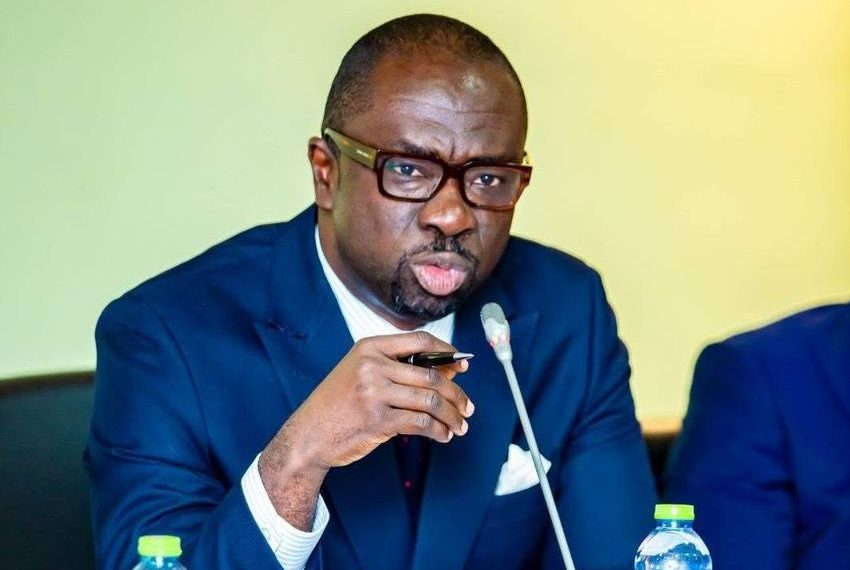
The Economic and Organised Crime Office (EOCO) has explained the circumstances surrounding its attempted arrest of Manhyia South Member of Parliament, Nana Agyei Baffour Awuah, at the Accra High Court on Wednesday, September 23, 2026.
The development followed a tense confrontation between the MP, who is also a lawyer, and security personnel believed to be from EOCO after proceedings in a case involving detained nurse Salomey Baffoe Awiti.
In a statement titled “EOCO’s Position on the Attempted Arrest of Hon. Baffour Awuah,” the anti-organised-crime agency said its officers were acting as part of their statutory responsibilities in connection with an ongoing investigation.
EOCO said the attempted arrest was not an isolated action but followed earlier efforts to secure the MP’s attendance for questioning.
EOCO says MP ignored two invitations
According to EOCO, Baffour Awuah was invited on two separate occasions in February 2026 to assist with an ongoing investigation.
The Office said the invitations were not honoured by the MP.
EOCO explained that after the invitations were allegedly ignored, it took further steps to secure his attendance in accordance with the law.
The agency therefore described Wednesday’s attempted arrest as one of the lawful measures it had taken to ensure that the MP appeared before the Office.
EOCO’s position was later reported by multiple media outlets, with the agency maintaining that the MP had failed to respond to the two February invitations.
Attempted arrest turns tense
The attempted arrest, however, did not proceed as planned after a confrontation broke out at the court premises.
Videos circulating online showed a woman believed to be an EOCO officer confronting Baffour Awuah around his vehicle.
The situation quickly became tense, with members of the MP’s team becoming involved before Baffour Awuah eventually drove away from the premises.
Reports indicate that a member of the legal team helped clear the way for the MP’s vehicle to leave, after which another vehicle believed to be connected to the security personnel followed.
EOCO said its officers ultimately decided not to complete the arrest because continuing with the operation could have posed a danger to public safety.
The agency said the circumstances surrounding the incident would be reviewed, including available video footage.
EOCO has also disclosed that it has identified two individuals who allegedly intervened during the incident to facilitate Baffour Awuah’s escape.
The Office said it was assessing the conduct of the two persons and that lawful action could follow if necessary.
According to EOCO, the available video footage would form part of the material it reviews before determining its next course of action.
Baffour Awuah has disputed EOCO’s account of the circumstances surrounding the attempted arrest.
Speaking to journalists at Parliament after the incident, the MP said a woman approached him after the court proceedings and asked him to accompany her to the EOCO office.
He said he questioned why he was being taken to EOCO and asked whether he had been formally invited.
According to the MP, the woman told him he had previously been invited but failed to appear, a claim he said he disputed.
Baffour Awuah also said he asked the woman to identify herself and to show him the legal basis for taking him into custody.
He said he specifically wanted to know whether she had an arrest warrant but alleged that no such document was produced.
The MP said the circumstances made him fear for his safety and that he therefore decided to drive away.
He later went to Parliament, where he said he felt safer and was joined by colleagues.
Baffour Awuah described the incident as an attempted abduction and said he had acted to protect himself, his family, his constituents and his ability to continue representing his client.
Those claims are the MP’s account of the incident and have not been independently established.
Baffour Awuah said his decision to go to Parliament was also connected to parliamentary work he was expected to undertake.
He said he had committee-related responsibilities and therefore proceeded to the parliamentary precincts after leaving the court.
EOCO, for its part, said it was aware that the MP had gone to Parliament to seek sanctuary, despite Parliament currently being on recess.
The agency stressed that it recognises and respects the constitutional privileges and immunities enjoyed by Members of Parliament.
However, EOCO also maintained that parliamentary membership does not automatically bring an investigation to an end or place an individual outside the reach of lawful investigative processes.
The Office said any action involving the MP would be conducted in accordance with the Constitution and applicable laws.
The confrontation occurred shortly after proceedings involving Salomey Baffoe Awiti at the Accra High Court.
Baffour Awuah is representing Baffoe Awiti as her lawyer.
Baffoe Awiti is facing a case involving allegations of abetment of crime in connection with the alleged publication and circulation of false information linked to the “Ghana Jollof” TikTok account.
According to the Ghana News Agency, Baffoe Awiti, a 40-year-old nurse, was remanded after being accused of conspiring with UK-based TikTok personality Barbara Asantewa Kodua, popularly known as “Ghana Jollof”, to publish and circulate false news.
She has pleaded not guilty to the charge.
The prosecution has alleged that investigations into the case are continuing and that the matter involves national security concerns.
The High Court on Wednesday adjourned Baffoe Awiti’s bail application to Thursday, September 24, 2026.
The adjournment followed a request by the prosecution for additional time to respond to the defence’s bail application.
Assistant State Attorney Carl Afedzi Forson told the court that he was not the substantive lawyer handling the matter and that the Attorney-General’s Office had only been served with the bail application the previous Friday.
He explained that Monday had been a public holiday, meaning the application had not yet been assigned to a lawyer within the Attorney-General’s Office for a response.
The prosecution consequently requested a short adjournment to prepare and file its response.
Baffour Awuah opposed the request, arguing that the matter concerned the liberty of his client and should therefore be dealt with expeditiously.
The court subsequently fixed Thursday, September 24, for the bail hearing.
EOCO maintains investigation is ongoing
EOCO has reiterated that its investigation remains active.
The Office said it would examine the events surrounding the attempted arrest, including video evidence and the conduct of those who allegedly intervened.
It also maintained that it would continue to discharge its statutory responsibilities while respecting the Constitution, the rule of law and the privileges and immunities attached to Parliament.
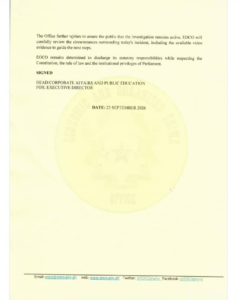
The statement was signed by the Head/Corporate Affairs and Public Education for the Executive Director of EOCO and dated September 23, 2026.
The incident has produced two competing accounts.
EOCO maintains that Baffour Awuah had been invited twice in February to assist with an ongoing investigation, failed to honour the invitations and was therefore the subject of a lawful attempt to secure his attendance.
Baffour Awuah, however, disputes that account and says he was approached by a woman who could not provide the identification or arrest warrant he requested. He maintains that he drove away because he feared for his safety.
The immediate circumstances of the confrontation, including the precise legal basis for the attempted arrest and the conduct of the individuals involved, remain subject to further clarification.
EOCO has indicated that it will review the available evidence before taking any further action.
Meanwhile, attention is expected to return to the High Court on Thursday, September 24, when the bail application involving Salomey Baffoe Awiti is scheduled to continue.
General News
Xi Jinping’s Washington Visit: Ceremony, Strategic Talks and High-Stakes U.S.–China Relations

By Angel No Lie | KPD Online | September 23, 2026
Introduction
Chinese President Xi Jinping is scheduled to begin a high-profile state visit to the United States from 23 to 25 September 2026, with the White House preparing an extensive ceremonial welcome and talks with President Donald Trump.
The visit is expected to combine diplomatic pageantry with discussions on trade, rare-earth supplies, artificial intelligence and the broader management of competition between the world’s two largest economies. It will be Xi’s first visit to Washington in more than a decade.
The scale of the planned welcome reflects the importance both governments attach to maintaining communication, even as disagreements persist over technology, economic policy, security and geopolitical influence.

Trump annuncia: il presidente cinese Xi Jinping alla Casa Bianca nel 2026
A high-profile welcome at the White House
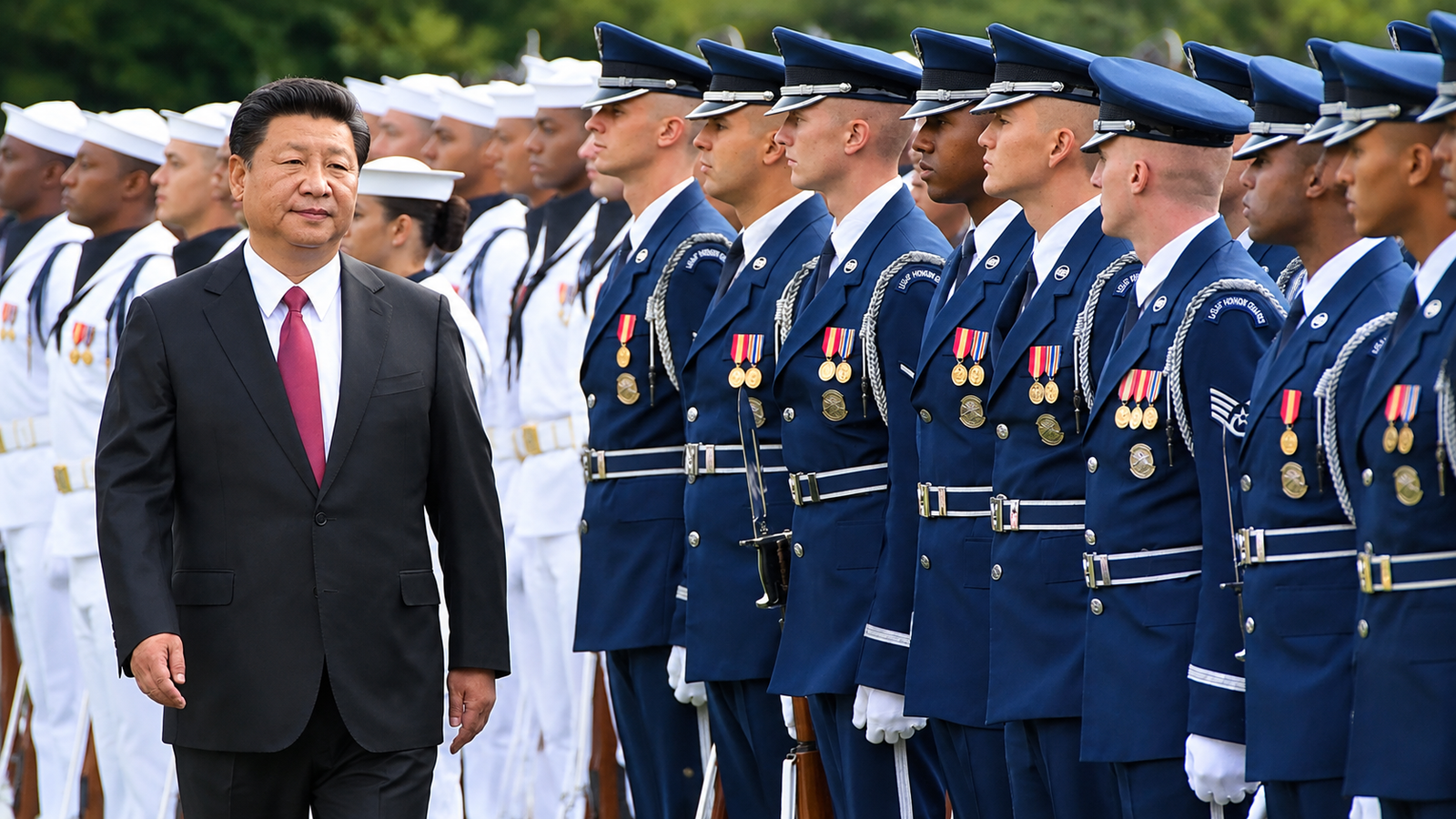
Trump is expected to personally welcome Xi at Joint Base Andrews, an unusual protocol gesture for a visiting foreign leader. The official program is scheduled to include:
-
A formal arrival ceremony inside the White House.
-
A military review in the Rose Garden.
-
Private discussions between Trump and Xi.
-
A state dinner hosted by Trump and First Lady Melania Trump.
-
Additional cultural and diplomatic engagements involving the two countries’ first ladies.
The planned ceremony underscores the symbolic importance of the visit. While such events are designed to project diplomatic respect, they do not necessarily indicate that disagreements between the two governments have been resolved.

US-NUCLEAR-SUMMIT-CHINA
Key issues on the agenda
1. Trade and tariffs
Trade is expected to be a central subject in the talks.
Washington and Beijing have sought to manage tensions following years of tariff disputes and restrictions on strategic goods. Officials are expected to discuss the possibility of easing selected tariffs and stabilizing commercial relations, although the scope of any agreement remains uncertain.
The two sides face competing economic priorities. The United States is seeking to address trade imbalances and protect sensitive industries, while China has an interest in maintaining access to international markets and limiting restrictions on its exports and technology sector.
2. Rare-earth materials
Rare-earth elements are another important subject.
These minerals are essential for several industries, including electronics, renewable-energy technologies, defence equipment and advanced manufacturing. China’s significant position in global rare-earth processing gives the issue strategic and economic importance.
According to reporting on the planned summit, the leaders are expected to discuss the flow of rare-earth materials into the global economy. The United States has indicated that it may consider tariff relief on some nonstrategic goods but is not expected to remove all export controls connected to rare-earth supplies.
3. Artificial intelligence
Artificial intelligence is also expected to feature in the discussions.
The United States and China are competing in AI research, computing infrastructure, advanced chips and commercial applications. At the same time, both countries face questions about the risks associated with increasingly capable AI systems.
The inclusion of AI in the summit agenda indicates that technology policy is becoming part of broader diplomatic negotiations rather than remaining solely a commercial or scientific issue.

시진핑 주석, 방미 두 번째 지역 워싱턴 도착 (5)
Technology executives invited to the state dinner
Several major technology executives are expected to attend the state dinner, including leaders from Amazon, Alphabet, OpenAI, Apple, Tesla, Nvidia and Dell Technologies.
Reported invitees include:
|
Company |
Executive |
|---|---|
|
Amazon |
Jeff Bezos |
|
Alphabet |
Sundar Pichai |
|
OpenAI |
Sam Altman |
|
Apple |
Tim Cook |
|
Tesla |
Elon Musk |
|
Nvidia |
Jensen Huang |
|
Dell Technologies |
Michael Dell |
Their presence would provide an opportunity for informal engagement between American technology leaders and Chinese officials. However, reports indicate that major Chinese corporate executives are unlikely to accompany Xi, limiting expectations of substantial business agreements during the visit.
Symbolism versus substantive outcomes
The visit carries considerable symbolic weight. Trump’s decision to greet Xi at the airport and host a state dinner signals a willingness to emphasize personal diplomacy and formal respect.
However, the ceremonial aspects should be distinguished from measurable policy outcomes. The summit’s practical significance will depend on whether the two governments reach understandings on trade, technology controls, rare-earth supplies and other disputed issues.
The Wall Street Journal reported that expectations for major trade and investment announcements were relatively limited, partly because political tensions continue to restrict significant Chinese investment in the United States.
Regional and geopolitical implications
The summit takes place against a broader backdrop of strategic competition involving Taiwan, technology restrictions and the balance of power in the Indo-Pacific.
The leaders’ approach to Taiwan is likely to remain relevant to the wider relationship, even if the visit’s publicly stated agenda focuses on economic and global issues. Disagreements over Taiwan, security partnerships and military activity in the region have the potential to complicate attempts to improve bilateral ties.
The visit should therefore be viewed as an effort to manage competition and preserve diplomatic channels, rather than evidence that the fundamental strategic differences between Washington and Beijing have disappeared.
What to watch during the visit
Several developments could help determine the summit’s practical impact:
-
Trade commitments: Whether the leaders announce tariff adjustments or a framework for future negotiations.
-
Rare-earth supplies: Whether China offers assurances on exports and whether the United States changes related restrictions.
-
Technology cooperation: Whether AI safety discussions produce concrete proposals or remain at the diplomatic level.
-
Taiwan and security: Whether either government issues statements that alter existing positions.
-
Business agreements: Whether the state dinner results in specific commercial commitments despite the reported absence of a large Chinese business delegation.
Independent assessment
The planned White House welcome demonstrates the diplomatic importance of the Xi–Trump meeting, but ceremony alone cannot establish whether the summit will produce lasting progress.
The visit presents an opportunity for both governments to reduce miscalculation, address economic disputes and maintain communication. At the same time, substantial differences remain over trade policy, strategic technologies, security and regional influence.
The most meaningful measure of the visit will be the concrete commitments and follow-up actions that emerge from the talks—not the scale of the ceremonial welcome.
Sources
-
Reuters — Xi Jinping’s scheduled U.S. visit from 23–25 September 2026.
-
Reuters — Planned airport welcome, state ceremony and summit agenda.
-
Associated Press — White House arrangements and planned state visit activities.
-
Wall Street Journal — Expectations surrounding trade and Chinese business participation.
General News
Gaza’s Displacement Crisis Exposes Growing Protection Risks for Women and Girls, UNFPA Reports
Overview
Reports of gender-based violence (GBV) in Gaza have increased amid prolonged displacement, overcrowded shelters, shortages of essential services and the weakening of protection systems, according to recent assessments published by the United Nations Population Fund (UNFPA).
A UNFPA analysis of reported cases from April to June 2026 identifies continuing risks for women and girls, including denial of resources, forced and early marriage, and sexual violence. The agency links these risks to displacement, inadequate shelter, scarcity of resources and limited access to essential services.
The findings are reinforced by a separate UNFPA safety audit published on 17 September, which examines how the physical and institutional conditions of displacement sites can increase exposure to violence and prevent survivors from safely seeking assistance.

Shelter-Camp-in-Gaza-Faces-Incoming-Blizzard
Reported cases rise, but figures do not represent total prevalence
The UNFPA trends analysis is based on cases managed by partners in Gaza’s GBV Case Management Taskforce. It identifies an increase in reported incidents during the second quarter of 2026 and highlights the disproportionate effect on women and girls.
However, reported cases should not be interpreted as a complete count of all violence occurring in Gaza. Fear of retaliation, stigma, limited confidentiality, the breakdown of referral services and restricted access to protection providers can prevent survivors from reporting incidents.
The UNFPA safety audit specifically cautions that its findings are intended to identify risk factors and gaps in services, rather than measure the overall prevalence of gender-based violence.

PALESTINIAN-ISRAEL-CONFLICT-AID-FOOD
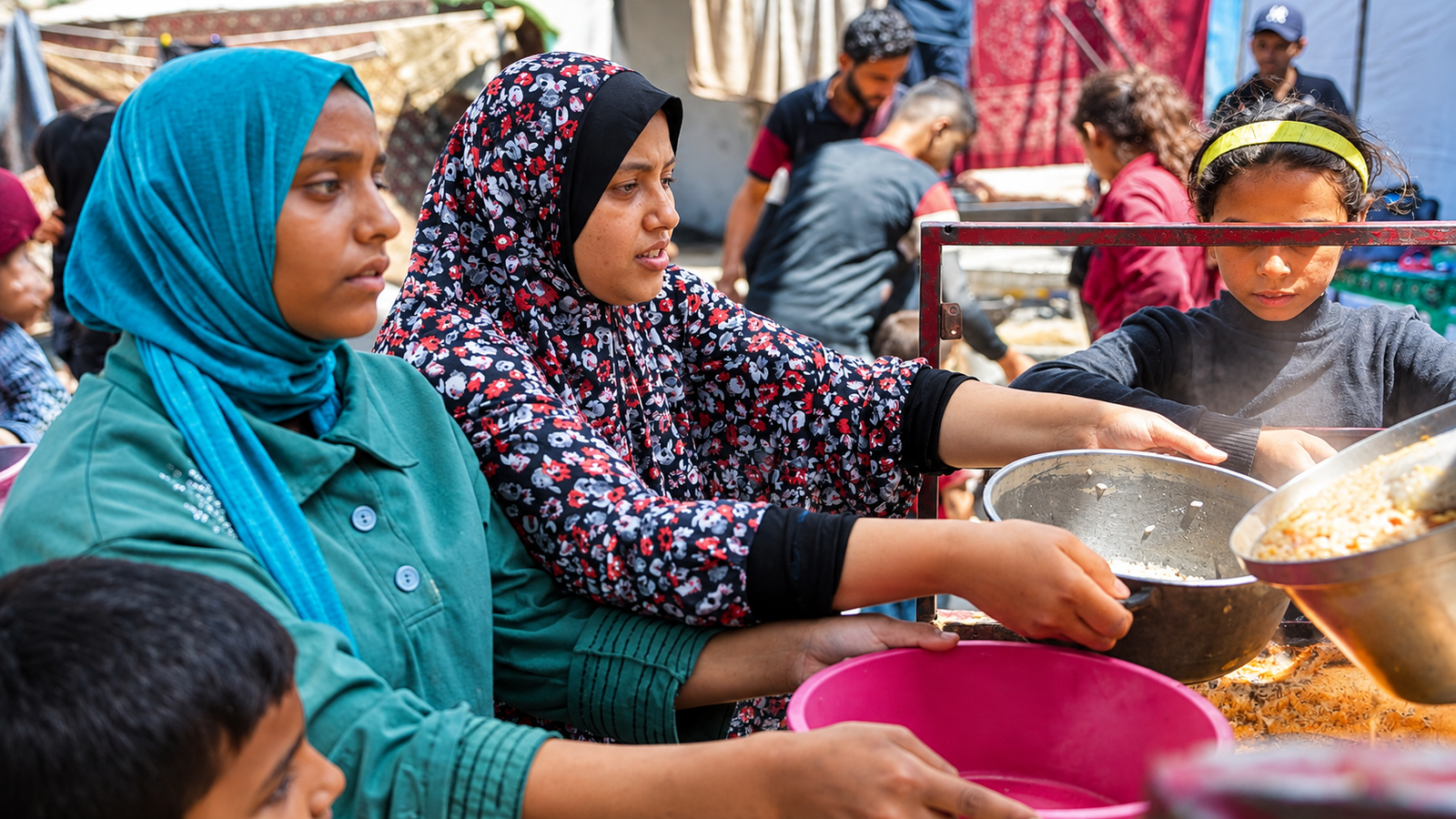
Overcrowded shelters increase risks
The UNFPA safety audit assessed 15 displacement and shelter sites, two humanitarian service-delivery environments and consultations involving women living in Gaza. The report also drew on a protection-monitoring dataset containing 10,594 interviews.
Its findings point to several recurring problems:
-
Insufficient lighting around pathways, toilets, water points and entrances.
-
Inadequate privacy in tents, classrooms and shared shelters.
-
Unsafe or distant sanitation facilities.
-
Overcrowding and limited separation between living spaces.
-
Barriers affecting women with disabilities, older women and people with limited mobility.
-
Weak or mistrusted complaint and referral systems.
-
Concerns about harassment and exploitation at service points and along routes to essential facilities.
The report says these conditions can restrict women’s movement and force them to adopt potentially harmful coping strategies, including delaying the use of sanitation facilities, reducing water consumption or relying on accompaniment to access basic services.

Gaza’s Deepening Humanitarian Crisis – Human Rights & Public Liberties
Scale of displacement places pressure on protection systems
According to the safety audit, data from the Site Management Cluster indicated that, as of 11 May 2026, 1,590 active displacement sites were hosting approximately 1.7 million people across 354,480 households.
The report states that 82.6% of the active sites were temporary or informal locations, while 66.5% had no designated site-management entity. UNFPA links the absence of formal management in many locations to challenges involving accountability, oversight, complaints and the timely response to protection risks.
The concentration of displaced people in crowded areas also places additional pressure on water, sanitation, health and food-distribution services.
Women describe deteriorating safety and privacy
A separate UNFPA report, based on the experiences of 230 women living in displacement camps in Gaza City and Khan Younis, documents concerns about overcrowding, limited privacy and reduced access to clean water, food and functioning latrines.
The research was based on 16 focus-group discussions conducted between December 2025 and January 2026. Participants had experienced repeated displacement, with some reporting between two and ten displacements.
The women described how the loss of stable housing and the disruption of family and community protection networks had affected their ability to stay safe. The report also records concerns about access to health, legal and psychosocial support.
The researchers stressed that participants’ accounts should be understood within the report’s methodology and limitations. In particular, indirect references to sexual violence were documented without assuming details that participants had not explicitly stated.
Forms of violence and exploitation
The UNFPA trends analysis identifies several forms of gender-based violence reported in Gaza, including:
|
Reported concern |
Context identified by UNFPA |
|---|---|
|
Denial of resources and services |
Restricted access to assistance and essential supplies |
|
Psychological and emotional abuse |
Harm affecting women and girls amid displacement and insecurity |
|
Physical violence |
Reported assaults in a wider protection crisis |
|
Forced and early marriage |
Increased risks linked to poverty, insecurity and displacement |
|
Sexual violence |
Underreporting and barriers to confidential support |
The agency says that increasing GBV services, expanding Women and Girls Safe Spaces, improving economic support and strengthening protection measures across humanitarian sectors are among the necessary responses.
Humanitarian aid and protection gaps
The reports describe a situation in which the safety of women and girls is influenced not only by direct acts of violence but also by the design and accessibility of humanitarian services.
For example, poorly lit routes, inadequate sanitation facilities and a lack of confidential complaint mechanisms can increase exposure to danger or discourage women from seeking assistance.
UNFPA recommends that humanitarian organizations:
-
Improve lighting around sanitation facilities, pathways, water points and distribution areas.
-
Rehabilitate toilets and water facilities with greater privacy and accessibility.
-
Ensure that shelters have secure doors, partitions and safer living arrangements.
-
Provide confidential complaint and referral channels staffed by trained personnel.
-
Strengthen the management and monitoring of displacement sites.
-
Ensure that women, including female-headed households and women with disabilities, can access aid independently and safely.
-
Integrate GBV risk reduction into shelter, health, WASH, food security and protection planning.
Wider humanitarian consequences
The findings come amid a broader humanitarian crisis in which women and girls face difficulties accessing health care, food, shelter and protection.
Earlier UN Women reporting cited by Reuters estimated that at least 47 women and girls were killed each day in Gaza between October 2023 and December 2025, while approximately one million women and girls were displaced. The agency also warned that extensive infrastructure damage had made access to essential health services extremely difficult.
Those figures concern deaths and displacement rather than the GBV case trends examined by UNFPA. They illustrate the wider gender-specific consequences of the conflict but should not be combined with reported violence cases as though they measured the same phenomenon.
Independent assessment
The UNFPA reports indicate that the risks facing women and girls in Gaza extend beyond individual incidents. Displacement, overcrowding, inadequate sanitation, limited privacy and weakened reporting systems can combine to make everyday activities more dangerous and reduce access to support.
At the same time, the available figures have important limitations. Reported cases depend on access to services and the willingness or ability of survivors to disclose violence. Consequently, an increase in reports may reflect both increased incidents and improved or changed reporting patterns.
The immediate challenge for humanitarian agencies is therefore twofold: prevent violence and exploitation while ensuring that women and girls can access confidential, survivor-centred assistance without fear of retaliation or losing access to essential aid.
Sources
-
UNFPA — GBV Trends Analysis, April–June 2026
-
UNFPA — Gender-Based Violence Safety Audit Report: Gaza Strip
-
UNFPA — “I want to feel safe again”: Drivers of Gender-Based Violence in Gaza
-
Reuters — UN report on women and girls killed in Gaza
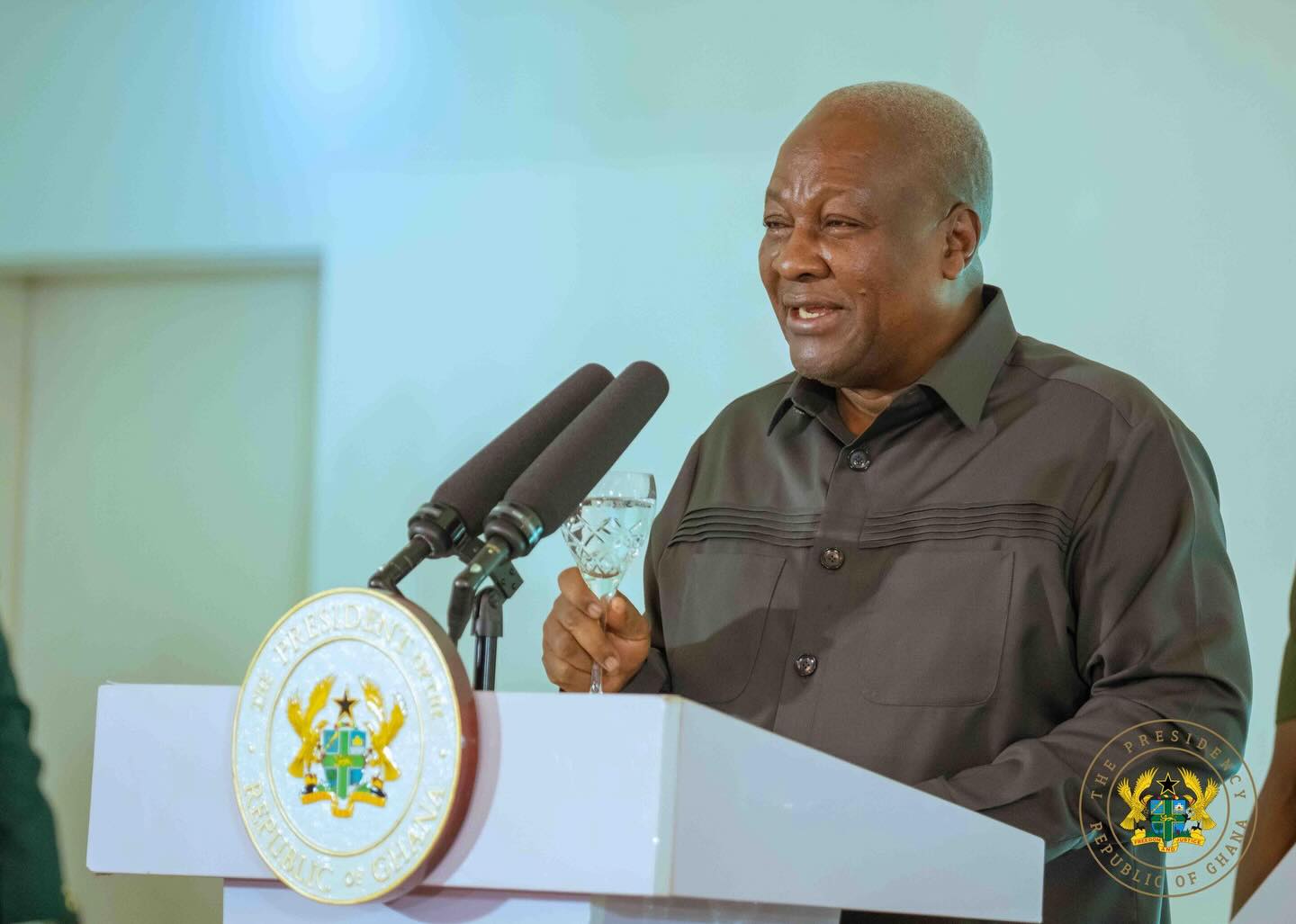
President John Dramani Mahama has directed the Media Foundation for West Africa (MFWA) and the Ghana Journalists Association (GJA) to jointly organise a national stakeholder engagement on hate speech, abusive online content and responsible digital communication.
The initiative is aimed at addressing the growing incidence of hate speech, threats, abusive language and other harmful content on social media and emerging digital platforms while safeguarding freedom of expression.
The directive was contained in a letter from the Office of the President dated September 22, 2026, and signed by the Secretary to the President, Dr Callistus Mahama.
In the letter, the President called for a broad, inclusive engagement to develop a coherent national roadmap that responds appropriately to harmful digital content without undermining legitimate expression.
President Mahama observed that Ghana’s media environment had undergone significant changes, with public discourse increasingly shaped not only by traditional media organisations but also by individual bloggers, content creators, influencers and users of platforms such as TikTok.
He noted that traditional media organisations operate within established professional and regulatory frameworks, while many online personalities command substantial audiences without necessarily being subject to recognised editorial standards or clear accountability mechanisms.
According to the President, this development presents a difficult but important public-policy challenge that requires a balanced response.
He stressed that efforts to address hate speech, threats, incitement and other unlawful conduct must not result in the criminalisation of legitimate criticism, political commentary, satire and dissent.
The President also expressed concern about what he described as disproportionate arrests over mere criticism or politically charged commentary.
He warned that such actions could be counterproductive, create undeserving martyrs and undermine public confidence in state institutions.
He therefore called for an approach that distinguishes between lawful expression and genuinely harmful or unlawful digital content.
“There is, therefore, an urgent need for a coherent national roadmap that protects freedom of expression while providing an appropriate and proportionate response to genuinely harmful digital content,” the letter stated.
As part of the directive, the MFWA and GJA have been requested to lead a broad, stakeholder-inclusive process involving institutions and groups with interests in media, law, human rights and digital communication.
The proposed engagement is expected to bring together: The National Media Commission, the Ghana Police Service, Relevant religious bodies, Civil society organisations,Traditional media organisations,Social media content creators, bloggers and influencers, Legal and human-rights experts, Representatives of digital platforms, where possible, and relevant state regulatory and security institutions.
The engagement is expected to provide a platform for these stakeholders to examine the challenges associated with harmful online content and identify measures that can address them while respecting freedom of expression.
President Mahama has asked the two organisations to ensure that the engagement examines the adequacy of Ghana’s existing legal, regulatory and institutional framework for dealing with hate speech and harmful digital content.
The process is also expected to clarify the distinction between lawful criticism and unlawful speech.
Participants are expected to propose practical guidelines for law-enforcement agencies and recommend appropriate policy, legislative, regulatory and non-legislative measures.
The proposed guidelines are intended to help address harmful online conduct while ensuring that legitimate expression is not unnecessarily restricted.
The engagement is also expected to consider public education, media and digital literacy, as well as professional and ethical standards for online content creators.
Other areas identified for consideration include accessible complaints and redress mechanisms that would allow individuals to report harmful content and seek appropriate remedies.
The President further called for consideration of alternatives to arrest and prosecution in cases that do not involve threats, incitement, violence or other clearly criminal conduct.
The process is expected to explore how these measures can contribute to responsible digital communication and a more effective response to harmful online activities.
President Mahama has requested the MFWA and GJA to submit a proposed framework and timetable for the stakeholder engagement.
The two organisations are also expected to present recommendations arising from the process for the President’s consideration.
The directive concludes with the President expressing his highest consideration to the recipients.
The initiative places the MFWA and GJA at the centre of a proposed national consultation on how Ghana can respond to harmful online content while maintaining protections for legitimate criticism, political commentary and dissent

‘This is a retrogression’ — Martin Kpebu condemns alleged EOCO attempt to arrest MP

Minority Demands Presidential Intervention After Reported EOCO–MP Confrontation

EOCO Explains Attempted Arrest of Manhyia South MP Baffour Awuah



-
 General News1 week ago
GTA’s Financial Strength Weakens Despite 2025 Tourism Activities
-

 General News1 week ago
GTA Cash Reserves Halve to GH¢640,000 Despite Improved Liquidity Ratio
-

 General News2 weeks ago
TVET is not for the academically weak – Advocate calls for change in Ghana’s mindset
-

 General News1 week ago
Creative Arts Agency Records GH¢2.01m Revenue in FY2025 Despite Financial Reporting Gaps
-
 Business2 weeks ago
Bank Profits Slide to GH¢7.1bn as Low Interest Rates Squeeze Earnings
-
 General News2 weeks ago
Police Launch Manhunt for Missing Assin Fosu Man as Captors Demand GH¢49,500 Ransom
-

 Culinary1 week ago
Oranges: More Than Just Juice — The Nutritious Fruit Adding Flavour to Ghanaian Life
-
 General News1 week ago
National Theatre balances cultural mandate with commercial survival