
General News
Family of Detained Nurse Cries Foul, Heads to High Court for Bail

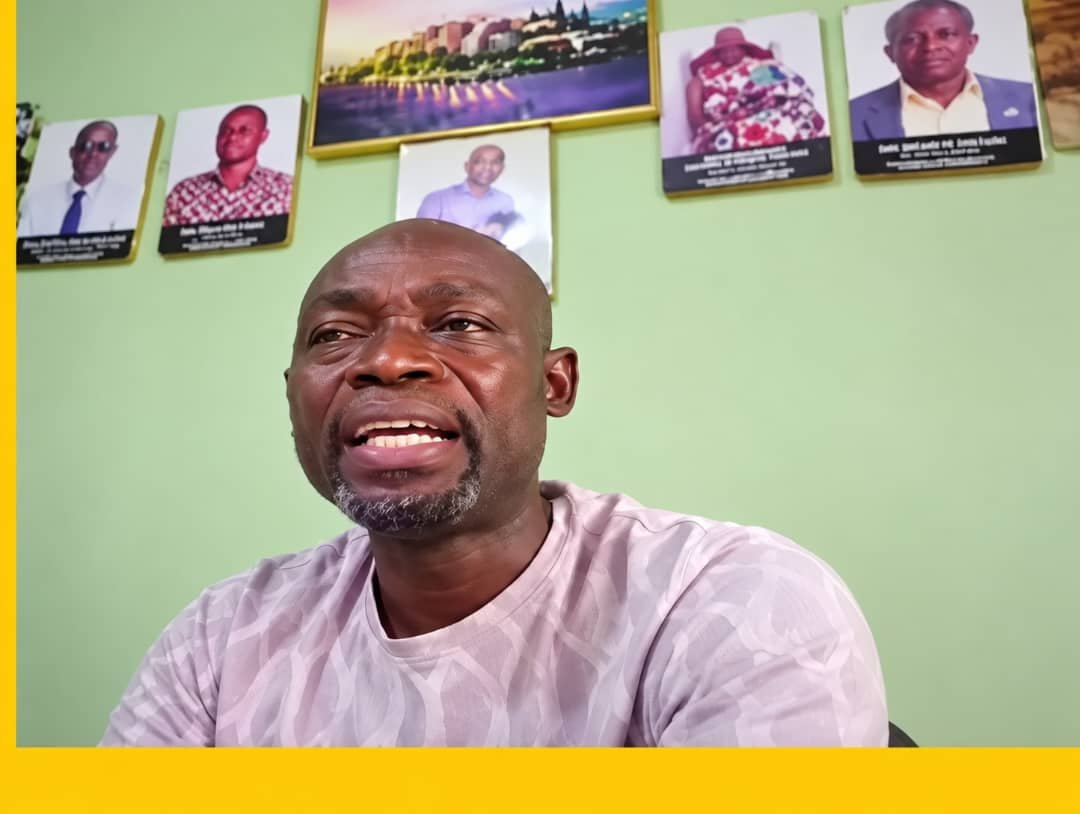
The family of Salomey Awiti Bafo, the nurse reportedly detained in connection with the controversial “Ghana Jollof” case, has raised concerns over her continued detention and restricted access to her.
In a zoom interview held with Kojo Preko Dankwa on Kessben Maakye show in Accra, Osei Safo Stuttgart, Salomey’s brother, he disclosed, his sister has been in police custody in Accra since last Thursday but relatives have allegedly not been permitted to see or speak with her.
According to the Osei, the family initially received information that Salomey had been picked up at night by police in connection with an alleged mobile money fraud case and would be taken to the Techiman Police Station.
However, after making enquiries, they reportedly could not locate her in Techiman.
The family said it later learned that she was being held in Accra at the Bureau of National Investigations (BNI) after they had organized a press conference to announce her disappearance. Their lawyer subsequently travelled to Accra but was allegedly not allowed to speak with her.
Osei Stuttgart further claims that Salomey has been accused of conspiring with “Ghana Jollof” to abuse the President and his family and also plotting a coûp d’ètat with the said “Ghana Jollof”.
Additionally , Osei noted that the coup d`etat charges reminds him of a posted picture on TicTok in April by Hopeson Adorye claiming that Salomey is Ghana Jollof of which Salomey later debunked it on facebook live streaming.
He also alleges that attempts to secure bail have so far been unsuccessful.
The family says they are now heading to the High Court to appeal for bail, while maintaining that Salomey is innocent and is neither active on social media or involved in partisan politics.

By Angel No Lie | KPD Online | September 23, 2026
South Sudan has entered a new stage of its long-delayed political transition after President Salva Kiir Mayardit dissolved the transitional unity government and signed changes to the country’s election law that remove two major prerequisites for holding national elections.
The measures, announced on September 22, came as authorities prepare for elections scheduled for December 22, 2026. The transition has been repeatedly postponed since South Sudan gained independence in 2011.

South Sudan marks 15 years of independence in crisis – The EastAfrican
Government dissolved after election-law changes
Kiir’s decision followed parliament’s approval of amendments to the National Elections Act.
Under the amended legislation, elections no longer have to wait for completion of a permanent constitution or a national census. Those requirements had been among the obstacles repeatedly cited during previous delays.
Kiir subsequently dissolved the transitional government, with the decree removing vice-presidents, ministers and local administrators. National and state assemblies were also dissolved.
The judiciary and security institutions remain in place.
Importantly, the amended law allows the incumbent executive leadership to remain in office with constitutional powers during the election period until a newly elected president assumes office.

SSUDAN-ETHIOPIA-ERITREA-DIPLOMACY
A transition created by the 2018 peace agreement
The government being dissolved was established under the 2018 peace agreement, which sought to end years of civil war and create a power-sharing arrangement between Kiir’s government and opposition forces.
The agreement was intended to lead eventually to elections.
However, several components of the transition have remained incomplete. These include the permanent constitution, voter registration and the integration of armed forces associated with rival political groups.
South Sudan’s first national elections were initially expected much earlier but have been repeatedly postponed.

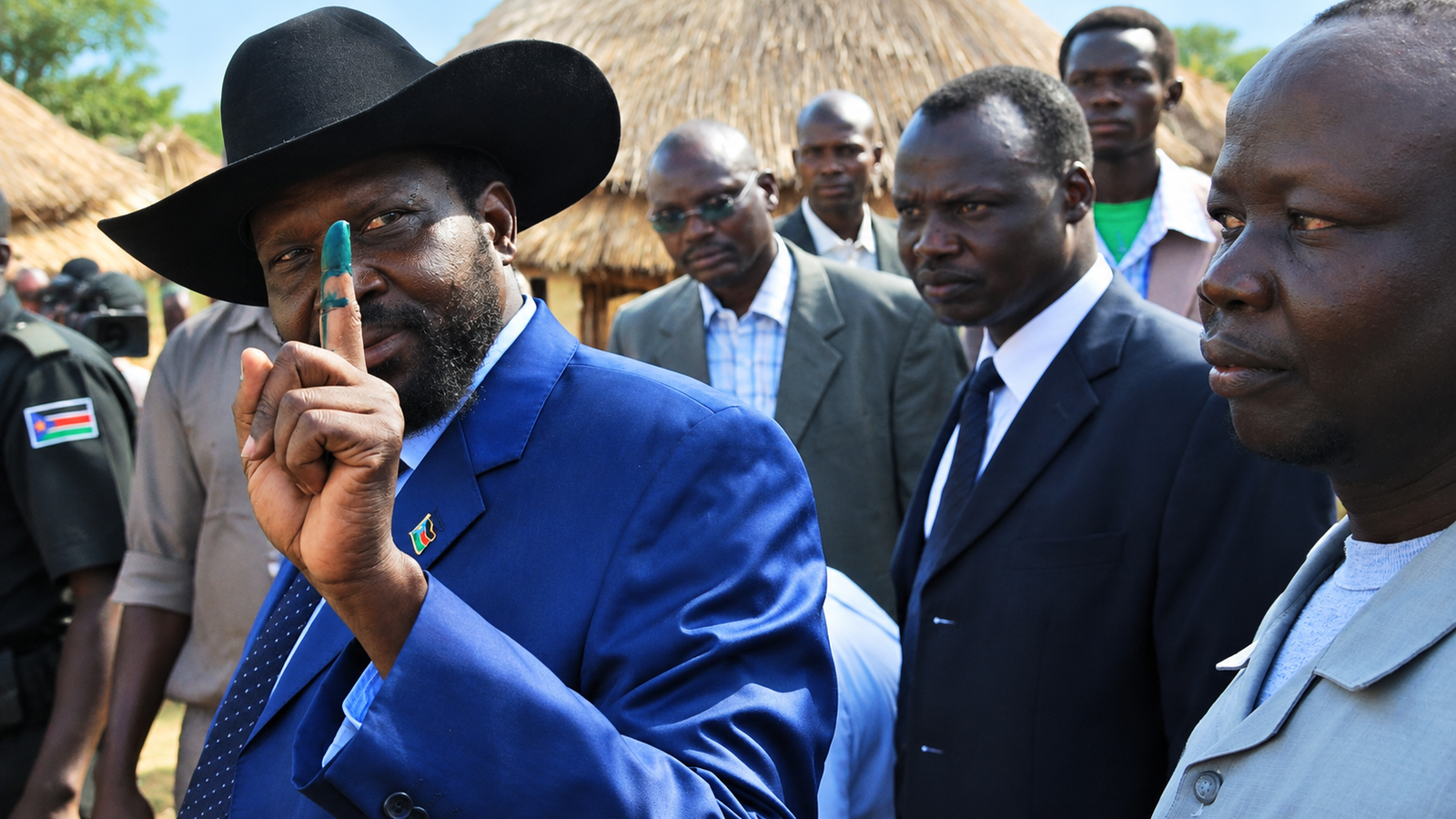
South Sudanese voters queue outside at a
Key developments
| Development | Current position |
|---|---|
| Transitional government | Dissolved |
| Election date | December 22, 2026 |
| Permanent constitution | Not completed |
| National census | Not completed |
| Voter registration | Yet to begin |
| National legislature | Dissolved under the new arrangement |
| Presidential authority | Kiir remains in office during the election period |
| First Vice-President Riek Machar | Remains under house arrest and on trial |
The election date and remaining preparations could still become contentious because major elements of the transition remain unfinished.
Opposition concerns
The changes have been rejected by the main opposition alliance.
One of the most significant issues is the position of Riek Machar, Kiir’s longtime political rival and leader of the Sudan People’s Liberation Movement-in-Opposition.
Machar has been under house arrest since March 2025 and is facing charges including treason and murder, which he denies. His continued detention adds another major political dimension to preparations for the proposed election.
The removal of the vice-presidential positions is also significant because those positions formed part of the power-sharing structure established by the 2018 peace agreement.
Changes to parliament
The new electoral framework also reduces the size of South Sudan’s legislature.
According to Reuters, the National Legislative Assembly will be reduced from 650 members to 270. State assemblies will fall from 100 seats to 58, while legislative councils in administrative areas will have 20 members.
The changes therefore affect not only the timing of elections but also the structure of the institutions that voters would elect.
Elections can now move forward — but preparations remain
The legal changes remove two important procedural obstacles, but they do not mean that the country is fully prepared for voting.
Reuters reported that voter registration had not yet begun as of September 22. Al Jazeera also reported that the permanent constitution remains unfinished and that the armed forces loyal to rival political factions have yet to be fully unified.
Kiir also replaced the head of the national elections commission the previous week without publicly giving a reason. The new chairman, Gabriel Bol Deng Majok, has been given a mandate to oversee preparations for the vote.
Questions over presidential powers
The restructuring has generated competing interpretations.
The government presents the changes as part of the process needed to move from the transitional period toward elections.
But analysts cited by Al Jazeera and AFP have raised concerns about the concentration of authority in the presidency because Kiir remains in office with full constitutional powers while the vice-presidents and legislature have been removed.
Those concerns are political assessments rather than an established conclusion about the eventual conduct of the election. The practical test will be whether the authorities can complete voter registration, maintain the peace framework and conduct the electoral process according to the revised legal arrangements.
Security remains a major factor
South Sudan’s political transition is taking place against the background of a country that emerged from a devastating civil war.
The 2018 peace agreement followed years of conflict that killed an estimated 400,000 people and displaced millions, according to figures cited by the United Nations.
Security was heightened around government facilities in Juba following the latest changes, with checkpoints and road closures reported in parts of the capital.
What comes next?
The immediate challenge is converting the new legal framework into an operational election process.
Among the key steps still to be followed are:
- beginning voter registration;
- organizing the electoral administration;
- resolving outstanding elements of the peace agreement;
- addressing the constitutional process;
- determining how political parties and candidates will participate;
- maintaining security during the campaign and voting period.
For South Sudan, the December 22 date therefore represents a significant target, but the country’s election machinery still has substantial work to complete.
Independent assessment
Kiir’s latest decisions remove some of the legal barriers that previously stood between South Sudan and an election, while simultaneously changing the country’s transitional power-sharing structure. Reuters confirms that the amendments remove the constitution and census requirements and allow the incumbent leadership to remain in power during the election period.
Whether the changes ultimately produce an election on December 22 will depend on the remaining preparations and the ability of the country’s political actors to operate within the revised framework. The competing views of the government, opposition and independent analysts make the coming months particularly important for South Sudan’s political transition.
Sources: Reuters and Al Jazeera/AFP reporting, with additional background from South Sudan’s political transition coverage.

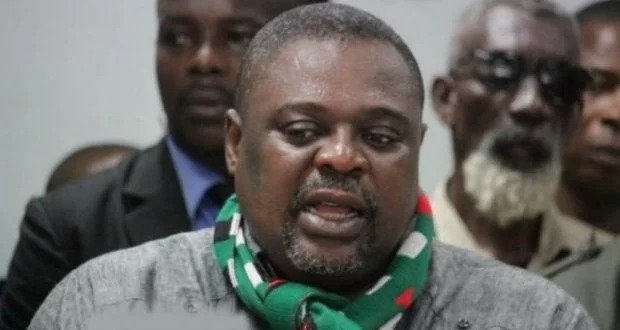
Former NDC Deputy General Secretary and Chief Executive Officer of the Atta-Mills Institute, Samuel Koku Anyidoho, has declared that Ghana belongs to all its citizens and cannot be controlled by any individual, family or group.
Anyidoho made the remarks while speaking about the state of political discourse in Ghana, where he criticised what he described as the growing use of insults and abusive language in political discussions.
According to him, political differences should not lead Ghanaians to place individuals or political interests above the nation.
He stressed that “Ghana will not belong to any family”, insisting that the country must remain a collective national project rather than the preserve of a particular group.
Anyidoho also called for a renewed emphasis on national values, respect and a change in the way political actors and citizens engage one another.
His comments come amid renewed discussions about political rhetoric and the influence of personalities and groups in Ghana’s public affairs.
The former NDC executive has previously argued that national institutions and democratic processes should serve the broader Ghanaian population rather than being controlled by political parties or particular interests.
He has also been involved in previous public disagreements over the commemoration of former President John Evans Atta Mills, including disputes surrounding activities at Asomdwee Park.
Anyidoho’s latest comments therefore add another layer to his long-running advocacy for what he describes as stronger national values, civic responsibility and allegiance to Ghana above individual political interests.
General News
Free Speech, False Publication and Presidential Criticism in Ghana: Where Does the Law Draw the Line?


Ghana’s constitutional commitment to freedom of speech and media freedom continues to raise an important legal question: when does criticism of the President or government remain protected expression, and when can a publication cross into criminal conduct because it is allegedly false and capable of causing public fear or alarm?
In a legal analysis, Rodney Williams, Esq. of Aseda Chambers examines the distinction between constitutionally protected political criticism and false publications that may attract criminal liability under Ghanaian law.
According to Mr Williams, the legal framework does not criminalise criticism of the President simply because the criticism is harsh, offensive or unpopular. Rather, the law becomes relevant where a publication allegedly contains a false factual assertion and meets specific statutory requirements.
Constitutional protection for free speech
Mr Williams explains that the starting point is the 1992 Constitution of Ghana, particularly Article 21(1)(a), which guarantees freedom of speech and expression.
Article 162 also protects media freedom and prohibits censorship, although these constitutional protections are subject to limitations provided under Article 164.
Article 164 allows restrictions that are reasonably required in areas including national security, public safety, public order, public morality and the protection of the rights and reputations of other people.
Williams therefore argues that freedom of expression is fundamental but is not an unlimited right.
The legal analysis notes that Ghana repealed its criminal libel and sedition laws in 2001.
The repeal means that insulting the President, without more, is not in itself a criminal offence simply because the target of the criticism is the Head of State.
Williams stresses that the repeal is important when discussing contemporary political speech.
A citizen can criticise President John Dramani Mahama, question government policies, disagree with ministers or express strong political opinions without automatically committing an offence.
However, the position can change when the speech involves a separate criminal offence recognised under Ghanaian law.
What Section 208 of Act 29 says
At the centre of the legal debate is Section 208 of the Criminal Offences Act, 1960 (Act 29).
The provision makes it a misdemeanour to publish or reproduce a statement, rumour or report that is likely to cause fear and alarm to the public or disturb the public peace where the person publishing it knows or has reason to believe that it is false.
Williams points out that the provision therefore contains several elements that must be established.
It is not enough, in every circumstance, simply to allege that a statement was inaccurate.
The prosecution would have to establish the relevant statutory requirements, including the falsity of the publication, the required state of mind and the likelihood of causing public fear, alarm or disturbance of the public peace.
According to Williams, the important legal distinction is between opinion and an assertion of fact.
For instance, saying that a person believes President Mahama’s government is performing poorly is an expression of political opinion.
By contrast, publishing an untrue claim that a coup has occurred at Jubilee House is a factual assertion capable of being tested as true or false.
Williams therefore maintains that the issue under Section 208 is not simply whether someone used strong language against the President.
The crucial questions include whether the statement was false, whether the publisher knew or had reason to believe it was false, and whether it was likely to cause the type of public fear or disturbance contemplated by the law.
The “Ghana Jollof” case
Williams’ analysis comes amid the ongoing legal controversy surrounding the TikTok account known as “Ghana Jollof.”
The case involves allegations that false information, including claims concerning an alleged near coup at Jubilee House, was circulated through social media.
A nurse, Salomey Awiti Bafoh, has been arrested and charged in connection with allegations of abetment of the publication of false news.
She has pleaded not guilty.
Police have also named Barbara Asantewaa Kodua, who is alleged to be connected to the TikTok account, as a person wanted in connection with the investigations.
The allegations remain before the courts and have not been established as facts against the accused persons.
Williams uses the case to illustrate the distinction between criticism of political leaders and publications that allegedly present false information capable of causing public fear or alarm.
Electronic communications law
The analysis also examines Section 76(1) of the Electronic Communications Act, 2008 (Act 775).
The provision addresses the knowing transmission through an electronic communications service of false or misleading communications that are likely to endanger life or disrupt essential services.
Williams notes that this provision, like Section 208, is concerned with particular forms of harmful communication rather than creating a blanket prohibition on political criticism online.
Another important aspect of the debate is the constitutional challenge against Section 208.
According to Williams, Austin Kwabena Brako-Powers has challenged aspects of the false-publication laws before the Supreme Court.
The challenge reportedly argues that Section 208 and aspects of the Electronic Communications Act are vague or overly broad and potentially inconsistent with constitutional protections for freedom of expression and media freedom.
The challenge also raises questions about the requirement under Section 208(2) for a person relying on lack of knowledge of falsity to demonstrate that reasonable steps were taken to verify the information.
Williams notes that these arguments remain matters for determination by the Supreme Court.
The fact that a law has been challenged does not, by itself, suspend its operation. Unless and until a competent court declares otherwise, the existing statutory provisions remain part of Ghanaian law.
Williams also acknowledges concerns raised by critics who argue that laws against false publication could potentially be applied selectively or used in ways that discourage legitimate dissent.
Media and civil-society groups have previously raised concerns about the continued use of Section 208 and similar provisions, particularly in the digital era.
The constitutional challenge will therefore have implications for the continuing balance between freedom of expression and the state’s interest in preventing publications that could cause serious public harm.
What the law means for journalists and digital creators
For journalists, bloggers and social-media content creators, Williams’ analysis highlights the importance of verification.
People publishing serious allegations should establish the source of their information and take reasonable steps to verify claims before publication.
This is particularly important when reporting on sensitive issues such as: coups and attempted coups; assassinations;national-security operations; military movements; attacks; deaths; public emergencies; and other events capable of causing widespread fear or disorder.
Journalists and digital publishers are also advised to preserve records showing how information was obtained and verified.
The legal line
For Williams, the central legal distinction is straightforward: strong criticism of the President is not automatically criminal simply because it is offensive or unpopular.
The legal risk arises where a publication allegedly falls within an existing criminal provision by containing a false factual claim, published with the required state of mind and under circumstances capable of causing the harm identified by the law.
The repeal of criminal libel and sedition in 2001 remains significant because it means that political criticism cannot simply be treated as criminal libel or sedition.
At the same time, the repeal did not remove every law dealing with harmful or false publications.
Williams concludes that Ghana must maintain a balance between protecting freedom of expression and addressing publications that may cause genuine public harm.
He argues that the possibility of selective enforcement remains a constitutional concern, but until the Supreme Court determines the pending challenge, Section 208 remains enforceable.
The legal question in individual cases, therefore, should focus on the specific publication, the evidence surrounding it, the intention or knowledge of the publisher, and whether the statutory requirements have been satisfied.
The ongoing “Ghana Jollof” proceedings will consequently be watched closely as Ghana continues to debate the boundaries of free expression, political criticism and false publication in the digital age.
The legal analysis was authored by Rodney Williams, Esq. of Aseda Chambers.

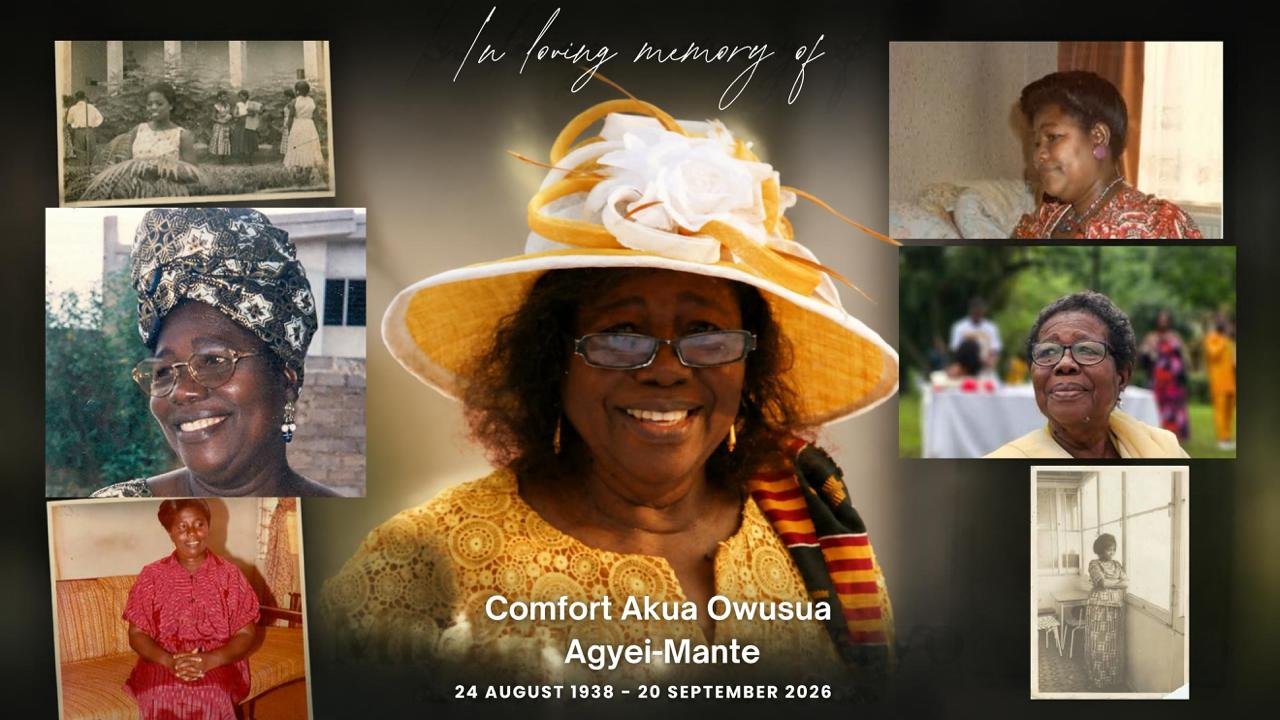
Abena Preko Dankwa, wife of renowned Ghanaian broadcaster Kojo Preko Dankwa, is mourning the loss of her beloved mother, Madam Comfort Akua Owusua Mante.
The passing, which occurred on Sunday, has plunged Abena and the entire family into a period of grief as they come to terms with the loss of a cherished family member and matriarch.
News of the bereavement has attracted messages of sympathy from relatives, friends, colleagues, and well-wishers who have extended their condolences to the family during this difficult period.
For Abena Preko Dankwa and her family, the loss marks a deeply emotional moment, particularly as they reflect on the memories, values, guidance, and family bonds shared with the deceased.
The death of a mother often leaves a profound void within a family, and the period following such a loss can be one of reflection, mourning, and remembrance. As the family prepares to honour the memory of their departed loved one, they are expected to draw strength from the support of family members, friends, and sympathisers.
Abena’s husband, Kojo Preko Dankwa, a respected figure in Ghana’s media and broadcasting space, is also standing with his wife and the family as they navigate this difficult period.
The bereaved family is expected to announce details regarding funeral and burial arrangements in due course.
As messages of condolence continue to reach the family, friends and well-wishers are encouraged to keep Abena Preko Dankwa, Kojo Preko Dankwa, and the entire family in their thoughts and prayers.
At this difficult time, we extend our deepest condolences to the family and pray for strength, comfort, and peace as they mourn their loss.
May the soul of the departed rest in perfect peace.

NPP Has No Moral Right to Lecture NDC on Narcotics — Alexander Ackuako

South Sudan Enters New Political Phase as Kiir Reshapes Government Ahead of Elections

Kojo Preko Dankwa calls for investigation into GTA’s World Cup visa affairs



-

 General News1 week ago
GTA’s Financial Strength Weakens Despite 2025 Tourism Activities
-

 General News1 week ago
GTA Cash Reserves Halve to GH¢640,000 Despite Improved Liquidity Ratio
-

 General News2 weeks ago
TVET is not for the academically weak – Advocate calls for change in Ghana’s mindset
-

 General News1 week ago
Creative Arts Agency Records GH¢2.01m Revenue in FY2025 Despite Financial Reporting Gaps
-
 Business2 weeks ago
Bank Profits Slide to GH¢7.1bn as Low Interest Rates Squeeze Earnings
-
 General News2 weeks ago
Police Launch Manhunt for Missing Assin Fosu Man as Captors Demand GH¢49,500 Ransom
-

 Culinary1 week ago
Oranges: More Than Just Juice — The Nutritious Fruit Adding Flavour to Ghanaian Life
-
 General News1 week ago
National Theatre balances cultural mandate with commercial survival