
General News
Ghana to Ratify AU Convention on Ending Violence Against Women and Girls, Mahama Announces

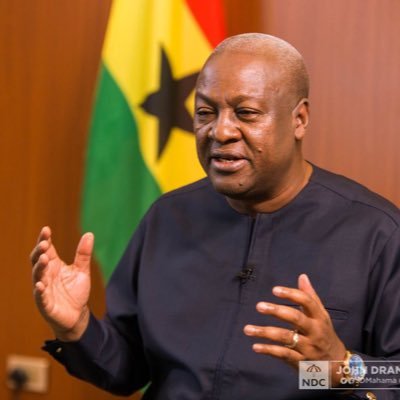




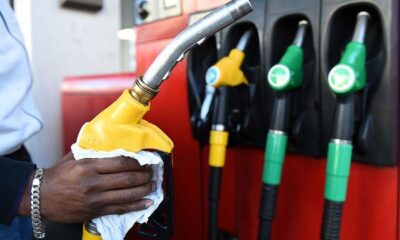
President John Dramani Mahama has assured that government is prepared to implement measures aimed at protecting consumers should rising global oil prices continue to put pressure on domestic fuel costs.
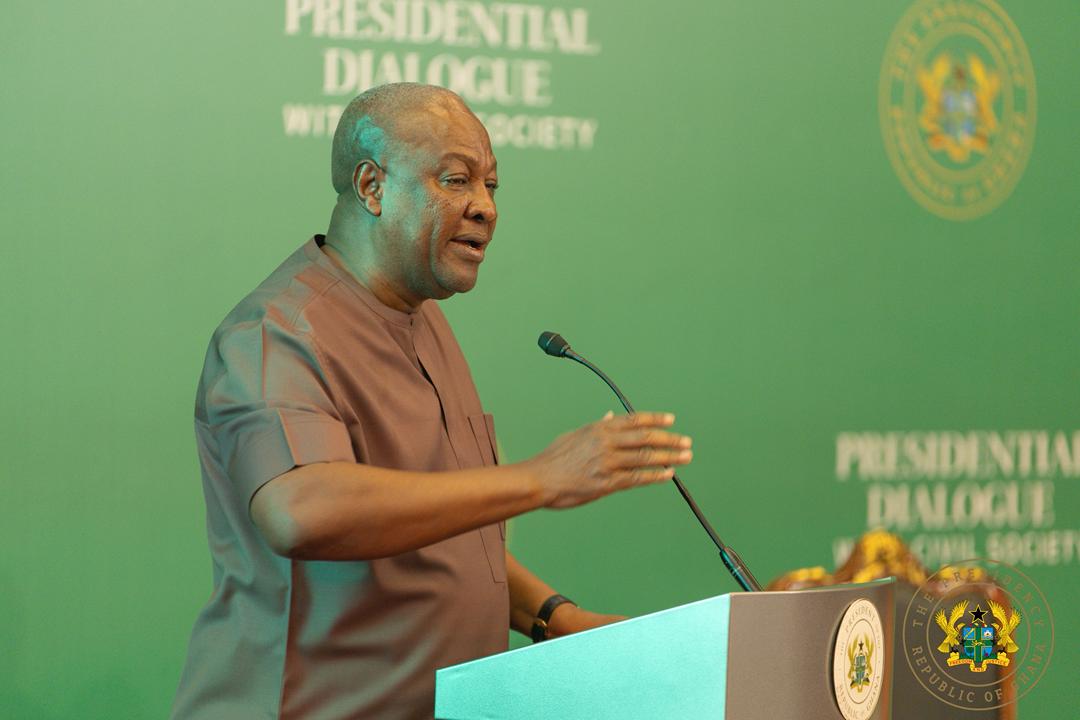
Speaking during a Presidential Dialogue with Civil Society Organisations, the President noted that while Ghana has recently enjoyed relatively stable and even lower fuel prices, external shocks are beginning to pose a potential upside risk.
“Things were sailing quite smoothly, and indeed, we’re beginning to enjoy some of the lowest fuel prices in a long time,” he said. However, he explained that current pressures are largely driven by global crude oil movements rather than domestic currency instability.
“The cedi remains stable, but the push factor in the oil price build-up is coming from the price of crude oil and finished products,” President Mahama stated.
He attributed the global volatility to geopolitical tensions affecting oil markets, warning that continued instability could force government to take corrective steps.
“If this thing continues some more, then we’ll have to take some decisive decisions,” he cautioned.
According to him, government is already considering a range of interventions to cushion consumers against possible price increases. These include adjustments to fuel marketing margins as well as the strategic use of the recently introduced development levy.
“Some of the weapons we have is to look at the margins, to try and cushion consumers, and then also look at the recently imposed one cedi development levy to try and cushion consumers,” he explained.
President Mahama stressed that fuel prices play a central role in Ghana’s inflation dynamics, particularly through transport costs which affect food prices and the broader cost of living.
“Fuel moves the transport sector, and the transport sector is the main driver of inflation. If fuel goes up, the cost of transporting food items goes up, and it affects inflation in the food basket,” he said.
He assured that government remains vigilant and is working closely with economic experts to monitor developments and respond appropriately to protect households from the impact of global energy shocks.
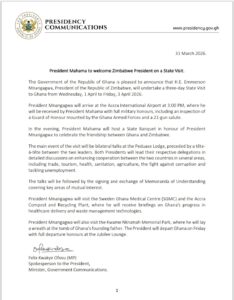
President John Dramani Mahama is set to host Zimbabwean President Emmerson Mnangagwa on a three-day State Visit to Ghana from Wednesday, April 1 to Friday, April 3, 2026.
According to a statement from the Presidency, President Mnangagwa will arrive at the Accra International Airport at 3:00 PM on Wednesday, where he will be received with full military honours by President Mahama. The ceremony will feature an inspection of a Guard of Honour mounted by the Ghana Armed Forces, followed by a 21-gun salute.
Later in the evening, President Mahama will host a State Banquet in honour of his Zimbabwean counterpart, in celebration of the long-standing relations between the two countries.
The highlight of the visit will be bilateral talks between the two leaders at the Peduase Lodge. The discussions, which will begin with a tête-à-tête, are expected to focus on strengthening cooperation in key sectors including trade, tourism, health, sanitation, agriculture, anti-corruption efforts, and job creation.
Both leaders are also expected to preside over the signing and exchange of several Memoranda of Understanding aimed at deepening diplomatic and economic ties between Ghana and Zimbabwe.
As part of his itinerary, President Mnangagwa will visit the Sweden Ghana Medical Centre and the Accra Compost and Recycling Plant to gain insight into Ghana’s advancements in healthcare delivery and sustainable waste management.
He will also pay homage to Ghana’s founding father, Dr Kwame Nkrumah, by laying a wreath at the Kwame Nkrumah Memorial Park.
President Mnangagwa is expected to depart Ghana on Friday, April 3, with full departure honours at the Jubilee Lounge.
The visit is anticipated to further strengthen bilateral relations and expand cooperation between Accra and Harare.
Read the statement below;
General News
Architects Demand Urgent Reforms as Building Collapses Expose Regulatory Failures in Ghana
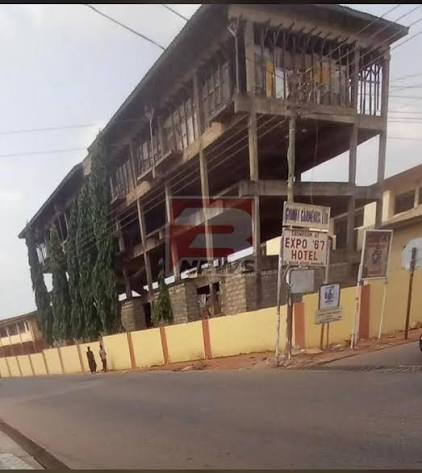
Architects in Ghana are calling for sweeping reforms in the country’s construction sector, including mandatory structural audits for long-abandoned buildings and the deployment of qualified professionals to district assemblies, amid rising concerns over recurring building collapses.
The President of the Ghana Institute of Architects, Tony Asare, has warned that persistent gaps in regulation and enforcement continue to endanger lives.
Speaking in an interview on Joy FM on March 30, 2026, Mr Asare said repeated structural failures point to systemic weaknesses in supervision, enforcement, and professional capacity at the local government level.
“This country must take the safety of its people seriously. We keep asking ourselves why this keeps reoccurring,” he said.
His comments follow the collapse of an uncompleted multi-storey building at Accra New Town on March 29, which claimed three lives and left several others injured.
Call for Mandatory Structural Audits
Mr Asare stressed the urgent need for structural integrity assessments of buildings left uncompleted for long periods, noting that prolonged exposure to weather conditions can significantly weaken their stability.
He expressed concern that many such structures are being repurposed for religious and commercial activities without undergoing proper safety checks.
According to him, building permits typically expire after five years, after which assemblies are expected to demand structural audits before renewal.
“If a building is sitting there, usually the permit expires after five years. As part of the re-permitting process, the assembly demands a structural audit before a new permit is issued. Are we taking these decisions?” he queried.
He added that any decision to demolish abandoned buildings should be guided by technical assessments rather than blanket enforcement measures.
Shortage of Qualified Professionals
The GIA President also highlighted a critical shortage of architects within district assemblies, which are responsible for enforcing building regulations nationwide.
“We have 261 assemblies. There are only about 10 architects. Who does the architectural work? Somebody is playing a role the person is not qualified to carry out,” he said.
He noted that although assemblies are mandated to oversee development control, the absence of a legal requirement to maintain adequate technical staff undermines effective supervision.
Concerns Over Use of Incomplete Structures
Mr Asare questioned the growing trend of using uncompleted buildings for public activities, particularly for worship and commercial operations, without proper certification.
“Before you can occupy a building, you need a certificate of habitation. Is it permissible for a building that is not fully completed to be used for such purposes?” he asked.
He further warned that buildings designed for specific purposes are often repurposed without proper structural reassessment.
Regulatory and Workmanship Gaps
Addressing broader regulatory challenges, Mr Asare said current laws place significant responsibility on developers, allowing them to engage unqualified workers with limited oversight.
“If the developer picks somebody who is not competent, the law cannot do much about it,” he said.
He revealed that the institute is preparing proposals to amend building regulations to strengthen accountability and enforcement mechanisms.
Material Quality Under Scrutiny
Mr Asare also raised concerns about the quality of construction materials on the market, particularly reinforcement bars, which he said are sometimes below standard specifications despite being advertised otherwise.
While the Ghana Standards Authority is mandated to regulate material quality, he noted that capacity constraints hinder effective monitoring.
Call for Comprehensive Review
He concluded by urging a comprehensive review of how institutions enforce construction standards, warning that the absence of qualified professionals in assemblies poses a serious risk to public safety.
“If you go to the assembly and there is no architect and there is no engineer, who supervises the building?” he asked.
Reiterating his call, Mr Asare said Ghana must urgently prioritise building safety to prevent further tragedies.

Mahama Assures Measures to Protect Consumers as Fuel Prices Face Upside Risk
Mahama to Host Zimbabwe President Mnangagwa for Three-Day State Visit

Architects Demand Urgent Reforms as Building Collapses Expose Regulatory Failures in Ghana



-

 Business2 weeks ago
Ghana’s Mobile Money Surge Hits GH¢447.4bn in February, Cementing Digital Payments Dominance
-

 Entertainment2 weeks ago
“I Slept with Someone in Church and Had a Child,” Gospel Singer Broda Sammy Confesses
-

 Entertainment2 weeks ago
Breaking News: Legendary Actor Chuck Norris Dies at 86
-
 Business2 weeks ago
Burkina Faso Bans Fresh Tomato Exports to Shield Domestic Processing Industry
-
 General News2 weeks ago
Mahama Inspects Jinijini–Sampa Road, Pledges Completion by 2027
-
 Politics2 weeks ago
Minority Demands Immediate Scrapping of GH₵1 Fuel Levy Amid Surging Prices and Economic Pressure
-

 General News6 days ago
AKUAPEM NIFAHENE CALLS ON DIASPORANS TO FOSTER DEVELOPMENT IN OKERE
-

 Sports2 weeks ago
Morocco Crowned Champions of 2025 AFCON after CAF Overturn final result