
General News
Ghana, Zimbabwe sign 10 MoUs to strengthen bilateral ties

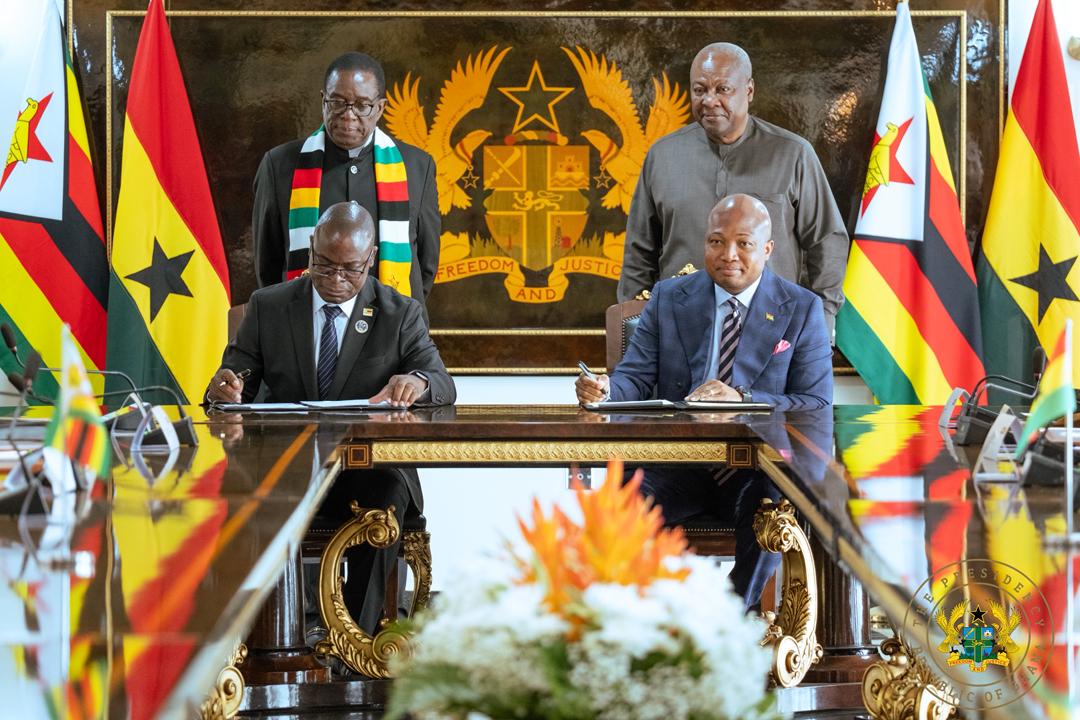
Ghana and Zimbabwe have signed 10 Memoranda of Understanding (MoUs) aimed at strengthening bilateral cooperation across multiple sectors, following the inaugural session of the Permanent Joint Commission for Cooperation (PJCC).
The agreements, signed during high-level bilateral engagements, span critical areas including political consultations, health, energy, tourism, sports development, and institutional collaboration.
Key among the agreements is the adoption of the agreed minutes of the inaugural PJCC session, which sets the framework for structured and sustained engagement between the two countries.
The two nations also signed an MoU on Political and Diplomatic Consultations to enhance regular dialogue and cooperation on regional and international issues. In addition, both sides committed to strengthening capacity building through an MoU on Research, Training and Documentation between their respective Foreign Service Institutes.
Cooperation in social sectors featured prominently, with agreements covering Health, Sports and Recreation Development, and Tourism, reflecting a shared commitment to improving people-to-people engagement and national development outcomes.
Further MoUs were signed in the fields of Energy and Archives, highlighting efforts to promote sustainable development and preserve historical records and heritage.
Trade and economic collaboration also received a boost with an agreement between ZimTrade and the Ghana Export Promotion Authority (GEPA), aimed at enhancing trade promotion and facilitating business partnerships between the two countries.
In the cultural and historical space, an MoU was signed between the Institute of African Knowledge and the Ghana Museums and Monuments Board to collaborate on an African liberation project.
While 10 agreements were signed at the government level, an additional MoU was concluded between private sector entities—Zoomlion Ghana Limited and Geo Pomona Waste Management (Pvt) Ltd—focusing on waste management collaboration.

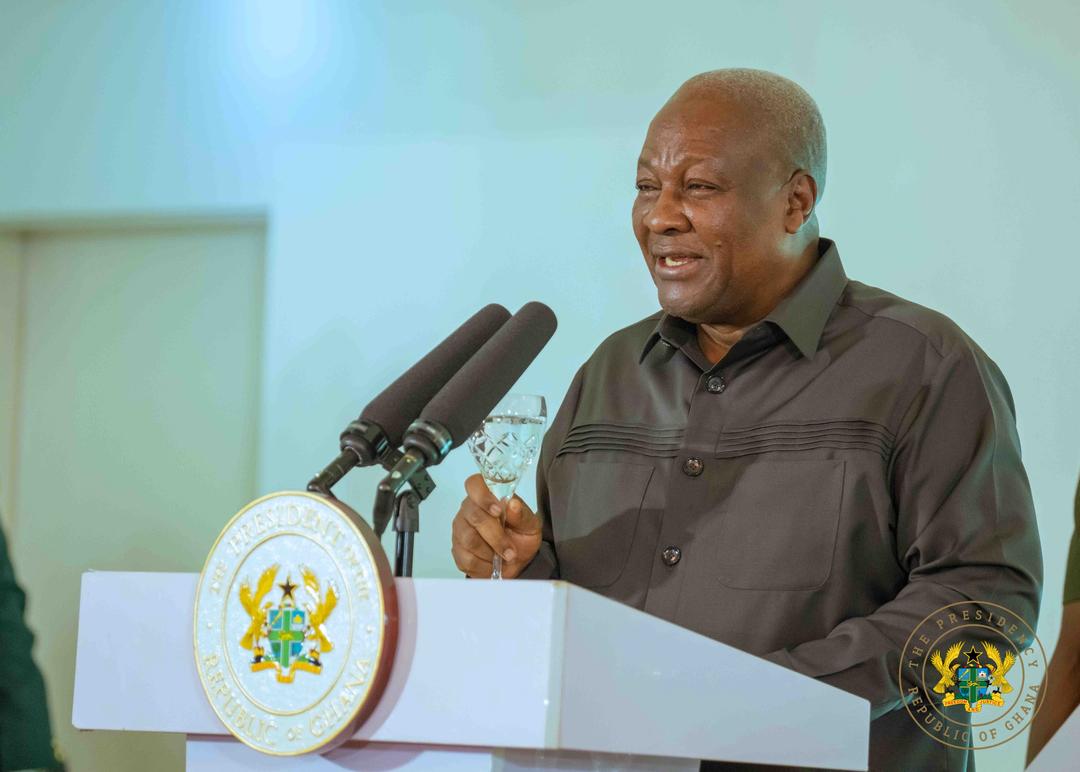
President John Dramani Mahama has called on African nations to take firm control of their future, urging greater unity, resilience, and collaboration across the continent to drive sustainable development.
Speaking at a state banquet held in honour of Zimbabwean President Emmerson Mnangagwa, President Mahama said Africa is at a pivotal moment in its history, where collective action and shared vision are crucial.
“Africa stands at a defining moment in its journey. Across our continent, there is renewed determination to shape our own destinies, to tell our own story, and to build resilient and prosperous societies,” he stated.
He emphasized that deeper cooperation among African countries remains key to unlocking economic growth and addressing common challenges. He pointed to the strengthening relationship between Ghana and Zimbabwe as a clear example of what continental partnerships can achieve.
“Tonight, we are not only honoured by your visit, but we also celebrate a partnership that continues to evolve,” he said. “We reaffirm our shared commitment to deepening this cooperation, particularly in trade, investment and economic transformation.”
He added that both nations are committed to translating their longstanding historical ties into tangible benefits for their citizens.
“Our two countries recognize the immense opportunities before us, and we are determined to translate our historic ties into tangible benefits for our people,” Mahama noted.
The President also revealed that Ghana and Zimbabwe would engage in bilateral talks aimed at strengthening cooperation, with plans to formalize agreements.
“Tomorrow, at the historic Peduase Lodge, we will hold bilateral meetings between our two countries and look forward to signing a number of Memoranda of Understanding that will bring us even closer together,” he said.
Mahama further commended Zimbabwe’s resilience in the face of prolonged economic sanctions, describing the country as a symbol of endurance on the continent.
“No other country has experienced this more than Zimbabwe, living under sanctions for so many years,” he remarked.
He stressed that partnerships among African nations are increasingly vital in reinforcing shared history and collective aspirations.
“In this context, partnerships such as that between Ghana and Zimbabwe take on even greater significance. They remind us that while geography may separate us, history and indeed destiny bind us together,” he said.
President John Dramani Mahama has called for sweeping reforms in global governance systems, urging African nations to unite and speak with one strong, coordinated voice on international issues.
Speaking at a state banquet in honor of visiting Zimbabwean President Emmerson Mnangagwa, President Mahama stressed that Africa’s influence on the global stage depends largely on unity, strategic cooperation, and shared purpose among its countries.
“At the same time, we must continue to speak with a united voice on global issues,” Mahama said, emphasizing the importance of continental solidarity in shaping international decision-making.
He noted that current global financial and governance structures often fail to adequately reflect the realities of developing nations, calling for urgent reforms to international financial institutions to make them more equitable and representative.
Mahama further highlighted the need for Africa to collectively pursue justice on historical injustices, including discussions around reparative frameworks, saying the continent must stand together in its advocacy efforts.
“Whether in advocating for reforms in international financial institutions, promoting fairer global governance systems, or pursuing justice through reparative frameworks for historical injustices, Africa must stand together,” he stated.
He also underscored the importance of regional economic integration, describing the African Continental Free Trade Area (AfCFTA) as a transformative opportunity to boost intra-African trade, strengthen value chains, and unlock the continent’s economic potential.
He reaffirmed Ghana’s commitment to deepening bilateral relations with African partners, particularly Zimbabwe, noting that such cooperation is essential for achieving shared development goals.

By : Sarah Adwoa Akuetteh
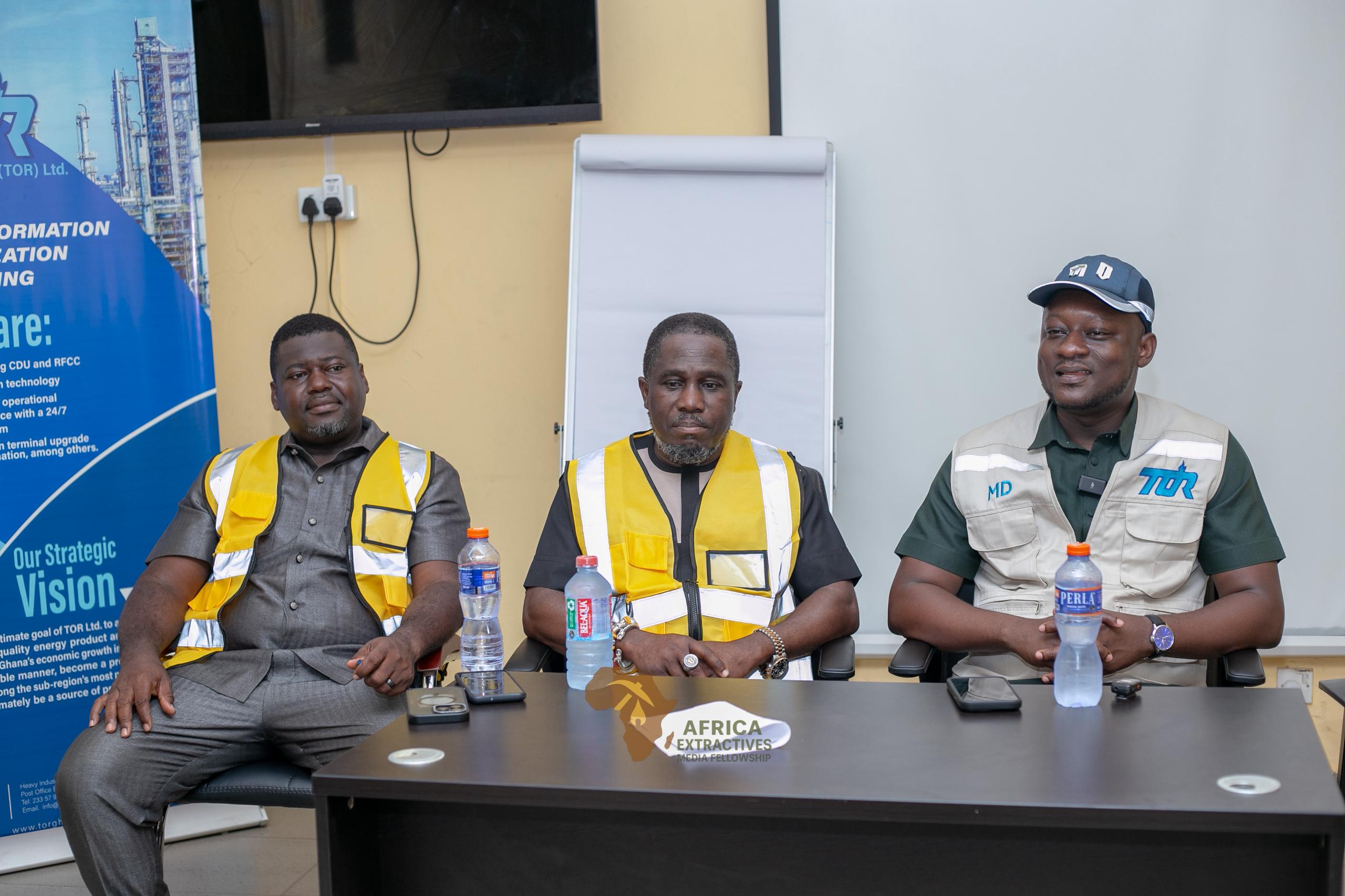
The Managing Director of Oil Refinery, Edmond Kombat, has revealed the scale of operational and financial challenges the refinery faced prior to its recent revival, describing the situation as “depressing” and nearly beyond recovery.
Speaking during an engagement with fellows of the African Extractive Media Fellowship (AEMF), Kombat traced the refinery’s trajectory from a relatively stable position in 2016 to what he described as a near-collapse state by 2024.
According to him, TOR’s debt, which had been reduced from $650 million to about $300 million before 2017, ballooned again to approximately $517 million over the following years, accompanied by operational shutdowns, poor maintenance, and rising liabilities.
He further disclosed that the refinery accumulated significant financial obligations, including debts to the Ghana Revenue Authority, ECG, Ghana Water, and staff-related funds, while also recording years of unaudited accounts and massive cumulative losses. At the same time, critical infrastructure such as storage tanks and processing units were left non-functional, with 17 tanks reportedly out of service and key plants idle.
Kombat painted a picture of an institution plagued not only by financial distress but also internal divisions, low staff morale, and a high attrition rate, with skilled workers leaving for opportunities in international markets, including the Middle East and larger refineries like Dangote. “The place was so depressing that it almost looked like there was no way out,” he admitted.
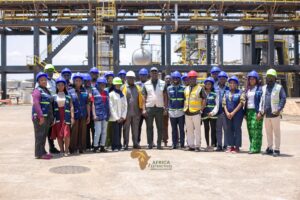
However, since assuming leadership, he says management has focused on rebuilding the refinery through internal reforms rather than relying on immediate government funding. “Central to this effort was restoring staff confidence and addressing longstanding human resource concerns, including stalled promotions. Over 300 staff petitions were reviewed, leading to promotions and salary adjustments aimed at rebuilding trust and productivity” he said.
With limited financial capacity, the refinery adopted unconventional strategies to generate revenue. These included extending operational hours, attracting regional clients such as Burkina Faso for petroleum storage services, and rebuilding confidence among private petroleum service providers. According to Kombat, these measures helped stabilize revenue streams and support initial restoration works.
A major milestone in the refinery’s recovery came on December 19, 2025, when TOR resumed refining operations after years of inactivity. The primary processing unit, known as the Crude Distillation Unit (CDU), was successfully restored by in-house engineers without external technical support. Ongoing works are also targeting the secondary processing unit (RFCC), which is expected to further enhance output and product value.
Beyond operations, management has initiated efforts to restore critical infrastructure, including rehabilitating storage tanks, modernizing the loading gantry, and recruiting new staff to address an aging workforce. Edmond Kombat noted that over 400 temporary workers and 300 permanent staff have been engaged as part of this rebuilding phase.
He emphasized the strategic importance of TOR to Ghana’s energy security, highlighting its unique capacity to produce aviation fuel and premix fuel, as well as its extensive storage and distribution infrastructure. With storage capacity estimated at one million metric tonnes and connections to key national and regional supply routes, the refinery remains central to the country’s petroleum supply chain.
The Managing Director also warned that neglecting such an asset could have serious consequences, particularly in times of global supply disruptions. He pointed to geopolitical tensions as a reminder of the need for strong domestic refining capacity and adequate fuel reserves.
While acknowledging progress, he maintained that the refinery’s recovery is still in its early stages. “We are just scratching the surface,” he said, stressing the need for continuity in management and policy direction to sustain the gains made so far.

Ghana, Zimbabwe sign 10 MoUs to strengthen bilateral ties

“Africa must shape its own destiny” — Mahama urges continental unity
One voice, one Africa — President Mahama calls for stronger global influence



-

 Entertainment2 weeks ago
Breaking News: Legendary Actor Chuck Norris Dies at 86
-

 General News1 week ago
AKUAPEM NIFAHENE CALLS ON DIASPORANS TO FOSTER DEVELOPMENT IN OKERE
-
 General News2 weeks ago
PHOTO: Ghana Breaks Ground on First Farmer Services Centre in Afram Plains, Signalling Shift in Agricultural Policy
-
 General News1 week ago
The Greatness Within Us Will Always Outweigh the Injustices Against Us – Mahama
-
 Uncategorized1 week ago
President Mahama Calls for Global Recognition of Slave Trade as Crime Against Humanity
-

 Sports1 week ago
Forward Thomas Asante Scores for Coventry City in Massive Win Over Swansea
-
 General News3 days ago
EMERGE Us Humanity International Conference 2026 and WAHANGELA KINGDOM Unveiled in Accra
-
 General News2 days ago
Mahama Assures Measures to Protect Consumers as Fuel Prices Face Upside Risk