
General News
TOR Was Left ‘Deep in Debt and Disrepair’ – MD Reveals


By : Sarah Adwoa Akuetteh
The Managing Director of Oil Refinery, Edmond Kombat, has revealed the scale of operational and financial challenges the refinery faced prior to its recent revival, describing the situation as “depressing” and nearly beyond recovery.
Speaking during an engagement with fellows of the African Extractive Media Fellowship (AEMF), Kombat traced the refinery’s trajectory from a relatively stable position in 2016 to what he described as a near-collapse state by 2024.
According to him, TOR’s debt, which had been reduced from $650 million to about $300 million before 2017, ballooned again to approximately $517 million over the following years, accompanied by operational shutdowns, poor maintenance, and rising liabilities.

He further disclosed that the refinery accumulated significant financial obligations, including debts to the Ghana Revenue Authority, ECG, Ghana Water, and staff-related funds, while also recording years of unaudited accounts and massive cumulative losses. At the same time, critical infrastructure such as storage tanks and processing units were left non-functional, with 17 tanks reportedly out of service and key plants idle.
Kombat painted a picture of an institution plagued not only by financial distress but also internal divisions, low staff morale, and a high attrition rate, with skilled workers leaving for opportunities in international markets, including the Middle East and larger refineries like Dangote. “The place was so depressing that it almost looked like there was no way out,” he admitted.

However, since assuming leadership, he says management has focused on rebuilding the refinery through internal reforms rather than relying on immediate government funding. “Central to this effort was restoring staff confidence and addressing longstanding human resource concerns, including stalled promotions. Over 300 staff petitions were reviewed, leading to promotions and salary adjustments aimed at rebuilding trust and productivity” he said.
With limited financial capacity, the refinery adopted unconventional strategies to generate revenue. These included extending operational hours, attracting regional clients such as Burkina Faso for petroleum storage services, and rebuilding confidence among private petroleum service providers. According to Kombat, these measures helped stabilize revenue streams and support initial restoration works.
A major milestone in the refinery’s recovery came on December 19, 2025, when TOR resumed refining operations after years of inactivity. The primary processing unit, known as the Crude Distillation Unit (CDU), was successfully restored by in-house engineers without external technical support. Ongoing works are also targeting the secondary processing unit (RFCC), which is expected to further enhance output and product value.
Beyond operations, management has initiated efforts to restore critical infrastructure, including rehabilitating storage tanks, modernizing the loading gantry, and recruiting new staff to address an aging workforce. Edmond Kombat noted that over 400 temporary workers and 300 permanent staff have been engaged as part of this rebuilding phase.
He emphasized the strategic importance of TOR to Ghana’s energy security, highlighting its unique capacity to produce aviation fuel and premix fuel, as well as its extensive storage and distribution infrastructure. With storage capacity estimated at one million metric tonnes and connections to key national and regional supply routes, the refinery remains central to the country’s petroleum supply chain.
The Managing Director also warned that neglecting such an asset could have serious consequences, particularly in times of global supply disruptions. He pointed to geopolitical tensions as a reminder of the need for strong domestic refining capacity and adequate fuel reserves.
While acknowledging progress, he maintained that the refinery’s recovery is still in its early stages. “We are just scratching the surface,” he said, stressing the need for continuity in management and policy direction to sustain the gains made so far.




The Ghana Gold Board (GoldBod) has emerged as a significant source of foreign exchange for commercial banks, supplying hundreds of millions of dollars to the formal banking system under a new collaborative financing model designed to strengthen liquidity and support stability in Ghana’s foreign exchange market.
In August 2026, GoldBod generated US$1.315 billion in foreign exchange, marking the first full month of implementation of the new financing arrangement. Of the total, US$668.21 million was sold directly to commercial banks through spot sales and funded forward arrangements.
A further US$646.59 million was made available to the Bank of Ghana (BoG) for the accumulation of international reserves under the Ghana Accelerated National Reserve Accumulation Policy (GANRAP).
GoldBod said the direct supply of foreign exchange to commercial banks is intended to improve access to dollars within the formal financial system.
Commercial banks serve as a major channel through which businesses and individuals obtain foreign currency for legitimate transactions, international payments and other economic activities. The additional FX supplied by GoldBod is therefore expected to strengthen banks’ ability to meet demand and improve liquidity in the foreign exchange market.
The arrangement also creates a closer link between Ghana’s gold resources and the country’s foreign exchange market. Gold generated through artisanal and small-scale mining operations is aggregated and converted into foreign exchange, which is then channelled into the formal financial system and, in part, into the country’s international reserves.
The financing model commenced on August 3, 2026, following consultations involving GoldBod, the Ministry of Finance, the Bank of Ghana, commercial banks and other stakeholders.
Its implementation followed the approval of GANRAP by Cabinet and Parliament. The model provides a framework for financing GoldBod’s gold aggregation operations while simultaneously supporting foreign exchange generation, market stability and reserve accumulation.
The August figures represent the first full month under the arrangement, with the US$668.21 million supplied to banks supporting foreign exchange market liquidity and the US$646.59 million transferred to the BoG contributing to the accumulation of national reserves.
GoldBod is expected to build on its August performance by generating US$1.4 billion in foreign exchange in September 2026.
Under the September plan, US$700 million is expected to be made available to commercial banks to support foreign exchange market stability, while up to US$700 million will be provided to the Bank of Ghana for reserve accumulation under GANRAP.
The projected September figure is about US$85 million higher than the US$1.315 billion generated in August.
The increased flow is expected to provide continued support to Ghana’s external position by simultaneously improving FX availability within commercial banks and strengthening the country’s international reserve position.
GoldBod said it remains committed to its statutory mandate of generating foreign exchange for Ghana and will continue working with the Ministry of Finance, the Bank of Ghana, commercial banks and other stakeholders to implement the financing model transparently.
The development further positions Ghana’s gold sector as an important source of foreign exchange while linking gold aggregation more directly to financial-sector liquidity, exchange-rate stability and national reserve accumulation.

The Upper East Regional Police Command, in collaboration with the Military, has recovered an AK-47 assault rifle and 28 rounds of ammunition during a joint operation targeting suspects linked to a series of shooting incidents in the Binduri District.
The intelligence-led operation was launched in response to several recent shootings and other firearm-related offences reported in the district, as security agencies intensified efforts to identify and arrest those behind the incidents.
The Police, in a statement issued on Thursday, September 3, 2026, identified one of the suspects as 32-year-old Isaka Sabani, alias “Culture.”
The Command said Sabani sustained gunshot wounds during the operation and later died.
An AK-47 assault rifle, loaded with 28 rounds of ammunition, was subsequently recovered from him.
The Police said preliminary investigations had established that Sabani was wanted over an attempted murder and unlawful discharge of firearms case reported at the Bawku Police Station on August 28, 2026.
He was also suspected of being involved in a series of shootings recorded in Binduri between August 29 and 31.
According to the Police, the incidents included shootings at Agenda 111 on August 29, Aniisi on August 30 and Gumyoko on August 31.
The latest operation forms part of an intensified security response aimed at tracking down individuals responsible for the recent attacks, recovering firearms and preventing further incidents in the district.
The recovered weapon and ammunition have been taken into custody as investigations continue into the shootings and other firearm-related offences.
The Upper East Regional Police Command has assured residents that it will continue to work with the Military, other security agencies and relevant stakeholders to apprehend other suspects and restore lasting security in the region.
“The Upper East Regional Police Command will continue to collaborate with sister security agencies and all other stakeholders to bring all other perpetrators to justice and ensure security, law and order in the region,” the statement said.
An educationist, Seth Afum A. Dankwah of J. G. Knol Technical Institute in Adukrom-Akuapem in the Eastern Region, has criticised the reported decision by the Computerised School Selection and Placement System (CSSPS) to disqualify candidates who fail either English Language or Mathematics.
His concerns follow comments by CSSPS Coordinator Sherif Sulemana on Joy FM’s Super Morning Show on September 3, 2026, that candidates would be disqualified from placement if they failed either English Language or Mathematics.
According to Mr Dankwah, the interpretation represents a significant change from what students, parents, schools and other stakeholders had understood to be the placement requirement since the introduction of Free SHS and TVET in 2017.
Under the previous understanding, a candidate who passed at least one of the two subjects could qualify for placement, while those who failed both were excluded.
Mr Dankwah cited figures from the CSSPS Secretariat indicating that 54,985 out of 620,243 candidates who sat the 2026 BECE would not be placed if the new interpretation is applied.
He argued that the situation could leave thousands of 15-year-olds without access to secondary or technical education.
He illustrated the potential impact with a candidate who scores Grade 9 in Mathematics but Grade 1 in English, Science, Social Studies, BDT, Religious and Moral Education and Ghanaian Language.
Such a candidate could obtain a best-six aggregate of 14 but, under the reported rule, would still be denied placement because of the Grade 9 in Mathematics.
Mr Dankwah said the projected number of excluded candidates represents a sharp increase compared with previous years.
According to figures he attributed to the West African Examinations Council (WAEC):
2022: 8,930 of 547,329 candidates were disqualified, representing 1.6%.
2023: 13,042 of 598,839 candidates were disqualified, representing 2.2%.
2024: 10,184 of 563,339 candidates were disqualified, representing 1.8%.
2025: 13,019 of 603,328 candidates were disqualified, representing 2.2%.
2026: 54,985 of 620,243 candidates are reportedly at risk of non-placement.
He described the 2026 figure as a “quantum leap” and urged authorities to reconsider the implementation.
Mr Dankwah questioned why the reported change was communicated through the media shortly before the placement exercise, rather than through an official circular from the Ghana Education Service (GES) or TVET Service.
He noted that some parents had already been instructed by Junior High School heads to begin selecting schools based on the previous understanding of the placement criteria.
He therefore argued that applying the new requirement to students who had already written the BECE would amount to retrospective implementation.
He referenced Article 23 of the 1992 Constitution, which requires administrative bodies to act fairly and reasonably, and Article 296, which provides safeguards on the exercise of discretionary power.
He also invoked the principle of legitimate expectation, arguing that students and parents had planned around the placement system as they understood it over several years.
Mr Dankwah acknowledged the importance of English and Mathematics in secondary education.
He said English is essential because it is the main language of instruction, while Mathematics provides fundamental skills for logical reasoning and many academic and technical disciplines.
However, he argued that a student’s weakness in one of the two subjects should not automatically end his or her educational journey.
He said some students who perform poorly in Mathematics or English may excel in practical and technical subjects.
He cited the example of a student who could score Grade 9 in Mathematics while obtaining Grade 1 in Basic Design and Technology, Technical Drawing, Woodwork, Metalwork, Biology or Creative Arts.
According to him, excluding such students could undermine Ghana’s efforts to develop artisans, technicians and skilled workers needed for industrialisation.
Mr Joseph Denteh, a contractor and Head of Department for Electrical Engineering at J. G. Knol Technical Institute, was also quoted as sharing his personal educational experience.
He said he started school late and consistently performed poorly from Class Four through JHS Three.
After obtaining poor BECE results, he was not placed in a secondary school and eventually entered SHS through protocol.
He said his subsequent progress demonstrated that poor BECE performance should not necessarily be treated as a permanent measure of a child’s potential.
Mr Dankwah proposed three measures to address the situation.
First, he wants the reported “must pass both” requirement rescinded for the 2026 placement exercise. He proposed that candidates who passed at least one of English or Mathematics should be allowed to enter second-cycle institutions this year, while the new requirement could take effect from the 2027 BECE.
Second, he proposed conditional placement. Students who fail one of the two subjects could be admitted but would be required to undertake compulsory remedial work and resit the subject while in secondary school.
Third, he called for a pre-SHS remedial year. Under the proposal, students who fail English or Mathematics would remain in the education system, receive intensive instruction in the failed subject alongside practical skills training, and resit the BECE the following year.
He argued that successful candidates could then progress to Form Two rather than being left without a clear educational pathway.
Mr Dankwah ultimately urged the GES, TVET authorities, parents, PTAs and other education stakeholders to prioritise inclusion while maintaining academic standards.
He said the debate should focus on whether Ghana wants to protect examination aggregates or provide opportunities for tens of thousands of young people to develop their academic and practical abilities.
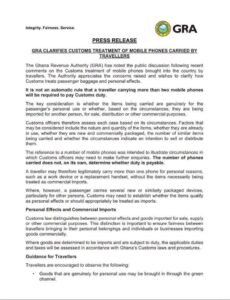
The Ghana Revenue Authority (GRA) has clarified that travellers entering Ghana are not automatically required to pay customs duty simply because they are carrying more than two mobile phones.
The clarification follows recent public discussions and concerns over the Customs treatment of mobile phones brought into the country by passengers.
In a press release issued on Thursday, September 3, 2026, the GRA explained that Customs officers assess travellers’ baggage and personal effects based on the circumstances of each case.
According to the GRA, there is no automatic rule requiring a traveller carrying more than two mobile phones to pay customs duty.
The Authority said the key consideration is whether the phones and other items being carried are genuinely intended for the traveller’s personal use or are being brought into Ghana for another person, for sale, distribution or other commercial purposes.
Customs officers may therefore consider several factors when assessing the items, including:
The nature and quantity of the items being carried.
Whether the phones are already in use.
Whether the devices are new and commercially packaged.
The number of similar items being carried.
Whether the circumstances suggest that the items are intended for sale or distribution.
The GRA explained that its earlier reference to some mobile phones was intended only to illustrate circumstances in which Customs officers might need to make further enquiries.
It stressed that the number of phones carried does not, on its own, determine whether customs duty is payable.
The Authority said a traveller may legitimately carry more than one mobile phone for personal reasons.
For instance, a passenger may be travelling with a work device and a personal phone, or may be carrying a replacement handset. In such circumstances, the phones would not necessarily be treated as commercial imports.
However, the situation may be different where a passenger is carrying several new or similarly packaged devices, particularly where the phones are intended for other people.
In such cases, Customs may need to establish whether the items qualify as personal effects or should be treated as imports subject to the applicable customs procedures.
The GRA said Ghana’s Customs system distinguishes between personal effects and goods imported for sale, supply or other commercial purposes.
The distinction, it noted, is important to ensure fairness between travellers bringing personal belongings into Ghana and individuals or businesses importing goods commercially.
Where goods are determined to be commercial imports and are subject to duty, the applicable duties and taxes will be assessed in accordance with Ghana’s Customs laws and procedures.
The GRA has encouraged travellers to observe the appropriate procedures when entering the country.
Goods that are genuinely for personal use may be brought into Ghana through the green channel.
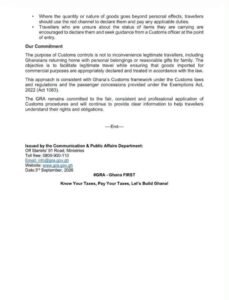
However, where the quantity or nature of goods goes beyond what would reasonably be considered personal effects, travellers should use the red channel, declare the items and pay any applicable duties.
The Authority also advised travellers who are uncertain about the status of items in their possession to declare them and seek guidance from a Customs officer at the point of entry.
The GRA said the purpose of Customs controls is not to inconvenience legitimate travellers, including Ghanaians returning home with their personal belongings or reasonable gifts for family members.
Instead, the objective is to facilitate legitimate travel while ensuring that goods imported for commercial purposes are properly declared and treated according to the law.
The Authority said its approach is consistent with Ghana’s Customs framework, including the Customs laws and regulations and passenger concessions provided under the Exemptions Act, 2022 (Act 1083).
The GRA reaffirmed its commitment to the fair, consistent and professional application of Customs procedures and said it would continue providing information to help travellers understand their rights and obligations.
The statement was issued by the Communication & Public Affairs Department of the Ghana Revenue Authority, located at Off Starlets 91 Road, Ministries.

Seven Illegal Miners Dead After Mining Pit Collapses at Manso Kaneago

GoldBod Supplies $668.21m Forex to Commercial Banks in August

Police-Military Operation in Binduri Recovers AK-47, 28 Rounds of Ammunition



-

 General News2 weeks ago
Nana Adwoa Tutuwaa Named Global Humanitarian of the Year 2026
-

 General News2 weeks ago
Police Arrest Suspect in GH¢1.1m Fake Gold Scam at Berekum
-

 Entertainment2 weeks ago
Interfaith Tourism World Club Calls for Faith-Based Tolerance to Strengthen National Peace
-
 General News2 weeks ago
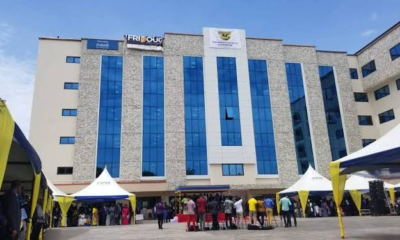
Assemblies of God Ghana Clears Headquarters Loan, Slashes Overdraft by GH¢3.2m
-
 General News1 week ago
GES Urged to Review Student Sexual Misconduct Rule Over Alleged Discrimination Against Boys
-

 Entertainment2 weeks ago
Tiwa Savage Reveals Why Cheating Has Never Been a Deal Breaker for Her
-

 General News1 week ago
OSP Assesses Extortion Allegations Against Afenyo-Markin
-

 Entertainment1 week ago
Stonebwoy Is Not My Rival — Shatta Wale Reveals They Live Minutes Apart