
General News
IMANI Questions GSA’s 15-Year Vehicle Import Ban, Calls for Safety-Based Regulation


IMANI Center for Policy & Education has raised concerns over the Ghana Standards Authority’s decision to restrict the importation of used vehicles that are more than 15 years old, arguing that vehicle safety should be determined primarily by roadworthiness and condition rather than age.
The policy, expected to take effect from October 1 under the GS 4510:2022 conformity regime, has sparked debate over its legal basis, economic impact and implications for consumers and businesses within Ghana’s automotive sector.
IMANI said it supports stronger measures to prevent dangerous vehicles from entering the country, particularly vehicles that have been severely damaged by floods, fire or accidents, as well as those with compromised structural integrity.
However, the policy think tank questioned whether a blanket age restriction is the most effective way to achieve that objective.
According to IMANI, a vehicle that is 16 years old but has been properly maintained, has a sound chassis, functioning safety systems, good brakes and meets applicable emissions requirements should not automatically be classified as unsafe simply because of its age.
It argued that a newer vehicle could equally pose a greater danger if it has been poorly maintained, improperly repaired or structurally damaged.
The organisation therefore believes the focus should be on identifying actual safety defects rather than using the age of a vehicle as the decisive factor.
“Are we regulating danger or regulating birthdays?” IMANI asked, stressing that safety regulations should distinguish between genuinely hazardous vehicles and older vehicles that remain mechanically and structurally sound.
IMANI also questioned the legal foundation for the proposed restriction, pointing to the Customs (Amendment) Act, 2020, Act 1014.
The organisation noted that Section 154(3) of the Act gives the Finance Minister, in consultation with the Trade Minister, the authority to specify by Legislative Instrument when vehicles above a particular age may no longer be imported.
IMANI argued that if the government is now operating with a 15-year threshold, the relevant Legislative Instrument and the legal connection between the legislation and the GSA’s new rule should be clearly identified.
It maintained that an administrative announcement or policy presentation cannot replace subsidiary legislation required under an Act of Parliament.
The policy think tank also warned that the restriction could have significant consequences for businesses and workers across Ghana’s used vehicle industry.
The sector involves importers, clearing agents, mechanics, spare-parts dealers, transport operators, tyre sellers, auto electricians, bodywork specialists and other businesses that depend on the movement and maintenance of used vehicles.
IMANI cited concerns raised by the Vehicle and Assets Dealers Union of Ghana, whose President General, Bernard Ntrakwah, has expressed support for efforts by the GSA to sanitise the vehicle market and prevent unsafe cars from entering Ghana.
However, the union has raised reservations about a blanket 15-year prohibition and its possible effects on dealers, consumers and businesses connected to the automotive value chain.
IMANI said these concerns should not simply be dismissed as commercial interests seeking to protect profits.
The organisation further questioned how the policy would affect ordinary Ghanaians who rely on relatively inexpensive used vehicles.
According to IMANI, removing older vehicles from the market could reduce the supply of cheaper cars and make vehicle ownership more difficult for consumers who cannot afford newer models.
It warned that consumers do not automatically become wealthier when government raises the minimum age or standard for imported vehicles.
Instead, people who cannot afford newer cars may continue using vehicles they already own for longer periods.
IMANI said this could create an unintended consequence in which a policy intended to modernise Ghana’s vehicle fleet could encourage some motorists to keep much older vehicles on the road because replacement costs have become unaffordable.
IMANI also acknowledged the importance of supporting Ghana’s domestic automotive assembly industry but argued that such support should be based on measurable economic benefits.
It called for greater transparency on the number of vehicles assembled locally, the jobs created, the level of local content in assembled vehicles and the value of tax incentives provided to vehicle assemblers.
The organisation said these benefits should be compared with the potential loss of Customs revenue, businesses and employment across the used vehicle sector.
It argued that protecting local assembly should not automatically mean weakening competition or imposing costs on consumers without clear evidence of the wider economic gains.
IMANI also raised concerns about the implementation of the Pre-Export Verification of Conformity (PVoC) system.
Under the arrangement, importers may be required to obtain certification from approved inspection companies before vehicles are shipped to Ghana.
IMANI said government should provide clarity on the companies responsible for inspections, how they were selected, the fees they charge, the mechanisms for auditing their operations and the process available to importers who want to challenge an inspection decision.
The organisation warned that mandatory certification could create additional costs for importers if the system is not sufficiently transparent and accountable.
Despite its opposition to what it considers a blanket age-based restriction, IMANI stressed that it is not against tighter vehicle safety regulations.
It said Ghana should continue to prevent the importation of flood-damaged vehicles, fire-damaged wrecks and cars with compromised chassis or fraudulent structural modifications.
It also advocated stronger verification of vehicle histories, tougher emissions requirements and rigorous roadworthiness inspections.
However, IMANI maintained that an older vehicle that passes comprehensive structural, mechanical, emissions and history checks should not automatically be rejected solely because of its age.
The organisation argued that the government should develop a regulatory framework that targets genuine safety risks while protecting consumers and legitimate businesses.
IMANI said Ghana should not be forced to choose between becoming a dumping ground for unsafe vehicles and making vehicle ownership unaffordable for ordinary citizens.
It called for a balanced approach that considers the legality of the restriction, the evidence supporting it, its economic consequences and the burden it places on consumers.
For IMANI, the fundamental principle should be straightforward: “A good vehicle policy should punish defects, not dates.”
The organisation said the government must demonstrate why age alone should determine whether an otherwise roadworthy vehicle is allowed into Ghana.
It therefore returned to its central question: if a vehicle is mechanically sound, structurally safe, emissions compliant and properly maintained, should it be rejected solely because it has crossed the 15-year threshold?
For IMANI, the answer requires government to demonstrate that the policy is not merely regulating the age of vehicles, but is genuinely addressing the safety risks associated with vehicle imports.
Source: IMANI
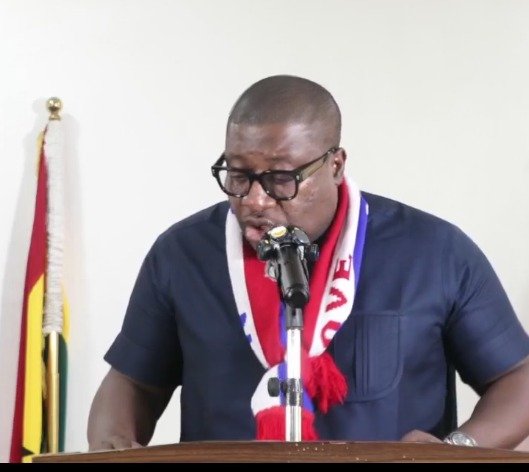
NPP National Organiser Henry Nana Boakye has called on the Minority in Parliament to intensify efforts to uncover the circumstances surrounding the reported US$1.7 billion loss linked to Ghana’s Domestic Gold Purchase Programme (DGPP).
Speaking to journalists on Tuesday, August 25, 2026, Nana Boakye said the New Patriotic Party (NPP) would not back down from its demand for accountability until all questions surrounding the reported loss are fully answered and subjected to public scrutiny.
“We are not backing off. Not now, not tomorrow, not until every question is answered in full, and in public, and under proper scrutiny,” he said.
He urged the Minority Leader and members of the NPP parliamentary caucus to make use of every available parliamentary procedure to demand explanations from the government and relevant institutions involved in the programme.
According to him, Parliament must deploy all appropriate mechanisms, including parliamentary questions, committee hearings, requests for documents, order papers and points of order, to establish what happened.
“Use every relevant law in the books, every question on the floor of Parliament, every committee hearing, every request for documents, every order paper, every point of order,” Nana Boakye said.
He also urged the Minority to continue pursuing the matter in the public domain to ensure that Ghanaians receive detailed explanations about the reported loss.
“Fight for the people of Ghana in the court of public opinion as well. Fight until the Ghanaian people receive all the answers they deserve—in writing, under oath if necessary,” he added.
The NPP’s position follows the reported assessment by the International Monetary Fund (IMF) of a US$1.7 billion loss associated with the Domestic Gold Purchase Programme.
The party says the reported loss raises concerns about the management of transactions under the programme and its implications for public finances.
Nana Boakye maintained that the NPP would continue using Parliament and other appropriate channels to pursue answers on the matter.
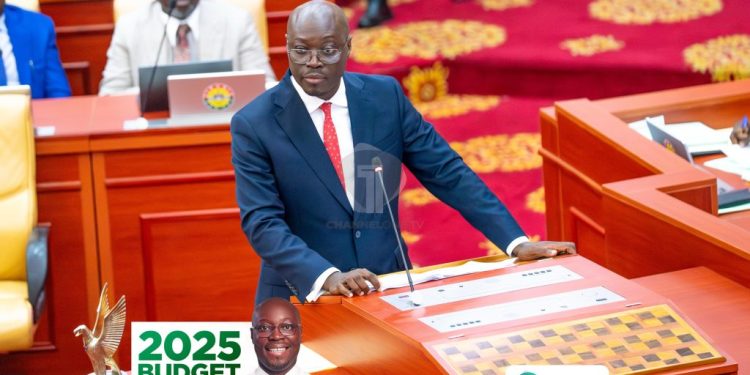
Ghana is set to adopt stricter financing standards for development projects as the government seeks to protect the country’s debt position and avoid a repeat of the economic pressures that culminated in the 2022 debt crisis.
Finance Minister Dr Cassiel Ato Forson said government would no longer contract loans merely because funding was available, insisting that proposed projects must demonstrate clear economic value before receiving financing.
“Ghana will now proceed with discipline. We will not borrow simply because financing is available,” Dr Forson stated.
He explained that projects financed through government’s cooperation with external partners would be subjected to greater scrutiny, with emphasis placed on their ability to contribute meaningfully to economic growth.
Under the approach, projects must be economically justified, transparently procured and capable of generating revenue, creating jobs, increasing exports, improving productivity or reducing costs.
Dr Forson specifically cited major infrastructure investments such as roads, railways, power plants and industrial enclaves, stressing that such projects must produce measurable benefits for the economy rather than add to the country’s debt burden without corresponding returns.
“Any road, railway, power plant, industrial enclave or other infrastructure financed through this cooperation must improve productivity, create jobs, increase exports and strengthen Ghana’s ability to repay its obligations,” he said.
The Finance Minister also disclosed that government intends to broaden the sources from which it secures development financing while maintaining strict controls over public debt.
“We will diversify our financing sources, protect debt sustainability and avoid a return to the conditions that led to the 2022 debt crisis,” he stated.
Dr Forson made the remarks during the Fifth Session of the Ghana–China Joint Commission on Economic, Trade and Technical Cooperation.

The Ministry of Foreign Affairs has announced that its official passport application website, passport.mfa.gov.gh, is temporarily unavailable due to technical issues.
In a notice issued on Tuesday, August 25, 2026, the Ministry informed passport applicants and other customers who may be experiencing difficulties accessing the platform that the website is currently down.
The disruption means members of the public attempting to access the online passport application platform may be unable to do so until the technical problem is resolved.
According to the Ministry, its technical team is actively working to restore the website. The team is collaborating with the National Signals Bureau (NSB) as part of efforts to identify and resolve the problem as quickly as possible.
The Ministry did not provide a specific timeline for when the website would be fully restored. However, it assured the public that another update would be issued once the technical difficulties have been resolved.
The Foreign Affairs Ministry also apologised to customers for the inconvenience caused by the temporary outage.
The notice was directed to all media houses to help inform the public about the disruption and prevent applicants from being unnecessarily concerned about difficulties accessing the passport website.
Members of the public who are currently unable to access passport.mfa.gov.gh are therefore being advised to await further communication from the Ministry on the restoration of the service.
AAklZ8sftjLXx6JwJusEXETD20i2_PRESS RELEASE – INTERNET DISRUPTION IN PASSPORT

Minority Leader of Parliament, Alexander Afenyo-Markin, has filed a libel suit at the High Court in Accra against the Chief Executive Officer of the Ghana Gold Board (GoldBod), Samuel Adu Gyamfi, popularly known as Sammy Gyamfi, and Multimedia Group Limited.
The suit follows alleged defamatory remarks made by Sammy Gyamfi during the Saturday, August 22, 2026 edition of JoyNews’ Newsfile, which was hosted by Samson Lardy Anyenini.
According to the Statement of Claim, Afenyo-Markin, who describes himself as a legal practitioner, prominent public figure, fourth-term Member of Parliament and former Majority Leader, says he has built a reputation for integrity, honesty, professionalism and competence in his legal and public career.
He also states that he is a traditional leader in the Effutu Traditional Area and has served as Third Deputy Speaker of the ECOWAS Parliament.
The suit identifies Sammy Gyamfi as the first defendant and Multimedia Group Limited, operators of Joy 99.7 FM and JoyNews TV, as the second defendant.
Alleged “extortionist” remarks
Afenyo-Markin’s case centres on comments allegedly made by Sammy Gyamfi during a discussion about GoldBod’s financial performance and criticism surrounding the institution.
The plaintiff claims that, in response to a question about GoldBod’s reported profits and liabilities, Sammy Gyamfi launched what the suit describes as an “unscathing attack” on him and referred to him as an “extortionist.”
The Statement of Claim says Sammy Gyamfi further justified the description by indicating that he had appeared on Newsfile many times and had held numerous press conferences on political issues but had never previously used the word “extortion” against any of his critics.
The plaintiff also claims that Sammy Gyamfi questioned why Afenyo-Markin had not challenged or threatened to sue him over his previous statements.
The court documents further quote Sammy Gyamfi as saying that there were underlying issues between him and Afenyo-Markin which the public did not know about.
The suit also alleges that Sammy Gyamfi challenged Afenyo-Markin and his supporters to debate the matter, describing himself as a “consummate democrat” who was prepared to engage in debate.
When the host sought clarification on whether Sammy Gyamfi was indeed calling the Minority Leader an “extortionist”, the Statement of Claim says he responded affirmatively and maintained that Afenyo-Markin could not challenge him because he knew what had been said was true.
The plaintiff further cites remarks in which Sammy Gyamfi allegedly encouraged the host, a lawyer, to represent Afenyo-Markin and sue him so that he could substantiate the allegation.
The suit also quotes Sammy Gyamfi as saying the statement was not an insult but that he was “speaking about what has happened and he knows.”
Afenyo-Markin denies extortion allegation
Afenyo-Markin strongly denies the allegations, describing the statements as false and defamatory.
He argues that the categorical description of him as an “extortionist”, without identifying when, where or from whom he allegedly extorted anything, amounts to defamation.
The plaintiff further argues that Sammy Gyamfi’s reference to unspecified “underlying issues” did not provide a legitimate basis for the allegation.
According to the Statement of Claim, the plaintiff believes the remarks were made with knowledge that they were defamatory and without proof to support them.
He also rejects the suggestion that his failure to immediately respond to previous criticisms could be interpreted as an admission that the allegations were true.
Alleged implications of the publication
The suit states that people who heard or watched the broadcast would have understood the allegations to mean that Afenyo-Markin is an extortionist and habitually engages in extortion.
The plaintiff further says the statements created the impression that he uses his political position and influence to exert improper pressure on public institutions and officials, engages in secret or behind-the-scenes negotiations for improper purposes, and improperly intervenes in the affairs of public institutions.
He also argues that the remarks portrayed him as someone who abuses the influence associated with his position and conducts himself in a manner inconsistent with the honesty and integrity expected of a legal practitioner and senior public official.
Claims of malicious publication
Afenyo-Markin alleges that the statements were published maliciously.
Among the particulars of malice cited in the Statement of Claim are the alleged deliberate use of the word “extortionist” in connection with his criticism of financial losses involving GoldBod, the repetition of the allegation after the host questioned Sammy Gyamfi about it, and the alleged assertion that Sammy Gyamfi possessed evidence to support his claims.
The plaintiff also cites the alleged challenge to him to “dare” Sammy Gyamfi and argues that the statements were presented as facts rather than opinions.
He maintains that the publication was made in circumstances calculated to expose him to public contempt, ridicule, disrepute and opprobrium.
Social media circulation
The plaintiff says the alleged defamatory statements were broadcast on JoyNews TV during Newsfile and were subsequently circulated widely on social media platforms, including X, Facebook and YouTube.
According to the suit, recordings of the programme were watched, listened to, downloaded, shared and otherwise accessed by members of the public.
Afenyo-Markin therefore argues that the publication reached a substantial audience and continues to cause damage to his reputation.
He says the allegation is particularly serious because of his position as a legal practitioner and senior political figure.
The plaintiff claims that the publication has exposed him to hatred, ridicule, contempt and public disapproval while creating a false impression that he uses his political influence to extort or improperly negotiate with public officials.
Multimedia Group’s involvement
The suit also names Multimedia Group Limited as a defendant.
Afenyo-Markin argues that Multimedia, through its JoyNews platform, published or facilitated the publication of the alleged defamatory statements to its audience.
He further alleges that the second defendant, despite being aware of the legal consequences of the statements, did not stop Sammy Gyamfi from making the remarks or deactivate his microphone.
The plaintiff says the programme therefore became a medium through which the alleged defamatory statements were disseminated to a wide audience.
Reliefs sought
Afenyo-Markin is seeking general damages for libel, aggravated damages and exemplary damages against the defendants.
He is also asking the High Court to order Sammy Gyamfi and Multimedia Group Limited to issue a full, unconditional and unequivocal retraction of the alleged defamatory statements.
He wants the defendants to issue a public apology and publish or broadcast the retraction and apology with substantially the same prominence and reach as the original publication.
The plaintiff is specifically seeking an order requiring the retraction and apology to be broadcast on JoyNews and published on the electronic and social media platforms through which the alleged defamatory material was disseminated.
He is also seeking a perpetual injunction restraining the defendants, their servants, agents, assigns and anyone acting under their authority from republishing the alleged defamatory words or statements with the same or substantially similar meaning.
In addition, Afenyo-Markin is claiming GH¢15 million in compensation, together with costs, including legal costs.
He has also asked the court to grant any further or other reliefs it considers appropriate.
The writ commands the defendants to enter an appearance within eight days after service, inclusive of the day of service, failing which judgment may be entered in their absence.
The suit was filed through lawyer F. Paa Kwesi Abaidoo of Dehyena Chambers in West Legon, Accra.

The Office of the Special Prosecutor (OSP) has begun assessing allegations of extortion and related conduct involving the Minority Leader of Parliament, Alexander Afenyo-Markin.
The allegations were publicly made by the Chief Executive Officer of the Ghana Gold Board (GoldBod), Sammy Gyamfi, against the Minority Leader.
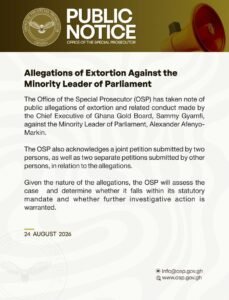
In a public notice dated Monday, August 24, 2026, the OSP said it had taken note of the allegations and acknowledged petitions submitted in connection with the matter.
The anti-corruption agency disclosed that it had received a joint petition from two individuals, in addition to two separate petitions submitted by other persons regarding the allegations.
The OSP said its immediate task is to assess the nature of the allegations and determine whether the matter falls within its statutory mandate.
It will also decide whether the circumstances warrant further investigative action.
“Given the nature of the allegations, the OSP will assess the case and determine whether it falls within its statutory mandate and whether further investigative action is warranted,” the notice stated.
The OSP’s announcement does not mean that Afenyo-Markin has been found guilty of extortion or that a formal investigation has already commenced. The office is first determining whether the allegations fall within its jurisdiction and whether there are grounds for further action.
The allegations form part of an increasingly public dispute between Afenyo-Markin and Sammy Gyamfi, with the GoldBod CEO accusing the Minority Leader of extortion.
Afenyo-Markin has rejected the allegations and has indicated his willingness to submit himself to any investigation by the relevant state institutions. He has also taken steps toward legal action over the claims.
The OSP’s assessment could determine whether the matter proceeds to a formal investigation or whether no further action is required.

Afoko Vows to Reunite NPP, Recapture Power in 2028

Agya Koo Opens Up On Eye Problems, Movie Earnings

Tiwa Savage Freezes Her Eggs, Reveals Why She Wants Women to Act Early



-

 Education2 weeks ago
Online Classes and Education: Are They the Future of Learning?
-

 Entertainment2 weeks ago
Let Them Come Home: Ras Caleb Urges Africa to Embrace Diaspora Returnees
-

 General News1 week ago
KFC Ghana Faces Legal Scrutiny Over Customer Safety During GH¢15 Anniversary Promotion
-

 Entertainment2 weeks ago
Tima Kumkum Confirms Marriage Has Ended After One Year, Nine Months
-

 General News1 week ago
BOST Makes Over GH¢10 Million From Faulty Flow Meter Charges, Tanker Drivers Claim
-

 Entertainment2 weeks ago
Tourism Minister responds to concerns over support for comedians, says Creative Arts Agency will engage industry
-

 Entertainment2 weeks ago
Where Are the Manifesto Promises? FOCAP Challenges Tourism Minister After Accountability Session
-

 Politics2 weeks ago
Where Is Sedina ? — Hawk Newspaper Managing Editor Charles McCarthy Questions Government