General News
Interior Minister Reveals Ghana Removed Over 3,000 Irregular Migrants in 2025
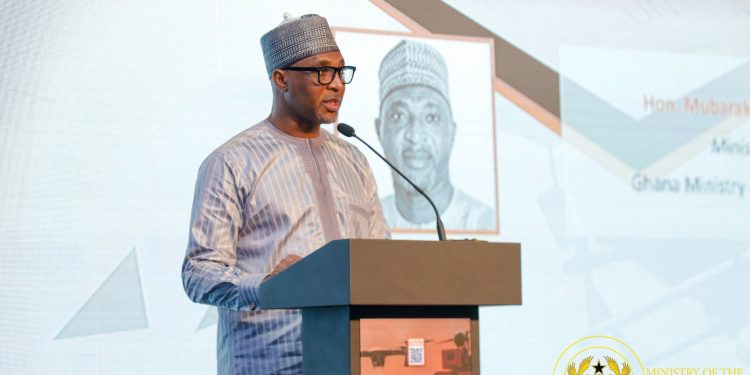
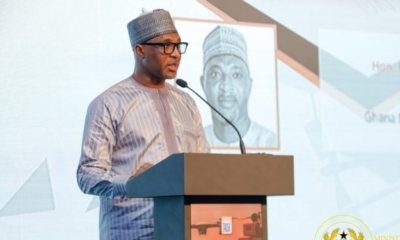
Interior Minister Muntaka Mubarak Mohammed has disclosed that Ghana removed 2,281 migrant beggars and 774 other illegal immigrants linked to transnational organised crime in 2025.
Speaking at the Government Accountability Series on Monday, August 24, 2026, Mr Muntaka said the Ghana Immigration Service had intensified efforts to address irregular migration and unlawful activities involving foreign nationals.
“By the end of 2025, the Ghana Immigration Service had 2,281 migrant beggars on our streets and 774 other illegal immigrants involved in transnational organised crime that had been removed from Ghana,” he stated.
He added that the enforcement exercise had continued into 2026, with 960 migrant beggars removed from the streets of Accra and Kumasi as of July. During the same period, another 186 illegal immigrants were also removed from the country.
The Interior Minister said the government was carrying out the removals while taking into account Ghana’s obligations under the ECOWAS Protocol on Free Movement of Persons, as well as the country’s diplomatic relations and longstanding ties with other nations.
“We are pursuing this removal fully conscious of Ghana’s obligation under the ECOWAS Protocol on free movement of persons as well as the diplomatic relations and long-standing ties we and other countries have,” Mr Muntaka said.
He explained that the government’s goal was to reduce irregular migration and unlawful activities associated with it while ensuring that enforcement operations were conducted within the law and with respect for human dignity.
“Our objective is to reduce irregular migration and unlawful activities associated with it to the barest minimum, while ensuring that enforcement actions are lawful, undertaken by the appropriate authorities and carried out in a manner that is respectful of human dignity,” he said.
Mr Muntaka also dismissed suggestions that the government lacked the political will, security intelligence or leadership to tackle irregular migration.
According to him, the major challenge was the level of skills and operational capacity available to effectively deal with the situation.
“Let me be clear that the challenge before us is not a lack of political will, security, intelligence or leadership. It is principally a question of skill,” he stated.
He assured the public that government had reached a high-level consensus to provide the necessary logistical support to strengthen the relevant agencies and expand the scale of migration enforcement.
“And I can assure the public that there is a high-level consensus that with earmarked logistical support to increase the scale of the removals and strengthen our bodies, evidence of that will soon be apparent,” he added.
The Interior Minister said Ghana would continue to uphold its tradition of hospitality while maintaining a firm stance on national security, public order and respect for the rule of law.
General News
Even Jesus Was Accused – Afenyo-Markin Softens Legal Threat Against Sammy Gyamfi
Minority Leader in Parliament, Alexander Afenyo-Markin, appears to have adopted a more restrained position over his earlier threat to pursue legal action against Ghana Gold Board (GoldBod) Chief Executive Officer, Sammy Gyamfi, following allegations made against him.
Mr Afenyo-Markin had earlier indicated in a Facebook post that he would seek legal remedies over what he described as defamatory attacks, including allegations portraying him as an “extortionist”.
However, less than 24 hours after that warning, the Effutu Member of Parliament declined to definitively state that he would take Mr Gyamfi to court.
Speaking on JoyNews’ The Probe on Sunday evening, August 23, Mr Afenyo-Markin said he would rely on statements he had already made and urged the public not to rush him into taking further action.
“I have made certain statements. I would rely on them without more. Don’t rush. In the Bible, Jesus was accused of wild allegations. He kept quiet and watched them. He could have done anything,” he said.
According to the Minority Leader, his position as a senior political figure requires him to exercise restraint and avoid responding emotionally to attacks.
He said Ghanaians expected a certain level of maturity from him, particularly because of the responsibilities attached to his office and his leadership role within the New Patriotic Party (NPP).
“But you see, when you are dealing with situations, the people of Ghana expect a certain level of maturity from me. The people of Ghana see that this is an accomplished businessman. He’s been in the space for some time. He’s leading a group. The tradition of the party NPP that I lead expects a certain level of conduct,” he stated.
Mr Afenyo-Markin said he would not allow himself to be distracted by what he believes could be a deliberate political strategy to shift attention away from the substantive questions surrounding the Bank of Ghana’s Domestic Gold Purchase Programme (DGPP) and reported losses linked to the initiative.
“So if I were carried away with emotions, I would fail. It’s not an emotional game. It’s not a game where somebody attacks you, and you should also react. No, you won’t get it,” he said.
“There is always bait in politics, and don’t underestimate it. Opponents also have a strategy,” he added.
The Minority Leader further suggested that the allegations against him could be part of an attempt to divert public attention from the issues the Minority Caucus has raised about the government’s gold purchase programme and GoldBod’s involvement in the transactions.
“I was a majority leader. I know how government operates. I know how government can divert attention. So I’ve been there. Because the government must hold itself together, so it can be thrown in today’s social media. Let’s divert attention. Let’s stain the man,” he explained.
Afenyo-Markin says political attacks come with the job
Mr Afenyo-Markin also placed the controversy within the broader realities of opposition politics, saying he would not be the first Minority Leader to face intense political pressure or personal attacks.
He cited the experience of current Majority Leader and former Minority Leader, Dr Cassiel Ato Forson, who faced criminal proceedings while serving in opposition.
“In opposition, like I said, was Ato Forson not in court? Was his not worse than my situation? Do you get what I mean?” he asked.
Despite the attacks, Mr Afenyo-Markin said he remained committed to the mandate given to him by the NPP and would continue to scrutinise the government.
“So, as for this game, I want to assure the party that the mandate they gave me, God willing, that mandate will be discharged. We will work hard. The people of Ghana expect us to do nothing less. They expect us as a minority to be forthright, to work hard, to hold the feet of government to the fire, we will do that,” he said.
He acknowledged that political opponents had the right to disagree with him and criticise his actions but maintained that such criticism should not cross the line into what he described as excessive or unacceptable language.
“You know, we are in a political environment; people are free to oppose or disagree. But what the political environment cannot tolerate is the excesses there too. I have become aware of certain unacceptable language being put out there,” he stated.
Mr Afenyo-Markin added that he and members of the Minority Caucus had already taken steps in response to the allegations but would not allow the controversy to distract them from their parliamentary duties.
“I believe that I’ve taken appropriate steps together with my colleagues in the caucus, and we don’t want to fall into any bait of diversion,” he said.
He insisted that the Minority’s concerns about the Domestic Gold Purchase Programme were not simply partisan attacks but were intended to draw attention to an issue of national importance.
“This is an important national issue. It is not a partisan call. It is a patriotic call being made by a vigilant minority, however few our numbers,” he said.
Minority pushes ahead with GoldBod losses inquiry
Mr Afenyo-Markin said the Minority Caucus would continue with its plans to seek a parliamentary inquiry into the reported losses associated with the gold purchase programme.
“We want to focus. We promised the people of Ghana that we would file a motion; we have filed that motion,” he stated.
He said he was prepared for the political consequences of his position, including personal attacks, and was not surprised by the pressure accompanying his role as Minority Leader.
“Look, I won’t be the first minority leader to suffer attacks,” he said.
He recounted a conversation with a colleague about the challenges faced by opposition leaders in other countries, noting that some minority leaders had faced arrest, imprisonment or investigations by state institutions.
“And I said, oh, sir, in other jurisdictions, minority leaders have been arrested. They are in jail. In other jurisdictions, minority leaders are made to report to investigative agencies all the time,” he recounted.
Mr Afenyo-Markin again referred to Dr Ato Forson’s experience while serving as Minority Leader under the previous administration.
“In any event, you remember, even my good friend, Ato Forson, was facing charges in court, and NDC appointed him minority leader. He was attending court two times, three times,” he said.
He stressed that he was fully aware of the responsibilities and pressures associated with his position when he accepted the role.
“So, I’m very clear on my mind. The very day I took this job, I knew the weight of it. Everything is on me. I’m ready to live up to the task. I rely on my God, and I thank the party for the support,” he stated.
Motion to be considered as Parliament resumes
Mr Afenyo-Markin said his immediate focus was on securing parliamentary approval for the Minority’s motion seeking an inquiry into the reported GoldBod losses.
Parliament was scheduled to resume on Monday, August 24, and he expressed hope that the motion would be admitted and subsequently referred to an ad hoc committee.
“All other things that will come, we will deal with it. Tomorrow we are resuming; we pray that the motion will be admitted. We argue, set up the ad hoc committee so that within the period of break, at least there will be a hearing so that by October before we read the 2027 budget,” he said.
He expressed optimism that the committee would complete its work before consideration of the 2027 Budget, allowing its findings to inform the national debate.
“I hope by that time the report will be ready, and once it is ready, the good people of Ghana will see,” he added.
The Minority Leader also called for the proceedings of the proposed inquiry to be broadcast live, saying the public should have direct access to the committee’s hearings.
“But I pray for a live broadcast of the hearing. We expect that once the motion is carried, there will be a full public hearing of these GoldBod losses,” he stated.
Mr Afenyo-Markin’s latest comments represent a notable shift from his earlier declaration that he would pursue legal remedies over the allegations made against him.
Rather than committing himself to court action, he has now emphasised restraint, political maturity and a determination not to be distracted from the Minority’s broader scrutiny of the Domestic Gold Purchase Programme.
For now, his attention appears to be firmly focused on Parliament and the proposed inquiry into the reported GoldBod losses, with the Minority Leader signalling that any further response to the allegations will not be allowed to overshadow what he considers a matter of national interest.
General News
IMANI Questions GSA’s 15-Year Vehicle Import Ban, Calls for Safety-Based Regulation
IMANI Center for Policy & Education has raised concerns over the Ghana Standards Authority’s decision to restrict the importation of used vehicles that are more than 15 years old, arguing that vehicle safety should be determined primarily by roadworthiness and condition rather than age.
The policy, expected to take effect from October 1 under the GS 4510:2022 conformity regime, has sparked debate over its legal basis, economic impact and implications for consumers and businesses within Ghana’s automotive sector.
IMANI said it supports stronger measures to prevent dangerous vehicles from entering the country, particularly vehicles that have been severely damaged by floods, fire or accidents, as well as those with compromised structural integrity.
However, the policy think tank questioned whether a blanket age restriction is the most effective way to achieve that objective.
According to IMANI, a vehicle that is 16 years old but has been properly maintained, has a sound chassis, functioning safety systems, good brakes and meets applicable emissions requirements should not automatically be classified as unsafe simply because of its age.
It argued that a newer vehicle could equally pose a greater danger if it has been poorly maintained, improperly repaired or structurally damaged.
The organisation therefore believes the focus should be on identifying actual safety defects rather than using the age of a vehicle as the decisive factor.
“Are we regulating danger or regulating birthdays?” IMANI asked, stressing that safety regulations should distinguish between genuinely hazardous vehicles and older vehicles that remain mechanically and structurally sound.
IMANI also questioned the legal foundation for the proposed restriction, pointing to the Customs (Amendment) Act, 2020, Act 1014.
The organisation noted that Section 154(3) of the Act gives the Finance Minister, in consultation with the Trade Minister, the authority to specify by Legislative Instrument when vehicles above a particular age may no longer be imported.
IMANI argued that if the government is now operating with a 15-year threshold, the relevant Legislative Instrument and the legal connection between the legislation and the GSA’s new rule should be clearly identified.
It maintained that an administrative announcement or policy presentation cannot replace subsidiary legislation required under an Act of Parliament.
The policy think tank also warned that the restriction could have significant consequences for businesses and workers across Ghana’s used vehicle industry.
The sector involves importers, clearing agents, mechanics, spare-parts dealers, transport operators, tyre sellers, auto electricians, bodywork specialists and other businesses that depend on the movement and maintenance of used vehicles.
IMANI cited concerns raised by the Vehicle and Assets Dealers Union of Ghana, whose President General, Bernard Ntrakwah, has expressed support for efforts by the GSA to sanitise the vehicle market and prevent unsafe cars from entering Ghana.
However, the union has raised reservations about a blanket 15-year prohibition and its possible effects on dealers, consumers and businesses connected to the automotive value chain.
IMANI said these concerns should not simply be dismissed as commercial interests seeking to protect profits.
The organisation further questioned how the policy would affect ordinary Ghanaians who rely on relatively inexpensive used vehicles.
According to IMANI, removing older vehicles from the market could reduce the supply of cheaper cars and make vehicle ownership more difficult for consumers who cannot afford newer models.
It warned that consumers do not automatically become wealthier when government raises the minimum age or standard for imported vehicles.
Instead, people who cannot afford newer cars may continue using vehicles they already own for longer periods.
IMANI said this could create an unintended consequence in which a policy intended to modernise Ghana’s vehicle fleet could encourage some motorists to keep much older vehicles on the road because replacement costs have become unaffordable.
IMANI also acknowledged the importance of supporting Ghana’s domestic automotive assembly industry but argued that such support should be based on measurable economic benefits.
It called for greater transparency on the number of vehicles assembled locally, the jobs created, the level of local content in assembled vehicles and the value of tax incentives provided to vehicle assemblers.
The organisation said these benefits should be compared with the potential loss of Customs revenue, businesses and employment across the used vehicle sector.
It argued that protecting local assembly should not automatically mean weakening competition or imposing costs on consumers without clear evidence of the wider economic gains.
IMANI also raised concerns about the implementation of the Pre-Export Verification of Conformity (PVoC) system.
Under the arrangement, importers may be required to obtain certification from approved inspection companies before vehicles are shipped to Ghana.
IMANI said government should provide clarity on the companies responsible for inspections, how they were selected, the fees they charge, the mechanisms for auditing their operations and the process available to importers who want to challenge an inspection decision.
The organisation warned that mandatory certification could create additional costs for importers if the system is not sufficiently transparent and accountable.
Despite its opposition to what it considers a blanket age-based restriction, IMANI stressed that it is not against tighter vehicle safety regulations.
It said Ghana should continue to prevent the importation of flood-damaged vehicles, fire-damaged wrecks and cars with compromised chassis or fraudulent structural modifications.
It also advocated stronger verification of vehicle histories, tougher emissions requirements and rigorous roadworthiness inspections.
However, IMANI maintained that an older vehicle that passes comprehensive structural, mechanical, emissions and history checks should not automatically be rejected solely because of its age.
The organisation argued that the government should develop a regulatory framework that targets genuine safety risks while protecting consumers and legitimate businesses.
IMANI said Ghana should not be forced to choose between becoming a dumping ground for unsafe vehicles and making vehicle ownership unaffordable for ordinary citizens.
It called for a balanced approach that considers the legality of the restriction, the evidence supporting it, its economic consequences and the burden it places on consumers.
For IMANI, the fundamental principle should be straightforward: “A good vehicle policy should punish defects, not dates.”
The organisation said the government must demonstrate why age alone should determine whether an otherwise roadworthy vehicle is allowed into Ghana.
It therefore returned to its central question: if a vehicle is mechanically sound, structurally safe, emissions compliant and properly maintained, should it be rejected solely because it has crossed the 15-year threshold?
For IMANI, the answer requires government to demonstrate that the policy is not merely regulating the age of vehicles, but is genuinely addressing the safety risks associated with vehicle imports.
Source: IMANI
General News
Police Arrest Suspect in GH¢1.1m Fake Gold Scam at Berekum
The Bono Regional Police Command has arrested a 36-year-old man, identified as Gyamfi Christian, in connection with a suspected fake gold syndicate operating in the Berekum Municipality.
According to the Police, the suspect was arrested following intelligence-led investigations into a GH¢1.1 million gold fraud case reported by a 29-year-old gold aggregator, Christopher Awuni.
The Police said Awuni reported that, in July 2026, four men posing as genuine gold sellers sold him 110 troy ounces of gold for GH¢1.1 million.
However, the gold was subsequently tested and found to be fake. The suspected counterfeit gold has since been retained by the Police as an exhibit.
The Bono Regional Police Command said sustained intelligence gathering led to the arrest of Gyamfi Christian at his hideout in Wamfie in the Dormaa East District on August 17, 2026.
During interrogation, the suspect allegedly admitted his involvement in the transaction and disclosed to investigators that the deal took place at Drobo in the Jaman South Municipality.
Police investigations further indicate that Christian identified three other alleged members of the group.
They are Abraham, alias “Frenchman,” who is alleged to be the leader of the group, as well as Isaac Antwi and Balthazar.
The three alleged accomplices are currently at large, with the Police continuing efforts to locate and arrest them.
The Police said preliminary investigations have also uncovered another alleged fraud linked to the same group.
According to the Bono Regional Police Command, the group is suspected to have defrauded another victim of approximately GH¢1.4 million in a separate transaction at Drobo earlier this year.
The development has widened the scope of the investigation as detectives work to establish the full extent of the suspected fake gold operation.
Gyamfi Christian remains in Police custody and is assisting with investigations while the Police pursue the other suspects.
The Bono Regional Police Command has meanwhile urged members of the public, particularly those involved in gold transactions, to exercise extreme caution when dealing with individuals presenting themselves as gold sellers.
The Command advised prospective buyers to properly verify gold before making payments and to report suspicious activities to the Police.
“The Bono Regional Police Command urges the public to exercise caution when engaging in gold transactions and report suspicious activities to the Police,” the Police said.
The arrest comes amid continued concerns over fraud involving Ghana’s gold trade, where unsuspecting buyers can suffer substantial financial losses when transactions are conducted without proper verification.
The Police say investigations remain ongoing as efforts continue to apprehend the three alleged accomplices who are currently at large.


General News
Nana Adwoa Tutuwaa Named Global Humanitarian of the Year 2026
Nhyiramma Foundation founder honoured for more than a decade of grassroots humanitarian service
Founder and Chief Executive Officer of the Nhyiramma Foundation, Nana Adwoa Tutuwaa, has been honoured as Global Humanitarian of the Year 2026 at the 5th Global Women Leadership Summit & Awards.
The recognition, presented by renowned broadcaster and women’s rights advocate Akumaa Mama Zimbi, celebrates more than a decade of humanitarian work focused on vulnerable people and underserved communities across Ghana.
Nana Adwoa Tutuwaa’s humanitarian journey began in 2014 as a personal passion to support people in need. Over the years, that passion has developed into sustained community-based interventions through the Nhyiramma Foundation.
Reflecting on the recognition, she said the journey had grown beyond what she initially imagined.
“What started as a passion project has grown into something I never imagined. I give God all the glory.”
Established in 2014, the Nhyiramma Foundation has implemented several humanitarian initiatives, particularly in deprived communities within Ghana’s Eastern Region.
Its interventions include the provision of boreholes for communities with limited access to potable water, educational support for children, healthcare assistance and economic empowerment programmes for women.
The foundation has helped children remain in school by paying their school fees, while also providing microloans to 250 women involved in petty trading. The support has enabled the beneficiaries to strengthen their businesses and improve their ability to provide for their children.
In the health sector, the foundation donated hospital items valued at approximately GH¢50,000 to the Tetteh Quashie Memorial Hospital.
It has also assisted less privileged mothers by settling hospital bills and facilitated two major surgeries for children living with hydrocephalus.
According to Nana Adwoa Tutuwaa, these experiences have further strengthened her commitment to humanitarian work.
A notable aspect of Nana Adwoa Tutuwaa’s philanthropic activities is the extent to which she has personally financed the foundation’s interventions.
She estimates that about 85 per cent of the projects undertaken by the Nhyiramma Foundation over the years have been funded from her personal resources.
She said proceeds from her businesses have frequently been channelled into charitable activities.
Her humanitarian work has also taken her beyond conventional office-based philanthropy. She has personally travelled to remote communities, at times renting vehicles to reach difficult-to-access areas, to interact with vulnerable families and understand their needs firsthand.
For her, humanitarian service goes beyond simply donating money or materials.
“It takes someone with a deep passion to continue doing this. I have always had a love for humanity, and when it comes to vulnerable people, I am selfless,” she said.
The Nhyiramma Foundation has increasingly shifted its attention towards sustainable economic empowerment for vulnerable women.
In 2025, the foundation launched the Widows and Single Mothers Association in Akuapem North to provide a structured platform where vulnerable women can access support, empowerment and opportunities to improve their livelihoods.
The initiative has so far provided seed capital to 20 women, with plans to extend the programme throughout the Eastern Region and eventually to other parts of Ghana.
The long-term objective is to move beyond one-time charitable assistance and establish sustainable opportunities that can enable widows and single mothers to become economically stronger and better able to support their families.
The Global Humanitarian of the Year 2026 award becomes the latest addition to Nana Adwoa Tutuwaa’s growing list of recognitions for her humanitarian and philanthropic work.
Her previous honours include:
Shero of the Year – 2019
Woman in Philanthropy Award – 2019
Best Humanitarian Award – 2020
Africa Peace Advocate Award – 2024
Triumph Change Maker Award – 2025
Global Humanitarian of the Year – 2026
She described the latest recognition as particularly humbling, noting that her journey began not with a major institutional plan but with a simple desire to help people.
With the Nhyiramma Foundation entering a new phase, Nana Adwoa Tutuwaa says her ambition is to build a more structured and sustainable organisation capable of reaching significantly more vulnerable people.
The foundation’s growing focus on widows, single mothers, children and deprived communities is expected to remain central to its expansion.
She also hopes to move from a model that has relied heavily on her personal resources towards establishing partnerships with individuals, organisations, corporations and other stakeholders who share the foundation’s vision.
For Nana Adwoa Tutuwaa, the past 12 years represent not the end of her humanitarian journey but the foundation for a larger mission.
From travelling to remote communities to support families, helping women establish small businesses, keeping children in school, assisting mothers with medical expenses and facilitating life-changing medical interventions, her work has been driven by a belief that humanitarianism begins with the willingness to care.
As she receives her sixth major recognition, Nana Adwoa Tutuwaa remains focused on the purpose that began in 2014: serving humanity, empowering vulnerable people and giving hope where it is needed most.
General News
United Party Petitions State Institutions Over Alleged $1m Extortion Claim Against Afenyo-Markin
The United Party has petitioned key state institutions to investigate allegations that Minority Leader in Parliament, Alexander Kwamena Afenyo-Markin, attempted to obtain US$1 million from Ghana Gold Board (GoldBod) Chief Executive Officer, Sammy Gyamfi.
The petition, dated August 23, 2026, was jointly signed by Solomon Owusu, Director of Communications and Spokesperson of the United Party, and Andrew Appiah-Danquah, Director of Legal and Constitutional Affairs. It was addressed to the Attorney-General and Minister for Justice, the Special Prosecutor, the Speaker of Parliament, the Commission on Human Rights and Administrative Justice (CHRAJ), the Inspector-General of Police and the Director-General of the Criminal Investigations Department (CID).
The petition, titled “Joint Petition for the Investigation of Allegations of Attempted Extortion, Corruption, Abuse of Public Office and Related Conduct Involving the Minority Leader of Parliament,” said the allegations were serious enough to warrant an independent and evidence-based investigation.
According to the petitioners, the allegations arose from comments made by Mr Gyamfi during the Government Accountability Series on August 19, 2026, where he responded to claims made by Afenyo-Markin concerning the operations and financial position of GoldBod.
The petition said Mr Gyamfi, towards the end of his statement, alleged that individuals could engage in what he described as a calculated campaign of reputational attacks by making false allegations against their targets, with the expectation that the targets would eventually submit to what he called “compulsory arbitration” for financial benefit.
It further stated that Eric Adjei, Chief Executive Officer of the National Entrepreneurship and Innovation Programme (NEIP) and a publicly known associate of Sammy Gyamfi, subsequently made additional allegations against Afenyo-Markin.
Mr Adjei was alleged to have accused the Minority Leader of engaging in extortionist conduct and of establishing or being associated with a team that allegedly used requests under the Right to Information Act to obtain information from public institutions before persons connected to the alleged operation assumed the role of “negotiators.”
The petitioners said it had subsequently been alleged and publicly attributed directly to Sammy Gyamfi that Afenyo-Markin attempted to demand or obtain US$1 million from him.
They said the cumulative effect of the allegations suggested that the alleged demand may have been connected to actual or threatened reputational attacks, adverse publicity, political pressure, threatened official or parliamentary action, or an offer to discontinue or moderate such conduct in exchange for payment.
However, the United Party stressed that it did not possess the communications, recordings, electronic messages or other evidence upon which the allegations were based and therefore could not determine whether the claims were true.
The petitioners argued that allegations of such magnitude, particularly when made publicly by persons holding high public office and concerning a serving parliamentary leader, should not simply be dismissed as ordinary political rhetoric.
They said that if the allegations were proven, they could point to an attempt to use political influence, parliamentary standing, access to information or threats to a person’s reputation to extract a substantial private financial benefit.
Conversely, if the allegations were false or could not be substantiated, the petitioners said they would constitute a serious attack on the reputation of Afenyo-Markin and the integrity of Parliament.
The United Party cited several constitutional and legal provisions in support of its call for an investigation.
It referred to Article 1(1) of the 1992 Constitution, which provides that sovereignty resides in the people of Ghana and that governmental powers are exercised in their name and for their welfare.
The petitioners argued that public power is therefore fiduciary and should not be transformed into a tool for private enrichment, political retaliation or coercion.
They also cited Article 35(8), which places an obligation on the State to take steps to eradicate corrupt practices and abuse of power, as well as Article 41(f), which requires citizens to protect public property and expose and combat the misuse and waste of public funds and property.
The petition further cited Article 218 of the Constitution and Section 7 of the Commission on Human Rights and Administrative Justice Act, 1993 (Act 456), saying these provisions empower CHRAJ to investigate complaints involving corruption, abuse of power and unfair treatment by public officers.
It also referenced the Office of the Special Prosecutor Act, 2017 (Act 959), which provides an institutional framework for investigating and prosecuting certain corruption and corruption-related offences involving public officers and politically exposed persons.
The petitioners also pointed to the Criminal Offences Act, 1960 (Act 29), particularly Sections 17, 18 and 151.
They argued that Section 151 criminalises obtaining property through threats, while Section 17 recognises threats of libel or slander and an offer to refrain from carrying out such threats.
The petition said that if evidence established that a demand for money was accompanied by an express or implied threat to publish, repeat or intensify damaging allegations, or an offer to stop such conduct in exchange for payment, the conduct could potentially fall within the legal definition of extortion.
Where a demand and qualifying threat were made but no money or property was obtained because the intended victim refused to pay, the petition said Section 18 could potentially apply to an attempted extortion offence.
The petition also said Sections 239 to 247 of Act 29 could become relevant if the alleged demand was made under the colour of public office or involved the exercise or threatened exercise of parliamentary or official authority.
Sections 20 and 23, it added, could also become relevant if an intermediary, political operative or other person intentionally assisted or facilitated the alleged conduct.
The United Party emphasised that a request for money by itself does not necessarily amount to extortion.
According to the petition, investigators must determine whether the alleged demand was accompanied by an express or implied threat, or an offer to stop reputational, prosecutorial, parliamentary, political or other harmful conduct in exchange for payment.
The petitioners said this could not responsibly be determined through press conferences, radio discussions or partisan exchanges, but required examination of witnesses, communications, recordings, electronic data and the circumstances surrounding the allegations.
The petition called on investigators to invite Sammy Gyamfi to provide a comprehensive formal statement detailing the alleged demand, including the amount involved, date and location, the person who allegedly communicated it, the words used, what was demanded in return and any subsequent developments.
Eric Adjei, it said, should also be invited to explain whether his allegations were based on firsthand knowledge, information received from Gyamfi, documentary or electronic evidence, communications with an intermediary or another identifiable source.
Afenyo-Markin, the petition said, should be given the opportunity to respond fully and should be accorded the presumption of innocence and all constitutional protections.
The petitioners further called for any alleged intermediary, negotiator, agent, representative or member of an alleged RTI-related team to be identified and interviewed.
Investigators, they said, should establish whether such persons acted independently or with the authority, knowledge, instruction, approval or subsequent ratification of Afenyo-Markin or anyone else.
They also asked investigators to determine whether the alleged demand was for US$1 million, GH¢10 million or another amount or valuable consideration, and whether it was linked to silence, withdrawal or non-publication of allegations, cessation of political attacks, restraint in parliamentary action, favourable treatment, settlement or “compulsory arbitration.”
They called for investigators to establish whether any payment, part-payment, promise, settlement proposal, financial instruction, benefit or other consideration was made, offered, discussed or contemplated.
The petition asked the Attorney-General and relevant investigative institutions to determine whether the facts ultimately established disclosed attempted extortion, completed extortion, corruption, abuse of public office, conspiracy, abetment or any other offence under Ghanaian law.
The Office of the Special Prosecutor was asked to determine whether the allegations fell within its jurisdiction as corruption or a corruption-related offence involving a public officer or politically exposed person.
CHRAJ was urged to investigate whether the alleged conduct amounted to corruption, abuse of power or a breach of the constitutional code of conduct for public officers.
The IGP and CID Director-General were also asked to open a criminal inquiry into the alleged monetary demand, any accompanying threat and the possible involvement of intermediaries or associates.
The petition also asked the Speaker of Parliament to refer any matter concerning the conduct, dignity and integrity of Parliament to the appropriate parliamentary mechanism without interfering with an independent criminal investigation.
It further called for coordination among the relevant institutions where necessary, while maintaining their constitutional and statutory independence.
If sufficient evidence is established, the petitioners want appropriate criminal, disciplinary, parliamentary, civil recovery or other proceedings commenced without fear, favour or partisan consideration.
Petitioners call for fair outcome
The United Party said that if the allegations could not be substantiated after a proper investigation, that conclusion should also be clearly communicated to protect public discourse and the reputation of anyone who may have been wrongly accused.
The petitioners said their concern went beyond the individuals and political parties involved, arguing that Ghana’s constitutional democracy could be undermined if political or public authority were used as an instrument for private bargaining.
They also warned that failing to investigate serious allegations of criminality could encourage impunity if the allegations were true, while allowing unsubstantiated accusations to stand could promote character assassination if they were false.
In its final request, the United Party called for the recipient institutions to acknowledge the petition, assign it an official reference number, commence a prompt and independent preliminary inquiry, obtain formal statements from Sammy Gyamfi and Eric Adjei, invite Afenyo-Markin to respond, identify all alleged intermediaries and preserve relevant electronic, documentary, audiovisual and financial evidence.
The petition also urged the institutions to determine whether public office, parliamentary position or institutional authority was allegedly used as leverage and, where the allegations are substantiated, institute the appropriate proceedings.
The petitioners stressed that they were not asserting that criminal liability had already been established.
They said their request was simply for those who had made serious and specific allegations to place their evidence before competent state institutions and for Afenyo-Markin to be given a fair opportunity to respond.
They concluded by calling for urgent intervention and written communication on the steps taken in response to the petition.
The petition was signed by Solomon Owusu, Director of Communications and Spokesperson of the United Party, and Andrew Appiah-Danquah, Director of Legal and Constitutional Affairs of the party. Attachments listed with the petition include excerpts of Sammy Gyamfi’s August 19 statement, audiovisual recordings or transcripts of Eric Adjei’s statements, material containing the alleged US$1 million demand, and any additional electronic, documentary or witness evidence available to the petitioners.
Petition on allegations of extortion made by Sammy Gyamfi against Afenyo Markin
-
Education2 weeks agoOnline Classes and Education: Are They the Future of Learning?
-
Entertainment2 weeks agoDomestic Tourism In Ghana Grows 7% As Visits Reach 1.79 Million In 2025
-
Entertainment2 weeks agoLet Them Come Home: Ras Caleb Urges Africa to Embrace Diaspora Returnees
-
General News1 week agoKFC Ghana Faces Legal Scrutiny Over Customer Safety During GH¢15 Anniversary Promotion
-
Entertainment2 weeks agoSay a Prayer and Make a Move – Sarkodie to Fans
-
Entertainment2 weeks agoGov’t Allocates GH¢20m Film Development Fund To Boost Ghana’s Film Industry
-
Entertainment2 weeks agoTima Kumkum Confirms Marriage Has Ended After One Year, Nine Months
-
Entertainment2 weeks agoIbrahim Mahama Donates GH¢200,000 to Beverly Afaglo’s Family