
Entertainment
Kojo Preko Dankwa Says There’s Nothing to Show After 18 Months in Government


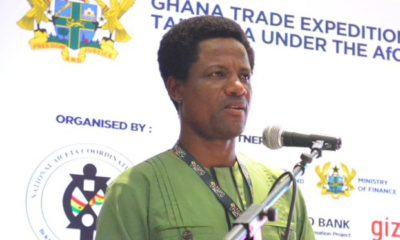
President of the Foundation of Concerned Arts Professionals (FOCAP), Kojo Preko Dankwa, has criticised the Ministry of Tourism, Culture and Creative Arts, saying the government has little to show for its first 18 months in office despite making several promises to the creative arts sector.
Speaking in an interview on Peace FM’s entertainment Review hosted by Ola Michael, Kojo Preko Dankwa questioned the progress made on key infrastructure projects promised in the National Democratic Congress (NDC) manifesto, particularly the construction and rehabilitation of theatres and cultural centres.
According to him, one of the major concerns is the lack of updates on theatre projects that were already underway before the previous government left office.
“What is even the update on the theatres the previous government was working on before it left office? The theatres have gathered dust. Nobody has told us anything. There has been no communication on what is happening,” he said.
He noted that although the current government’s manifesto promised to construct new theatres and rehabilitate existing ones, there has been no visible evidence that those commitments are being implemented.
Kojo Preko pointed specifically to the proposed theatre for the Ashanti Region, saying there has been no indication of where it will be built or when work will begin.
“Their own manifesto talked about building new theatres and rehabilitating existing national cultural centres. After one and a half years, there is nowhere showing where the Ashanti Region theatre will be built. What are we waiting for?” he asked.
The FOCAP President also criticised what he described as the government’s reliance on committees without producing tangible results.
According to him, several committees have been established since the administration assumed office, yet the industry has seen very little action.
“Too many committees have been set up. Some of the committees even conflict with each other, but we don’t see anything happening. I see that as a problem.”
He appealed to the ministry to become more proactive in addressing the challenges facing Ghana’s creative industry.
“We are pleading with them to be on their toes. We already know the problems. Solve them for us. Gather the stakeholders, bring everyone together and deal with the issues.”
Despite his criticisms, Kojo Preko commended the Minister’s decision to establish the Black Star Experience Secretariat, describing it as a strategic initiative.
He explained that the office was expected to coordinate the implementation of the government’s creative arts and tourism agenda as outlined in the NDC manifesto.
“The Black Star Experience was strategic because it was supposed to coordinate everything that was promised in the manifesto.”
However, he questioned whether the secretariat was effectively carrying out that responsibility.
“If that office is really coordinating what they said they would do, then we should be seeing visible results. If they are not coordinating, then there is a problem.”
Kojo Preko further expressed disappointment over what he described as the ministry’s limited engagement with industry stakeholders.
According to him, since the government assumed office about 18 months ago, there has not been a comprehensive stakeholders’ meeting or a press conference to brief the creative arts community on ongoing projects, future plans or implementation timelines.
“There have been no stakeholders’ meetings. For one and a half years, there hasn’t been any press conference to tell us what lies ahead. If we have all these problems and we don’t work on them, then it is bad.”















Entertainment
Shatta Wale Breaks Silence: Here’s Why Ashanti Regional Police Commander Advised Him to Cancel KNUST Show


Ghanaian dancehall heavyweight Shatta Wale has opened up about the circumstances surrounding a recent decision to cancel his planned performance at the Kwame Nkrumah University of Science and Technology (KNUST).
The outspoken musician explained that the decision came after the Ashanti Regional Police Commander reportedly advised him against going ahead with the show, citing security concerns.
According to Shatta Wale, the advice was not something he could simply ignore, especially given the potential risks associated with hosting a major entertainment event involving thousands of students and fans.
The development reportedly left many fans disappointed, as anticipation had been building for the dancehall star’s appearance at the university.
Shatta Wale, however, appears to have taken the situation seriously, stressing the importance of prioritising safety when authorities raise concerns about a public event.
The revelation has since sparked conversations among fans and social media users, with many questioning what specific security issues prompted the police commander’s warning.
For an artiste with a reputation for attracting massive crowds, cancelling a highly anticipated show is no small decision. The situation has therefore generated significant interest among his followers and Ghana’s entertainment community.
Shatta Wale’s explanation also highlights the growing importance of security planning at major concerts and university events, where large crowds can present significant challenges for organisers and law enforcement.
While fans may have been looking forward to seeing the self-proclaimed dancehall king take the stage at KNUST, the latest revelation suggests that security considerations ultimately played a major role in the decision.
The question now on the minds of many fans is: What exactly did the police discover that led to the recommendation to cancel the show?
More details surrounding the incident are expected to emerge as the story develops.

Ghanaian music sensation Black Sherif has officially released his highly anticipated six-track EP, Sun Sherif, introducing fans to a more personal and vulnerable side of his artistry.
The project, released through RBA/EMPIRE, comes after the success of his second studio album, Iron Boy. Unlike the heavier themes of his previous project, Sun Sherif delves deeper into love, self-discovery, life experiences and emotional resilience.
The EP opens a new window into Black Sherif’s personal world, particularly his struggles with intimacy and accepting love. Its lead single, “Love Again,” featuring Trinidadian artiste Full Blown, highlights this softer dimension of his music.
Explaining the motivation behind the project, Black Sherif said his difficulty with receiving and maintaining affection has become an important part of his personal reflection.
“Almost all of the necessary affections that I have needed, and have gotten, came from afar, physically and figuratively,” he said.
He explained that this experience has made it difficult for him to receive and hold on to love, despite having a strong desire for intimacy.
“With this project, I have allowed you a glimpse of it,” he added.
The EP takes listeners through different emotional and personal experiences.
“Expresso” reflects on the pressures that come with rapid success, including loneliness, excess, risk and the challenge of staying grounded.
“Run Around” explores romantic relationships, with Black Sherif expressing a desire for understanding, while “Jolie” focuses more directly on affection and devotion.
On “Forever,” featuring AratheJay, the artiste embraces themes of faith, solitude and spirituality, while “Frontline” restores the tougher energy associated with some of his earlier work. The song touches on betrayal, money, pride and the importance of remaining prepared for life’s challenges.
The release follows a message from Black Sherif encouraging his fans to listen to the project with an open heart and mind.
“Open your ears and your heart,” he told them.
Beyond his music, Black Sherif has increasingly established himself as a cultural force, with growing influence in fashion, sports and discussions about African identity.
In 2024, he walked for Labrum London during London Fashion Week and later made his Paris Fashion Week debut with Off-White. He also wore Christian Louboutin for the brand’s event with GQ during BRIT Awards week.
He has also expanded his commercial reach through major global collaborations, including “Find A Way,” released as part of Puma’s World Cup campaign celebrating Ghana’s participation in the tournament.
With Sun Sherif, Black Sherif continues to evolve as an artiste, offering listeners a more intimate look at the emotions, experiences and reflections shaping his journey.
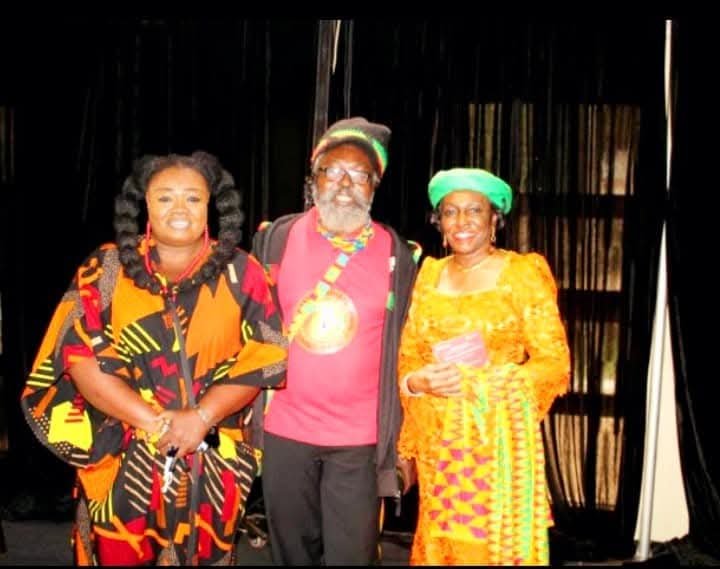
Musician and Pan-Africanist Ras Caleb Appiah-Levi has criticised what he describes as society’s tendency to celebrate people more after their death than while they are alive and in need of support.
In a passionate reflection, Appiah-Levi said he had observed the phenomenon for many years through his experiences as a musician, Pan-Africanist, community worker and son of the soil.

According to him, living people who are struggling to create, work and contribute to society are often ignored, criticised, envied or denied the support they need.
“When a man is alive, walking among us, struggling, creating, sweating, crying for support, we ignore him,” he said.
He argued that society sometimes labels people who are ambitious, outspoken or controversial negatively while failing to support their work.
Appiah-Levi said people could watch an individual’s phone calls go unanswered, attend poorly patronised programmes and see someone struggle to raise funds for projects without offering meaningful assistance.
However, he noted that the situation often changes dramatically after the person dies.
“But the moment he dies, we suddenly love him,” he said.
He explained that after death, society often puts up large banners bearing the deceased’s image, writes lengthy tributes, composes songs, travels long distances to attend funerals and raises substantial sums of money in their honour.

According to him, some of the same people who refused to provide financial assistance when the deceased needed medical treatment or support while alive later describe them as legends, heroes and icons.
Appiah-Levi identified three major reasons he believes contribute to the phenomenon.
He argued that living people can sometimes be perceived as competitors or threats because their achievements may expose the shortcomings or limitations of others.
He cited the late visual artist Yaa Padiki as an example, saying that while she was alive and engaged in her artistic work, some people viewed her activities as competition.
He also referenced his own experience as a musician who performs revolutionary songs, saying some people may perceive such work as a threat.
However, he said death eliminates the perceived competition, making it easier for people to praise the deceased without feeling that the person’s achievements diminish their own.
The musician further argued that it is easier for people to express affection towards someone who can no longer respond or challenge them.
He said the living can disagree with others, demand accountability or express dissatisfaction, whereas the dead remain silent.
“The dead are silent. They accept all flowers, even from those who poisoned them while alive,” he stated.
He therefore suggested that some public displays of affection after death may come at little personal cost compared with supporting someone while they are alive.
Appiah-Levi also blamed what he described as a culture that places greater emphasis on remembering the dead than building and supporting the present.
He linked this partly to colonial education, arguing that Africans have been conditioned to place significant emphasis on history while failing to invest adequately in living people and present-day visions.
He acknowledged the importance of honouring ancestors but questioned why people sometimes fail to provide basic support to living elders and other members of society.
“We pour libation to ancestors — which is good — but we forget to give water to the living elder who is thirsty today,” he said.
Appiah-Levi described the trend as a dangerous culture and warned that society could become one that mourns people after their deaths while failing to support their visions during their lifetime.
“If we continue this way, we will always be a continent that cries at funerals but sleeps during visions,” he said.
He subsequently called on Africans to change the way they demonstrate appreciation and support for people making contributions to society.
He urged the public to support artists by purchasing their work while they are alive, attend programmes organised by people while they can still appreciate the support, and provide assistance to musicians, inventors, teachers, farmers, beach cleaners and other community workers during their lifetime.
According to him, the support people receive after death often comes too late.
“Yaa Padiki did not need our tears today as much as she needed our hands yesterday,” he said.
He questioned how many other talented and hardworking people may currently be living without recognition, encouragement or financial assistance.
“And how many more Yaa Padikis are among us today, walking unknown, unsung, unsupported?” he asked.
Appiah-Levi concluded his reflection with a call for society to stop waiting until death before recognising the value of individuals.

He argued that while the dead cannot experience the love and support shown to them after death, living people can benefit directly from encouragement and assistance and potentially use that support to make a greater impact on society.
“For what is the use of loving the dead more than the living?” he asked.
His message ended with a call for people to embrace and support the living while they still have the opportunity to feel that appreciation and use it to continue changing their communities and the world.

The family of Ghanaian visual artist and Guinness World Record holder Sharon Dede Padi, popularly known as Yaa Padiki, has announced arrangements for her final funeral rites.
Sharon Dede Padi passed away on Tuesday, July 7, 2026, at the age of 50. Her death has prompted tributes from colleagues, friends and admirers who have remembered her as a celebrated creative figure and Guinness World Record holder.
Her final funeral rites will be held on Saturday, September 26, 2026, at the Forecourt of the State House in Accra.
The programme will begin with a pre-burial service at 7:30 a.m., followed by the burial service at 9:00 a.m. Interment will take place afterwards, with the final funeral rites and reception also scheduled for the State House forecourt.
A memorial service will be held on Sunday, September 27, 2026, at Calvary Methodist Church, Adabraka, beginning at 10:00 a.m.
The family has invited friends, sympathisers and well-wishers to join them in celebrating and honouring the life and legacy of Sharon Dede Padi.


Nigerian Afrobeats superstar Burna Boy has reportedly surpassed four billion total views on YouTube, becoming the first Nigerian and Sub-Saharan African artiste to achieve the milestone.
The achievement is attributed to the combined views generated by videos on the Grammy-winning singer’s official YouTube channel, which has continued to attract a global audience.
Burna Boy has built a strong presence on the video-sharing platform over the years, with several of his music videos recording millions of views. His catalogue includes internationally successful songs such as “On The Low,” “Ye,” “Last Last,” and “For My Hand.”
The latest milestone adds to a series of records associated with the Afrobeats star’s digital success. In 2021, Burna Boy reportedly became the first Nigerian artiste to surpass one billion total YouTube views.
His continued growth on YouTube reflects the increasing global reach of Afrobeats and Burna Boy’s position as one of the genre’s leading international acts.
Source: dailypost.ng

FRIMPONG-BOATENG SPEAKS ON GALAMSEY — ‘ENFORCING ENVIRONMENTAL LAWS CARRIES POLITICAL COST’

CHIEF JUSTICE COMMENTS STIR DEBATE — QUESTIONS RAISED OVER JUDICIAL IMPARTIALITY

ACCRA–KUMASI EXPRESSWAY HITS MAJOR MILESTONE — GAF COMPLETES 175.6KM CORRIDOR CLEARING



-

 General News2 weeks ago
Nana Adwoa Tutuwaa Named Global Humanitarian of the Year 2026
-

 General News2 weeks ago
Police Arrest Suspect in GH¢1.1m Fake Gold Scam at Berekum
-

 General News1 week ago
GES Urged to Review Student Sexual Misconduct Rule Over Alleged Discrimination Against Boys
-

 Entertainment7 days ago
Oswald Okaitei Explains the Real Vision Behind Ghana’s Black Star Experience
-

 General News2 weeks ago
OSP Assesses Extortion Allegations Against Afenyo-Markin
-

 Entertainment2 weeks ago
Stonebwoy Is Not My Rival — Shatta Wale Reveals They Live Minutes Apart
-

 Politics2 weeks ago
Stop The Personal Attacks!” — Vitus Azeem Demands Probe Into Sammy Gyamfi–Afenyo-Markin Feud
-

 Entertainment2 weeks ago
Mzbel Says Age Gap Is No Barrier as She Opens Up About 19-Year-Old Admirer