
Health & Fitness
Korle Bu Doctors Call Off Strike After Management Gives Assurances Over Lab Standoff

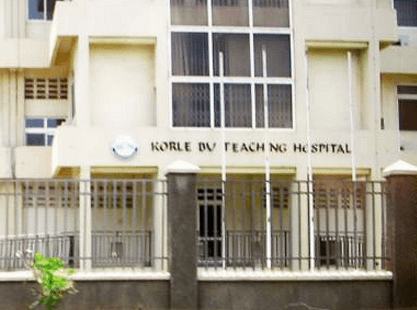
Doctors at the Korle Bu Teaching Hospital have suspended their strike action after reaching an agreement with hospital management over a simmering turf dispute at the facility’s Central Laboratory — bringing temporary relief to patients who had been left stranded when Out-Patient Department services were withdrawn.
The Korle Bu Doctors Association (KODA) announced the suspension in a notice dated Monday, May 4, 2026, just hours after its members had downed tools and pulled out of OPD services in a move that sent shockwaves through one of Ghana’s busiest referral hospitals.
At the heart of the dispute is a professional standoff between Laboratory Physicians and Medical Laboratory Scientists over roles and operational control within the Central Laboratory — a tension that had apparently been building beneath the surface before boiling over into full strike action.
KODA said the decision to suspend followed direct engagement with hospital management, who offered assurances intended to allow Laboratory Physicians to return to their posts and restore working cooperation within the unit.
“Peaceful collaboration between both professional groups is essential for quality healthcare delivery,” the Association said, signalling that while the strike is on hold, the underlying issues are far from fully resolved.
Effective Tuesday, May 5, 2026, KODA has directed its members to resume Out-Patient services — a development that will come as welcome news to the scores of patients and their families who had their appointments and treatment disrupted by the industrial action.
The Association, however, made clear it is keeping a close eye on how management follows through on its commitments, reaffirming its dedication to patient safety and professional standards at the teaching hospital.









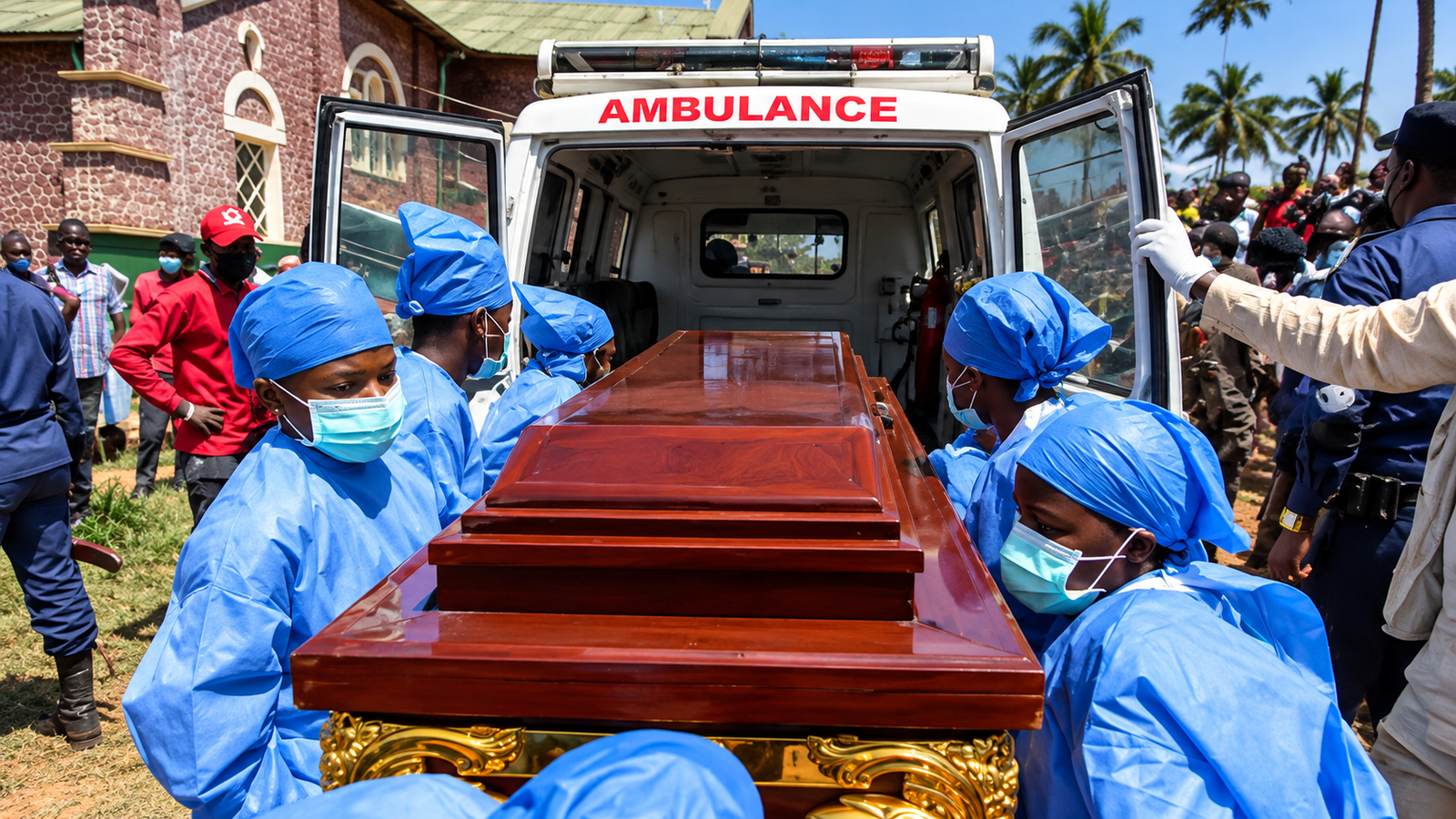
NAIROBI, Kenya — October 7, 2026 — Kenya has confirmed its first-ever Ebola case and death after a Kenyan citizen who had been living in the Democratic Republic of Congo (DRC) died in Nairobi, prompting an intensified public-health response and contact-tracing operation.
Kenya’s Ministry of Health said the patient had been living in the DRC and became ill about a month ago. He was treated at several medical facilities there before travelling by road to Kampala, Uganda, and then flying to Nairobi on October 3. He was taken to a Nairobi hospital after arriving in the country and was subsequently isolated.
Laboratory tests confirmed that the patient had Bundibugyo virus disease, a form of Ebola linked to the ongoing outbreak in the DRC. Despite receiving supportive medical care, he died on October 5 and was buried under Kenya’s safe and dignified burial procedures.
Authorities begin contact tracing
Kenyan health authorities have identified 28 contacts, including relatives and healthcare workers who had contact with the patient. Officials are also working to locate people who travelled on the same flight from Uganda to Nairobi. Contacts are being monitored and isolated for 21 days where required.
The World Health Organization said it is supporting Kenya as authorities strengthen surveillance, screening at high-risk points of entry, case investigation and community communication. Kenya had already been on heightened alert because of the Ebola situation in neighbouring countries.
The country has screened more than 652,000 travellers, tested hundreds of suspected samples and trained approximately 5,000 health workers in Ebola prevention and management, according to the WHO.
Concern grows over wider regional spread
The Kenyan case is connected to a much larger outbreak in the DRC. The DRC declared its latest Ebola outbreak in May, and the disease has since spread across several provinces. More than 8,000 confirmed cases and over 4,000 deaths have been reported during the outbreak, according to recent health authorities’ figures.
Uganda, which borders both the DRC and Kenya, previously reported cases linked to the outbreak but was declared Ebola-free in August after containing its transmission. Kenya is now the latest country to confirm an imported case of the Bundibugyo virus.
Kenyan officials have urged the public not to panic while advising people to maintain good hygiene, avoid close contact with people showing symptoms and seek medical attention when necessary. Authorities say their priority is to detect any additional cases quickly and prevent community transmission.

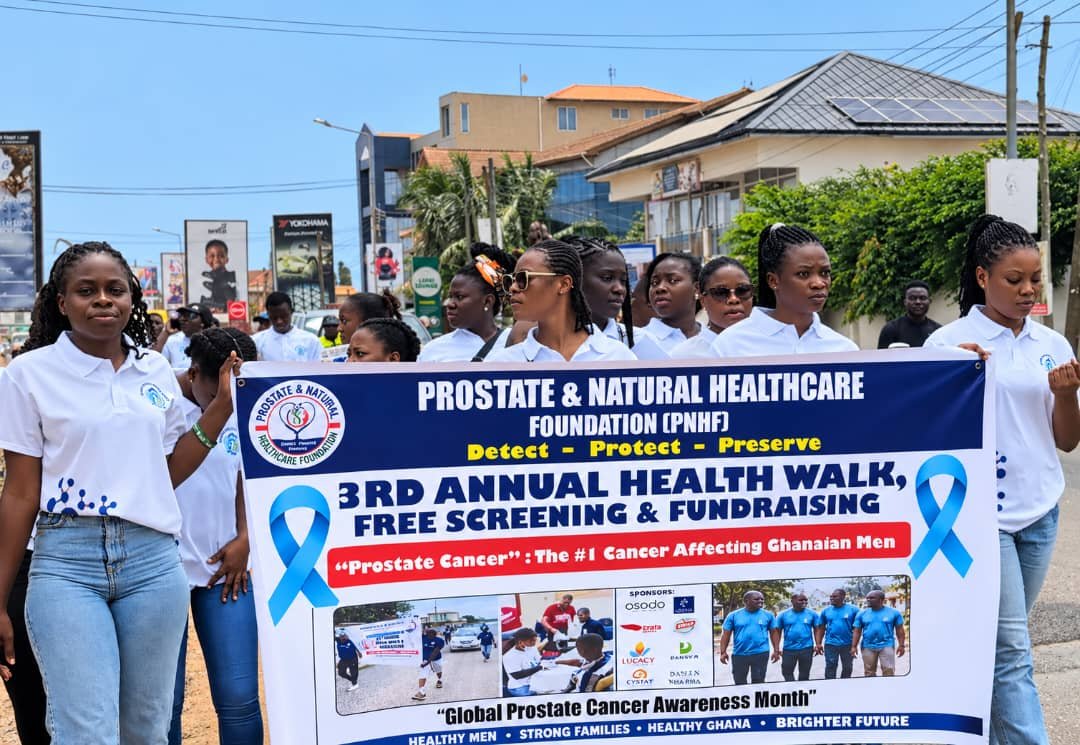
The Prostate and Natural Healthcare Foundation, in collaboration with St. Mary’s College of Health Sciences, has embarked on a 10-kilometre health walk to intensify prostate cancer awareness and encourage men to undergo regular screening.
The initiative forms part of activities marking September as Prostate Cancer Awareness Month, with organisers stressing the importance of early detection and preventive healthcare.
According to Dr. Tony Badu, CEO of Prostate and Natural Health Care, prostate cancer remains a major health challenge among men in Ghana and across African descend. He observed that prostate cancer is a tumor that affect the prostate gland in men and cautioned that early detection is vital to prevent escalation . He noted that factors including family history, lifestyle and ageing can increase the risk of developing the disease.
As part of the campaign, organisers are offering free prostate screening to men while using the walk to educate the public about prostate health and the importance of seeking medical attention early.
The assistant Principal of St. Mary’s College of Health Sciences, Mr. Francis Adoma, also highlighted the educational value of the exercise, saying it provides students with an opportunity to put what they learn in the classroom into practice while engaging directly with the public.
Mr. Adoma further urged Ghanaians to embrace preventive and safe healthcare practices rather than waiting until illnesses become severe before seeking treatment.
Early detection is vital to prevent spreading to other organs and saving lives, Francis Adoma, noted.
By Angel No Lie | KPD Online | 26 September 2026
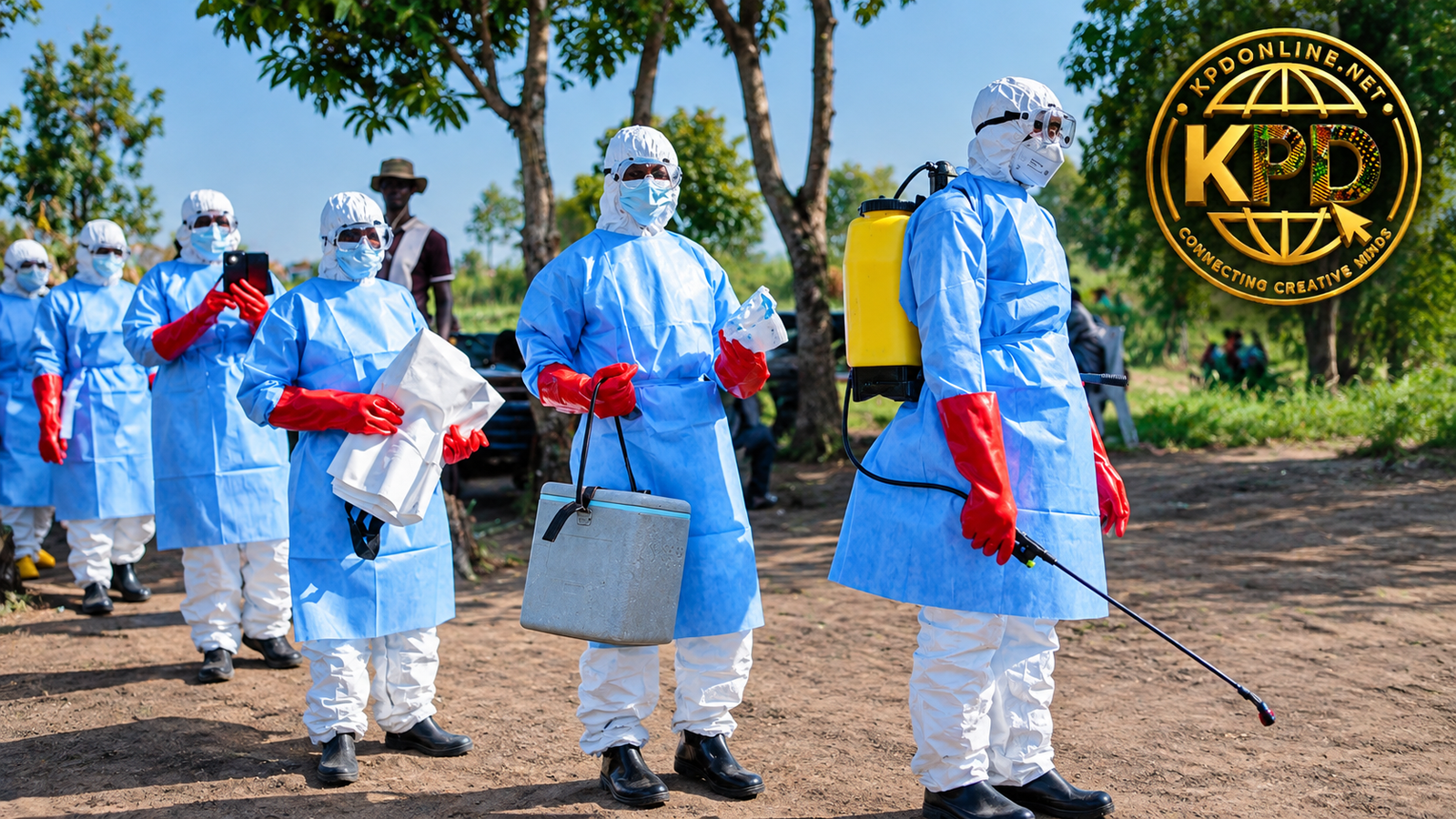
The Democratic Republic of Congo is facing a growing shortage of trained health workers as an Ebola outbreak continues to spread across the country, creating pressure on treatment centres that are being expanded to cope with rising infections.
The World Health Organization says the outbreak, caused by Bundibugyo virus, remains uncontrolled despite improvements in some areas. The shortage of personnel is becoming one of the major obstacles to operating newly established treatment facilities.

Frontline Health Workers Battle Ebola Outbreak in DR Congo
Treatment centres are expanding faster than staffing
WHO says the response has expanded considerably since the outbreak was declared in May.
By 1 September, 59 care facilities had been identified across affected provinces, with a combined capacity of 1,346 beds. More than 4,000 additional health professionals had also been deployed to reinforce existing teams.
But the expansion has not eliminated the staffing gap.
WHO Ebola Incident Manager Catherine Smallwood said that although treatment beds are being added, facilities do not always have enough personnel and operational partners to run them.
WHO representative in Congo Anne Ancia said an Ebola treatment centre can require about 300 health professionals, including nurses, doctors, anaesthetists and hygiene specialists.
“The human resources gap is one of the biggest gaps,” Smallwood said, according to the Associated Press report.

DR Congo Expands Ebola Treatment Capacity as Cases Rise
Outbreak has reached seven provinces
The latest WHO situation report, covering data through 23 September, says the outbreak had reached 63 health zones across seven provinces.
The affected provinces are Ituri, North Kivu, Haut-Uélé, Bas-Uélé, Tshopo, South Kivu and Sud Ubangi. Two of the newest affected areas are Bulu in Sud Ubangi and Dungu in Haut-Uélé, near the South Sudan border.
As of 23 September, WHO reported:
| Measure | Confirmed total |
|---|---|
| Confirmed cases | 7,890 |
| Confirmed deaths | 3,799 |
| Case-fatality ratio | 48.1% |
| Recovered patients | 1,966 |
| Affected health zones | 63 |
| Affected provinces | 7 |
WHO cautions that national figures conceal significant differences between provinces. Ituri, the outbreak’s epicentre, has seen transmission decline from its mid-August peak, while North Kivu experienced a substantial rise in cases during September.

Health Workers Face Mounting Pressure as Ebola Spreads
North Kivu puts additional pressure on the response
The shortage is particularly concerning in North Kivu, where the number of cases increased sharply over recent weeks.
According to the Associated Press report, cases there rose 73% over three weeks, even as some other provinces recorded declines. WHO said transmission patterns remain highly uneven and that the outbreak is still not under control.
The situation is complicated by insecurity, displacement and population movements, which can make it harder for response teams to reach communities, identify cases and monitor people who have been exposed.
Contact tracing remains a major challenge
The staffing problem is occurring alongside difficulties in tracking people who may have been exposed.
Africa CDC Director-General Jean Kaseya told Reuters that health authorities had identified only about 30,000 people potentially exposed through contact tracing, compared with an estimated more than 400,000 people who could require follow-up.
WHO’s latest figures show that 26,980 of 32,342 identified contacts were successfully monitored during the 24 hours preceding 23 September — an 83.4% monitoring rate.
These figures illustrate the scale of the operational challenge: even where health teams are reaching large numbers of contacts, the overall population requiring surveillance is expanding as the outbreak reaches new areas.
Health workers have also faced payment problems
The response has been further affected by difficulties surrounding health-worker pay.
Frontline workers in Ituri previously went on strike over unpaid wages. According to the Associated Press, officials said they were checking payroll lists after concerns that names of people not involved in the Ebola response had been included. Some workers reportedly received outstanding payments only partially or had not received them.
For a response that requires large numbers of specialised personnel to work continuously in high-risk environments, reliable staffing and payment are therefore central operational issues.
Children face particularly serious risks
WHO has also highlighted the severity of the disease among young children.
Children under five have recorded a case-fatality rate of more than 60%, compared with roughly 40% among adults, according to WHO’s regional emergency director Marie Roseline Belizaire.
Identifying Ebola in very young children can also be difficult because they cannot always describe their symptoms clearly, while the early symptoms can resemble other common illnesses.
International assistance continues
The scale of the outbreak has prompted additional international support.
The United States announced an additional $267 million for efforts to fight Ebola in central Africa, while WHO and other partners continue supporting surveillance, treatment, infection prevention and community-based response operations.
WHO’s latest risk assessment places the risk in the DRC at very high, the risk to countries sharing land borders with the DRC at high, and the risk to the wider African region and globally at low. WHO is not currently recommending restrictions on travel or trade with affected countries.
What the latest figures mean
The latest data do not show a uniformly worsening situation everywhere. Some provinces, particularly Ituri, have recorded declines in transmission. At the same time, new geographic spread, rising transmission in parts of North Kivu and shortages of personnel mean the overall outbreak remains difficult to control.
The central challenge is therefore not simply the number of treatment beds. Facilities need enough trained staff, funding, protective equipment and access to affected communities to make those beds operational.
With the outbreak now spanning seven provinces, maintaining and expanding that workforce is becoming a critical part of efforts to reduce transmission and deaths.
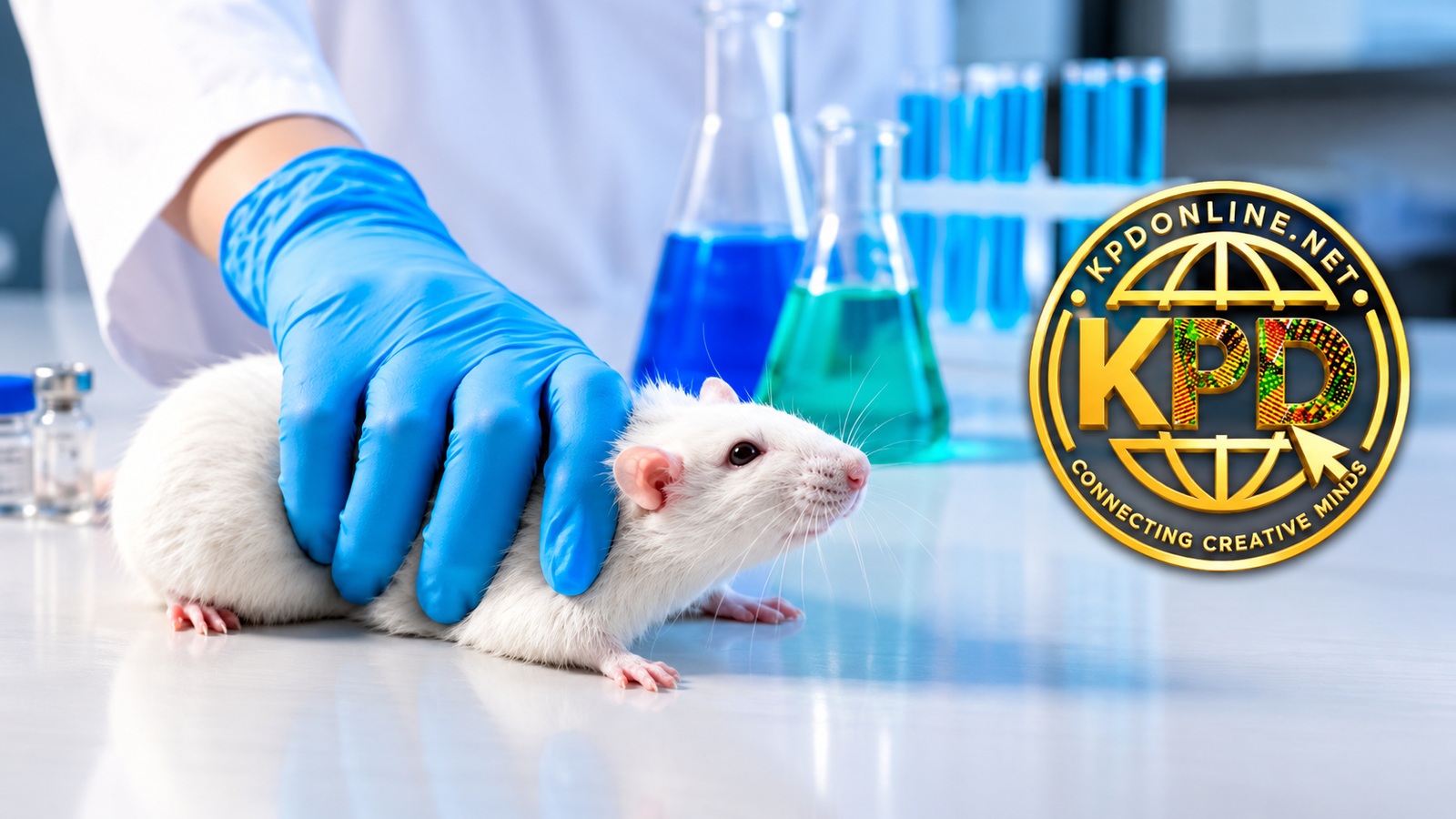
By Angel No Lie | KPD Online | 17 September 2026
Scientists develop part-human, part-mouse brain model
Scientists at Stanford University have created genetically engineered mice containing a large amount of lab-grown human brain tissue, in a breakthrough that could provide a new way to study neurological and psychiatric disorders.
The research, published in Nature on 16 September 2026, involves transplanting human cortical organoids—three-dimensional clusters of brain cells grown from human stem cells—into mice whose developing brains had been genetically altered so that much of the cerebral cortex and hippocampus would not form.
The resulting animals are known as xenocortical mice.
Despite headlines describing them as having “half-human brains,” the science is more specific: the animals remain mice, but much of the tissue occupying the space normally taken by the mouse cortex is derived from human cells. STAT notes that the “half-human” description refers to the brain tissue’s volume rather than meaning that half of the mouse’s neurons are human.

Researchers Develop Method to Study Brain Connectivity, Functionality – National Institute of Mental Health (NIMH)
How the experiment worked
The Stanford researchers began with human stem cells and guided them into becoming cortical organoids—miniature, developing pieces of human brain tissue.
The scientists then used genetic engineering to prevent particular precursor cells in newborn mice from developing the neocortex and hippocampus. This created physical space in the animals’ brains for the human-derived tissue.
The human organoids were transplanted into the mice while the animals were still very young.
Over the following months, the human tissue expanded substantially and developed different types of human cortical neurons.
According to the Nature study, the human-derived tissue occupied most of the available cortical space and produced a diversity of human cortical cell types, including layer-5 projection neurons.

Human neurons connected to the mouse nervous system
One of the most important findings was that the human cells did not simply remain as an isolated lump of tissue.
Researchers found evidence that human cortical neurons established connections with the mouse nervous system. Human neuronal projections extended through the animal’s brain and, in some cases, as far as the spinal cord.
Electrical recordings also showed organized activity within the human-derived tissue.
The researchers therefore describe the model as potentially useful for studying human neural circuits in a living organism rather than only inside a laboratory dish.
![Border between a transplanted human brain organoid and mouse brain [IMAGE] | EurekAlert! Science News Releases](https://images.openai.com/static-rsc-4/Tq428x7_bMg03HjXaW7fg-OpR7PlkKOTWPWHX-QtDgHYBjnj8FE1SMS3laLVNY3J4FQZevT83J5_DiqoKrcEY6FnQkJRuebjnyMH4UYcbdjfiKY6-2EZLDchLbf5MEITOF6iQbZkwAqpzDqOxFQt5Q4Ma3sjyKQg0Prtar8PKJQ?purpose=inline)
Border between a transplanted human brain organoid and mouse brain [IMAGE] | EurekAlert! Science News Releases
But the human tissue was not a normal human cortex
An important qualification is that the transplanted tissue did not develop into a completely normal human cerebral cortex.
The Nature paper reports that the graft lacked several features of mature cortical circuitry, including complete areal patterning, a well-defined cortical layer structure and a mature balance of excitatory and inhibitory neurons.
This means the experiment should not be interpreted as scientists having created a mouse with a fully functioning human brain.
Researchers Develop Method to Study Brain Connectivity, Functionality – National Institute of Mental Health (NIMH)
Did the mice start behaving like humans?
No evidence suggests that they did.
The animals remained mice, and researchers carried out behavioral tests to examine whether the human tissue altered their capabilities.
The study found differences in movement and spontaneous behavior between normal mice, mice without the normal cortex and the xenocortical animals. In some tests, the animals containing human tissue performed between the other two groups.
Researchers did not report human-like intelligence, language, human consciousness or human-style cognition.
Science News reported that experts evaluating the work emphasized that the key ethical question is not simply how much human tissue an animal contains, but what capabilities that tissue gives the animal. The researchers found no obvious evidence that the mice had acquired extraordinary cognitive abilities.
Why scientists carried out the experiment
Studying the human brain presents an enormous scientific challenge.
Researchers cannot normally observe human brain development from its earliest stages or experimentally manipulate human brain tissue in the way they can with laboratory animals.
Brain organoids provide one alternative. They allow scientists to grow human neural tissue from stem cells, but organoids grown in laboratory dishes have significant limitations.
They lack the complete environment of a living brain—including blood supply, long-distance neural connections and interactions with other organs and brain regions.
The Stanford approach attempts to overcome some of those limitations by putting human neural tissue inside a living animal.

Organoides cerebrales humanos responden a estímulos visuales al trasplantarlos en ratas
Potential medical applications
The researchers believe the model could eventually help scientists investigate conditions including:
- autism and other neurodevelopmental disorders
- epilepsy
- schizophrenia
- cerebral palsy
- intellectual disabilities
- neurodegenerative diseases
- rare disorders affecting human brain development
The advantage is that researchers can potentially observe human neurons developing and responding to physiological conditions inside a living organism.
The study also demonstrated the possibility of using the animals to examine how human neural tissue responds to injury.
A striking finding about oxygen deprivation
The research also provided evidence that human neurons inside the mice responded differently to a shortage of oxygen than the surrounding mouse tissue.
This matters because oxygen deprivation is involved in several neurological injuries and diseases.
The ability to examine human-derived neurons under such conditions in a living organism could eventually help researchers investigate why certain human brain cells are particularly vulnerable to injury.
The ethical questions
The experiment has also revived difficult questions about how far scientists should go when combining human cells with animals.
The central concern is whether increasingly sophisticated human neural tissue could eventually alter an animal’s cognitive abilities, perception or capacity to experience suffering.
The researchers anticipated these concerns.
According to the Nature paper, the project underwent review by Stanford’s stem-cell oversight committee and animal-care committee, with additional consultation involving bioethicists and an independent ethics committee. The researchers also conducted behavioral and cognitive testing to look for altered capabilities.
The authors themselves say that future experiments involving more mature human neural tissue will require continued ethical oversight.
They specifically identify questions surrounding more advanced cortical organization, mature neural networks and possible changes in animal capabilities.
What makes this experiment different?
Human brain organoids have previously been transplanted into rodents.
For example, earlier work from Stanford researchers demonstrated that human cortical organoids could integrate into developing rat brains and form functional connections.
The 2026 experiment goes substantially further.
Instead of placing a relatively small human graft alongside an intact rodent cortex, researchers removed the developmental competition for space by preventing much of the mouse cortex from forming in the first place.
This allowed the human-derived tissue to expand into most of the available cortical region. Nature describes this as a way of overcoming one of the major limitations of previous transplantation experiments.

(PDF) Maturation and circuit integration of transplanted human cortical organoids
What scientists have — and have not — created
| Claim | What the evidence shows |
|---|---|
| A mouse containing human brain tissue | Yes |
| Human neurons integrated with mouse neural circuits | Yes |
| Human tissue occupied much of the available cortex | Yes |
| Human neurons sent projections toward the spinal cord | Yes |
| Human-like consciousness demonstrated | No |
| A mouse with a completely human brain | No |
| Human intelligence demonstrated | No |
| Fully mature human cerebral cortex created inside a mouse | No |
The distinction is important because the phrase “part-human, part-mouse brain” can make the achievement sound more science-fiction-like than the underlying experiment actually is.
What happens next?
The researchers see the xenocortical mouse as a research platform rather than a finished model of the human brain.
Future work will need to determine how closely the human tissue reproduces normal human cortical development, how reliably the model reproduces human neurological diseases and whether treatments tested on the human-derived neurons accurately predict what happens in people.
The ethical questions will also become more important if researchers succeed in producing increasingly mature and organized human neural networks inside animals. The Nature authors explicitly call for continued collaboration among scientists, ethicists, patient representatives and regulators as the technology develops.

Scientists Discover Neural Basis of Schizophrenia and Bipolar Disorder
Independent assessment
The breakthrough is significant because it addresses a longstanding problem in neuroscience: how to study human brain cells in a living system without experimenting directly on human brains.
However, the findings should not be interpreted as evidence that scientists have created an animal with a human mind. The experiment produced a mouse whose developing cortex contains a large amount of human-derived neural tissue that can form connections with the mouse nervous system.
The technology could eventually improve research into diseases that are difficult to reproduce using conventional mice. At the same time, the more human-like these experimental brains become, the more carefully researchers will need to assess animal welfare and cognitive consequences.
For now, the study represents an important step in human brain modeling, rather than the creation of a human-animal hybrid in the science-fiction sense.
Primary scientific source: Kaganovsky et al., Nature, “Developmental xenocortication using human-derived organoids in mice,” published 16 September 2026.
Additional reporting: Stanford Medicine, Nature, Reuters and Science News.


Relationships rarely become difficult overnight.
For many couples, the cracks appear gradually — communication becomes harder, affection fades, arguments become more frequent and the connection that once felt effortless begins to feel like work.
Yet, despite the problems, some people choose to stay.
So, what keeps someone holding on when a relationship has become troubled?
Hope can be a powerful force
One of the strongest reasons people remain in difficult relationships is hope — the belief that things can still get better.
A person may remember how the relationship began, the good times they shared and the qualities that initially brought them together. Those memories can create the belief that the relationship can return to what it once was.
Hope can motivate couples to communicate, seek counselling, change unhealthy behaviours and work through conflict rather than immediately giving up.
Research and relationship literature similarly point to the importance of partners being willing to work through problems and change unhealthy patterns when a relationship is otherwise worth preserving.
But hope can also become a trap
There is an important distinction between healthy hope and simply waiting for someone to change without evidence that change is happening.
A person may continue saying, “Things will get better,” even when the same problems keep repeating.
In such situations, hope without action can keep someone stuck.
Healthy relationships require more than promises. They require communication, accountability, respect and a willingness from both partners to take responsibility for their part in the relationship.
Love alone is not always enough
Many people stay because they still love their partner.
That love can be genuine, even when the relationship is struggling.
But love does not mean accepting disrespect, manipulation, repeated betrayal or abuse.
Relationship guidance on boundaries stresses that protecting a relationship does not mean tolerating harmful behaviour. In abusive situations, establishing boundaries and seeking appropriate help can be essential.
The memories of better days
Another powerful factor is nostalgia.
People often compare the present relationship with the person they fell in love with rather than the person their partner has become.
They remember the first dates, long conversations, laughter, affection and dreams they once shared.
Those memories can make walking away feel like giving up on an entire chapter of their lives.
But the important question is not only “Was this relationship once good?”
It is also:
“Is there something healthy and constructive to rebuild today?”
Fear can make leaving difficult
Some people remain because they are afraid of what comes next.
They may fear loneliness, starting over, disappointing their family or losing the future they imagined with their partner.
Others may worry about finances, children or social pressure.
These fears can become powerful reasons for staying, even when the relationship is no longer fulfilling.
The difference between struggling and suffering
Every relationship experiences conflict.
Arguments, misunderstandings and difficult periods do not automatically mean a relationship is doomed.
The bigger question is how the couple responds to those problems.
Can they talk honestly?
Can they apologise?
Can they take responsibility?
Can they change harmful behaviour?
Can they rebuild trust?
When both partners are willing to do the work, a difficult period can sometimes become an opportunity to rebuild the relationship.
When staying is no longer healthy
There are situations where staying should not be romanticised.
Physical violence, sexual abuse, serious threats, coercive control and persistent emotional abuse require a different response.
In such circumstances, the priority should be safety, not simply preserving the relationship.
A person experiencing abuse should consider reaching out to trusted people and appropriate professional or support services rather than feeling obligated to stay because of love or hope.
So, what really keeps people holding on?
For many people, it is hope — hope that the person they love can change, hope that communication can improve and hope that the good parts of the relationship can return.
But hope is most meaningful when it is accompanied by action.
A troubled relationship does not necessarily need to end, but neither should someone remain indefinitely in a cycle of pain simply because they remember how good things once were.
Sometimes, the most important question is not whether you still love someone.
It is whether both of you are willing and able to build something healthier together.

Fetu Afahye: The History, Traditions and Cultural Meaning of Cape Coast’s Famous Festival

Ghana’s Forgotten Tourist Assets: Is the Tourism Ministry Doing Enough to Save Them?

Assafuah Reveals GTA Directors’ Concerns Over World Cup Activation Programme



-

 General News1 week ago
Fidelity Bank Chairman Named Ghana’s Topmost Transformational Board Chair 2026
-

 Technology2 weeks ago
Rolls-Royce Expands Aviation Business with Major Philippine Airlines Engine Agreement
-

 Entertainment2 weeks ago
Ras Caleb assesses institutions under the Tourism Ministry, highlighting key roles.
-

 Entertainment2 weeks ago
Ras Caleb Appiah-Levi: The musician, Pan-Africanist and organiser whose career spans four decades
-

 Entertainment1 week ago
Ras Caleb Appiah-Levi Reflects on Death, Wealth and Equality: “Death Neither Knows Rich Nor Poor”
-

 Business2 weeks ago
Rev. Dr. Christian Kwetey Kweitsu Honoured for Excellence in Audiology Practice in Kigali
-

 General News2 weeks ago
Sudan Chemical Weapons Allegations: UN Signals Readiness for Possible Investigation
-

 Politics6 days ago
Asiedu Nketiah to Chair Launch of Six NDC Historiographies on Ghana’s Political Journey