
Culture
Kundum Festival: The Deep History, Rituals and Culture of the Ahanta and Nzema People

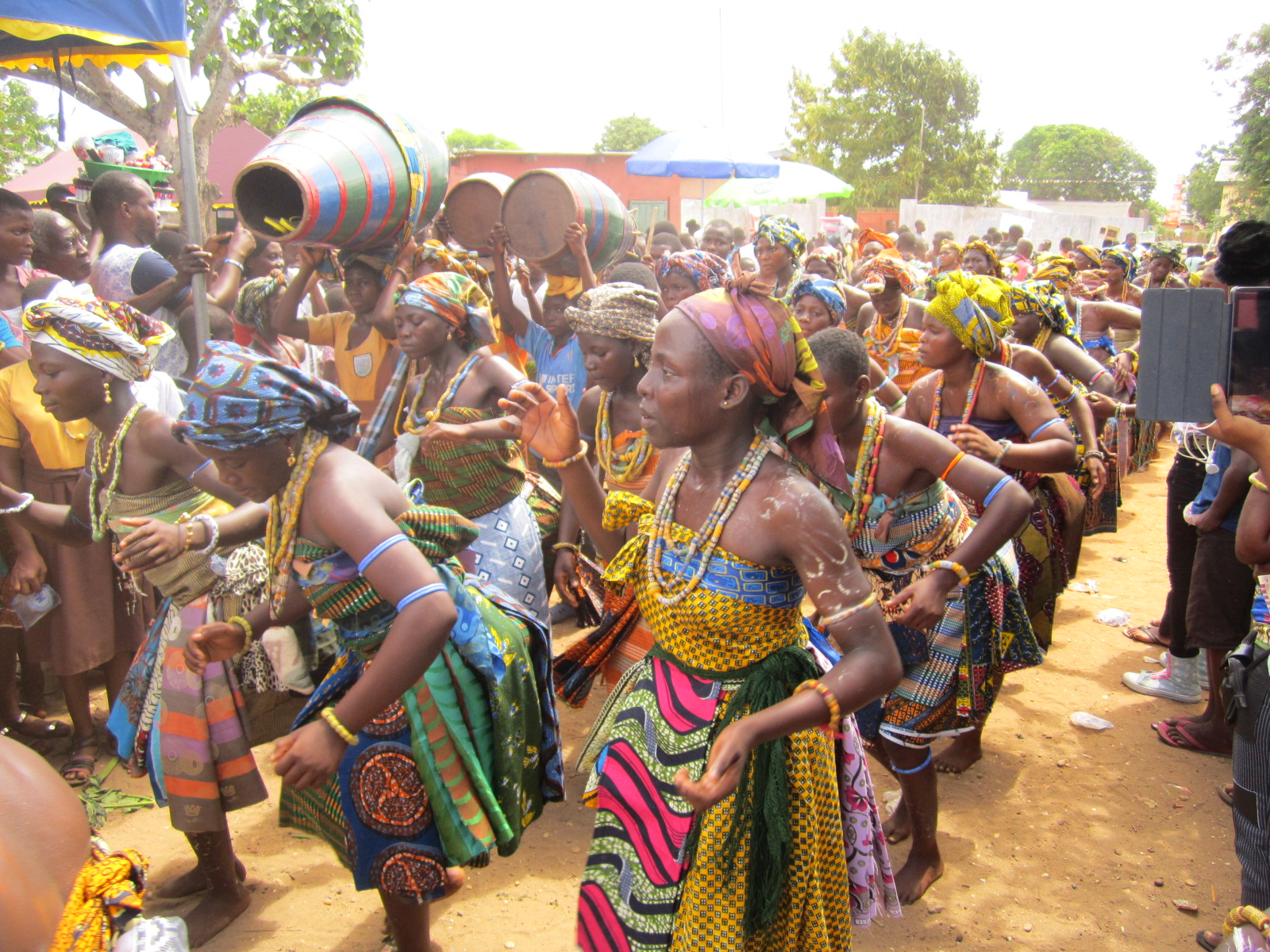
Every year, communities across Ghana’s Western Region come alive with drumming, dancing, traditional processions, feasting and colourful displays of chieftaincy during the Kundum Festival.
Celebrated principally by the Ahanta and Nzema people, Kundum is one of Ghana’s major traditional festivals and combines the celebration of harvest with thanksgiving, spirituality, ancestral remembrance, community purification and social renewal.
The festival is particularly associated with communities in the western coastal belt, including Axim and parts of the Ahanta traditional area.
Kundum is not held on one fixed date throughout the entire region. Its timing traditionally follows the agricultural and local traditional calendar, meaning celebrations move from one community to another as the harvest season progresses. Wikipedia notes that individual towns within the Ahanta and Nzema traditional areas determine their own starting dates.
The festival’s importance goes beyond entertainment. It is a living expression of the history, religion, agriculture, music, social organisation and identity of the people who celebrate it.
Who celebrates Kundum?
Kundum is primarily associated with the Ahanta and Nzema people of Ghana’s Western Region.
The Nzema are an Akan-speaking people whose traditional homeland extends across southwestern Ghana and into neighbouring Côte d’Ivoire. The Ahanta are also an Akan people living principally in the western part of Ghana.
Although the two groups have their own distinct histories and traditions, Kundum became an important cultural institution shared across several communities.
The National Commission on Culture identifies Kundum as a major festival of the Ahanta and Nzema and says it is associated with the celebration of a bumper harvest and strengthening bonds among communities and indigenes.
What is Kundum?
Kundum is both a harvest festival and a religious-cultural celebration.
At its simplest level, it is a time to give thanks for food produced during the farming season.
But the festival also serves other purposes.
It is a period for:
Giving thanks for the harvest
Remembering ancestors
Performing traditional rites
Purifying communities
Driving away evil and negative spiritual forces
Strengthening family and community relationships
Celebrating traditional leadership
Eating and sharing food
Preserving traditional music and dance
Discussing community development
Visit Ghana describes Kundum as a celebration of gratitude for abundant food during the harvest period.
The different stories about the origin of Kundum
One of the most interesting aspects of Kundum is that there is more than one traditional explanation for its origin.
This is important because much of the history of Ghana’s traditional festivals was transmitted orally.
One widely circulated oral tradition says the festival began with a hunter called Akpoley.
According to this account, Akpoley was on a hunting expedition when he encountered dwarfs dancing in a circle to unusual music.
He watched their movements for a period before returning to his community.
After returning, he introduced the dance to his people.
The dance eventually became associated with Kundum and acquired a religious purpose connected with driving evil spirits away from communities.
Wikipedia records this Akpoley story as one of the traditional explanations for the origin of the festival.
The palm-fruit story
Another tradition connects the beginning of Kundum to a particular palm tree.
According to this account, a palm tree at Aboade, an Ahanta community, produced ripe fruit at a particular period each year.
The people began using the ripening of the fruit as a natural signal for the beginning of the festival.
Over time, the annual cycle of the fruit became incorporated into the traditional calendar.
Visit Ghana presents this as another legend surrounding the origin of Kundum.
This story helps explain why the festival’s timing has historically been linked to agricultural and seasonal cycles.
A third traditional explanation
The National Commission on Culture provides another version of Kundum’s history.
Its account traces the festival’s origin to Ahanta Aboadze, near Agona Ahanta, and says the name Kundum is connected with a deity called Kofi Kundum, regarded as an ancestral god of harvest.
The same account says Brempon Yaw later gave prominence and recognition to the festival and introduced another traditional spiritual figure known as Asafua, who was believed to be the first to taste produce from the annual harvest before the food could be distributed or taken to market.
These different accounts demonstrate the importance of oral tradition in understanding Ghanaian festivals.
Rather than one single written origin story, Kundum has been preserved through different narratives transmitted by communities and generations.
Kundum is not a recent cultural invention.
Wikipedia records that one of the earliest written accounts of the festival came from Willem Bosman, a Dutch explorer who travelled along the Gold Coast in the 17th century.
His observations provide historical evidence that a form of the festival was already being celebrated centuries ago.
This is significant because it shows that Kundum existed during the period when European merchants and travellers were establishing relationships with coastal communities along the Gold Coast.
Kundum as a harvest festival
Agriculture is at the heart of Kundum.
Historically, farming communities depended heavily on the success of the agricultural season.
A good harvest meant food for families, supplies for communities and products that could be exchanged or sold.
Kundum therefore became a time to celebrate the availability of food and express gratitude.
The Western Region Coordinating Council similarly describes Kundum as a festival associated with thanksgiving for abundant food at harvest time.
The festival does not happen everywhere at once
One distinctive feature of Kundum is its movement from community to community.
Unlike a festival that has one fixed national celebration date, Kundum is celebrated at different times by different traditional communities.
Visit Ghana describes the festival as one that moves from town to town, giving visitors opportunities to experience celebrations in different locations.
The timing traditionally follows the harvest season.
Wikipedia also notes that each town within the Ahanta and Nzema traditional areas can independently determine when its local celebration begins.
This creates a long festival season across the western part of Ghana.
The traditional four-week celebration
Traditional descriptions of Kundum identify a celebration lasting approximately four weeks.
The first three weeks are particularly associated with preparations, drumming and dancing.
According to the traditional account recorded by Wikipedia, much of this activity takes place at night and on the outskirts of towns at locations known as Siedu or Sienu.
These weeks provide time for the community to prepare spiritually and socially for the major final-week celebrations.
The five shrines
One of the traditional activities involves musicians taking drums to five shrines situated around the outskirts of the town.
At these shrines, requests are made for the welfare of the community.
Libation is also poured as part of the traditional rites.
These activities demonstrate that Kundum is not simply a public festival or entertainment programme.
It has a spiritual foundation involving traditional beliefs and practices.
The Kundum fire
The Kundum fire is another important element of the traditional celebration.
According to the traditional programme documented by Wikipedia, the fire is lit at the chief’s palace during the final week and remains burning throughout the festivities.
It serves both a ceremonial and practical purpose.
Traditionally, it becomes a central point around which activities take place and is also used as the source of heat for preparing the main festival meals.
The sacred stool room
The final week includes rituals connected with the stool room.
The stool room is a sacred area within the traditional palace where the stools of deceased chiefs and elders are kept.
According to the traditional account, sacrifices such as fowl or sheep are made privately in this sacred space by designated people.
A public sacrifice may subsequently take place in the palace courtyard.
These rites connect the living community with its traditional leadership and ancestors.
Tuesday and Wednesday rituals
The traditional four-week programme contains different activities on particular days.
Tuesday is associated with sacrifices and the beginning of more visible public singing.
By Wednesday, the chief joins the celebration.
The chief’s arrival is traditionally marked by a procession involving a palanquin, drumming and singing.
This transition from private ritual activities to public celebration demonstrates how Kundum combines spiritual observance with communal festivities.
The Kundum dance
Perhaps the most recognisable feature of Kundum is its distinctive dance.
The dance is performed to traditional drums and is associated with the festival’s spiritual purpose.
According to the oral tradition recorded by Wikipedia, the ritual dancing is intended to drive evil spirits and negative forces away from towns and villages.
The National Commission on Culture identifies the Abesa Dance, also known as the Kundum Dance, as one of the festival’s unique features.
The meaning behind the dance
The Kundum dance is therefore more than a performance for an audience.
Traditionally, it represents purification and protection.
Through the dance, drumming and accompanying rituals, the community symbolically clears away evil and prepares for another successful year.
This gives the celebration a spiritual meaning that can easily be missed when the festival is viewed only as a cultural spectacle.
Drumming
Drumming is central to Kundum.
The drums accompany traditional dances, processions and ceremonial activities.
During the preparation period, drummers traditionally gather at designated locations outside the community.
The rhythm of the drums becomes a familiar sound during the festival season.
For communities that have preserved the tradition over generations, the drums are also part of an oral cultural system through which identity and communal history are expressed.
Food and the great feast
Food is another major part of Kundum.
Because the festival is connected to harvest, eating and sharing food have important symbolic meaning.
Traditional accounts describe large communal meals during the festival, with the final Sunday culminating in a major feast.
The food is traditionally prepared collectively by women, with elder women directing the preparations.
The Kundum fire provides the traditional cooking source.
The feast therefore transforms the agricultural harvest into a communal experience.
The role of women
Women play an important role in the preparation of food for the festival.
The traditional account describes women working collectively under the direction of older women.
This is significant because festivals are also mechanisms for transferring knowledge.
Older women can teach younger generations how food is prepared, how traditional practices are observed and how communal responsibilities are organised.
Dancing by men and women
Kundum dancing involves both men and women.
Some traditional dances are performed specifically by men, some by women, while others are not restricted according to gender.
The performances contribute to the communal nature of the festival and allow different groups within the society to participate.
Traditional clothing and masks
Kundum also has its own visual identity.
Participants may wear distinctive clothing and footwear, and traditional performances can include masks.
These elements contribute to the ceremonial atmosphere and help distinguish the festival from ordinary community gatherings.
The Asafo companies
Traditional Asafo companies also feature in Kundum celebrations.
The National Commission on Culture specifically identifies Asafo Company performances as one of the unique features of the festival.
Asafo institutions historically had military, social and political functions within many Akan societies.
Their presence during Kundum therefore connects the festival to older systems of community organisation.
The role of the chief
The chief is one of the central figures in the public celebration.
When the paramount chief sits in state, subjects and visitors pay homage.
The occasion can also become a platform for discussing the future of the traditional area.
Visit Ghana notes that development projects can be planned and funds raised around the festival, showing how traditional institutions have adapted Kundum to contemporary community needs.
Remembering the dead
Kundum is also a period for remembering ancestors and deceased members of the community.
Traditional rites connect the living with those who came before them.
Visit Ghana describes the festival as a time when communities remember their ancestors and seek their help and protection.
This gives the celebration a strong element of continuity.
The living community is not seen as separate from its history; instead, the past remains part of the identity of the present.
Purification and cleansing
Another important purpose of Kundum is community purification.
The traditional rites and dancing are associated with removing evil and cleansing the community.
Visit Ghana describes Kundum as a period for cleansing the state, while traditional accounts connect the ritual dance with driving evil spirits away.
The idea of cleansing also gives the festival a symbolic fresh start.
A time to set new goals
Kundum does not only look backwards.
The festival can also be a period for setting goals for the future.
The Secondi Kundum, for example, has been described by Visit Ghana as a harvest celebration as well as a period for remembering the dead, cleansing the community and setting new goals for the coming year.
This combination of remembrance and future planning gives the festival continuing relevance.
Kundum and community development
Modern Kundum has become an important platform for community development.
Traditional authorities can use the gathering of large numbers of people to discuss development challenges and mobilise support.
Issues such as:
Education
Roads
Healthcare
Sanitation
Youth development
Employment
Community infrastructure
Tourism
can become part of the broader conversation surrounding the festival.
This demonstrates how traditional institutions can adapt historic celebrations to modern needs.
Kundum and tourism
Kundum has considerable cultural tourism value.
Visitors are attracted by its distinctive combination of traditional dancing, drumming, chiefs, palanquins, food, rituals and colourful public celebrations.
The festival can also encourage visitors to explore the wider cultural and historical attractions of the Western Region.
The region contains important heritage sites, including forts and museums associated with Ghana’s coastal history.
The Ghana Museums and Monuments Board lists Fort Apollonia Museum of Nzema Culture and History and Fort San Antonio Museum in Axim among Ghana’s museums.
Kundum and the heritage of the Western Region
The festival forms part of a much larger cultural heritage landscape.
Ghana’s Museums and Monuments Board identifies festivals, traditional dances, ethnic music, clothing, musical instruments, stools and other cultural objects as important components of the country’s heritage.
Kundum brings many of these elements together in one annual celebration.
It therefore provides a living example of how intangible cultural practices remain connected to tangible heritage such as palaces, stools, musical instruments and historic settlements.
Kundum in Sekondi
Kundum has also been adopted and celebrated in Sekondi.
The National Commission on Culture explains that Sekondi adopted the festival because of its historical allegiance to the Ahanta traditional authority of Busua.
A special Kundum Square, locally known as Komfo Ase, is used for performances and serves as a gathering point for dance groups at the close of the annual celebration.
This illustrates how the festival has travelled beyond its original communities while retaining its connection with Ahanta culture.
The changing face of Kundum
Kundum has changed over time. Modern transportation, urbanisation, formal education, Christianity, Islam, economic development, media and entertainment have all influenced how traditional festivals are celebrated.
Yet the core elements have remained recognisable.
The festival continues to bring together traditional leadership, families, music, dance, food, history and spirituality.
Visit Ghana notes that foreign contact and modern economic development have reshaped aspects of the festival while traditional practices remain important.
Why Kundum matters to young people
For younger generations, Kundum can function as an informal cultural classroom.
A young person attending the festival can encounter:
Traditional drumming
Ancestral stories
Chieftaincy
Traditional dance
Local food
Community history
Traditional clothing
Oral storytelling
Spiritual practices
Family traditions
This makes the festival important for cultural transmission.
Without such occasions, some traditional knowledge could gradually disappear as older generations pass away.
Kundum as a living history book
Perhaps the best way to understand Kundum is to see it as a living history book.
Its history is not contained only in written documents.
It survives through movement, music, food, rituals, oral accounts, traditional authority and annual repetition.
The story of Akpoley, the palm-fruit tradition, the accounts linking Kundum with harvest deities and the historical observations recorded by European travellers all form part of the complex history surrounding the festival.
More than a harvest festival
Kundum may be described as a harvest festival, but that description alone does not capture its full significance.
It is simultaneously:
A harvest celebration because communities give thanks for food.
A religious festival because traditional rites and spiritual practices form part of its observance.
A purification ceremony because the community seeks to drive away evil and cleanse itself.
An ancestral celebration because the dead and ancestors are remembered.
A cultural festival because music, dance, clothing and oral traditions are preserved.
A community event because families and communities gather together.
A development platform because traditional leaders can use the occasion to discuss projects and future priorities.
A tourism attraction because visitors are drawn to its unique cultural practices.
The enduring legacy of Kundum
For centuries, Kundum has remained part of the cultural life of communities in western Ghana.
Its survival demonstrates the strength of oral tradition and the ability of communities to adapt ancient practices to changing circumstances.
From the mysterious story of Akpoley encountering dancing dwarfs to the harvest traditions associated with the palm tree, from the ritual fire at the chief’s palace to the final communal feast, Kundum contains layers of history that cannot be reduced to one simple explanation.
It is a festival about food, faith, ancestors, identity, purification, celebration and renewal.
Most importantly, it gives the Ahanta and Nzema people an opportunity every year to return to their cultural roots, honour their traditions and pass their heritage to another generation.
As Ghana continues to promote cultural tourism and preserve its traditional heritage, festivals such as Kundum remain important reminders that the country’s history is not found only in museums and monuments.
It is also alive in the drums, dances, rituals, food, stories and communities that continue to practise them.








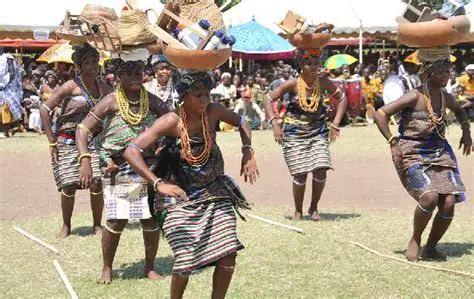
The Hogbetsotso Festival is one of the important traditional celebrations of the Anlo people of the Volta Region of Ghana.
Celebrated annually in Anloga, the traditional and cultural home of the Anlo people, the festival commemorates the migration of the Anlo people from Notsé in present-day Togo to their current settlement along the southeastern coast of Ghana.
The festival is strongly connected to Anlo history, ancestral migration, traditional leadership, cultural identity, and the preservation of customs passed down through generations.
Unlike festivals that are primarily associated with harvest or a particular historical battle, Hogbetsotso places considerable emphasis on the journey of the ancestors and their escape from the rule of King Agokoli of Notsé.
What does Hogbetsotso mean?
The name Hogbetsotso is associated with the migration or exodus of the Anlo people from Notsé.
The word is generally linked to the idea of coming out or escaping from Notsé.
The festival therefore serves as an annual reminder of the journey undertaken by the ancestors of the Anlo people before eventually settling in their present homeland.
The story of Notsé and King Agokoli
According to Anlo oral tradition, the ancestors of the Anlo people lived at Notsé, where they were ruled by King Agokoli.
Traditional accounts describe Agokoli as a powerful ruler under whose authority the people endured harsh conditions.
The oral history recounts that the people were subjected to difficult circumstances, including forced labour and restrictions imposed by the king.
One of the stories associated with their eventual escape concerns the construction of a large defensive wall around Notsé.
The people are said to have secretly weakened part of the wall by removing mud from its base.
They used various methods to conceal their activities from the authorities.
When the time came to escape, the people passed through the weakened section of the wall.
This escape became an important part of the history remembered through Hogbetsotso.
The migration from Notsé
After leaving Notsé, the ancestors of the Anlo people travelled southwards.
The migration was not an overnight journey.
The traditional account describes a movement through different locations before the people eventually settled in the area that became Anlo.
The journey is remembered as one involving hardship, determination and the search for a permanent home.
The migration story remains central to Anlo identity because it connects present-day communities with their ancestors.
Why Anloga is important
The town of Anloga is regarded as the traditional capital of the Anlo people.
It is therefore the principal location for the annual Hogbetsotso Festival.
The festival brings together chiefs, queenmothers, elders, families, traditional leaders, residents and visitors.
For Anlo people living outside the traditional area, the celebration also provides an opportunity to return home and reconnect with their roots.
Traditional purification before the festival
Hogbetsotso involves several traditional preparations before the main public celebration.
One of the most important is purification.
Traditional leaders and priests perform rites intended to cleanse the community and prepare it for the festival.
The purification process is also associated with removing negative influences and restoring harmony within the community.
The ceremonies remind the people that the festival is not simply an entertainment event but has important spiritual and traditional dimensions.
Another important aspect of the festival is the emphasis on peace and reconciliation.
Members of the community are traditionally encouraged to settle disputes and resolve disagreements before the major celebration.
The idea is that the community should enter the festival period in an atmosphere of unity.
This reflects an important principle of the festival: the ancestors are remembered not only for escaping hardship but also for building a community together.
Traditional rulers play a central role in Hogbetsotso.
The Awomefia, the paramount chief of the Anlo State, presides over major traditional activities.
Other chiefs and queenmothers from the various Anlo communities participate in the celebration.
Their appearance in colourful traditional regalia is one of the major attractions during the festival.
The gathering of chiefs also provides an opportunity to reaffirm the traditional structure and unity of the Anlo State.
The grand durbar
The grand durbar is one of the main highlights of Hogbetsotso.
Traditional leaders appear in elaborate regalia and are accompanied by linguists, drummers, traditional attendants and other members of their entourages.
The durbar provides an opportunity for the chiefs to address the people and discuss issues concerning the traditional area.
Government representatives, politicians, business leaders, diplomats, cultural personalities and visitors may also attend.
The occasion combines traditional ceremony with public discussion and cultural display.
Traditional music and dance
Music and dance are central to Hogbetsotso.
Traditional drumming accompanies processions and ceremonies, while cultural groups perform dances associated with Anlo heritage.
The music provides a means of preserving history because traditional songs can contain references to the migration, ancestors, chiefs and important events in the community’s past.
Younger generations therefore encounter their history not only through written records but also through songs, performances and oral storytelling.
Traditional clothing is another major feature of the festival.
Chiefs and queen mothers appear in elaborate traditional attire, while community members wear colourful Ghanaian fabrics and locally inspired designs.
The display of traditional clothing adds to the visual identity of the celebration while also reinforcing cultural pride.
Hogbetsotso as a family reunion
The festival has become an important homecoming occasion for Anlo people.
People who have moved to Accra, other parts of Ghana or abroad may return to Anloga during the festival.
Families use the occasion to reconnect with relatives, visit ancestral homes and participate in traditional ceremonies.
For young people who may have grown up away from the Volta Region, the festival provides an opportunity to learn more about their heritage.
Food and hospitality
Food is an important part of the celebration.
Families prepare traditional dishes and share meals with relatives and visitors.
The festival also provides opportunities for local food vendors and traders to sell traditional meals and other products.
Food therefore serves both a cultural and economic function during the celebration.
Hogbetsotso and tourism
Hogbetsotso has become one of the major cultural tourism attractions in the Volta Region.
Visitors are drawn to the festival because of its history, traditional ceremonies, music, dance, chieftaincy and cultural displays.
The celebration also provides an opportunity for visitors to explore other attractions in the Volta Region.
Hotels, restaurants, transport operators, artisans, traders and other businesses can benefit from the increased movement of people during the festival period.
Preserving Anlo history
Perhaps the most important role of Hogbetsotso is the preservation of Anlo history.
The migration from Notsé is a foundational story of Anlo identity.
By retelling the story every year, the festival keeps the history alive for younger generations.
The story is transmitted through:
- Oral history
- Traditional songs
- Drumming
- Dance
- Storytelling
- Chieftaincy ceremonies
- Traditional processions
- Public speeches
The festival therefore acts as a cultural classroom where history is experienced rather than simply read.
Hogbetsotso and unity
The festival also promotes unity among the various communities that make up the Anlo traditional area.
People from different towns and villages gather under the authority of the traditional leadership.
The festival allows them to celebrate a shared history and common ancestry.
This shared identity is particularly important for Anlo communities whose members now live in different parts of Ghana and around the world.
Although the festival is rooted in traditional history, its modern celebration includes contemporary activities.
These may include educational programmes, health initiatives, cultural exhibitions, community development discussions, entertainment programmes and other public events.
Traditional leaders and organisers may also use the festival to highlight development challenges and mobilise support for projects within the traditional area.
As a result, Hogbetsotso has evolved into a celebration that combines history, tradition, community development and tourism.
Why Hogbetsotso remains important
Hogbetsotso is ultimately a festival about identity and memory.
The celebration reminds the Anlo people of where their ancestors came from, the difficulties they experienced and the journey that eventually brought them to their present home.
Every year, the story of Notsé and the escape from the rule of Agokoli is brought back into public consciousness.
The festival also creates a space for chiefs and communities to reflect on their present circumstances while celebrating their shared heritage.
From the traditional purification rites to the grand durbar, music, dance, traditional regalia and family reunions, Hogbetsotso provides a living connection between the past and the present.
For the Anlo people, the festival is therefore much more than an annual celebration in Anloga.
It is a reminder of ancestral courage, migration, survival, unity and cultural identity.
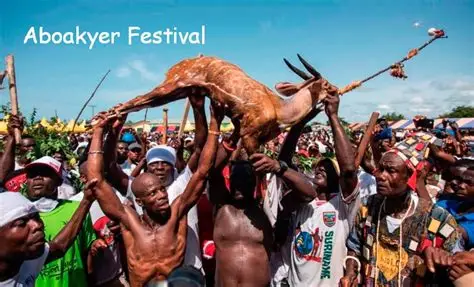
Ghana is home to numerous traditional festivals, each carrying stories of migration, spirituality, warfare, thanksgiving and the preservation of ancestral customs. Among the most distinctive is the Aboakyer Festival, celebrated annually by the Effutu people of Winneba in the Central Region.
Unlike many festivals that are primarily marked by processions, traditional dances and durbars, Aboakyer is particularly known for a dramatic ritual in which two traditional Asafo companies compete to capture a live bushbuck.
The festival is normally celebrated on the first Saturday in May and has become one of the important cultural events associated with Winneba and the Central Region.
What does Aboakyer mean?
The name Aboakyer is derived from the Fante language and is commonly translated as “hunting for game” or the catching of a live animal.
The festival is closely connected to the history and traditional beliefs of the Effutu people, also known historically as the Simpafo. According to the traditional account, their ancestors migrated from the ancient Western Sudan region and eventually settled in what is now Winneba.
As part of their migration story, the people were believed to have travelled with their deity, Penkye Otu, who became central to the religious traditions surrounding Aboakyer.
The story behind the sacrifice
Traditional accounts say that after the Effutu people had settled in their new home, they sought guidance from their deity about sacrifices that should be made.
According to the account recorded by Visit Ghana, the deity initially demanded the sacrifice of a young member of the royal family. The people became concerned that repeatedly sacrificing members of the royal family could eventually threaten the survival of the royal lineage.
They therefore appealed for an alternative sacrifice.
The request resulted in a wild animal being substituted for the human sacrifice. A wild cat was initially accepted, but capturing it alive proved extremely dangerous.
The people eventually appealed again, leading to the acceptance of a bushbuck as the sacrificial animal.
This tradition became the foundation of the annual Aboakyer celebration.
The two Asafo companies
One of the most important features of Aboakyer is the participation of two traditional warrior groups, known as Asafo companies.
They are:
- Tuafo Asafo – traditionally regarded as the Number One company
- Dentsifo Asafo – traditionally regarded as the Number Two company
The two groups compete in the live bushbuck-catching ritual.
The competition is not simply a modern sporting contest. It is connected to the traditional military and social organisation of the Effutu people, with the Asafo historically playing important roles in protecting the community.
The two companies continue to serve as major custodians and performers of the festival’s traditions.
The famous bushbuck hunt
The climax of Aboakyer begins early in the morning when the two Asafo companies set out for their respective hunting grounds.
The objective is to capture a live bushbuck.
According to the traditional rules described by Visit Ghana, the hunters use sticks and clubs rather than conventional hunting weapons. The challenge is to catch the animal alive and bring it back to the traditional authorities.
The first company to successfully capture the animal and bring it to the durbar grounds gains the honour for that year’s competition.
The successful capture is accompanied by intense drumming, singing, dancing and celebrations as supporters of the victorious Asafo company welcome the hunters.
The role of the Omanhene
After the animal is successfully brought back, it is presented during the traditional proceedings.
Visit Ghana notes that the first Asafo company to bring the live deer to the Omanhene, allowing him to step over it three times, is declared the winner of the year’s competition.
The event therefore combines spiritual tradition, competition, history and communal celebration.
Rituals before the main festival
Aboakyer is not limited to the famous hunting expedition.
Before the main celebration, traditional rituals take place involving the Asafo companies, chiefs and spiritual authorities.
On the eve of the main festival, the Asafo companies perform rituals and bring out their traditional gods.
The ceremony attracts large crowds, with drumming, dancing and other cultural performances forming part of the build-up to the main event.
The durbar
After the hunting expedition, chiefs, sub-chiefs, traditional leaders, dignitaries and members of the public gather at the durbar grounds.
The atmosphere is filled with traditional music, dancing, colourful flags and the display of Asafo regalia.
The arrival of the hunters with the captured animal is one of the major moments of the celebration.
For residents, the event is not simply entertainment. It provides an opportunity for the community to reconnect with its history, traditional authorities and cultural identity.
Traditional flags and Asafo culture
Colourful flags are an important part of the Aboakyer celebration.
The Asafo companies display their flags as symbols of their identity and traditional history. These displays form part of the visual character of the festival.
The Asafo tradition itself reflects an older system in which organised groups of warriors played roles in protecting communities and maintaining social order.
Consequently, Aboakyer provides a public display of an institution that has historical importance beyond the festival itself.
A festival connected to migration
At its heart, Aboakyer is also a festival about migration and survival.
The traditional history of the Effutu people links the festival to their journey from the ancient Western Sudan region to their present settlement at Winneba.
The annual celebration therefore serves as a reminder of the journey of the ancestors and the establishment of the Effutu community.
Wikipedia’s account of the festival identifies the commemoration of the migration of the Simpafo as one of the central purposes of the institution of Aboakyer.
Thanksgiving and hopes for the future
Aboakyer also has a spiritual dimension.
The traditional sacrifice is associated with thanksgiving for the safe migration and settlement of the people, while traditional accounts also connect the festival with the removal of evil and hopes for a successful year and good harvest.
This makes the festival both a remembrance of the past and an occasion for looking toward the future.
A major cultural attraction
Over the years, Aboakyer has developed beyond a purely traditional ceremony into an important cultural and tourism attraction.
Winneba itself is recognised for its cultural traditions, while the Central Region is home to several major festivals, including Aboakyer and Fetu Afahye.
The festival also brings visitors to Winneba, creating opportunities for local businesses, accommodation providers, food vendors, artisans and other service providers.
Visit Ghana lists Aboakyer among the major festivals that contribute to the cultural appeal of the Central Region.
Aboakyer and the preservation of Ghanaian heritage
For younger generations, festivals such as Aboakyer provide an opportunity to learn about traditions that may otherwise be difficult to understand outside their historical context.
The songs, drums, Asafo flags, traditional costumes, rituals, storytelling and public ceremonies all contribute to the transmission of cultural knowledge.
The festival also demonstrates how oral history continues to play an important role in preserving the stories of Ghanaian communities.
Traditional accounts of the Effutu migration and the origins of Aboakyer were passed down through generations through songs, war chants and storytelling.
More than a deer hunt
Although the live bushbuck capture is the part of Aboakyer that attracts the most attention, the festival represents much more than the hunt.
It brings together:
- Effutu history
- Traditional religion
- Migration history
- Asafo military traditions
- Chieftaincy
- Music and dance
- Traditional regalia
- Community identity
- Thanksgiving
- Tourism and cultural education
The annual gathering therefore provides a living connection between Winneba’s past and present.
Aboakyer remains one of Ghana’s most recognisable traditional festivals because its central ritual is unusual, visually striking and deeply connected to the traditional history of the Effutu people.
By Angel No Lie | KPD Online | September 27, 2026
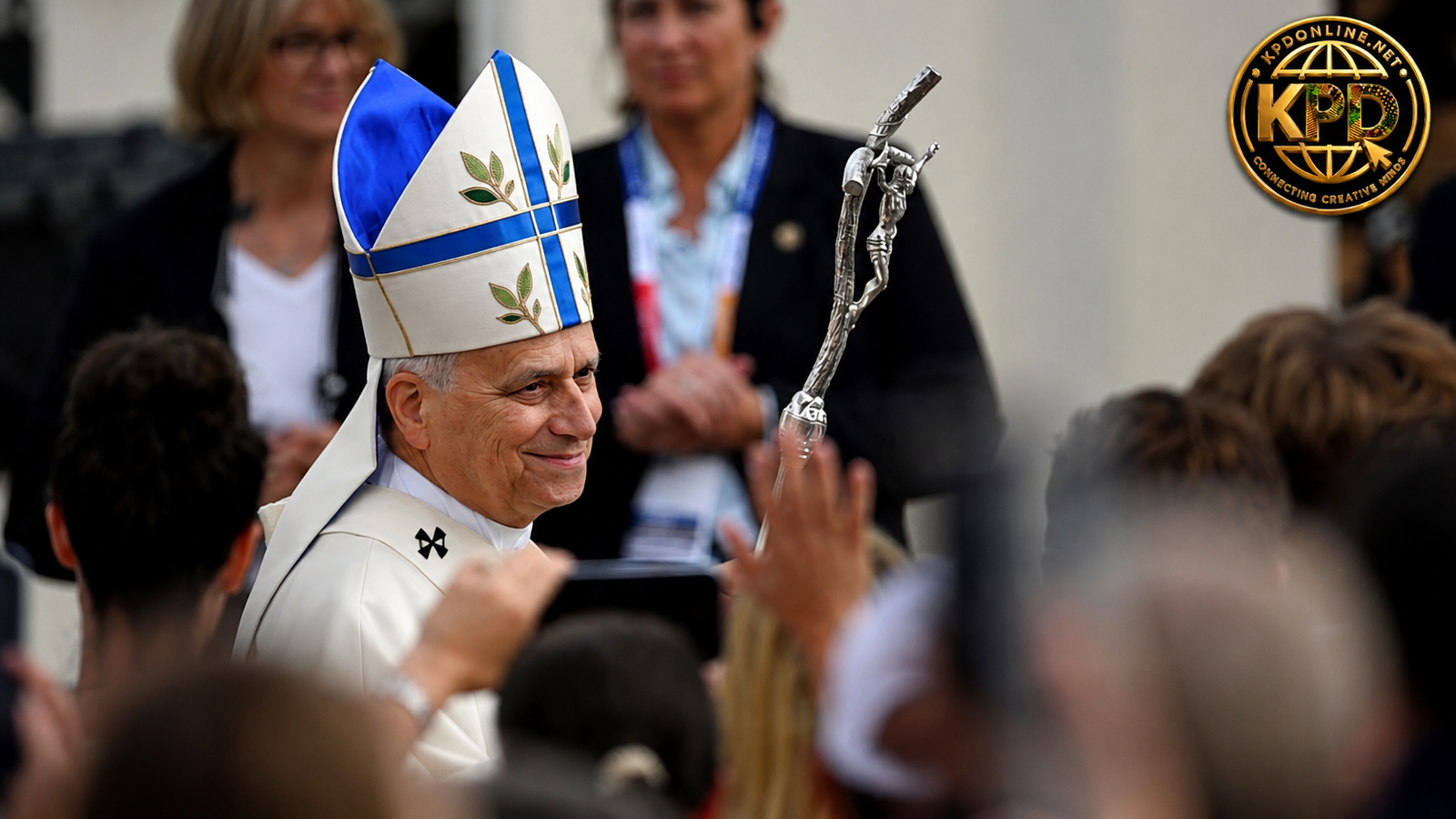
PARIS — Pope Leo XIV used a huge open-air Mass in central Paris on Saturday to praise the enthusiasm and commitment of young people, telling them they are an important part of the Catholic Church’s present and future.
The Mass at the Place de la Concorde and along the Champs-Élysées drew hundreds of thousands of worshippers. The Vatican put attendance at about 700,000, while AFP reported that the Vatican, citing local sources, said the crowd reached roughly 800,000 across the area.
Paris Welcomes Pope Leo XIV as Crowds Fill the Champs-Élysées
Pope highlights the role of young people
During his homily, Pope Leo directly addressed young people, describing them as “today’s Church” and thanking them for the enthusiasm, energy, commitment and joy they bring to Christian communities.
His comments followed a separate youth prayer vigil at the Stade de France on Friday evening, where about 80,000 young people gathered to hear him speak and share their experiences. The Pope encouraged them to commit themselves to service and peace and urged those considering religious vocations not to be afraid of the call.
Hundreds of Thousands Gather as Pope Leo Celebrates Mass in Paris
A message about faith and hope
The Paris Mass focused heavily on the Christian image of “living water.” Drawing on the Gospel, Leo said Jesus Christ is the source of living water capable of satisfying humanity’s deepest spiritual thirst.
He also encouraged Catholics not to keep their faith private, but to share it with others through their lives and actions.
The Pope’s visit to Paris forms part of his four-day journey through France from September 25 to 28. His schedule included a visit to UNESCO, meetings with young people, Notre-Dame de Paris and the open-air Mass before his departure for Lourdes.
A Sea of Worshippers Gather for Pope Leo’s Paris Mass
A major public gathering in central Paris
Before the Mass, Pope Leo travelled along the Champs-Élysées in the popemobile, greeting crowds gathered along the route. The event transformed some of central Paris into a vast gathering place for pilgrims and spectators.
The choice of the Place de la Concorde also carried historical significance. The square, now one of Paris’s major public spaces, is associated with the French Revolution and the country’s strongly secular political tradition.
The Paris visit is the Pope’s first official papal visit to France and comes nearly two decades after the previous papal visit to the country.
By Angel No Lie | KPD Online | 26 September 2026
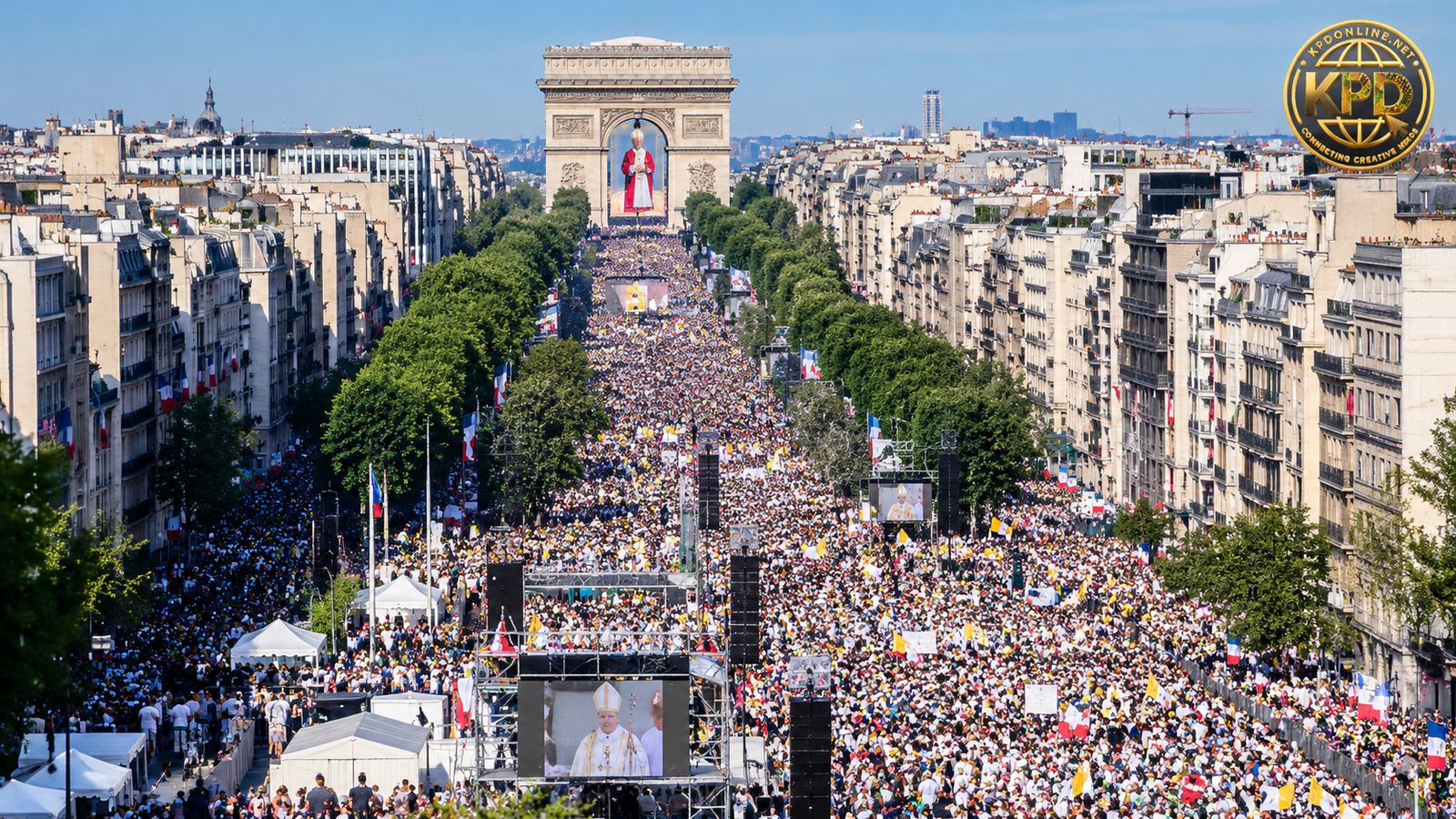
Hundreds of thousands of people filled central Paris on Saturday as Pope Leo XIV celebrated a large open-air Mass at Place de la Concorde, bringing one of the biggest public gatherings of his four-day visit to France.
The Vatican estimated that about 700,000 people attended the event, exceeding the roughly 600,000 people who had registered in advance. The crowds stretched along the Champs-Élysées as the pope travelled in his popemobile toward the Mass site.

700,000 Gather in Paris as Pope Leo XIV Celebrates Open-Air Mass
A sea of people across central Paris
The gathering extended across several major landmarks and avenues, including the Champs-Élysées, Place de la Concorde, Place de l’Étoile and Avenue de la Grande Armée.
Pope Leo travelled about two kilometres through the French capital in his popemobile, waving to crowds who carried flags and religious symbols and cheered as he passed.
The official Paris tourism authority had originally planned for around 500,000 people to attend the Mass, while registration eventually reached 600,000. The Vatican’s later estimate put the actual turnout at approximately 700,000.

Pope Leo XIV Waves to Massive Paris Crowd from Popemobile
Message focused on faith and hope
During his homily, Pope Leo spoke about what he described as the deep human search for meaning and fulfillment.
According to Vatican News, he presented Jesus Christ as the source of the “living water” that satisfies the spiritual thirst of humanity. He also urged those attending not to keep their faith to themselves, but to allow it to influence how they engage with other people.
Reuters reported that the pope encouraged Catholics to seek happiness through faith rather than material possessions.

Paris Turns Into a Sea of Worshippers for Pope Leo XIV
A major moment during the pope’s France visit
The Paris Mass formed the centrepiece of Leo’s visit to the French capital.
His programme had included a meeting with French President Emmanuel Macron, a visit to UNESCO, celebrations at Notre-Dame de Paris and a prayer vigil with young people at the Stade de France.
The Paris visit is also significant because it is the first papal visit to the French capital since 2008.
On Friday evening, Leo became the first pope to enter Notre-Dame Cathedral since the 2019 fire that severely damaged the historic building.
Paris transformed for the event
The enormous gathering required extensive security and transportation measures.
Large sections of central Paris were closed to traffic, while several Metro and RER stations around the Champs-Élysées, Concorde and surrounding areas were temporarily closed. The restrictions were put in place to manage the crowds and security arrangements surrounding the papal visit.
The gathering also created a striking visual scene, with crowds extending along the grand Parisian avenues and the Arc de Triomphe providing a backdrop to the pope’s journey.
The significance for the Catholic Church in France
The size of the crowd comes against a complicated religious backdrop.
France remains constitutionally secular and has experienced a long-term decline in regular church attendance. At the same time, the papal visit has attracted substantial public interest, with hundreds of thousands registering for the Paris Mass.
Reuters described the turnout as evidence of the continued ability of the Catholic Church to attract large public gatherings despite decades of secularisation and declining churchgoing.
The size of the crowd alone, however, does not establish how representative the gathering is of religious practice across France. Attendance at a major papal event is different from regular participation in religious services.
The visit also carries difficult questions
Leo’s visit is taking place while the French Catholic Church continues to face scrutiny over its handling of historic sexual-abuse cases.
A 2021 independent investigation estimated that around 330,000 minors had been sexually abused by clergy or other church personnel in France between 1950 and 2020. During his France trip, Leo is scheduled to meet survivors of clerical abuse in Lourdes.
The Paris crowds therefore form only one part of a broader visit involving worship, diplomacy, social issues and the Church’s relationship with French society.
What comes next
After leaving Paris, Pope Leo is travelling to Lourdes, where he is scheduled to pray at the Grotto of Massabielle and celebrate Mass on Sunday.
The final stage of his France journey will take him to Metz on Monday, where he is scheduled to celebrate Mass at Saint-Étienne Cathedral before returning to Rome.
Independent perspective
The Paris Mass produced an exceptionally large public gathering, with the Vatican estimating approximately 700,000 attendees. It demonstrates the ability of a papal visit to attract large crowds even in a country where religious practice has declined over several decades.
At the same time, attendance figures should be viewed separately from broader measures of Catholic participation and belief. The visit is unfolding alongside continuing debates about secularisation, the Church’s response to abuse and its role in contemporary French society.
Sources: Reuters, Vatican News, Paris tourist authorities and Associated Press reporting.
General News
Pope Leo XIV Arrives in France as Paris Prepares for Mass Gathering of Hundreds of Thousands

By Angel No Lie | KPD Online | September 25, 2026
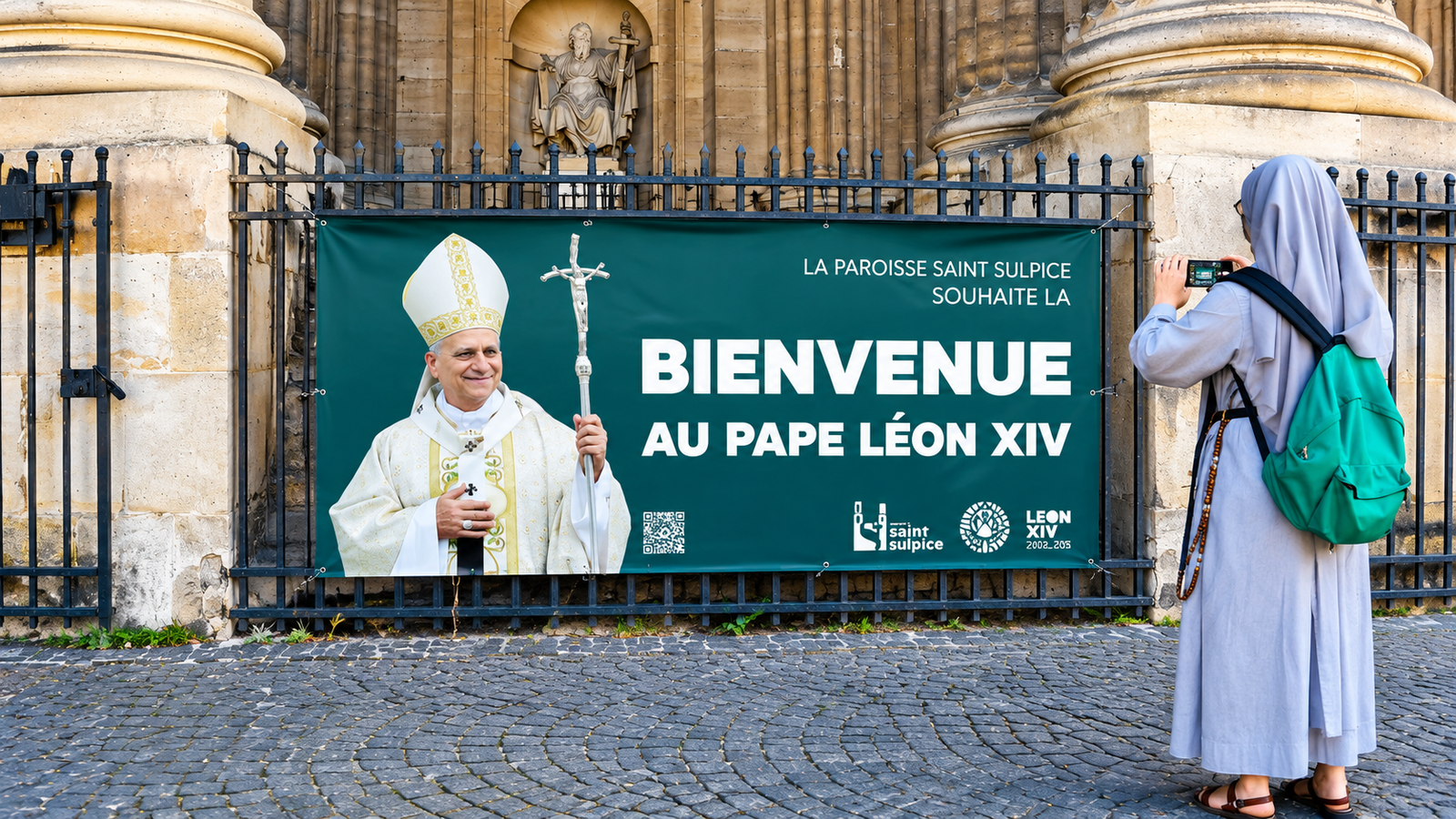
Paris is preparing for a major public gathering as Pope Leo XIV begins his four-day visit to France, with hundreds of thousands of people expected to attend an outdoor Mass and other events in the French capital.
The visit, taking place from 25 to 28 September 2026, is the first official papal visit to France in almost two decades. The itinerary includes Paris, Lourdes and Metz, combining religious ceremonies with meetings focused on social, political and humanitarian issues.
Organizers expect the wider visit to attract more than one million people, although attendance will be spread across multiple locations and events rather than concentrated in one gathering.

Paris Prepares for Historic Papal Gathering as Pope Leo XIV Begins France Visit
Large crowds expected for Paris Mass
One of the main events is an open-air Mass in central Paris, with organizers expecting approximately 500,000 attendees. The gathering is planned around Place de la Concorde and the Champs-Élysées, requiring extensive preparations for security, transport and crowd management.
A separate youth vigil at the Stade de France is expected to bring together around 75,000 young people, according to preparations reported by French Catholic authorities.
The scale of the events has required coordination between church officials, volunteers, public authorities and specialist event agencies. Reports indicate that approximately 12,000 volunteers are being recruited to support the visit and its related activities.

Pope Leo XIV’s France Tour Brings Major Crowds and Renewed Focus on Church Reform
A visit combining faith and public affairs
Pope Leo’s programme extends beyond religious ceremonies. In Paris, he is expected to meet French President Emmanuel Macron and address audiences connected to UNESCO, the United Nations cultural agency.
The visit is also expected to address issues such as peace, human dignity, artificial intelligence and Europe’s future. In Metz, the Pope is scheduled to emphasize peace and European unity in an event connected to Robert Schuman, one of the founding figures of the European Union.
The diplomatic dimension of the visit comes as France continues to navigate questions surrounding secularism, religious expression and public policy.

Hundreds of Thousands Prepare to Welcome Pope Leo XIV in Paris
Lourdes visit will focus on abuse survivors
A significant part of the trip will take place in Lourdes, one of the Catholic Church’s most important pilgrimage destinations.
Pope Leo is scheduled to meet survivors of sexual abuse connected to the Catholic Church. The meeting comes after a 2021 French report documented extensive abuse of children within Catholic institutions over several decades.
French survivors and advocacy groups have called for deeper reforms in how abuse allegations are investigated and how victims receive compensation and support.
Reuters reported that survivors hope the Pope’s engagement will encourage more consistent, independent and victim-focused procedures within the Church.
Church seeks to rebuild trust
The papal visit comes against the backdrop of a continuing crisis of confidence in parts of the French Catholic Church.
The Independent National Authority for Recognition and Reparation has processed claims from people who reported abuse by clergy and other Church personnel. The compensation process has provided financial support and recognition, although survivors and advocates continue to debate whether existing arrangements offer sufficient independence and long-term accountability.
Pope Leo’s meetings with survivors are therefore likely to be closely watched, particularly by people seeking acknowledgment, institutional change and stronger safeguards for children.
Security and logistical preparations
Large public events in Paris require extensive planning, including crowd-control measures, restricted traffic routes, medical support and security screening.
The timing of the visit also presents logistical challenges for the French capital, where tourism, cultural events and other major public activities are taking place.
The expected turnout has prompted authorities and organizers to prepare for significant pressure on transport networks and public spaces. The exact attendance figures will depend on the number of people who attend each event and the access arrangements in place.
A major moment for French Catholicism
Although France remains a strongly secular country, the visit is expected to draw substantial participation from Catholic communities, young people and pilgrims.
French Catholic leaders have presented the trip as an opportunity to demonstrate the Church’s continued public presence and to encourage religious engagement among younger generations. At the same time, the visit takes place amid declining regular religious participation and continuing debate over the role of religion in French public life.
Independent assessment
Pope Leo XIV’s visit is simultaneously a major religious gathering, a diplomatic engagement and an opportunity for the Catholic Church to address longstanding concerns about institutional trust.
The large expected crowds demonstrate the organizational and public interest surrounding the visit, but attendance figures alone cannot establish the broader impact of the Pope’s message or the Church’s reform efforts. The significance of the trip will also depend on the outcomes of his meetings, particularly with abuse survivors and public institutions.

Ghana, Korea explore deeper cultural, tourism and creative ties

DBlack Reveals He and EL Once Dated the Same Woman Without Knowing

From Bamba’s Shock Win to JFK’s Landslide: 5 Biggest Surprises From NPP’s 2026 Elections



-

 General News2 weeks ago
Free Speech, False Publication and Presidential Criticism in Ghana: Where Does the Law Draw the Line?
-

 General News2 weeks ago
Rev. Dr. Christian Kwetey Kweitsu Set for International Recognition at 100 Most Influential Persons Awards in Kigali
-

 General News7 days ago
Fidelity Bank Chairman Named Ghana’s Topmost Transformational Board Chair 2026
-
 General News2 weeks ago
Don’t Expect Concerts When People Can’t Afford Food – Rex Omar on Black Star Experience
-
 Entertainment1 week ago
Ras Caleb assesses institutions under the Tourism Ministry, highlighting key roles.
-
 Entertainment1 week ago
Ras Caleb Appiah-Levi: The musician, Pan-Africanist and organiser whose career spans four decades
-
 Technology2 weeks ago
Rolls-Royce Expands Aviation Business with Major Philippine Airlines Engine Agreement
-

 Entertainment2 weeks ago
Kojo Preko Dankwa calls for investigation into GTA’s World Cup visa affairs