
General News
Mahama Allocates GH¢100 Million to NAIMOS, Orders Destruction of Illegal Mining Equipment

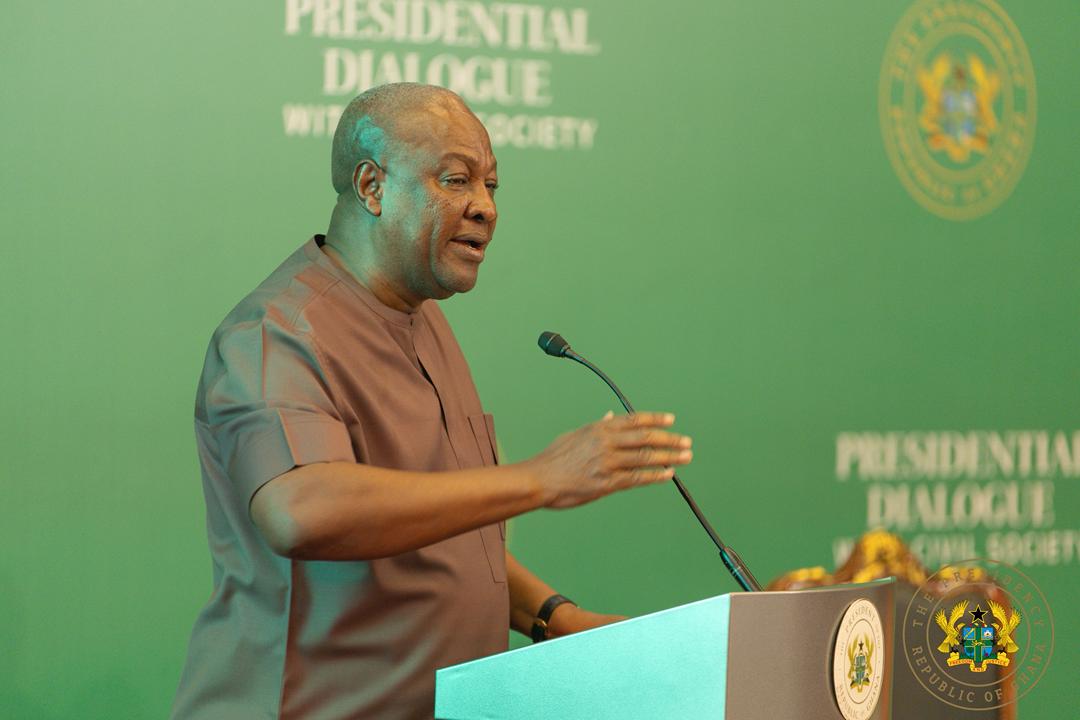
President John Dramani Mahama has announced a major boost in funding and logistics for the fight against illegal mining, revealing that government has allocated GH¢100 million to the National Anti-Illegal Mining Operations Secretariat (NAIMOS) to intensify its activities this year.
Speaking during a Presidential Dialogue with Civil Society Organisations, the President said the initial allocation is expected to support ongoing operations, with the possibility of additional funding later in the year.
“This year, we are giving NAIMOS GH¢100 million to continue their activity, and I have assured them that they should start with that,” he said. “If during the year we think that they need more money at the mid-year review of the budget, we will allocate some more money to NAIMOS.”
President Mahama, however, acknowledged critical logistical gaps hampering the effectiveness of the anti-galamsey fight, particularly on water bodies.
“There are some things they don’t have. They lack equipment, especially for policing the water bodies. Sometimes you see them in canoes with outboard motors, and sometimes they even have local people paddling them to fight the menace on the rivers,” he noted.
To address the challenge, the President disclosed that government has approved the procurement of specialised patrol boats to enhance surveillance and enforcement along rivers heavily affected by illegal mining.
“The Minister of Finance, who is also acting as Minister of Defence, has approved a budget for them to bring in new patrol boats that are designed for patrolling rivers,” he said.
Highlighting the scale of the challenge, President Mahama referenced the vast stretches of rivers affected by galamsey, stressing the need for more efficient equipment.
“Take a river like the Pra, which is about 120 kilometres long—you can imagine what distance those fishermen’s canoes can cover in terms of patrolling,” he explained. “So they are bringing purpose-built boats that can travel far in riverine areas.”
He added that the boats will be deployed to both the Ghana Police Service and the Ghana Armed Forces to support NAIMOS operations on water bodies.
According to the President, the security agencies have been given firm instructions to take decisive action against illegal mining equipment wherever they are found.
“The directive is that any chamfan machine they find, whether on the river or on land, they should destroy it,” he stressed.
President Mahama further revealed that enforcement efforts are already underway, with daily operations targeting illegal mining activities across the country.
“I get the videos every day, and I can share them with you—every day they are burning and destroying chamfan machines,” he said.
The renewed investment and operational strategy form part of government’s broader efforts to clamp down on illegal mining, protect water bodies, and restore degraded lands.

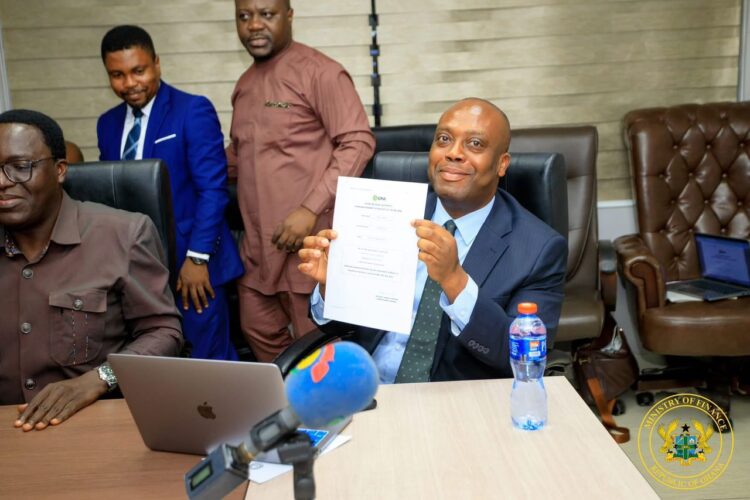
The Cassiel Ato Forson, together with his Deputy Thomas Nyarko Ampem, has publicly filed his annual tax returns in a move aimed at promoting voluntary compliance and reinforcing public confidence in the country’s tax system.
Addressing the media after the exercise, Dr. Forson indicated that the decision to file publicly was intentional, underscoring the importance of leading by example. He stated that leadership must be demonstrated through action rather than mere pronouncements.
The Minister commended Ghanaian taxpayers for their continued contributions to national development, noting that their role remains vital in sustaining the country’s economic framework.
He emphasized that tax payment is a collective civic duty, describing it as fundamental to good governance and a key driver of national progress. According to him, all individuals and institutions are equal under the law and must fulfill their tax obligations accordingly.
Dr. Forson further highlighted that tax compliance extends beyond legal requirements, framing it as a moral responsibility that ensures a fair distribution of the national burden and accelerates development.
He pointed out that tax revenues remain the backbone of public financing, supporting critical sectors such as education, healthcare, infrastructure, and security.
The Minister also lauded the Ghana Revenue Authority for its efforts, particularly during the Tax and Good Governance Month observed in April. He urged the Authority to intensify public education campaigns and continue reforms aimed at simplifying tax processes, reducing compliance costs, and enhancing transparency.
Reaffirming the government’s commitment, Dr. Forson assured that the Ministry of Finance would continue to support the GRA in executing its mandate effectively.
He concluded by encouraging individuals and businesses yet to file their tax returns to do so promptly, leveraging digital platforms and available support systems.
According to the Minister, strengthening the country’s tax culture is essential for economic stability, improved accountability, and the creation of a more equitable society.
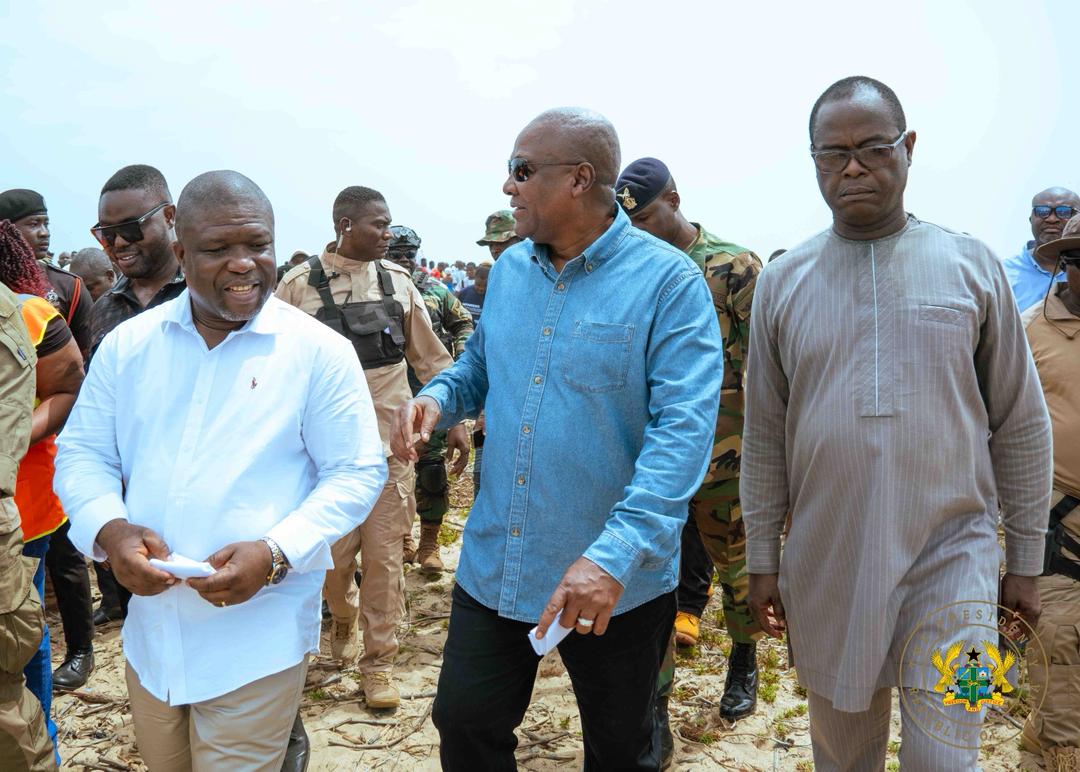
President John Dramani Mahama has visited Fuveme and other coastal communities in the Volta Region affected by recent tidal waves, assuring residents of immediate relief measures and long-term interventions to address the worsening coastal erosion crisis.
The visit follows renewed tidal wave activity that has displaced families, destroyed homes, and left sections of the coastline severely damaged, deepening concerns about the vulnerability of communities along the stretch.
During his tour, President Mahama interacted with affected residents, inspected damaged properties, and reaffirmed government’s commitment to both emergency support and permanent protection works.
“We came here to see for ourselves what is happening after the sea broke through and caused this destruction,” President Mahama said. “This entire coastline is part of an ongoing coastal protection programme, and we are committed to making sure the right interventions are implemented.”
He explained that the area falls under the West Africa Coastal Areas (WACA) project, a $150 million World Bank-supported initiative designed to protect vulnerable coastal communities from sea erosion and tidal wave impacts.
“The WACA project is a major intervention covering this stretch from Ketu South through parts of Anloga,” he noted. “It will involve the construction of sea defence structures and groynes to reduce wave energy, as well as ecological measures like mangrove and coconut planting to help stabilize the shoreline.”
President Mahama acknowledged delays in the implementation process, attributing them in part to the 2024 election period, but assured residents that progress has resumed.
“Yes, there were delays last year because of the elections, but I am happy to report that the feasibility studies have been completed and we are now moving into the design phase,” he stated. “After that, we proceed to procurement and then actual construction.”
He further assured residents that funding for the project remains secure and that government is determined to see it through to completion.
“We want to assure you that the financing for this project is not in doubt,” President Mahama emphasized. “Government is fully committed to ensuring that this coastal protection project is implemented to safeguard lives and property.”
As an immediate response, he disclosed that government will collaborate with the Volta River Authority (VRA) to undertake dredging works at the estuary to help reduce pressure on the coastline.
“In the short term, we are working with VRA to do dredging at the estuary to help ease the tidal impact while we implement the bigger project,” he added.
President Mahama appealed for patience and cooperation from residents as government rolls out both short-term interventions and long-term solutions to address the persistent coastal erosion challenges affecting the Volta Region.
General News
Hon. Joana Gyan Cudjoe Delivers on Her Promise, Supports Achichire Community Center Project


Hon. Joana Gyan Cudjoe, MP for Amenfi Central, has once again demonstrated her strong commitment to community development by fulfilling her promise to the people of Achichire. In support of their efforts to complete a much-needed community center, she donated 300 bags of cement along with 15 packages of roofing sheets today.
The donation was presented on her behalf by Hon. Peter Amponsah, the DCE, for Amenfi Central, together with constituency and branch executives.
This act goes beyond a simple donation, it reflects a deep dedication to improving lives and creating spaces where communities can come together, grow, and thrive. When completed, the Achichire Community Center will serve as a vital hub for social activities, meetings, and local initiatives, helping to strengthen unity and drive development in the area.
Hon. Gyan Cudjoe’s timely support has injected new energy and hope into the project, and the people of Achichire have expressed heartfelt appreciation for her continued leadership and commitment to their welfare.

GES Bans Tainted Officials from 2026 BECE as Record 620,141 Candidates Prepare to Sit

Finance Minister, Deputy Publicly File Tax Returns to Boost Compliance and Trust

“Obaa Hemaa”: CityGod Aruu Unveils Soulful Ode to Women



-

 Entertainment1 week ago
Kwamang Homecoming Concert Positions Kwadwo Nkansah Lil Win as a Driving Force in Community-Centred Entertainment
-

 Education5 days ago
PRESS STATEMENT : Team Haruna Opposes SRC Presidential Election Results
-

 Health & Fitness1 week ago
Kanda Community Receives Free Health Screening from Consolidated Bank Ghana Limited
-
Entertainment2 days ago
Haruna Rashid Yussif vrs Africa University of Communication and Business; SRC Presidential Aspirant Challenges Election Outcome
-

 Entertainment1 week ago
The Church of Pentecost Causes Arrest of Gospel Musician Francis Amo Over Alleged Song Theft; Consultant Explains
-

 Politics1 week ago
NPP Treasurer Denies Dues Diversion Claims, Warns Against Fake Payment Shortcode
-

 General News1 week ago
Accra to Host 12th District 94 Toastmasters Conference, Bringing Global Leaders Together
-

 General News6 days ago
Hon. Joana Gyan Cudjoe Delivers on Her Promise, Supports Achichire Community Center Project