
General News
Mahama Pushes UN Resolution to Recognize Transatlantic Slave Trade as Gravest Crime Against Humanity

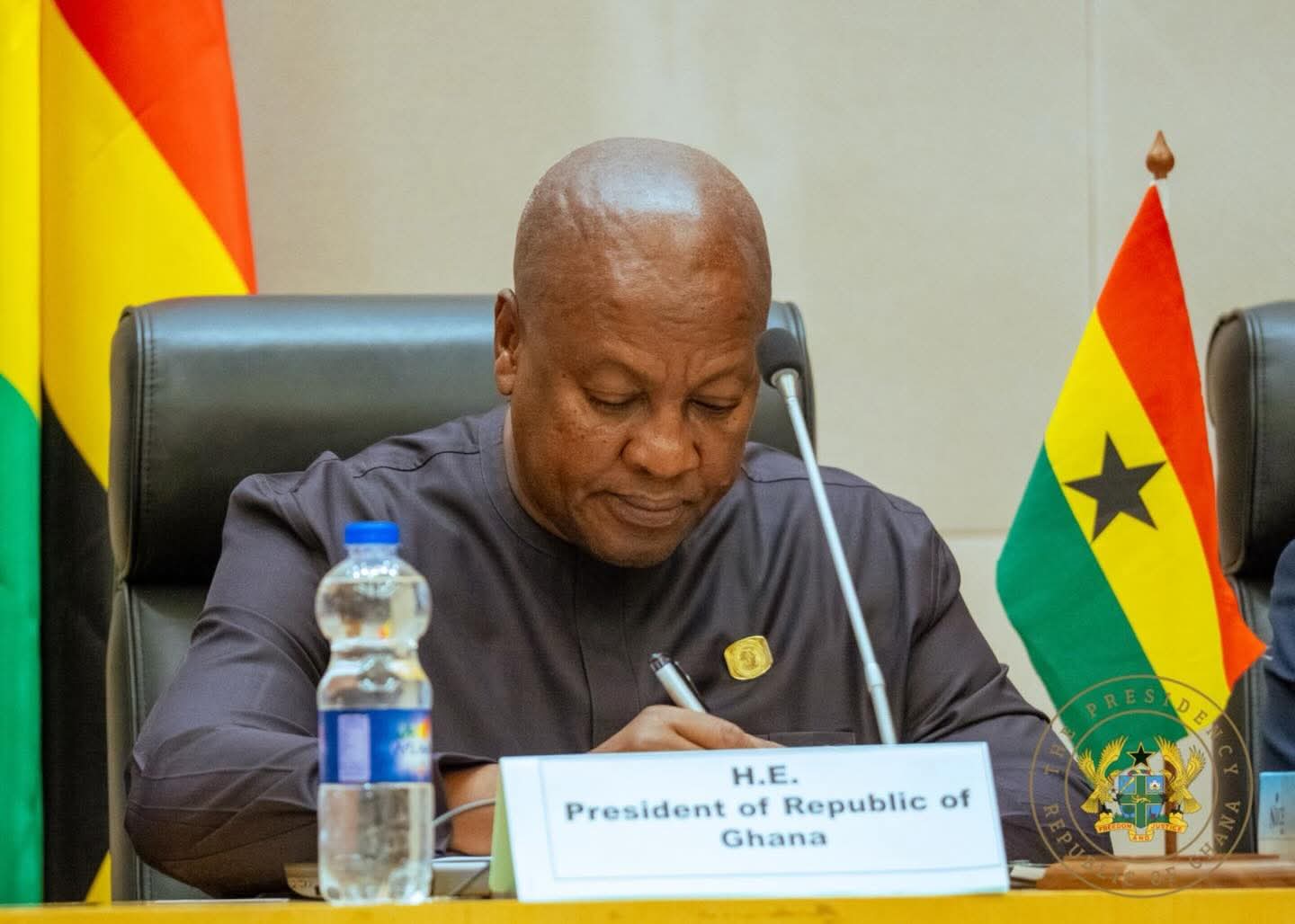
The President of Ghana, John Dramani Mahama, has announced that he has initiated processes to table a resolution at the United Nations General Assembly in March this year, seeking global recognition of the Transatlantic Slave Trade as the gravest crime against humanity.
According to the President, the move follows his earlier announcement during the 80th Session of the UN General Assembly in September last year. He emphasized that the push for recognition is part of a broader campaign for reparatory justice for Africans and people of African descent.
President Mahama stated that reparatory justice will not be freely given but must be pursued with unity and determination. He likened the struggle for reparations to the fight for independence, stressing that collective effort across the continent and the diaspora will be critical.
In his report to the Assembly of the African Union Heads of State, the President noted that 2025, designated as the African Union Year of Justice through Reparations, marks a significant turning point in the campaign. He outlined key steps already taken to advance the cause.
These include the establishment of an AU Coordination Team and a Committee of Experts on Reparations. Ghana and its partners have also engaged global institutions, including the United Nations and UNESCO, while leading discussions at major international forums across four continents. The President said the approach has helped to reframe reparations as forward looking instruments aimed at promoting justice and equity.
Despite the progress made, President Mahama acknowledged that much work remains. He called on all AU Member States to strengthen their institutions, establish national reparations commissions, and actively engage the global community to secure formal apologies, restitution, and binding agreements.
The proposed resolution at the UN General Assembly is expected to further intensify global discussions on historical accountability and reparatory justice for Africa and its diaspora.




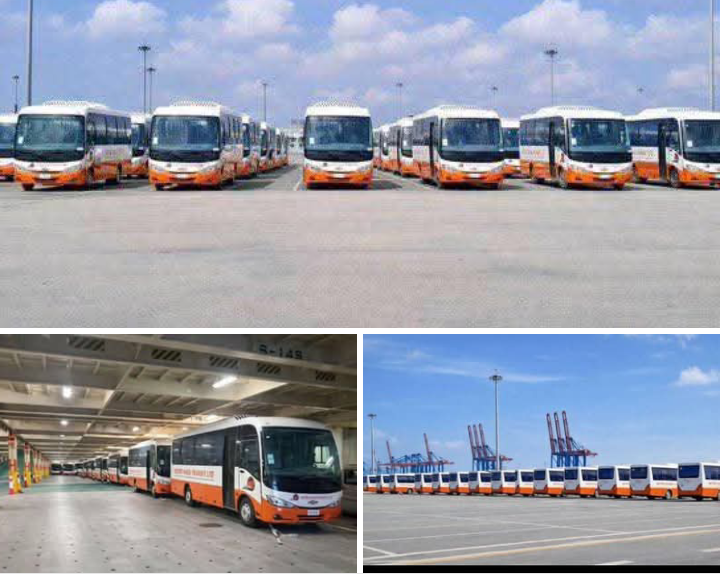
The government has taken delivery of 100 new buses as part of efforts to address growing pressure on Ghana’s public transport system following recent commuter disruptions across the country.
Minister for Government Communications, Felix Kwakye Ofosu, announced the development in a Facebook post on Sunday, April 5, 2026. He indicated that the buses form part of a broader nationwide initiative to expand transport capacity and improve mobility.
According to the Minister, the newly arrived 29-seater buses are the first tranche of a 300-vehicle procurement programme. “In the meantime, 100 29-seater buses have arrived in the country to ease recent road transport challenges. They form part of 300 procured for the purpose. Another batch of 100 will arrive in August, with the final batch expected in November,” he stated.
The intervention follows recent shortages of commercial vehicles in several parts of the country, which left commuters stranded at bus stops and transport terminals, particularly during peak hours.
Government officials have acknowledged the disruptions and assured the public of ongoing measures to stabilise the sector. Vice-President Jane Naana Opoku-Agyemang has previously indicated that steps are being taken to improve transport services and ease the burden on daily commuters.
The phased delivery of the buses is expected to gradually improve conditions, especially in urban centres where overcrowding, long waiting times and limited vehicle availability have become persistent challenges.
Authorities say the initiative will provide much-needed relief for workers, students and other commuters who rely heavily on public transport, as efforts continue to restore efficiency and stability within the sector.
General News
GHS 1.5 Million Health Boost: Joana Gyan Cudjoe Delivers Lifeline Equipment to Amenfi Central
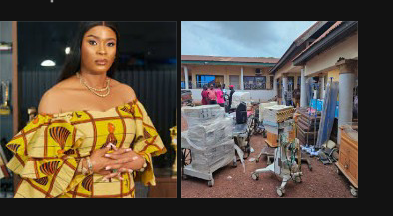
A major upgrade in healthcare delivery is underway in Amenfi Central after Member of Parliament Joana Gyan Cudjoe donated medical equipment worth GHS 1.5 million to the district’s health directorate.
The donation, presented at Agona Amenfi, was received by District Health Director Abdul Ganiyu Nuhu and his team, marking a significant intervention aimed at strengthening medical services across the constituency.
The consignment includes a wide array of essential equipment such as baby incubators, an anesthetic machine, heart monitors, oxygen concentrators, centrifuge, sterilizers, wheelchairs, delivery beds, and diagnostic tools. Health officials say the supplies will help address critical gaps in service delivery and improve patient care.
According to authorities, the equipment will be distributed across all 39 health facilities in the district to ensure equitable access and maximum impact.
The initiative forms part of the MP’s broader healthcare agenda, which includes plans to upgrade an existing health centre into a full-fledged hospital. Several Community-based Health Planning and Services (CHPS) compounds are also set to be elevated to health centre status, with the Juabo facility among the first expected to benefit.
The items were presented on behalf of the MP by a delegation led by District Chief Executive Peter Amponsah, alongside constituency executives and local government representatives.
Receiving the donation, Mr. Nuhu described the intervention as “timely and transformative,” noting that it would significantly enhance the capacity of health workers to deliver quality care. He assured stakeholders that the equipment would be properly maintained and used responsibly for long-term benefit.
The donation is widely seen as a critical step toward improving healthcare infrastructure in Amenfi Central, reinforcing public confidence and advancing efforts to build a more resilient local health system.

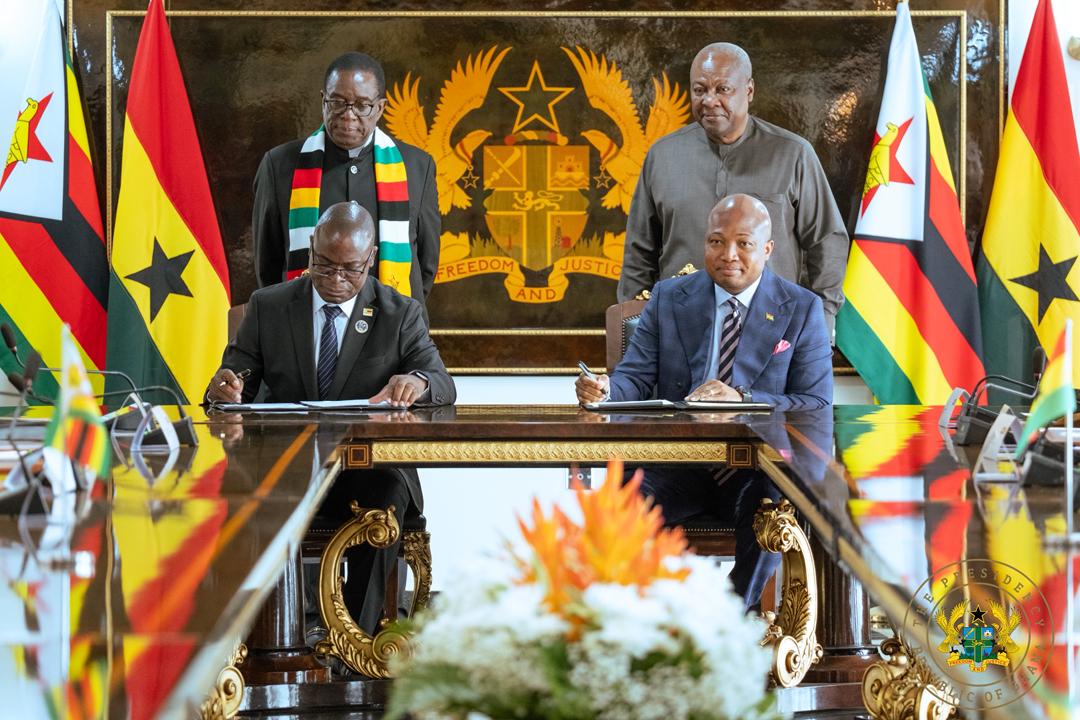
Ghana and Zimbabwe have signed 10 Memoranda of Understanding (MoUs) aimed at strengthening bilateral cooperation across multiple sectors, following the inaugural session of the Permanent Joint Commission for Cooperation (PJCC).
The agreements, signed during high-level bilateral engagements, span critical areas including political consultations, health, energy, tourism, sports development, and institutional collaboration.
Key among the agreements is the adoption of the agreed minutes of the inaugural PJCC session, which sets the framework for structured and sustained engagement between the two countries.
The two nations also signed an MoU on Political and Diplomatic Consultations to enhance regular dialogue and cooperation on regional and international issues. In addition, both sides committed to strengthening capacity building through an MoU on Research, Training and Documentation between their respective Foreign Service Institutes.
Cooperation in social sectors featured prominently, with agreements covering Health, Sports and Recreation Development, and Tourism, reflecting a shared commitment to improving people-to-people engagement and national development outcomes.
Further MoUs were signed in the fields of Energy and Archives, highlighting efforts to promote sustainable development and preserve historical records and heritage.
Trade and economic collaboration also received a boost with an agreement between ZimTrade and the Ghana Export Promotion Authority (GEPA), aimed at enhancing trade promotion and facilitating business partnerships between the two countries.
In the cultural and historical space, an MoU was signed between the Institute of African Knowledge and the Ghana Museums and Monuments Board to collaborate on an African liberation project.
While 10 agreements were signed at the government level, an additional MoU was concluded between private sector entities—Zoomlion Ghana Limited and Geo Pomona Waste Management (Pvt) Ltd—focusing on waste management collaboration.

Easter in Ghana Shifts from Sacred Reflection to Tourism and Business Boom

Kojo Preko Dankwa Recognised for Outstanding Media Consultancy at Heroines International Awards 26′

Ghanaian Hairstylist Chelsea Abigail Owusu Ansah Set to Break Her Own Guinness World Record on May 1



-
 General News2 weeks ago
AKUAPEM NIFAHENE CALLS ON DIASPORANS TO FOSTER DEVELOPMENT IN OKERE
-
 General News1 week ago
Mahama Allocates GH¢100 Million to NAIMOS, Orders Destruction of Illegal Mining Equipment
-
 General News2 weeks ago
The Greatness Within Us Will Always Outweigh the Injustices Against Us – Mahama
-
General News1 week ago
Mahama Assures Measures to Protect Consumers as Fuel Prices Face Upside Risk
-
 Uncategorized2 weeks ago
President Mahama Calls for Global Recognition of Slave Trade as Crime Against Humanity
-
 General News1 week ago
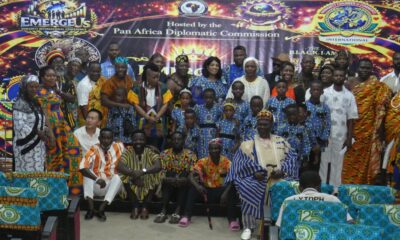
EMERGE Us Humanity International Conference 2026 and WAHANGELA KINGDOM Unveiled in Accra
-

 Entertainment1 week ago
“How Much Did It Cost to Paint Parts of Accra?”- FOCAP President Questions Gyankroma Akuffo-Addo Over Alleged $25M ‘Arts for All’ Project
-

 General News1 week ago
Ghana Mourns as Two Brothers Laid to Rest After Tragic Aircraft Crash