
Politics
RESETTING GHANA – ONE YEAR IN RETROSPECT


By Joyce Bawa Mogtari, Presidential Adviser and Special Aide
‘A comparatively peaceful year in retrospect’, is how a 70-year-old retired academic described President Mahama’s first year in office.
From the observers’ seat, let me say without any fear of contradiction that as citizens we are pleased with the progress made so far by the ruling National Democratic Congress (NDC) led by President John Dramani Mahama.
A year after, the overwhelming mandate that returned the NDC to government under the leadership of President John Dramani Mahama was more than an electoral outcome. It was a national call for a #Reset in leadership, governance and public trust. However, it was in the days that followed, during the complex transition from one administration to another, that this mandate found its first and most enduring expression.
First, the transition itself set the tone. It unfolded with calm, cooperation and adherence to Ghana’s constitution, without the usual fallouts. In his inaugural address on January 07/2025 President Mahama declared that Ghana was open for business.
Unlike nations grappling with uncertainty, Ghana chose continuity and dialogue over conflict and disruption. State institutions held firm, security agencies remained professional and the transfer of responsibility took place with dignity and restraint. More than a procedural success, this peaceful handover reassured citizens, investors and partners alike that, change in leadership does not mean instability in the state. In fact, it laid the foundation upon which renewal and the #Reset Ghana, could take root.
From that foundation, government moved quickly into action. Within weeks, the John Mahama–led NDC Government signaled discipline and purpose:
• Institutional discipline: Cabinet Ministers were nominated within 14 days and approved by Parliament, the leanest government under the Fourth Republic was constituted within 90 days, a Code of Conduct for public officials operationalised, and a National Economic Dialogue convened to ground policy in consultation.
• Relief for households: The E-Levy, Betting Tax, and Emissions Levy were scrapped, while COVID levy was absorbed into VAT reforms.
• Human-centred reforms: The “No-Academic-Fee” policy for first-year tertiary students, free tertiary education for Persons with Disabilities was launched; free sanitary pads were rolled out for schoolgirls; and MahamaCares (The Ghana Medical Trust Fund became operational. These affirmed that the #Reset in governance, needed to begin with dignity.
• Strategic economic renewal: Job-creation programmes such as Adwumawura, the National Apprenticeship Programme and One Million Coders were launched, and Goldbod was established as a cornerstone of forex mobilization.
Meanwhile, the economy began to stabilise. Where uncertainty once prevailed, confidence gradually returned:
• Inflation declined and interest rates eased, dropping from January’s 23.5% rate to single digits, 6.3% in November and even lower in December.
• The debt burden reduced, the cedi regained strength and import cover lengthened from weeks to months.
• Fiscal discipline improved, signaling not merely technical recovery but the careful rebuilding of the social contract between state and citizen—restoring predictability for households and credibility for businesses.
Across key sectors, our reforms were visible.
• Education: Funding for the future of Free SHS was secured, national research fund was launched; and 154,000 students benefited from “No Fees Stress”.
• Health: The NHIS was uncapped; revenue rose to GHS 9.76bn; 13,000 nurses received financial clearance; a 2-year backlog of Pharmacy doctors paid, and the Ghana Medical Care Trust Fund was established.
• Energy & Digital Economy: Solar investments commenced; data value more than doubled while consumer costs fell; and household media prices were reduced.
• Agriculture: Feed Ghana, boreholes, irrigation dam rehabilitation, and targeted food inflation control restored agriculture’s strategic role in food security.
• Infrastructure & Local Government: The Big Push policy was launched with a plan, and the sod cutting for various road construction to begin, cleared huge contraction debts and laid foundations for growth, while affordable housing and timely payment of District Assembly Common Fund releases have been duly implemented.
Equally important, accountability was pursued deliberately. Thanks to Operation Recover all Loot(ORAL) Investigations into corruption, prosecutions for acts of malfeasance, legacy challenges from the banking sector to major procurement and infrastructure projects have sent a clear message: a #Reset is not only about new programmes, but about restoring integrity to public life. Where reforms remain unfinished, they have been acknowledged openly, which clearly demonstrates the government’s commitment to good governance and transparency.
In retrospect, this year marks a period of unprecedented progress. The confidence placed in President Mahama and the NDC did not merely endorse a government; it entrusted a vision of a Ghana renewed in governance,fairness, steadiness and shared purpose.
Looking ahead, the task is clear.
• To consolidate our economic recovery into lasting stability;
• To accelerate industrial growth, job creation and digital transformation; and
• To enhance institutional reform so that accountability becomes the enduring culture of governance.
If the first year essentially restored trust, President Mahama and his government aim to translate that trust into even more tangible transformation for our people.
Guided by the calm leadership and anchored in the mandate for renewal, Ghana now stands poised not merely to recover but to forge forward with confidence and collective purpose.
President Mahama says, that his comeback must count.
Article by Joyce Bawa Mogtari, Presidential Adviser and Special Aide







Politics
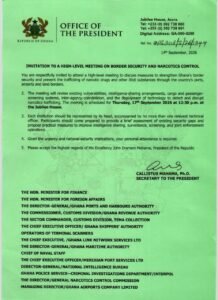
Mahama summons top officials to Jubilee House over border security and narcotics trafficking

Politics
Mahama petitioned over alleged PURC tariff irregularities, governance concerns and AKSA Power deal
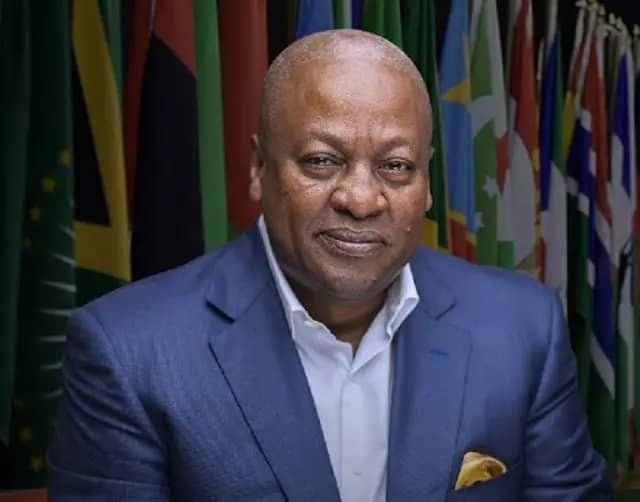
President John Dramani Mahama has been petitioned to order an investigation into a series of alleged irregularities surrounding the operations and decisions of the Public Utilities Regulatory Commission (PURC).
The petition, dated September 14, 2026, raises serious concerns about the determination of electricity tariffs, the imposition of an EMOP levy, the recovery of charges from electricity consumers and the governance of the PURC.
It also calls for scrutiny of alleged interference in the management of the regulatory body, concerns surrounding the PURC Board and the approval of a tariff for the AKSA Power Takoradi project.
The petitioner is calling for an independent, impartial and comprehensive investigation into the matters raised, arguing that they could have significant implications for consumer protection, fair competition, public finances and confidence in Ghana’s electricity market.
Petition raises red flags over PURC tariff decisions
One of the major concerns raised in the petition relates to what the petitioner describes as alleged preferential electricity tariffs for certain steel companies.
According to the petition, some Ghanaian industrial companies are reportedly paying higher tariffs for electricity than certain steel companies operating under the energy-intensive consumer category.
The petitioner claims that during PURC’s most recent major tariff review, the Commission’s Board approved electricity tariffs for certain steel companies that were allegedly significantly lower than the normal industrial tariff applicable to Ghanaian industrial consumers.
The petition questions the basis for what it describes as the preferential treatment.
‘Why are some companies paying less?’
The petitioner states that, as an interested person whose family owns shares in one of the affected businesses, attempts were made to engage representatives of some of the affected steel companies to understand the basis for the allegedly preferential tariffs.
The concerns raised centre on whether the tariff arrangements were properly determined and whether all industrial consumers are being treated fairly under the regulatory framework.
If established, such disparities could raise questions about fair competition, transparency and equal treatment of electricity consumers, particularly businesses operating within Ghana’s industrial sector.
EMOP levy also comes under scrutiny
The petition also calls for an investigation into the imposition of the EMOP levy, with the petitioner seeking clarity on the circumstances surrounding its introduction and administration.
The matter has been presented as part of broader concerns over how electricity-related charges are determined and recovered from consumers.
The petitioner wants the relevant decisions and processes examined to establish whether they were properly authorised and implemented.
PURC governance questioned
Beyond electricity tariffs, the petition raises concerns about the governance and administration of PURC.
The petitioner is seeking an investigation into what he describes as possible interference in the management of the Commission, as well as concerns relating to the PURC Board.
Questions have also been raised about the conduct and independence of members of the Board and the Executive Secretary.
The petition argues that the independence and credibility of the country’s electricity regulator are critical to maintaining confidence in Ghana’s energy sector.
AKSA Power tariff approval raises questions
Another major issue highlighted in the petition is the approval of a tariff for the AKSA Power Takoradi project.
The petitioner is calling for the circumstances surrounding the tariff approval to be investigated as part of the broader review of PURC’s decisions and regulatory processes.
The AKSA Power matter has therefore been placed alongside the concerns over electricity tariffs, consumer charges and PURC governance as issues requiring presidential attention.
Calls for independent investigation
The petitioner is asking President Mahama to ensure that the allegations are subjected to a thorough and independent investigation rather than being dismissed without scrutiny.
According to the petition, the issues raised have potential implications for consumer protection, fair competition, public finances and confidence in Ghana’s electricity market.
The petitioner also makes a distinction between information personally obtained or verified through official sources and allegations submitted by third parties, stressing the need for investigators to independently establish the facts.
Spotlight turns to PURC
The petition now places the operations and decisions of PURC under renewed scrutiny, particularly regarding how electricity tariffs are determined and how different categories of consumers are treated.
For Ghanaian businesses and consumers already grappling with electricity costs, questions surrounding tariff fairness and transparency are likely to attract significant public interest.
The petition ultimately asks the President to ensure that the allegations are properly investigated and that any wrongdoing established through the process is dealt with accordingly.
For now, the matters remain allegations contained in the petition, and no finding of wrongdoing has been established against PURC officials, Board members or any of the companies mentioned.
The spotlight, however, is now firmly on PURC, its tariff decisions and the regulatory processes surrounding Ghana’s power sector.
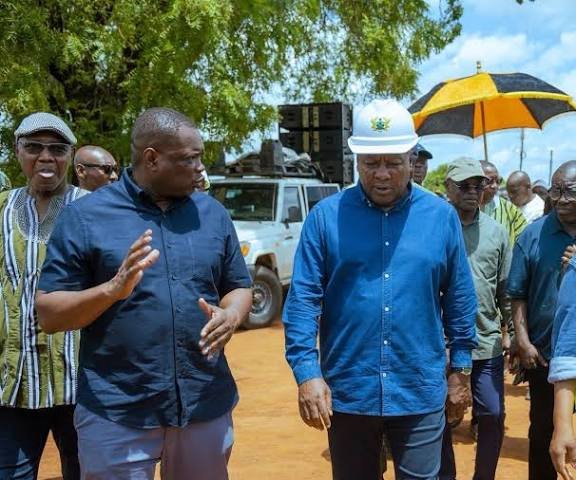
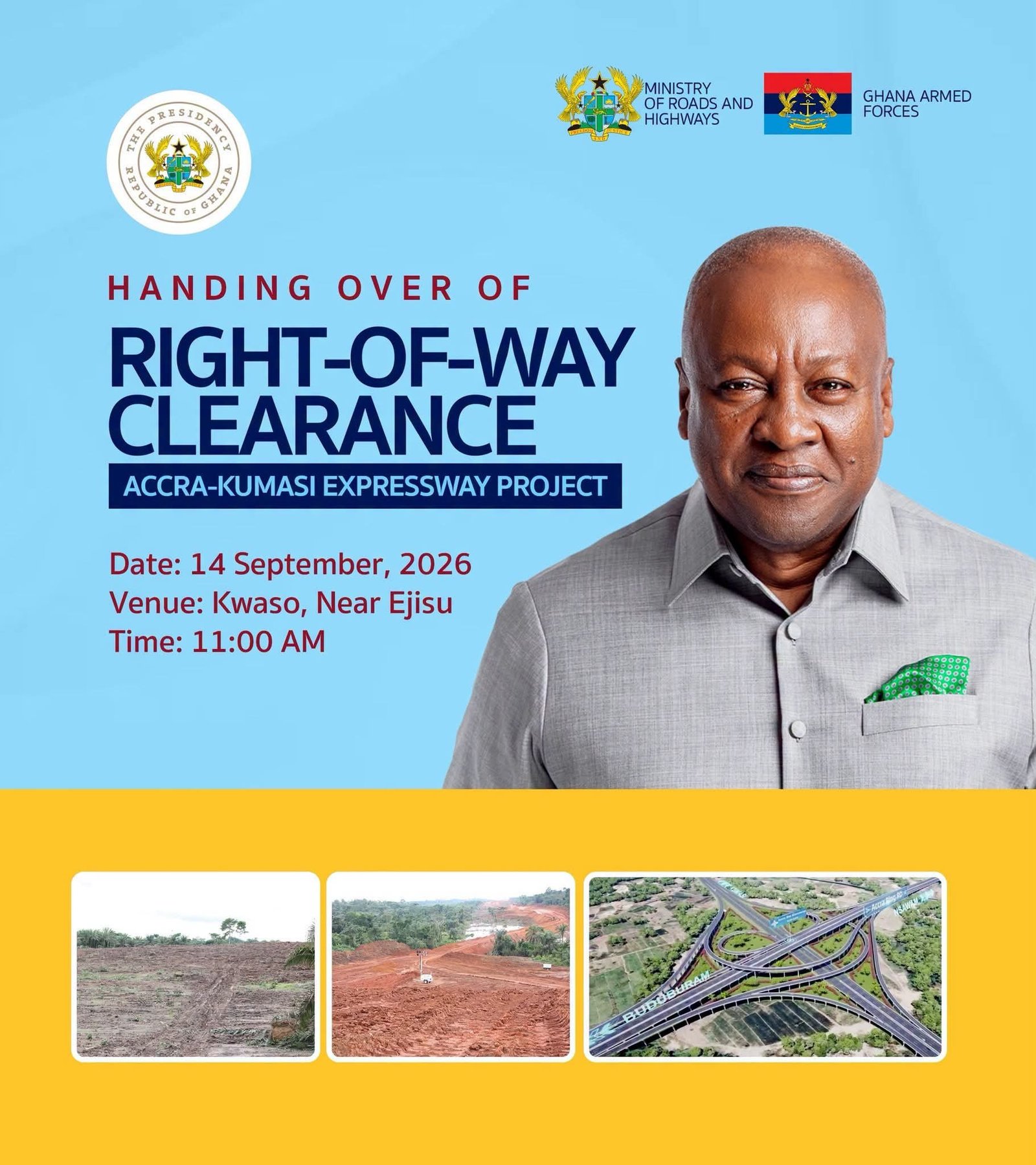
President John Dramani Mahama has announced that the 48 Engineer Regiment of the Ghana Armed Forces will serve as a major sub-contractor on the construction of the Accra-Kumasi Expressway.
The announcement comes as government moves into the next phase of the ambitious expressway project, following the completion of major right-of-way clearing works by the Ghana Armed Forces.
The 48 Engineer Regiment has already played a key role in preparing the corridor for construction, clearing the right-of-way along the proposed route. The Ghana Armed Forces is scheduled to hand over the cleared 175.6-kilometre right-of-way to government on September 14, 2026.
Military engineers to take on major construction role
President Mahama’s decision to involve the 48 Engineer Regiment more directly in the project builds on the government’s earlier plans to leverage the technical capabilities of the Ghana Armed Forces in major infrastructure projects.
In January, President Mahama announced that the 48 Engineer Regiment would participate in the government’s Big Push road projects, with the aim of using the military’s engineering capacity while also generating internally generated funds for the Armed Forces.
The regiment’s involvement in the Accra-Kumasi Expressway therefore goes beyond the initial right-of-way clearance and places the military engineering unit in a significant role in the implementation of the flagship road project.
Mahama orders preparation for New Accra Orbital
President Mahama has also directed the 48 Engineer Regiment to begin preparations to clear the right-of-way for the proposed New Accra Orbital.
The directive signals government’s intention to use the technical capacity of the Ghana Armed Forces in preparing major road corridors for construction.
Accra-Kumasi Expressway moves closer to construction
The development comes shortly after government secured significant financing for the expressway.
The government announced in July that US$1.7 billion had been deposited into a dedicated Accra-Kumasi Expressway account at the Bank of Ghana, with the funds ring-fenced for the project and to be used after the main construction contract is awarded.
The proposed expressway is approximately 198.7 kilometres long and is planned as a six-lane, access-controlled road linking Ghana’s two major economic centres.
Government has described the project as a flagship component of the Big Push Infrastructure Programme, expected to reduce travel time, improve road safety, ease congestion and lower transportation costs.
Right-of-way clearance completed
The Ghana Armed Forces has been heavily involved in clearing the corridor ahead of construction.
Earlier in the year, military engineers were deployed along the route to clear the designated right-of-way. By July, government reported that the Armed Forces had cleared 122 kilometres, representing about 70 percent of the designated right-of-way.
The latest handover of the 175.6-kilometre cleared corridor represents a major milestone in preparing the project for the construction phase.
With the military engineers now expected to play a larger role, attention will turn to how quickly the project moves from preparatory works into full-scale construction.
A major test for the Big Push
The Accra-Kumasi Expressway is one of the most closely watched projects under President Mahama’s Big Push programme.
Government has repeatedly emphasised the need for stronger local participation and value for money in the implementation of major infrastructure projects.
The decision to make the 48 Engineer Regiment a major sub-contractor could therefore mark a significant expansion of the Ghana Armed Forces’ role in the country’s infrastructure development.
The project is now entering a crucial stage, with government expected to proceed with the main construction process after the necessary preparatory and procurement requirements are completed.
Politics
Stan Dogbe Orders Immediate Restoration of Reclaimed Kpeshie Lagoon Lands After Demolition Exercise
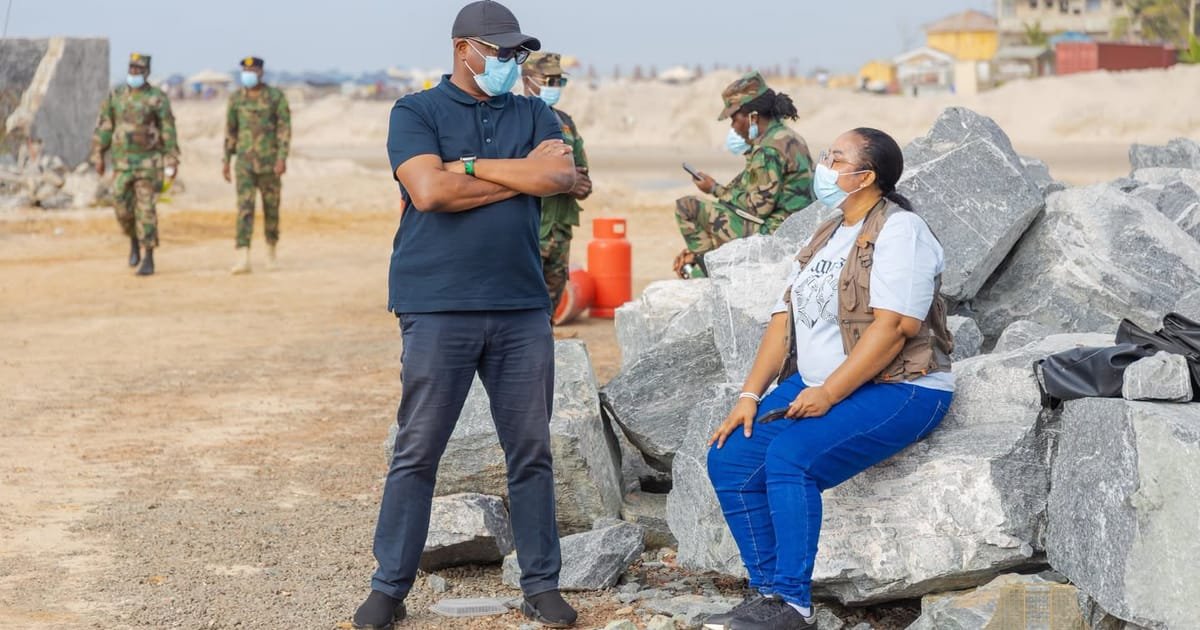
Deputy Chief of Staff, Operations, Stan Xoese Dogbe, has directed the Greater Accra Regional Coordinating Council (GARCC) to immediately begin the ecological restoration of reclaimed portions of the Kpeshie Lagoon.
The directive follows the removal of illegal structures that had encroached on sections of the wetland’s legally protected buffer zone.
Mr. Dogbe’s order forms part of efforts to restore the ecological integrity of the Kpeshie Lagoon and protect the wetland from further encroachment and human activities that could threaten its natural function.
Following the clearance exercise, the reclaimed areas are expected to undergo ecological restoration to return the affected portions of the wetland to a healthier and more sustainable state.
The Kpeshie Lagoon and its surrounding wetlands serve important environmental functions, including supporting biodiversity, helping to manage stormwater and providing a natural buffer against flooding.
Authorities have increasingly raised concerns about the development of illegal structures around wetlands and waterways, particularly in urban areas where rapid development has placed pressure on environmentally sensitive lands.
The removal of structures from the protected buffer zone is therefore seen as a significant step toward reclaiming and protecting the lagoon.
The directive to the GARCC signals a move beyond demolition and clearance, with emphasis now being placed on restoring the affected environment and preventing future encroachment.
Residents and stakeholders are expected to cooperate with the authorities as efforts continue to protect the Kpeshie Lagoon and preserve the remaining wetland ecosystem for future generations.
The development is likely to renew calls for stronger enforcement of regulations governing wetlands and protected environmental zones across the Greater Accra Region.
Politics
Experts Break Down “Right-of-Way” in Road Construction — Here’s What Every Road User Needs to Know
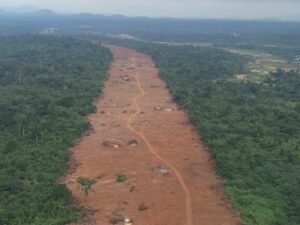
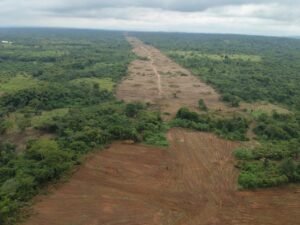
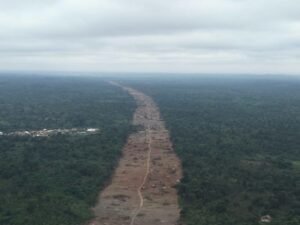
- Experts have shed more light on the meaning of “right-of-way” in road construction, explaining the crucial role it plays in the development, maintenance and future expansion of roads and highways.
According to experts, right-of-way (ROW) refers to the total width of land legally acquired and reserved for the construction, operation, maintenance and future expansion of a road or highway.
The explanation highlights that a road is not limited to the portion of land occupied by the asphalt or concrete surface.
Rather, the legally designated right-of-way may cover a much wider area, including space required for road infrastructure, drainage systems, pedestrian facilities, utility installations, safety features and possible expansion of the road in the future.
Why Right-of-Way Matters
Experts say securing adequate right-of-way is a critical part of road planning because it allows authorities to develop transportation infrastructure without being severely restricted by surrounding buildings, properties or other developments.
The reserved land provides room for the road authority to construct and maintain the road while also accommodating future improvements as traffic volumes increase.
In some cases, the right-of-way may extend beyond the visible road itself, meaning properties or structures located within the legally acquired road reserve could be affected by road development or expansion projects.
More Than Just the Road Surface
Experts stress that the concept of right-of-way should not be confused with the actual width of the carriageway.
While motorists may primarily see the paved section of a road, the right-of-way can include additional land on both sides of the road.
This space can be required for facilities such as drainage channels, shoulders, sidewalks, road signs, utility lines, embankments, intersections and other road-related infrastructure.
It can also provide the necessary space for future widening or upgrading of the road.
Planning for the Future
The reservation of right-of-way is particularly important in rapidly growing communities, where population growth and increased vehicle usage can eventually place pressure on existing roads.
Experts therefore maintain that properly planned road reserves can help authorities expand and improve roads when the need arises, rather than having to acquire heavily developed land at significantly higher costs.
The clarification comes as discussions surrounding road construction, development and property boundaries continue to attract public attention.
Understanding what right-of-way means, experts say, is essential for property owners, developers, motorists and residents living along major road corridors.
- Ultimately, the right-of-way represents the legally protected land corridor that allows a road to function today while preserving the space needed for its maintenance, improvement and expansion in the future.

A Rocha Ghana Raises Alarm Over Escalating Galamsey Activities in Atewa Forest

Should Students Be Allowed to Choose More of Their Subjects?

Mahama summons top officials to Jubilee House over border security and narcotics trafficking



-

 Entertainment1 week ago
Mahama Is First President to Put GH¢40m Seed Money into Creative Arts Fund: Kojo Preko Dankwa
-
 General News2 weeks ago
COCOBOD Settles GH¢2.3 Billion DDEP Bond Obligations for 2026
-
 General News2 weeks ago
Don’t Punish Them Retrospectively – Educationist Challenges New CSSPS Placement Rule
-

 Culinary1 week ago
The Green Heart of Ghanaian Cuisine: Celebrating Nkontomire and the Art of Abom
-

 Entertainment7 days ago
Government Repatriates Musician Barosky from UK
-
 General News2 weeks ago
OSP Opens Preliminary Investigation into Alleged GH¢70,000 Payment Linked to Parliament’s Vetting
-

 Culinary2 weeks ago
Pineapple: The Spiky Tropical Fruit Packed With Sweetness and Nutrients
-
 Entertainment2 weeks ago
Ras Caleb Appiah-Levi: Hate Me for the Truth That I Represent