
General News
Sam George Announces New Data Bundle Rates: More Value, Higher Prices Starting July 1


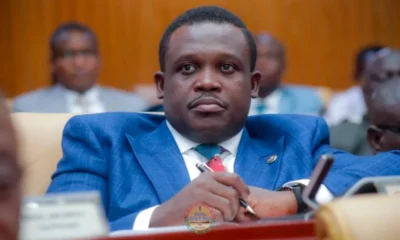
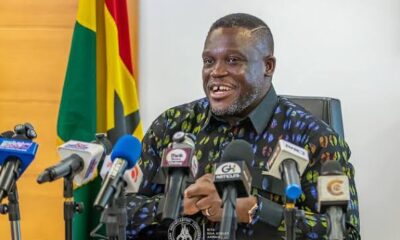
From July 1, 2025, the prices and value of data bundles from Ghana’s top mobile networks will change. This was announced today (June 10) by the Minister for Communication, Digital Technology, and Innovations, Hon. Samuel Nartey George (MP), during a press briefing in Accra.
The new changes follow discussions with the heads of MTN Ghana, Telecel Ghana, and AT Ghana (formerly AirtelTigo), aimed at giving customers better value while supporting the telecom industry.
Here’s What’s Changing:
MTN Ghana
-
A 15% price increase will be added to all existing data bundles.
-
The GH₵399 bundle, which had been reduced and renamed as a GH₵350 bundle offering 92.88GB, is coming back. It will now offer 214GB for GH₵399.
AT Ghana
-
All current data bundles will increase by 10% in price.
-
The GH₵400 bundle, which used to offer 195GB, will now give you 236GB.
Telecel Ghana
-
All current bundles will also increase by 10%.
-
The GH₵400 bundle, which used to give only 90GB, will now give you 250GB—a major boost in value.
Why the Changes?
The Minister explained that the goal is to make sure customers get better data offers, while also helping the telecom companies manage their rising costs.
He also assured the public that the National Communications Authority (NCA) has been asked to closely monitor the changes and punish any company that doesn’t comply.
“From July 1, if any network fails to implement these new bundles correctly, sanctions will apply,” Sam George said.
No More “Missing Data” Worries
Sam George also addressed a common concern—data disappearing mysteriously. He said the NCA ran tests last year and found no issues with how MTN, Telecel, or AT credited data bundles.
All bundles were properly credited, unused data didn’t expire if they weren’t meant to, and data was rolled over where it should be.
Moving forward, the NCA will conduct similar checks every quarter to ensure accuracy and protect consumers.
Looking Ahead: Cheaper Data?
The Minister revealed that he’s in talks with the Finance Minister to reduce the heavy taxes on data services, which currently make up about 39% of the cost. There are also plans to introduce a special electricity tariff for telecom services—similar to what the mining sector enjoys—to help reduce operational costs.
Final Words from the Minister
“My focus is the people of Ghana. I’ll work with urgency and honesty to fix the problems in this sector,” Sam George promised.
The new data packages are expected to give consumers more data for their money while helping telecom companies improve their services across the country.








General News
Petition filed for investigation into alleged impersonation of Adwoa Safo during parliamentary sittings

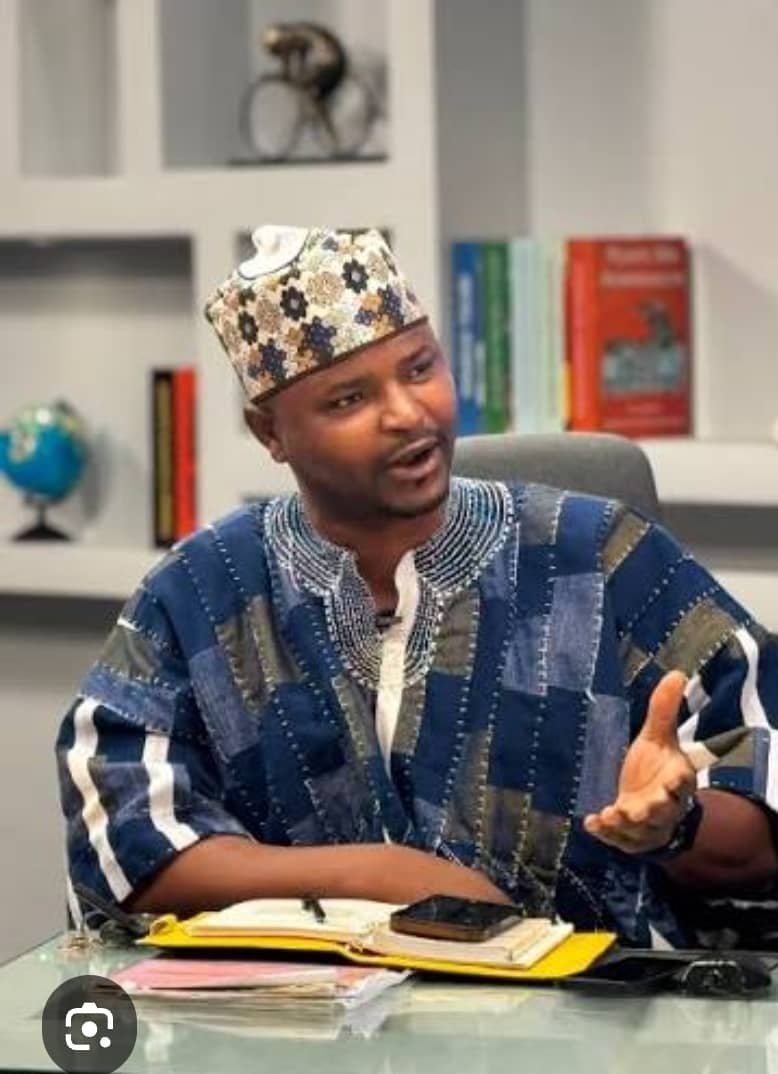
Three individuals have petitioned the Criminal Investigation Department (CID) to investigate allegations that an unidentified woman may have appeared in Parliament while holding herself out as then Dome-Kwabenya Member of Parliament, Sarah Adwoa Safo, during parliamentary proceedings in November 2021 and March 2022.
The petition, dated September 15, 2026, was submitted by Emmanuel Mawanye Kotin, Edwin Godwin Buckman, also known as Ebo Buckman, and Dr Ramzi Inusah.
The petitioners are seeking what they describe as a formal and impartial investigation into the identity of the woman shown in video footage and photographs associated with the parliamentary sittings of November 30, 2021, and March 29, 2022.
The petition was addressed to the Director-General of the then Bureau of National Investigation (BNI), now operating as the National Intelligence Bureau, with copies sent to the Attorney-General and Minister for Justice, Inspector-General of Police, Speaker of Parliament, Clerk to Parliament and Controller of the Ghana Immigration Service.
According to the petition, the disputed sittings involved Parliament’s consideration and approval of the 2022 Budget Statement on November 30, 2021, and the passage of the Electronic Transfer Levy (E-Levy) Bill, 2022 on March 29, 2022.
The petitioners say video footage and still photographs circulated publicly during and after the November 2021 sitting, prompting some observers to question whether the woman occupying or associated with the Dome-Kwabenya parliamentary seat was actually Adwoa Safo.
Adwoa Safo, however, subsequently rejected the allegation and maintained that she was personally present in Parliament on the dates in question.
The petitioners stress that they are not presenting the allegation of personation as a fact. Rather, they want investigators to determine the identity of the woman in the disputed material and establish whether any criminal, security or parliamentary wrongdoing occurred.
They also acknowledge that Adwoa Safo’s denial is material evidence and should be considered fairly alongside the allegation.
A key concern raised in the petition is that, to the petitioners’ knowledge, the competing claims have not been resolved through a publicly reported forensic examination of the original video footage alongside Parliament’s contemporary attendance, access and security records.
They argue that an authoritative investigation could either clear Adwoa Safo and Parliament of what they describe as a continuing allegation or, if the allegation is substantiated, establish whether there were security failures, unlawful access, falsification of official records or assistance by other persons.
The petitioners also acknowledge the considerable time that has passed since the events occurred.
They argue, however, that the passage of time should not replace institutional fact-finding with speculation. They want investigators to determine what records were created, whether those records still exist and, where records have been destroyed, when and under what authorised retention or disposal policy that occurred.
The petition refers to Article 104 of the 1992 Constitution, which governs the determination of questions in Parliament and the applicable quorum.
The petitioners state that the mere presence of a non-member in the Chamber would not automatically invalidate a parliamentary decision.
They argue that any constitutional consequence would depend on evidence showing that the person was counted as a Member of Parliament, participated in a vote, affected the quorum or numerical result, or caused an official record to falsely reflect the presence or vote of the elected Member.
They further clarify that they are not asking investigators to declare the parliamentary proceedings invalid, noting that any such constitutional determination would be for a court with the appropriate jurisdiction.
The petition also refers to Section 134 of the Criminal Offences Act, 1960 (Act 29), which concerns personation.
It states that applying the provision would require proof of all the statutory ingredients, including the identity assumed by the person, the accused person’s knowledge and the intention required by law.
Depending on the evidence, the petition says, investigators could also uncover possible aiding and abetting, unlawful access, falsification or use of official records, or another offence.
The petitioners therefore want the facts investigated first and the appropriate legal characterisation determined from the evidence rather than beginning with a predetermined criminal charge.
The petition also recognises constitutional protections relating to parliamentary proceedings.
It cites Article 115 of the Constitution concerning parliamentary speech, debate and proceedings, as well as Parliament’s authority over contempt under Article 122 and the Speaker’s control of the Chamber and parliamentary records.
The petitioners say their complaint is not intended to challenge protected parliamentary speech or debate.
Instead, they say it concerns the alleged physical assumption of a Member’s identity by someone who may not have been a Member.
They have therefore asked investigators to work formally with the Speaker and Clerk to Parliament and obtain relevant parliamentary records through lawful processes that respect parliamentary privilege and institutional autonomy.
The petition makes a distinction between the proposed investigation and previous legal proceedings concerning the E-Levy.
It notes that Supreme Court proceedings challenging the passage of the Electronic Transfer Levy involved a different parliamentary sitting and issues concerning quorum and proof.
The petitioners say they are not seeking to reopen those proceedings or invalidate the E-Levy legislation, which has since been repealed.
Instead, their request is limited to the alleged personation during the November 30, 2021 proceedings and the March 29, 2022 sitting at which the E-Levy Bill was passed, as well as any criminal, security or institutional responsibility arising from the alleged conduct.
The petition identifies several specific matters for investigation.
Investigators are being asked to establish:
- The true identity of the woman shown in the original parliamentary video and photographic material from November 30, 2021 and March 29, 2022.
- Whether Adwoa Safo was physically present in Parliament at the relevant times and whether she entered through an authorised access point.
- The provenance, completeness and authenticity of the disputed recordings, including whether publicly circulated copies were edited, compressed, mislabelled or taken from another date.
- The relevant Hansard, Votes and Proceedings, division or voting records, attendance registers, accreditation records, CCTV recordings, official broadcast footage, access-control logs and security occurrence books.
- Whether the woman shown spoke, voted, was counted for quorum, signed any record, used a Member’s access credentials or otherwise participated in parliamentary business.
- Whether any parliamentary official, Member, security officer or another person can identify the woman or explain her entry, presence or movements.
- Whether anyone knowingly facilitated, authorised, encouraged, concealed or subsequently falsified a record connected to the alleged conduct.
- Whether relevant records still exist and, if they do not, the applicable retention policy, date and authority for their destruction or disposal.
- Whether the evidence establishes personation or another offence, security breach, contempt or misconduct, and identifies anyone responsible.
The petitioners are asking for a preliminary assessment, followed, if the evidential threshold is met, by a formal criminal investigation.
They are also seeking formal liaison with the Speaker and Clerk to Parliament to ensure the lawful preservation, identification and production of relevant records.
Other requests include:
- Forensic authentication and comparison of the original recordings with publicly circulated copies.
- Interviews with Adwoa Safo and relevant Members of Parliament.
- Interviews with parliamentary officials, security personnel, media personnel and other identifiable witnesses.
- Investigation into possible facilitation, unlawful access, falsification of records, concealment or related criminal conduct.
- Referral of matters falling exclusively within Parliament’s disciplinary or contempt jurisdiction to the Speaker.
- Referral of any prosecutable offence to the Attorney-General in accordance with the law.
- Written acknowledgement of the petition and, subject to lawful confidentiality requirements and the rights of affected persons, communication of the eventual outcome to the petitioners.
The petitioners say they are prepared to provide complete, unedited copies of relevant recordings and documents in their possession.
They have also offered information concerning the source and chain of custody of the materials and requested an opportunity to make a formal statement and identify the specific portions of the material on which the petition is based.
They stressed that the investigation should be conducted without a public presumption of guilt, arguing that the public interest is served both by clearing a person who has been wrongly accused and by ensuring accountability where credible evidence establishes wrongdoing.
The petition was signed by: Emmanuel Mawanye Kotin, Edwin Godwin Buckman (Ebo Buckman), Dr Ramzi Inusah
Copies of the petition were also directed to the Attorney-General and Minister for Justice, Inspector-General of Police, Speaker of Parliament, Clerk to Parliament and Controller of the Ghana Immigration Service.
The petition includes a schedule of proposed annexures covering the disputed video footage, still images, source and publication records, official parliamentary broadcast recordings, Hansard and Votes and Proceedings, a statement or interview from Adwoa Safo, witness information and any recent material that prompted the petition.
It also lists links to recordings identified as relating to the parliamentary proceedings of November 30, 2021 and March 29, 2022.

By Angel No Lie | KPD Online
Published: September 15, 2026
The ceremony was held on September 14, 2026, at the Peacock Theater in Los Angeles and hosted by actress Mariska Hargitay. The Television Academy says the 78th Emmys recognized television programming and individual achievements from the 2025–26 season.
Widow’s Bay dominated the comedy field, ultimately collecting 14 Emmy Awards, a record for a comedy series in a single year. The Pitt, meanwhile, won Outstanding Drama Series for a second consecutive year.


The biggest moments of the night
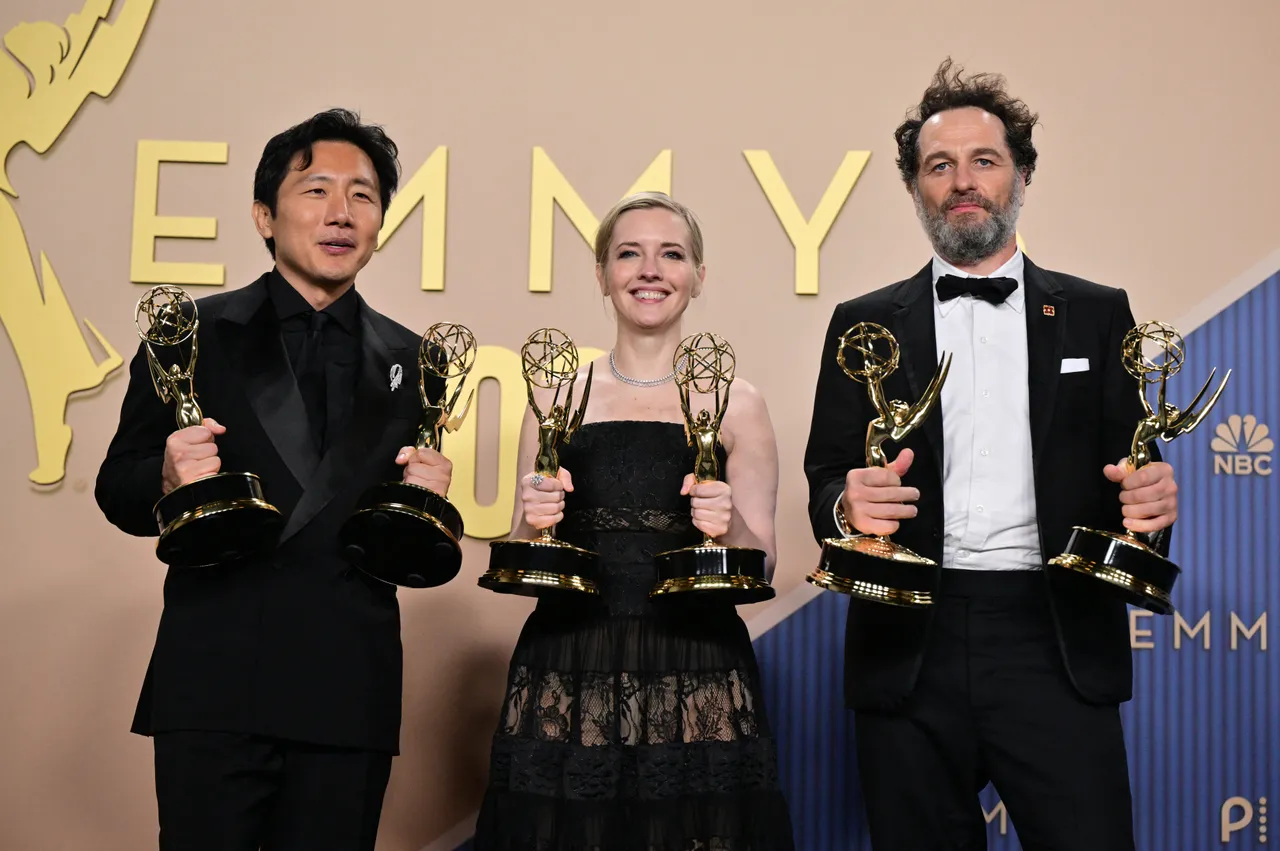
One of the evening’s most historic performances came from Matthew Rhys, who won Outstanding Lead Actor in a Comedy Series for Widow’s Bay and Outstanding Lead Actor in a Limited or Anthology Series or Movie for The Beast in Me.
The double victory makes Rhys the first male performer to win lead acting Emmys across comedy, drama and limited-series categories.
Jean Smart also made Emmy history. She won Outstanding Lead Actress in a Comedy Series for Hacks for the fifth consecutive time, becoming the first woman to win the acting award for every season of a series. Her career total reached eight acting Emmys, tying her with Julia Louis-Dreyfus and Cloris Leachman.
For drama, Noah Wyle won Lead Actor for The Pitt, while Rhea Seehorn collected her first Emmy for Lead Actress in a Drama Series for Pluribus.
Full Winners and Nominees
Outstanding Drama Series
Winner: The Pitt
Nominees:
- The Diplomat
- The Gilded Age
- A Knight of the Seven Kingdoms
- Paradise
- The Pitt — WINNER
- Pluribus
- Slow Horses
- Your Friends & Neighbors
Outstanding Comedy Series
Winner: Widow’s Bay
Nominees:
- Abbott Elementary
- The Bear
- Hacks
- Margo’s Got Money Troubles
- Nobody Wants This
- Only Murders in the Building
- Shrinking
- Widow’s Bay — WINNER
Outstanding Lead Actor in a Drama Series
Winner: Noah Wyle — The Pitt
Nominees:
- Sterling K. Brown — Paradise
- Gary Oldman — Slow Horses
- Mark Ruffalo — Task
- Rufus Sewell — The Diplomat
- Noah Wyle — The Pitt — WINNER
Outstanding Lead Actress in a Drama Series
Winner: Rhea Seehorn — Pluribus
Nominees:
- Carrie Coon — The Gilded Age
- Chase Infiniti — The Testaments
- Keri Russell — The Diplomat
- Rhea Seehorn — Pluribus — WINNER
- Zendaya — Euphoria
Outstanding Supporting Actor in a Drama Series
Winner: Tom Pelphrey — Task
Nominees:
- Patrick Ball — The Pitt
- Billy Crudup — The Morning Show
- Shawn Hatosy — The Pitt
- Gerran Howell — The Pitt
- Jack Lowden — Slow Horses
- Tom Pelphrey — Task — WINNER
- Carlos-Manuel Vesga — Pluribus
Outstanding Supporting Actress in a Drama Series
Winner: Allison Janney — The Diplomat
Nominees:
- Taylor Dearden — The Pitt
- Fiona Dourif — The Pitt
- Allison Janney — The Diplomat — WINNER
- Katherine LaNasa — The Pitt
- Sepideh Moafi — The Pitt
- Julianne Nicholson — Paradise
- Karolina Wydra — Pluribus
Comedy Categories


Outstanding Lead Actor in a Comedy Series
Winner: Matthew Rhys — Widow’s Bay
Nominees:
- Yahya Abdul-Mateen II — Wonder Man
- Steve Carell — Rooster
- Matthew Rhys — Widow’s Bay — WINNER
- Jason Segel — Shrinking
- Martin Short — Only Murders in the Building
Outstanding Lead Actress in a Comedy Series
Winner: Jean Smart — Hacks
Nominees:
- Quinta Brunson — Abbott Elementary
- Ayo Edebiri — The Bear
- Elle Fanning — Margo’s Got Money Troubles
- Lisa Kudrow — The Comeback
- Jean Smart — Hacks — WINNER
Outstanding Supporting Actor in a Comedy Series
Winner: Stephen Root — Widow’s Bay
Nominees:
- Colman Domingo — The Four Seasons
- Paul W. Downs — Hacks
- Harrison Ford — Shrinking
- Nick Offerman — Margo’s Got Money Troubles
- Stephen Root — Widow’s Bay — WINNER
- Michael Urie — Shrinking
- Tyler James Williams — Abbott Elementary
Outstanding Supporting Actress in a Comedy Series
Winner: Kate O’Flynn — Widow’s Bay
Nominees:
- Dale Dickey — Widow’s Bay
- Hannah Einbinder — Hacks
- Janelle James — Abbott Elementary
- Kate O’Flynn — Widow’s Bay — WINNER
- Michelle Pfeiffer — Margo’s Got Money Troubles
- Megan Stalter — Hacks
- Jessica Williams — Shrinking
Limited or Anthology Series
Outstanding Limited or Anthology Series
Winner: DTF St. Louis
Nominees:
- All Her Fault
- The Beast in Me
- Beef
- DTF St. Louis — WINNER
- Love Story: John F. Kennedy Jr. & Carolyn Bessette
Outstanding Lead Actor in a Limited or Anthology Series or Movie
Winner: Matthew Rhys — The Beast in Me
Nominees:
- Riz Ahmed — Bait
- Jason Bateman — Black Rabbit
- Charlie Hunnam — Monster: The Ed Gein Story
- Oscar Isaac — Beef
- Matthew Rhys — The Beast in Me — WINNER
Outstanding Lead Actress in a Limited or Anthology Series or Movie
Winner: Sally Field — Remarkably Bright Creatures
Nominees:
- Claire Danes — The Beast in Me
- Sally Field — Remarkably Bright Creatures — WINNER
- Carey Mulligan — Beef
- Sarah Pidgeon — Love Story: John F. Kennedy Jr. & Carolyn Bessette
- Sarah Snook — All Her Fault
Supporting Actor in a Limited or Anthology Series or Movie
Winner: David Harbour — DTF St. Louis
Nominees:
- Jason Bateman — DTF St. Louis
- Richard Gadd — Half Man
- David Harbour — DTF St. Louis — WINNER
- Richard Jenkins — DTF St. Louis
- Charles Melton — Beef
- Nick Offerman — Death by Lightning
Supporting Actress in a Limited or Anthology Series or Movie
Winner: Linda Cardellini — DTF St. Louis
Nominees:
- Linda Cardellini — DTF St. Louis — WINNER
- Dakota Fanning — All Her Fault
- Laurie Metcalf — Monster: The Ed Gein Story
- Joy Sunday — DTF St. Louis
- Youn Yuh-jung — Beef
- Constance Zimmer — Love Story: John F. Kennedy Jr. & Carolyn Bessette
Directing and Writing
Outstanding Directing for a Drama Series
Winner: Saul Metzstein — Slow Horses
Nominees:
- Salli Richardson Whitfield — The Gilded Age
- Hanelle M. Culpepper — Paradise
- Noah Wyle — The Pitt
- Vince Gilligan — Pluribus
- Saul Metzstein — Slow Horses — WINNER
- Salli Richardson-Whitfield — Task
Outstanding Directing for a Comedy Series
Winner: Hiro Murai — Widow’s Bay
Nominees:
- Randall Einhorn — Abbott Elementary
- Christopher Storer — The Bear
- Andrew DeYoung — The Chair Company
- Lucia Aniello — Hacks
- Mary Lou Belli — The Ms. Pat Show
- Hiro Murai — Widow’s Bay — WINNER
Outstanding Writing for a Drama Series
Winner: Vince Gilligan — Pluribus
Nominees:
- Peter Ackerman & Debora Cahn — The Diplomat
- Valerie Chu — The Pitt
- Kirsten Pierre-Geyfman & R. Scott Gemmill — The Pitt
- Vince Gilligan — Pluribus — WINNER
- Will Smith — Slow Horses
- Brad Ingelsby — Task
Outstanding Writing for a Comedy Series
Winner: Katie Dippold — Widow’s Bay
Nominees:
- Quinta Brunson — Abbott Elementary
- Tim Robinson & Zach Kanin — The Chair Company
- Michael Patrick King & Lisa Kudrow — The Comeback
- Lucia Aniello, Paul W. Downs & Jen Statsky — Hacks
- Anthony King — Jury Duty Presents: Company Retreat
- Katie Dippold — Widow’s Bay — WINNER
Reality, Variety and Other Major Awards
Outstanding Reality Competition Program
Winner: The Traitors
Nominees:
- Dancing with the Stars
- RuPaul’s Drag Race
- Survivor
- Top Chef
- The Traitors — WINNER
Outstanding Variety Series
Winner: The Late Show with Stephen Colbert
Nominees:
- The Daily Show
- Jimmy Kimmel Live!
- Last Week Tonight with John Oliver
- The Late Show with Stephen Colbert — WINNER
- Saturday Night Live
Outstanding Television Movie
Winner: Remarkably Bright Creatures
Nominees:
- Heads of State
- Miss You, Love You
- People We Meet on Vacation
- Remarkably Bright Creatures — WINNER
- Tom Clancy’s Jack Ryan: Ghost War
Outstanding Animated Program
Winner: South Park
Nominees:
- Bob’s Burgers
- Rick and Morty
- The Simpsons
- Smiling Friends
- South Park — WINNER
- Star Wars: Visions
Outstanding Live Variety Special
Winner: The Apple Music Super Bowl LX Halftime Show Starring Bad Bunny
Other nominees:
- 83rd Annual Golden Globes
- 68th Annual Grammy Awards
- 97th Academy Awards
- 78th Annual Tony Awards
Outstanding Pre-Recorded Variety Special
Winner: The Muppet Show
Nominees:
- Dave Chappelle: The Unstoppable …
- The Muppet Show — WINNER
- Nikki Glaser: Good Girl
- Taylor Swift | The Eras Tour | The Final Show
- Wicked: One Wonderful Night
Guest Acting Winners
Guest Actress, Drama: Shailene Woodley — Paradise
Guest Actor, Drama: Ernest Harden Jr. — The Pitt
Guest Actress, Comedy: Betty Gilpin — Widow’s Bay
Guest Actor, Comedy: Rob Reiner — The Bear
The Creative Arts Emmys also recognized numerous technical and behind-the-scenes achievements across television. The Television Academy held the Creative Arts ceremonies on September 5 and 6, ahead of the September 14 Primetime telecast.
The Night’s Biggest Winners

Widow’s Bay
The Apple TV+ series was the undisputed breakout winner, taking 14 awards, including Outstanding Comedy Series, Lead Actor for Matthew Rhys, Supporting Actor for Stephen Root, Supporting Actress for Kate O’Flynn, Writing for Katie Dippold and Directing for Hiro Murai.
The Pitt
The medical drama successfully defended its Outstanding Drama Series title. Noah Wyle also repeated his Lead Actor victory, giving the series another major Emmy night.
Jean Smart
Smart’s fifth consecutive comedy-actress Emmy for Hacks was among the ceremony’s most significant records. She became the first woman to win the acting award for every season of a series.
Matthew Rhys
Rhys had perhaps the most extraordinary individual night, taking home two lead acting awards for two different productions. His wins came for Widow’s Bay and The Beast in Me.
DTF St. Louis
The HBO limited series captured the top limited-series prize and several acting and creative awards, including wins for David Harbour and Linda Cardellini.
A changing television landscape
The 2026 Emmys reflected a television industry increasingly dominated by streaming platforms alongside traditional broadcasters. Established productions such as Hacks, The Pitt and The Late Show with Stephen Colbert shared the spotlight with newer titles such as Widow’s Bay and Pluribus.
The evening also provided recognition for television veterans while creating new milestones for performers including Rhys, Smart, Seehorn and Wyle. Michael J. Fox received the Bob Hope Humanitarian Award for his philanthropic work.
The complete official 2026 Emmy nominees-and-winners database is maintained by the Television Academy.
Editor’s note: This report is independently written and organized for news-portal publication. Award results have been cross-checked against the Television Academy and multiple contemporaneous reports, including AP and The Guardian.
Image note: Images shown above are sourced from current 2026 Emmy coverage/search results. Publication should use properly licensed editorial photographs before commercial reuse.
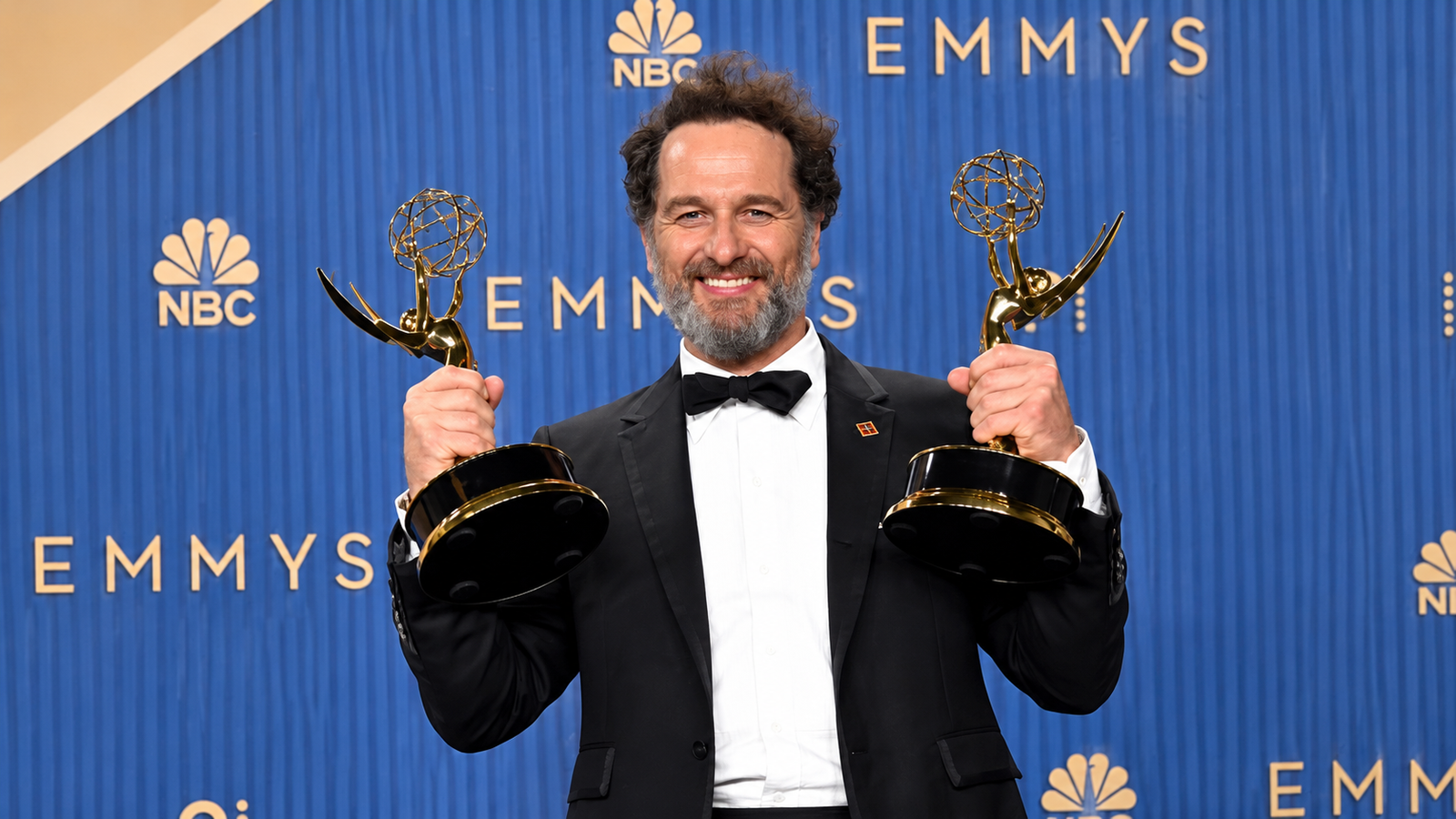
Welsh actor Matthew Rhys has made television history after becoming the first male performer to win two lead acting Emmy Awards in the same ceremony, capping a remarkable night at the 78th Primetime Emmy Awards in Los Angeles.
Rhys first took home the Outstanding Lead Actor in a Limited or Anthology Series or Movie award for his performance as Nile Jarvis in Netflix’s The Beast in Me. He later won Outstanding Lead Actor in a Comedy Series for playing Mayor Tom Loftis in Apple TV+’s Widow’s Bay.


A RECORD-BREAKING NIGHT
The achievement puts Rhys in an elite position in Emmy history. Following his earlier victory for The Americans in 2018, he has now won lead acting honours across drama, limited series and comedy categories.
His latest victories also brought his total number of Emmy wins to three, from eight career nominations.
EMOTIONAL ACCEPTANCE SPEECH
Rhys received a standing ovation during the ceremony and used his speeches to acknowledge the people who helped shape his career.
He thanked his family, his colleagues and, in particular, the people of Wales, describing his homeland as a powerful influence on his journey as an actor.
‘WIDOW’S BAY’ ENJOYS A BIG NIGHT
Rhys’s success was part of a broader triumph for Widow’s Bay. The Apple TV+ series dominated the ceremony, collecting multiple awards, including Outstanding Comedy Series, while also earning acting, writing and directing honours.
The series entered the awards with 19 nominations and ultimately emerged as one of the biggest winners of the night.
A CAREER MILESTONE
For Rhys, the double victory represents another major chapter in a career that has included acclaimed performances in Brothers & Sisters, The Americans and Perry Mason.
At 51, the Welsh actor has now established himself as one of the rare performers to win Emmy recognition across three major lead-acting categories—an achievement that could stand for years as one of the ceremony’s defining moments.


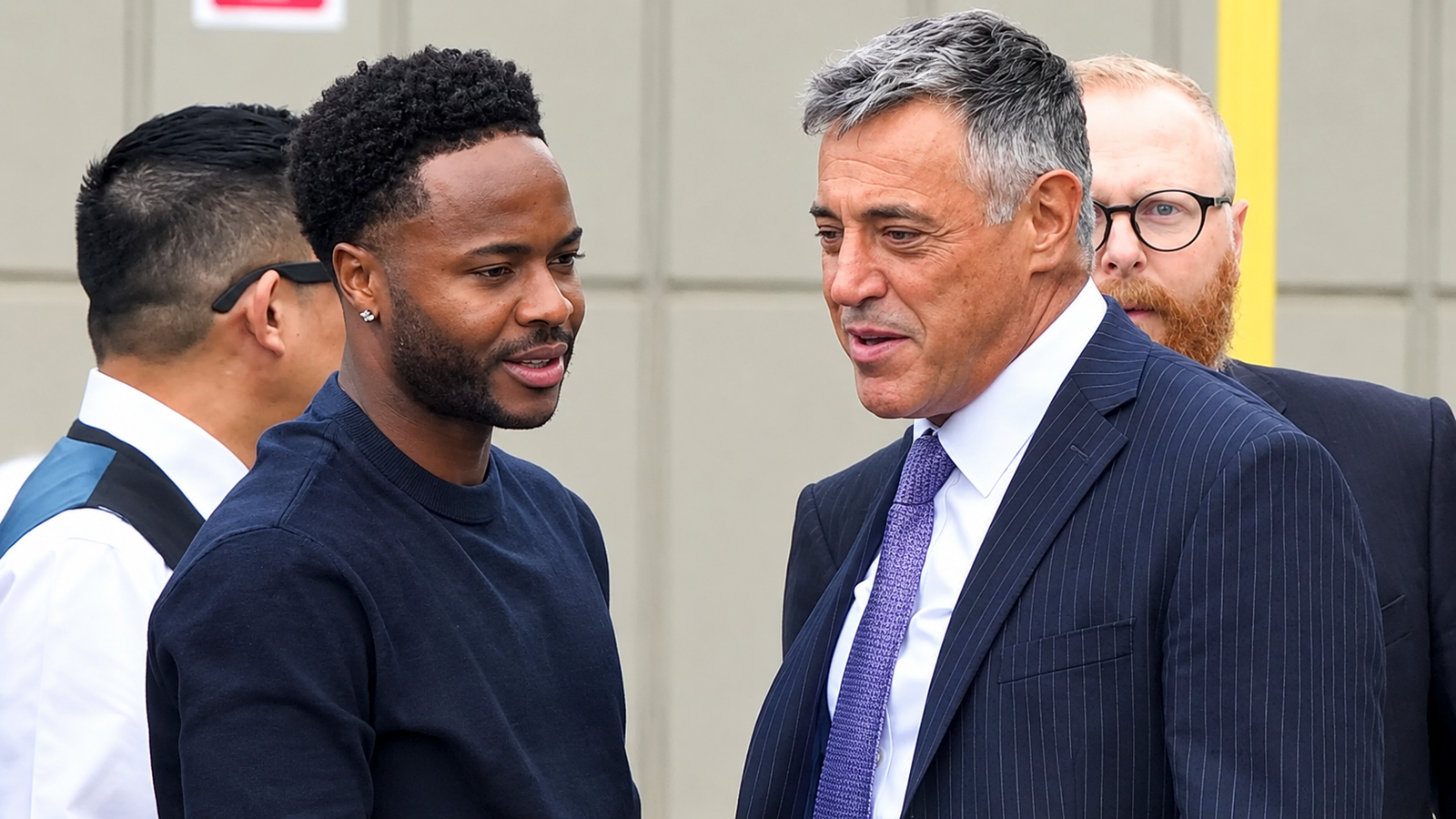
Former England international footballer Raheem Sterling has pleaded guilty to dangerous driving following a single-vehicle crash involving his Lamborghini on the M3 motorway in Hampshire.
Sterling, 31, appeared at Basingstoke Magistrates’ Court on Tuesday and admitted dangerous driving as well as charges relating to the possession of nitrous oxide and failing to provide a specimen.
Crash on M3
The incident happened on May 28, 2026, when Sterling’s Lamborghini Urus crashed on the southbound M3 near the Minley Interchange.
Police said no other vehicles were involved and no injuries were reported. Sterling was subsequently charged after the crash.
The dangerous-driving charge covered his driving on several roads, including the M25, M3, A327 and Minley Road, before the collision.
Nitrous Oxide Charges
Sterling also admitted possessing six nitrous oxide canisters. The substance is classified as a Class C drug in the UK when possessed for wrongful inhalation.
He additionally pleaded guilty to failing to provide a specimen.
The court heard allegations about his driving before the crash, with witnesses describing erratic manoeuvres and sudden changes in speed.
Football Career
Sterling has enjoyed a distinguished career with Liverpool, Manchester City and Chelsea, while also spending time on loan at Arsenal and later playing for Dutch club Feyenoord.
He made 82 appearances for England and won four Premier League titles with Manchester City. Sterling is currently without a club following the expiry of his Feyenoord contract.
The court proceedings are expected to determine the consequences of his guilty pleas.

Petition filed for investigation into alleged impersonation of Adwoa Safo during parliamentary sittings

Emmys 2026: The Winners and Nominees in Full

Matthew Rhys makes Emmy history with two lead acting wins in one night



-

 Entertainment1 week ago
Mahama Is First President to Put GH¢40m Seed Money into Creative Arts Fund: Kojo Preko Dankwa
-

 Culinary1 week ago
The Green Heart of Ghanaian Cuisine: Celebrating Nkontomire and the Art of Abom
-
 General News2 weeks ago
Don’t Punish Them Retrospectively – Educationist Challenges New CSSPS Placement Rule
-
 Entertainment1 week ago
Government Repatriates Musician Barosky from UK
-
 General News2 weeks ago
OSP Opens Preliminary Investigation into Alleged GH¢70,000 Payment Linked to Parliament’s Vetting
-

 Culinary2 weeks ago
Pineapple: The Spiky Tropical Fruit Packed With Sweetness and Nutrients
-
 Business2 weeks ago
TOR & GOIL Explore Further Opportunities for Strategic Collaboration
-
 Entertainment2 weeks ago
Ras Caleb Appiah-Levi: Hate Me for the Truth That I Represent