
Entertainment
Shatta Wale Wouldn’t Have Gotten This Far If He Stayed Quiet – Rex Omar


Veteran Ghanaian musician Rex Omar has shared his perspective on the personality and approach he believes have helped dancehall artiste Shatta Wale establish a powerful connection with his audience.
Rex Omar said Shatta Wale’s habit of speaking his mind, confronting people who criticise him and refusing to remain silent has contributed significantly to the size and loyalty of his fan base.
He made the remarks while speaking on the Group Chat Podcast, hosted by media personality Nana Aba Anamoah.
According to Rex Omar, Shatta Wale’s public identity is built around being a fighter, a quality he believes has made the musician particularly relatable to many young Ghanaians.
“Shatta Wale is a fighter. I like him so much, but trust me, if Shatta became like the so-called ‘decent artist’, nice guy and the quiet guy, if you offend him, he won’t say anything, expecting the music alone to speak for him, he wouldn’t have gotten this far,” Rex Omar said.
He explained that Shatta Wale’s career could have taken a different direction if the musician had chosen to ignore criticism and rely solely on his music to communicate with the public.
Rex Omar believes the dancehall star’s readiness to confront what he considers unfair treatment has allowed him to represent the frustrations of some young people.
“Shatta became who he is because he decided to fight society. No matter who you are, if you say something to offend him, he will return it in double, and so he became a voice for a lot of the young hungry people,” he said.
The veteran musician went on to draw a connection between Shatta Wale’s personality and the experiences many young people have had when dealing with older members of society.
He recalled that young people are sometimes expected to accept the views of their elders simply because of their age, even when they believe the older person is in the wrong.
“When I was growing up, you know, when you have an issue with an elderly person, you know what the elderly person is doing is stupid, there is no sense in it, but because you are a young one, they will tell you the elderly is right even when the young person is right. So this silenced you,” he said.
Rex Omar said years of being unable to openly express such frustrations can leave people with emotions they keep to themselves.
He believes Shatta Wale’s willingness to speak without holding back has resonated with some of those people, helping him develop what he described as a strong core following.
“Some of these things are with us, and it suppresses our being, so a lot of people bottled anger in them so Shatta became the voice, and that is what has propelled him and has given him that core fan base,” he added.
Despite Shatta Wale’s often combative public image, Rex Omar believes the musician may present a completely different personality when he is away from the spotlight.
“I believe that when you meet someone like Shatta Wale in his quiet moment, he is one of the best people you can be with,” Rex Omar said.
He further suggested that the image associated with Shatta Wale has, over time, become an important part of the musician’s public identity.
“Shatta has created that image that he is a nonsense man,” Rex Omar stated.
His comments highlight how Shatta Wale’s music, outspoken personality and willingness to engage in public confrontations have combined to shape his relationship with his supporters over the years.

Ghanaian rapper Tic Tac has opened up about his experiences with women when he was younger, revealing that his reserved attitude and limited interest in women sometimes led people to assume that he was gay.
The veteran musician explained that his upbringing played a major role in shaping how he interacted with women. According to him, he was not particularly interested in women during his younger years, a situation that caused some people around him to make assumptions about his sexuality.
Speaking during a discussion on Adom TV on September 27, 2026, Tic Tac said some people would openly tell him that they believed he was gay because of the way he behaved around women.
“I didn’t like women too much, so some people thought I was gay. People used to tell me I’m gay, but it’s because of my upbringing,” he said.
Tic Tac said his lack of interest could sometimes become apparent even when he was already spending time with a woman.
He explained that there were occasions when he would take a woman to his room but suddenly lose interest when the situation became intimate. Instead of forcing himself to continue, he would find an excuse to leave or end the encounter.
According to him, his reaction could sometimes be so strong that even if a woman undressed in front of him, he would become uncomfortable and walk away.
“If a woman should strip herself naked in front of me, I will run away.”
The rapper further recounted situations where he would invite a woman into his room but, when the moment came for intimacy, his feelings would suddenly change.
He said he could then pretend that he was experiencing stomach pains as an excuse to end the encounter.
Tic Tac explained that his actions were not necessarily intended to deliberately reject the woman. Rather, he said he paid attention to his instincts whenever he realised that the attraction or desire was no longer there.
“That’s because the feeling is no longer there. Something is telling me I can’t do anything with you, and I will follow it.”
He said such moments could also make him visibly uncomfortable, including sweating profusely.
“I will be sweating profusely, and you might think it’s pressure.”
Tic Tac added that, in some instances, he would simply leave the woman in the room and walk away.
“I can even leave you inside and walk out.”
The rapper said his reserved nature and attitude toward women during his younger years were largely shaped by his upbringing.

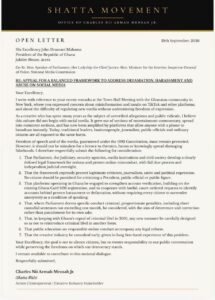
Ghanaian dancehall star Charles Nii Armah Mensah Jr., popularly known as Shatta Wale, has urged President John Dramani Mahama to support measures aimed at tackling defamation, harassment and abuse on social media while protecting the constitutional right to free expression.
In an open letter dated September 28, 2026, the musician called for a national conversation on how Ghana can respond to harmful online behaviour without creating laws that could be used to suppress legitimate criticism or public debate.
Shatta Wale said the increasing misuse of social media had created the need for clearer rules governing online conduct, particularly in cases involving threats, harassment and the deliberate circulation of false information.
He said his own encounters with what he described as unverified allegations, public ridicule and damaging claims had given him a personal understanding of the impact such conduct could have on individuals.
According to him, Ghana’s commitment to freedom of speech and media freedom under the 1992 Constitution must remain intact.
However, he argued that those freedoms should not be interpreted as giving people unrestricted permission to threaten others, engage in sustained harassment or knowingly circulate false claims that cause serious harm.
Shatta Wale proposed a collaborative approach involving Parliament, the Judiciary, security agencies, media organisations and civil society groups to develop clearly defined rules for serious online misconduct.
He said any such framework must be based on due process and independent judicial oversight, particularly where criminal sanctions or the identification of anonymous social media users are involved.
The artiste also stressed that the law must draw a clear line between harmful conduct and legitimate public expression.
He specifically called for protection for journalism, satire, political commentary and criticism of public officials, arguing that citizens should not face punishment merely because they disagree with or criticise the President, government officials or other public figures.
Shatta Wale further proposed discussions with social media companies operating in Ghana to improve account verification and strengthen cooperation with lawful investigations.
Under his proposal, platforms could respond to court-ordered requests seeking information about accounts involved in proven cases of serious harassment or defamation.
However, he said such measures should not amount to a blanket requirement for every social media user to disclose their identity before participating in public discussions.
He maintained that anonymity can have a legitimate place in public discourse and should not automatically be treated as evidence of wrongdoing.
On possible penalties, Shatta Wale suggested that Parliament could consider proportionate sanctions for specific forms of online conduct that are clearly established as criminal offences.
He proposed that, in appropriate cases, short custodial sentences of no more than one month could be considered, with the broader objective being deterrence, accountability and correction rather than excessive punishment.
At the same time, he cautioned against using new legislation to effectively bring back criminal libel, which Ghana abolished in 2001.
His position comes amid an ongoing national debate over how authorities should respond to allegedly false, threatening or defamatory online statements while respecting constitutional freedoms.
Shatta Wale also called for public education to form part of any response to social media abuse.
He argued that Ghanaians need greater awareness of responsible online behaviour alongside any changes to the law.
He further urged the government to involve members of the creative industry in consultations on the issue, noting that musicians, entertainers and other public figures are among those who frequently experience the effects of social media activity.
For Shatta Wale, the proposed approach should strike a balance between individual accountability and the protection of democratic freedoms.
“The goal is not to silence citizens, but to restore responsibility to our public conversation while preserving the freedoms on which our democracy stands,” he said.
Ghanaian rapper Tic Tac has opened up about how he handles romantic relationships, revealing that he prefers to be upfront with a woman once he realises they do not have a future together.
According to the rapper, he would rather be honest and end a relationship than continue with it and create false expectations, even when he genuinely cares about the woman.
Speaking on Adom TV on September 27, 2026, Tic Tac recalled several instances where women became emotional after he decided to end their relationships.
“I was very blunt with women. If we’re in a relationship and I feel like I can’t continue with you, I’ll tell you,” he said.
Tic Tac explained that ending a relationship did not necessarily mean he disliked or disrespected the woman. In some cases, he simply realised that their ambitions, values or long-term plans did not align.
“I had a lot of situations where women used to cry a lot, and they would ask why I was doing that. I would just say we should end it.”
The rapper stressed that he could continue to care for and respect someone even after deciding that their romantic relationship would not work.
“Though I like you, I respect you, and I will be there for you if you need anything. As for the relationship, it wouldn’t last because our vision doesn’t align.”
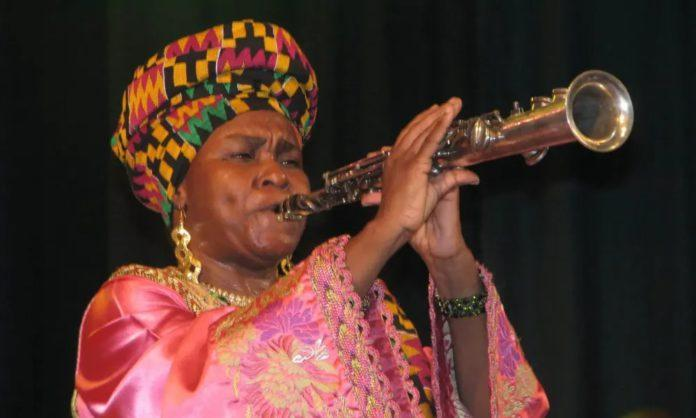
Long before Ghanaian music became dominated by Afrobeats, digital streaming and social media, there were female musicians who were already proving that women could command the highlife stage.
One of the most distinctive among them was Queen Asabia Cropper.
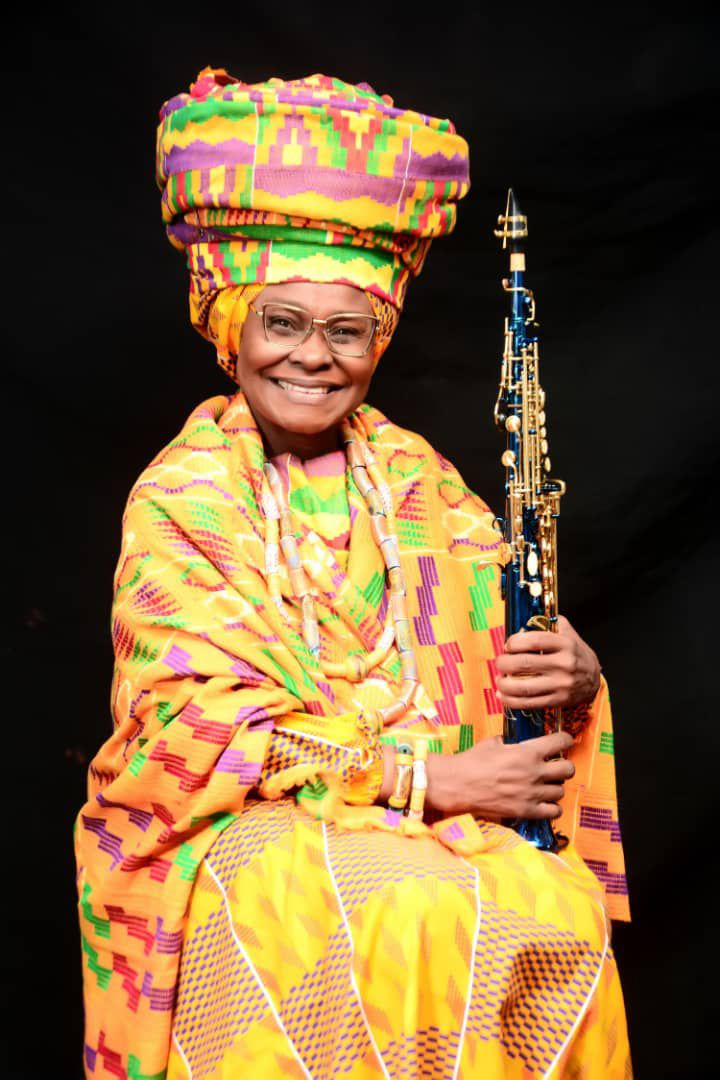
Born Eugenia Asabia Cropper, she became known as a singer and soprano saxophonist and eventually earned the title Queen of Highlife Music. Her career has also been closely connected with fashion, particularly the use of colourful Ghanaian kente as part of her stage identity.
Her story is not simply about music. It is a story about family, highlife, fashion, African identity, international performance and a woman who created a recognisable identity at a time when Ghana’s music industry was overwhelmingly male-dominated.

Queen Asabia was born, raised and educated in Ghana.
She grew up in an environment where music and fashion were both important parts of her life. Her mother and grandmother played a significant role in developing her interest in fashion and headgear.
According to accounts of her life, they taught her different ways of tying and arranging headwear.
That childhood influence would eventually become one of the most recognisable aspects of her public image.
Her colourful headgear was not simply an accessory.
It became part of the Asabia brand.
She later developed distinctive styles associated with names such as Mt Kilimanjaro, Afajato Kloyo and Yogaga.
Music also came into her life through her twin brother, Kenteman, whose birth name is Eugene Nene Agyeman Cropper.
Kenteman became a respected bassist, multi-instrumentalist, arranger, composer and producer.
He was instrumental in introducing Asabia to music.
During the 1970s, he taught her to play the piano and acoustic guitar.
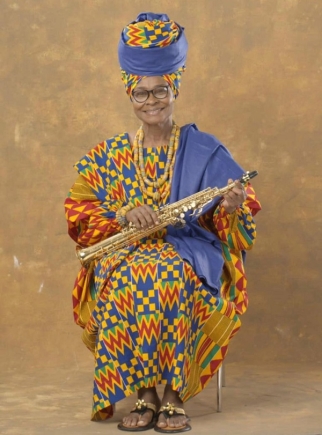
Asabia later developed her skills on the soprano saxophone, receiving instruction from the renowned Ghanaian saxophonist Tex Korley in 1978 and later from Sammy Lartey Snr., a bandleader associated with the Ghana Broadcasting Corporation band, in 1983.
This meant that Asabia was not merely a vocalist standing in front of a band, and she was also an instrumentalist.

In 1975, Asabia and her twin brother became associated with the legendary Sweet Talks Band.
This period marked an important stage in her development as a professional musician.
The Sweet Talks were among the notable highlife groups of their generation, and being part of such a band placed Asabia in the middle of Ghana’s vibrant live-band culture.
It was also around this period that she began incorporating her distinctive kente headwear into her stage appearance.
She has said that she first wore the kente headwrap on stage in 1975. Fifty years later, she was still using the style as part of her performances.

From Ghana to Côte d’Ivoire
Asabia’s career was not restricted to Ghana.
She and Kenteman later became associated with the Black Hustlers Band, which operated in Côte d’Ivoire.
This became one of the most important periods of their international musical journey.
The band included Asabia as singer and saxophonist, Kenteman on bass, Pope Flynn, Alfred Young on lead guitar, Alex Abito on drums and Max Cozy on keyboards.
The Côte d’Ivoire experience exposed the siblings to a wider West African audience and helped them build an identity beyond Ghana.
The birth of Pagne du Asabia
It was in Côte d’Ivoire that Asabia’s fashion identity became even more influential.
Her use of Ghanaian kente as part of her performance clothing became so distinctive that the material was associated with her name.
The style became known as Pagne du Asabia, essentially referring to Asabia’s cloth or trademark style.
She and Kenteman used kente not simply as clothing but as a cultural statement.
Their stage appearances combined music with Ghanaian textile traditions and helped project the image of Ghanaian kente to audiences outside the country.
This combination of music and fashion eventually became one of the strongest parts of their identity.
Recording Wamaya
One of the songs strongly associated with Queen Asabia is Wamaya.
The song was recorded through Eboni Records in Côte d’Ivoire, with Abdoulaye Soumare involved in the recording process.
The Eboni Records band also had connections with internationally recognised African musicians.
Kenteman, for instance, played bass when the band backed Mory Kanté on his N’Diarabi project.
Wamaya later became one of Asabia’s signature songs and remains one of the tracks audiences associate with her career.
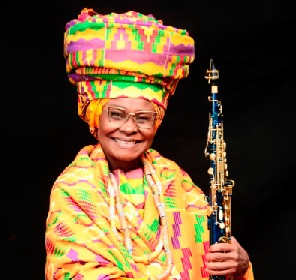
Asabia’s career also involved collaborations beyond Ghana.
In 1982, she collaborated with Samuel Mangwana and Jimmy Hyacinthe on the album Sam Asabia.
Her career therefore developed within a wider West African musical environment rather than being limited to the Ghanaian market.
This was particularly significant at a time when musicians did not have today’s digital platforms to reach international audiences.
Cross-border performances, physical records, radio and live concerts were among the main ways African musicians expanded their audiences.
Her music catalogue
Some of the recordings associated with Queen Asabia include: Wamaya, Torwia, Inamosi, I Love So Much, Asabia.
Her songs have continued to appear in performances and retrospectives celebrating Ghanaian highlife.
At a 2019 Signature Concert, for example, Asabia performed Torwia, Inamosi, and finished with Wamaya.
Becoming the Queen of Highlife
Asabia’s career eventually earned her one of the most recognisable titles in Ghanaian music.
She was honoured as the Queen of Highlife Music through the Union of National Radio and Television Organisations of Africa (URTNA) awards.
She also received a gold disc in 1984 from Daniel Cuxac, an international music executive associated with Disco Stock International in Côte d’Ivoire.
In the same period, she and Kenteman were increasingly being recognised not only as musicians but also as cultural ambassadors.
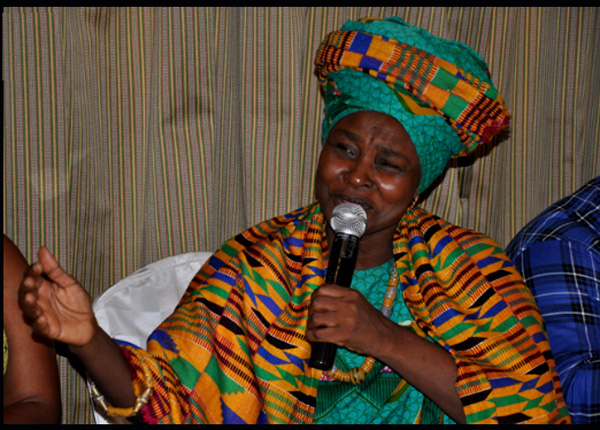
A cultural ambassador
In 1993, the URTNA awards recognised Asabia and Kenteman as cultural ambassadors of Africa.
That recognition reflected the wider cultural dimension of their work.
They were promoting music, but they were also presenting a visual representation of Ghana through their kente clothing.
Their performances communicated Ghanaian identity through sound, colour, fashion and stage presentation.
Asabia’s achievements were also recognised within Ghana’s entertainment industry.
Her self-titled album Asabia was reportedly selected as Album of the Year, while she was named Artist of the Year at the 1985 Entertainment Critics and Reviewers Association of Ghana awards.
This was a significant moment for a female instrumentalist and singer working within a largely male-dominated highlife environment.

More than a musician
One of the things that separates Queen Asabia from many musicians of her generation is the fact that she built a complete artistic identity.
She had: Music, Fashion, Kente, Saxophone, Stage performance, African cultural representation.
The different elements became inseparable from the Queen Asabia image.
Asabia’s contribution did not disappear as Ghanaian music changed.
In 2019, she was honoured at the Rhythms On Da Runway fashion show for her contribution to fashion in Ghana.
She was also honoured at the MUSIGA Presidential Grand Ball and received an Industry Heroes Award.
In March 2021, she was among personalities recognised at the 3Music Awards Women’s Brunch for their contributions to the entertainment industry.

Unlike many musicians from her generation who have completely withdrawn from public performances, Asabia has continued to appear at highlife and cultural events.
In 2024, she and Kenteman returned to the stage at an Authentic Highlife Night organised to support the Musicians Union of Ghana’s Aged Musicians Welfare Fund.
Asabia, who serves as chairperson of AMWEF, performed alongside musicians from different generations.
Their entrance in colourful kente clothing once again brought together the two elements that have defined their careers: music and fashion.
In 2025, Asabia marked approximately 50 years of using kente headwear as part of her public image.
At the Highlife Heritage Concert 2025, she performed and also brought young women onto the stage to model some of her distinctive headwear styles.
The moment demonstrated how a practice she learned from her mother and grandmother had evolved into a major part of her artistic identity.

Asabia has continued to speak about the importance of preserving Ghanaian music.
At a Highlife Heritage Monthly Concert in June 2026, she performed with the New Ramblers Band, played her soprano saxophone and spoke about the connection between music, culture and Ghanaian identity.
She described highlife as something people continue to cherish as they grow older and emphasised that it belongs to Ghana and deserves to be treasured.
Why Queen Asabia deserves to be remembered
For younger Ghanaians who know highlife mainly through its modern interpretations, Queen Asabia’s story offers another perspective.
She represents a generation when musicians were expected to be more than recording artists.
They had to perform live.
They had to entertain audiences without social media.
They had to build their own visual identity.
And for Asabia, that identity became unmistakable.
The soprano saxophone.
The voice.
The colourful kente.
The headgear.
The twin brother beside her.
And the name Queen Asabia.
Her journey from the Sweet Talks era through Côte d’Ivoire and the Black Hustlers Band to later highlife heritage performances makes her one of the important women in Ghana’s popular music history.
Today, she continues to appear at cultural and highlife events, keeping alive a musical tradition that has passed through several generations.
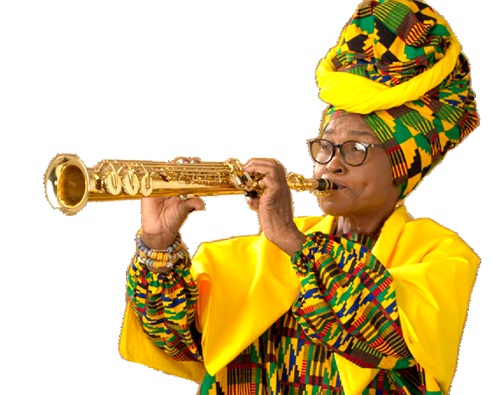
Queen Asabia Cropper — singer and soprano saxophonist
Kenteman — twin brother, bassist, multi-instrumentalist and producer
Tex Korley — saxophone tutor
Sammy Lartey Snr. — GBC bandleader and saxophone tutor
Sweet Talks Band — group with which she performed in the 1970s
Black Hustlers Band — group associated with her Côte d’Ivoire period
Mory Kanté — African musician whose N’Diarabi project was backed by the Eboni Records band with Kenteman on bass
Queen Asabia’s story is ultimately about music, identity and the deliberate preservation of Ghanaian culture. Her career demonstrates how a musician could use both sound and fashion to create an identity that remained recognisable decades after the first performance.
And while many names from Ghana’s golden highlife era have gradually faded from mainstream conversation, Queen Asabia Cropper remains one of the women whose story deserves to be brought back into the spotlight.

Ghanaian musician Black Sherif has waded into the debate surrounding a recent relationship comment by fellow musician Akwaboah Jnr, asking him to explain exactly what he meant.
The discussion started after Akwaboah shared a brief message on social media advising men not to allow their partners to work for another man.
“Never let your woman work for another man… Yes, I said it,” Akwaboah wrote in a post on X.
The statement quickly became a talking point, with social media users offering different interpretations of the musician’s position on marriage, employment and relationships.
Some questioned the reasoning behind the advice, while others tried to determine whether Akwaboah’s comments were influenced by personal experiences. The musician, however, has not publicly provided a detailed explanation of what prompted the post.
Amid the discussion, Black Sherif addressed the issue during an appearance on Akrobeto’s show on United Television.
The Kwaku the Traveller hitmaker called on Akwaboah to provide further clarity instead of leaving the statement open to different interpretations.
Black Sherif indicated that he personally would not tell his wife that she could not work for another man. At the same time, he acknowledged that Akwaboah was likely speaking from a particular perspective and therefore should be the one to explain the thinking behind his statement.
His intervention has added another dimension to a discussion that has moved beyond music into questions about marriage, financial responsibility and women’s careers.
Akwaboah’s original statement was notably brief, giving no specific explanation about whether he was referring to working for a male employer generally or to particular circumstances within a workplace.
The lack of clarification has consequently left room for different interpretations online.
The debate has also renewed attention around Akwaboah’s previous comments about marriage and financial preparedness. He has previously advised men to have stable employment and reliable sources of income before getting married. He has also said that his relationship-related posts should not necessarily be interpreted as commentary on problems in his own marriage.
Akwaboah has previously described himself as happily married and has rejected speculation that his marriage is facing difficulties.
For Black Sherif, however, the immediate issue appears to be the need for clarity on what exactly Akwaboah intended by the phrase “work for another man.”
The debate continues to attract reactions online, with discussions focusing on whether decisions about employment should be determined by one partner, the importance of financial independence and the boundaries couples should establish within marriage.

If She Strips Naked, I’ll Run – Tic Tac Reveals His Unusual Reaction to Women

Free Speech Is Not a Licence to Abuse– Shatta Wale Tells Mahama
I’ll Tell You If I Know I Can’t Marry You: Tic Tac



-

 General News1 week ago
Two political parties, one lesson: Afuntummireku and Tikro Nkɔ Agyina for Ghana
-

 Culinary1 week ago
Kofi Brokeman: The Simple Ghanaian Snack That Has Stood the Test of Time
-

 General News2 weeks ago
Bost Energies Made GH¢684 Million Profit: Why Use The NPA Bill, 2026 To Weaken Its Operations?
-

 General News6 days ago
Rev. Dr. Christian Kwetey Kweitsu Set for International Recognition at 100 Most Influential Persons Awards in Kigali
-

 General News5 days ago
Free Speech, False Publication and Presidential Criticism in Ghana: Where Does the Law Draw the Line?
-

 Entertainment1 week ago
Can’t Anything Good Come Out of Ghana? – Ras Caleb Appiah-Levi Fires Back at Critics
-

 General News5 days ago
Don’t Expect Concerts When People Can’t Afford Food – Rex Omar on Black Star Experience
-

 General News2 weeks ago
Iran War Has Led to U.S. Munitions Shortfalls, Pentagon Inspector General Confirms